Best Honey 2026: Manuka vs Raw vs Buckwheat Compared
Honey varies in composition, taste, and purported health properties based on floral source (what the bees forage), processing method (raw vs heated), and in the case of Manuka honey, the concentration. Taste consistency between batches matters more than health claims on the label.
Each honey was evaluated on verified certification rigor, flavor consistency across batches, price per serving, sourcing transparency, and real-world suitability for its intended use case.
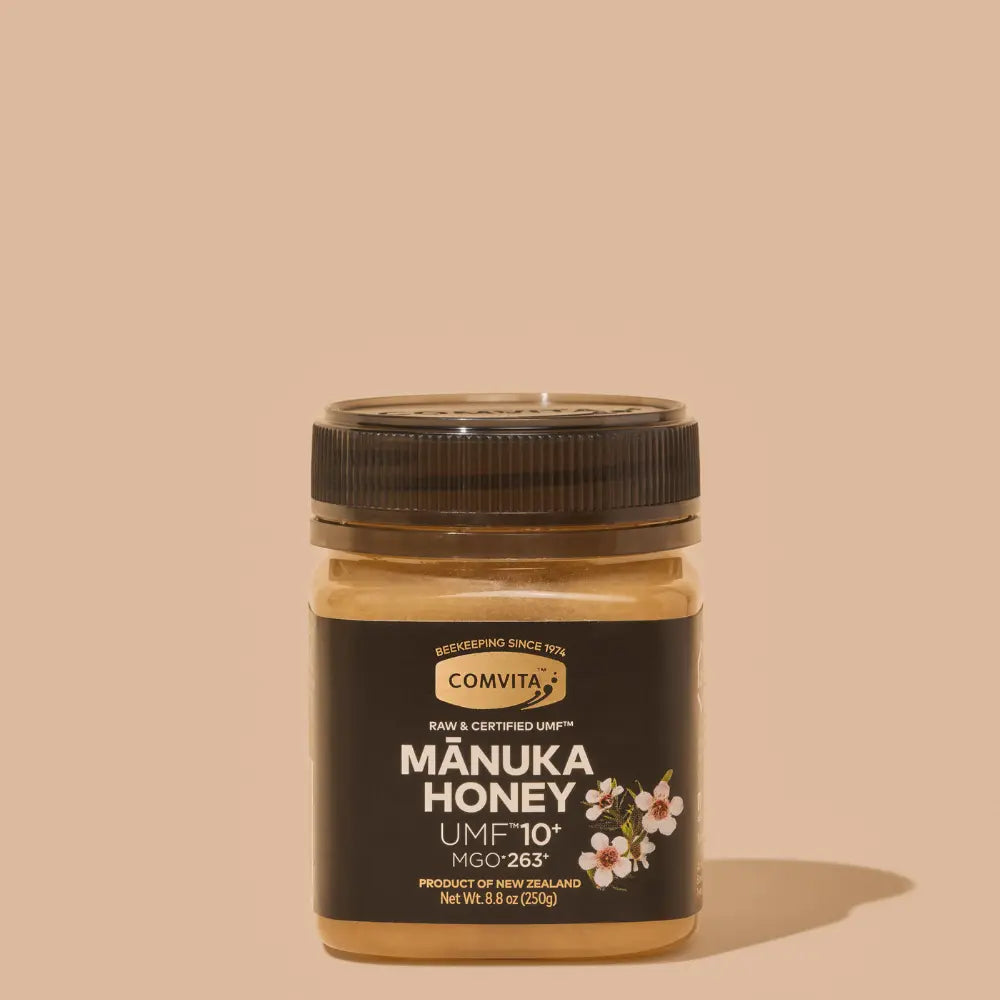
Comvita Manuka Honey UMF 10+
Best Overall: Comvita UMF 10+ is the most trustworthy certified Manuka on the market — the UMF system independently verifies both MGO concentration and authenticity markers, eliminating the fraud risk that plagues cheaper Manuka labels. At 250g for $26–40, the price per serving is high, but you're paying for documented MGO 263+ and global batch traceability, not marketing.
Top picks ↓| Product | Price | Link |
|---|---|---|
| $26.24 | View deal → | |
| $27.99 | View deal → | |
| $9.99 | View deal → | |
| $19.99 | View deal → | |
| $17.99 | View deal → |
Top picks
Related articles


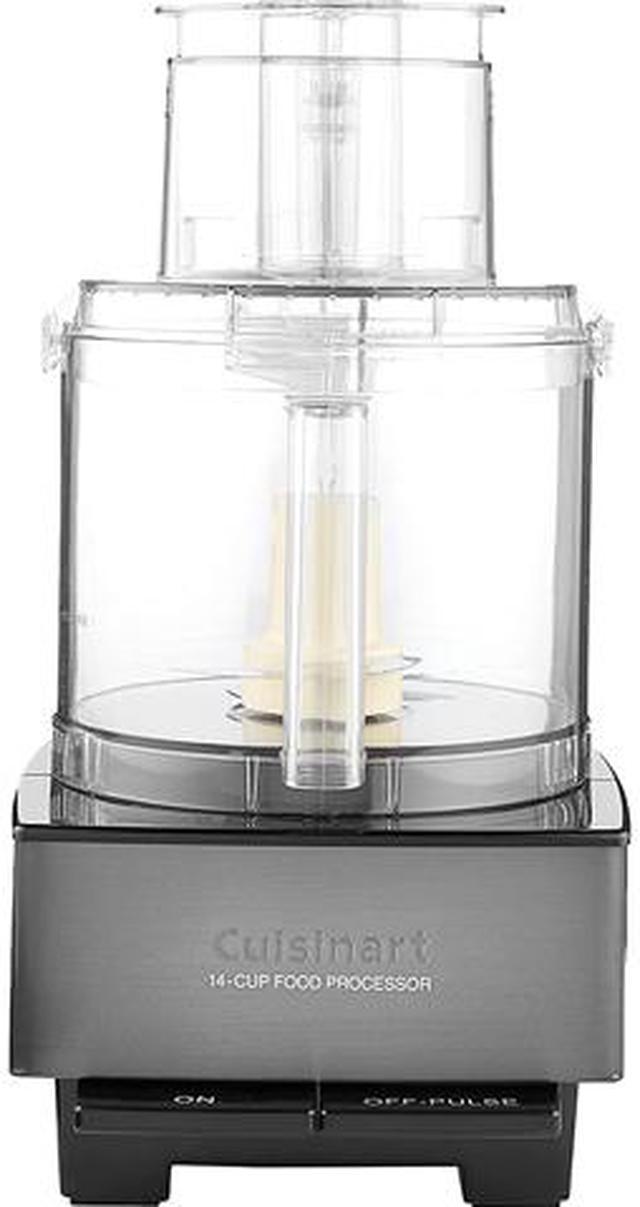
Comvita Manuka Honey UMF 10+
Manuka honey, UMF 10+ / MGO 263+, 250g. $30-40. Best certified Manuka — UMF certification verifies MGO and authenticity, global brand. Correct for Manuka buyers who want certified MGO and don't want KFactor ambiguity.
Comvita UMF 10+ is the most trustworthy certified Manuka on the market — the UMF system independently verifies both MGO concentration and authenticity markers, eliminating the fraud risk that plagues cheaper Manuka labels. At 250g for $26–40, the price per serving is high, but you're paying for documented MGO 263+ and global batch traceability, not marketing. The honest limitation is that a 250g jar disappears quickly if you use it as an everyday sweetener.
Pros
- ✓UMF certification verifies MGO and authenticity independently
- ✓Global availability with consistent batch quality
- ✓Mid-range MGO 263+ suitable for general wellness use
Cons
- ✗$26–40 for 250g makes daily use expensive
Score breakdown
| Type | Manuka |
| Grade | UMF 10+ (MGO 263+) |
| Raw | yes |
| Origin | New Zealand |
| Certifications | UMF certified, Non-GMO, Halal, Kosher |
| Serving calories | 64 kcal per 1 tbsp (21 g) |

Wedderspoon Manuka Honey KFactor 16
Manuka honey, KFactor 16 (75%+ Manuka pollen), 11.4 oz. $20-30. Best accessible Manuka — KFactor certifies pollen not MGO, but legitimate Manuka sourcing. Correct for Manuka buyers comfortable with pollen-based rather than MGO-based rating.
Wedderspoon KFactor 16 certifies that 75%+ of pollen comes from Manuka flowers, which confirms floral source but doesn't directly state MGO content — a meaningful distinction from UMF. It's a legitimate product at a softer price than most UMF-certified Manuka, making it the right pick for buyers who want verified Manuka origin without paying the UMF premium. Be aware that KFactor 16 cannot be converted directly to a UMF rating.
Pros
- ✓Pollen-certified Manuka origin at lower price than UMF
- ✓11.4 oz provides better volume than most Manuka options
- ✓Widely available in mainstream grocery channels
Cons
- ✗KFactor does not state MGO level — less precise than UMF
Score breakdown
| Type | Manuka |
| Grade | KFactor 16 (≈ MGO 150+) |
| Raw | yes |
| Origin | New Zealand |
| Certifications | Non-GMO Project Verified; meets NZ Monofloral Manuka Honey Standard |
| Serving calories | 60 kcal per 1 tbsp (21 g) |
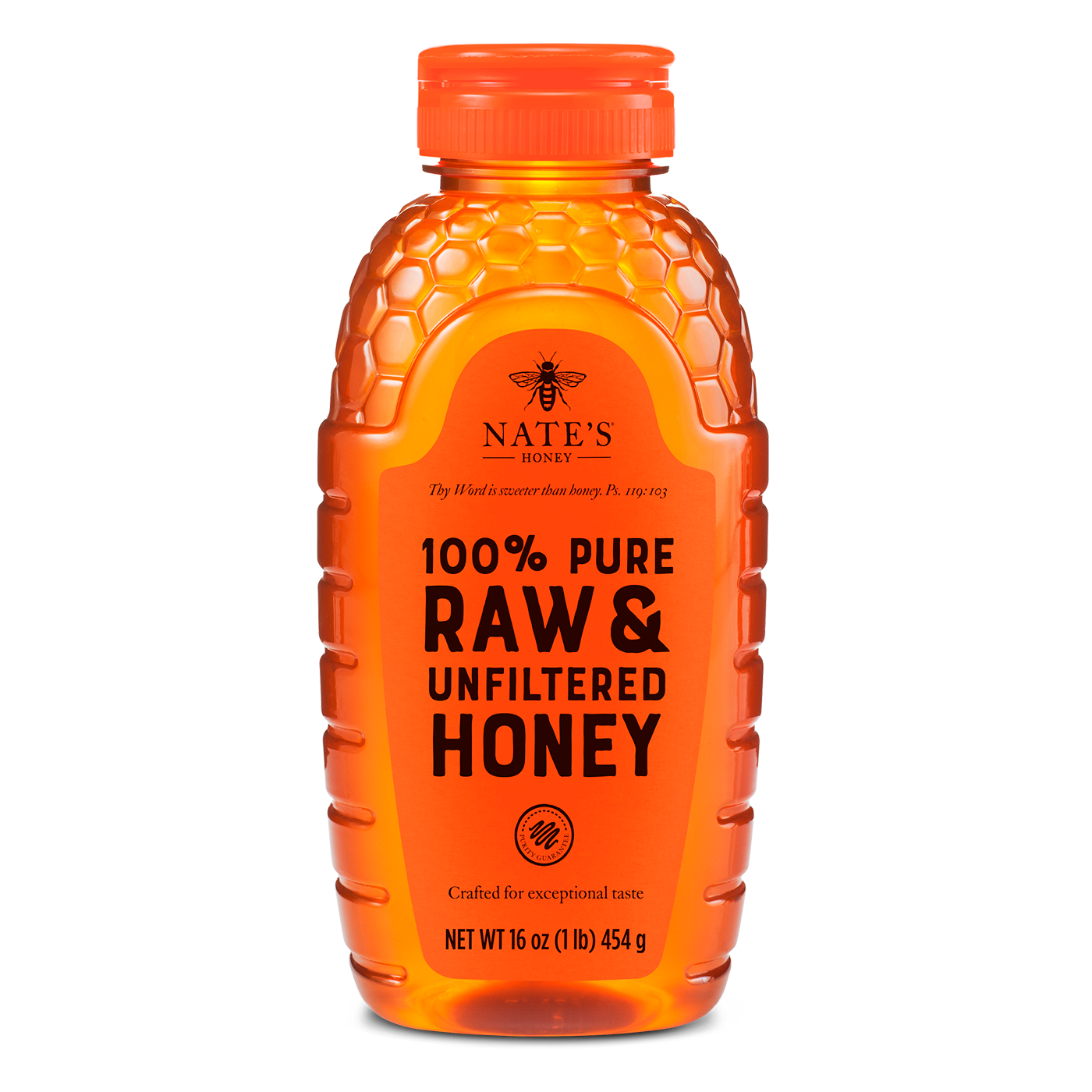
Nature Nate's 100% Pure Raw Honey
Raw clover honey, unfiltered, unheated, 16 oz. $10-15. Best everyday raw honey — traceable US sourcing, raw processing, mild flavor. Correct for daily sweetener use without Manuka premium.
Nature Nate's is the right answer for daily use — US-sourced, unfiltered, unheated, independently audited, and under $10 for 16 oz. The flavor is mild clover honey, which is exactly what you want when honey is a background sweetener in tea, yogurt, or dressings. It won't crystallize as fast as thicker raw honeys, and the squeeze bottle is practical. Nothing exotic here — that's the point.
Pros
- ✓Traceable US sourcing with independent raw auditing
- ✓Mild clover flavor suits broad culinary use
- ✓Accessible price for daily consumption
Cons
- ✗Less complex flavor than single-origin or regional varieties
Score breakdown
| Type | raw |
| Raw | yes |
| Serving calories | 70 kcal per 1 tbsp (21 g) |

Y.S. Eco Bee Farms Raw Honey
Raw honey, USDA organic, unfiltered, 22 oz. $12-18. Best thick unfiltered raw honey — visible propolis and pollen, assertive flavor. Correct for raw honey buyers who want visible bee products and stronger honey character.
Y.S. Eco Bee Farms delivers a noticeably different raw honey experience — thick, opaque, with visible propolis and pollen particles that confirm minimal processing. The flavor is more assertive than Nature Nate's, leaning earthy and complex. At 22 oz USDA organic for around $12–18, it's one of the better values in certified raw honey. The texture can be challenging to scoop in cold weather; warm the jar slightly if it becomes too firm.
Pros
- ✓Visible propolis and pollen confirm unfiltered processing
- ✓USDA organic certification
- ✓22 oz size offers strong value per ounce
Cons
- ✗Thick texture becomes difficult to pour in cooler temperatures
Score breakdown
| Type | raw |
| Raw | yes |
| Certifications | U.S. Grade A, Kosher |
| Serving calories | 60 kcal per 1 tbsp (21 g) |

Wholesome Organic Raw Honey
Organic raw honey, fair-trade certified, 16 oz. $12-18. Best organic-certified raw honey — fair-trade sourcing, mild flavor, organic certification. Correct for buyers who prioritize organic and fair-trade alongside raw processing.
Wholesome Organic hits a specific niche: buyers who want both organic certification and fair-trade sourcing in a raw honey without paying Manuka prices. The flavor is mild and clean — comparable to Nature Nate's but with the added credentials. At $12–18 for 16 oz, it costs slightly more than Nature Nate's for the organic and fair-trade overhead, which is a reasonable trade-off for the ethically minded buyer. Not the best value by weight, but certified on multiple dimensions.
Pros
- ✓USDA Organic + fair-trade certified simultaneously
- ✓Mild flavor works across most use cases
- ✓Transparent sourcing credentials
Cons
- ✗Higher price per ounce than conventional raw honey without premium flavor payoff
Score breakdown
| Type | raw |
| Raw | yes |
| Origin | Brazil / Southern Mexico (South America) |
| Certifications | USDA Organic, Non-GMO Project Verified, Fair Trade Certified |
| Serving calories | 60 kcal per 1 tbsp (21 g) |
Which one is right for you?
For daily sweetener use
Nature Nate's 100% Pure Raw Honey
Mild flavor, raw certified, and priced for everyday consumption without guilt.
For verified Manuka benefits
Comvita Manuka Honey UMF 10+
UMF 10+ independently certifies MGO 263+ — the most reliable certification if Manuka potency matters to you.
For ethical sourcing priority
Wholesome Organic Raw Honey
USDA Organic and fair-trade certified — the pick when sourcing ethics matter as much as flavor.
For budget Manuka buyers
Wedderspoon Manuka Honey KFactor 16
Pollen-certified Manuka origin at a lower price than UMF products — good entry point to Manuka without full UMF premium.
For maximally unfiltered honey
Y.S. Eco Bee Farms Raw Honey
Visible propolis and pollen in a thick, assertive honey with USDA organic certification — the most 'raw' option on this list.
Manuka honey: MGO, UMF ratings, and what they mean
MGO (methylglyoxal) is the primary bioactive compound in Manuka honey with documented antibacterial activity. MGO forms from DHA (dihydroxyacetone) present in Manuka nectar. Higher MGO = higher antibacterial potential. New Zealand Manuka honey is graded on MGO content: MGO 100+ is entry-level, MGO 250+ is mid-range, MGO 400+ is high potency. UMF (Unique Manuka Factor) is an independent certification used primarily in New Zealand — UMF 10+ corresponds approximately to MGO 263+, UMF 20+ corresponds to MGO 829+. The UMF system also certifies authenticity (licensed growers, batch testing for Leptospermum pollen markers), which matters because Manuka fraud is common — mislabeled honey from other sources has been sold as Manuka.
Comvita is the most globally distributed certified Manuka brand — UMF 5+ through UMF 20+ products available. Comvita UMF 10+ ($30-40 for 250g) is a mid-tier entry point with documented MGO levels. Wedderspoon Manuka Honey uses the KFactor rating system (their proprietary system, not UMF) — KFactor 16 means 75%+ Manuka pollen by count. KFactor is not equivalent to UMF and doesn't directly state MGO. This creates consumer confusion: Wedderspoon is a legitimate product but comparing KFactor to UMF directly requires knowing the conversion.
When is Manuka worth the price? The clinical evidence for Manuka's unique benefits — wound healing, H. pylori inhibition at high doses — requires high MGO concentrations in a controlled context. Eating one teaspoon of MGO 250+ Manuka daily is unlikely to produce meaningful therapeutic effects based on current evidence. For topical wound care (burns, abrasions), high-grade Manuka honey has documented efficacy. For dietary use as a sweetener or in tea, the premium over good raw honey is primarily about personal preference, not documented health difference. If the attraction is supporting New Zealand beekeeping or you prefer the flavor, the premium is valid on those grounds.
Raw honey: what it is, why it matters
Raw honey is honey in its natural state — unheated above hive temperature (approximately 35°C/95°F), unfiltered or coarsely filtered. Raw honey retains: active enzymes (diastase, invertase, glucose oxidase), propolis particles, bee pollen, trace amounts of wax. The glucose oxidase enzyme in raw honey produces hydrogen peroxide when diluted with water — this is the basis for raw honey's general antibacterial properties (present in all raw honey, not just Manuka). Heating above 40°C deactivates these enzymes. Processed commercial honey (most supermarket honey) has been heated and filtered — cleaner appearance, longer shelf life, no crystallization, but minimal enzyme activity.
Nature Nate's Raw Honey ($10-15 for 16 oz, US sourced) is the leading mass-market raw honey brand — unfiltered, unheated, widely available at Target and Walmart. The flavor is mild clover honey — appropriate for general use as a sweetener. The 'raw' designation is accurate (independently audited). For everyday honey use, Nature Nate's represents good value — traceable US sourcing, raw processing, accessible price. The flavor profile won't surprise you.
Y.S. Eco Bee Farms Raw Honey ($12-18 for 22 oz) is a thicker, more intensely flavored raw honey — unfiltered with visible propolis and pollen particles. The texture is thick enough to hold shape when scooped. Y.S. Eco Bee is USDA organic and raw — appropriate for those who want unfiltered honey with visible bee products. The opaque, slightly granular texture is a sign of minimal processing. If you find Nature Nate's too mild, Y.S. Eco Bee has a more assertive honey flavor.
Specialty and single-origin honeys worth knowing
Buckwheat honey: dark, intensely flavored, high antioxidant content by comparison with other honeys. Buckwheat honey comes from buckwheat flower forage and is one of the highest-antioxidant honey varieties — higher polyphenol content than lighter honeys. The flavor is strong, almost molasses-like, and not appropriate as a substitute for neutral honey in baking. Best uses: with strong cheeses, in marinades, in robust baked goods where the flavor complements rather than clashes. Approximately $10-20 for 16 oz from specialty sources.
Clover honey vs wildflower honey: clover honey is the dominant US honey variety — mild, sweet, light golden color. Wildflower honey varies by region and season — flavor changes based on what's blooming when the hives are placed. Wildflower honey has more complex flavor variability that can range from fruity to herbal. For honey tasting exploration, buying local wildflower honey from farmers markets is the most flavor-interesting approach — it reflects the local ecosystem in a way that commercial clover honey doesn't.
Creamed honey (whipped honey): same composition as liquid honey, mechanically agitated to produce small sugar crystals that give a spreadable, butter-like texture. Doesn't melt in tea but excellent on toast. Not a different product — same nutritional profile as the source honey, just different texture. Raw creamed honey has the same enzyme activity as liquid raw honey if made from a raw base. Useful for people who want honey that doesn't drip or pour uncontrollably.
Choosing honey for your actual use case
For everyday sweetener use (tea, yogurt, toast): good raw clover or wildflower honey from a traceable US or local source (Nature Nate's, local beekeeper) is the correct choice. The price point ($10-15 for 16 oz) is sustainable for daily use. Manuka honey at $30-60 for 250g doesn't make sense as an everyday sweetener — you'd use it faster than the benefit justifies.
For medicinal/wound care use: high-grade Manuka honey (UMF 15+ / MGO 514+) or medical-grade Manuka dressing products are documented for wound healing applications. For topical use on burns or wounds, Medihoney products (medical-grade Manuka in sterile dressings) are the clinical standard. Eating Manuka honey for sore throats has anecdotal support and some general antibacterial logic but clinical evidence for dietary consumption is limited.
For flavor and cooking: buckwheat honey for strong-flavored applications, good local wildflower honey for general cooking where honey flavor is a feature, mild clover for recipes where you want sweetness without honey character. Raw honey crystallizes faster than processed — this is normal and desirable in raw honey. To reliquefy: warm gently in a water bath (not microwave) to avoid temperature spikes that destroy enzyme activity.