Best Omega-3 Fish Oil 2026: 5 Ranked by EPA/DHA
Fish oil supplements are one of the most purchased supplements globally, and also one of the most misunderstood. The evidence base is split: omega-3s (specifically EPA and DHA) have strong data for reducing triglycerides, supporting cardiovascular health in people with elevated cardiovascular risk, and reducing inflammation markers. They do not have equally strong evidence for preventing heart attacks in already-healthy individuals — recent large trials (ASCEND, VITAL) showed modest or null benefits for primary prevention. Knowing what the research supports helps you decide whether supplementation makes sense for you and, if so, what dose actually matters.
Products evaluated on: EPA and DHA content per serving (total omega-3 is not the same as EPA+DHA — check both), form of omega-3 (triglyceride vs. ethyl ester), third-party freshness and purity testing (IFOS 5-star is the gold standard), oxidation indicators (TOTOX score), and cost per 1000mg of combined EPA+DHA.
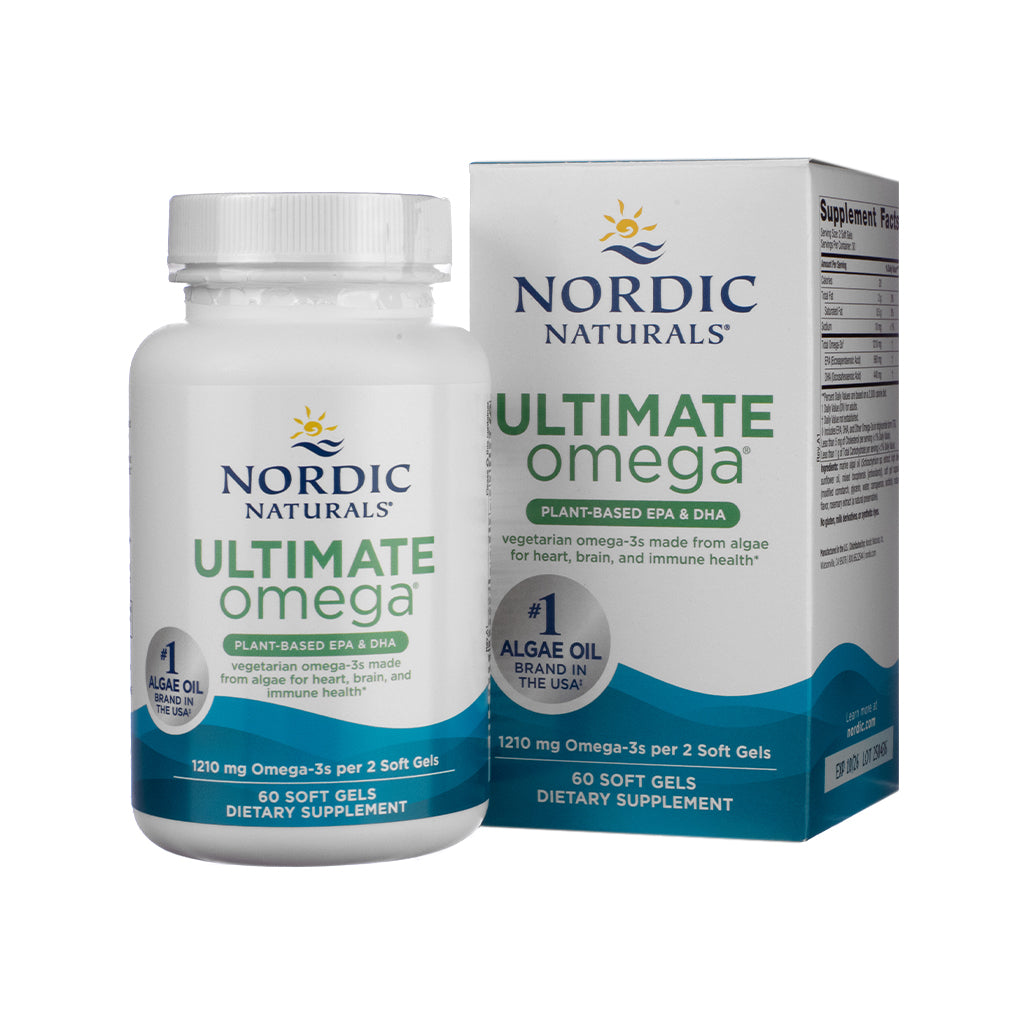
Nordic Naturals Ultimate Omega
Best Overall: Nordic Naturals Ultimate Omega is the benchmark against which other fish oil supplements are measured. IFOS 5-star certification means every production lot has been independently tested for purity, freshness (TOTOX score), label accuracy, and absence of environmental contaminants (PCBs, dioxins, heavy metals).
Top picks ↓| Product | Price | Link |
|---|---|---|
| 38〜65 | View deal → | |
| 48〜75 | View deal → | |
| 30〜55 | View deal → | |
| 28〜50 | View deal → |
Top picks
Related articles


Nordic Naturals Ultimate Omega
Nordic Naturals Ultimate Omega is the benchmark against which other fish oil supplements are measured. IFOS 5-star certification means every production lot has been independently tested for purity, freshness (TOTOX score), label accuracy, and absence of environmental contaminants (PCBs, dioxins, heavy metals). The triglyceride form provides superior bioavailability compared to ethyl ester alternatives. At 650mg EPA and 450mg DHA per serving (2 softgels), it hits the lower end of the therapeutic range for cardiovascular support and sits comfortably within the maintenance dose range. The lemon flavor effectively neutralizes any fishy aftertaste.
Pros
- ✓IFOS 5-star certified — industry benchmark for fish oil purity verification
- ✓Triglyceride form for superior bioavailability
- ✓Consistent freshness — pleasant lemon flavor, no oxidation odor
Cons
- ✗EPA+DHA per serving (1100mg) is moderate — need 2–4 servings for therapeutic cardiovascular doses
- ✗Premium price reflects certification and quality
Score breakdown
| EPA per serving | 650mg |
| DHA per serving | 450mg |
| Total EPA+DHA | 1100mg |
| Form | Triglycerides |
| Certifications | IFOS 5-star |

Thorne Super EPA
Thorne Super EPA is the choice when EPA specifically is the target — inflammation reduction, cardiovascular risk in those with elevated triglycerides, or mood support (EPA has the better evidence for depression outcomes compared to DHA). At 900mg EPA and 200mg DHA per serving, the formula is skewed heavily toward EPA in a way that reflects the current direction of cardiovascular omega-3 research. NSF Certified for Sport covers banned substance testing — relevant for competitive athletes. The triglyceride form and Thorne's pharmaceutical-grade manufacturing make this a premium product with documentation to match.
Pros
- ✓Highest EPA dose per serving — 900mg EPA per capsule
- ✓NSF Certified for Sport for athlete compliance
- ✓Thorne pharmaceutical-grade NSF-registered manufacturing
Cons
- ✗Low DHA relative to EPA — not ideal if DHA is a priority (pregnancy, cognitive support)
- ✗Premium pricing for the certification and manufacturing quality
Score breakdown
| EPA per serving | 900mg |
| DHA per serving | 200mg |
| Total EPA+DHA | 1100mg |
| Form | Triglycerides |
| Certifications | NSF Certified for Sport |

Carlson Elite Omega-3 Gems
Carlson has been manufacturing fish oil supplements since 1965 and the quality shows. Elite Omega-3 Gems use Arctic cod from Norwegian fisheries — a sustainably managed source with low environmental contamination. At 800mg EPA and 600mg DHA per serving, the dose is generous, and the triglyceride form ensures good bioavailability. Carlson's freshness protocol (nitrogen atmosphere packaging, small-batch production, refrigerated shipping) produces fish oil with consistently low TOTOX scores. The result is softgels with a genuinely mild, non-fishy smell even weeks after opening.
Pros
- ✓1400mg EPA+DHA per serving — one of the highest doses per capsule in this comparison
- ✓Norwegian Arctic cod — sustainable source with minimal contamination
- ✓Exceptional freshness reputation with nitrogen-flush packaging
Cons
- ✗No IFOS certification (though independently lab-tested)
- ✗Larger softgel size may be difficult for some to swallow
Score breakdown
| EPA per serving | 800mg |
| DHA per serving | 600mg |
| Total EPA+DHA | 1400mg |
| Form | Triglycerides |
| Certifications | Third-party tested |
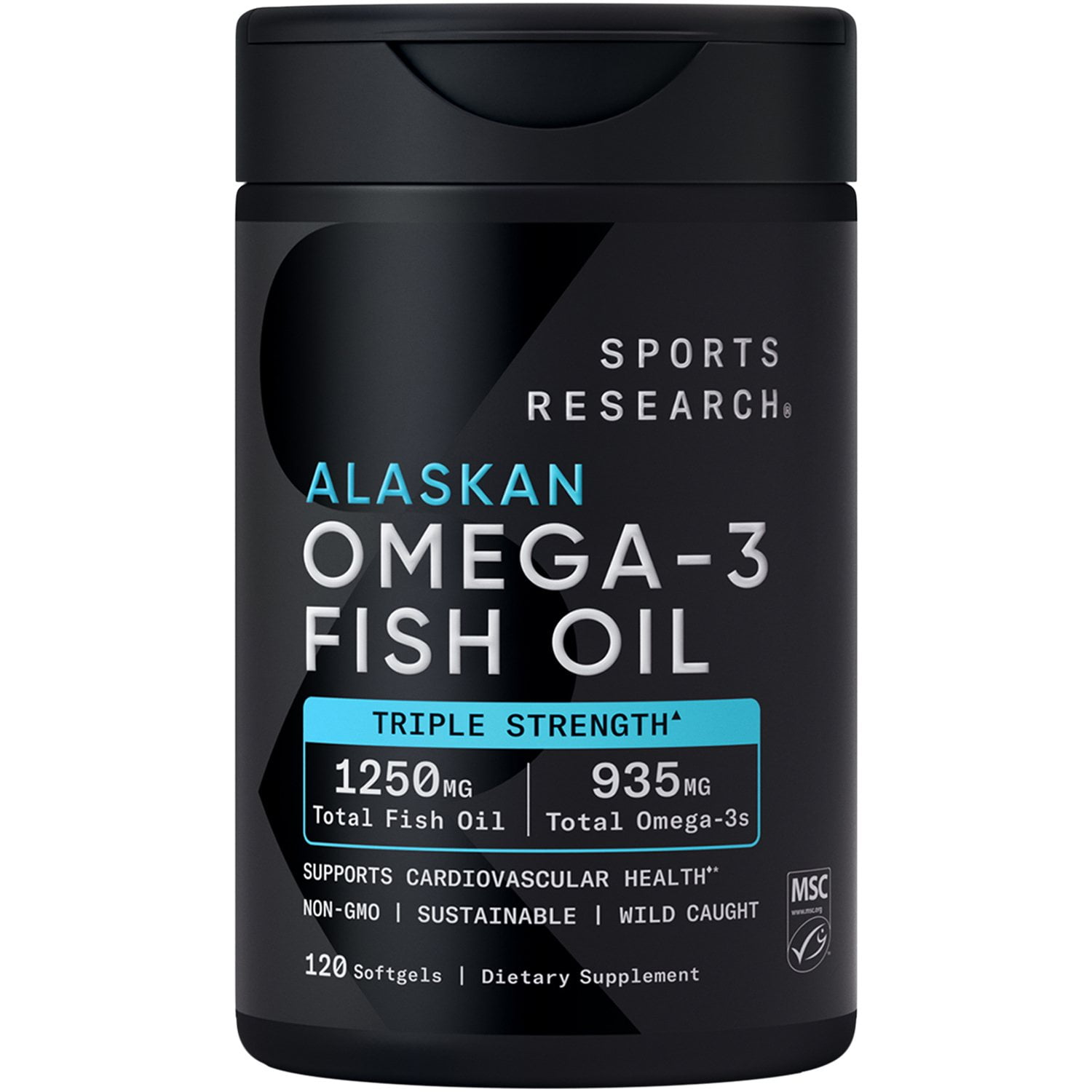
Sports Research Triple Strength Omega-3
Sports Research Triple Strength delivers an exceptional EPA+DHA dose per capsule at a price that makes daily compliance financially sustainable. At 690mg EPA and 500mg DHA per softgel, a single capsule covers the standard maintenance dose. IFOS 5-star certified for purity and freshness. The burpless enteric coating is one of the better implementations in this price range — fishy repeat is rare and mild for the vast majority of users. Triglyceride form for bioavailability. For people who want verified, high-potency omega-3s without paying the premium for Thorne or Nordic Naturals, this is the clearest value recommendation.
Pros
- ✓IFOS 5-star certified — independent purity and freshness verification
- ✓1190mg EPA+DHA per softgel at lowest per-mg cost in this comparison
- ✓Enteric coating reliably prevents fishy aftertaste
Cons
- ✗No NSF Certified for Sport (not relevant for non-tested athletes)
- ✗Brand less established than Nordic Naturals or Carlson
Score breakdown
| EPA per serving | 690mg |
| DHA per serving | 500mg |
| Total EPA+DHA | 1190mg |
| Form | Triglycerides |
| Certifications | IFOS 5-star |
Which one is right for you?
Best overall purity and testing documentation
Nordic Naturals Ultimate Omega
IFOS 5-star certified, triglyceride form, consistent freshness verification
Athletes and those with inflammatory conditions
Thorne Super EPA
Highest EPA dose per serving — EPA is the primary anti-inflammatory omega-3
Best value per mg EPA+DHA
Sports Research Triple Strength Omega-3
IFOS certified, high per-capsule EPA+DHA content at competitive pricing
Japan-market buyers
omega3-fancl-epa-dha-jp
Fancl brand trusted in Japan, domestic sourcing and testing, convenient capsule size
No fishy aftertaste priority
Carlson Elite Omega-3 Gems
Enteric coating and freshness protocol minimize fishy repeat
EPA vs. DHA: Which One Do You Actually Need?
EPA (eicosapentaenoic acid) and DHA (docosahexaenoic acid) are not interchangeable. EPA is primarily anti-inflammatory — it competes with arachidonic acid and reduces production of pro-inflammatory eicosanoids. DHA is primarily structural — it's a major component of brain cell membranes, retinal tissue, and the myelin sheath. Fish oil supplements contain both, but the ratio matters depending on your goal.
For cardiovascular risk reduction and inflammation: EPA-heavy formulas are supported by the REDUCE-IT trial (icosapentaenoic acid at 4g/day showed significant cardiovascular event reduction in people with elevated triglycerides). For cognitive support, pregnancy, and infant development: DHA is the dominant concern. For general health maintenance, a balanced formula (1000mg+ EPA+DHA per serving) is a reasonable default.
How to Dose: What 'Total Omega-3' on Labels Hides
Fish oil labels commonly display 'total omega-3' prominently, but this number includes ALA (alpha-linolenic acid) and other fatty acids in addition to EPA and DHA. The clinically relevant number is combined EPA+DHA. A product showing '2000mg omega-3' per serving might contain only 600mg EPA and 400mg DHA — the other 1000mg is largely ALA and other fatty acids with weaker evidence.
Effective doses for documented benefits: cardiovascular risk reduction, 1000–4000mg EPA+DHA daily (higher end for triglyceride reduction); general anti-inflammatory and maintenance, 500–1000mg EPA+DHA daily; athletic recovery, 2000–4000mg EPA+DHA daily based on emerging research. Always calculate your actual EPA+DHA intake, not total omega-3.
Japanese EPA Supplements: A Different Regulatory Context
Japan has a prescription EPA drug (Epadel, icosapentaenoic acid at 1800mg/day) approved for hyperlipidemia — something the US and EU do not have an equivalent of. Japanese supplement brands like Fancl and DHC produce over-the-counter EPA/DHA products in this regulatory environment, which generally means consumers have higher awareness of EPA specifically and the products are formulated with that awareness.
Fancl's EPA+DHA supplement uses Japanese sardine and mackerel as source fish — the same species that provide naturally high EPA content used in pharmaceutical-grade products. The capsule size is specifically designed for consumers (smaller than typical Western softgels) and the product consistently sells at or near the top of EPA supplement rankings on major online retailers.
Burp-Free and Coating: Does It Work?
Fishy burps after taking fish oil are caused by the capsule dissolving in the stomach and releasing the oil before it can be absorbed. Enteric coating delays dissolution until the oil reaches the small intestine, where absorption occurs — eliminating the contact with stomach acid that causes the fishy repeat. Sports Research's enteric-coated capsules consistently receive user feedback confirming near-zero fishy aftertaste, which is real and meaningful for daily compliance.
Keeping fish oil refrigerated after opening also significantly reduces oxidation and aftertaste. Fresh fish oil has a mild, neutral smell. Rancid fish oil smells intensely fishy and bitter. If your current fish oil capsules smell strongly fishy when you open the bottle, the oil has oxidized and should be discarded.
