Best Siphon Coffee Makers 2026: Hario vs Yama vs Cona
A siphon coffee maker (also called vacuum pot or vac pot) brews coffee using vapor pressure and vacuum. The grind, water temp, and ratio matter far more than which brewer you choose.
Each siphon was evaluated on cup clarity and body at a standard 1:15 ratio, stand stability under butane burner heat, glass wall thickness and thermal shock resistance, filter holder precision and ease of post-brew removal, and total price including required accessories — cup quality and build safety weighted highest.
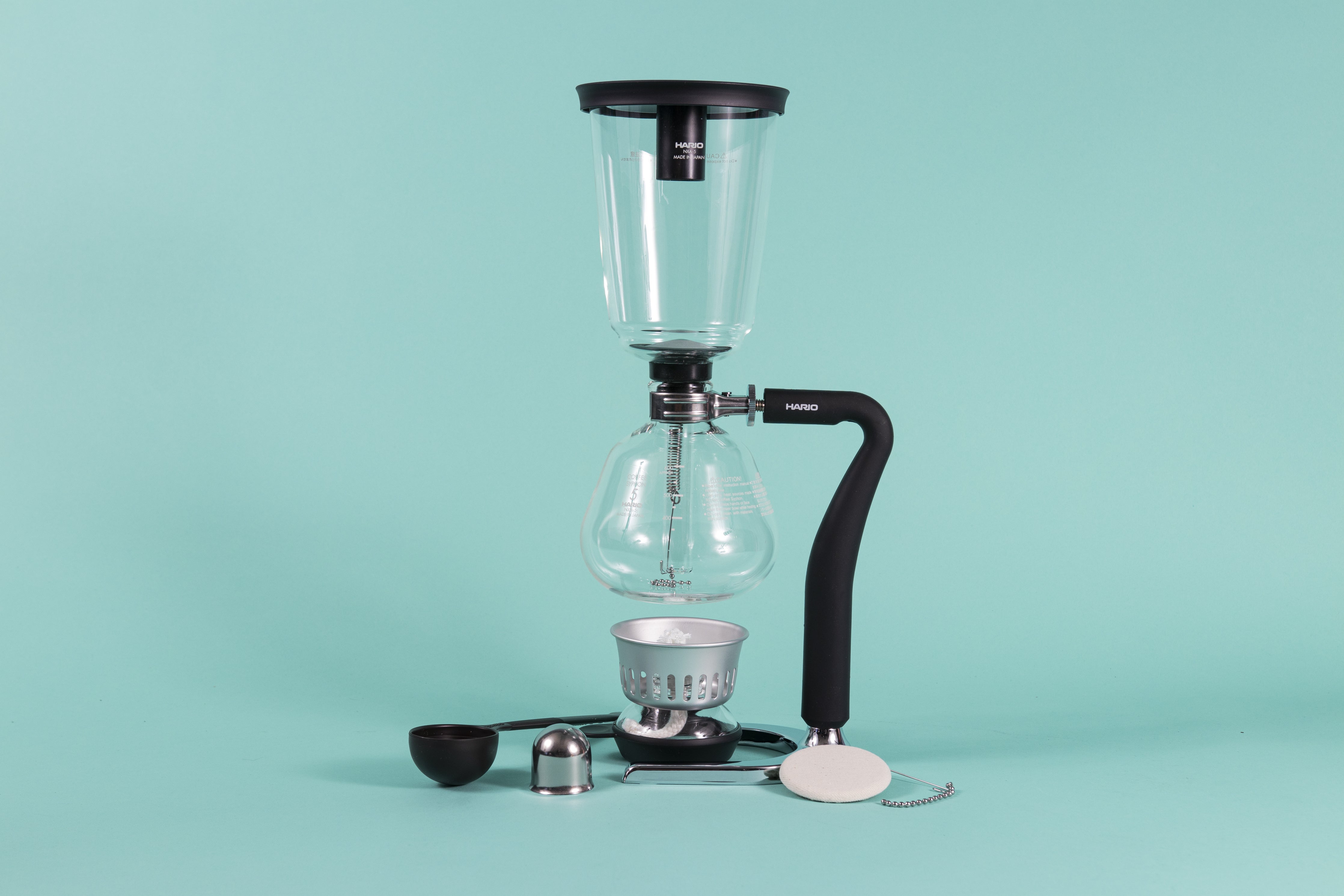
Hario Next Siphon
Best Overall: The Hario Next is the current benchmark for siphon brewing — its improved cloth filter holder produces clean, full-bodied cups consistently, and the updated stand is more stable under butane burner heat than the Technica. Available in 3-cup and 5-cup configurations.
Top picks ↓| Product | Price | Link |
|---|---|---|
| $60 | View deal → | |
| $70 | View deal → | |
| $45 | View deal → | |
| $90 | View deal → | |
| $20 | View deal → |
Top picks
Related articles

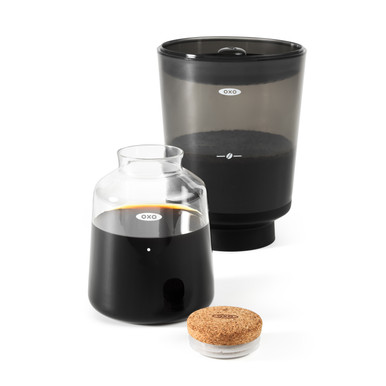

Hario Next Siphon
3-cup or 5-cup, improved stand, cloth filter, butane burner compatible. $60-90. Best current siphon — most stable Hario design, improved cloth filter holder. Correct for serious siphon brewing. Butane burner sold separately.
The Hario Next is the current benchmark for siphon brewing — its improved cloth filter holder produces clean, full-bodied cups consistently, and the updated stand is more stable under butane burner heat than the Technica. Available in 3-cup and 5-cup configurations. The main caveat: the butane burner is sold separately, so budget for that accessory upfront.
Pros
- ✓Improved cloth filter holder — consistent cup quality
- ✓Stable stand under butane burner heat
- ✓Available in 3-cup and 5-cup sizes
Cons
- ✗Butane burner sold separately — add to total cost
Score breakdown
| Capacity | 3-cup (360 ml) or 5-cup (600 ml) |
| Filter | Cloth (included) |
| Stand | Improved — more stable than Technica |
| Heat source | Butane burner (sold separately) |
| Glass | Borosilicate |
| Price | ~$60–90 |
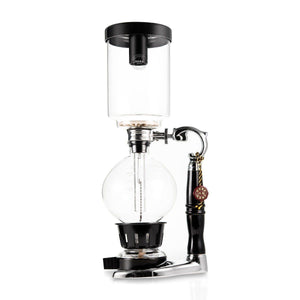
Yama Glass Siphon 5-Cup
5-cup (600ml), thick borosilicate glass, cloth or metal filter. $70-100. Best non-Hario siphon — thicker glass than most, practical 5-cup size for 2-3 people. Good alternative to Hario with comparable cup quality.
Yama's thick borosilicate walls make it the most break-resistant siphon in this comparison — a meaningful advantage for a brewer you handle while hot. The 5-cup (600 ml) size is practical for brewing for 2–3 people, and cup quality is comparable to Hario. The trade-off is that Yama replacement parts are harder to source than Hario components.
Pros
- ✓Thicker borosilicate glass — more break-resistant than most
- ✓5-cup size practical for 2–3 people
- ✓Cloth or metal filter options available
Cons
- ✗Replacement parts less available than Hario ecosystem
Score breakdown
| Capacity | 5-cup (600 ml) |
| Filter | Cloth or metal mesh |
| Glass | Thick borosilicate |
| Heat source | Butane burner compatible |
| Footprint | Standard siphon |
| Price | ~$70–100 |
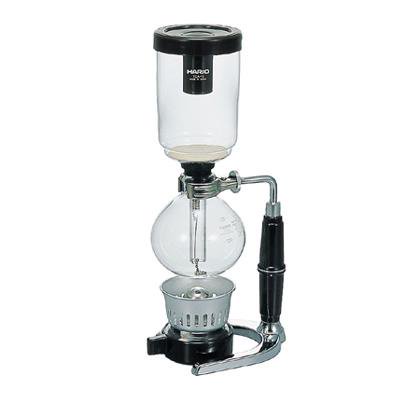
Hario Technica Siphon
3-cup or 5-cup, simpler stand, compatible with standard Hario filters. $45-70. Entry-level Hario siphon — correct starting point to explore siphon brewing without Hario Next price. Same brewing principle as Next.
The Hario Technica uses the same borosilicate glass globes and brewing principle as the Next at a lower price — it's the correct starting point for exploring siphon brewing before committing to the Next's cost. The stand is simpler and slightly less stable, which matters primarily when adjusting the butane burner mid-brew. Compatible with standard Hario filters, so you're not locked into proprietary accessories.
Pros
- ✓Same brewing principle as the Next at lower cost
- ✓Uses standard Hario filters — no proprietary accessories
- ✓Good entry point before investing in Next
Cons
- ✗Simpler stand — slightly less stable than the Next
Score breakdown
| Capacity | 3-cup or 5-cup |
| Filter | Hario cloth (standard) |
| Stand | Simple frame |
| Glass | Borosilicate |
| Burner | Sold separately |
| Price | ~$45–70 |
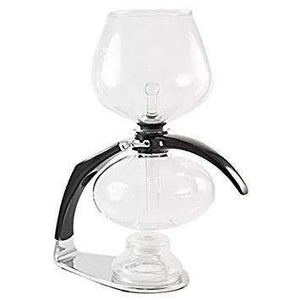
Cona Siphon Coffee Maker
British design, solid borosilicate glass, spring-clip filter. $90-140. Classic siphon with easy-clean spring-clip filter. Good for brewers wanting a durable, low-maintenance filter option. Traditional aesthetic.
Cona's spring-clip filter is the most durable and easiest-to-clean filter in this comparison — unlike cloth filters, it doesn't require storage submerged in water between uses. The British design has been in production since the 1930s, and the solid borosilicate construction reflects that longevity. Replacement parts are available but sourcing them outside the UK takes effort.
Pros
- ✓Spring-clip filter — easiest to clean, no storage in water
- ✓Solid borosilicate construction with proven longevity
- ✓Classic British design unchanged since the 1930s
Cons
- ✗Parts harder to source outside the UK
Score breakdown
| Capacity | varies by model |
| Filter | Spring-clip (no cloth maintenance) |
| Glass | Solid borosilicate |
| Origin | UK, in production since 1930s |
| Heat source | Butane or spirit lamp |
| Price | ~$90–140 |
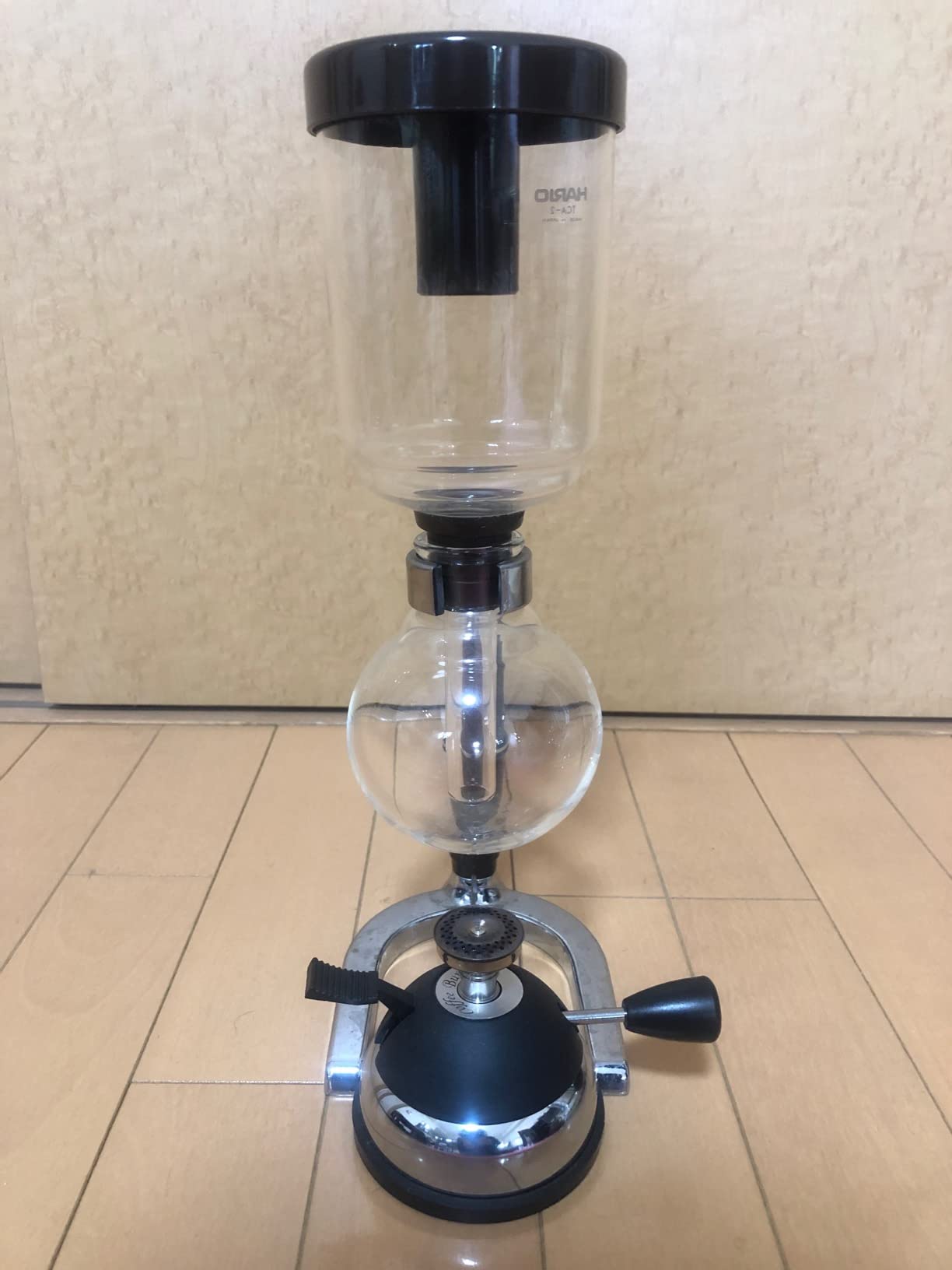
Butane Burner for Siphon Coffee
Adjustable flame butane burner for siphon brewing. $20-40. Required for consistent siphon heat — more controllable than included alcohol lamps. Necessary for precise temperature control and repeatable results.
The alcohol lamps included with entry-level siphons produce inconsistent heat and require frequent refilling — a butane burner gives you adjustable flame control, consistent temperature, and repeatable results. Required for serious siphon brewing. Most Hario and Yama siphons are sold without a burner; add one to the total cost calculation from the start.
Pros
- ✓Adjustable flame for precise temperature control
- ✓Consistent heat vs inconsistent alcohol lamp included alternatives
- ✓Repeatable results across brew sessions
Cons
- ✗Butane canisters are a recurring consumable cost
Score breakdown
| Fuel | Butane canister (standard size) |
| Flame control | Adjustable |
| Compatible with | Hario, Yama, Cona siphons |
| Canister life | Multiple sessions per canister |
| Price | ~$20–40 |
Which one is right for you?
For serious siphon brewers
Hario Next Siphon
The most stable stand and best cloth filter holder in the Hario lineup — the correct investment once you know siphon brewing is part of your routine.
For brewers who value durability
Yama Glass Siphon 5-Cup
Thick borosilicate walls reduce breakage risk when handling hot glass — the most forgiving build for daily use.
For first-time siphon buyers
Hario Technica Siphon
The same brewing principle as the Next at a lower entry price — the right way to start before committing to the full Next setup.
For low-maintenance filter preference
Cona Siphon Coffee Maker
Spring-clip filter never needs water storage — if the cloth filter maintenance routine sounds like a barrier, Cona removes it.
For any siphon brewer using an alcohol lamp
Butane Burner for Siphon Coffee
Adjustable butane flame gives you the temperature control that alcohol lamps can't provide — the single upgrade that most improves brew consistency.
Siphon brewing mechanics: vapor pressure and vacuum
Stage 1 — heating: water in the lower glass globe is heated by a butane burner or alcohol lamp. As the water approaches boiling, water vapor builds pressure inside the sealed lower chamber. This pressure forces the hot water upward through the tube into the upper chamber, where it mixes with ground coffee. The temperature of the water when it rises is typically around 90-96°C — slightly below boiling, which is ideal for coffee extraction.
Stage 2 — brewing: once most of the water has risen into the upper chamber, the coffee and hot water are mixed for 45-90 seconds depending on grind size and desired extraction. Gentle stirring ensures all grounds contact the water. The brewing temperature is stable throughout this phase since the heat source continues.
Stage 3 — vacuum drawdown: when the heat is removed, the vapor in the lower chamber condenses. The resulting vacuum pulls the brewed coffee back down through the filter (typically a cloth or metal mesh filter) into the lower chamber. The spent grounds remain in the upper chamber, completely separated from the brewed coffee. The drawdown takes about 30-60 seconds. The final cup in the lower chamber is ready to serve directly.
Hario Next vs Hario Technica: current Hario lineup
Hario Next Siphon ($60-90) is Hario's current flagship siphon — updated design with a more stable stand, improved cloth filter holder, and better heat distribution from the butane burner. Available in 3-cup (360ml) and 5-cup (600ml) configurations. The Hario Next uses a cloth filter that produces a clean but slightly fuller-bodied cup than paper — cloth allows more coffee oils through than paper but catches all sediment. The cloth filter requires rinsing and storage in water between uses.
Hario Technica Siphon ($45-70) is Hario's entry-level siphon — simpler stand, same brewing principle, compatible with Hario's standard cloth filters. The Technica is the starting point for exploring siphon brewing without committing to the Next's price. Both Hario models use the same borosilicate glass globes and the same brewing principle; the differences are in stand stability and aesthetic design.
Hario siphons use a butane burner (sold separately or bundled). Butane burners provide even, controllable heat and are the preferred heat source for consistent siphon brewing. Alcohol lamp heaters are sometimes included but produce less consistent heat and need to be refilled with denatured alcohol.
Yama Glass and Cona: alternative siphon options
Yama Glass Siphon 5-Cup ($70-100) is the most common non-Hario siphon in the Western market — 5-cup (600ml) capacity, borosilicate glass, and a cloth or metal mesh filter option. Yama siphons are built with thick glass globes that are more break-resistant than thinner alternatives. The 5-cup size makes Yama practical for brewing for 2-3 people. Yama produces a clean, full-bodied cup comparable to Hario.
Cona Siphon Coffee Maker ($90-140) is the classic British siphon design — vacuum pot brewing in the UK since the 1930s. Cona's construction is solid borosilicate glass with a distinctive spring-clip filter rather than cloth. The spring-clip filter is easier to clean than cloth but may produce a slightly different cup character. Cona is a good choice for brewers who want a durable, cleanable siphon with a classic aesthetic.
Filter options for siphon brewing: cloth filters (standard with most Hario and Yama siphons) produce a clean but slightly textured cup — they allow more body than paper while catching all sediment. Metal mesh filters let more coffee oils through, producing a fuller-bodied cup similar to French press with the siphon's clarity. Paper filters (available for some siphon models) produce the cleanest, lightest cup but add paper taste if not rinsed.
Siphon vs other brewing methods: when it's the right choice
Siphon coffee character: clean, bright, fuller-bodied than V60 pour-over, less sediment than French press. The vacuum drawdown through a cloth filter removes all fine particles and most coffee oils while preserving more body than paper-filter methods. The result sits between pour-over clarity and French press richness — a cup that showcases origin character clearly without the heaviness of immersion brewing.
Siphon is not a speed method: total brew time is 8-12 minutes including heat-up time. The process requires attention — you can't walk away during the brew. This is the intended character of siphon brewing: it's a deliberate, ritual-oriented method designed for the experience of brewing as much as the cup quality. It's the correct choice for brewers who enjoy the process and want a visually dramatic brewing ritual.
Siphon maintenance: cloth filters require thorough rinsing after each use and storage submerged in water in a refrigerator (prevents mold). Siphon glassware is fragile — borosilicate is heat-resistant but breaks on impact. Never place cold water in a hot siphon globe — thermal shock will crack the glass. The siphon is the highest-maintenance brewing method on this list, requiring more care than any immersion or pour-over method.
