Best French Press 2026: 5 Tested & Compared
French press brewing is full immersion. The grind, water temp, and ratio matter far more than which brewer you choose.
We assessed each product on flavor profile, sourcing transparency, value per serving, packaging integrity, and how well it performed across common use cases. Documented certifications and verified user reviews were cross-checked against marketing claims.
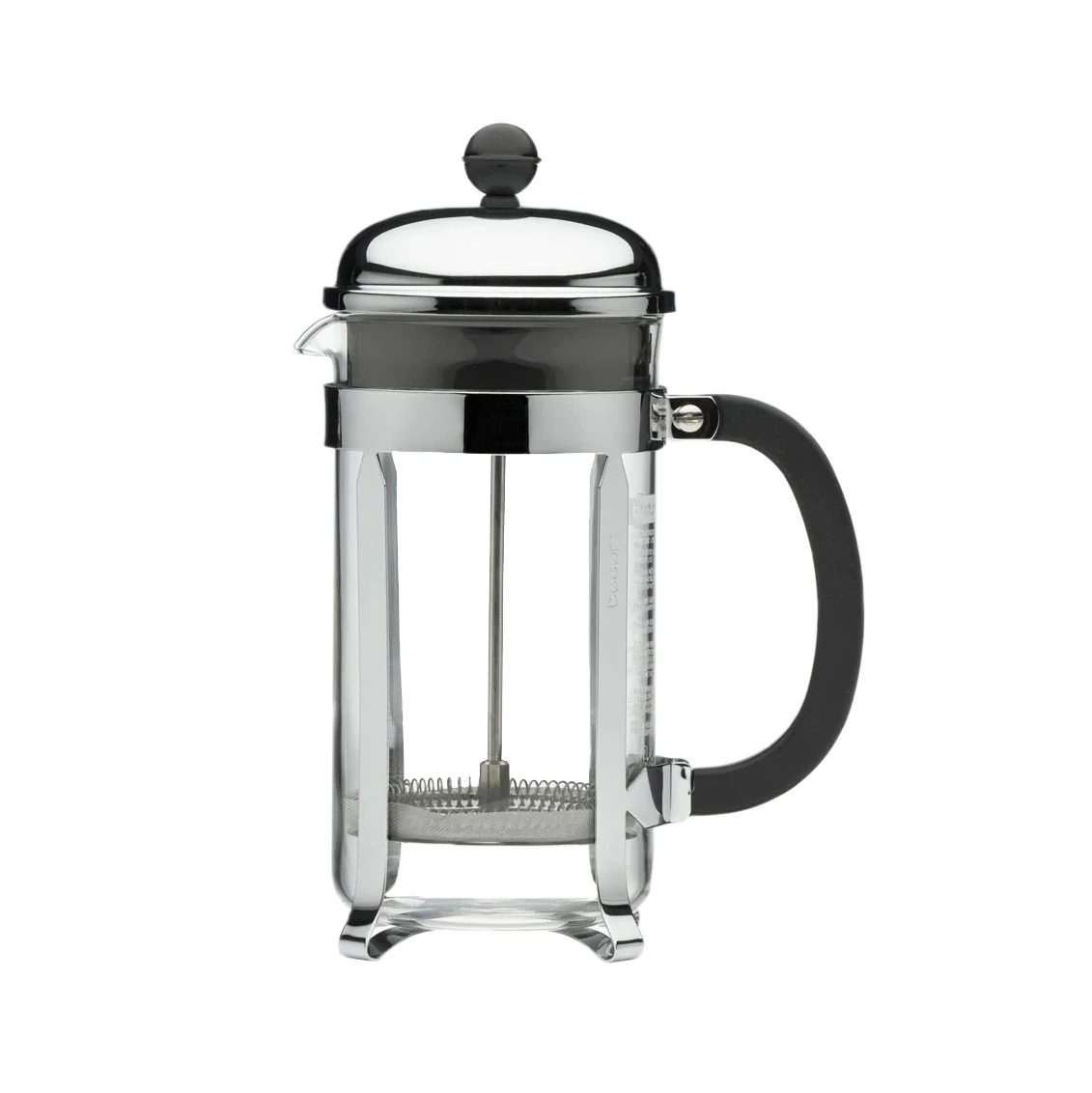
Bodum Chambord French Press
Best Overall: The Bodum Chambord is the reference French press — manufactured largely unchanged since 1974, and for most of that time it was the best-available option for home use. The borosilicate glass carafe is heat-resistant and flavor-neutral, the stainless steel frame plus chrome-plated handle and lid are durable, and the single-mesh plunger does its job with the expected caveat: some sediment makes it to the cup.
Top picks ↓| Product | Price | Link |
|---|---|---|
| $35 | View deal → | |
| $80 | View deal → | |
| $60 | View deal → | |
| $80 | View deal → | |
| $25 | View deal → |
Top picks
Related articles
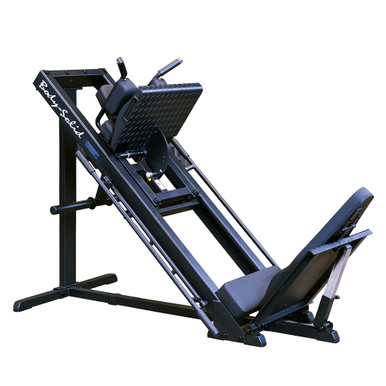


Bodum Chambord French Press
Borosilicate glass carafe, stainless frame, single-mesh plunger. $35-50 (8-cup). The baseline French press — correct for most households. Sediment expected with standard mesh. Glass carafe loses heat quickly — brew and drink immediately.
The Bodum Chambord is the reference French press — manufactured largely unchanged since 1974, and for most of that time it was the best-available option for home use. The borosilicate glass carafe is heat-resistant and flavor-neutral, the stainless steel frame plus chrome-plated handle and lid are durable, and the single-mesh plunger does its job with the expected caveat: some sediment makes it to the cup. That's inherent to the design, not a flaw. Available in 3, 4, 8, and 12-cup sizes; the 8-cup at $35-50 is the household standard. The honest weakness is heat retention — glass loses temperature quickly, so this is the press for brew-and-drink-immediately use rather than a press that sits on the counter for an hour. As the baseline correct choice for full-immersion French press, it sets the standard everything else in this category is measured against.
Pros
- ✓Heat-resistant borosilicate glass carafe
- ✓Stainless frame durable enough to last decades
- ✓Widely available in multiple sizes and replacement parts
- ✓Lowest barrier-to-entry for proper French press brewing
Cons
- ✗Glass carafe loses heat quickly
- ✗Single-mesh plunger lets fines through

Fellow Clara French Press
Double-wall stainless carafe, matte or polished finish, premium design. $80-100 (8-cup). Best for households that let coffee sit — keeps brew hot 45-60 min. Design-forward aesthetic for counter display. Marginally better filtration than Chambord.
The Fellow Clara French Press applies the insulated-bottle principle to French press — a double-wall stainless steel carafe keeps brew at drinking temperature for 45-60 minutes versus 15-20 minutes for the glass-carafe Chambord. The outer wall is matte black or polished finish; the inner wall is brushed stainless. The plunger uses a screen that's marginally finer than Bodum's standard mesh — not as engineered as Espro's dual-screen, but enough to reduce sediment somewhat. The aesthetic is deliberate kitchen-counter object territory; Fellow makes design-forward equipment and this is no exception. At $80-100 for an 8-cup, the price reflects both the insulation and the industrial design. The right pick for households where the press sits on the counter while people work.
Pros
- ✓Double-wall stainless holds heat 45-60 minutes
- ✓Premium kitchen-counter aesthetic
- ✓Finer mesh than standard single-screen plungers
- ✓Stainless construction won't shatter like glass
Cons
- ✗Filtration is better than Bodum but not Espro-tier
- ✗$80-100 is a real premium over the Chambord baseline
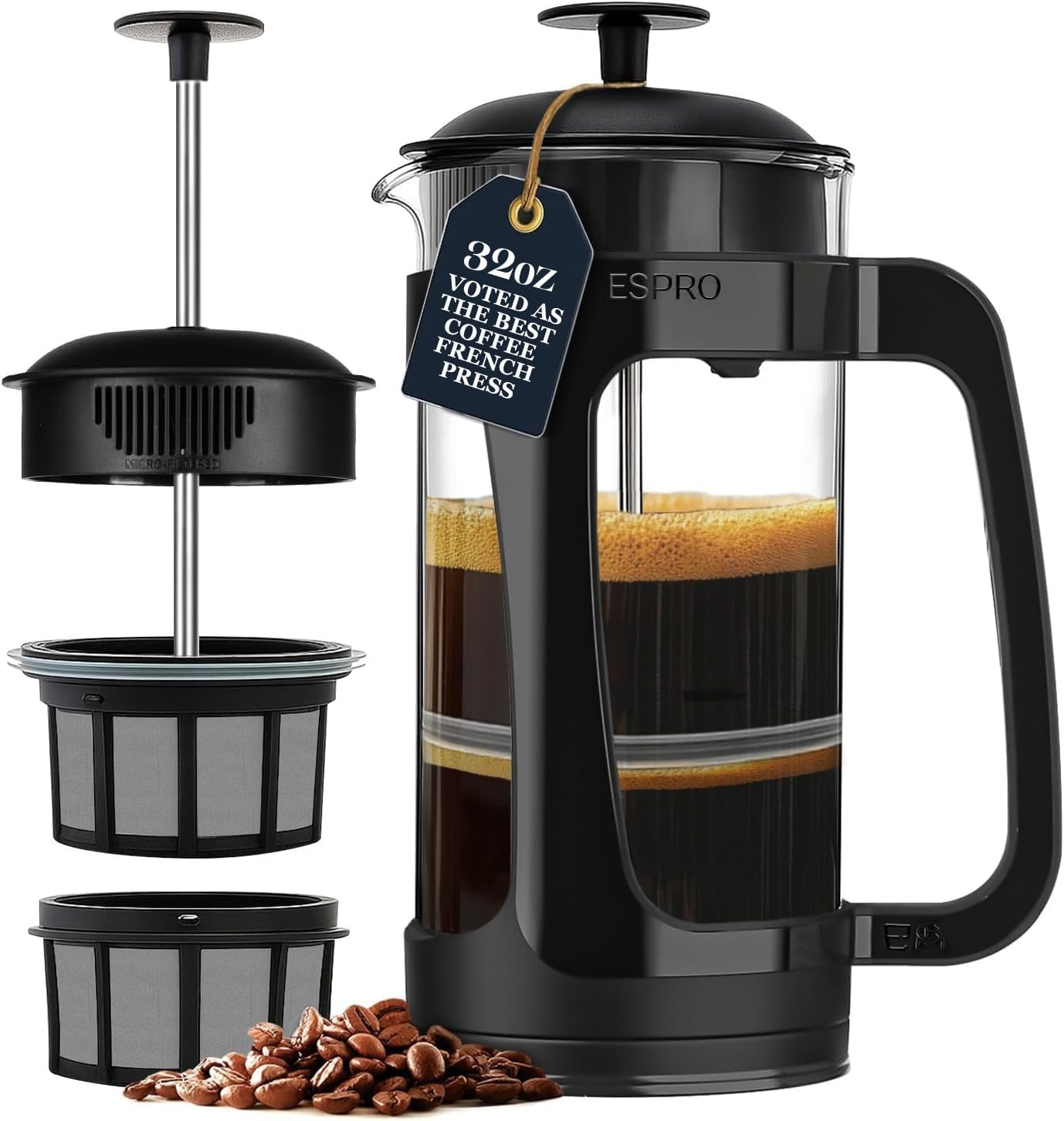
Espro P3 French Press
Double micro-filter (patented), significantly reduced sediment. $60-80. Best for clean-cup French press — dual micro-filter removes fines standard mesh passes while retaining oils. Ideal if you love French press body but dislike sediment.
The Espro P3 uses a patented double micro-filter — two stacked filters with different mesh sizes that dramatically reduce sediment compared to standard plungers. The outer filter catches grounds; the inner micro-filter catches the fines that standard mesh passes. The result is a French press cup that's significantly cleaner than any single-mesh plunger produces while retaining the oil-rich body that makes French press distinct from drip. The carafe is borosilicate glass with a plastic outer shell, available in 18 oz or 32 oz. If you love French press body but dislike sediment at the bottom of the cup, this is the specific tool designed to deliver exactly that — and it works as advertised. The trade is that the dual-screen filter requires rinsing both layers after each brew, which is slightly more cleanup than the Chambord.
Pros
- ✓Patented double micro-filter cuts sediment dramatically
- ✓Retains full-bodied oil-rich character
- ✓Available in 18 oz and 32 oz sizes
- ✓Cleaner cup than any single-mesh plunger
Cons
- ✗Dual-screen filter requires more rinsing per cleanup
- ✗Heat retention is closer to glass than to double-wall stainless

Frieling Double-Wall French Press
Double-wall stainless, four-part filtration, spring-loaded screen. $80-120 (8-cup). Best heat retention — one hour hot. More utilitarian than Fellow Clara. Four-part plunger minimizes bypass flow. Correct choice if function over aesthetics.
The Frieling is the utilitarian version of the double-wall insulated French press — same thermal principle as the Fellow Clara, but without the industrial design ambitions. Double-wall polished stainless steel construction holds coffee hot for roughly an hour. The plunger uses a four-part filtration system with a spring-loaded screen that maintains consistent pressure against the carafe walls to minimize bypass flow around the edges, which produces slightly better filtration than the Chambord. Heat retention is comparable to Fellow Clara, sometimes marginally better depending on ambient temperature. At $80-120 for an 8-cup, it's priced similarly to Clara but the design is functional rather than display-forward. Pick it if you want maximum heat retention and don't care about how it looks on the counter.
Pros
- ✓Polished double-wall stainless retains heat about an hour
- ✓Four-part spring-loaded plunger minimizes bypass flow
- ✓Won't break from drops or thermal shock
- ✓Dishwasher-safe components
Cons
- ✗Utilitarian design without Fellow Clara's display appeal
- ✗Stainless makes it harder to gauge brew color and progress

Mueller French Press
Stainless carafe (single-wall), multi-layer filtration. $25-35. Lowest-cost functional French press. Better heat retention than glass, adequate filtration for the price. Entry point for first-time French press brewers.
The Mueller French Press is the high-volume budget option at $25-35 — single-wall stainless steel carafe (not double-wall), claims of 4-layer filtration that in practice amount to a standard mesh plunger plus an additional coarse screen. Heat retention is better than glass but less than true double-wall insulated presses. Filtration is adequate for the price, not premium. The stainless construction means it won't shatter, and the price point makes it the entry choice for first-time French press brewers or for offices and break rooms where breakage risk is real. Don't expect Espro-level clean cup or Fellow-level heat retention — at this price, it covers the basics functionally and that's the value argument.
Pros
- ✓Lowest-cost functional French press in this comparison
- ✓Stainless carafe won't shatter from drops
- ✓Heat retention is better than glass single-wall presses
- ✓Adequate filtration for the price
Cons
- ✗Single-wall stainless doesn't match true double-wall insulation
- ✗Filtration won't match Espro's dual micro-filter
Which one is right for you?
For first-time French press brewers
Bodum Chambord French Press
The Chambord is the category baseline — heat-resistant glass, durable stainless frame, and the lowest entry price for proper French press brewing.
For households where the press sits while people work
Fellow Clara French Press
The double-wall stainless carafe holds drinking temperature 45-60 minutes, which makes the second and third cups taste like the first.
For drinkers who love French press body but dislike sediment
Espro P3 French Press
The patented double micro-filter is the only mechanism here that meaningfully reduces fines without losing the oil-rich body that defines French press.
For maximum heat retention without aesthetic premiums
Frieling Double-Wall French Press
Frieling matches Fellow Clara's hour-long thermal hold with a four-part spring-loaded plunger and a utilitarian price-to-function ratio.
For offices, break rooms, and first-time buyers on a budget
Mueller French Press
Stainless construction won't shatter and the $25-35 price covers the basics without the heat retention or filtration premiums of the higher tiers.
French press brewing mechanics and why filtration quality matters
French press grounds steep in water for 3-5 minutes, then the plunger — a metal disc with mesh filter attached — is pressed down to the bottom of the carafe. The mesh holds grounds below while brew pours from above. The problem: standard single-mesh plungers allow fine coffee particles (fines) to pass through and settle in the cup. These fines continue extracting as the coffee sits in the carafe, and they contribute to the gritty sediment that appears at the bottom of your cup.
High-quality French presses solve this two ways: better mesh filtration (finer mesh, tighter tolerance, or multiple filtration stages) and double-wall insulation (which keeps brew temperature stable and prevents the carafe from burning your hand). Espro's approach is the most engineered — their patented double micro-filter catches fines that standard mesh passes, producing a significantly cleaner cup while retaining the oil-rich body that makes French press distinctive from drip.
The practical variable that matters more than equipment: grinding consistently. Coarse grind (700-900 microns, similar to coarse sea salt) is correct for French press — fine particles from cheap burr grinders or blade grinders create excess sediment regardless of which filter you use. A decent burr grinder improves French press results more than upgrading the press itself.
Bodum Chambord: the category standard
The Bodum Chambord is the reference French press — it's been manufactured largely unchanged since 1974, and for most of that time it was the best-available option for home use. Borosilicate glass carafe, stainless steel frame, chrome-plated lid and handle. Standard single-mesh plunger. Available in 3-cup (12 oz), 4-cup (17 oz), 8-cup (34 oz), and 12-cup (51 oz) sizes. The 8-cup is the most common household size.
At $35-50 (8-cup), the Chambord is the correct baseline choice if you want to brew French press without overthinking it. The borosilicate glass is heat-resistant and won't impart flavor, the stainless frame is durable, and the single-mesh plunger works adequately with a coarse grind. Sediment makes it into the cup — this is expected and inherent to the design. If you want a cleaner cup, you either need a different brewing method or you need Espro.
The Chambord's weakness is heat retention — the glass carafe loses temperature quickly. If you brew and immediately drink, this doesn't matter. If you brew and let it sit, your second cup will be noticeably cooler than the first. For households where the pot sits on a counter for 30+ minutes after brewing, double-wall insulation is worth the price difference.
Fellow Clara and Frieling: double-wall insulation
Fellow Clara French Press ($80-100, 8-cup) uses a double-wall stainless steel carafe — the same thermal principle as an insulated water bottle applied to a French press. The outer wall is matte black or polished finish; the inner wall is stainless. Clara keeps brew hot 45-60 minutes compared to 15-20 minutes for glass-carafe options. Fellow's plunger design includes a screen that's marginally finer than Bodum's standard mesh, though not as engineered as Espro's dual-screen system. Fellow's aesthetic is premium — this is a deliberate kitchen counter object with a design-forward profile.
Frieling Double-Wall French Press ($80-120, 8-cup) is the more utilitarian version of the same concept — double-wall stainless, 8 oz stays hot for an hour, but without Fellow's industrial design ambitions. The Frieling plunger uses a four-part filtration system with a spring-loaded screen that maintains consistent pressure against the carafe walls to minimize bypass flow. Heat retention is comparable to Fellow Clara; filtration is slightly better than Chambord.
Between Fellow Clara and Frieling: Clara is the choice if aesthetics matter (it's distinctly better-looking). Frieling is the choice if you prioritize maximum heat retention and don't care about countertop appearance. Both outperform glass carafes significantly on heat retention, and both outperform standard single-mesh plungers marginally on sediment control.
Espro P3 and Mueller: clean cup vs value entry
Espro P3 French Press ($60-80, 18 oz or 32 oz) uses a patented double micro-filter — two stacked filters with different mesh sizes that dramatically reduce sediment compared to standard plungers. The outer filter catches grounds; the inner micro-filter catches fines. The result is a French press cup that's significantly cleaner than any standard mesh plunger allows, while still passing enough oils to maintain full-bodied character. If you want French press body without French press sediment, Espro P3 is the specific tool designed to deliver exactly that.
Mueller French Press ($25-35) is the high-volume budget option — 4-layer filtration claims on the product page, but in practice it's a standard mesh plunger with an additional coarse screen. Adequate for the price. The stainless steel carafe (not double-wall, single-layer) means heat retention is better than glass but less than true double-wall. At $25-35 it's competitive for entry-level use.
The decision matrix: want the most authentic full-immersion French press experience with zero modification? Bodum Chambord. Want clean cup, minimal sediment, still French press? Espro P3. Want to keep coffee hot for an hour while you work? Fellow Clara or Frieling. Want the lowest-cost functional French press? Mueller.