Best Bone Broth 2026: 5 Picks for Gut Health, Collagen, and Cooking
Bone broth sits at a strange intersection. Bioavailability and consistency of intake outperform ingredient quantity on the label.
We assessed each product on flavor profile, sourcing transparency, value per serving, packaging integrity, and how well it performed across common use cases. Documented certifications and verified user reviews were cross-checked against marketing claims.
Kettle & Fire Beef Bone Broth
Best Overall: Kettle & Fire is the best shelf-stable bone broth for everyday use: grass-fed beef bones, 10g protein per serving, a short ingredient list, and a Tetra Pak carton that lives in your pantry without refrigerator space. The flavor is savory and clean — mild enough to sip, substantial enough as a braising base.
Top picks ↓| Product | Price | Link |
|---|---|---|
| $6.58 | View deal → | |
| $9.99 | View deal → | |
| $7.49 | View deal → | |
| $37.49 | View deal → | |
| $10.99 | View deal → |
Top picks
Related articles


Kettle & Fire Beef Bone Broth
Shelf-stable, 10g protein per serving — best for pantry convenience
Kettle & Fire is the best shelf-stable bone broth for everyday use: grass-fed beef bones, 10g protein per serving, a short ingredient list, and a Tetra Pak carton that lives in your pantry without refrigerator space. The flavor is savory and clean — mild enough to sip, substantial enough as a braising base. The UHT processing slightly reduces some amino acids versus fresh options, but the convenience trade-off is real and meaningful.
Pros
- ✓Shelf-stable — no refrigerator space needed
- ✓10g protein per serving from grass-fed bones
- ✓Short, recognizable ingredient list with organic vegetables
Cons
- ✗UHT processing may reduce some amino acid concentration vs. refrigerated options
Score breakdown
| Protein | 10g per serving |
| Format | Tetra Pak (shelf-stable) |
| Bones | Grass-fed beef |
| Serving size | 1 cup (240 ml) |
| Organic veg | Yes |
FOND Bone Broth
Pasture-raised, ships refrigerated, highest gelatin content — sets firm when cold
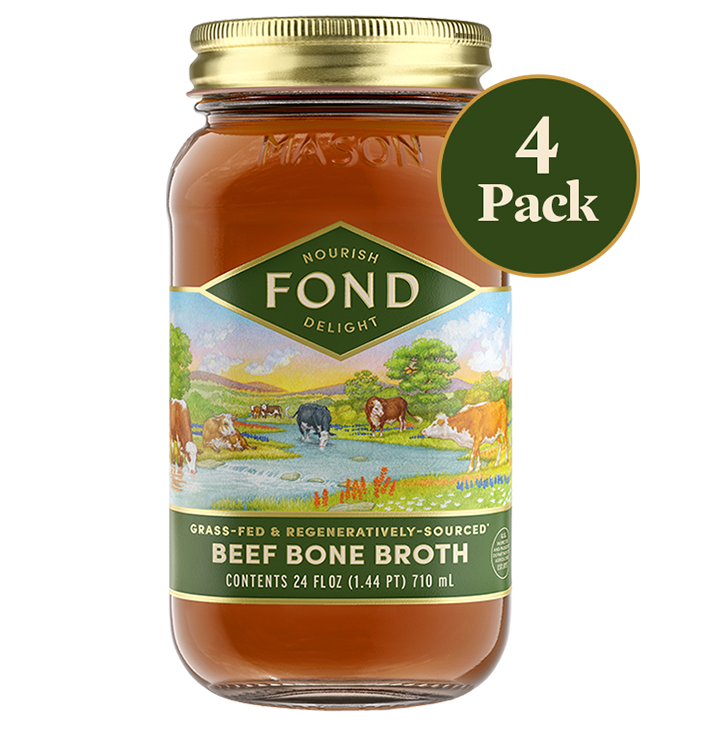
FOND is the bone broth for people who've read every label: pasture-raised, organic-certified, glass bottles, ships refrigerated. It sets to a firm jelly when chilled — the reliable indicator of genuinely high gelatin content. The herb-forward flavor from slow-simmered thyme, rosemary, and bay is rich enough to use as a finished consommé, which can overpower neutral cooking applications. Worth the premium if collagen content is the point.
Pros
- ✓Sets firm when cold — confirmed high gelatin and collagen content
- ✓Glass bottles — no plastic leaching when heated
- ✓Pasture-raised, organic-certified sourcing
Cons
- ✗Roughly twice the price of Kettle & Fire — ships refrigerated only
Score breakdown
| Protein | ~9–10g per serving |
| Format | Glass bottle (refrigerated) |
| Bones | Pasture-raised, organic-certified |
| Gelatin | Sets firm when chilled |
| Simmer | Slow-simmered with herbs |
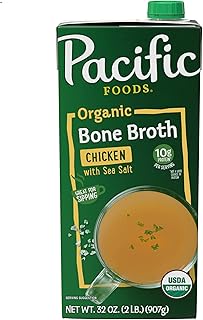
Pacific Foods Organic Bone Broth
USDA organic, widely available at major retailers, best value
Pacific Foods is the bone broth you can grab at Costco or Target without planning — USDA organic certified, around $5–7 per 32 oz carton. Protein runs 9–10g per serving and flavor is clean and neutral, which makes it better than FOND for cooking applications where herb complexity would compete. The gelatin content is lower (doesn't set firm when cold), so it's less suited to dedicated gut-healing protocols.
Pros
- ✓USDA Organic at mainstream retail prices
- ✓Widely available at Costco, Target, and most grocery chains
- ✓Neutral flavor ideal for cooking applications
Cons
- ✗Doesn't gel when cold — lower gelatin concentration than premium alternatives
Score breakdown
| Protein | 9–10g per serving |
| Format | Tetra Pak (shelf-stable) |
| Certification | USDA Organic |
| Retail | Widely available |
| Low sodium | Option available |
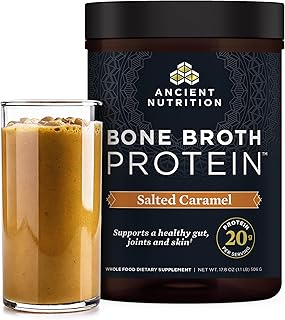
Ancient Nutrition Multi-Collagen Bone Broth Protein
Powder form — 20g collagen protein, mixes into hot or cold drinks
Ancient Nutrition takes a different approach — powder format delivering 20g collagen protein per serving from bovine, chicken, fish, and egg white sources, versus the 7–12g you'd get from most liquid broths. Mixes cleanly in hot or cold liquids. The honest limitation: this is a collagen supplement packaged under the bone broth brand umbrella, not a broth with depth of flavor or aromatics.
Pros
- ✓20g collagen protein per serving — highest of any option here
- ✓Multi-source collagen (bovine, chicken, fish, egg white)
- ✓Mixes without clumping in hot or cold liquids
Cons
- ✗No broth flavor, aromatics, or cooking utility — it's a supplement, not a broth
Score breakdown
| Protein | 20g collagen per serving |
| Format | Powder |
| Collagen sources | Bovine, chicken, fish, egg white |
| Flavor options | Unflavored, chocolate, vanilla |
| Availability | Costco, Walmart, supplement retailers |

Bare Bones Broth
Clean 4-ingredient formula, grass-fed beef, woman-owned brand
Bare Bones uses a four-ingredient formula — bones, water, apple cider vinegar, sea salt — with no natural flavors, yeast extract, or stabilizers. 100% grass-fed beef, soft jelly when chilled (confirming real gelatin content), 10g protein per serving. The broth is direct and beefy without being heavy, suited equally to sipping and cooking. Price sits between mass-market and FOND, hitting a reasonable middle ground.
Pros
- ✓4-ingredient formula — no natural flavors or stabilizers
- ✓Soft jelly when chilled — meaningful gelatin content
- ✓Woman-owned, mission-driven brand with traceable sourcing
Cons
- ✗Less widely distributed than Pacific Foods or Kettle & Fire
Score breakdown
| Protein | 10g per serving |
| Format | Tetra Pak (shelf-stable) + frozen pouches |
| Bones | 100% grass-fed beef |
| Ingredients | 4 (bones, water, ACV, sea salt) |
| Gelatin | Sets to soft jelly when chilled |
Which one is right for you?
For pantry-first convenience
Kettle & Fire Beef Bone Broth
Shelf-stable, consistent, and available online by the case — the practical default for daily sipping or weeknight cooking.
For gut-healing protocols
FOND Bone Broth
Sets firm when cold, ships refrigerated, highest gelatin content — if collagen and glycine content is the actual point, this is worth the premium.
For cooking in bulk
Pacific Foods Organic Bone Broth
USDA Organic at Costco prices — the right choice when bone broth is a cooking ingredient, not the main event.
For maximum collagen intake
Ancient Nutrition Multi-Collagen Bone Broth Protein
20g multi-source collagen per scoop — the most efficient way to add collagen to a morning smoothie or coffee.
For label-readers and clean-ingredient seekers
Bare Bones Broth
Four ingredients, no additives, grass-fed — the cleanest standard-format bone broth in the category.