Best Hario V60 2026: Ceramic vs Plastic vs Glass vs Metal
The Hario V60 is a conical pour-over dripper with a single large spiral-ribbed exit hole at the base. The grind, water temp, and ratio matter far more than which brewer you choose.
Each V60 variant was evaluated on brew clarity at matched grind and technique, heat retention during a standard 3-minute pour, durability for travel and daily use, build quality, and practical value relative to extraction performance.
Hario V60 02 Ceramic
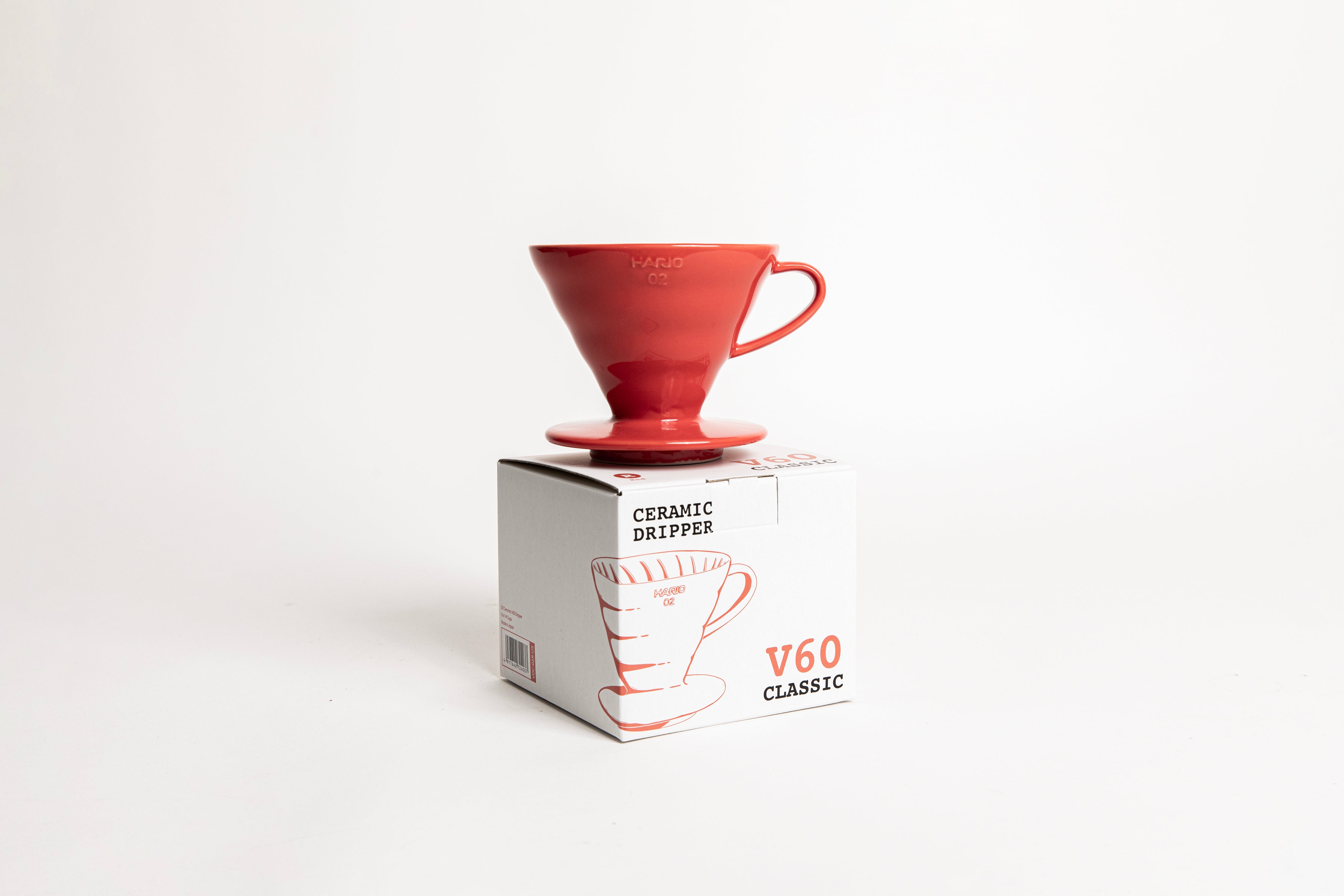
Best Overall: The Hario V60 02 Ceramic is the standard recommendation for most home brewers — neutral flavor, good heat retention when pre-heated, and the classic aesthetic that has made it the center of pour-over culture. Pre-rinse with hot water before brewing to eliminate the heat-absorption gap versus plastic.
Top picks ↓| Product | Price | Link |
|---|---|---|
| $25 | View deal → | |
| $8 | View deal → | |
| $25 | View deal → | |
| $60 | View deal → | |
| $5 | View deal → |
Top picks
Related articles


Hario V60 02 Ceramic
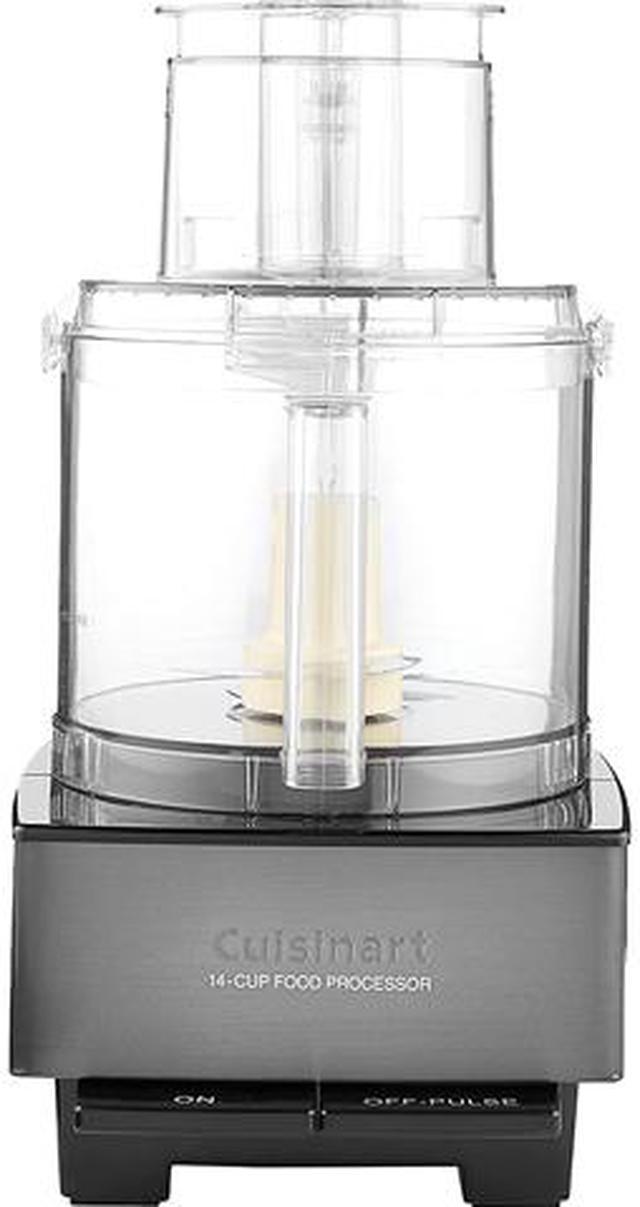
Ceramic, 02 size (1-4 cups), good heat retention. $25-35. Best all-around V60 — neutral flavor, good heat retention when pre-heated, classic aesthetic. Correct for most home brewers.
The Hario V60 02 Ceramic is the standard recommendation for most home brewers — neutral flavor, good heat retention when pre-heated, and the classic aesthetic that has made it the center of pour-over culture. Pre-rinse with hot water before brewing to eliminate the heat-absorption gap versus plastic. The trade-off is breakage risk and the $25–35 price vs the plastic version.
Pros
- ✓Best heat retention when pre-heated among non-metal V60 options
- ✓Neutral ceramic flavor — no taste interference
- ✓The community-standard V60 with the most brew guides written for it
Cons
- ✗Breakable — needs careful handling or travel case
Score breakdown
| Material | Ceramic |
| Size | 02 (1–4 cups) |
| Price | ~$25–35 |
| Heat retention | Good (pre-heat required) |
| Fragility | Medium |
| Filter size | V60 02 |
| Dishwasher safe | Yes |

Hario V60 02 Plastic
Plastic, 02 size (1-4 cups), lightweight. $8-15. Best for travel and beginners — no breakage risk, minimal heat loss, same extraction geometry as ceramic. Best starting point to learn V60 technique.
The V60 02 Plastic is the best starting point for learning V60 technique. Functionally identical to ceramic — same geometry, same spiral ribs, same single hole — but plastic doesn't absorb heat from the brew water, so heat loss to the dripper itself is minimal. No breakage risk makes it ideal for travel and outdoor use. At $8–15, the financial risk is negligible.
Pros
- ✓Same extraction geometry as ceramic at $8–15
- ✓No breakage risk — ideal for travel and outdoor use
- ✓Less heat loss to dripper than ceramic (plastic doesn't absorb heat)
Cons
- ✗Less premium aesthetic than ceramic or metal
Score breakdown
| Material | Plastic (BPA-free) |
| Size | 02 (1–4 cups) |
| Price | ~$8–15 |
| Heat retention | Minimal heat loss |
| Fragility | None |
| Filter size | V60 02 |
| Dishwasher safe | Yes |

Hario V60 02 Glass
Borosilicate glass, 02 size (1-4 cups), transparent. $25-40. Best for visual learners — watch bloom and extraction. Less heat retention than ceramic. Most fragile. Pre-heat before use.
The V60 02 Glass uses borosilicate glass — fully transparent so you can watch the bloom expand and observe water distribution through the coffee bed in real time. This visual feedback is uniquely useful for diagnosing extraction issues and learning pour technique. Glass retains less heat than ceramic, so pre-heating is essential. Most fragile of the four materials.
Pros
- ✓Transparent — watch bloom and water distribution in real time
- ✓Useful for diagnosing extraction problems visually
- ✓Heat-resistant borosilicate construction
Cons
- ✗Most fragile — highest breakage risk
- ✗Poorest heat retention in this comparison
Score breakdown
| Material | Borosilicate glass |
| Size | 02 (1–4 cups) |
| Price | ~$25–40 |
| Heat retention | Low (pre-heat essential) |
| Fragility | High |
| Filter size | V60 02 |
| Transparency | Full |
Hario V60 02 Metal
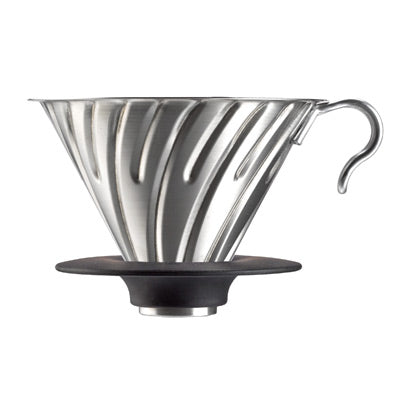
Stainless or copper, 02 size, most durable. $60-90. Most durable V60 — never breaks, heats evenly, premium aesthetic. Copper version is a display piece. Best for gift or display-quality setup.
The V60 02 Metal (stainless or copper) is the most durable option — it will never break, heats quickly and evenly, and the copper version is a display piece as much as a coffee tool. At $60–90 it's the most expensive V60 dripper, best justified as a gift or premium kitchen aesthetic piece. For daily practical brewing, ceramic offers comparable results at a third of the price.
Pros
- ✓Indestructible — ideal for heavy daily use or accident-prone environments
- ✓Copper version is a premium display-quality gift
- ✓Heats quickly and evenly — no cold spots
Cons
- ✗$60–90 is expensive for a dripper when ceramic performs comparably
Score breakdown
| Material | Stainless steel or copper |
| Size | 02 |
| Price | ~$60–90 |
| Heat retention | Excellent |
| Fragility | None |
| Filter size | V60 02 |
| Aesthetics | Premium |

Hario V60 Paper Filters 02
V60 paper filters, 02 size, white or natural. ~$5-10 per 100 count. Required consumable — widely available at grocery stores and specialty coffee retailers. More available than Kalita Wave filters.
Hario V60 Paper Filters 02 are the required ongoing consumable for any V60 setup. White and natural (unbleached) versions both work well; the difference is minimal for most brewers. Key practical advantage over Kalita Wave filters: V60 02 filters are sold at Starbucks, most grocery chains, and any specialty coffee shop — you won't run out mid-week waiting for online delivery.
Pros
- ✓Available at grocery stores, Starbucks, and specialty coffee retailers
- ✓100 count lasts approximately 3 months for daily brewers
- ✓Both white and natural versions widely available
Cons
- ✗Must be repurchased regularly — factor into the ongoing V60 cost
Score breakdown
| Size | 02 |
| Count | 100 per pack |
| Price | ~$5–10 per 100 |
| Types | White (bleached) or natural (unbleached) |
| Availability | Grocery stores nationwide |
| Fit | V60 01, 02, 03 |
Which one is right for you?
For most home brewers
Hario V60 02 Ceramic
The community-standard V60 with good heat retention and the most brew guides written for it
For beginners and travelers
Hario V60 02 Plastic
Same extraction geometry at $8–15 with zero breakage risk
For diagnosing brew technique
Hario V60 02 Glass
Full transparency lets you watch bloom and water distribution in real time
For gifts or premium aesthetics
Hario V60 02 Metal
Indestructible and the copper version is a display-quality gift
For stocking up on consumables
Hario V60 Paper Filters 02
Required for every V60 brew and available at grocery stores when you run out
How the V60's single-hole design controls extraction
V60 extraction mechanics: the conical shape funnels all water toward a single large exit hole. Water flow rate is determined by grind size (coarser = faster drain, finer = slower drain) and pour speed. There's minimal pooling — water moves through the coffee bed and exits quickly. This means your grind size and your pour directly control the extraction time, giving you more levers to pull than a flat-bottom dripper.
The spiral ribs inside the V60 are deliberately designed to create an air gap between the filter paper and the dripper wall, preventing the filter from suctioning against the wall and blocking flow. This allows the flow to be controlled by the coffee bed resistance rather than the dripper structure itself — which is what makes the V60's grind-and-pour control so direct.
What this means in practice: if you pour too fast, water races through underextracted coffee and you get a thin, sour cup. If you pour too slow or grind too fine, you get an overextracted, bitter, muddy cup. The margin for error is narrower than a Kalita Wave or French press. This is not a design flaw — it's what makes the V60 the preferred tool for specialty coffee brewers who want maximum control over flavor. But it requires consistent technique to realize those advantages.
V60 02 materials: ceramic, plastic, glass, and metal
Hario V60 02 Ceramic ($25-35) is the most popular V60 version — good heat retention, neutral flavor (no metallic taste), easy to clean, and the aesthetic is clean and minimal. Ceramic has mass that absorbs heat from the brew water during the first pour, which is why pre-rinsing the dripper with hot water matters more for ceramic than for plastic. The ceramic V60 is the standard recommendation for most home brewers.
Hario V60 02 Plastic ($8-15) is functionally identical to ceramic in terms of extraction — the same spiral ribs, same single hole, same V60 geometry. Plastic doesn't absorb heat the way ceramic does, so heat loss to the dripper is less of a factor. The plastic V60 is the choice for travel, outdoor use, or any context where breaking a ceramic dripper is a real concern. It's also the best starting point for learning V60 technique before committing to more expensive versions.
Hario V60 02 Glass ($25-40) uses heat-resistant borosilicate glass — transparent, so you can observe the bloom and watch water distribution. Visually striking but the least durable option. Glass has poor heat retention compared to ceramic, so pre-heating is essential. Best for visual learners and for diagnosing extraction issues.
Hario V60 02 Metal ($60-90) — typically stainless or copper — is the most durable and most heat-conductive. Metal heats up quickly and distributes heat evenly. The high-end copper V60 has a visual appeal that makes it a display piece as much as a coffee tool. For practical home brewing, ceramic is more cost-effective.
V60 02 filters: the critical consumable
Hario V60 Paper Filters 02 ($5-10 per 100 count) are the ongoing consumable for V60 brewing. The two types: natural (unbleached, brown paper) and white (bleached). White filters are more common; some brewers pre-rinse to remove any paper taste. Natural filters are slightly thicker and may slow flow marginally. For most home brewers, the difference is minimal — use whichever is easily available.
V60 filters are more widely available than Kalita Wave filters — sold at Starbucks, most grocery chains with a coffee aisle, and any specialty coffee retailer. This availability is a practical advantage of the V60 system: you won't get stuck waiting for online orders if you run out.
Filter fit by size: V60 filters come in three sizes — 01 (1 cup), 02 (1-4 cups), and 03 (1-6 cups). The 02 is by far the most common and covers the typical home brewing range of 1-4 cups. Buy 02 filters to match the standard V60 02 dripper.
V60 vs Kalita Wave: which is right for you
Choose V60 if: you have consistent pour technique and want maximum extraction control. The V60's single-hole design lets you deliberately manipulate flow rate for different flavor outcomes — intentionally slow pours for extended extraction, fast pours for lighter profiles. This requires a baseline of reliable technique to translate into intentional results rather than accidents.
Choose Kalita Wave if: you're still developing technique or want forgiving daily results. The Wave's three-hole flat bottom evens out extraction automatically — mistakes in pour rate have less impact on the final cup. The Wave's forgiving nature produces better daily results while technique is still inconsistent.
The Hario V60 has a larger community around it: more brew guides, more recipe videos, more troubleshooting resources. Fellow Stagg EKG, Hario Buono, and most gooseneck kettle recommendations are calibrated around V60 recipes. If you want the largest ecosystem of brew guides and community knowledge, V60 is the center of specialty pour-over culture.