Best Spirulina Supplement 2026: 5 Picks Tested for Purity
Spirulina is one of the most nutrient-dense foods on the planet — but it's also one of the most prone to contamination. Spirulina is a cyanobacterium that bioaccumulates toxins from its growing water, including heavy metals (lead, mercury, arsenic, cadmium) and microcystins from cyanobacterial blooms. The source water quality and testing program determine whether you're buying a genuinely therapeutic supplement or an expensive source of heavy metal exposure. Phycocyanin — spirulina's primary bioactive pigment — is the compound most associated with spirulina's antioxidant and anti-inflammatory evidence; its content varies significantly between products.
Each product was evaluated on sourcing transparency and water quality controls, third-party testing for heavy metals (lead, mercury, arsenic, cadmium) and microcystins, phycocyanin content where disclosed, protein content and amino acid profile, and cost per gram of verified spirulina.
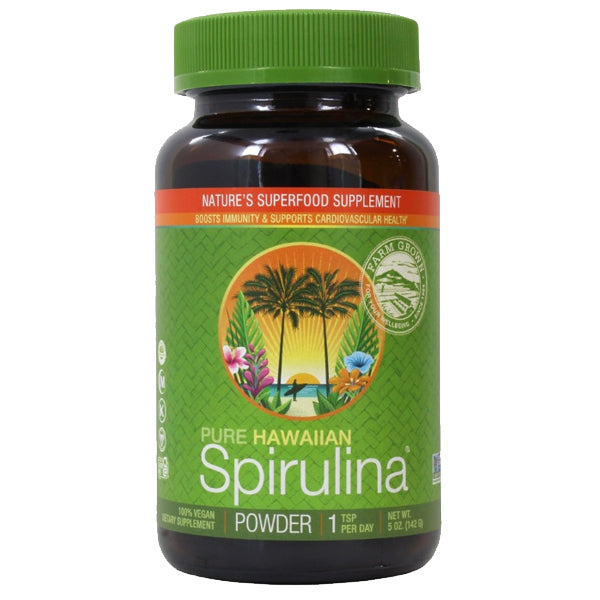
Nutrex Pure Hawaiian Spirulina
Best Sourcing and Testing: Nutrex Pure Hawaiian Spirulina is the category benchmark for source quality — deep Pacific ocean water in Kona, Hawaii, 40+ years of continuous production, and the most extensive testing documentation in commercial spirulina. Phycocyanin content disclosed per batch.
Top picks ↓| Product | Price | Link |
|---|---|---|
| 30〜45 | View deal → | |
| 20〜35 | View deal → | |
| 15〜25 | View deal → | |
| 40〜60 | View deal → |
Top picks
Related articles


Nutrex Pure Hawaiian Spirulina
Nutrex Pure Hawaiian Spirulina is the category benchmark for source quality — deep Pacific ocean water in Kona, Hawaii, 40+ years of continuous production, and the most extensive testing documentation in commercial spirulina. Phycocyanin content disclosed per batch. Heavy metal testing for all four primary contaminants. The price premium over mass-market spirulina is real and justified for buyers who prioritize documentation above cost.
Pros
- ✓Kona, Hawaii deep ocean water source — mineral-rich, free of agricultural runoff and municipal pollution
- ✓Phycocyanin content disclosed per batch — the key bioactive compound with antioxidant and anti-inflammatory evidence
- ✓40+ years continuous production — the longest batch-to-batch consistency documentation in US spirulina
Cons
- ✗30–40% price premium over mass-market spirulina — significant for daily use at higher doses
Score breakdown
| Source | Kona, Hawaii — deep Pacific ocean water (2,000 feet depth) |
| Phycocyanin | Disclosed per batch (typically 14–17% of dry weight) |
| Heavy metal testing | All four primary metals, per batch CoA available |
| Certification | Non-GMO Project Verified, various organic certs |
| Serving | 3–6 tablets (3g) or 1 tsp powder daily |
| Protein per serving | ~60% by dry weight |
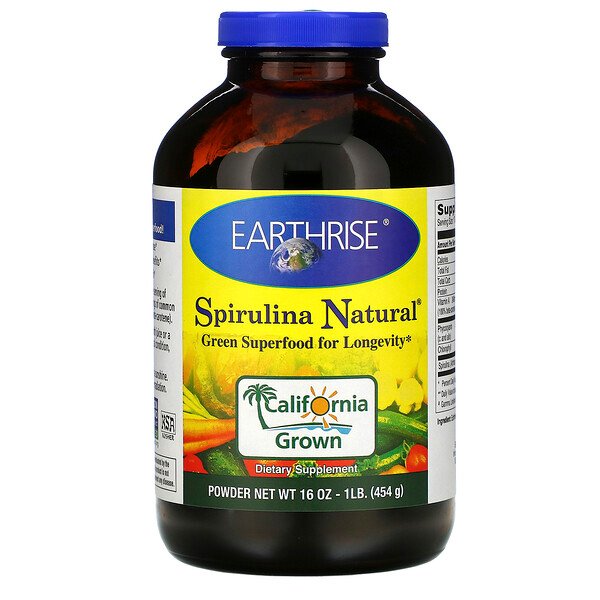
Earthrise Spirulina Naturals
Earthrise has been producing spirulina in California's Calipatria facility since the late 1970s — nearly five decades of continuous production data. CGMP certified, heavy metal tested, phycocyanin documented. US-grown with controlled water management. The price is below Hawaiian spirulina while maintaining domestic production quality controls superior to most imported alternatives. The historical production record is the product's strongest credential.
Pros
- ✓Nearly 5 decades of continuous California production — unmatched batch consistency data
- ✓US-grown in controlled Calipatria facility — superior water quality management vs. Asian imported spirulina
- ✓CGMP certified, heavy metal tested, phycocyanin documented — comprehensive quality documentation
Cons
- ✗Calipatria water source has had some historical quality questions — current testing should be verified
Score breakdown
| Source | Calipatria, California — dedicated agricultural water channels |
| Phycocyanin | Documented per batch |
| Heavy metal testing | All primary metals, CGMP facility testing |
| Certification | CGMP certified, FDA registered facility |
| Serving | 3–5 tablets or 1 tsp powder daily |
| Protein per serving | ~60–65% by dry weight |

NOW Foods Organic Spirulina
NOW Foods Organic Spirulina is USDA certified organic and Informed Sport certified — the best third-party testing combination for cost-conscious buyers. Available at major retailers at roughly half the price per gram of Hawaiian spirulina. Heavy metal testing published in quality documentation. For daily spirulina use where budget sustainability matters and trusted third-party certification is required, NOW Foods is the strongest choice.
Pros
- ✓USDA Certified Organic + Informed Sport certified — strong dual third-party certification at accessible price
- ✓Available at Whole Foods, iHerb, Amazon, Vitacost — the widest retail distribution in this comparison
- ✓Heavy metal testing documented in NOW Foods' quality program — reliable baseline purity assurance
Cons
- ✗Source not as specifically disclosed as Hawaiian or California producers — less granular water quality documentation
Score breakdown
| Source | Certified organic (source country varies by lot — check label) |
| Phycocyanin | Not typically disclosed per batch |
| Heavy metal testing | NOW Foods quality testing program (internal and third-party) |
| Certification | USDA Organic, Informed Sport, non-GMO |
| Serving | 3 tablets or 1 tsp powder daily |
| Protein per serving | ~60% by dry weight |

Pure Synergy Super Spirulina Plus
Pure Synergy Super Spirulina Plus adds astaxanthin to USDA organic spirulina — astaxanthin has some of the strongest antioxidant activity of any natural compound and documented evidence for exercise recovery and skin photoprotection. Phycocyanin content disclosed more explicitly than most brands. For buyers who want a designed antioxidant formula using spirulina as the primary base, this is the most sophisticated option. The premium price reflects the astaxanthin addition and targeted formulation.
Pros
- ✓Astaxanthin addition — documented antioxidant and anti-inflammatory activity that complements phycocyanin
- ✓Phycocyanin content more explicitly disclosed than most spirulina brands — bioactive potency verification
- ✓USDA certified organic spirulina base with third-party heavy metal testing
Cons
- ✗50–70% higher price per serving than NOW Foods Organic — premium only justified if astaxanthin is part of your plan
Score breakdown
| Source | USDA certified organic spirulina + added astaxanthin + spinach + green tea |
| Phycocyanin | Disclosed (explicitly stated on label and website) |
| Heavy metal testing | Third-party tested per batch |
| Certification | USDA Organic, non-GMO, third-party tested |
| Serving | 2–4 capsules or 1 tsp powder daily |
| Protein per serving | From spirulina component (~60% DW) |
Which one is right for you?
For those who want the most researched, highest-quality Hawaiian spirulina with extensive testing
Nutrex Pure Hawaiian Spirulina
Nutrex Pure Hawaiian Spirulina is grown in deep ocean water in Kona, Hawaii with 70+ years of continuous production, the most extensive quality testing documentation in the category.
For buyers who want the original California open-pond spirulina pioneer with decades of data
Earthrise Spirulina Naturals
Earthrise pioneered US commercial spirulina production in the 1970s from a dedicated Calipatria, California facility — one of the longest continuous spirulina production operations globally.
For USDA organic certification with NOW Foods' broad retail availability and testing
NOW Foods Organic Spirulina
NOW Foods Organic Spirulina is USDA certified organic, Informed Sport certified, and available across major US retailers at a price point that makes daily use sustainable.
For Japan-market spirulina from Yamamoto Kanpo with Japanese market quality standards
spirulina-yamamoto-jp
Yamamoto Kanpo is Japan's leading specialty supplement brand with rigorous domestic quality standards, producing spirulina supplements optimized for the Japan market.
For those who want spirulina combined with complementary superfoods in a synergistic formula
Pure Synergy Super Spirulina Plus
Pure Synergy Super Spirulina combines spirulina with astaxanthin and other synergistic antioxidants — a more comprehensive formula for those seeking beyond basic spirulina nutrition.
Nutrex Pure Hawaiian Spirulina — Deep Ocean Water, 70+ Years, Most Tested Source
Nutrex Hawaii's Pure Hawaiian Spirulina is grown in Kona, Hawaii, on the Big Island, using a combination of deep ocean water pumped from 2,000 feet below sea level and Pacific sun. The deep ocean water source is mineral-rich and largely free of the surface agricultural runoff and municipal pollution that affects open-pond spirulina grown in regions with less controlled water sources. The Nutrex facility has been producing spirulina since 1984, making it one of the longest-continuously-operating spirulina farms globally.
The testing program is the most extensively documented in the commercial spirulina market. Nutrex publishes results for heavy metals (lead, mercury, arsenic, cadmium), pesticides, microbial contamination, and phycocyanin content. C-phycocyanin — the blue pigment that gives spirulina its characteristic teal color — is spirulina's primary bioactive compound, responsible for a significant portion of the antioxidant activity, anti-inflammatory effects, and immune modulation attributed to spirulina in published research. Products with higher phycocyanin content per gram deliver proportionally more of this bioactive.
The protein content is approximately 60–65% by dry weight, with all essential amino acids present. Nutrex publishes amino acid profiles per serving. The price is at the premium end of the spirulina category — roughly 30–40% higher than mass-market spirulina tablets — which reflects the premium sourcing and testing overhead. For buyers who prioritize source quality and documentation above all else, Nutrex is the category benchmark.
Earthrise Spirulina Naturals — Calipatria, California, US Pioneer, Open-Pond Controlled
Earthrise Nutritionals (originally the Earthrise Company) pioneered commercial spirulina production in the United States, beginning production in Calipatria, California in the late 1970s. The Calipatria facility uses water from the Salton Sea watershed, controlled in dedicated agricultural channels, with testing for heavy metals, pesticides, and microbial contamination. Earthrise has been producing continuous spirulina for nearly five decades — a production history that provides batch-to-batch consistency data that newer producers cannot offer.
Earthrise's quality documentation includes testing for all four primary heavy metals, microcystins, phycocyanin content, and protein percentage. The facility is CGMP certified and meets FDA quality standards for dietary supplements. Their spirulina is available in both powder and tablet forms, with the powder offering more flexibility for incorporation into smoothies or other food applications.
The price is accessible relative to Hawaiian spirulina while maintaining domestic production controls superior to imported spirulina from China or India, where water quality management and testing frequency are more variable. Earthrise is available at natural food retailers including Whole Foods and through major online retailers. For buyers who want US-grown, historically validated spirulina at a price point below Hawaiian premium brands, Earthrise is the most credible middle-tier option.
NOW Foods Organic Spirulina — USDA Organic, Informed Sport, Mass-Market Accessibility
NOW Foods is one of the most trusted mass-market supplement brands, with CGMP manufacturing standards and broad third-party certification across their product line. Their Organic Spirulina is USDA certified organic — meaning the growing water and farming practices meet organic certification requirements — and Informed Sport certified, which adds independent testing for banned substances at 270+ compounds. For athletes subject to drug testing who want affordable spirulina, this is the most accessible certified option.
The organic certification for spirulina is meaningful primarily as a proxy for clean growing practices rather than pesticide avoidance (spirulina is a cyanobacterium that doesn't require pesticides by nature). It does indicate that the growing water meets organic certification standards, which provides some confidence about the water source quality. The specific testing program for heavy metals is robust — NOW Foods publishes testing results in their quality documentation.
Availability is the strongest argument: NOW Foods Organic Spirulina is available at Whole Foods, iHerb, Amazon, Vitacost, and most natural food retailers at approximately half the price per gram of Hawaiian spirulina. For the majority of buyers who want reliable, well-tested spirulina at a sustainable daily use cost, NOW Foods delivers the strongest combination of certification, availability, and price.
Yamamoto Kanpo Spirulina — Japan's Specialty Supplement Pioneer, Japanese Market Quality
Yamamoto Kanpo Pharmaceutical is one of Japan's most respected specialty supplement producers, with a product history spanning several decades in kampo (traditional Japanese herbal medicine) and health supplements. Their spirulina product is formulated and tested to Japanese pharmaceutical-adjacent quality standards, with distribution through Japan's major health supplement channels including specialty supplement retailers, pharmacies, and direct-to-consumer online platforms.
Japanese regulatory expectations for supplement quality — while not as stringent as pharmaceutical standards — create a different quality floor than US or European standards in practice. Heavy metal limits in Japan are often stricter than US limits for food supplements, and independent testing programs are common among established Japanese supplement brands. Yamamoto Kanpo's spirulina is sourced from controlled production facilities and tested for Japanese market compliance standards.
The format options available through Yamamoto Kanpo include both tablet and powder forms, with serving sizes calibrated to standard consumption conventions. For Japan-based buyers or those purchasing Japan-market spirulina, Yamamoto Kanpo is one of the most credible domestic supplement producers with a specific and long spirulina product history.
Pure Synergy Super Spirulina Plus — Phycocyanin-Boosted, Astaxanthin Added, Premium Antioxidant Focus
Pure Synergy occupies the premium-functional end of the spirulina market. Their Super Spirulina Plus formula combines certified organic spirulina with astaxanthin — a marine carotenoid with some of the strongest antioxidant activity of any natural compound — and a small amount of organic spinach and organic green tea extract. The astaxanthin addition is a genuine differentiation, as astaxanthin has documented evidence for exercise recovery, skin photoprotection, and antioxidant activity that complements spirulina's phycocyanin-based antioxidant profile.
The spirulina in the formula is USDA certified organic, third-party tested for heavy metals, and standardized for phycocyanin content — Pure Synergy discloses phycocyanin concentration more explicitly than most spirulina brands, which is a transparency advantage. The combination approach means you're not just buying spirulina but a designed antioxidant formula using spirulina as the primary base.
The price per serving is among the highest in the spirulina category — roughly 50–70% higher than NOW Foods Organic. The premium is defensible if astaxanthin is part of your supplementation goal; it's less so if you're primarily seeking straightforward spirulina nutrition. For buyers who want a sophisticated antioxidant formula with spirulina as the foundational ingredient, Pure Synergy is the most complete option in this comparison.
Spirulina's Evidence Base: What's Proven vs. What's Extrapolated
Spirulina's human clinical evidence is stronger than many people realize but narrower than marketing suggests. The areas with the most credible evidence: lipid profile improvement (multiple meta-analyses show reductions in total cholesterol, LDL, and triglycerides at 1–8g per day with increases in HDL), blood glucose management in type 2 diabetes (several RCTs show modest fasting blood glucose reduction), and antioxidant activity (measurable increases in antioxidant enzyme levels in plasma). The anti-inflammatory effects, while mechanistically plausible through phycocyanin-mediated inhibition of prostaglandin synthesis, have less robust human clinical evidence.
The protein content is real and significant — spirulina is approximately 60–70% protein by dry weight, with all essential amino acids. At 3–5 grams per serving (typical tablet dose), the protein contribution is approximately 1.8–3.5 grams — nutritionally relevant but not a primary protein source. The B12 in spirulina is primarily pseudovitamin B12 (an inactive analog) that does not satisfy B12 requirements and may actually block active B12 absorption at the receptor level. People following plant-based diets should not rely on spirulina as a B12 source.
The immune modulation claims — widely promoted in spirulina marketing — are based on in vitro cell studies and animal models that have not been consistently replicated in human clinical trials. The mechanism exists at the cellular level; the clinical magnitude in otherwise healthy adults is not established. For people with specific clinical goals (lipid management, antioxidant support during high training load), spirulina has a credible evidence base. For general wellness in an already-healthy individual, the marginal benefit over a whole-food diet rich in vegetables is modest.
