Best Overnight Oats 2026: Sugar, Protein, Flavor Tested
Five overnight oats options from $4 to $18, spanning pre-portioned single-serve packets, protein-boosted cups, and bulk unflavored rolled oats. The right choice depends less on flavor and more on your added sugar tolerance, protein targets, and how much control you want over what goes into your breakfast jar.
We sourced nutrition facts panel data and ingredient lists from official brand websites and verified packaging for all five products as of May 2026. Added sugar figures, protein content, and serving size are sourced from official nutrition labeling. Flavor range counts are based on brand website listings. Price per serving is calculated from current Amazon listings for the most common package size (per-unit bulk prices from Trader Joe's are estimated from store pricing). We did not conduct lab testing on nutrient content. Taste notes draw from verified purchaser reviews on Amazon, Reddit r/MealPrepSunday, and healthy breakfast community forums.

Quaker Overnight Oats (8-pack variety)
Most Convenient Single-Serve Pick: Quaker Overnight is the overnight oats option for buyers who want genuinely zero-effort: pre-portioned cups where you add your choice of milk or yogurt, stir, refrigerate overnight, and eat. No measuring, no flavor building, no decisions.
Top picks ↓| Product | Price | Link |
|---|---|---|
| 8〜14 | View deal → | |
| 10〜18 | View deal → | |
| 12〜18 | View deal → | |
| 11〜17 | View deal → | |
| 4〜7 | View deal → |
Top picks
Related articles


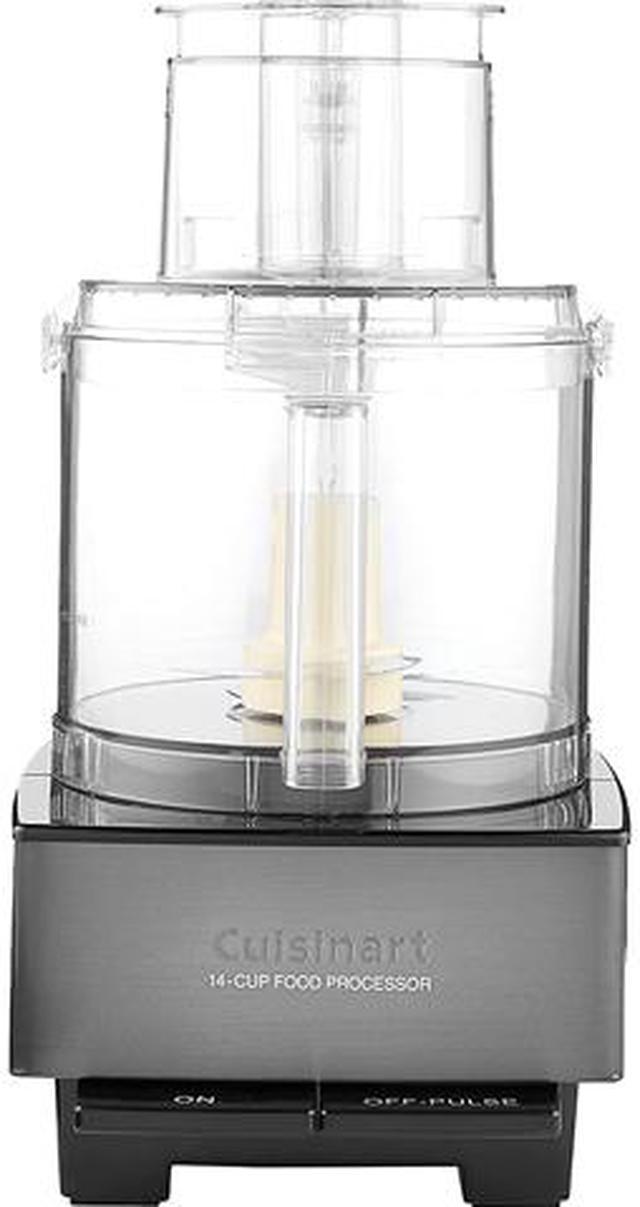
Quaker Overnight Oats (8-pack variety)
Quaker Overnight is the overnight oats option for buyers who want genuinely zero-effort: pre-portioned cups where you add your choice of milk or yogurt, stir, refrigerate overnight, and eat. No measuring, no flavor building, no decisions. 7g protein from oats and added milk powder, 8g added sugar from cane sugar, and eight flavor varieties including Blueberry Banana, Apple Cinnamon, and Peaches & Cream — flavors that appeal to buyers transitioning from instant oatmeal packets. The Quaker brand familiarity reduces skepticism for first-time overnight oats buyers. The honest weaknesses: 8g added sugar is the highest of any option here — each cup delivers a meaningful dose of added sugar at a level that adds up across multiple daily servings; the pre-portioned cups produce more packaging waste per serving than bulk oats; the 7g protein is the lowest of the packaged options in this comparison; and the per-serving cost is higher than bulk oats by 3–4x.
Pros
- ✓Pre-portioned cups with no measuring or flavor decisions required
- ✓8 flavor varieties including familiar apple cinnamon and blueberry banana
- ✓Quaker brand familiarity reduces the entry barrier for first-time overnight oats
- ✓Available at virtually every US grocery chain
Cons
- ✗8g added sugar per serving — the highest of any option in this comparison
- ✗3–4x higher per-serving cost than bulk oats for the same base ingredient
Score breakdown
| Protein | 7g per serving |
| AddedSugar | 8g per serving |
| Carbohydrates | 44g per serving |
| Calories | 230 kcal (dry, before milk) |
| BaseOats | Rolled oats |
| Certifications | None specified |
| Format | Pre-portioned single-serve cups (8-pack) |

Bob's Red Mill Organic Old Fashioned Rolled Oats
Bob's Red Mill Organic Old Fashioned Rolled Oats is the gold-standard bulk organic oats for overnight oat enthusiasts who want full control over ingredients, added sugar, and protein content. USDA Certified Organic, non-GMO verified, and specifically tested for glyphosate residue — Bob's Red Mill publishes its testing protocols and results for buyers who specifically avoid pesticide residue in their grain products. The oat quality is consistently described by verified buyers as the best-rolling, most uniform oat thickness in the bulk organic category, producing creamy overnight oats that hold texture well after 3–4 days in the refrigerator without turning mushy. At 5g protein and 0g added sugar per half-cup dry serving, it is the cleanest nutritional baseline to build from. The honest weaknesses: requiring toppings for flavor means it is not a grab-and-go option; the per-serving cost is low but the upfront bag price ($10–$18 for 32–56 oz) requires a commitment; and the packaging is bulk bag rather than individual portion, requiring your own containers.
Pros
- ✓USDA Certified Organic, non-GMO verified, glyphosate testing published
- ✓0g added sugar — complete control over sweetener type and amount
- ✓Best uniform oat quality in the bulk organic category for consistent overnight texture
- ✓Lowest per-serving cost of any organic option in this comparison
Cons
- ✗Requires toppings and flavor building — not a grab-and-go option
- ✗Upfront bulk bag price requires a commitment versus single-serve packets
Score breakdown
| Protein | 5g per 1/2 cup dry serving |
| AddedSugar | 0g |
| Carbohydrates | 27g per serving |
| Calories | 150 kcal per dry serving |
| BaseOats | Old-fashioned rolled oats |
| Certifications | USDA Certified Organic, Non-GMO Verified, glyphosate tested |
| Format | Bulk bag (32 oz / 56 oz) |

Purely Elizabeth Pumpkin Cinnamon Overnight Oats
Purely Elizabeth Pumpkin Cinnamon Overnight Oats is the flavored overnight oats pouch with the best nutritional profile in this comparison: 10g protein per pouch from gluten-free oats, quinoa flakes (a complete protein grain), and chia seeds — whole-food protein sources rather than added isolates. The pumpkin cinnamon flavor is well-executed rather than artificially pumpkin-spice-synthetic — the combination of pumpkin, cinnamon, and a modest coconut sugar sweetness reads as genuinely warming rather than candy-sweet. 6g added sugar from coconut sugar is lower than the Quaker and Kodiak alternatives. The pouch format is single-serve and self-portioned. The honest weaknesses: Purely Elizabeth is a premium-positioned brand and the per-pouch price of $2.00–$3.00 is among the highest per serving here; pumpkin cinnamon is a single seasonal-adjacent flavor (the brand offers 6+ varieties but each must be purchased separately); and the 40g carbohydrates from oats and quinoa are appropriate for a full breakfast but high for buyers tracking carbohydrate macros.
Pros
- ✓10g protein from gluten-free oats, quinoa flakes, and chia seeds — whole-food sources
- ✓Well-executed pumpkin cinnamon flavor that avoids candy-synthetic sweetness
- ✓6g added sugar from coconut sugar — lower than Quaker and Kodiak alternatives
- ✓Gluten-free, non-GMO — appropriate for gluten-sensitive buyers
Cons
- ✗$2.00–$3.00 per pouch is among the highest per-serving cost in this comparison
- ✗Single flavor per product — variety requires purchasing multiple SKUs
Score breakdown
| Protein | 10g per serving (oats + quinoa + chia) |
| AddedSugar | 6g (coconut sugar) |
| Carbohydrates | 40g per serving |
| Calories | 220 kcal per pouch |
| BaseOats | Gluten-free rolled oats + quinoa flakes |
| Certifications | Gluten-free, Non-GMO Verified |
| Format | Single-serve pouches |
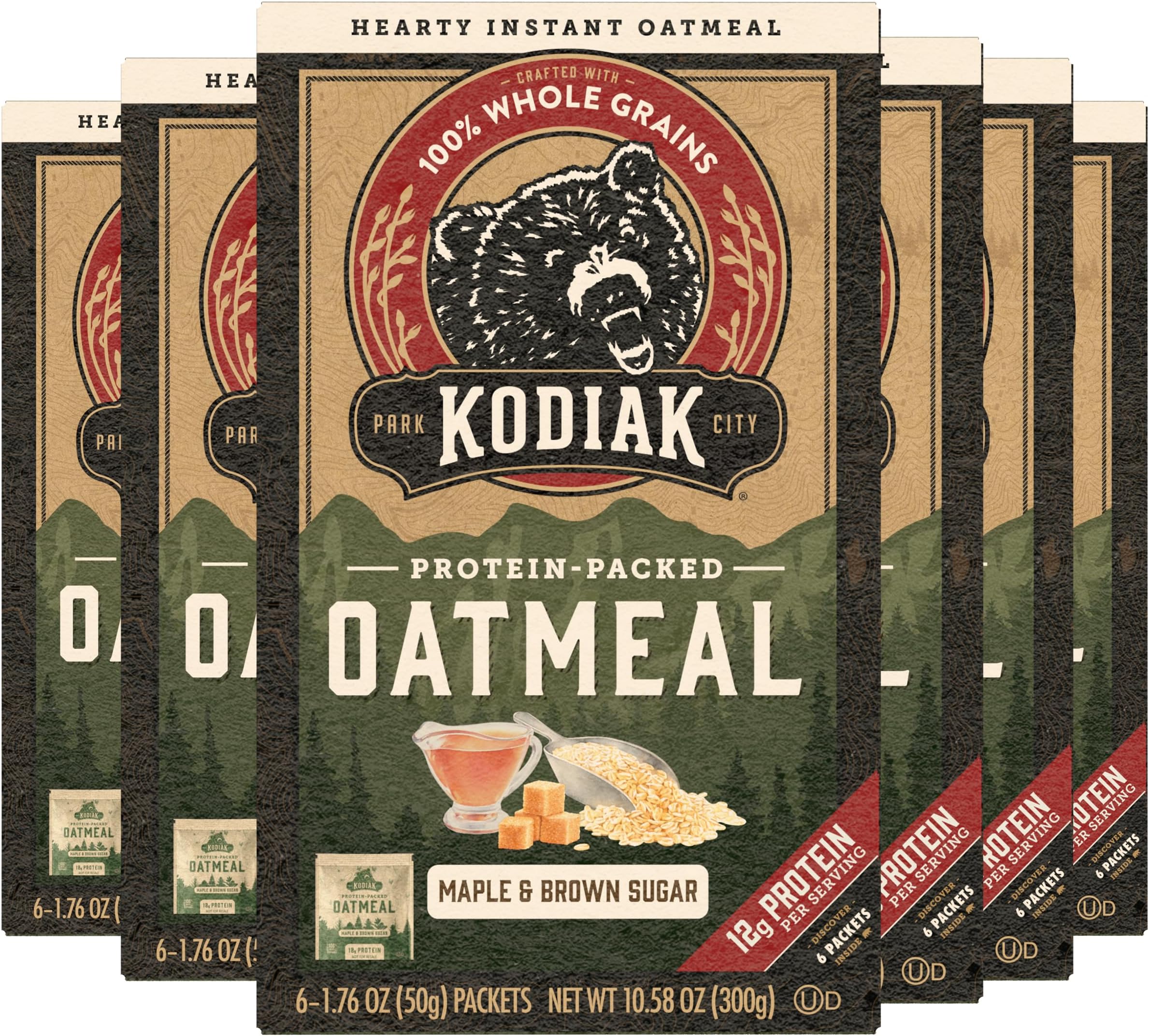
Kodiak Protein-Packed Oatmeal Cups
Kodiak Protein-Packed Oatmeal Cups are the highest-protein pre-packaged overnight oats option in this comparison at 12g per serving — achieved through added whey protein alongside whole grain oats. The just-add-hot-water cup format makes it a 2-minute breakfast without refrigerator pre-planning, which breaks from the overnight preparation model but serves the same 'high-protein convenient oat breakfast' use case. The whey protein addition produces a noticeably denser, slightly protein-shake-adjacent texture in the finished oatmeal that some buyers find satisfying and others find off-putting. 7g added sugar from cane sugar. The honest weaknesses: whey protein sourced from dairy makes it unsuitable for vegan or lactose-intolerant buyers; the just-add-hot-water format is technically hot oatmeal rather than overnight oats, so it does not deliver the lower-glycemic-index benefit of cold-soaked oats; the 12g protein from whey is a lower-quality amino acid profile than from egg whites (RXBAR comparison) though adequate for general daily protein; and the per-cup cost of $1.80–$2.50 is mid-range for the packaged oats category.
Pros
- ✓12g protein per serving — highest of any pre-packaged overnight oats here
- ✓Just-add-hot-water format — done in 2 minutes with no overnight prep required
- ✓Whole grain oat base with whey protein for meaningful protein contribution
- ✓Available at most US grocery chains with Kodiak's wide distribution
Cons
- ✗Whey protein makes it unsuitable for vegan or lactose-intolerant buyers
- ✗Hot water preparation loses the cold-soak lower-glycemic-index benefit of true overnight oats
Score breakdown
| Protein | 12g per serving (oats + whey protein) |
| AddedSugar | 7g (cane sugar) |
| Carbohydrates | 36g per serving |
| Calories | 240 kcal per cup |
| BaseOats | Whole grain rolled oats + whey protein |
| Certifications | Non-GMO Verified |
| Format | Single-serve cups (just-add-hot-water) |

Trader Joe's Organic Old Fashioned Rolled Oats
Trader Joe's Organic Old Fashioned Rolled Oats is the value benchmark for bulk organic rolled oats in the US market — USDA Organic, non-GMO, at a price that undercuts most branded organic oats by 30–40%. At $4–$7 for a 30–48 oz bag, the per-serving cost is the lowest in this comparison for organic oats, matching or beating Bob's Red Mill on price while providing comparable organic certification. The oat quality is adequate for overnight oats — consistent thickness, clean flavor, holds texture well after 4–5 days soaked in the refrigerator. The honest weaknesses: Trader Joe's exclusive distribution means you must have a Trader Joe's store nearby or order from gray-market resellers on Amazon at above-store pricing; there is no published glyphosate testing or third-party quality certification beyond the USDA Organic designation; and the Trader Joe's in-store brand is a private label sourced from varying suppliers, which means occasional batch variation in oat quality.
Pros
- ✓USDA Organic, non-GMO at the lowest per-serving price of any organic option here
- ✓30–40% cheaper than branded organic oats with comparable USDA Organic certification
- ✓Clean, neutral oat flavor as a blank canvas for overnight oats toppings
- ✓In-store availability means no shipping costs for local buyers
Cons
- ✗Trader Joe's exclusive distribution — unavailable without store access
- ✗No published glyphosate testing or quality certification beyond USDA Organic
Score breakdown
| Protein | 5g per 1/2 cup dry serving |
| AddedSugar | 0g |
| Carbohydrates | 27g per serving |
| Calories | 150 kcal per dry serving |
| BaseOats | Old-fashioned rolled oats |
| Certifications | USDA Certified Organic, Non-GMO |
| Format | Bulk bag (30–48 oz) |
Which one is right for you?
For the most convenient no-prep single-serve overnight oats
Quaker Overnight Oats (8-pack variety)
Pre-portioned cups, just add milk and refrigerate overnight — the genuinely zero-effort overnight oats option.
For full control over ingredients with zero added sugar
Bob's Red Mill Organic Old Fashioned Rolled Oats
USDA Organic, non-GMO, glyphosate-free bulk rolled oats — the base for custom overnight oats with exactly the toppings you choose.
For flavored overnight oats with higher protein from seeds
Purely Elizabeth Pumpkin Cinnamon Overnight Oats
10g protein per pouch from quinoa flakes and chia seeds alongside gluten-free oats — the tastiest flavored option with meaningful protein.
For the highest protein overnight oats at 12g per serving
Kodiak Protein-Packed Oatmeal Cups
Whey protein added to whole grain oats — just add hot water, done in 2 minutes with 12g protein for a post-workout breakfast.
For the best value organic rolled oats on the US market
Trader Joe's Organic Old Fashioned Rolled Oats
USDA Organic non-GMO bulk oats at the lowest per-serving price of any organic option here — Trader Joe's house brand reliability.
Overnight oats 101: what changes overnight and why it matters
Overnight oats are not cooked oats. The soaking process — submersing rolled oats in liquid (milk, dairy-free milk, yogurt, or water) for 6–12 hours at refrigerator temperature — causes the oat starches to hydrate and soften through a cold-water absorption process called retrogradation. The result is a creamy, spoonable texture without cooking, and several nutritional changes that distinguish overnight oats from hot oatmeal. The hydration process partially breaks down the phytic acid in oat bran, which is the compound that reduces mineral absorption (particularly iron, zinc, and calcium). Extended cold-water soaking increases the bioaccessibility of these minerals — studies suggest 12 hours of soaking reduces phytic acid by 25–50% depending on oat variety and water temperature. This is a modest but real nutritional advantage of overnight oats over quick-cooked oatmeal. The retrograded starch structure also produces a lower glycemic index effect than hot-cooked oats — not dramatically lower, but the slower starch digestion produces a flatter blood glucose curve that sustains satiety longer for the same calorie count.
Rolled oats versus quick oats versus steel-cut oats — the overnight oats ingredient specification matters. Rolled oats (old-fashioned oats) are the correct base for overnight oats: the oat groat is steamed and rolled flat, creating a surface area that hydrates fully in 6–8 hours of cold soaking. Quick oats (instant oats) are rolled thinner and pre-cooked, which means they over-absorb and become mushy rather than creamy in overnight soaking — too soft and losing the distinct oat texture. Steel-cut oats are minimally processed (just chopped groat, not steamed and rolled), which means they under-hydrate in 8 hours of cold soaking and remain too chewy and raw-textured for most overnight oats applications — you need 24 hours of soaking for steel-cut oats to soften adequately, or a warm water soak to accelerate. The five products in this comparison all use rolled oats as their base, which is correct.
Added sugar in overnight oats is the most significant nutritional variable between the pre-flavored options versus bulk unflavored. Quaker Overnight cups contain 8g added sugar from cane sugar added during manufacturing. Purely Elizabeth pouches contain approximately 6g added sugar from coconut sugar. Kodiak cups contain 7g added sugar from cane sugar. Bob's Red Mill bulk oats contain 0g added sugar — any sweetness you add comes from toppings you control. Trader Joe's bulk oats contain 0g added sugar. The distinction matters for buyers managing blood sugar or following low-added-sugar nutritional protocols: the pre-flavored cups deliver an appetizing, ready-to-eat product at the cost of 6–8g added sugar per serving that the bulk oats approach eliminates. For reference, the American Heart Association recommends no more than 25g added sugar per day for women and 36g for men — a Quaker Overnight cup's 8g added sugar represents approximately 32% of the women's daily limit, and the rest of the day's food needs to fit within the remaining 17g.
Protein content and where it comes from
Overnight oats are inherently a carbohydrate-forward breakfast — plain rolled oats provide approximately 5g protein per half-cup dry serving from the oat's natural protein content. This is meaningfully lower than eggs, Greek yogurt, or cottage cheese as a standalone protein source. The five products in this comparison address this limitation in three ways: (1) Adding protein sources directly to the oat base (Kodiak adds whey protein, Purely Elizabeth adds quinoa flakes and chia seeds), (2) Leaving protein augmentation to the buyer (Bob's Red Mill and Trader Joe's bulk oats, where you add your own Greek yogurt, protein powder, or nut butter), or (3) Not specifically addressing it (Quaker Overnight, which reaches 7g protein from oats and milk powder rather than added isolate). Kodiak at 12g protein per serving is the highest protein among ready-to-eat overnight oats options here — the whey protein is the mechanism, and the result is a meaningful protein contribution per breakfast, though still below the 20–30g recommended for active individuals seeking muscle protein synthesis. Purely Elizabeth at 10g protein uses quinoa flakes (a complete protein grain) and chia seeds (8g protein per ounce) alongside oats — a whole-food protein augmentation without protein isolates.
The most protein-efficient overnight oats approach combines bulk oats (Bob's Red Mill or Trader Joe's) with high-protein toppings: 1/2 cup rolled oats (5g protein) + 1/2 cup Greek yogurt (10–12g protein) + 1 scoop protein powder (20–25g protein) + 1 tablespoon chia seeds (2g protein) = approximately 37–44g protein per jar with full control over flavors and added sugar. This approach produces a breakfast with protein equivalent to four eggs at the cost of approximately 10 minutes of assembly time once per week for meal-prepped jars. For buyers who are specifically optimizing protein intake, bulk oats plus high-protein additions outperform any pre-packaged overnight oats option in this comparison by 25–30g protein per serving while costing less per serving.
Chia seeds deserve specific mention because they appear in Purely Elizabeth pouches and are a popular overnight oats addition. When soaked in liquid for 6+ hours, chia seeds absorb 10–12x their weight in water and form a gel matrix that significantly thickens overnight oats — a texture effect that some buyers find desirable (creamier, more pudding-like texture) and others find unpleasant (slimy, like tapioca). If you find soaked chia seeds unappealing, add them dry just before eating (crunchier, full nutritional benefit without the gel texture) or replace with ground flaxseed (which does not gel in the same way). Nutritionally, chia seeds in overnight oats are one of the most efficient whole-food protein and omega-3 additions per calorie — 2 tablespoons adds 4g protein, 5g fiber, and 2.5g omega-3 at approximately 70 kcal.
Flavor range and the convenience vs control trade-off
Pre-flavored overnight oats packets (Quaker Overnight, Purely Elizabeth) eliminate the morning decision about what to add to your oats — the flavor is baked in. The convenience is real: for someone who wants to grab a jar from the refrigerator and eat without any additional steps, pre-flavored options eliminate the 'this is boring' abandonment risk that blank oats face. Quaker Overnight comes in eight flavor varieties including Blueberry Banana, Apple Cinnamon, and Peaches & Cream — all have the Quaker brand familiarity factor and flavors that appeal to buyers transitioning from flavored instant oatmeal packets. Purely Elizabeth's Pumpkin Cinnamon is a single flavor in this comparison but the brand offers 6+ overnight oats varieties including Vanilla Almond Butter and Raspberry Coconut. The flavor engineering in pre-packaged overnight oats is competent — these products do not taste medicinal or overly 'healthy-food-flavored', and buyers who have historically found plain oatmeal boring tend to stick with overnight oats when a flavored option removes the effort of building their own flavor.
The control trade-off: bulk unflavored oats (Bob's Red Mill, Trader Joe's) produce blank-slate breakfast jars where every flavor element comes from toppings you choose and control. The standard overnight oats framework — oats + liquid + flavor agent + optional protein + optional fruit + optional crunch — allows for daily variety without buying different products: honey and walnuts on Monday, peanut butter and banana on Tuesday, cinnamon and diced apple on Wednesday, vanilla and berries on Thursday. The blank-slate approach also means zero added sugar from the base (you control exactly what goes in), lower cost per serving than pre-flavored packets, and the ability to adjust serving size, protein content, and caloric density to your needs. The failure mode of bulk oats is not the oats — it is the topping decision fatigue that causes some buyers to resort to plain unseasoned oats and then abandon the practice because it is not appetizing enough.
Seasonal flavors and the pumpkin spice consideration. Purely Elizabeth's Pumpkin Cinnamon overnight oats pouch is a seasonal-adjacent product that is available year-round but peaks in Q3-Q4 in terms of consumer demand. Pumpkin spice flavoring in overnight oats is one of the category's reliable Pinterest-driving flavors — the visual aesthetic of orange-tinted oats with cinnamon swirl and pumpkin seed garnish is among the most saved overnight oats images on Pinterest in Q4. If you are using overnight oats for Pinterest content (meal prep aesthetics are a major Pinterest category), the Purely Elizabeth pumpkin spice variant is the correct pick. If you are optimizing for nutritional value and price, the seasonal flavor premium is not relevant.
Building the perfect overnight oats jar: the ratio framework
The ratio that produces the best overnight oats texture from bulk rolled oats is 1:1 oats to liquid by volume for standard overnight oats (creamy but pourable), and 1:1.5 oats to liquid for thicker, spoonable-only overnight oats. Using half dairy milk and half Greek yogurt as the liquid produces a noticeably creamier result than milk alone — the yogurt's protein content thickens the mixture through casein gel formation during the overnight soak. For dairy-free overnight oats, oat milk and coconut milk produce the creamiest results (the fat content in full-fat coconut milk is particularly effective as a dairy substitute for overnight oats texture). Almond milk produces thinner overnight oats than other plant milks due to its lower protein and fat content — compensate by reducing the milk ratio or adding a tablespoon of chia seeds, which gel and thicken the mixture.
Timing is more flexible than most overnight oats recipes suggest. 6–8 hours is sufficient for rolled oats to fully hydrate in milk or yogurt. However, jars prepared on Sunday evening for weekday mornings (5 days in advance) maintain acceptable texture in the refrigerator — the oats continue to absorb liquid and become slightly softer over time, but do not turn mushy until after approximately day 4. Adding fruit that releases liquid (sliced strawberry, diced mango, banana) is best done within 24 hours of eating rather than 5 days in advance — the released juice discolors and softens the oats noticeably over 3–5 days. Hard fruits (apple, pear) and frozen fruit (which controls juice release during thawing) hold up better for longer-prep meal planning.
Common overnight oats additions and their nutritional contribution. Nut butters (1–2 tablespoons almond, peanut, or cashew butter): 3–7g protein, 8–16g fat, significant flavor richness. Honey or maple syrup (1 teaspoon): 5–6g added sugar, meaningful sweetness. Greek yogurt (1/2 cup): 10–12g protein, 0–3g added sugar (use plain, not flavored). Chia seeds (1–2 tablespoons): 2–4g protein, 3–5g fiber, omega-3 fatty acids, texture thickening. Vanilla extract (1/4 teaspoon): significant flavor improvement at zero calorie cost — this single addition is the most under-utilized overnight oats improvement for plain bulk oats. Cinnamon (1/4 teaspoon): mild blood glucose modulating effect, significant flavor contribution, zero calorie.