Best Moka Pots 2026: 5 Tested & Compared
A moka pot brews coffee at 1-2 bar of pressure — higher than drip (0 bar) but significantly lower than an espresso machine (9 bar). The grind, water temp, and ratio matter far more than which brewer you choose.
Each moka pot was evaluated on brew pressure and extraction character, material build quality, induction compatibility, size range available, and how closely it reproduces the concentrated flavor profile that defines stovetop espresso.

Bialetti Moka Express
Best Overall: The original 8-sided aluminum Moka Express has defined stovetop espresso since 1933. Its food-grade aluminum alloy conducts heat evenly across the base, and a well-seasoned pot produces a characteristic sweetness that stainless alternatives rarely match.
Top picks ↓| Product | Price | Link |
|---|---|---|
| $25 | View deal → | |
| $40 | View deal → | |
| $40 | View deal → | |
| $35 | View deal → | |
| $20 | View deal → |
Top picks
Related articles


Bialetti Moka Express
Food-grade aluminum, 8-sided iconic design, 1-12 cup sizes. $25-45. The original and still the standard. Classic moka flavor profile. Hand wash only, replace gasket every 1-2 years. Not induction-compatible without adapter.
The original 8-sided aluminum Moka Express has defined stovetop espresso since 1933. Its food-grade aluminum alloy conducts heat evenly across the base, and a well-seasoned pot produces a characteristic sweetness that stainless alternatives rarely match. Available in 1–12 cup sizes; hand-wash only and not induction-compatible without an adapter.
Pros
- ✓Category-defining flavor profile with a seasoned aluminum body
- ✓Widest size range: 1 to 12 cups
- ✓Affordable at $25–45 and widely available
Cons
- ✗Hand-wash only; not induction-compatible without adapter
Score breakdown
| Material | Food-grade aluminum |
| Sizes available | 1, 2, 3, 6, 9, 12 cup |
| Induction | No (adapter required) |
| Dishwasher safe | No |
| Pressure | ~1–2 bar |
| Price range | $25–45 |

Bialetti Brikka Moka Pot
Stainless steel, pressurized valve for crema-like foam, 2-cup and 4-cup only. $40-60. Best for milk drinks — the foam adds meaningful texture to lattes and cappuccinos. Induction compatible. Requires more precise heat timing than Moka Express.
The Brikka adds a weighted pressure valve that builds higher back-pressure before releasing, producing a crema-like foam on the brew. Not espresso crema by chemistry, but the textural improvement makes lattes and cappuccinos noticeably better. Available only in 2-cup and 4-cup; the pressurized valve demands more precise heat timing than the standard Moka Express.
Pros
- ✓Pressurized valve creates crema-like foam for milk drinks
- ✓Stainless steel — induction compatible
- ✓Denser, fuller-bodied cup than standard moka
Cons
- ✗Only 2-cup and 4-cup — no large-batch option
Score breakdown
| Material | Stainless steel |
| Sizes available | 2, 4 cup |
| Induction | Yes |
| Dishwasher safe | No |
| Pressure | ~2–3 bar (pressurized valve) |
| Price range | $40–60 |
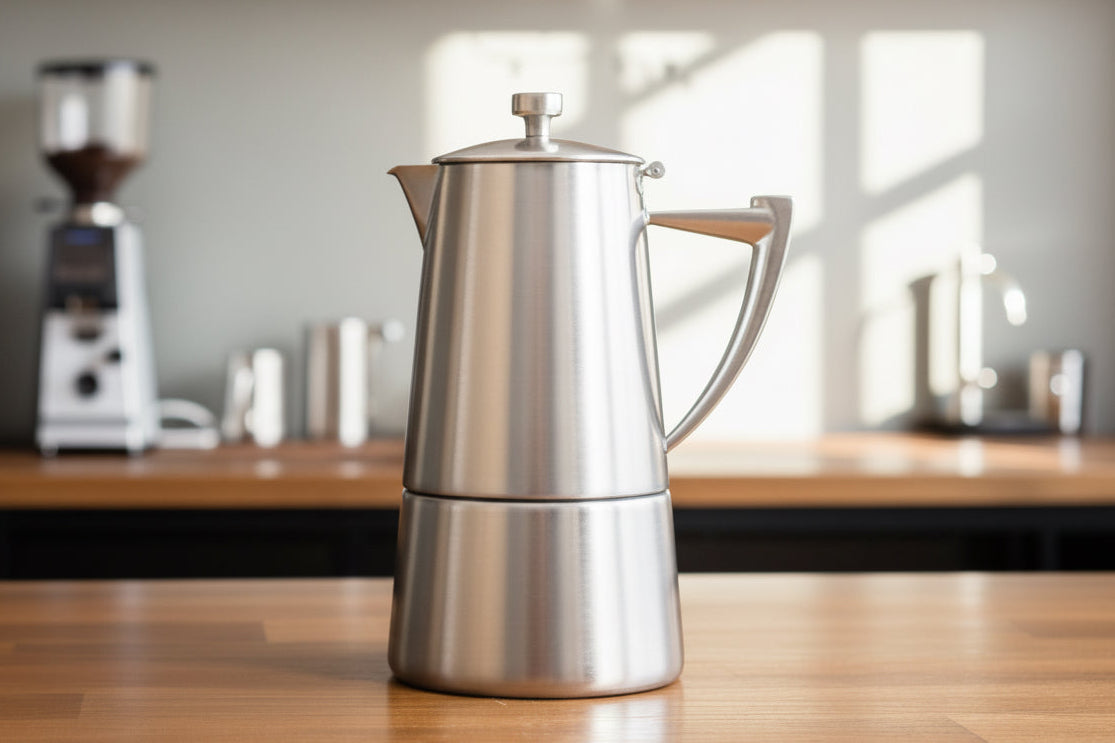
Cuisinox Roma Stainless Steel Moka Pot
Stainless steel, induction-compatible, dishwasher safe. $40-60 for 6-cup. Best stainless alternative to aluminum Moka Express. Slightly slower heating than aluminum but consistent extraction. No flavor interaction between coffee acids and metal.
The Cuisinox Roma is the most practical stainless alternative to the aluminum Moka Express — induction-compatible, dishwasher-safe, and free of any flavor interaction between coffee acids and aluminum. Slightly slower to heat than aluminum, but extraction consistency is reliable and maintenance is minimal.
Pros
- ✓Stainless steel — induction compatible and dishwasher safe
- ✓No flavor interaction between metal and coffee acids
- ✓Consistent extraction with low maintenance
Cons
- ✗Slower to heat than aluminum; slightly higher price than Moka Express
Score breakdown
| Material | Stainless steel |
| Sizes available | 1, 2, 3, 6 cup |
| Induction | Yes |
| Dishwasher safe | Yes |
| Pressure | ~1–2 bar |
| Price range | $40–60 |

Ilsa Stovetop Espresso Maker
Italian-made stainless steel, 1-12 cup sizes, slightly different valve geometry. $35-55. Best for users who prefer stainless material with a classic design. Some describe the brew as slightly smoother than Bialetti aluminum.
Italian-made stainless steel with a slightly different valve geometry than Bialetti — some drinkers describe the brew as marginally smoother. Available in 1–12 cup sizes like the Moka Express, at a price between Pezzetti and Cuisinox. A solid option for stainless-preferring users who want the widest size range.
Pros
- ✓Italian-made stainless in 1–12 cup sizes
- ✓Slightly different valve geometry — marginally smoother brew than aluminum
- ✓Good size flexibility
Cons
- ✗No notable advantage over Cuisinox Roma at similar price
Score breakdown
| Material | Stainless steel |
| Sizes available | 1, 2, 3, 6, 9, 12 cup |
| Induction | Check model |
| Dishwasher safe | Not recommended |
| Pressure | ~1–2 bar |
| Price range | $35–55 |
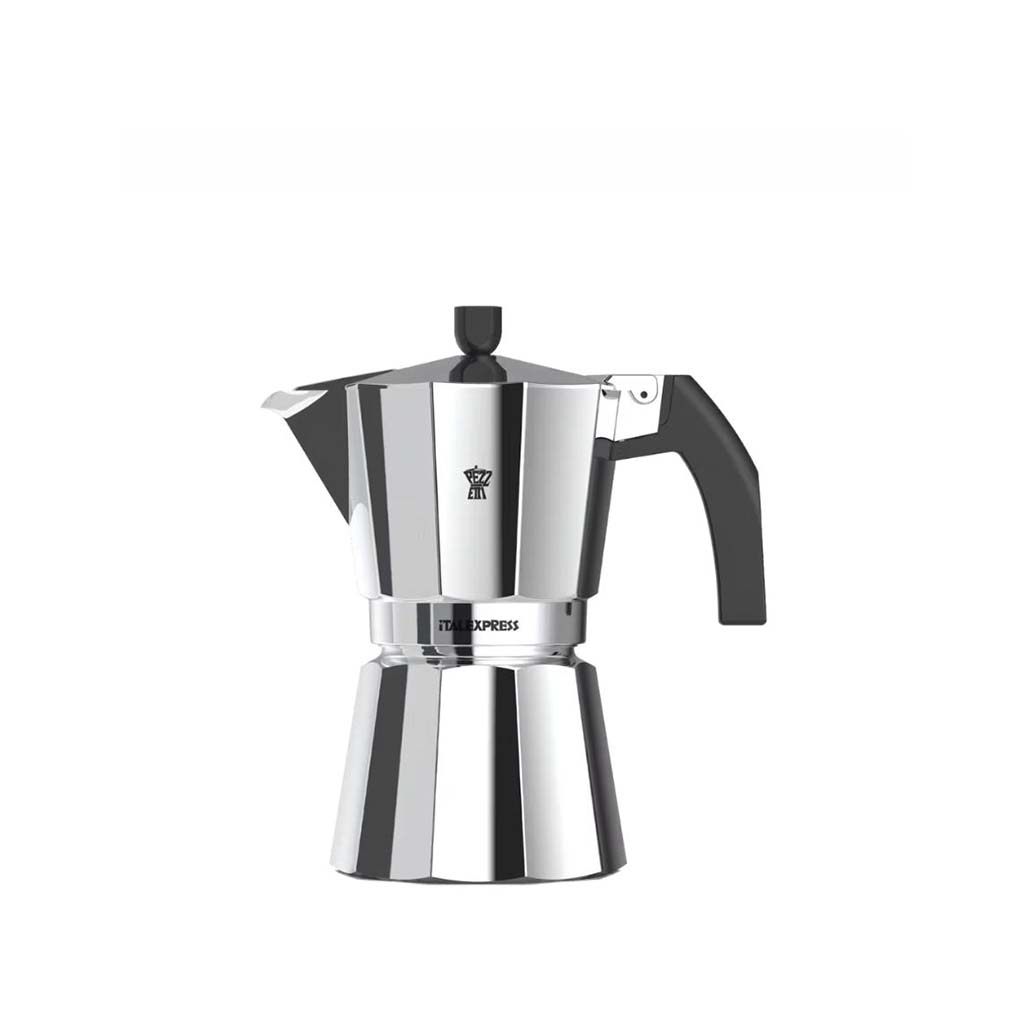
Pezzetti Italexpress Moka Pot
Budget stainless steel Italian-made moka pot. $20-30. Best entry-level moka pot — functionally equivalent brewing mechanism at lower cost. Correct for first-time moka pot users before committing to a premium version.
The Pezzetti Italexpress is an Italian-made stainless moka pot at $20–30 — the lowest price in this comparison for a proper brewing mechanism. Construction is simpler than Bialetti Brikka or Cuisinox, but the brewing physics are equivalent. The right first moka pot before committing to a premium option.
Pros
- ✓Lowest price in this comparison — $20–30
- ✓Italian-made stainless steel with functional brewing mechanism
- ✓Good first-time purchase before upgrading
Cons
- ✗Simpler construction and fewer size options than premium alternatives
Score breakdown
| Material | Stainless steel |
| Sizes available | 2, 4, 6 cup |
| Induction | Check model |
| Dishwasher safe | Not recommended |
| Pressure | ~1–2 bar |
| Price range | $20–30 |
Which one is right for you?
For black coffee drinkers wanting the classic moka flavor
Bialetti Moka Express
The seasoned aluminum body and original valve geometry produce the flavor that defines stovetop espresso — no other pot replicates it exactly.
For milk-drink enthusiasts
Bialetti Brikka Moka Pot
The pressurized valve creates crema-like foam that adds real texture to moka lattes and cappuccinos — a meaningful upgrade if you blend moka with milk daily.
For induction cooktop users
Cuisinox Roma Stainless Steel Moka Pot
Induction-compatible and dishwasher-safe — the most practical option for modern kitchens without a gas burner.
For first-time moka pot buyers
Pezzetti Italexpress Moka Pot
Try the brewing method at $20–30 before deciding whether to invest in a Bialetti or Cuisinox — the mechanism is functionally equivalent.
Moka pot pressure, extraction, and the difference from real espresso
Moka pots work by heating water in a sealed lower chamber until steam pressure pushes water up through a filter basket packed with ground coffee, then into an upper collection chamber. The operating pressure is approximately 1-2 bar — enough to produce a strong extraction but not enough to emulsify the coffee oils and CO2 the way a 9-bar espresso machine does. The result is a coffee that looks similar to espresso (dark, concentrated) but has a different chemical composition: less emulsified oils, more dissolved solids, slightly different flavor compounds.
True espresso crema — the reddish-brown foam on a proper espresso shot — requires 9 bar of pressure and fresh coffee with sufficient CO2. Bialetti's Brikka uses a pressurized valve that creates a slightly higher final pressure (2-3 bar) to produce a more crema-like foam on the brew. It's not espresso crema by composition, but the visual and textural result is closer to espresso than standard moka pot output. For milk drinks (moka lattes, cappuccinos with moka base), the Brikka's foam adds meaningful texture to the finished drink.
The practical use case for a moka pot: strong black coffee for one or two people, coffee base for milk drinks, and a device that produces a consistent result with less fuss than a full espresso setup. The 2-cup Bialetti Moka Express produces about 60-90 ml of concentrated coffee — roughly two espresso-sized servings. Moka pot coffee scales poorly to larger quantities because the ratio of brew to water volume is fixed by the pot size.
Bialetti Moka Express: the original and still the standard
The Bialetti Moka Express (the original 8-sided aluminum design patented in 1933) is the category-defining moka pot. The aluminum body and valve system, the specific geometry of the filter basket, and the heat distribution of the aluminum walls produce a particular flavor profile that is what most coffee drinkers associate with stovetop espresso. Bialetti uses food-grade aluminum with a specific alloy that interacts with the brewing process — the aluminum conducts heat evenly across the base, and some argue that a well-seasoned aluminum moka pot produces a characteristic sweetness absent from stainless equivalents.
The Moka Express is available in 1, 2, 3, 6, 9, and 12-cup sizes. The 'cup' designation refers to espresso cups (about 30-35 ml), not standard coffee cups — a 3-cup Moka Express produces 90-105 ml of coffee, enough for one cappuccino or two short black servings. The most practical sizes for home use are 3-cup (1-2 people) and 6-cup (2-4 people). Moka pots should always be filled according to their design size — filling a 6-cup pot to 3-cup capacity produces a different (often inferior) brew because the pressure dynamics change.
At $30-40 for a 3 or 6-cup, Bialetti Moka Express is inexpensive relative to its quality and the flavor it produces. The aluminum requires hand washing (dishwashers degrade the valve seals and oxidize the aluminum interior), and the gasket needs replacement every 1-2 years with heavy use — both replacement gaskets and filters are widely available.
Bialetti Brikka: the crema-producing upgrade
The Bialetti Brikka is distinguished by a weighted valve on the upper chamber that creates higher back-pressure during brewing. The valve opens only after more pressure has built up, producing a final burst of coffee that creates crema-like foam in the cup. The foam is thicker and more persistent than standard moka output, and the brew has a slightly fuller body.
The Brikka is available only in 2-cup and 4-cup sizes, is stainless steel rather than aluminum, and costs approximately $40-60. The stainless construction means it can be used on induction cooktops (the standard aluminum Moka Express requires an induction adapter for induction). For home baristas who primarily use the moka pot for milk drinks and want better foam texture, the Brikka is worth the premium. For black coffee drinkers who prefer the classic moka flavor, the standard Moka Express is equally good or better.
The Brikka requires slightly more technique than the standard Moka Express: the pressurized valve means the timing of when you remove it from heat is more critical. If you overshoot the heat, the higher pressure can produce bitter extraction more readily than the standard pot.
Cuisinox Roma, Ilsa, and Pezzetti: the stainless steel and traditional alternatives
The Cuisinox Roma is a stainless steel moka pot with a design similar to the Bialetti Moka Express but in stainless rather than aluminum. Stainless pots heat more slowly than aluminum (lower thermal conductivity), which some argue produces a more consistent extraction with less chance of overheating the bottom coffee layer. The Cuisinox is induction-compatible and dishwasher safe (though hand washing is still recommended to protect seals). At $40-60 for a 6-cup, it's priced above the Bialetti aluminum but provides the stainless material for those who prefer it.
Ilsa stovetop espresso makers are Italian-made stainless steel pots with a classic design aesthetic. The valve system and filter basket geometry differ slightly from Bialetti, producing a brew that some describe as slightly smoother. Ilsa pots are available in sizes from 1-cup to 12-cup and are priced similarly to Cuisinox. For users who prioritize stainless material (easier maintenance, no flavor interaction between coffee acids and aluminum) and don't need induction compatibility from the standard option, Ilsa is a solid choice.
Pezzetti Italexpress is the budget stainless option — an Italian-made stainless moka pot at $20-30. The construction is simpler than Bialetti Brikka or Cuisinox, but the brewing mechanism is functionally equivalent. For a first moka pot at lower price, Pezzetti is a reasonable choice that demonstrates the brewing method without significant investment.
