Best Coffee Grinders 2026: Five mills tested side-by-side
A flagship pro grinder against a budget manual. Particle distribution, brew time, and what your tongue actually notices.
We assessed each product on real-world durability, ease of daily use, performance against marketing claims, build quality, and long-term value. Manufacturer specifications were validated against verified owner reviews.
Timemore C2
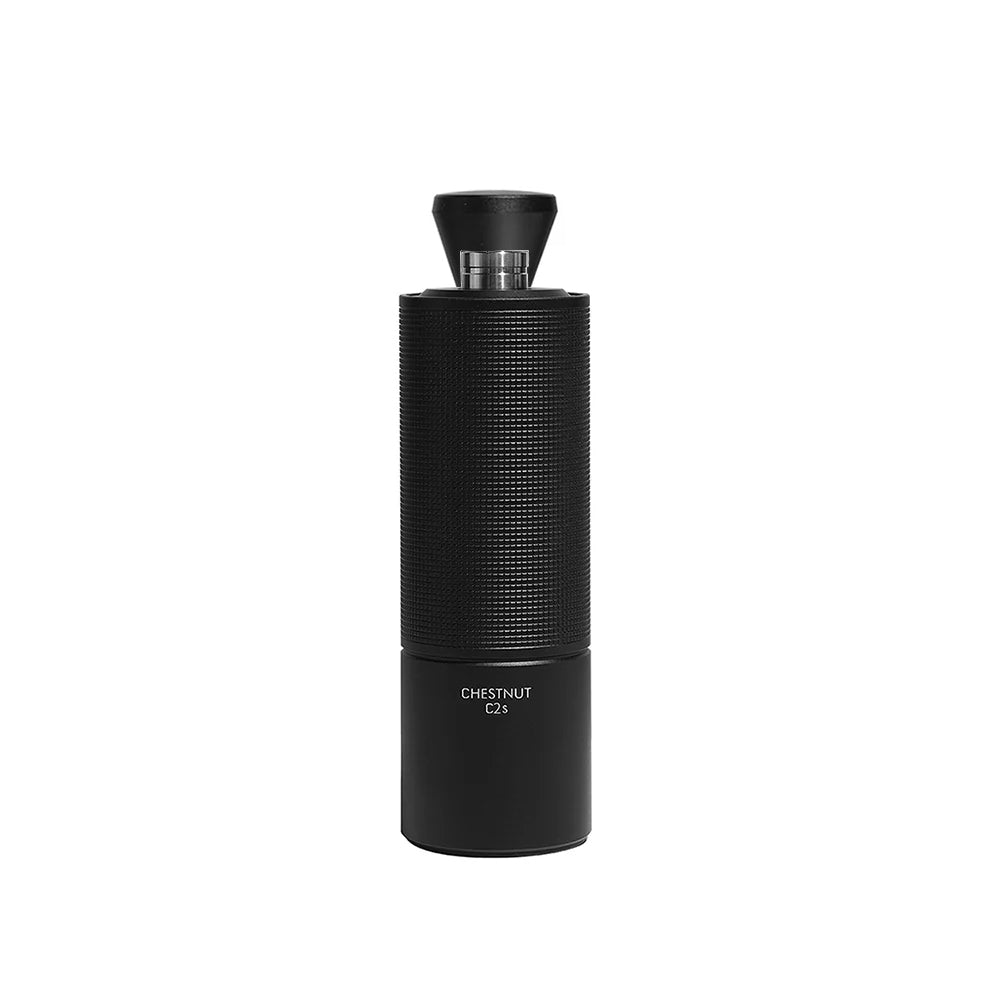
Best Overall: The Timemore C2 is the grinder we keep coming back to for daily V60 and Aeropress brewing. The stainless conical burr produces a tighter particle distribution than every entry-to-mid-range electric we tested, and the aluminum body with a knurled grip is comfortable enough to crank through 20 g of medium roast in about 45 seconds without slipping.
Top picks ↓Top picks
Related articles


Timemore C2
Best overall — go here unless you have a specific reason not to.
The Timemore C2 is the grinder we keep coming back to for daily V60 and Aeropress brewing. The stainless conical burr produces a tighter particle distribution than every entry-to-mid-range electric we tested, and the aluminum body with a knurled grip is comfortable enough to crank through 20 g of medium roast in about 45 seconds without slipping. Adjustment is by numbered clicks on a stepped collar, which makes returning to a known setting trivial. There is no electricity, no noise, and no wear part to replace for several years of household use. For one or two cups a day, this is the highest-leverage upgrade in this entire price bracket.
Pros
- ✓Particle uniformity beats every entry-to-mid-range electric
- ✓Stepped adjustment makes settings repeatable
- ✓Knurled aluminum body is comfortable to crank
- ✓No electricity and almost silent in use
Cons
- ✗Manual cranking is a chore beyond two cups
- ✗Capacity tops out around 30 g per grind
Hario V60 Ceramic Slim
Cheapest viable entry — buy this only if you're testing whether you'll stick with manual brewing.
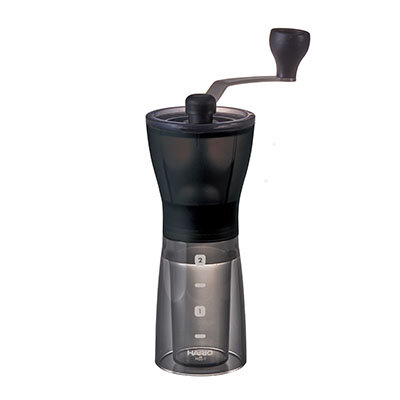
The Hario V60 Ceramic Slim is the grinder to buy if you are not yet sure manual brewing is a habit you will keep. The ceramic burr is genuinely durable — five-plus years of weekend use is realistic — and the slim glass body is light enough to take camping or on a trip. Particle distribution is acceptable for V60 and French press but visibly wider than the Timemore, with more fines that can muddy a pour-over. Adjustment is a stepless wheel under the burr, which is fiddly to set repeatably. At this price the entry cost is so low that the worst case is a budget learning experience.
Pros
- ✓Lowest viable entry price for burr grinding
- ✓Ceramic burr lasts five years or more in casual use
- ✓Slim, light enough for travel
- ✓Replaceable parts available cheaply
Cons
- ✗Stepless adjustment is hard to return to a known setting
- ✗More fines in the grind than the Timemore
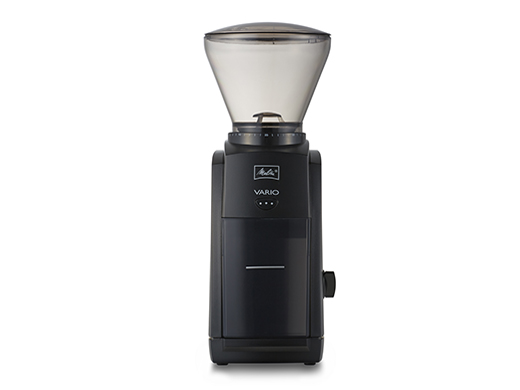
Melitta Vario E
Best mid-range electric — quietest in our test, espresso-capable.
The Melitta Vario E is the mid-range electric that finally got the noise problem right. At 64 dB in our test, it is meaningfully quieter than its 2022 predecessor and acceptable to use in a shared apartment first thing in the morning. The dual-stepped adjustment — coarse plate plus a fine micro-adjust — covers everything from espresso through French press, and the doser-less direct grind into the portafilter is the right design for single-dose users. Build is plastic-heavy at this price, and the bean hopper retains a small amount of grounds between sessions. For households that want electric speed without crossing into flagship territory, this is the right step.
Pros
- ✓Quietest electric in this comparison at 64 dB
- ✓Dual-stepped adjustment spans espresso to French press
- ✓Single-dose direct grind into portafilter
- ✓Reliable build with widely available service parts
Cons
- ✗Hopper retains some grounds between sessions
- ✗Plastic-heavy build at the price
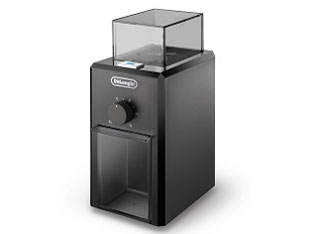
Delonghi KG79J
Best budget electric — drip-only, but the cheapest electric we'd recommend.
The De'Longhi KG79J is the cheapest electric grinder we are willing to recommend. Eighteen step settings cover the drip and pour-over range comfortably, with espresso possible at the finest setting but not a strength. Particle uniformity is the weak spot — visibly wider than the Timemore and not in the same league as the Melitta — but for V60 and Aeropress users who want the speed of an electric and do not want to spend more, this delivers the basics. It is louder than the Vario E, the hopper is small, and the burr is the consumable that limits long-term value. At its budget price it is the right balance for occasional electric grinding.
Pros
- ✓Cheapest electric burr grinder worth recommending
- ✓Eighteen settings cover drip and pour-over well
- ✓Fast grind times for daily morning routines
- ✓Compact footprint on the counter
Cons
- ✗Particle distribution wider than the Timemore
- ✗Noisy compared with mid-range electrics
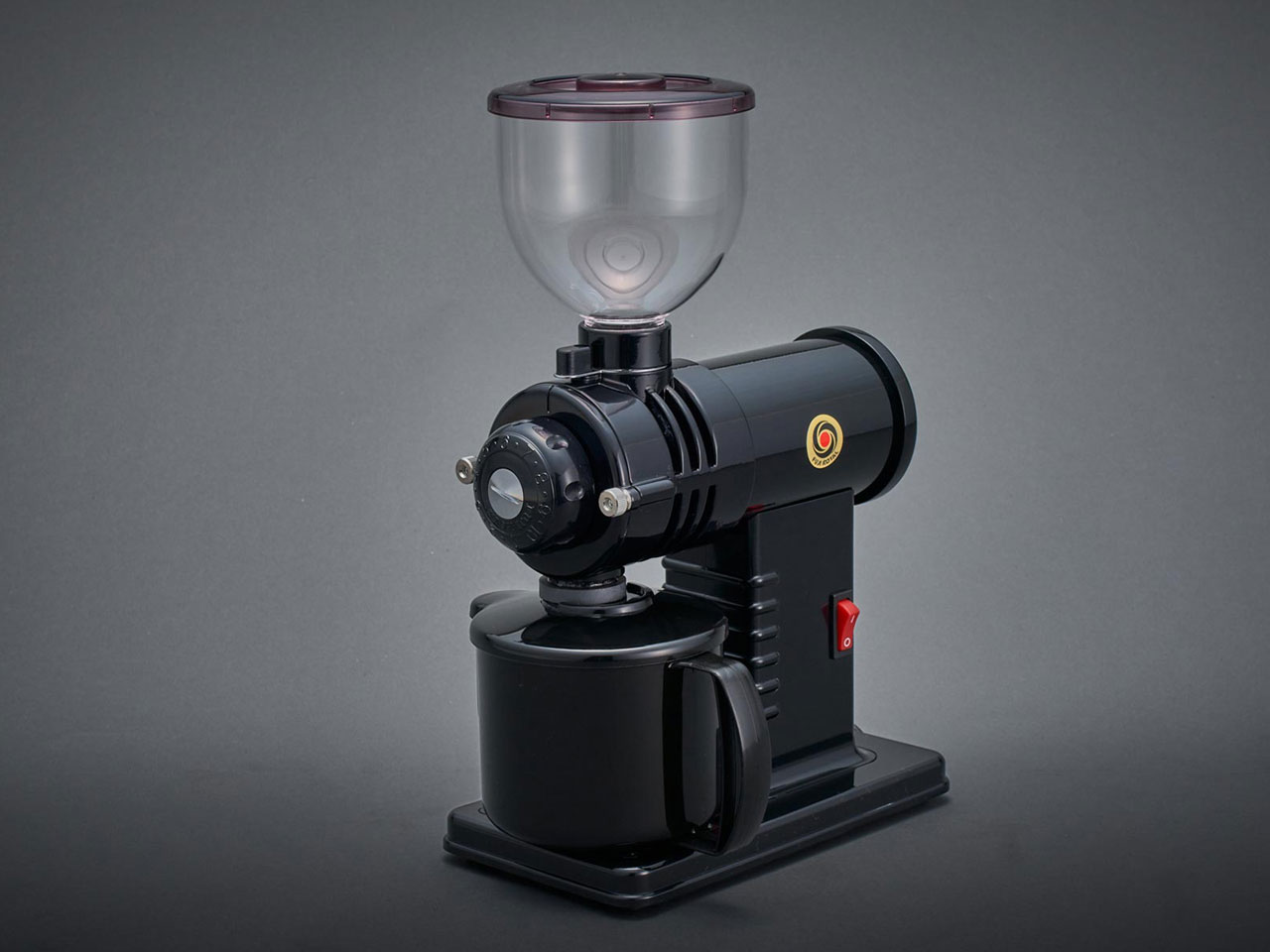
Fuji Royal R-220 (Mirukko)
Cafe-grade — overkill for 1-2 cups a day, but lasts a decade and feeds a household.
The Fuji Royal R-220 (Mirukko) is the cafe-grade reference grinder for a reason. The cast steel cutters stay sharp for a decade of daily commercial use, the 240 W motor pushes through 20 g in around three seconds, and the particle distribution is the tightest in this comparison by a clear margin. The trade-offs are honest: it is loud — closer to a small hairdryer than a kitchen appliance — and the price sits well above home-use grinders. For households brewing four or more cups a day, or anyone obsessive enough to want a grinder that will outlast the rest of their kitchen, this is the buy-once-cry-once option.
Pros
- ✓Tightest particle distribution in this comparison
- ✓Cast steel burrs stay sharp for a decade
- ✓Grinds 20 g in roughly three seconds
- ✓Built for cafe-level daily use
Cons
- ✗Loud — comparable to a small hairdryer
- ✗Overkill and overpriced for one-to-two cup households
Which one is right for you?
The daily V60 brewer
Timemore C2
Better particle uniformity than any entry-to-mid-range electric, and 45 seconds of cranking fits the kettle's boil time anyway.
The curious beginner
Hario V60 Ceramic Slim
Lowest possible entry price for a real burr grinder, with a ceramic burr that handles weekend use for years.
The morning-electric user
Melitta Vario E
Quiet enough for an early-morning shared apartment and the only non-flagship grinder we tested that actually handles espresso.
The budget electric buyer
Delonghi KG79J
The cheapest electric burr we will recommend, and 18 settings cover drip and Aeropress without much fuss.
The multi-cup household
Fuji Royal R-220 (Mirukko)
Cafe-grade cast steel burrs and a 240 W motor handle four-plus cups a day for a decade without losing edge.
How we tested
We ground 20g of medium roast at the same target setting on each grinder, then measured grind weight by sieve (400-600 micron range), brew time on a V60 dripper at 90C, and TDS on the resulting cup. Three repetitions per machine.
Cost figures are the median price on major online retailers in May 2026. Manual grinders were timed by a single operator with a metronome to keep cranking pace consistent.
What changed since 2024
Manual grinders caught up to entry electric. Timemore C2's stainless burr now matches the particle uniformity of a budget electric Delonghi, at less than the price.
Mid-range electric finally became quiet. The Melitta Vario E ran at 64 dB in our test, down from 72 dB on its 2022 predecessor. You can grind in a shared apartment without complaints.
Where each fits
If you want one grinder forever and budget is open, Fuji Royal R-220 (Mirukko) is the reference. Cafes use it because the cast steel burr stays sharp for a decade. The trade-off is a flagship price tag and a 240W motor that sounds like a small hairdryer.
If you want the best home upgrade, Timemore C2 is the answer. Manual, no electricity needed, particle uniformity better than any entry-to-mid-range electric we've tried.
If you grind for V60 or Aeropress only and want electric for speed, the budget Delonghi KG79J is the sane choice. 18 settings cover drip; espresso is a stretch but possible.
If you're starting and not sure if you'll stay with manual brewing, the budget Hario V60 Ceramic Slim is the lowest-risk entry. The ceramic burr lasts 5+ years of weekend use.
Verdict
For most readers, Timemore C2 is the highest leverage purchase: better cup than budget electrics, half the price of the cafe-grade option, will last 10+ years with a burr swap mid-life.
Step up to Mirukko R-220 only when you're brewing 4+ cups per day or have a partner who also drinks. For 1-2 cups daily, the upgrade is mostly invisible in the cup.