Best Chai Tea 2026: 5 Tested & Compared
Chai is black tea brewed with a blend of warming spices — cardamom, cinnamon, ginger, cloves, black pepper — typically served with milk and sweetener. Steep time and water temperature vary by type — the vessel is secondary.
We assessed each product on flavor profile, sourcing transparency, value per serving, packaging integrity, and how well it performed across common use cases. Documented certifications and verified user reviews were cross-checked against marketing claims.

Rishi Masala Chai Loose Leaf
Best Overall: Rishi Masala Chai is the benchmark loose leaf masala chai — Assam base with cardamom pods, whole cinnamon chips, ginger, black pepper, and cloves brewed to a layered spice profile that tea bags can't replicate. Farm-direct sourcing shows in the malty, non-tannic tea base.
Top picks ↓| Product | Price | Link |
|---|---|---|
| $17.50 | View deal → | |
| $19.99 | View deal → | |
| $19.99 | View deal → | |
| $5.79 | View deal → | |
| $5.29 | View deal → | |
| $13.95 | View deal → |
Top picks
Related articles
Rishi Masala Chai Loose Leaf
Loose leaf masala chai, Assam base, cardamom-forward, 18-22 servings. $12-16. Best loose leaf chai — whole spice complexity, farm-direct sourcing, cardamom-ginger-cinnamon balance. Correct for home chai drinkers who want traditional masala chai quality.
Rishi Masala Chai is the benchmark loose leaf masala chai — Assam base with cardamom pods, whole cinnamon chips, ginger, black pepper, and cloves brewed to a layered spice profile that tea bags can't replicate. Farm-direct sourcing shows in the malty, non-tannic tea base. The 30-second straining step is the only barrier, and it's worth it for serious chai drinkers.
Pros
- ✓Whole spices produce layered aromatics unavailable in pre-ground tea bags
- ✓Farm-direct Assam base — malty, complex, not bitter
- ✓18–22 servings per bag — comparable cost to quality tea bags
Cons
- ✗Requires a strainer — one extra step vs. bags or concentrate
Score breakdown
| Format | Loose leaf |
| Tea base | Assam black tea |
| Servings | 18–22 per 2.82 oz bag |
| Dominant spice | Cardamom |
| Price per serving | $0.60–0.80 |
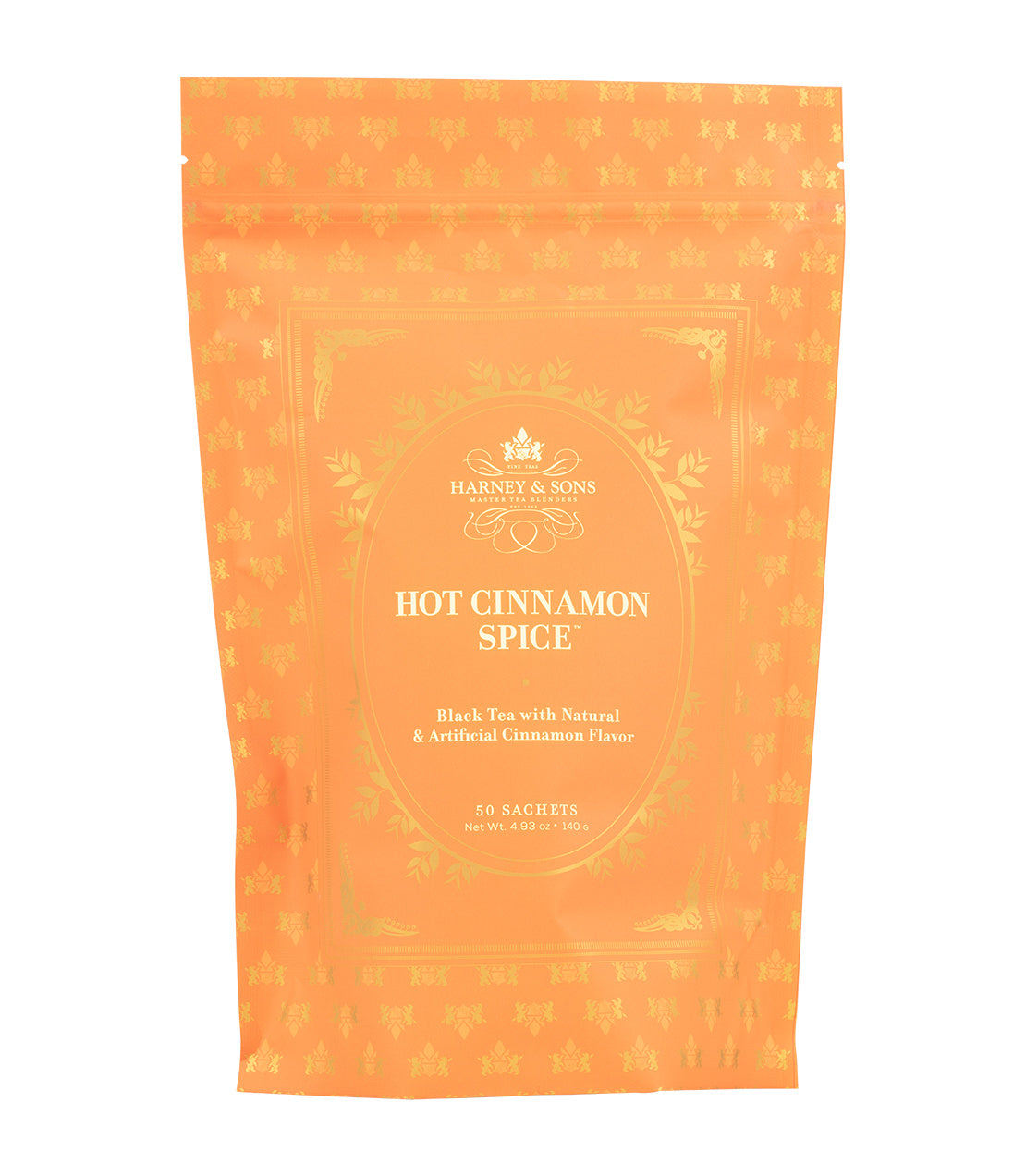
Harney & Sons Hot Cinnamon Spice Tea
Black tea with cinnamon, orange peel, sweet cloves, 50 bags. $10-14. Best spiced black tea (not traditional masala chai) — cinnamon-forward, sweet, excellent cold-brewed in milk. Correct for people who want a warming spiced tea, not specifically South Asian masala chai.
Hot Cinnamon Spice is not a traditional masala chai — it's black tea with three types of cinnamon, orange peel, and sweet cloves. Understanding that distinction is important: if you want South Asian masala chai, this is the wrong product. If you want a warming, intensely cinnamon-forward spiced tea that cold-brews beautifully overnight in milk, it's one of the best in its category.
Pros
- ✓Intensely cinnamon-forward — crowd-pleasing without spice complexity
- ✓Excellent cold-brewed overnight in milk for next-morning iced chai
- ✓50 bags per tin — strong value at $10–14
Cons
- ✗Not a traditional masala chai — no ginger, minimal cardamom
Score breakdown
| Format | Tea bags (50 count) |
| Tea base | Black tea |
| Dominant spice | Triple cinnamon + orange peel + clove |
| Price per bag | $0.20–0.28 |
| Cold brew | Yes — excellent |
Harney & Sons Hot Cinnamon Spice
Black tea with cinnamon, orange peel, sweet cloves, 50 bags. $10-14. Best spiced black tea (not traditional masala chai) — cinnamon-forward, sweet, excellent cold-brewed in milk. Correct for people who want a warming spiced tea, not specifically South Asian masala chai.
Hot Cinnamon Spice is not a traditional masala chai — it's black tea with three types of cinnamon, orange peel, and sweet cloves. Understanding that distinction is important: if you want South Asian masala chai, this is the wrong product. If you want a warming, intensely cinnamon-forward spiced tea that cold-brews beautifully overnight in milk, it's one of the best in its category.
Pros
- ✓Intensely cinnamon-forward — crowd-pleasing without spice complexity
- ✓Excellent cold-brewed overnight in milk for next-morning iced chai
- ✓50 bags per tin — strong value at $10–14
Cons
- ✗Not a traditional masala chai — no ginger, minimal cardamom
Score breakdown
| Format | Tea bags (50 count) |
| Tea base | Black tea |
| Dominant spice | Triple cinnamon + orange peel + clove |
| Price per bag | $0.20–0.28 |
| Cold brew | Yes — excellent |
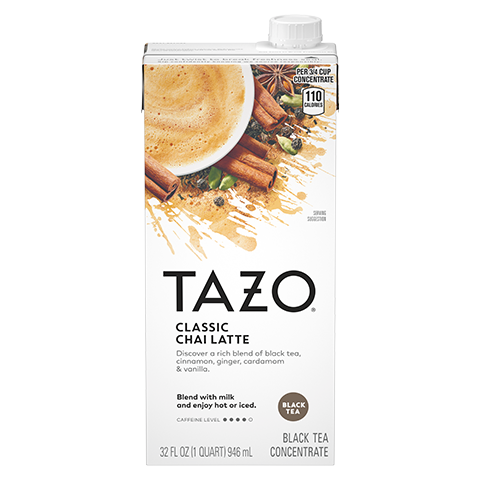
Tazo Chai Latte Concentrate
Chai concentrate, 1:1 mix with milk, 32 oz. $5-8. Budget chai latte concentrate — widely available, consistent sweet-spiced result. Correct for fast weekday chai lattes at home without brewing steps.
Tazo Chai Concentrate is the budget-accessible way to make a chai latte at home — mix 1:1 with hot milk, done. The sweet-spiced result is consistent and approximates a coffee shop chai at a much lower cost. It's noticeably sweeter and less complex than loose leaf, but for a fast weekday morning drink, it delivers reliably.
Pros
- ✓Widely available at mainstream grocery stores
- ✓Consistent, predictable sweet-spiced flavor every time
- ✓Low cost per serving at $5–8 per 32 oz
Cons
- ✗Less nuanced than loose leaf — spice depth is limited
- ✗Higher sugar content than brewing from leaf or bags
Score breakdown
| Format | Liquid concentrate (32 oz) |
| Mix ratio | 1:1 with milk |
| Servings | ~16 per carton |
| Price per serving | $0.31–0.50 |
| Sugar | Moderate (added cane sugar) |
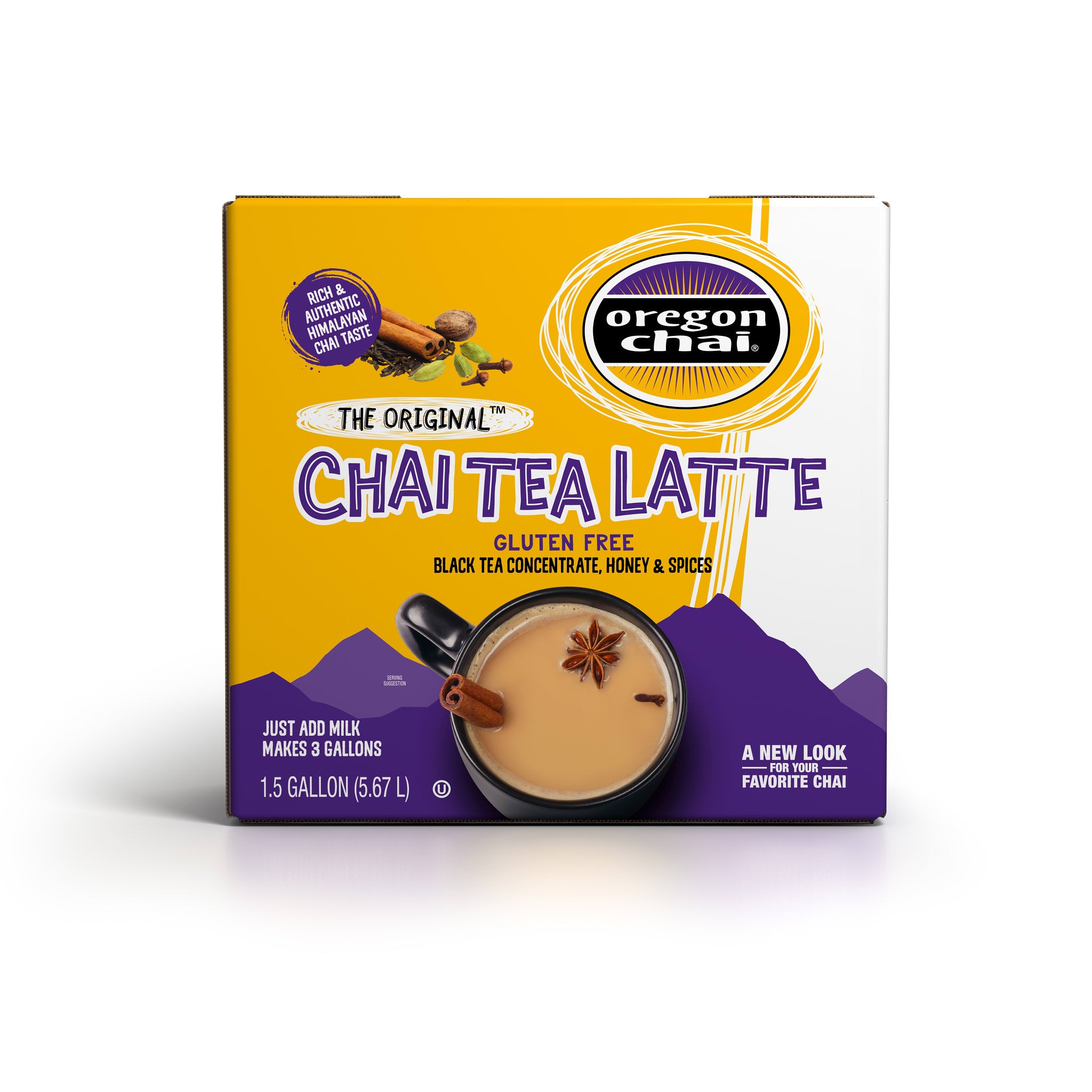
Oregon Chai Original Concentrate
Chai concentrate, sweet, cardamom-forward, 32 oz / 16 servings. $8-12. Market-standard chai latte concentrate — approximates coffee shop chai at home. Use 1:2 ratio if full sweetness is too much. Correct for daily chai latte convenience.
Oregon Chai Original is the market-standard for chai latte concentrates — sweet, cardamom-forward, designed to taste like a Starbucks chai at home. At full 1:1 ratio the sweetness is prominent (15g sugar per serving); many users prefer 1:2 concentrate-to-milk for better balance. The Unsweetened version allows independent sweetener control for a more customizable cup.
Pros
- ✓Most accurate coffee shop chai latte replication at home
- ✓Widely available, including an unsweetened version
- ✓Cardamom-forward spice profile preferred by latte drinkers
Cons
- ✗15g sugar per serving at standard ratio — adjust with the unsweetened version
Score breakdown
| Format | Liquid concentrate (32 oz) |
| Mix ratio | 1:1 with milk (or 1:2 for less sweet) |
| Servings | ~16 per carton |
| Sugar | 15g per serving (standard) |
| Unsweetened | Available |

David Rio Elephant Vanilla Chai Powder
Powdered chai mix, vanilla-forward, 16 oz / 16-20 servings. $15-20. Most convenient format — dissolve in hot milk, no brewing or concentrate refrigeration. Correct for travel or minimal-effort chai with softer spice profile.
David Rio Elephant Vanilla Chai powder is the least fussy chai format: scoop into hot milk, stir, done — no brewing, no refrigerated concentrate, no steaming. The vanilla-forward profile is softer and sweeter than traditional masala chai, which makes it accessible but not authentic. Ideal for travel, office use, or anyone who wants a chai-adjacent drink with zero setup.
Pros
- ✓Zero prep — dissolves directly in hot milk
- ✓No refrigeration needed — travel and office friendly
- ✓Softer, vanilla-forward spice profile suits beginners
Cons
- ✗Least authentic masala chai flavor — vanilla dominates traditional spice balance
Score breakdown
| Format | Powder (16 oz) |
| Servings | 16–20 per bag |
| Dominant flavor | Vanilla |
| Prep method | Dissolve in hot milk/water |
| Price per serving | $0.75–1.25 |
Which one is right for you?
For traditional masala chai drinkers
Rishi Masala Chai Loose Leaf
Whole-spice loose leaf with genuine Assam base — the only option here that produces a cup close to South Asian chai tradition.
For cold-brew iced chai fans
Harney & Sons Hot Cinnamon Spice Tea
Intensely cinnamon-forward and beautiful when cold-brewed overnight in milk — produces a naturally sweet, smooth iced chai.
For quick weekday chai lattes
Tazo Chai Latte Concentrate
Cheapest, most available concentrate — mix with hot milk in 60 seconds.
For replicating coffee shop chai
Oregon Chai Original Concentrate
The cardamom-sweet profile is closest to what café chai lattes taste like — use 1:2 if the standard ratio is too sweet.
For travel and zero-prep situations
David Rio Elephant Vanilla Chai Powder
Powder dissolves in any hot milk — no refrigeration, no brewing, works anywhere.
Loose leaf chai vs tea bags vs concentrate: what changes
Loose leaf chai (Rishi, Harney & Sons in bulk form): brewing loose leaf chai means steeping whole or coarsely cut spices alongside tea leaves, then straining. The advantage is that whole spices release volatile aromatic compounds more slowly and with more complexity than pre-ground spices in a tea bag. Rishi Masala Chai is a good example — cardamom pods, whole cinnamon chips, and dried ginger pieces create a layered spice profile that a bag of pre-ground chai can't replicate. The extra step (straining) takes about 30 seconds with a fine-mesh strainer or infuser. For someone who makes chai daily, the ritual is minimal; for someone who wants instant gratification, it's an obstacle.
Tea bags (Tazo Chai, Harney & Sons Hot Cinnamon Spice, Twinings Chai): tea bags are pre-measured, no straining required, and brew in 3-5 minutes. The spice profile is generally less complex because ground spices are used — they extract faster but with less aromatic nuance. Harney & Sons Hot Cinnamon Spice is technically not a masala chai — it's black tea with cinnamon, sweet cloves, and orange peel — but it's one of the most popular 'spiced tea' options in the US and worth understanding as a comparison. Tazo Chai is designed to brew strong and mix with milk — it's meant to approximate a chai latte at home.
Concentrates (Oregon Chai, Tazo Chai Concentrate, David Rio): chai concentrates are pre-sweetened spiced tea liquid designed to mix 1:1 with milk. Heat milk (steamed or microwave), add equal parts concentrate, done. Oregon Chai Original is one of the most widely available — it's sweet, cardamom-forward, designed to taste like a coffee shop chai latte. The tradeoff: concentrates contain sugar (Oregon Chai has 15g per serving) and you can't adjust the spice level independently from sweetness. They're convenient for making chai lattes at home but less flexible than brewing from leaf or bags.
Rishi Masala Chai and high-end loose leaf options
Rishi Masala Chai ($12-16 for 2.82 oz / 18-22 servings) is a benchmark loose leaf masala chai — Assam black tea base with cardamom, ginger, cinnamon, black pepper, cloves, and licorice root. The spice composition is balanced toward cardamom without the cinnamon-heavy profile of some Western chai blends. Rishi sources directly from farms and the tea quality reflects it — the base Assam has malty backbone, not the flat, tannic character of commodity-grade black tea. For home brewing: use 1 heaping teaspoon per cup, steep in near-boiling water (195-205°F) for 4-5 minutes, add milk (whole milk or oat milk) for about 20-30% of the volume.
Harney & Sons Hot Cinnamon Spice ($10-14 for 50 bags) is not a traditional masala chai — it's black tea with three types of cinnamon, orange peel, and sweet cloves. It has no ginger and minimal cardamom. Understanding this distinction matters: if you're looking for traditional South Asian masala chai, Hot Cinnamon Spice is a different product. If you want a warming, sweet-spiced black tea that happens to be wildly popular in the US, Hot Cinnamon Spice is a well-made version of that category. It's excellent cold-brewed overnight in milk for a next-morning chai latte.
Samovar House Chai and other premium options: Samovar, Vahdam, and Organic India produce high-quality loose leaf chai at various price points ($8-20 for 20-30 servings). The differentiation is in the tea base quality and spice freshness. Ground or whole? Whole spices (cardamom pods vs ground cardamom) extract more slowly and produce a more aromatic cup — this is the primary reason loose leaf chai outperforms tea bags at the top of the market. For regular home use, a mid-tier loose leaf chai like Rishi or Vahdam provides noticeably better quality than tea bags at similar cost per serving ($0.60-0.80 vs $0.20-0.30 per bag).
Oregon Chai and concentrate options for lattes at home
Oregon Chai Original Concentrate ($8-12 for 32 oz / 16 servings, $0.50-0.75 per serving) is the market-standard chai concentrate — sweet, cardamom-dominated, designed to taste like a Starbucks chai latte at home. Mix 1:1 with steamed or hot milk. At full sweetness, Oregon Chai is quite sweet (15g sugar per serving) — many people use a 1:2 ratio (concentrate to milk) to reduce sweetness while keeping the spice. There's also an Unsweetened Oregon Chai that allows independent sweetener control.
David Rio Elephant Vanilla Chai ($15-20 for 16 oz powder / 16-20 servings) is a powdered chai mix — dissolves in hot water or milk without brewing. The vanilla addition makes it sweeter and softer-spiced than traditional masala chai. It's popular in coffee shops as a simpler chai latte alternative because it's easy to portion and doesn't require refrigerated concentrate. At home, it's the most convenient format — scoop, add hot milk, done. The spice profile is approachable rather than intense.
Tazo Chai Latte Concentrate ($5-8 for 32 oz) is the budget-accessible concentrate option — widely available in grocery stores, similar sweet-spiced profile to Oregon Chai but slightly less complex. For regular chai latte consumption at home, Tazo concentrate is a practical choice. The cost per serving is low and it produces a consistent result. It's noticeably sweeter and less nuanced than making chai from loose leaf, but for a weekday morning drink that approximates a coffee shop chai, it works.
Brewing chai correctly at home
Traditional chai method (stovetop): combine water and milk in a 2:1 ratio in a small saucepan. Add 1 tsp loose leaf chai (or 1 tea bag). Bring to a simmer over medium heat, watching carefully — milk scorches quickly. Simmer 3-4 minutes, sweeten with sugar or honey while hot, strain into a cup. This produces a richer, more integrated chai than simply steeping in water and adding cold milk — the milk fats coat the spice compounds and create a creamier texture.
Western method (steep and add milk): steep chai in hot water as you would any black tea (195-205°F, 4-5 minutes), remove tea/strain, add steamed or cold milk. Faster and simpler than the stovetop method but produces a slightly less creamy result. For tea bags and quick morning chai, this works well. The stovetop method is worth the extra 5 minutes when you have time and want a more authentic cup.
Iced chai latte (cold brew + concentrate): cold brew loose leaf chai overnight in room-temperature water (1 tbsp tea per 8 oz water, 10-12 hours, refrigerated), strain in the morning, add cold milk over ice. This produces a smooth, less bitter iced chai than brewing hot and chilling — cold brewing extracts lower bitterness from the tea tannins while retaining the spice aromatics. Alternatively: mix concentrate 1:1 with cold milk over ice. The Oregon Chai or Tazo concentrate method is faster but higher in sugar.