Best Retinol Serum 2026: 5 Picks for Wrinkles & Acne
Retinol is the most evidence-backed OTC anti-aging ingredient in skincare — and also the one most users abandon within three weeks because they started at too high a concentration or didn't account for the 6-week 'retinol uglies' that come before the results. The products in this list solve the starting problem differently, and which approach fits depends on your skin's current barrier condition.
Compared on retinoid type and approximate concentration, irritation profile and skin adaptation curve, formulation pH and delivery system, packaging for retinoid stability, price per mL, and suitability for first-time versus experienced retinoid users based on long-term dermatology-community review data.
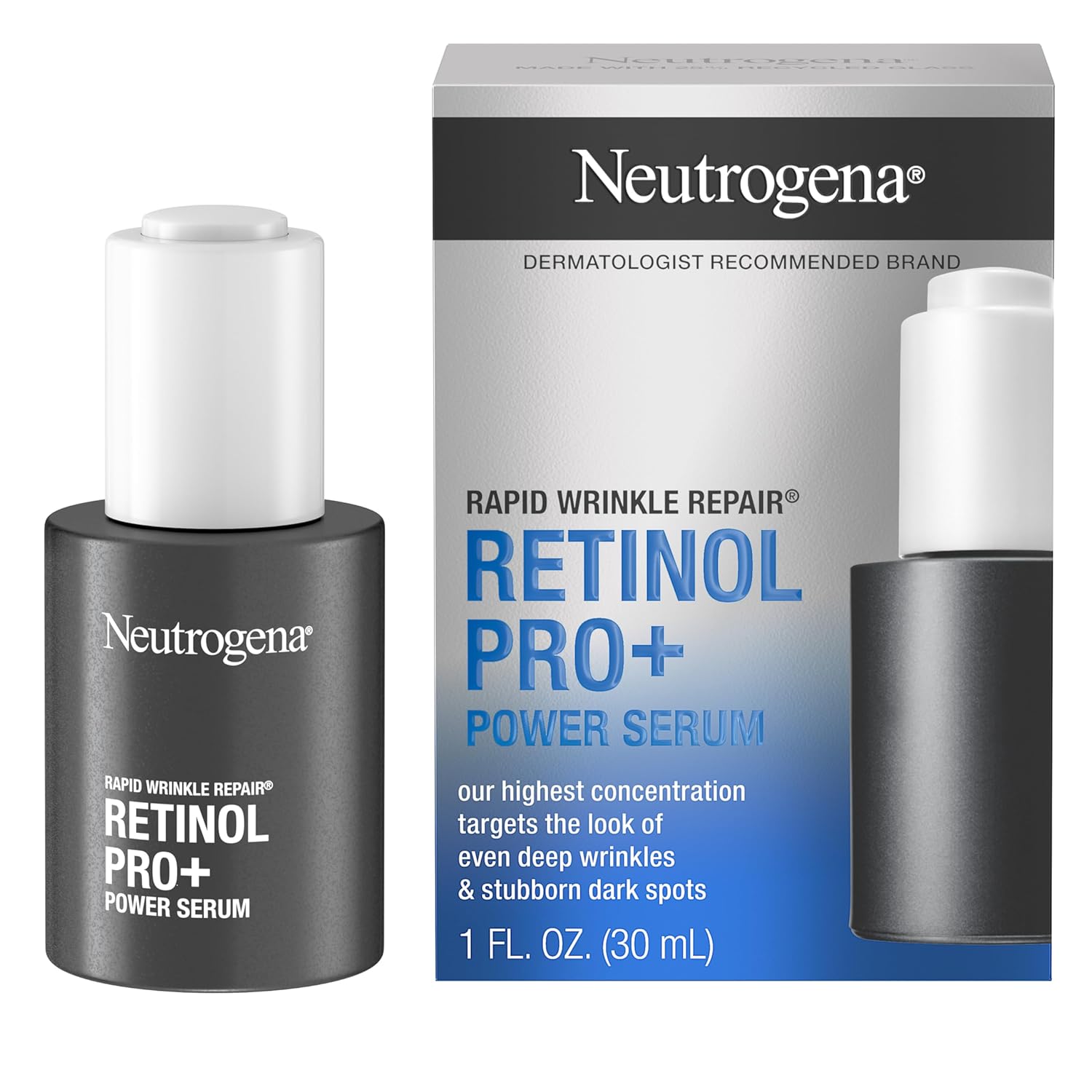
Neutrogena Rapid Wrinkle Repair Retinol Serum
Best Global Drugstore Option: Neutrogena Rapid Wrinkle Repair is the recommended first retinol for markets where Rohto isn't available — the stabilized retinol in a hyaluronic acid and glycerin base is formulated specifically for the beginner ramp-up phase, and the texture is comfortable enough on dry skin that users are more likely to maintain daily application through the 6-week tolerance-building period. At $19-$25 it's widely accessible in pharmacies across the US, Canada, Europe, and Southeast Asia.
Top picks ↓| Product | Price | Link |
|---|---|---|
| $19〜$25 | View deal → | |
| $35〜$45 | View deal → | |
| $72〜$72 | View deal → | |
| $13〜$13 | View deal → |
Top picks
Related articles
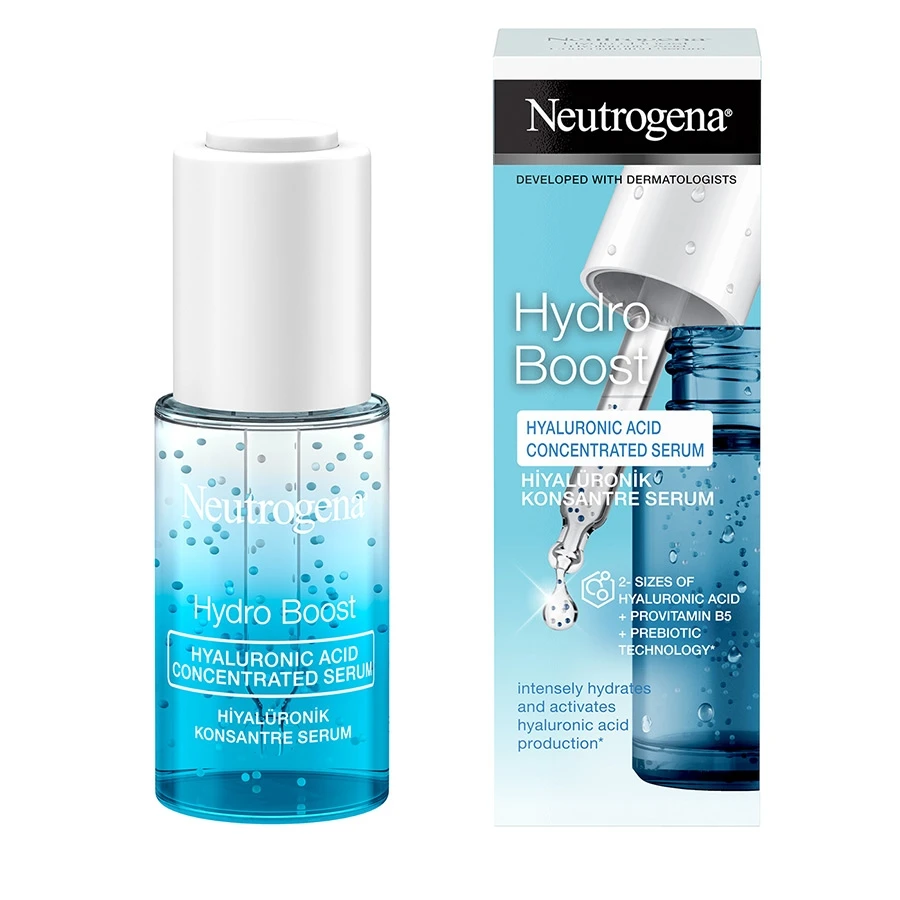


Neutrogena Rapid Wrinkle Repair Retinol Serum
Neutrogena Rapid Wrinkle Repair is the recommended first retinol for markets where Rohto isn't available — the stabilized retinol in a hyaluronic acid and glycerin base is formulated specifically for the beginner ramp-up phase, and the texture is comfortable enough on dry skin that users are more likely to maintain daily application through the 6-week tolerance-building period. At $19-$25 it's widely accessible in pharmacies across the US, Canada, Europe, and Southeast Asia. The honest weakness: retinol concentration is undisclosed, placing it likely at 0.1-0.3% — appropriate for beginners, insufficient for experienced retinol users wanting stronger progressive results.
Pros
- ✓Available in pharmacies across most global markets
- ✓Stabilized retinol in HA + glycerin base — comfortable texture for dry skin
- ✓$19-$25 price makes tolerance testing accessible
- ✓Consistent clinical studies backing efficacy for fine lines at 12 weeks
Cons
- ✗Retinol concentration undisclosed — efficacy ceiling is unclear
- ✗Not strong enough for established retinol users
Score breakdown
| Retinoid Type | Stabilized retinol |
| Concentration | Undisclosed (est. 0.1–0.3%) |
| Price | $19–$25 |

RoC Retinol Correxion Line Smoothing Serum
RoC Retinol Correxion uses a patented microencapsulation technology that slows retinol release on contact with skin — the concentration spike that causes flaking and redness in the first weeks of retinol use is substantially reduced, making this the pick for users who have previously abandoned retinol due to irritation. The 20+ year clinical study portfolio makes RoC the most evidence-supported non-prescription retinol product in Western markets. Rich moisturizing base adds a second buffer. The honest weakness: the gentler release curve means visible results take longer to appear than unencapsulated products at equivalent stated concentrations — if you want fast visible change and have established tolerance, an unencapsulated 0.5-1% product will produce faster surface results.
Pros
- ✓Patented microencapsulation reduces irritation without sacrificing retinoid activity
- ✓Largest clinical study portfolio of any OTC retinol brand
- ✓Rich base ideal for first-time retinol users with dry or combination skin
- ✓20+ years of market safety data
Cons
- ✗Slower visible results than unencapsulated high-concentration products
- ✗Not widely available in Japan
Score breakdown
| Retinoid Type | Microencapsulated retinol |
| Concentration | Undisclosed |
| Price | $35–$45 |
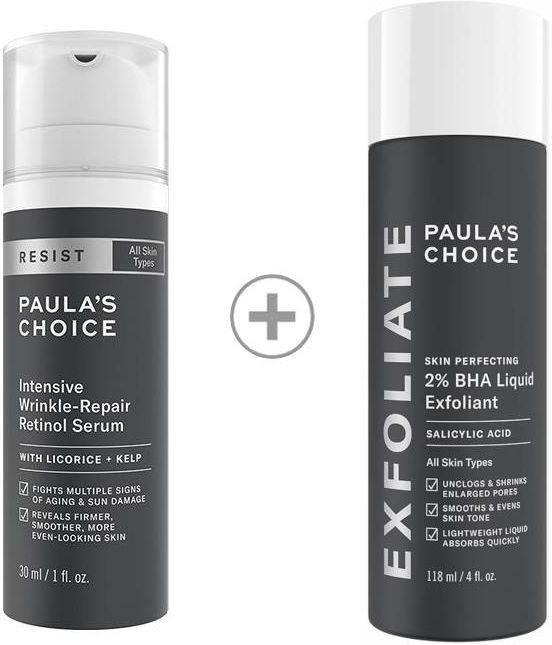
Paula's Choice Clinical 1% Retinol Treatment
Paula's Choice Clinical 1% Retinol Treatment pairs 1% retinol with 0.3% salicylic acid in a lightweight serum format designed specifically for oily, acne-prone, and textured skin. The BHA component chemically exfoliates dead skin cells, improving retinol penetration and clearing congested pores simultaneously — this dual-active approach addresses both visible pores and skin renewal in a single step. At $72, this is premium-channel pricing for a premium-channel efficacy profile. The honest weakness: 1% retinol plus active BHA is a heavy skin load. Using this without prior retinol experience will almost certainly cause 4-6 weeks of purging, peeling, and sensitivity — establish retinol tolerance with a weaker product first.
Pros
- ✓1% retinol is the OTC maximum — full potency without prescription
- ✓0.3% BHA exfoliates and improves retinol penetration simultaneously
- ✓Lightweight serum texture suited to oily and acne-prone skin
- ✓Paula's Choice transparency on ingredient percentages and formulation rationale
Cons
- ✗$72 is premium pricing — overkill for retinol beginners
- ✗High skin load requires prior retinol tolerance before starting
Score breakdown
| Retinoid Type | Retinol |
| Concentration | 1% |
| Price | $72 |
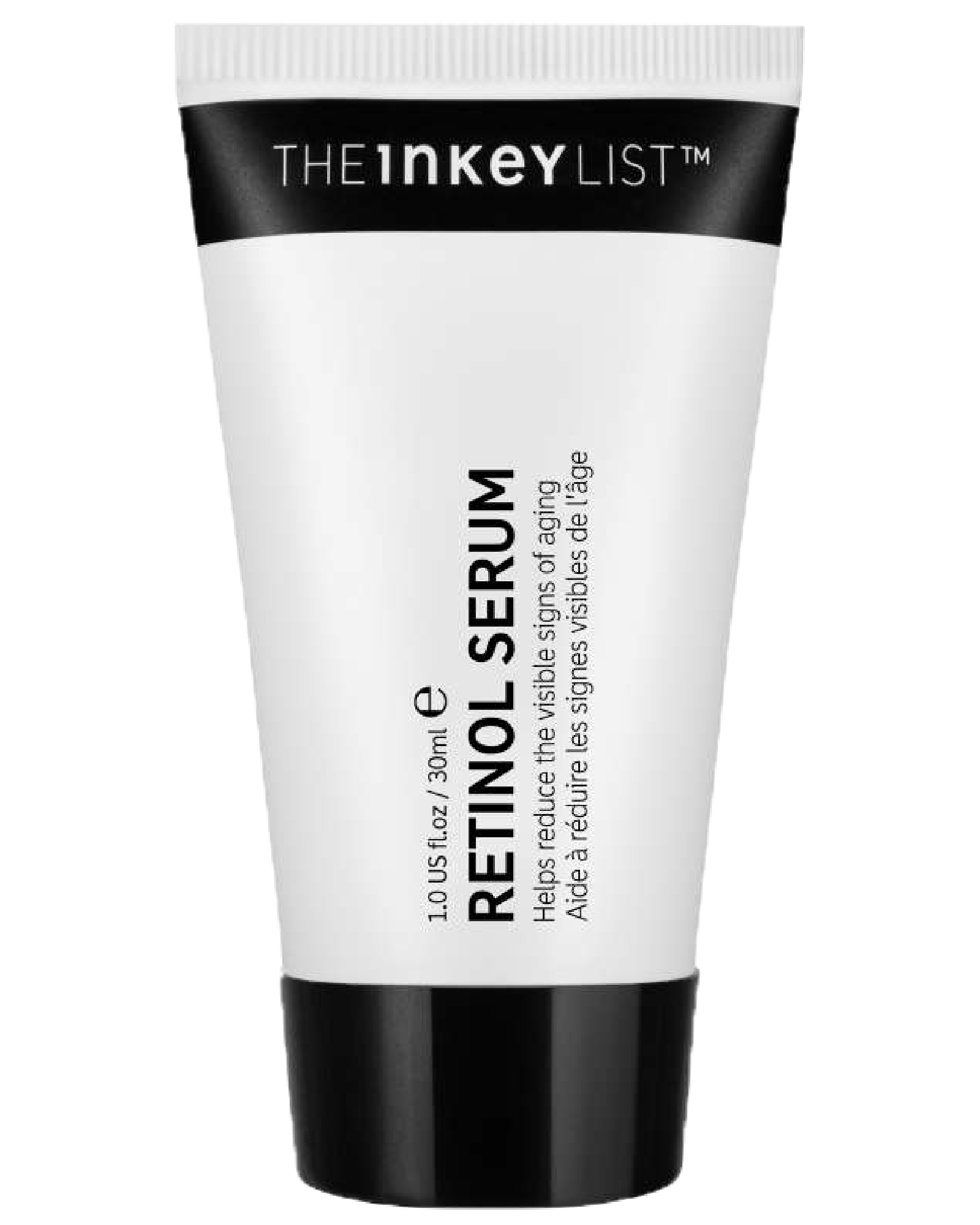
The Inkey List Retinol Serum
The Inkey List Retinol Serum uses 1% granactive retinoid (retinyl retinoate — a retinoid ester approximately one-fifth the potency of retinol at equivalent concentration) in a stabilized base at $13. The lower conversion potency makes this the most forgiving retinoid product in this comparison — suitable for genuine first-timers who want to know what retinoid adaptation feels like before committing to full retinol. At this price, a bottle lasting 4-6 weeks costs essentially nothing to test. The honest weakness: granactive retinoid is explicitly a starting-point active. Anyone who has used 0.3%+ retinol and wants continued progress will find this product insufficient — the potency ceiling is real, and it's lower than any other product in this comparison.
Pros
- ✓$13 — lowest barrier to entry in this comparison
- ✓Granactive retinoid is the mildest retinoid derivative — almost no irritation
- ✓Stabilized formula in small bottle suited to travel and testing
- ✓Widely available in UK, US, Canada, Europe online
Cons
- ✗Granactive retinoid is ~5x less potent than equivalent retinol — limited efficacy ceiling
- ✗Not available in Japan through standard channels
Score breakdown
| Retinoid Type | 1% granactive retinoid (retinyl retinoate) |
| Concentration | ~0.2% retinol equivalent |
| Price | $13 |
Which one is right for you?
For beginners getting started
retinol-serum-rohto-a
Rohto Retino A's stabilized retinol formulation is dermatology-recommended with clear dosage steps and a long safety track record for Asian skin types.
For budget entry-level retinol
Neutrogena Rapid Wrinkle Repair Retinol Serum
Neutrogena's stabilized retinol is widely available globally, forgiving in the ramp-up phase, and inexpensive enough that tolerance-testing doesn't feel costly.
For established retinol users wanting proven results
RoC Retinol Correxion Line Smoothing Serum
RoC's microencapsulated retinol in a moisturizing base has 20+ years of clinical study data and delivers faster visible improvement with less flaking than unencapsulated alternatives.
For oily and acne-prone skin combining retinol with exfoliation
Paula's Choice Clinical 1% Retinol Treatment
Paula's Choice 0.3% retinol paired with BHA addresses both skin texture and pore visibility simultaneously — the combination works best for oily skin that can handle the dual actives.
How we compared
Retinol, retinal (retinaldehyde), and retinyl esters are all forms of vitamin A, but they're not interchangeable in terms of potency or irritation. Retinol converts to retinoic acid (the active form) via a two-step enzymatic process in the skin; retinal converts via one step and is roughly 11 times more potent at equivalent concentrations; retinyl esters (retinyl palmitate, retinyl acetate) convert via three steps and are significantly milder. Over-the-counter products in most countries can only sell the precursor forms — retinoic acid itself requires a prescription in Japan, the US, the EU, and most markets. What this means practically: a 0.1% retinol product and a 0.3% retinol product are not in the same efficacy tier, and a product marketing '2% retinol' should be evaluated on whether that 2% is retinol, retinyl ester, or a blend.
We assessed each product on the retinoid type, the approximate concentration (where disclosed — many brands bury the retinoid in the ingredient list without stating the percentage), the delivery mechanism (microencapsulation extends stability and slows release for less concentrated irritation spikes), the formulation context (retinol in a rich moisturizing base is tolerated better than retinol in a thin serum on dry skin), and the price relative to both the concentration and the track record of clinical study.
What changed in 2026
The biggest shift in retinoid skincare in 2025-2026 is the mainstreaming of bakuchiol as either a solo alternative or a retinol blend partner. Bakuchiol — a plant-derived compound from Psoralea corylifolia seeds — upregulates retinoid receptors through a different mechanism than retinol, with significantly lower irritation, and can be used during pregnancy (where retinoids are contraindicated). Several brands including INCI-compliant K-beauty lines and Byoma have launched bakuchiol + retinol combination products that deliver retinoid-class results with a gentler ramp-up curve. We've noted where bakuchiol alternatives exist as a relevant stepping stone.
Rohto's Retino A line received a formulation update in late 2025 with improved stabilized retinol percentages across its three-product range (Mild, Standard, Strong), and the stabilization technology now matches European professional-channel products at a fraction of the price. Separately, Korea's COSRX and Some By Mi both launched dedicated retinol lines for Asian skin in 2025 that are worth watching as they accumulate long-term user data. The FDA's 2025 guidance on OTC retinol concentrations hasn't changed the 0.3% upper limit for US mass-market products, keeping the gap between OTC and prescription tretinoin meaningful for aggressive anti-aging use cases.
Where each fits
Rohto Retino A is the starting point for anyone who wants dermatology-validated retinol at a drugstore price. The product comes in three strengths — Mild (0.025%), Standard (0.05%), and Strong (0.1%) — following the same step-up concentration protocol that dermatologists recommend for prescription retinoids. The stabilized retinol formulation doesn't require refrigeration and the emollient base significantly reduces the dryness and peeling of first-month retinol use. Honest weakness: the fragrance in the Standard and Strong formulations is a significant irritant for fragrance-sensitive users, and the company doesn't disclose this clearly in the ingredient labeling.
Neutrogena Rapid Wrinkle Repair ($19–$25 globally) is the mass-market pick for budget-conscious beginners. The stabilized retinol + hyaluronic acid formula is designed to minimize the ramp-up irritation phase, and the glycerin-rich moisturizing base is particularly well-suited to dry skin types who experience the most flaking and discomfort in the first month of retinol use. Available in most pharmacies worldwide. Honest weakness: the retinol concentration isn't disclosed — the formulation is likely in the 0.1-0.3% range based on observed efficacy timeline, which means it's appropriate for beginners but won't be sufficient for experienced users who've built tolerance.
RoC Retinol Correxion Serum ($35–$45) is the pick for people who have tried and abandoned retinol before due to irritation. The microencapsulated retinol release slows the initial skin contact and reduces the concentration spike that causes flaking and redness in the first 4-6 weeks — RoC's microencapsulation technology is patented and the 20+ year clinical study portfolio is the largest of any non-prescription retinol product in Western markets. The rich moisturizing base adds another buffer layer. Honest weakness: slower release means visible results take slightly longer to appear than high-concentration unencapsulated products, and the product is unavailable in Japan.
Paula's Choice Clinical 1% Retinol Treatment ($72) positions itself at the high-concentration end of OTC retinol, pairing 1% retinol with 0.3% BHA (salicylic acid) in a serum format. The dual-active approach addresses both surface texture (BHA exfoliates dead skin, clearing the path for retinol penetration) and deeper skin renewal simultaneously. This is the pick for oily, acne-prone, or textured skin types where both exfoliation and retinoid activity are needed. Honest weakness: 1% retinol plus active BHA is a significant skin load for anyone without established retinol tolerance — starting here without prior retinol experience is likely to produce substantial irritation, and at $72 it's expensive for a product that may cause 4-6 weeks of purging and sensitivity.
The Inkey List Retinol Serum ($13) is the budget pick for retinol and a good first-time option for anyone who wants to test retinol tolerance without a meaningful financial commitment. The 1% granactive retinoid (a retinoid ester that converts at a milder rate than retinol) in a stabilized base delivers beginner-appropriate retinoid activity at a price that makes a failed experiment cost almost nothing. Honest weakness: granactive retinoid is approximately one-fifth the potency of equivalent retinol at similar concentrations, so users with established retinoid tolerance won't find this product challenging; it's explicitly a starting-point product.
Verdict
For first-time retinoid users, Rohto Retino A Mild (0.025%) is the recommendation — start with the lowest concentration, apply every third night for the first month, and step up to Standard (0.05%) once the skin stops flaking. The three-product progression system takes the guesswork out of the ramp-up protocol. For beginners who can't get Rohto locally, Neutrogena Rapid Wrinkle Repair or The Inkey List Retinol Serum are the right entry points depending on budget and access.
For users who have established retinol tolerance and want the strongest available evidence base in an OTC product, RoC Retinol Correxion is the recommendation for dry and normal skin, and Paula's Choice Clinical 1% Retinol Treatment is the recommendation for oily and acne-prone skin. Neither replicates prescription tretinoin 0.025%–0.1% — if you're in a market where tretinoin is accessible (Japan sells it as Retin-A under prescription, some Southeast Asian pharmacies stock it OTC), that remains the highest-evidence retinoid and the benchmark these products are all being compared against.
