Best Hyaluronic Acid Serum 2026: 5 Tested for Hydration
Hyaluronic acid is one of the few skincare actives that dermatologists and skeptics agree on — it unambiguously holds water in the skin. The catch is that 'hyaluronic acid serum' is an extremely broad category: a product with only high-molecular-weight HA pulls moisture from the environment and locks it on the surface, while one with low-molecular-weight fragments penetrates deeper but can dehydrate if the environment is dry. Getting lasting hydration requires knowing which molecular weight you're getting.
Assessed on disclosed molecular weight range (high, medium, low, or multiple), co-humectant and occlusive ingredients, pH and texture for layering under moisturizer, total HA concentration where disclosed, skin-feel on dry versus oily skin types, and price per mL from domestic Japan and global markets.
Hada Labo Gokujyn Hyaluronic Acid Lotion
Best Overall / Best Japan Value: Hada Labo Gokujyn uses five molecular weights of hyaluronic acid — mega, super, regular, nano, and cross-linked — stacked to address both surface film formation and deeper stratum corneum hydration in one product. At 170 mL for a budget drugstore price, no other product in this comparison comes close on value.
Top picks ↓| Product | Price | Link |
|---|---|---|
| — | View deal → | |
| $20〜$25 | View deal → | |
| $9〜$9 | View deal → | |
| $45〜$45 | View deal → | |
| $20〜$20 | View deal → |
Top picks
Related articles


Hada Labo Gokujyn Hyaluronic Acid Lotion
Hada Labo Gokujyn uses five molecular weights of hyaluronic acid — mega, super, regular, nano, and cross-linked — stacked to address both surface film formation and deeper stratum corneum hydration in one product. At 170 mL for a budget drugstore price, no other product in this comparison comes close on value. The fragrance-free, mineral oil-free formula works on sensitive, acne-prone, and oily skin equally — it's one of very few skincare products with essentially universal tolerability. The honest weakness is distribution: it's primarily available in Japan, South Korea, and select Asian grocery importers globally, limiting accessibility for most non-Japan readers.
Pros
- ✓Five molecular weights of HA — broadest hydration depth profile in this comparison
- ✓170 mL at a budget drugstore price — extraordinary value per mL
- ✓Fragrance-free and mineral oil-free — virtually universal tolerability
- ✓Best-selling hydration product in Japan by unit volume
Cons
- ✗Limited distribution outside Japan and South Korea
- ✗Marketed as 'lotion' (Japanese toner) — terminology confuses non-Japanese buyers
Score breakdown
| HA types | 5 molecular weights (mega, super, regular, nano, cross-linked) |
| Size | 170 mL |
| Price | Budget |
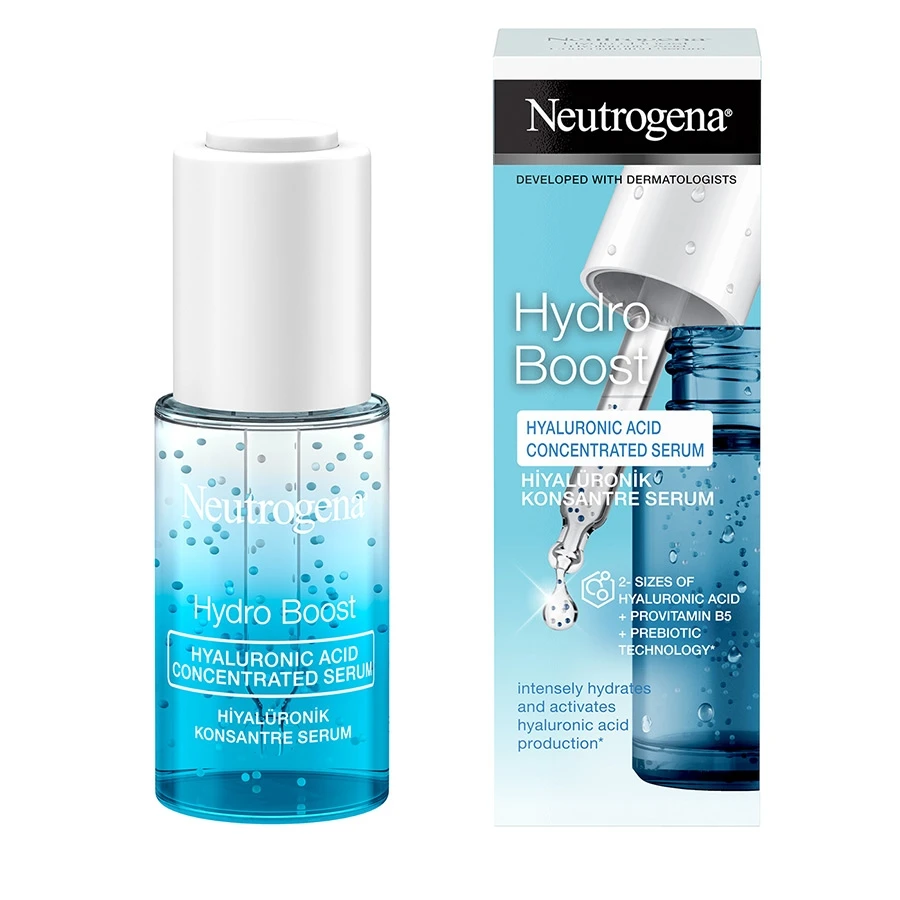
Neutrogena Hydro Boost Water Gel
Neutrogena Hydro Boost Water Gel is the most globally accessible HA product in this comparison — available in pharmacies across the US, Europe, Southeast Asia, and Japan simultaneously. The primary HA is high-molecular-weight for surface plumping, with dimethicone providing a light occlusive effect. The gel-cream texture is comfortable across humid and temperate climates. The honest weakness is that it functions better as a hydrating serum step than as the standalone moisturizer it's marketed as — in dry climates below 50% ambient humidity, the lack of meaningful low-MW HA and insufficient occlusivity can lead to 6-hour dehydration without a proper cream on top.
Pros
- ✓Sold in pharmacies in virtually every global market
- ✓Gel-cream texture comfortable for oily and combination skin in humid climates
- ✓Established 15-year Neutrogena safety and dermatologist recommendation track record
- ✓Mid-range price accessible for regular repurchase
Cons
- ✗Functions better as serum layer than standalone moisturizer in dry climates
- ✗Primarily high-MW HA only — limited penetration depth
Score breakdown
| HA type | High-molecular-weight primary |
| Size | 50 mL |
| Price | $20–$25 |
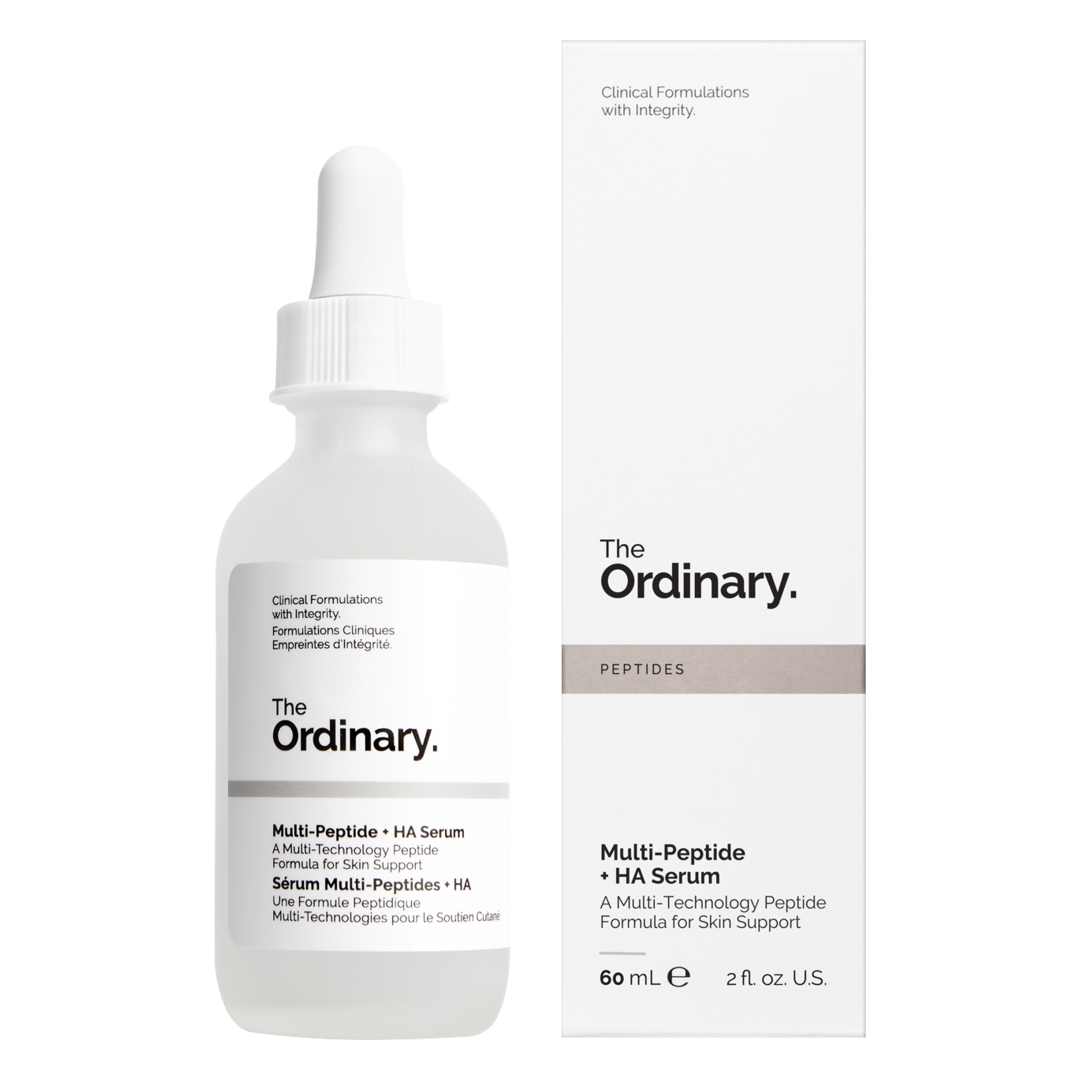
The Ordinary Hyaluronic Acid 2% + B5
The Ordinary HA 2% + B5 delivers high (1500 kDa) and low (50 kDa) molecular weight HA at a combined 2% concentration with pro-vitamin B5 for barrier conditioning at $9 for 30 mL. The formula is as minimalist as it sounds — water, HA fractions, panthenol, and a preservation system — and it layers without issue under any moisturizer or serum in any routine. At $9 it's one of the most cost-effective ways to add an HA step globally. The honest weakness: two molecular weight fractions is less comprehensive than Hada Labo's five, and the low-MW HA fraction pulls moisture out in dry climates if you're not applying an occlusive immediately after.
Pros
- ✓$9 for 30 mL — lowest price per mL of dedicated HA serum in this comparison
- ✓Fragrance-free, vegan, transparent ingredient percentages
- ✓High + low MW HA covers both surface and deeper hydration
- ✓Water-thin texture layers under anything without heaviness
Cons
- ✗Two molecular weights vs Hada Labo's five — less comprehensive depth coverage
- ✗Low-MW HA fraction causes dehydration in dry climates without occlusive on top
Score breakdown
| HA types | High (1500 kDa) + low (50 kDa), combined 2% |
| Size | 30 mL |
| Price | $9 |
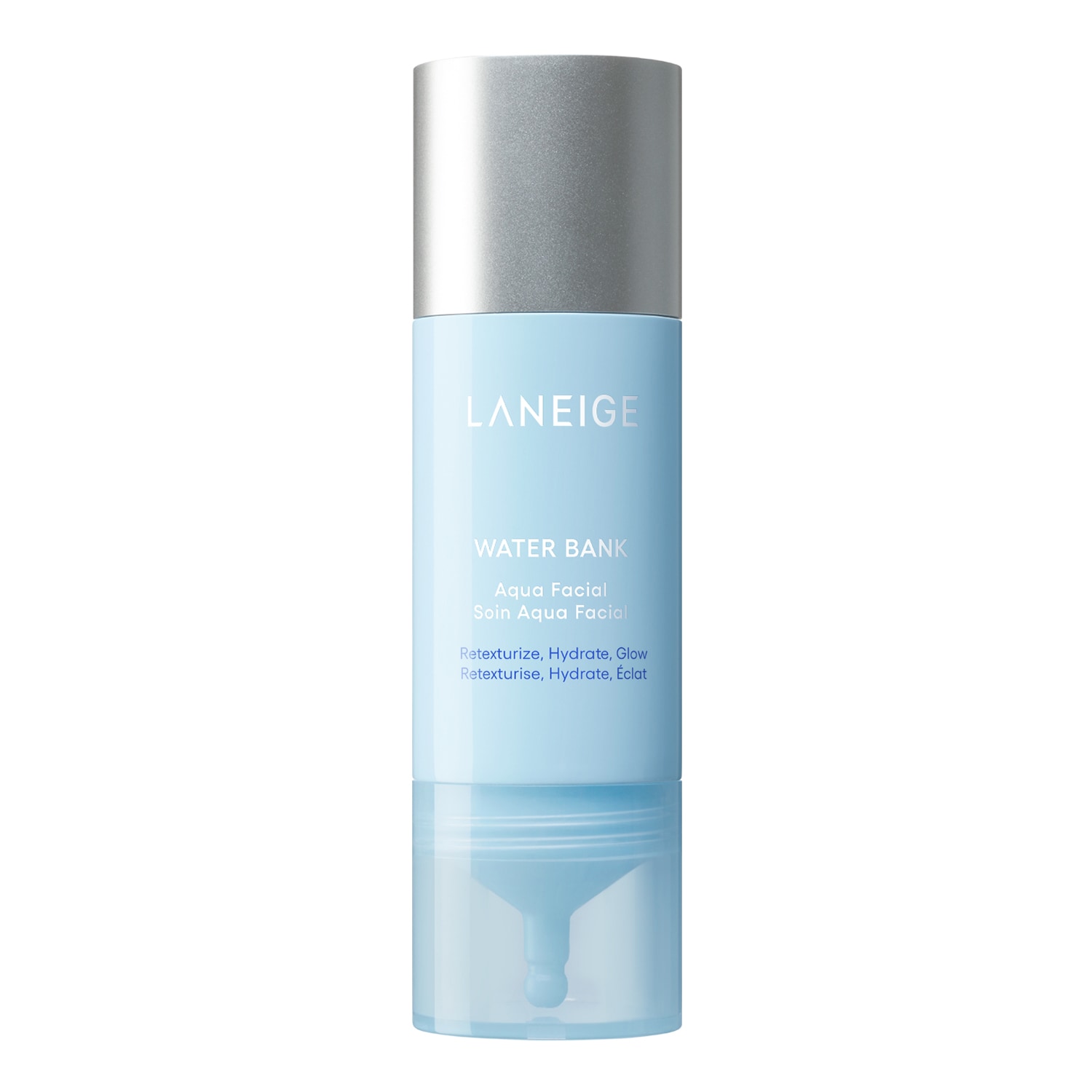
Laneige Water Bank Blue Hyaluronic Serum
Laneige Water Bank Blue Hyaluronic Serum uses fermented blue algae-derived HA alongside HA crosspolymer for a multi-textured hydration delivery that produces immediate visible plumping — the 'glass skin' effect that makes Laneige one of the most photographed skincare brands in K-beauty content. The serum performs visibly well for dry and dehydrated skin types, and the inclusion of blue agave extract extends the surface moisture film effect. At $45 for 30 mL it's the premium option in this comparison. The honest weakness: the fermented HA advantage over standard HA hasn't been independently replicated in peer-reviewed literature to date, and the price premium over Hada Labo (which outperforms on molecular-weight stacking) is not fully supported by published efficacy data.
Pros
- ✓Immediate visible surface plumping — effective 'glass skin' appearance on dry skin
- ✓Fermented blue algae HA complex for claimed enhanced skin affinity
- ✓Widely available at Sephora and global K-beauty retail channels
- ✓Premium feel and aesthetic packaging suited for gift giving
Cons
- ✗$45/30 mL — significant price premium without robust independent efficacy data
- ✗Fermented HA advantage over standard HA not peer-reviewed to date
Score breakdown
| HA type | Fermented blue algae HA + crosspolymer |
| Size | 30 mL |
| Price | $45 |

COSRX Advanced Snail 96 Mucin Power Essence
COSRX Advanced Snail 96 Mucin Power Essence at $20 for 100 mL pairs HA analogs with 96% snail secretion filtrate — a complex containing glycoproteins, glycolic acid, and growth factor analogs with documented wound-healing and barrier-repair activity. For skin that is sensitized, post-treatment, or recovering from overuse of actives, this is the hydration-plus-repair solution that outperforms dedicated HA serums in that specific context. The honest weaknesses are the faint fermented smell of snail mucin and the more limited evidence base for cosmetic-grade growth factors compared to medical-grade concentrations.
Pros
- ✓$20 / 100 mL — excellent value for combination hydration + barrier repair
- ✓96% snail mucin provides HA analogs plus glycoprotein barrier support
- ✓Recommended by Korean and Japanese dermatologists for post-active recovery
- ✓Widely available in global K-beauty retail
Cons
- ✗Faint fermented smell from snail mucin bothers some users
- ✗Cosmetic-grade growth factor concentration not equivalent to medical-grade
Score breakdown
| Key active | 96% snail secretion filtrate + HA |
| Size | 100 mL |
| Price | $20 |
Which one is right for you?
For everyday daily hydration
Hada Labo Gokujyn Hyaluronic Acid Lotion
Hada Labo Gokujyn uses five molecular weights of HA and is the highest-reviewed drugstore hydration product in Japan by a wide margin — genuinely effective and nearly universally tolerated.
For dry skin needing immediate visible plumping
Laneige Water Bank Blue Hyaluronic Serum
Laneige Water Bank Blue Hyaluronic Serum's blue algae-fermented HA complex delivers immediate surface plumping that reads as visible skin fullness, particularly effective for dry and dehydrated skin types.
For budget-conscious oily or combination skin
The Ordinary Hyaluronic Acid 2% + B5
The Ordinary HA 2% + B5 at $9 delivers two molecular weights plus pro-vitamin B5 in a water-thin texture that layers under any moisturizer without heaviness — practical for oily skin that resists richer formulas.
For combination HA and soothing repair
COSRX Advanced Snail 96 Mucin Power Essence
COSRX Advanced Snail 96 Mucin Power Essence pairs HA with snail secretion filtrate for a dual hydration and barrier-repair effect particularly valuable for sensitized or recently compromised skin.
How we compared
Hyaluronic acid (HA) is a polysaccharide that the skin produces naturally, and it's one of the primary components of the extracellular matrix. It holds water at up to 1,000 times its own weight — the headline figure in every HA marketing claim. The mechanism is real, but 'hyaluronic acid serum' as a category description masks enormous variation in what the product actually does. The critical variable is molecular weight. High-molecular-weight HA (above 1,000 kDa) sits on the skin surface, forming a film that reduces transepidermal water loss — it plumps visibly but doesn't penetrate. Low-molecular-weight HA fragments (below 50 kDa) penetrate into the stratum corneum and deliver hydration to deeper skin layers but can pull moisture outward from the skin if the environment humidity is below about 70%, leading to net dehydration in dry climates without an occlusive layer on top.
We looked at five products across the drugstore, mid-range, and K-beauty segments with significantly different HA approaches: Hada Labo's multi-weight HA stack, The Ordinary's minimalist two-weight formula, Neutrogena's mass-market Hydro Boost, Laneige's fermented blue algae HA complex, and COSRX's snail mucin and HA combination. We assessed each against the question a buyer actually needs answered: will this product hydrate my skin in the climate I live in, and will it stay comfortable under my moisturizer?
What changed in 2026
Fermented HA has gone mainstream in 2025-2026. Laneige's Water Bank Blue Hyaluronic line, launched in a reformulation in 2024, uses blue algae-fermented hyaluronic acid that the brand claims offers better skin affinity and deeper penetration than standard HA. While independent peer review of the specific fermented form is limited, the user reception — particularly for dry and dehydrated skin types — is consistently positive. Several Korean brands have followed with their own fermented HA variants, creating a sub-category premium tier above standard HA serums.
Hada Labo's Gokujyn 'Super' variant — which added nano-hyaluronic acid (low molecular weight fragments under 5 kDa) to the existing four-HA formula — has largely replaced the original Gokujyn in Japan distribution following a 2024 product lineup update. The nano-HA addition extends the penetration depth profile while the higher-MW variants continue to provide surface film effects. This puts the reformulated Hada Labo Gokujyn in a position where it directly competes with multi-weight formulas from premium K-beauty brands at a fraction of the price. It remains one of the most compelling values in all of skincare.
Where each fits
Hada Labo Gokujyn Hyaluronic Acid Lotion (170 mL) is the Japan-market default and genuinely excellent by any standard. The 'lotion' in the name is Japanese cosmetics terminology for toner — this is an aqueous hydrating layer applied after cleansing, before serum and moisturizer. The formula contains five molecular weights of HA (mega, super, regular, nano, and cross-linked), providing surface film, mid-layer moisture, and deeper stratum corneum hydration in a single step. The formula pH is skin-compatible, the texture is water-thin enough to layer under any serum or moisturizer without interference, and the fragrance-free formulation works on nearly every skin type including sensitive and acne-prone. The honest weakness: 'lotion' format means it's sold as a toner step in a Japanese routine, which confuses buyers accustomed to Western 'serum' terminology. It's also not widely distributed outside Japan and South Korea, making it impractical for most non-Japan readers.
Neutrogena Hydro Boost Water Gel ($20-$25 globally) is the most widely available hyaluronic acid product globally — sold in pharmacies across the US, Europe, Southeast Asia, and Japan. The lightweight gel-cream texture uses primarily high-molecular-weight HA for surface hydration with dimethicone as a light occlusive, making it the practical pick for humid climates where a heavy moisturizer feels oppressive. In dry climates (below 50% humidity), the lack of meaningful low-MW HA and the absence of a true film-forming occlusive can result in net dehydration over 4-6 hours — use a separate occlusive moisturizer on top if you're in a dry environment. The honest weakness: it's marketed as a standalone moisturizer but functions better as a hydrating serum step under a real moisturizer in dry conditions.
The Ordinary Hyaluronic Acid 2% + B5 ($9) is the budget pick for anyone who wants to understand what HA does without financial commitment. High (1500 kDa) and low (50 kDa) molecular weight HA at a combined 2% concentration, with pro-vitamin B5 (panthenol) for skin barrier conditioning. The formula is water-thin, fragrance-free, vegan, and layers under anything. At $9 for 30 mL, it's among the most economical HA products available in global markets. The honest weaknesses: the low-MW component can cause the same humidity-dependent dehydration issue as any low-MW HA in dry climates, and the minimalist formula doesn't have the multi-weight stacking depth that Hada Labo's five-weight system provides — if you're in a dry climate without an occlusive on top, seal with a proper cream.
Laneige Water Bank Blue Hyaluronic Serum ($45) is the premium K-beauty pick for visible immediate results. The fermented blue algae HA complex delivers surface plumping that shows as visible skin fullness within 20-30 minutes of application — the visual 'bounce' that skincare content creators demonstrate is real and most noticeable on dehydrated skin in the 25-45 age range. The formula also includes blue agave extract and hyaluronic acid crosspolymer for extended surface moisture film. At $45 for 30 mL it's significantly more expensive per mL than Hada Labo but delivers a noticeably more premium skin feel and is widely available in Sephora and global K-beauty retail channels. Honest weakness: the premium experience is primarily visible hydration and sensory — the long-term hydration depth evidence for the fermented HA advantage over standard HA is not yet robust.
COSRX Advanced Snail 96 Mucin Power Essence ($20 / 100 mL) is the hydration-plus-repair pick for sensitized, post-active, or barrier-compromised skin. The 96% snail secretion filtrate contains a mix of HA analogs, glycoproteins, and growth factors that have documented wound-healing and barrier-repair properties in in-vitro studies and small clinical trials. For skin that is recovering from overuse of acids, retinol, or laser treatments, this is the product dermatologists in Korea and Japan reach for first. The HA component is lower concentration than the dedicated HA serums in this comparison, but the mucin context means the hydration effect is supported by barrier restoration rather than pure water retention. Honest weakness: snail mucin has a faintly fermented smell that bothers some users, and the evidence base for growth factor benefits in cosmetic-grade (vs medical-grade) concentrations is limited.
Verdict
In Japan, buy Hada Labo Gokujyn. At 170 mL for a budget drugstore price, it's one of the best-value skincare products in any category globally, and the five-weight HA formula performs at or above products costing ten times more per mL. The fact that it's not glamorous or Instagram-friendly is not a reason to ignore it.
Outside Japan, The Ordinary HA 2% + B5 at $9 is the equivalent value recommendation — minimalist formula, works everywhere, and costs essentially nothing. For people who want a more premium experience and immediate visible plumping, Laneige Water Bank Blue Hyaluronic Serum at $45 delivers on those terms. For sensitized or barrier-compromised skin, COSRX Advanced Snail 96 Mucin Essence handles both hydration and repair in a single step that outperforms dedicated HA serums in that specific context.
