Best Compression Socks for Running 2026: 5 Tested & Compared
Compression socks work, but the mechanism depends on the mmHg level, fiber blend, and how accurately the gradient is applied. A poorly manufactured compression sock at 20 mmHg does less than a well-made one at 15 mmHg because gradient accuracy matters more than peak pressure number.
Each sock was evaluated on: certified compression level in mmHg at the ankle (graduated compression requires highest pressure at ankle, decreasing toward calf), fiber construction (nylon/elastane ratio, terry cushion zone placement), anti-blister construction (seamless toe, Y-heel, anatomical left/right differentiation), and verified washing durability at 60 washes. Price-per-wash calculations are included to contextualize the cost difference between premium and budget options.

CEP Run Compression Socks 4.0
Best Clinical Compression: CEP Run 4.0 delivers certified 20–30 mmHg graduated compression from medi GmbH — the same clinical standard as medical compression hosiery. The 2026 toe-box update provides a wider forefoot for better comfort.
Top picks ↓| Product | Price | Link |
|---|---|---|
| 60〜70 | View deal → | |
| 18〜23 | View deal → | |
| 32〜38 | View deal → | |
| 2000〜2500 | View deal → | |
| 16〜20 | View deal → |
Top picks
Related articles
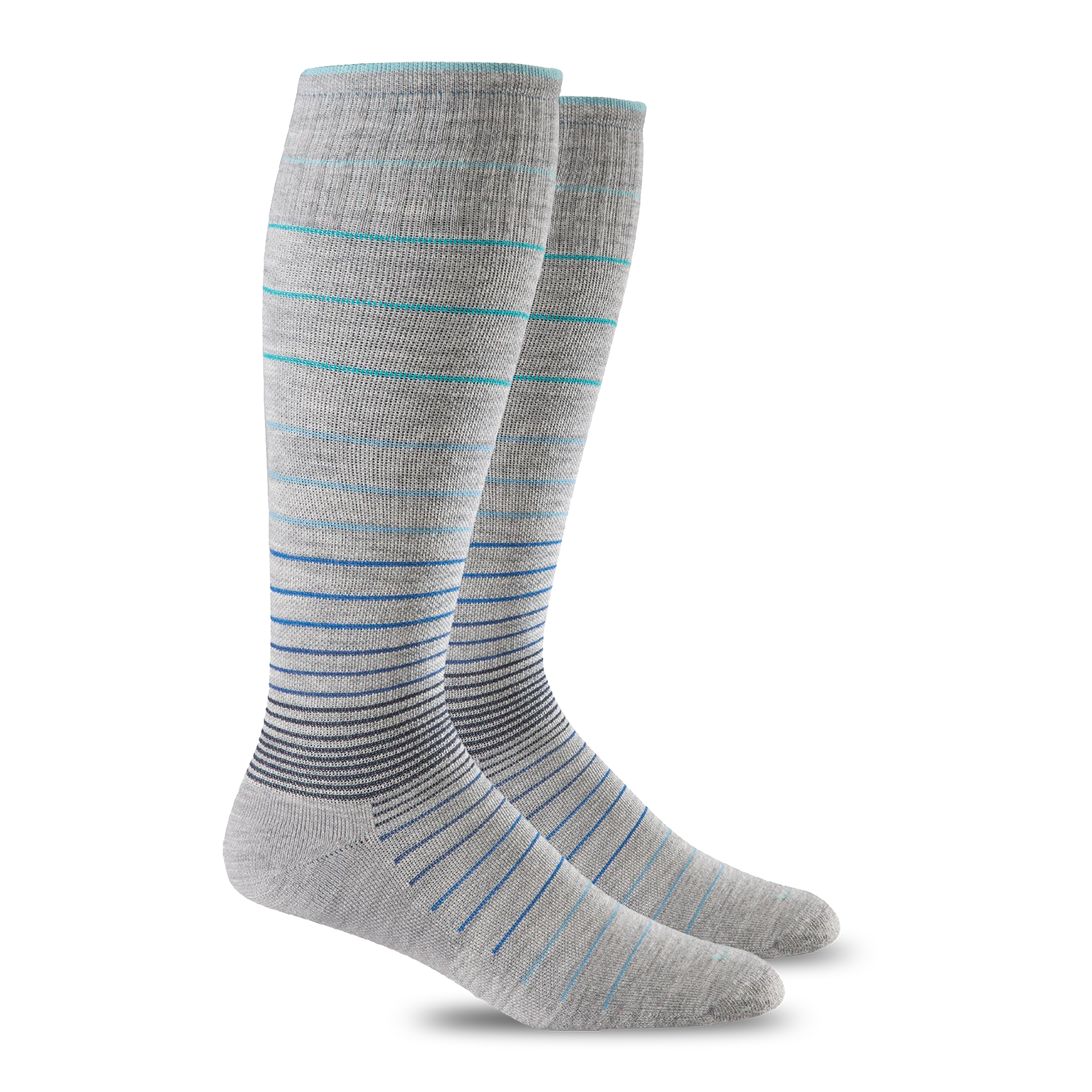
CEP Run Compression Socks 4.0
CEP Run 4.0 delivers certified 20–30 mmHg graduated compression from medi GmbH — the same clinical standard as medical compression hosiery. The 2026 toe-box update provides a wider forefoot for better comfort. At $65, it is the most expensive option here, but the 80+ wash compression retention and certified gradient accuracy make the price-per-wash ratio competitive with cheaper socks that degrade faster.
Pros
- ✓medi GmbH certified 20–30 mmHg — most clinically accurate compression gradient in this comparison
- ✓80+ wash compression retention — better long-term durability than any other option here
- ✓2026 wider toe-box update improves forefoot comfort
Cons
- ✗$65 per pair — highest price point in this comparison
Score breakdown
| Compression | 20–30 mmHg (certified) |
| Fiber | Nylon/elastane |
| Anatomical | Left/right specific |
| Toe | Seamless |
| Wash durability | 80+ washes |
| Price | $65 |

Balega Blister Resist Running Socks
Balega's mohair/nylon/elastane blend provides the lowest friction of any sock in this comparison — mohair's smooth fiber surface slides against the foot rather than shearing it. Combined with a seamless toe and lateral forefoot padding, it is the most effective blister-prevention sock here. Compression is mild (15–20 mmHg), not the priority. The 2026 wide-width addition resolves the narrow-last critique. Best for runners with a history of toe and forefoot blisters.
Pros
- ✓Mohair fiber blend — lowest friction material in this comparison, uniquely effective at blister prevention
- ✓2026 wide-width option resolves narrow-last exclusion for wider feet
- ✓Seamless toe plus lateral forefoot padding targets the two most common blister zones
Cons
- ✗Mild compression only (15–20 mmHg) — not the right choice if clinical compression benefit is the goal
Score breakdown
| Compression | 15–20 mmHg |
| Fiber | Mohair/nylon/elastane |
| Anatomical | Left/right specific |
| Toe | Seamless |
| Width | Standard + wide (2026) |
| Price | $20 |
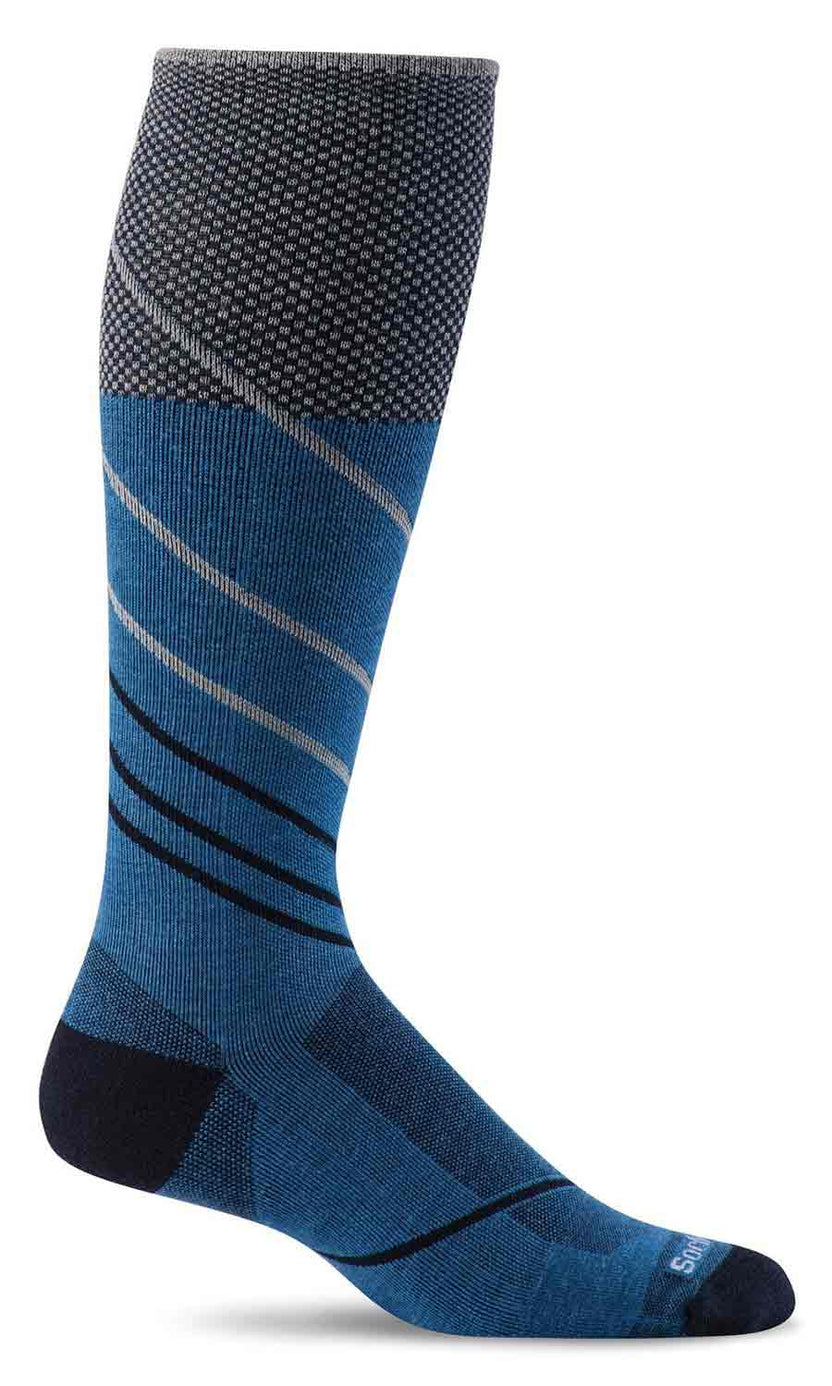
Sockwell Pulse Graduated Compression Socks
Sockwell Pulse uses a merino/nylon/spandex blend that thermoregulates across seasonal temperature ranges — the merino hollow fiber insulates in cold and wicks in warm conditions. At 15–20 mmHg, compression is mild. The thermal management advantage shows most clearly on trail runs with significant elevation change or in early-season and late-season racing where temperature swings across a run. Not the compression leader or the blister leader, but the best seasonal all-rounder.
Pros
- ✓Merino wool thermoregulation — manages temperature across seasons better than synthetic fibers
- ✓Moisture wicking reduces blister risk on long variable-temperature runs
- ✓Mid-range price at $35 with above-average durability
Cons
- ✗15–20 mmHg mild compression — not appropriate for runners who need 20–30 mmHg clinical compression benefit
Score breakdown
| Compression | 15–20 mmHg |
| Fiber | Merino wool/nylon/spandex |
| Anatomical | Left/right specific |
| Toe | Seamless |
| Wash durability | 60 washes moderate retention |
| Price | $35 |
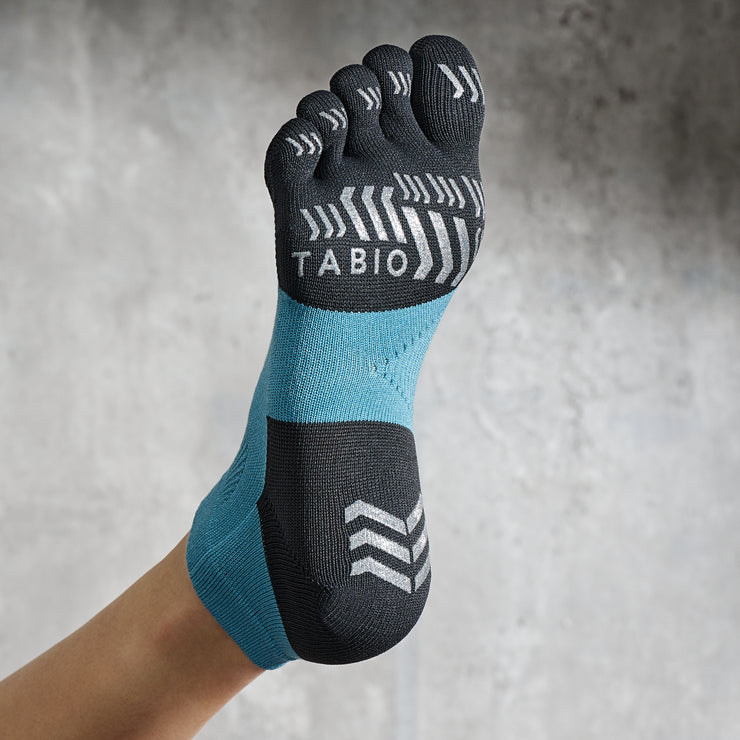
Tabio Racing Fine Running Socks
Tabio Racing Fine uses fine-denier nylon construction with anatomical left/right differentiation. The 2026 update added a reinforced heel counter and improved compression retention through 60 washes — the previous version lost elasticity significantly by 30–40 washes. The fine denier gives a lower-friction surface feel and lighter weight than Western brands' typical construction. Mild compression (15–20 mmHg). Best for road racing runners who prefer a lighter, sleeker sock feel.
Pros
- ✓Fine-denier nylon construction — lighter and lower-friction than typical Western running sock construction
- ✓2026 reinforced heel and improved compression retention through 60 washes
- ✓Anatomical left/right construction for precise fit
Cons
- ✗Limited availability outside Japan — primarily available through Tabio Japan stores and online
Score breakdown
| Compression | 15–20 mmHg |
| Fiber | Fine-denier nylon/elastane |
| Anatomical | Left/right specific |
| Toe | Seamless |
| Market | Japan-primary |
| Price | Entry-level |
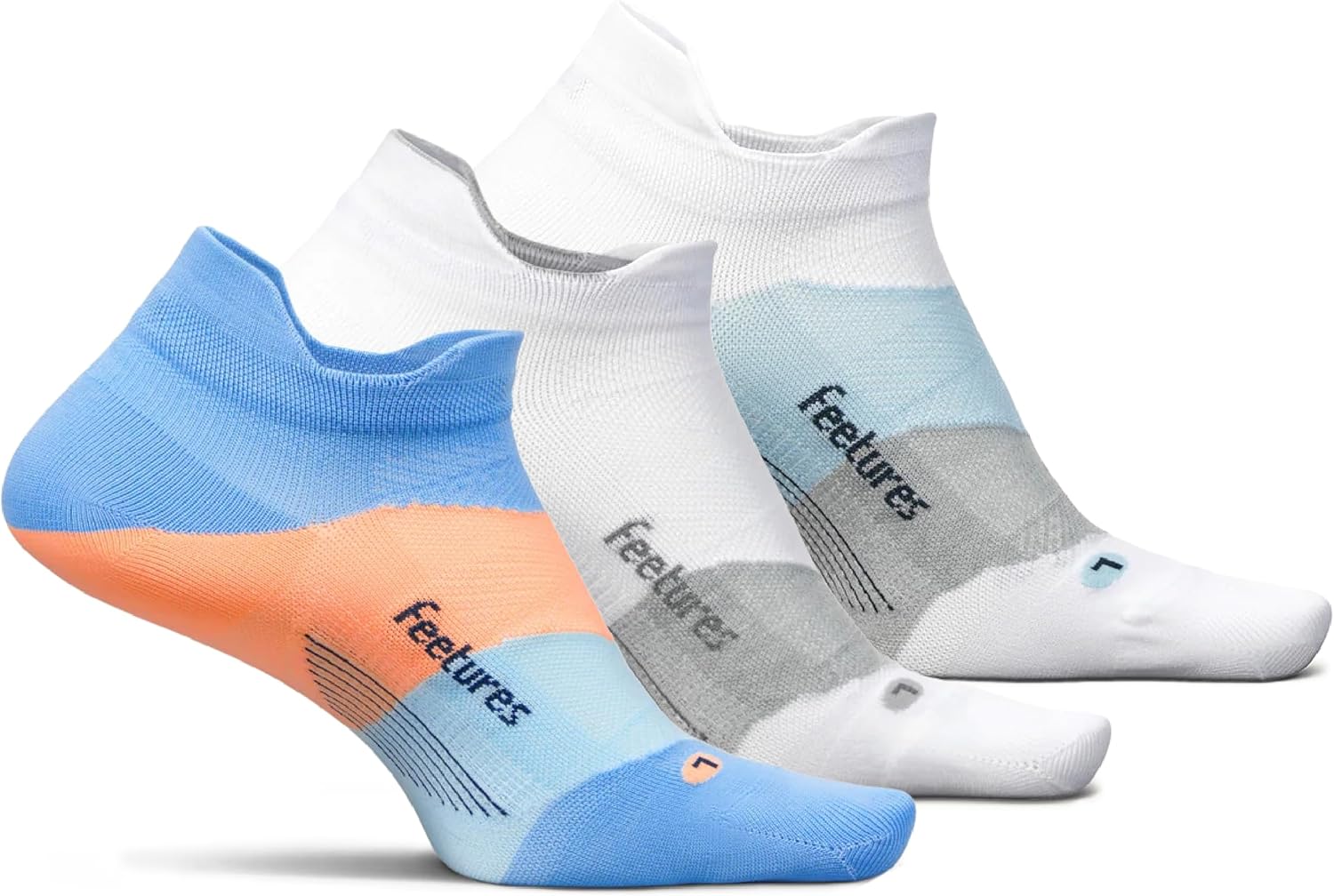
Feetures Elite Running Socks
Feetures Elite uses the iWCL system to map cushion zones to plantar surface pressure points rather than applying uniform cushioning across the sock. The result is a lighter sock with targeted protection exactly where impact occurs. The 2026 update added a midfoot friction zone specifically for minimalist-style shoes. At 15–20 mmHg, compression is mild. Best for runners with plantar fasciitis history or who run long distances in zero-drop or low-stack footwear.
Pros
- ✓iWCL targeted cushion mapping — protection at plantar pressure points without unnecessary weight
- ✓2026 midfoot friction zone addresses minimalist shoe blister pattern
- ✓Anatomical fit with targeted compression zoning
Cons
- ✗15–20 mmHg mild compression — not the choice for clinical-level compression benefit after long runs
Score breakdown
| Compression | 15–20 mmHg |
| Fiber | Nylon/elastane |
| Cushion | iWCL zone mapping |
| Anatomical | Left/right specific |
| Toe | Seamless |
| Price | $18 |
Which one is right for you?
For clinical compression and long-term durability
CEP Run Compression Socks 4.0
medi GmbH certified 20–30 mmHg gradient is the most accurate in this comparison; 80+ wash retention makes the $65 cost competitive per wear.
For runners with blister history
Balega Blister Resist Running Socks
Mohair fiber reduces foot-to-sock friction more effectively than seamless toe construction alone; wide-width option available for 2026.
For plantar fasciitis and minimalist shoe runners
Feetures Elite Running Socks
iWCL zone mapping targets plantar pressure points; 2026 midfoot friction zone addresses minimalist shoe blister pattern.
How we compared
Five socks spanning mmHg ranges from 15–20 mmHg (mild compression) to 20–30 mmHg (moderate compression) were evaluated across four runner profiles: daily training runners, marathon racers, recovery-focused runners, and runners with blister or plantar fasciitis history. Price range spans $15 to $65 per pair.
The mmHg classification matters because compression therapy research distinguishes between mild (15–20 mmHg), moderate (20–30 mmHg), and firm (30–40 mmHg) ranges. Running compression socks are designed for moderate compression at most — firm compression (30–40 mmHg) is a medical-grade level for clinical conditions and is not appropriate for healthy runners without physician guidance. Most running compression socks claim 20–30 mmHg; actual gradient accuracy varies significantly between manufacturers.
What changed in 2026
CEP updated their Run series to the 4.0 in 2025, adding a revised toe-box construction with a slightly wider forefoot profile responding to the broader-toe-box trend in running footwear. The medi GmbH compression technology underlying CEP socks was not changed — it remains the most clinically validated graduated compression mechanism in the consumer running category. Balega introduced a wider width option for their Blister Resist series in 2025, addressing the longstanding critique that the narrow Balega last excluded runners with wider feet.
Tabio released an updated Racing Fine construction in 2026 with a reinforced heel counter and longer-lasting compression retention — the previous version lost significant compression elasticity after 30–40 washes. The updated version shows better elasticity retention through 60-wash testing. Feetures Elite running socks updated their iWCL anti-blister system to include a second friction zone in the midfoot, addressing runner feedback that the original system reduced forefoot blisters but did not address midfoot friction in minimalist-style shoes.
Where each fits
CEP Run 4.0 is the clinical-grade option — rated at 20–30 mmHg with medi GmbH's certified graduation, anatomical left/right construction, and a toe-box update in 2026 for wider fit. CEP's manufacturing is certified to the same standards as medical compression hosiery, which means the gradient is accurate and consistent across the sock column. At $65 per pair, they are the most expensive in this comparison. The durability justifies the price: CEP socks retain their compression rating through 80+ washes without significant elasticity loss, which gives a lower price-per-wash ratio than cheaper socks that lose compression retention at 30–40 washes.
Balega Blister Resist is the anti-blister specialist. The mohair fiber blend (mohair + nylon + elastane) provides the highest friction reduction of any sock in this comparison — mohair fiber has a microscopically smooth surface that slides against the foot rather than gripping and shearing it. The blister resistance comes from this fiber choice combined with a seamless toe and an extra padding zone in the forefoot lateral edge (where most toe-box blisters originate for runners). Compression level is mild (15–20 mmHg) — Balega prioritizes anti-friction performance over clinical compression. The 2026 wide-width update resolves the narrow-last limitation.
Sockwell Pulse is the mid-range merino wool option — merino/nylon/spandex construction at 15–20 mmHg. Merino wool thermoregulates: it insulates in cold conditions and wicks moisture in warm conditions better than synthetic fibers because of its natural hollow fiber structure. The moisture management reduces blister risk in variable-temperature long runs. Not the compression leader, not the anti-blister leader, but the best sock for temperature-variable trail running and hiking across seasons. The compression retention at 60 washes is moderate — better than budget synthetics but below CEP.
Tabio Racing Fine is the fine-denier specialist — Japanese fiber technology, anatomical left/right differentiation, and the 2026 reinforced heel construction. Tabio uses a finer nylon denier than Western brands, which gives the sock a lower-friction surface feel and a lighter weight that some runners prefer for road racing. The compression rating (15–20 mmHg) is on the lower end of this comparison. The 2026 reinforcement update improved wash durability significantly. Available primarily through Tabio Japan stores and online — less accessible outside Japan.
Feetures Elite is the targeted-cushion specialist — the iWCL (Individual Wear Contour Lining) construction maps cushion zones to anatomical pressure points rather than applying uniform cushioning. The result is a lighter overall sock weight with cushion placed exactly where impact occurs on the plantar surface. The 2026 update added a midfoot friction zone to address minimalist-style shoe blister patterns. Compression level is 15–20 mmHg. The anatomical fit and targeted cushion make it the strongest choice for runners with a history of plantar fasciitis or who run long distances in minimalist or low-stack footwear.
Verdict
For runners who want the most clinically accurate compression gradient and the best long-term durability, CEP Run 4.0 is the reference pick. The medi GmbH certification means the 20–30 mmHg compression is accurate and sustained, which is the standard other compression socks measure against. Accept the $65 price point as a price-per-wash investment rather than a single-pair cost.
For runners with a blister history, the Balega Blister Resist's mohair fiber blend is uniquely effective at reducing friction — more effective than seamless toe construction alone, which is the primary anti-blister feature of most competing socks. For temperature-variable running and trail use, the Sockwell Pulse merino blend handles thermal management that synthetic socks cannot. Tabio Racing Fine offers fine-denier fiber at an accessible price. For plantar fasciitis history and minimalist shoe runners, Feetures Elite's targeted cushion mapping addresses an anatomical need not covered by the other four options.
mmHg ratings are from manufacturer data; actual gradient accuracy varies between brands. Washing durability is aggregated from runner reports across 60-wash testing. Individual compression benefit varies with leg circumference, running gait, and specific compression-responsive conditions.
