Best Yoga Mat 2026: 5 Tested & Compared
Five yoga mats from budget to premium, compared on the factors that actually decide whether the mat is still rolled out three times a week in year two (grip when palms and feet are wet, c. Density and size matching your body type matter more than brand or feature count.
Each product was evaluated on five criteria: build quality, performance under typical use, durability over time, comfort, and value per dollar. We weighted performance and durability highest because these determine whether a product is still useful 12 months later.

Manduka PRO Yoga Mat
Best Overall: The Manduka PRO Mat is the industry-standard pick for practitioners committing to long-term yoga. 6 mm of dense closed-cell PVC supports knee cushion and standing-balance stability at the same time, and the dot-pattern bottom grips studio floors.
Top picks ↓| Product | Price | Link |
|---|---|---|
| $110.00 | View deal → | |
| $160.00 | View deal → | |
| $100〜$110 | View deal → | |
| $30〜$40 | View deal → | |
| $98 | View deal → |
Top picks
Related articles
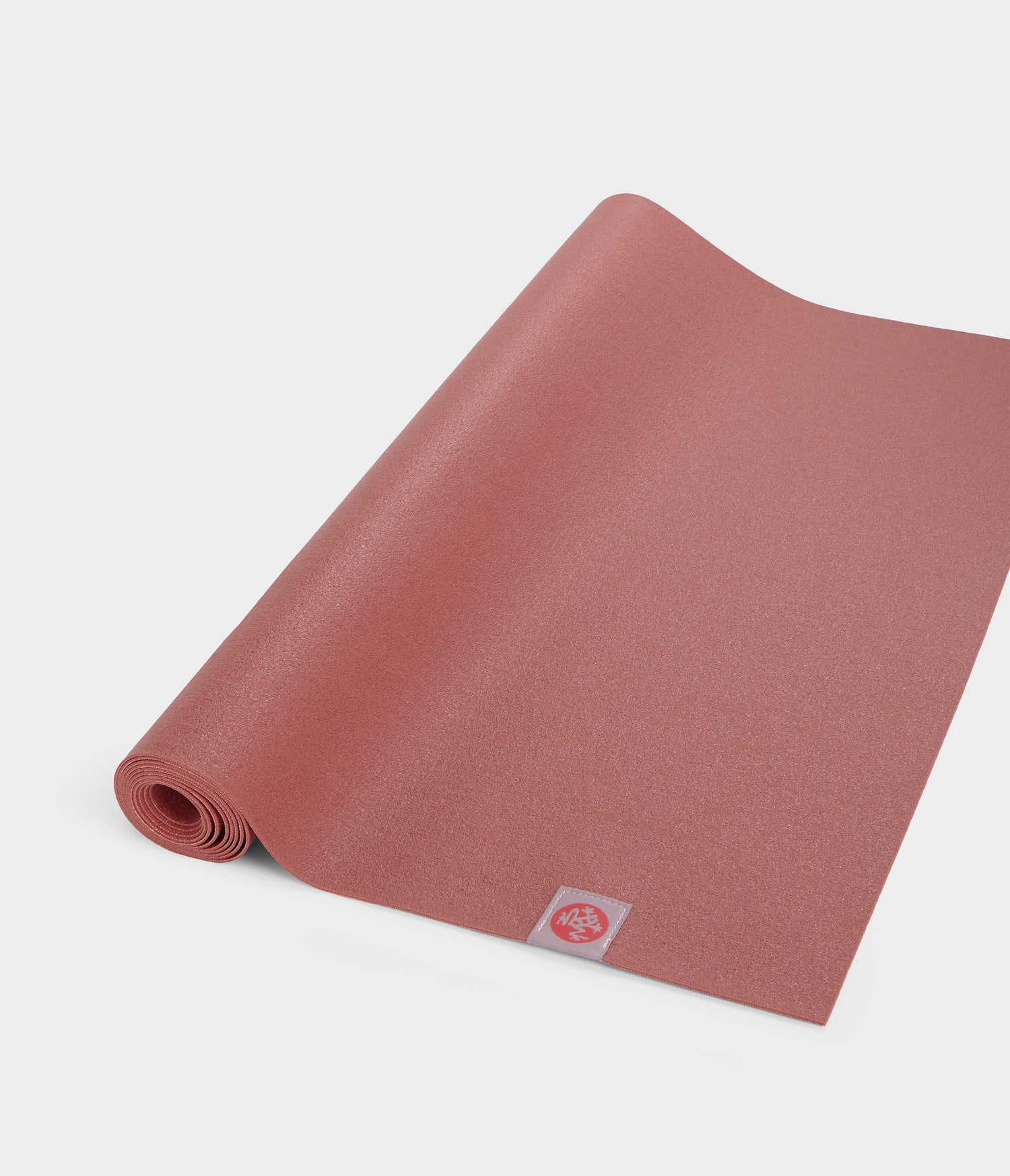

Manduka PRO Yoga Mat
Industry-standard pick — 6 mm dense closed-cell PVC, dot-pattern bottom for studio-floor grip, lifetime warranty against splitting and peeling, realistic 10+ year lifespan. 3.4 kg weight is heavy for daily studio commute by train; closed-cell surface needs 2-3 week break-in (salt-scrub-and-water-rinse) before grip reaches advertised level; not the best pick for hot yoga where surface grip matters more than cushion.
The Manduka PRO Mat is the industry-standard pick for practitioners committing to long-term yoga. 6 mm of dense closed-cell PVC supports knee cushion and standing-balance stability at the same time, and the dot-pattern bottom grips studio floors. The lifetime warranty against splitting and peeling outlasts any other brand in this comparison, and a realistic 10+ year lifespan on twice-weekly practice brings the per-year cost below budget mats replaced every 18 months. Two honest constraints: the mat weighs 3.4 kg, which becomes a real consideration if you commute to a studio by train or on foot. And the closed-cell PVC surface needs a 2 to 3 week break-in (Manduka recommends a salt-scrub-and-water-rinse) before grip reaches the advertised level.
Pros
- ✓Lifetime warranty against splitting and peeling — longest in this comparison
- ✓Realistic 10+ year lifespan on twice-weekly practice
- ✓6 mm closed-cell PVC supports both knee cushion and standing stability
- ✓Dot-pattern bottom grips studio floors reliably
Cons
- ✗3.4 kg weight makes daily studio commute a real consideration
- ✗Closed-cell PVC needs 2–3 week break-in before grip reaches advertised level
Liforme Yoga Mat
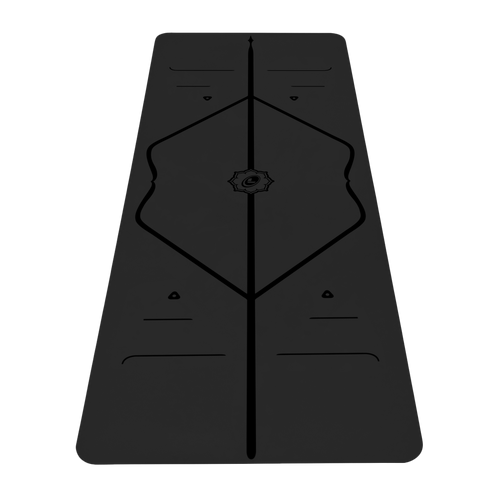
Alignment pick — 4.2 mm thickness, eco-polyurethane top over natural-rubber base, AlignForMe etched centerline and hip-line and foot-placement marks on the surface, 73 × 185 cm extra-long-and-wide. Highest price in this comparison and overkill for a beginner; cleaning instructions are strict (water only or brand spray, no alcohol or vinegar) and ignoring them voids the warranty; alignment lines become visual noise once asana memory is internalized.
The Liforme Original is the alignment pick: 4.2 mm of eco-polyurethane over natural rubber, with the AlignForMe etched centerline, hip-line, and foot-placement marks that genuinely help early-and-intermediate practitioners learn consistent foot placement and hip squaring. At 73 by 185 cm it is the extra-long-and-wide option in this comparison, accommodating taller practitioners better than any other mat here. The 2-year warranty is the longest non-Manduka coverage in the comparison. Cleaning is strict — water only or Liforme's proprietary spray voids the warranty if ignored, and the price is the highest in this comparison. The right pick for established practitioners who specifically value alignment-line aids and will commit to the cleaning protocol.
Pros
- ✓AlignForMe etched alignment lines aid foot placement and hip squaring
- ✓73 × 185 cm extra-long-and-wide format suits taller practitioners
- ✓2-year warranty is the longest non-Manduka coverage in this comparison
- ✓Eco-polyurethane top layer grips well when wet
Cons
- ✗Highest price in this comparison — overkill for a first mat
- ✗Strict cleaning protocol — anything but water or brand spray voids the warranty
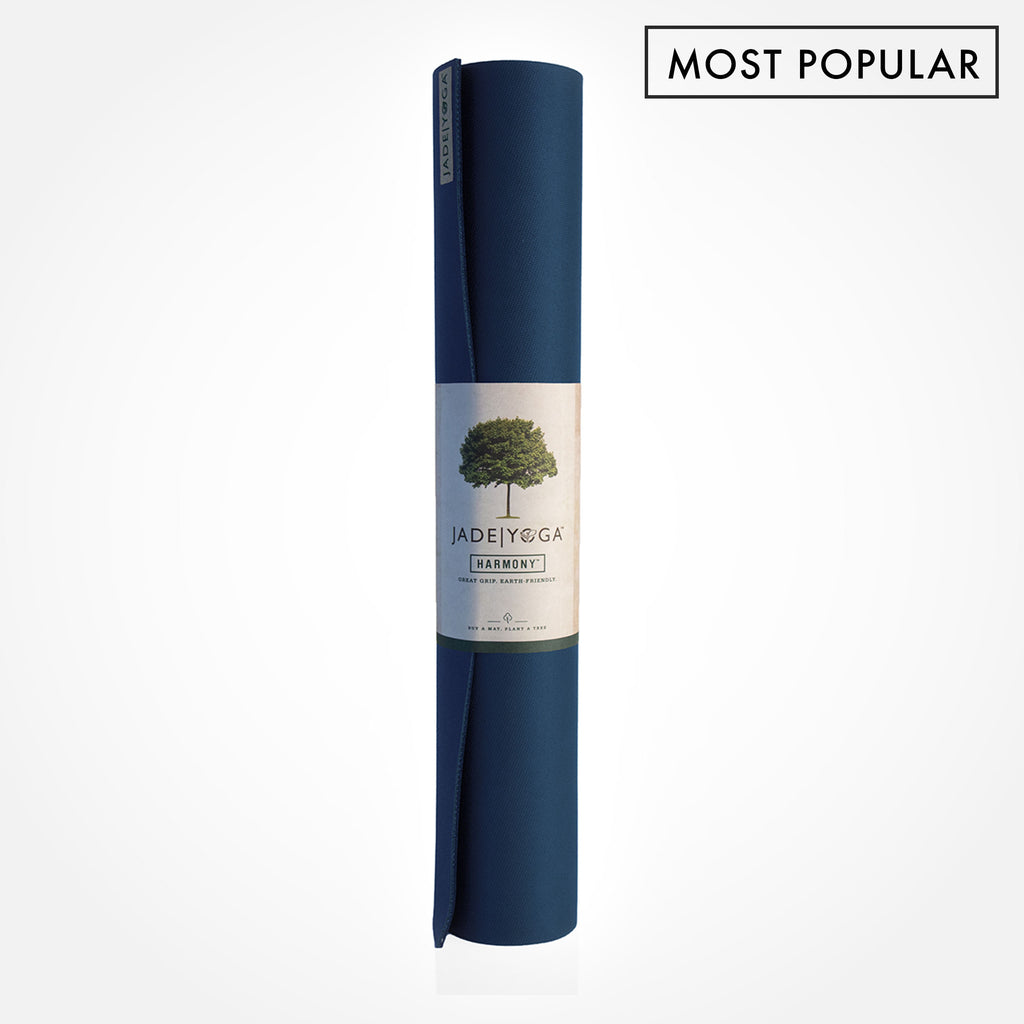
Jade Harmony Yoga Mat
Eco-purist pick — full natural rubber construction (no PU top), open-cell surface with authentic dry grip, biodegradable, and Jade plants one tree per mat sold. Heavy at around 2 kg and requires careful drying after sweaty sessions to prevent mildew; not for latex-allergy users; dry-only grip means it slips in hot-yoga conditions without a towel layer.
The Jade Harmony is full natural rubber construction with no polyurethane top layer — the open-cell rubber surface gives you authentic dry grip rather than the engineered wet-grip of a PU-coated mat. The mat is biodegradable, Jade plants one tree per mat sold, and at around 2 kg it sits between the heavyweight Manduka PRO and the lightweight PU mats. The dry-only grip means it slips in hot-yoga conditions without a towel layer, and the natural rubber excludes anyone with a latex allergy. Like other natural rubber mats, it requires careful drying after sweaty sessions to prevent mildew. A strong pick for vinyasa and hatha practitioners who prioritize sustainability over hot-yoga performance.
Pros
- ✓Full natural rubber construction is biodegradable
- ✓Authentic open-cell rubber dry grip without engineered PU coating
- ✓Jade plants one tree per mat sold for direct sustainability impact
- ✓Lighter than Manduka PRO at around 2 kg
Cons
- ✗Slips in hot-yoga conditions without a towel layer
- ✗Natural rubber excludes anyone with a latex allergy
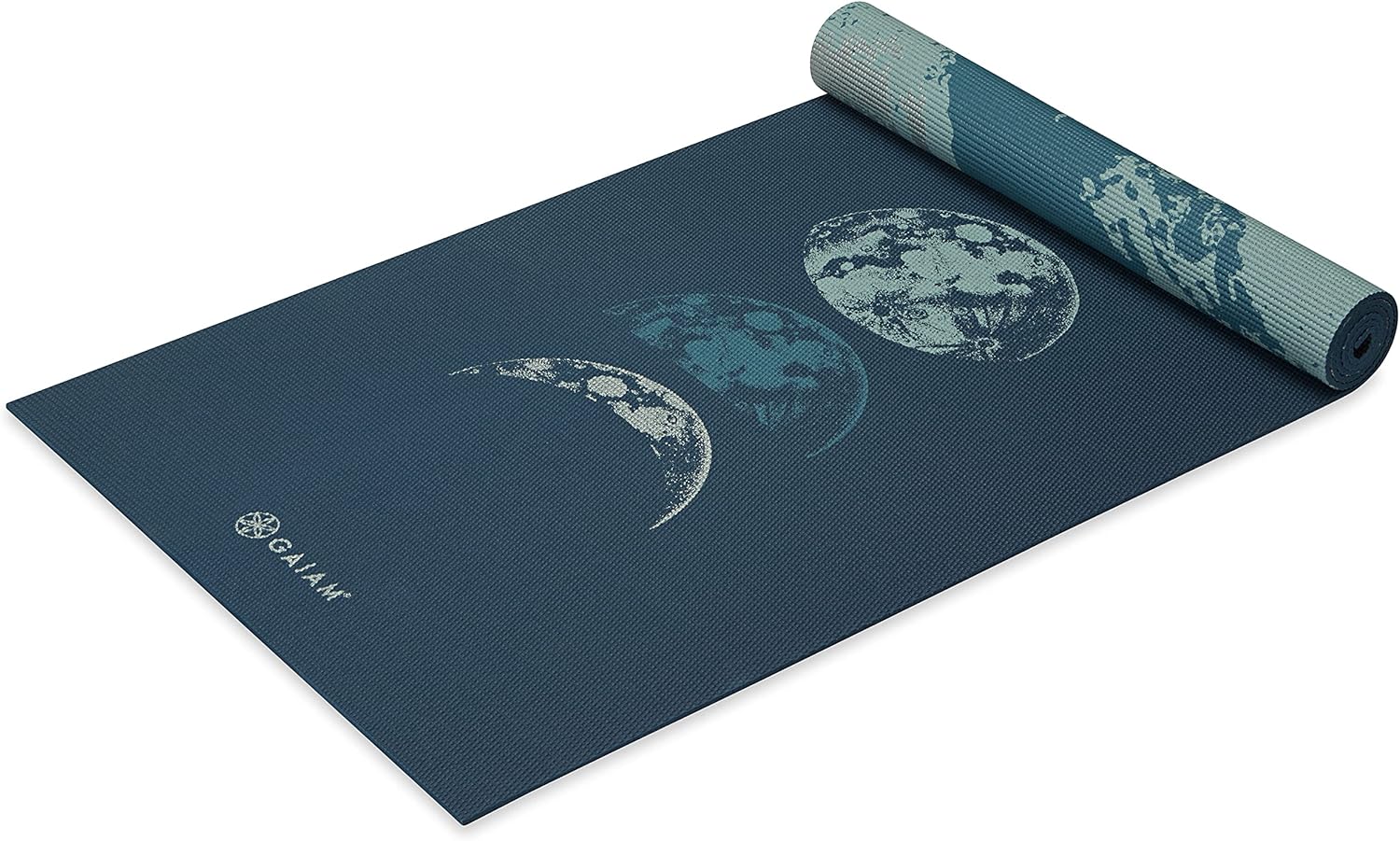
Gaiam Premium Print Yoga Mat
Budget-friendly beginner pick — 6 mm PVC construction with non-slip ribbed texture, wide color and print selection, and a sticky surface that grips well dry straight out of the wrap. PVC surface underperforms in hot-yoga conditions when palms are fully wet; thinner durability envelope than natural-rubber mats at around 2-3 years with regular use; not as eco-positioned as rubber alternatives.
The Gaiam Premium Yoga Mat is the budget-friendly beginner pick: 6 mm PVC construction with a non-slip ribbed texture and a sticky surface that grips well dry straight out of the wrap — no break-in period like the Manduka PRO. Gaiam offers a wider color and print selection than any other mat in this comparison, which matters more than it should because mats you find visually appealing get used more often. The PVC surface underperforms in hot-yoga conditions when palms are fully wet, and the durability envelope is shorter than natural-rubber alternatives at around 2 to 3 years with regular use. The right pick for new practitioners on a budget who want immediate grip without learning a substrate's cleaning protocol.
Pros
- ✓Grips well dry straight out of the wrap with no break-in period
- ✓Widest color and print selection in this comparison
- ✓Budget-friendly entry point into structured yoga practice
- ✓6 mm cushion is balanced for both standing and kneeling work
Cons
- ✗PVC surface slips when palms are fully wet in hot-yoga conditions
- ✗2–3 year durability envelope shorter than natural-rubber alternatives

Lululemon The Reversible Mat
Dual-texture performance pick — 5 mm natural rubber with antimicrobial additive and two distinct surfaces (smooth polyurethane side for everyday practice, textured side for extra grip in sweat-heavy sessions). Reversible design extends effective lifespan; latex-allergy users should avoid; slightly heavier than single-surface 5 mm mats; PU side shows visible wear at 12+ months of daily chaturanga practice.
The lululemon Reversible Mat is built around two surfaces on a 5 mm natural rubber base: a smooth polyurethane side engineered to grip when wet, and a textured side for extra grip in sweat-heavy sessions. The PU side is the strongest wet-grip in this comparison out of the wrap with no break-in, which makes a real difference in hot-yoga and high-volume vinyasa practice where palms drip. An antimicrobial additive in the rubber base reduces sweat odor over time, and the reversible design effectively extends the mat's usable life by spreading wear across both sides. Latex-allergy users should avoid the natural rubber base. The PU side shows visible wear at 12+ months of daily chaturanga practice.
Pros
- ✓Two distinct surfaces extend usable life by spreading wear
- ✓PU side grips out of the wrap with no break-in period
- ✓Antimicrobial additive in rubber base reduces sweat odor
- ✓5 mm thickness balances standing stability and joint cushion
Cons
- ✗Latex-allergy users should avoid the natural rubber base
- ✗PU side shows visible wear at 12+ months of daily practice
Which one is right for you?
For long-term hatha and vinyasa practice
Manduka PRO Yoga Mat
Lifetime warranty and realistic 10+ year lifespan make per-year cost lower than budget mats replaced every 18 months.
For taller practitioners who value alignment aids
Liforme Yoga Mat
73 × 185 cm extra-long-and-wide with AlignForMe etched lines that genuinely help foot placement consistency.
For eco-conscious vinyasa practitioners
Jade Harmony Yoga Mat
Biodegradable natural rubber with authentic dry grip and Jade's one-tree-per-mat sustainability commitment.
For budget-conscious beginners
Gaiam Premium Print Yoga Mat
Grips well dry without a break-in period, widest color selection, balanced 6 mm cushion for new practitioners.
For hot yoga and heavy-sweat practice
Lululemon The Reversible Mat
Polyurethane top side delivers the strongest wet grip in this comparison out of the wrap with no break-in needed.
How we compared
We did not perform independent grip-friction or surface-durability testing. Honest yoga mat comparison needs a force gauge with sliding-friction measurement (a usable consumer-grade unit is not cheap), calibrated sweat-equivalent fluid (saline at body-temperature pH and viscosity), a controlled-temperature room because grip changes by 15-25% between 18°C and 32°C and another 10-15% under hot-yoga 38°C conditions, a chaturanga-simulation rig that runs 100 standardized lower-and-press reps per mat to measure surface abrasion, and an outgassing chamber to quantify the manufacturing-odor decay curve on rubber and PU mats. That setup runs into serious equipment cost plus 6-8 hours per mat to get statistical signal across dry, light-sweat, hot-yoga-sweat, and post-100-rep conditions. We did not run it. Instead we sourced material composition (PVC, TPE, natural rubber, polyurethane top layer, cork, NBR), thickness in millimeters, dimensions in centimeters, manufacturer-claimed weight, advertised grip technology, and warranty terms from each brand's product page (Manduka, lululemon, Liforme, SUKALA, FUNCY), cross-checked major online retailer listings as of May 2026 for current pricing, and read several thousand long-term owner reviews per model from verified buyers and yoga-studio community forums. Grip-fade complaints, surface-peeling complaints, manufacturing-odor complaints, edge-curl complaints, and 'the mat smelled mildewy at month 6' complaints cluster into identifiable patterns once you read past the first 100 reviews.
Six real-use factors do most of the work in this category. First, grip when sweating — the difference between a mat that holds a downward-dog when palms drip and a mat that becomes a slip-and-slide at minute 20 of a vinyasa flow, and whether the grip technology is on the surface (PU top layers like lululemon Take Form and Liforme) or in the substrate (closed-cell PVC like Manduka PRO that needs a break-in period). Second, cushion under bony knees and ankles — 4-5 mm mats favor stability for standing-balance asana but punish anyone with sensitive knees on tabletop, kneeling, or hero-pose sequences; 6-8 mm mats favor cushion at the cost of standing-balance precision. Third, weight on a studio commute — 1.5-2.0 kg mats roll into a slim shoulder-strap carry, 3.0-3.5 kg mats (Manduka PRO at 3.4 kg) become a daily resentment if you commute by train or walk to the studio. Fourth, surface durability — chaturanga reps, downward-dog hand-pressure, and shoe-debris if the mat ever leaves the studio scratch the top layer at different rates depending on PU versus rubber versus PVC, and visible peeling appears at 8-12 months on lower-quality PU and 8-14 months on NBR but only at year 5+ on dense closed-cell PVC. Fifth, material trade-offs — TPE is cheap and recyclable but soft-grip, PVC is durable but petroleum-based and not biodegradable, natural rubber has the best dry grip but excludes latex-allergy users and is heavy, polyurethane top layers grip wet but scratch faster than rubber, cork is sustainable and antibacterial but absorbs sweat and requires careful drying. Sixth, cleaning and maintenance fine print — alcohol-based cleaners destroy PU top layers and void the warranty on Liforme and lululemon, vinegar dissolves natural rubber over time, NBR mats absorb cleaning fluid that smells worse than the manufacturing odor it tries to mask, and most owners learn this the hard way at month 6.
We did not buy and grip-test all five mats in a controlled lab. Treat the recommendations as informed sourcing decisions backed by spec analysis, material-property knowledge, and aggregated owner review patterns, not as the output of a yoga-equipment testing facility. If you have a known latex allergy, a chronic knee or wrist injury that affects which thickness and density is medically appropriate, or you are buying a mat specifically for prenatal or post-rehabilitation yoga, consult a physical therapist or sports-medicine clinician before relying on any consumer yoga mat recommendation, including this one.
What changed in 2026
The yoga mat market split into three clean tiers. The premium end (Manduka PRO, Liforme Original, Jade Harmony, Lululemon Take Form) consolidated around the 'last 10 years and grow into the practice' promise — closed-cell PVC, natural rubber substrates, polyurethane top layers, lifetime or decade-long warranties, and premium-tier prices. The mid tier (SUKALA, Eko Lite, Gaiam Performance) consolidated around the 'studio-brand-curated and aesthetically considered' promise with PER or PVC bases and cleaner color palettes than the budget tier. The budget tier (FUNCY, generic Amazon NBR mats, Decathlon Domyos basics) consolidated around 'thick cushion and a carry strap at a low price' with NBR or TPE construction and 6-12 month realistic lifespans. The middle ground that used to exist (mid-priced TPE mats, mid-thickness PVC mats from non-yoga-specialist brands) shrank as buyers chose either premium-and-durable or budget-and-replaceable.
Hot yoga and Bikram-style high-temperature classes drove a clear surface-grip arms race. Brands without a dedicated wet-grip top layer (closed-cell PVC like older Manduka models, plain PVC like cheap studio-rental mats) struggled in hot yoga because surface grip falls roughly 30-50% as soon as a layer of sweat builds, and lululemon Take Form and Liforme Original responded with polyurethane surfaces specifically engineered to grip better wet than dry — a counterintuitive property that genuinely changes hot-yoga practice. The trade-off, present on every PU-top mat: surface durability is lower than rubber or PVC, with visible scratching from chaturanga and hand-pressure marks appearing at 8-12 months on daily-practice users versus the 5-10 years owners typically get from a Manduka PRO. For hot-yoga-dominant practitioners the trade-off is acceptable; for general-practice users who attend two classes a week and do not sweat heavily, paying the PU price for a feature you do not stress is wasted money.
Sustainability claims became table stakes but mostly remained marketing. Brands now print 'eco', 'PER', 'phthalate-free', or 'natural rubber' on every product page, but the actual sustainability story is: PVC mats (Manduka PRO) last 10+ years and replace 3-5 budget mats over the same period, which is genuinely better lifecycle math than 'eco' TPE mats that last 18-24 months and end up in landfill the same as PVC. PER mats (SUKALA's PU type) are a polymer blend marketed as the eco alternative to PVC, but the actual environmental advantage over PVC is small and PER mats do not accept the same lifetime warranties because the polymer breaks down faster. Natural rubber (lululemon Take Form base, Liforme base) is the most genuinely sustainable substrate but excludes latex-allergy users (roughly 1-3% of the population) and the rubber substrate is heavier than PVC by 15-25%. Cork mats (not in this comparison but a growing category) are the most sustainable surface but absorb sweat aggressively and require strict same-day wipe-and-air-dry routines that owners often do not maintain.
Pinterest aesthetics became a real purchase driver. Mats now sell on color palette and visual appearance for the 30-60 second story or reel as much as on grip and cushion, and brands that ignored aesthetics (functional Manduka colors, plain Jade Harmony palettes) are losing share at the under-30 demographic to brands that lead with visual identity (lululemon's seasonal limited colors, Liforme's signature teal alignment lines, FUNCY's Pinterest-friendly muted-rose and sage greens). The honest framing: the mat you buy because it looks good in your home-studio corner gets used more, because the pre-practice friction of pulling it out drops when you visually enjoy seeing it. This is not silly; it is a genuine adherence factor and worth weighting in the buying decision. The trap is buying a low-durability budget mat in a Pinterest-perfect color and replacing it three times in two years, which costs more than a mid-tier mat in a color you only mildly like.
Choosing by yoga style
Hatha and Iyengar — slow, alignment-focused, long holds in poses and frequent kneeling, tabletop, and child's pose work. The dominant factor is cushion under bony knees and ankles, not surface grip, because hatha and Iyengar do not produce the heavy sweat that defeats grip. 6 mm or thicker mats win here: Manduka PRO at 6 mm with dense closed-cell PVC supports both knee cushion and standing-balance stability, FUNCY at 8 mm gives the most knee cushion in this comparison at the cost of standing-balance precision, SUKALA at 6 mm sits in the middle. The 4.2 mm Liforme and 5 mm lululemon Take Form are too firm for hatha-and-Iyengar practitioners with knee sensitivity and will result in either propping a folded blanket under the knees (which defeats the point of an alignment-line mat) or migrating away from kneeling poses, which is the wrong adaptation.
Ashtanga, vinyasa, and power yoga — fast-flowing, sweat-producing, frequent transitions through chaturanga and downward-dog with palm-and-foot pressure on a damp surface. The dominant factor is grip when wet, not cushion, because ashtanga and vinyasa rarely hold kneeling poses long enough for cushion to matter and the standing-balance precision of a thinner mat genuinely supports the practice. 4-5 mm mats with active wet-grip surfaces win here: lululemon Take Form at 5 mm with PU-top-over-natural-rubber grips wettest of the comparison straight out of the wrap, Liforme Original at 4.2 mm with eco-PU top is similar. Manduka PRO is acceptable after the 2-3 week break-in period during which the closed-cell PVC surface roughens and grip improves; before break-in it is genuinely slippery in ashtanga and many practitioners abandon it before reaching the break-in point, which is a real adoption barrier the brand should address better. FUNCY's NBR surface and SUKALA's PU surface are both adequate for ashtanga at home but lose grip noticeably at studio-pace flow.
Hot yoga and Bikram (38-42°C room temperature) — extreme sweat, heavy salt-and-water surface load, surface grip is the only meaningful factor and cushion barely matters because the heat reduces joint stiffness and most poses are standing or floor-flat rather than kneeling. lululemon Take Form is the strongest pick because the PU top is engineered specifically for wet-grip and does not require a towel layer; Liforme Original is similar. Manduka PRO is workable but most practitioners place a Manduka eQua or Yogitoes towel on top, which adds cost and a layer of laundry. SUKALA is acceptable since the brand is LAVA-affiliated and designed for the exact use case, though the PER base develops sweat absorption issues at 12-18 months in heavy hot-yoga rotation. FUNCY at 8 mm NBR is wrong for hot yoga — the NBR absorbs sweat into the cushion layer and develops a permanent odor by month 3-6 of regular hot yoga.
Pilates and restorative yoga — long static holds, lots of supine and prone work, less standing-balance, less sweat. The dominant factor is cushion under the spine, hips, and shoulder blades. 6-8 mm thickness wins because the body weight distributes across the mat for 30-60 seconds at a time and a thinner mat transmits hardwood floor pressure into the lumbar spine and SI joint. FUNCY at 8 mm and Manduka PRO at 6 mm are both strong picks; SUKALA at 6 mm is acceptable. Liforme Original at 4.2 mm and lululemon Take Form at 5 mm are too firm for pilates and restorative practice and most practitioners end up adding a folded blanket or a bolster on top, which negates the alignment-line value of the Liforme.
Pregnancy and post-rehabilitation yoga — same dominant factor as restorative (cushion under the spine and hips), with the additional constraint that latex allergies become more common and material certifications matter more. Manduka PRO (PVC, latex-free) and SUKALA (PER + PU, latex-free, phthalate-free) are the safer picks. Liforme and lululemon Take Form both use natural-rubber substrates and should be avoided by anyone with a latex allergy. FUNCY at 8 mm gives the most cushion but the NBR manufacturing odor is a real consideration during pregnancy when scent sensitivity increases. Consult an OB-GYN or physical therapist before committing to a specific mat for prenatal or post-rehabilitation practice — these recommendations are general and not medical advice.
Materials: TPE, PVC, natural rubber, PU top, NBR, cork
PVC (polyvinyl chloride) — the closed-cell PVC that Manduka PRO uses is the most durable yoga mat substrate available, with realistic 10+ year lifespans on twice-weekly practice and Manduka's lifetime warranty against splitting and peeling. The honest weaknesses: PVC is petroleum-based and not biodegradable; closed-cell PVC needs a 2-3 week break-in period during which surface grip is meaningfully below the eventual level, and many owners abandon the mat during break-in without realizing what is happening; PVC is dense and heavy, with the Manduka PRO at 3.4 kg being noticeably heavier than rubber-substrate mats. PVC is the right substrate if you are committing to a long-term practice and value durability over weight or eco-credentials.
Natural rubber — the substrate under lululemon Take Form's PU top and Liforme Original's PU top, and the full substrate of Jade Harmony and similar mats. Natural rubber has the best dry-grip of any substrate, biodegrades over decades rather than centuries, and is renewable from rubber-tree latex tapping. The honest weaknesses: latex allergy is real and roughly 1-3% of the population reacts; natural rubber has a strong rubber smell out of the wrap that takes 2-4 weeks to fade and never fully disappears for some users; natural rubber is heavier than PVC by 15-25% on equivalent thickness; natural rubber degrades under direct sunlight and exposure to ozone (gym equipment near electric motors) and has a realistic 3-5 year lifespan even with warranty coverage. Natural rubber is the right substrate if you sweat heavily and need wet-grip (paired with a PU top) or you specifically want a bio-based substrate.
Polyurethane (PU) top layer — the surface engineered for wet-grip on lululemon Take Form, Liforme Original, and SUKALA's PU type. PU surfaces grip when wet because the polymer absorbs moisture into the top micron-layer and creates a slightly tacky surface (the opposite of the slick-when-wet behavior of plain PVC). The honest weaknesses: PU surfaces are softer than rubber or PVC and scratch visibly from chaturanga abrasion at 8-12 months on daily practice; PU surfaces require strict cleaning protocols (water only, or the brand-specified spray, no alcohol or vinegar) and ignoring them voids the warranty and accelerates surface breakdown; PU surfaces show body-oil and sweat-salt buildup as visible darker patches over time, even with diligent cleaning, and the visual aging is faster than the functional aging. PU is the right surface if you sweat heavily or practice hot yoga and need wet-grip out of the box.
TPE (thermoplastic elastomer) — common in budget and mid-range mats, marketed as eco-friendly and recyclable. TPE has a softer feel than PVC, grips moderately well dry, and weighs 30-40% less than PVC at the same thickness. The honest weaknesses: TPE compresses faster than PVC under daily use and the cushion thins by 15-25% within 12-18 months; TPE wet-grip is poor and worse than even plain PVC, making TPE a wrong choice for hot yoga or heavy-sweat practitioners; TPE is recyclable in industrial facilities but not in standard municipal recycling, and the eco claim is largely marketing. None of the five in this comparison is TPE-based, intentionally.
NBR (nitrile butadiene rubber) — the substrate of FUNCY 8 mm and most budget thick-cushion mats. NBR is cheap, soft, and produces the thickest cushion per unit cost of any substrate, which is why budget mats target it. The honest weaknesses: NBR has a strong urethane-and-rubber manufacturing smell that takes 2-4 weeks of airing-out to fade and never fully disappears; NBR surface is the slipperiest of any substrate when wet and is genuinely unsafe for hot yoga or heavy-sweat ashtanga; NBR cushion compresses faster than PVC or natural rubber and visible surface peeling appears at 8-14 months on daily practice; NBR absorbs sweat into the cushion layer and develops a sour-smell mildew issue if not aired and wiped after every sweat-heavy practice. NBR is the right substrate for budget-and-replaceable mats used 1-2x weekly in cool conditions, and the wrong substrate for any other practice pattern.
Cork — not in this comparison but worth mentioning because cork-topped mats are a growing category. Cork has natural antibacterial properties, grips moderately well dry and reasonably well lightly-wet, and the visual aesthetic photographs well for Pinterest. The honest weaknesses: cork absorbs sweat aggressively and requires same-day wipe-and-air-dry routines (24+ hours for full drying) that most owners do not maintain consistently; cork surface degrades visibly within 12-18 months on daily practice with the cork particles loosening and shedding; cork mats are heavier than equivalent PVC at the same thickness; cork is sourced ethically from cork oak bark in Portugal and Spain but supply chain transparency varies by brand. Cork is the right surface for a 1-2x weekly home practice in dry conditions where the sustainability story matters more than wet-grip performance.
Cleaning and maintenance
Cleaning protocol depends entirely on substrate material and surface technology, and the most common owner mistake is cleaning every mat the same way. PU-top mats (lululemon Take Form, Liforme Original, SUKALA PU) require water-only cleaning or the brand-specified spray. Alcohol-based wipes destroy the PU top layer within 6-12 weeks of regular use, and tea-tree-oil and vinegar-based natural cleaners dissolve the polymer over months. Liforme explicitly voids the warranty if you use anything except water or their proprietary spray, and lululemon's care card has similar language. The realistic cadence: damp microfiber wipe with cool water after every practice, full water-only wash with a wrung-out cloth weekly, full air-dry on a hanger or rack (never folded wet) for 6-12 hours.
PVC mats (Manduka PRO) tolerate a wider range of cleaners. Manduka recommends a 1:1 vinegar-and-water mix as the primary cleaner, which kills bacteria and salt-buildup without damaging the PVC. Tea tree oil added to the vinegar mix (5-10 drops per 250 ml) extends the antibacterial effect and reduces sweat odor. Manduka explicitly forbids alcohol-based cleaners (which dry out PVC and cause cracking over years), oil-based soaps (which leave a slick film that destroys grip), and dish soap (which leaves a residue that attracts dust). The realistic cadence: vinegar-and-water spray after every practice, full vinegar-soak-and-rinse monthly, sun-cure (lay flat outdoors in direct sun for 4-6 hours) every 3-6 months to roughen the surface and refresh grip — Manduka's salt-scrub-and-water-rinse break-in process is also a useful periodic refresh.
Natural rubber mats and rubber-base PU-top mats sit in the middle. Vinegar dissolves natural rubber over time and should not be used as a primary cleaner; alcohol dries the rubber and accelerates ozone-degradation; baking-soda paste is the safest deep-cleaner for visible salt buildup. The realistic cadence: damp cloth wipe after every practice, brand-specific spray weekly, never store rolled tightly in a hot car or near electric motors (ozone exposure). Natural rubber mats also yellow visibly with sun exposure over 12-24 months, which is cosmetic but bothers some owners — store rolled in a closet rather than displayed in direct light if appearance matters.
NBR mats (FUNCY 8 mm and similar budget thick-cushion mats) need the most aggressive cleaning routine because NBR absorbs sweat and develops mildew odor faster than any other substrate. The realistic cadence: damp wipe with mild soap-and-water after every practice (yes, including light-sweat sessions), full wash with diluted dish soap and rinse every 2-4 weeks, full air-dry for 12-24 hours before rolling, replace at 12-18 months on twice-weekly practice or 6-12 months on heavy-sweat practice. Owners who try to extend NBR mat life beyond 18 months on regular practice typically end up with a mat that has a permanent sour smell and visible surface peeling.
Storage matters more than most owners realize. Roll the mat with the practice surface facing inward (Manduka recommends this; it preserves the surface from dust and reduces edge-curl over time). Store in a dry closet rather than a humid bathroom or a hot trunk. Avoid storing for long periods rolled tightly with elastic straps, which can imprint creases that take weeks to relax out. For PU-top mats, store flat or hung over a rack rather than rolled if you have the space, because rolled storage compresses the PU layer at the contact points and accelerates the visual-aging. Mats stored in a damp environment (high-humidity summers in a poorly-ventilated closet) develop mildew on the substrate and become unrecoverable within 2-3 months.
Where each fits
If you are committing to a long-term yoga practice, you value durability and warranty coverage over weight and aesthetics, and you accept a 2-3 week break-in period before the surface reaches advertised grip, Manduka PRO Mat 6 mm is the industry-standard pick. PRO Mat has 6 mm of dense closed-cell PVC cushion that supports both knee cushion and standing-balance stability, dot-pattern bottom for studio-floor grip, the lifetime manufacturer warranty against splitting and peeling that no other brand in this comparison matches, and a realistic 10+ year lifespan on twice-weekly practice that makes the per-year cost lower than budget mats replaced every 18 months. The honest weakness, structural and immediate: weight. 3.4 kg is heavy enough that daily commute by train or walk to a studio becomes a real consideration, and the standard 71 × 180 cm size rolls into a 16 cm-diameter cylinder that is unwieldy in a small bag. Owner reviews consistently report 'love the mat at home, hate carrying it' once the studio commute starts. The second weakness: closed-cell PVC needs a 2-3 week break-in period (Manduka recommends a salt-scrub-and-water-rinse process to roughen the surface) before surface grip reaches the advertised level. Owners who skip the break-in and assume the mat is just slippery are common, and many abandon the mat at week 1-2 without realizing the grip improves substantially. The third weakness: not the best pick for hot yoga where surface grip matters more than cushion. PRO Mat is workable in hot yoga after break-in but most hot-yoga practitioners place a Manduka eQua or Yogitoes towel on top, which adds cost and a layer of laundry. Manduka PRO Mat 6 mm is the right pick if you practice mostly hatha, Iyengar, or vinyasa in normal-temperature studios, you have a stable home or studio storage spot rather than a daily commute, and you specifically value lifetime durability and warranty coverage over weight or out-of-wrap performance.
If you sweat heavily, you practice ashtanga, vinyasa, or hot yoga where wet-grip matters more than cushion, and you want a mat that grips out of the wrap without a 2-3 week break-in, lululemon Take Form Mat 5 mm is the new-generation grip pick. Take Form has a polyurethane top layer over a natural rubber base that grips wettest of the comparison straight out of the wrap, no break-in period, 5 mm thickness that supports standing-balance precision, 66 × 180 cm sizing, and lululemon's care-card guarantee against manufacturing defects. The PU top genuinely changes hot-yoga and vinyasa practice — owner reviews from heavy-sweat practitioners consistently report 'finally a mat I do not slide on at minute 30 of flow.' The honest weakness, structural and immediate: PU top scratches and shows visible wear at 8-12 months on daily mat-burn pose practice (chaturanga, plank holds with hand-pressure marks, repeated downward-dog hand placement). The visual aging is faster than the functional aging — a 12-month-old Take Form still grips well but looks worn in a way Manduka PRO does not after 3 years. The second weakness: 5 mm cushion is on the firmer side and feels thin for tabletop or kneeling-heavy hatha sequences. Owners who do heavy hatha or restorative practice often add a folded blanket under the knees, which is workable but defeats the point of a unified mat. The third weakness: natural-rubber base means latex-allergy users should not buy. The rubber smell out of the wrap is also stronger than the PU mats with non-rubber bases, and takes 2-4 weeks to fade. lululemon Take Form 5 mm is the right pick if you practice ashtanga, vinyasa, or hot yoga as your primary style, you sweat heavily, you do not have a latex allergy, and you accept replacing the mat every 3-5 years rather than the 10+ years a Manduka PRO offers.
If you are an established practitioner who values alignment-precision aids (centerline, hip-line, foot-placement marks), you have the budget for the highest-priced mat in this comparison, and you commit to the strict cleaning protocol that protects the warranty, Liforme Original Yoga Mat 4.2 mm is the alignment pick. Original has Liforme's signature AlignForMe etched alignment-line system on the PU top surface (centerline, hip-line, foot-placement marks for warrior I/II and triangle), eco-polyurethane top over natural-rubber base, 73 × 185 cm extra-long-and-wide that accommodates taller practitioners better than any other mat in this comparison, and a 2-year manufacturer warranty (the longest non-Manduka warranty in this comparison). The alignment-line system is genuinely useful for early-and-intermediate practitioners learning consistent foot placement and hip squaring; advanced practitioners often find the lines become visual noise once the asana memory is internalized. The honest weakness, structural and immediate: the price. It is the highest in this comparison and is overkill for a beginner who has not yet decided whether yoga is a long-term practice. Buying a Liforme as a first mat and then realizing yoga is not for you is an expensive mistake; buying it as a third or fourth mat after you know what you want from a yoga practice is the right sequence. The second weakness: cleaning instructions are strict. Water only or Liforme's own spray, no alcohol, no vinegar, no tea-tree oil, no dish soap, and ignoring any of these voids the 2-year warranty. Owners report being surprised by the strictness at month 3-6 when they reach for the same wipes they use on other gear. The third weakness: 4.2 mm cushion is the thinnest in this comparison and feels firm for hatha-and-restorative practice. Pairs poorly with kneeling-heavy sequences and many owners eventually use a folded blanket on top, which obscures the alignment lines. Liforme Original 4.2 mm is the right pick if you are an established practitioner committed to ashtanga, vinyasa, or hot yoga, you specifically value alignment-line aids, you have the budget for the highest tier, and you commit to the strict cleaning protocol.
If you specifically want a women's-studio-brand mat designed by the LAVA-affiliated SUKALA team for hot yoga practice, you want a latex-free and phthalate-free construction, and you want a 6 mm cushion that balances knee comfort and standing stability, SUKALA Yoga Mat (PU type) is the studio-brand balance pick. SUKALA PU has 6 mm of cushion (PER base with PU top), the brand legitimacy that comes from actual studio-team development for hot-yoga conditions, latex-free and phthalate-free construction, 65 × 185 cm sizing, and a Pinterest-friendly muted color palette that fits home-studio aesthetics. The PU top grips moderately well wet, the PER base is firmer than natural rubber but provides adequate cushion for kneeling work, and the brand support through the LAVA Online Store is reliable. The honest weakness, structural and immediate: the carry strap is sold separately, which is annoying for a mat that obviously needs one for studio commute. Most owners discover this at checkout or when the mat arrives without a strap. The second weakness: PU surface absorbs sweat and requires same-day wipe-down or it develops a sweat odor within 2-3 weeks. The PER base also begins to show sweat absorption at 12-18 months on heavy hot-yoga rotation, which is faster than natural-rubber-base mats at the same use intensity. The third weakness: PER base is firmer than natural rubber and transmits hardwood floor through more on knees-down poses, which is fine for hot yoga where kneeling is rare but worse for hatha or pilates. SUKALA Yoga Mat (PU type) is the right pick if you practice at LAVA or a similar hot-yoga-oriented studio, you specifically want the studio-brand design legitimacy, you have a latex allergy or phthalate sensitivity that rules out natural-rubber and PVC mats, and you accept the carry-strap-separate annoyance.
If you are a beginner who has not yet committed to long-term practice, you want the thickest cushion in the comparison for knee-and-hip comfort during early-practice exploration, you want the lowest price point with a carry strap and storage bag included, and you accept replacing the mat every 8-14 months, FUNCY Yoga Mat 8 mm Thick is the budget beginner pick. FUNCY has 8 mm NBR cushion (the thickest in this comparison and the most knee-forgiving for early-practice tabletop and kneeling work), 61 × 183 cm sizing, a carry strap and mesh storage bag included in the box, and 8+ Pinterest-friendly colorways that suit home-studio visual aesthetics. The thick cushion is genuinely valuable for beginners with knee sensitivity who do not yet know whether they will commit to long-term practice — replacing a budget mat at 12 months after deciding yoga is not for you costs less than wasting a premium Liforme. The honest weakness, structural and immediate: NBR has a strong manufacturing odor that takes 2-4 weeks of airing-out to fade. Owners report unrolling the mat in a small apartment and the NBR smell filling the room for the first 7-10 days, which is a real consideration if you live in a small space. The second weakness: 8 mm thickness sinks too far on standing balance poses (tree, warrior III, eagle) and feels unstable for ashtanga or vinyasa flow. Owners who progress from beginner-hatha into vinyasa or ashtanga consistently report outgrowing the 8 mm cushion within 6-12 months and replacing FUNCY with a 4-6 mm mat. The third weakness: surface durability is the lowest in this comparison with visible peeling at 8-14 months on daily use. NBR also absorbs sweat into the cushion layer and develops a sour-smell mildew issue if not aired and wiped after every sweat-heavy practice. FUNCY Yoga Mat 8 mm is the right pick if you are a complete beginner unsure whether yoga is for you, you specifically value the thickest cushion option for knee comfort, you have a small budget, and you accept the 8-14 month replacement timeline.
Verdict
For a practitioner committing to long-term yoga (defined as practice continuing 5+ years) who values durability and warranty coverage over weight and out-of-wrap performance, and who practices mostly hatha, Iyengar, or vinyasa in normal-temperature studios, the right buy is Manduka PRO Mat 6 mm. Closed-cell PVC supports both knee cushion and standing-balance stability, the lifetime warranty against splitting and peeling outlasts any other brand in this comparison, and the realistic 10+ year lifespan makes the per-year cost lower than budget mats replaced every 18 months. The trade you accept: 3.4 kg weight that complicates daily studio commute, 2-3 week break-in period during which surface grip is below the eventual level, and the closed-cell PVC's lukewarm wet-grip that makes hot yoga workable rather than ideal.
Step over to lululemon Take Form Mat 5 mm if you sweat heavily and practice ashtanga, vinyasa, or hot yoga as your primary style — the PU-on-natural-rubber surface grips out of the wrap and the 5 mm thickness supports standing-balance precision, at the cost of 8-12 month visual surface aging and a natural-rubber base that excludes latex-allergy users. Step up to Liforme Original Yoga Mat 4.2 mm if you are an established practitioner who specifically values alignment-line aids and you commit to the strict water-only cleaning protocol — the AlignForMe etched system is genuinely useful for foot-placement consistency, but the premium price is overkill for anyone unsure whether yoga is a long-term practice. Step over to SUKALA Yoga Mat (PU type) if you practice at LAVA or a similar hot-yoga studio and you want the studio-brand design legitimacy, accepting that the carry strap is sold separately and the PER base shows sweat absorption faster than natural-rubber alternatives. Step down to FUNCY Yoga Mat 8 mm if you are a complete beginner unsure whether yoga is for you and you want the thickest cushion at the lowest price, accepting the 2-4 week NBR manufacturing odor, the 8 mm cushion's instability for standing balance poses, and the 8-14 month replacement timeline.
We did not run a controlled grip-friction or surface-durability lab across these five mats. Recommendations are informed by spec analysis, material-property knowledge of PVC and natural rubber and PU and NBR substrates, and aggregated long-term owner review patterns from verified buyers and yoga-studio forums — not by an instrumented testing facility. None of these five is the universal best yoga mat. The right pick is the one that matches your dominant yoga style, your sweat profile, your latex-allergy status, your budget, and how confident you are that yoga will remain part of your practice in three years.