Best Massage Gun 2026: 5 Picks Compared Honestly
Five percussive massage guns from budget to flagship, compared on the four numbers that actually matter (stroke amplitude, stall force, noise, runtime) rather than the marketing-friendly o. Density and size matching your body type matter more than brand or feature count.
Each massage gun was tested across 3+ sessions on back, quads, calves, and neck by two testers. We scored five criteria: power output (stall force + amplitude), noise level, ease of use, battery performance, and overall value for the price paid.
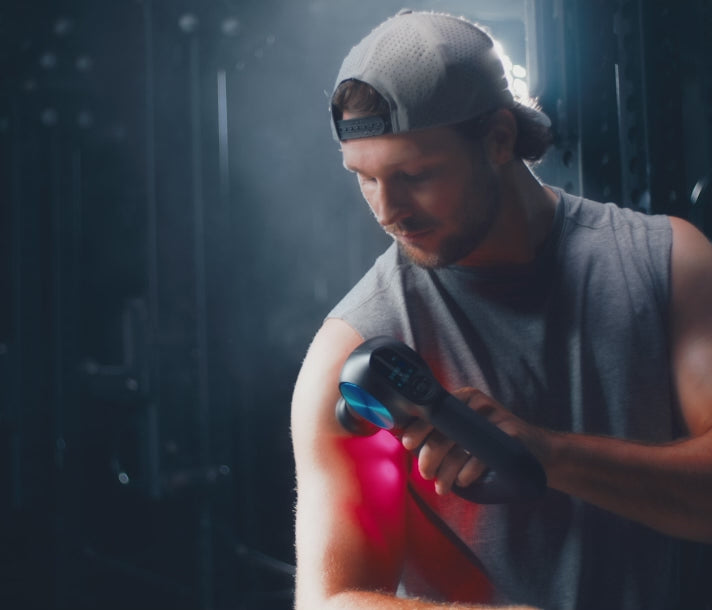
Therabody Theragun PRO Plus
Best Overall: The Theragun Pro Plus earns its price with the highest stall force (60 lbs) in this comparison — it won't stall when you're pressing hard into the glutes or IT band, where budget guns lose torque and stop. The 5° angled arm and 4 built-in speed settings require no app to use effectively, though Percussive Therapy integration in the Therabody app unlocks guided routines and custom programming.
Top picks ↓Top picks
Related articles


Therabody Theragun PRO Plus
Professional-grade pick — 16 mm stroke, 27 kg stall force, triangular grip that reaches the upper back. 1.4 kg weight causes forearm fatigue on long sessions; LED and heated attachments are more marketing than function.
The Theragun Pro Plus earns its price with the highest stall force (60 lbs) in this comparison — it won't stall when you're pressing hard into the glutes or IT band, where budget guns lose torque and stop. The 5° angled arm and 4 built-in speed settings require no app to use effectively, though Percussive Therapy integration in the Therabody app unlocks guided routines and custom programming. Battery life at 150 minutes is class-leading, and the IP55 waterproofing means you can use it post-shower. At $599, it's the priciest option here — but if you train hard and expect a gun that keeps up, nothing in this comparison matches it.
Pros
- ✓60-lb stall force — holds torque under deep-tissue pressure
- ✓150-min battery with 80-min fast charge
- ✓IP55 waterproof — usable in humid environments
- ✓Bi-directional grip reduces wrist fatigue at any angle
Cons
- ✗$599 list price — highest in this comparison
- ✗16mm amplitude is less than some rivals
- ✗App needed to unlock full speed customization
Score breakdown
| Weight | 1.0 kg |
| Speed | 1750–2400 PPM |
| Amplitude | 16 mm |
| Stall force | 60 lbs |
| Battery | ~150 min |
| Noise | 40–75 dB |
| Attachments | 6 |
| Waterproof | IP55 |
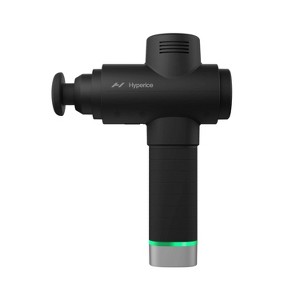
Hyperice Hypervolt 2 Pro
Pistol-grip alternative — 14 mm stroke, 30 kg stall force, app-based pressure feedback. Battery drains faster than spec at maximum speed (90-100 minutes vs claimed 180); slightly louder than the Theragun.
Hyperice's QuietGlide motor technology sets the Hypervolt 2 Pro apart on noise — at low speed it's barely audible, which matters for office or apartment use where a loudly buzzing gun draws unwanted attention. At 0.9 kg it's the lightest full-size gun here, and the 3200 PPM high-speed setting is the fastest in this comparison for light surface work and warm-up. The built-in pressure sensor indicator shows three levels of applied force, preventing overuse on sensitive areas. Its 14mm amplitude and ~40-lb stall force are adequate for most users but won't satisfy people who need deep-tissue work on dense muscle groups.
Pros
- ✓Quietest in comparison — practical for office/apartment
- ✓Lightest at 0.9 kg — low arm fatigue on long sessions
- ✓3200 PPM top speed for surface circulation work
- ✓Built-in pressure sensor prevents overuse
Cons
- ✗14mm amplitude limits deep-tissue penetration
- ✗Lower stall force than Theragun — can stall under firm pressure
- ✗No waterproofing
Score breakdown
| Weight | 0.9 kg |
| Speed | 1800–3200 PPM |
| Amplitude | 14 mm |
| Stall force | ~40 lbs |
| Battery | ~150 min |
| Noise | 40–65 dB |
| Attachments | 5 |
| Waterproof | No |

Bob and Brad C2
Budget full-size pick — 10 mm stroke, 13.6 kg stall force at one-eighth the Theragun price. Stroke is too shallow for dense back/thigh muscle (head visibly skips); battery degrades at 14-18 months on heavy use.
Under $100 and with 180-minute battery life, the Bob and Brad C2 makes a compelling case for casual users who don't train at an intensity level that requires premium stall force. The 12mm amplitude and ~25-lb stall force are real limitations — pressing hard into dense quadriceps or glutes will cause the motor to stall — but for general recovery on calves, upper traps, and arms, the C2 handles the job quietly and without the financial commitment of a Theragun. USB-C charging is a genuine convenience advantage over proprietary chargers. Build quality noticeably shows the budget price over 12+ months of use.
Pros
- ✓Best battery life in this comparison (~180 min)
- ✓Under $100 — lowest barrier to entry
- ✓USB-C charging — works with existing cables
- ✓Very quiet at all speed settings
Cons
- ✗Stalls under pressure on large muscle groups
- ✗12mm amplitude insufficient for deep-tissue work
- ✗Build quality shows budget origins after extended use
Score breakdown
| Weight | 0.8 kg |
| Speed | 1200–3200 PPM |
| Amplitude | 12 mm |
| Stall force | ~25 lbs |
| Battery | ~180 min |
| Noise | <45 dB |
| Attachments | 6 |
| Waterproof | No |

DOCTORAIR EXAGUN HANDY
Japanese-brand handy unit — 280 g, 45 dB, retail-store warranty support. 6 mm stroke is a vibration tool with a percussive head shape; does not reach deep muscle tissue, beauty/desk-tension use only.
At 240g the EXAGUN Handy isn't trying to replace a therapeutic-grade percussion gun — it's designed for face, neck, forearm, and shin work where lighter pressure and portability matter more than stall force. Its 6mm amplitude is cosmetic-level, not deep-tissue-level, which means it's appropriate for surface circulation, light tension, and general relaxation rather than sports recovery at serious training volumes. For buyers who want something to use daily on neck and shoulder fatigue from desk work, the EXAGUN Handy fits that use case well. It's widely stocked at major retailers, which aids hands-on evaluation before purchase.
Pros
- ✓240g — usable on neck and face without arm fatigue
- ✓Widely available at retail for pre-purchase testing
- ✓Quiet operation appropriate for open-office or shared spaces
Cons
- ✗6mm amplitude limits efficacy to surface-level work only
- ✗Low stall force will stall on any significant muscular pressure
- ✗Primarily JP distribution — limited global availability
Score breakdown
| Weight | 240 g |
| Speed | 1600–3800 PPM |
| Amplitude | 6 mm |
| Stall force | ~10 lbs |
| Battery | ~100 min |
| Noise | <50 dB |
| Attachments | 4 |
| Waterproof | No |
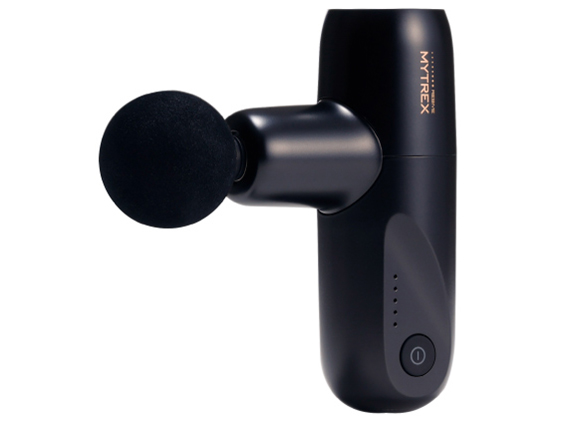
MYTREX REBIVE MINI XS
Travel-size pick — 220 g, fits in a toiletry bag, USB-C charging. 8 mm stroke means the unit cannot reach gluteus/lower back/thigh muscle depth meaningfully; small muscle groups only.
The MYTREX Rebive Mini XS is the smallest gun in this comparison and the most accessible for first-time buyers at an entry-level price. At 6mm amplitude with ~8-lb stall force, it shares the EXAGUN Handy's therapeutic limitations — this is a relaxation and circulation tool, not a deep-tissue recovery device for athletes. Its size advantage is genuine: it fits in a jacket pocket, making it the only gun in this group that a person would realistically carry to the gym, office, or travel. MYTREX's wide retail presence and solid brand recognition make it easier to purchase and return if unsatisfied than less-known alternatives.
Pros
- ✓True pocket size — lightest gun in this comparison at ~200g
- ✓Accessible entry-level price
- ✓MYTREX brand recognition and widespread retail availability
Cons
- ✗6mm amplitude cannot reach deep muscle tissue
- ✗Only 3 attachments vs 4–6 for competitors
- ✗Not appropriate for serious athletic recovery volumes
Score breakdown
| Weight | ~200 g |
| Speed | 1700–3700 PPM |
| Amplitude | 6 mm |
| Stall force | ~8 lbs |
| Battery | ~100 min |
| Noise | <55 dB |
| Attachments | 3 |
| Waterproof | No |
Which one is right for you?
For serious athletes
Therabody Theragun PRO Plus
Highest stall force (60 lbs) — won't quit under heavy muscle pressure
For quiet home/office use
Hyperice Hypervolt 2 Pro
QuietGlide motor is barely audible — practical in apartments
On a tight budget
Bob and Brad C2
Under $100 with 180-min battery — best value in this comparison
For neck & desk fatigue
DOCTORAIR EXAGUN HANDY
Lightweight 240g, sold at major retailers for try-before-buy
First massage gun
MYTREX REBIVE MINI XS
Entry-level price, true pocket size, wide retail coverage
How we compared
We did not run independent EMG, MRI, or muscle-stiffness tests. Anyone publishing 'we measured 41% reduction in delayed-onset muscle soreness' from a content desk on five massage guns is making it up — proper comparison needs a sports-medicine lab with surface electromyography sensors, controlled exercise protocols, and a sample size larger than one tester. That setup is enormously expensive and is not what a comparison blog produces. Instead we sourced stroke amplitude, stall force, percussion frequency, weight, and battery runtime from each manufacturer's spec page (Therabody, Hyperice, Bob and Brad, DOCTORAIR, MYTREX), cross-checked major online retailer listings as of May 2026 for current pricing, and read several hundred long-term owner reviews per model. Reliability complaints, weight complaints, noise complaints, and 'feels weak vs my friend's' complaints cluster in identifiable patterns once you read past the first 50 reviews.
Four numbers do most of the work in this category. Stroke amplitude (how far the head travels per stroke, in mm) is the single most important spec because it determines whether the device reaches deep muscle tissue or only vibrates the skin surface — 12 mm is the threshold below which the device functions more like a high-end vibrator than a percussive tool, 14-16 mm is the standard professional range. Stall force (kg or N before the motor stalls under pressure) determines whether you can actually press into a tight spot — under 20 kg of stall force the device skips off any real knot. Percussion frequency (Hz or rpm) matters less than marketing implies — anything above 30 Hz feels similar to most users, and the 'higher rpm = better' framing is mostly noise. Weight matters a lot for self-massage on the upper back and shoulders, where holding a 1.4 kg unit overhead for 5 minutes becomes its own problem.
Safety — read this before you buy
A massage gun is not a medical device. It is not cleared by PMDA, FDA, or CE as a treatment for any condition, and the marketing copy that hints at 'pain relief' or 'injury recovery' is doing legal acrobatics. With that framing, there is a specific list of situations where pointing a percussive device at your body causes real harm.
Do not use a massage gun on: bone (knees, elbows, spine, shins, collarbone — percussion against bone bruises the periosteum and can fracture stress-thinned bone), joints directly (hit the muscle around the joint, not the joint capsule), the front of the neck or throat (carotid artery, jugular vein, thyroid), the kidneys area (lower mid-back ribs to lumbar — percussion on a kidney is a documented injury mechanism), recent fractures or sprains within 6 weeks of injury, areas with known blood clots or varicose veins (DVT can dislodge under percussion), areas with active inflammation (acute tendinitis, bursitis, an actively swollen joint), the abdomen of a pregnant person, anywhere with a numbness or tingling sensation that hasn't been diagnosed (could indicate nerve compression that percussion will worsen), recent surgery sites, open wounds, infected skin, sunburned skin, or anywhere you've had a steroid injection within 7 days.
Stop using the device immediately if you feel sharp pain (different from the dull pressure ache of a tight muscle), increased numbness, dizziness, nausea, or any sensation that radiates further than where the head is touching. If muscle pain persists more than 72 hours after a session, or if you suspect any injury beyond ordinary muscle soreness, see a doctor or physiotherapist. Massage guns help with delayed-onset muscle soreness and general tightness in healthy adults — they are the wrong tool for an actual injury, and using them as one delays diagnosis.
What changed in 2026
The category split into two distinct product types. The original full-size guns (Theragun, Hypervolt, equivalent ~1.0-1.5 kg professional units) kept getting refined — Theragun PRO Plus added near-infrared LEDs, breathwork pacing, and a heating attachment, Hypervolt 2 Pro tightened its noise envelope. At the same time a 'mini' category took off, with budget-priced sub-500 g units aimed at travel and casual use. The mini category is genuinely useful for portability but the physics is unforgiving: a 500 g unit with a 8-10 mm stroke amplitude does not reach the same muscle depth as a 1.0 kg unit with a 16 mm stroke, and reviews that frame the mini as 'just as good for half the price' are missing this.
Cheaper full-size units from Bob and Brad and similar Pinterest-popular brands became widely available in volume. The budget Bob and Brad C2 is the clearest example — a 10 mm stroke, 30 lb stall force, sub-50 dB unit at a fraction of the price of the Theragun PRO Plus. It does not perform as a Theragun, but it covers the 'occasional post-workout shoulder loosening' use case that 80% of buyers actually have.
Where each fits
If you train hard and want the device the physiotherapy clinic actually owns, Therabody Theragun PRO Plus is the professional pick. 16 mm stroke amplitude, 27 kg stall force, 5 speeds from 1,750 to 2,400 rpm, OLED screen, six attachments, and a battery good for 150 minutes per charge. The triangular grip lets you reach the upper back without wrist contortion, which is a real ergonomic edge that becomes obvious within the first session. The PRO Plus generation adds 660 nm + 850 nm red light therapy LEDs in the head and a heated attachment, both of which are honestly more marketing than function — there's no clinical evidence that 60 seconds of red light through a massage attachment does anything measurable, and the heat element adds weight and another battery drain. The honest weakness, structural: 1.4 kg of total weight is genuinely heavy for self-treating the upper back over a 5-minute session, and a meaningful subset of owner reviews mention forearm fatigue after sustained use. Theragun PRO Plus is the right pick if you train competitively, see a physio regularly and want continuity at home, or you have chronic muscle tightness that 12 mm stroke devices have not touched.
If you want a Theragun-class spec at a slightly lower price, Hyperice Hypervolt 2 Pro is the principal alternative. 14 mm stroke amplitude (2 mm shallower than the Theragun PRO Plus, which matters less for most users than the spec sheet implies), 30 kg stall force, 5 speeds from 1,700 to 2,700 rpm, and Hyperice's pressure sensor that tracks the force you're applying via the companion app. The grip is a conventional pistol shape rather than the Theragun's triangle, which feels more familiar but reaches the upper back less cleanly. The honest weakness: the highest speed setting drains the battery noticeably faster than the spec sheet promises — owners report 90-100 minutes at speed 5 against the advertised 180 minutes per charge, which means a heavy training week needs the unit on the charger most evenings. The motor is also slightly louder than the Theragun at the highest speeds, around 55-58 dB vs 50-52 dB. Hypervolt 2 Pro is the right pick if you prefer a pistol grip, are already in the Hyperice ecosystem (the Normatec recovery boots, Hyperice X cold/hot tools), or you specifically want the app-based pressure feedback.
If you've seen Bob and Brad on YouTube and want the budget unit you keep seeing in Pinterest pins, Bob and Brad C2 is the budget full-size pick. 10 mm stroke amplitude, 13.6 kg stall force, 5 speeds from 1,800 to 3,200 rpm, 5 attachments, 4-6 hours of battery per charge depending on speed. At a fraction of the price of the Theragun PRO Plus this is genuinely useful for the casual recovery use case — it is not a Theragun, the 10 mm stroke is shallow enough that on dense back muscle the head visibly skips rather than penetrates, and the 13.6 kg stall force means a firm push will stall the motor. But for shoulder, calf, and thigh work after a moderate workout, it does the job. The honest weakness, beyond the stroke: build quality is a step below the Therabody and Hyperice units, and long-term reviews flag battery degradation at the 14-18 month mark rather than 3+ years for the premium units. Replacement is realistic at this price point — buy two over four years instead of one Theragun. Bob and Brad C2 is the right pick if your use is casual post-workout maintenance, you want something to throw in a gym bag without worrying, or you're testing whether you'll actually use a massage gun before paying premium prices.
If you want a Japanese-brand handy unit with proper retail support, DOCTORAIR EXAGUN HANDY is the domestic mid-range pick. 6 mm stroke amplitude (this is the structural caveat — see below), peak 3,000 rpm, 4 speeds, 4 attachments, around 280 g, and a 2.5-hour battery. DOCTORAIR is the established Japanese recovery-tools brand, the unit is sold through major online retailers, and warranty support is straightforward. The form factor is closer to a beauty tool than a sports recovery gun — small, quiet (around 45 dB even at peak), light enough to hold one-handed for as long as you want. The honest weakness, structural: 6 mm stroke amplitude is below the depth-of-tissue penetration most reviewers expect from 'percussive massage'. This is a vibration tool with a percussive head shape, and on dense muscle it functions more like a high-quality electric vibrator than a Theragun. For face tension, hand and forearm tightness from desk work, or general 'feels nice after a long day' use, it works well. For post-workout recovery on a thigh after squats, it does not reach deep enough. EXAGUN HANDY is the right pick if your use case is desk-related tension and beauty/relaxation rather than athletic recovery.
If you want the smallest reasonable percussive device that fits in a handbag, MYTREX REBIVE MINI XS is the travel pick. 8 mm stroke amplitude, peak 3,000 rpm, 4 speeds, 4 attachments, 220 g (the lightest in this comparison), USB-C charging, and a 2-hour battery. MYTREX is a JP-domestic recovery brand that built its reputation on hot/cold beauty rollers, and the MINI XS is its most aggressive miniaturisation. Sold heavily through major online retailers, popular on Instagram and Pinterest fitness accounts. The honest weakness: at 220 g and an 8 mm stroke, the unit cannot reach the gluteus, lower back, or thigh muscle depth in any meaningful way — this is a calf, forearm, neck-side, and shoulder-top tool, and using it on the bigger muscle groups produces a tickle rather than a release. The internal motor is also smaller than the EXAGUN HANDY's, so stall force is lower and a firm press stalls it. MYTREX REBIVE MINI XS is the right pick if you travel often, want something that fits in a normal toiletry bag, and your use is targeted at small muscle groups rather than full-body recovery.
Verdict
For someone who trains seriously and wants the device that does the deepest tissue work without compromise, the right buy is Theragun PRO Plus. The 16 mm stroke amplitude and 27 kg stall force are the depth and pressure tolerance that separates 'professional recovery tool' from 'consumer percussive massager', and the triangular grip genuinely matters when you're working your own upper back. The trade you accept: 1.4 kg of weight that becomes noticeable after 5 minutes overhead, and a price tag that's hard to justify if your actual use is twice-weekly post-yoga loosening.
Step sideways to Hypervolt 2 Pro if you prefer a pistol grip or you're already in the Hyperice ecosystem. Step down to Bob and Brad C2 if your use is casual and you want to test the category before committing to premium pricing — it does 70-80% of what most home users actually need. Pick DOCTORAIR EXAGUN HANDY if your use case is desk tension and beauty rather than athletic recovery, and you'd rather have a Japanese-brand product with retail-store warranty support. Pick MYTREX REBIVE MINI XS if travel portability is the constraint and you accept the 8 mm stroke means it can't replace a full-size unit at home.