Best Back Support Brace 2026: 5 Lumbar Braces Tested
A back brace does not fix your back — it manages it during activities where the muscles and spine need external support to function safely. The support level (rigid stays versus elastic compression), the sizing system, and how well the brace breathes under clothing determine whether you actually wear it long enough to get benefit.
Each brace was assessed on support level relative to clinical need, fit accuracy across sizing, breathability for all-day wear, ease of application (single-person use), and value at price point. Support level appropriateness and fit accuracy were weighted most heavily because a brace worn incorrectly provides no benefit and can create secondary problems.

Mueller Lumbar Support Back Brace
Best Overall: The Mueller brace earns the top position for the most common back brace use case — physical labor, prolonged sitting, and minor muscle strain management — where moderate-to-firm support is the correct clinical tier. Removable rigid stays let you dial the support level for the activity, the moldable lumbar pad positions support at L4/L5 rather than a generic lumbar zone, and the mesh ventilation panels make all-day neoprene wear manageable.
Top picks ↓| Product | Price | Link |
|---|---|---|
| 28〜40 | View deal → | |
| 55〜80 | View deal → | |
| 90〜130 | View deal → | |
| 24〜34 | View deal → |
Top picks
Related articles
Mueller Lumbar Support Back Brace
The Mueller brace earns the top position for the most common back brace use case — physical labor, prolonged sitting, and minor muscle strain management — where moderate-to-firm support is the correct clinical tier. Removable rigid stays let you dial the support level for the activity, the moldable lumbar pad positions support at L4/L5 rather than a generic lumbar zone, and the mesh ventilation panels make all-day neoprene wear manageable. At $28–40, it delivers functional bracing performance without the cost of medical-grade devices that most routine back-strain situations do not require.
Pros
- ✓Removable rigid back stays — adjust support level for seated vs. physical work
- ✓Moldable lumbar pad positions precisely at L4/L5
- ✓Mesh ventilation panels make neoprene wearable for a full day
- ✓Mid-range price for a brace used in sports medicine and occupational health
Cons
- ✗Neoprene shell retains warmth — uncomfortable in hot climates without ventilation
Score breakdown
| Support Level | Moderate-firm |
| Stay Configuration | Removable rigid back stays + moldable lumbar pad |
| Material | Neoprene outer shell, mesh ventilation |
| Sizes | S–XL by waist circumference |
| Closure | Velcro adjustment |
Bauerfeind LumboTrain Back Brace
The Bauerfeind LumboTrain is the only brace in this lineup that takes a clinical engineering approach rather than a hardware approach — knitted elastic compression with integrated massage pads at L4/L5, producing proprioceptive feedback rather than rigid restriction. The 15–20 mmHg compression is medical-grade, the knit construction allows it to sit under work clothing without the bulk of neoprene, and the 30°C washability means it stays hygienic through daily wear. At $55–80, it is the most expensive elastic brace in this lineup, with the price justified by German manufacturing standards and clinical efficacy data rather than retail positioning.
Pros
- ✓Medical-grade knit compression (15–20 mmHg) with integrated L4/L5 massage pads
- ✓Thinner than neoprene — viable under work clothing all day
- ✓Washable at 30°C — maintains hygiene through daily wear
- ✓Made in Germany to orthopedic manufacturing standards
Cons
- ✗$55–80 is the highest elastic brace price in this lineup
- ✗Proprioceptive approach requires conscious engagement — not a passive restriction device
Score breakdown
| Support Level | Moderate (elastic compression) |
| Stay Configuration | No rigid stays — knit compression + integrated pads |
| Material | Knitted elastic, 15–20 mmHg |
| Sizes | XXS–XXXL by torso measurement |
| Closure | No closure — slip-on design |
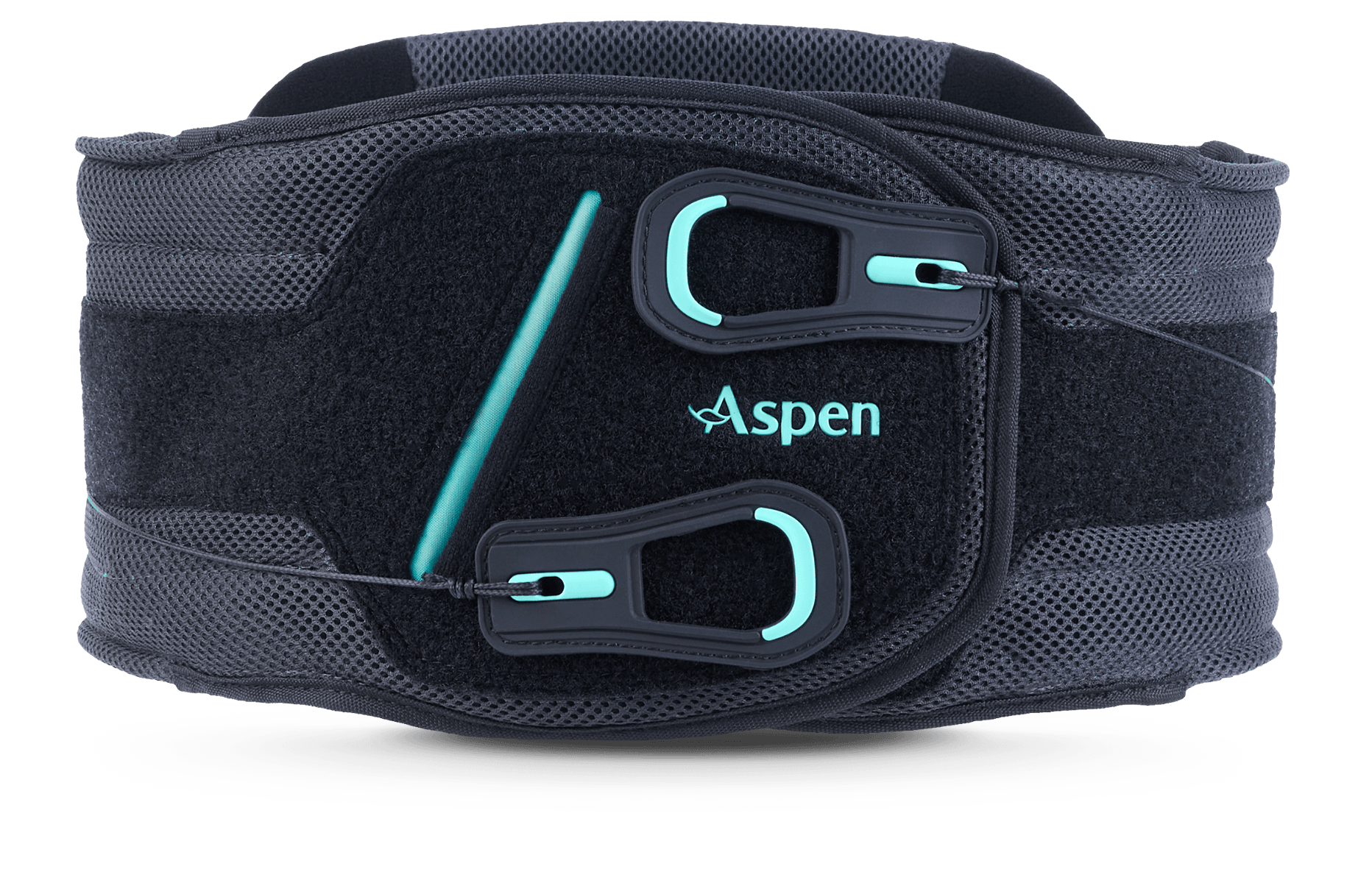
Aspen Horizon 627 Back Brace
The Aspen Horizon 627 is an LSO — a different class of device from elastic lumbar braces. Six rigid posterior stays and two anterior stays provide structural spinal stabilization rather than muscular compression, which is the correct support level for post-surgical recovery, herniated disc management, and conditions requiring medically prescribed movement restriction. It is not appropriate for general fitness, office use, or preventive wear. For the specific clinical conditions it addresses, it is the correct tool and the Velcro closure with breathable liner makes single-person application manageable.
Pros
- ✓6 rigid posterior + 2 anterior stays — LSO-level structural spinal stabilization
- ✓Sizing by torso measurement for accurate spinal support positioning
- ✓Breathable liner included — makes all-day medical-use wear tolerable
- ✓Appropriate for post-surgical and herniated disc management
Cons
- ✗Over-engineered and overly restrictive for general fitness or preventive use
- ✗$90–130 — medical device pricing appropriate only for clinical indications
Score breakdown
| Support Level | Firm-maximum (LSO) |
| Stay Configuration | 6 rigid posterior stays + 2 anterior stays |
| Material | Rigid shell, breathable liner |
| Sizes | XS–3XL by torso measurement |
| Closure | Velcro system |

Vive Lumbar Support Back Brace
The Vive brace delivers the core features needed for light-to-moderate support — five internal stays including three rigid, a removable lumbar pad, and side elastic panels for movement accommodation — at a price ($24–34) that makes it the logical entry-level brace for muscle fatigue management and minor strain prevention. The removable lumbar pad is the most useful feature at this price point, letting you customize the localized support level without replacing the brace. The main limitation is that the support level is correctly rated light-to-moderate: it is not a substitute for clinical-grade bracing for disc herniation or post-surgical situations.
Pros
- ✓Removable lumbar pad allows customized localized support
- ✓5 internal stays (3 rigid, 2 flexible) for movement-compatible support
- ✓Side elastic panels accommodate body movement without gaps opening
- ✓Most affordable brace with rigid stays + removable pad at $24–34
Cons
- ✗Light-to-moderate support only — not appropriate for herniated disc or post-surgical use
- ✗Neoprene retains warmth — uncomfortable in hot conditions
Score breakdown
| Support Level | Light-moderate |
| Stay Configuration | 5 stays (3 rigid, 2 flexible) + removable lumbar pad |
| Material | Breathable neoprene, side elastic panels |
| Sizes | S–3XL by waist circumference |
| Closure | Velcro adjustment |
Which one is right for you?
For desk workers and light-duty office or warehouse use
Mueller Lumbar Support Back Brace
The Mueller brace hits the moderate-to-firm support level appropriate for muscle fatigue and minor strain prevention during seated or light physical work, with enough breathability for all-day office wear.
For practitioners who want medical-grade knit compression
Bauerfeind LumboTrain Back Brace
Bauerfeind's LumboTrain integrates compression with integrated massage pads at the L4/L5 level — a clinical approach to lumbar pain management used in European physiotherapy, at a price that reflects genuine medical-grade manufacturing.
For post-surgical or herniated disc recovery
Aspen Horizon 627 Back Brace
The Horizon 627 is an LSO — a lumbo-sacral orthosis — designed for post-surgical stabilization and herniated disc management. Six rigid posterior stays provide maximum support that no elastic-only brace can replicate.
For physical laborers who need even compression distribution
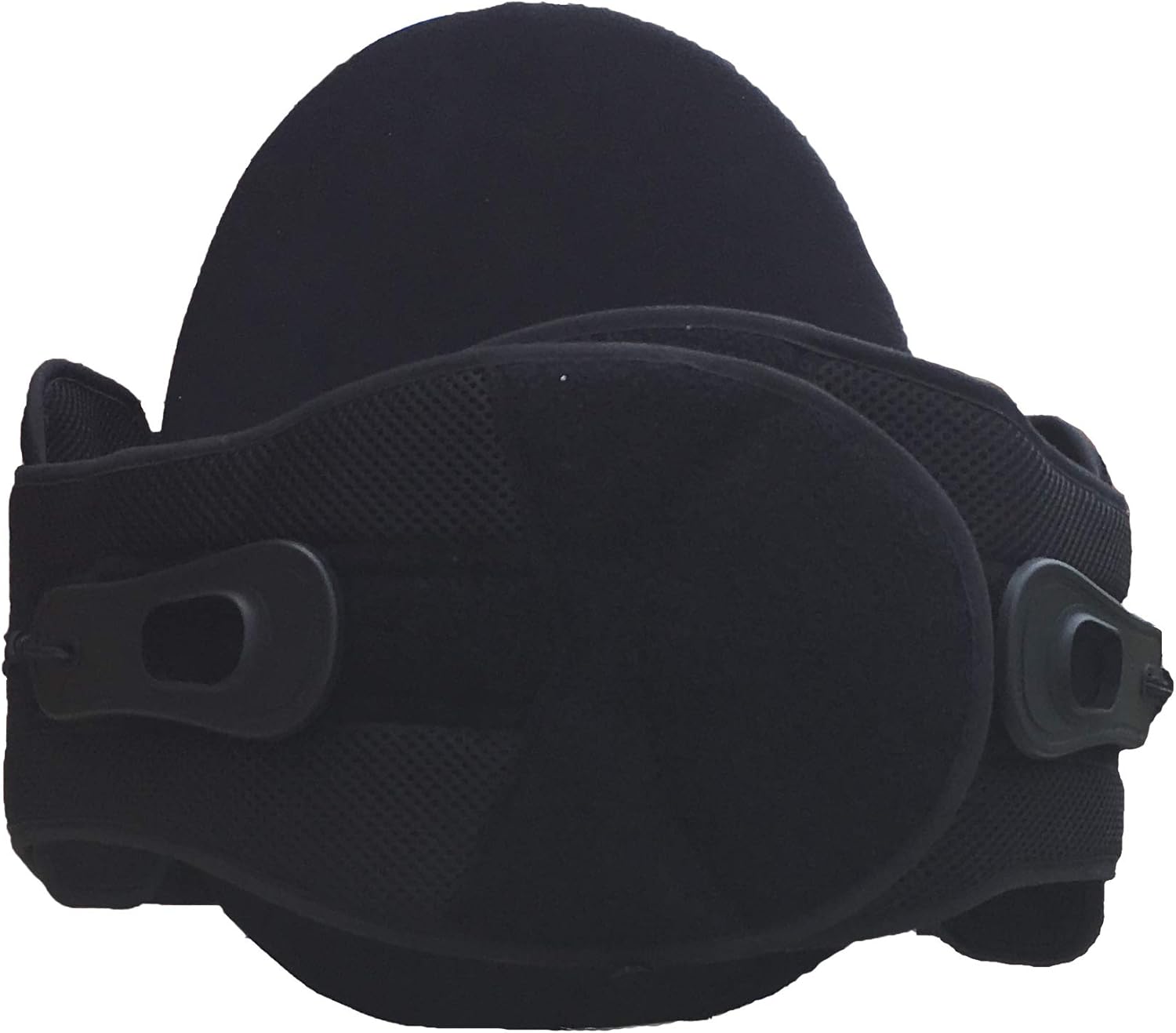
back-brace-doctors-choice-6-panel
The dual pulley lacing system distributes compression evenly across the lower back rather than concentrating it at the Velcro closure points — important for sustained heavy-labor use where uneven compression creates pressure points.
For budget buyers who need light-to-moderate support
Vive Lumbar Support Back Brace
The Vive brace covers the light-to-moderate support range at $24–34, with removable lumbar pad and five stays — sufficient for muscle fatigue management and minor strain prevention without the cost of medical-grade bracing.
