Best Weighted Blanket 2026: 5 Compared on Fill & Weight
Weighted blankets work for some people and are overpriced dead weight for others. The difference comes down to fill type (glass beads versus knit weight), whether the weight is evenly distributed, how hot it sleeps, and whether the cover survives regular washing. Five options from budget to premium compared here.
We assessed each blanket on fill construction and weight distribution, heat retention characteristics, cover washability, and long-term durability signals from aggregated owner reviews. Specifications were verified against manufacturer product pages as of May 2026.
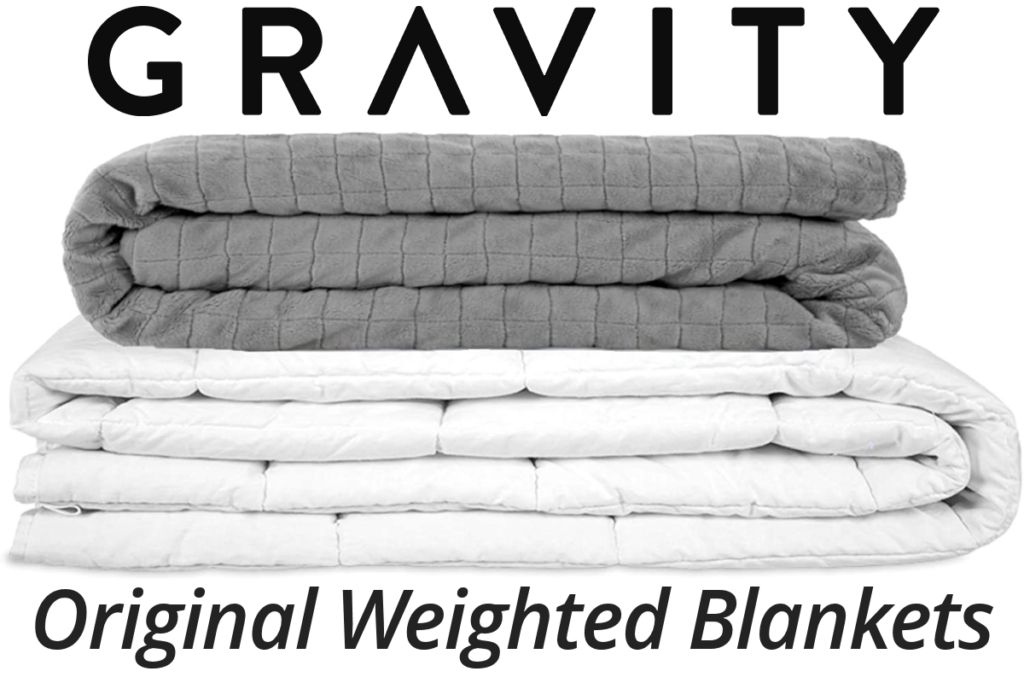
Gravity Blanket Original Weighted Blanket
Best Overall: Gravity is the reference design — 6-inch square compartment grid prevents bead migration, 7-layer construction has 8+ years of owner-verified durability, and the 15 lb (6.8 kg) and 20 lb (9.1 kg) weights cover the range most adults use. Owner reviews at 5+ year use show no significant bead-clustering or seam failure patterns.
Top picks ↓| Product | Price | Link |
|---|---|---|
| 189〜249 | View deal → | |
| 249〜299 | View deal → | |
| 55〜89 | View deal → | |
| 65〜95 | View deal → |
Top picks
Related articles

Gravity Blanket Original Weighted Blanket
Gravity is the reference design — 6-inch square compartment grid prevents bead migration, 7-layer construction has 8+ years of owner-verified durability, and the 15 lb (6.8 kg) and 20 lb (9.1 kg) weights cover the range most adults use. Owner reviews at 5+ year use show no significant bead-clustering or seam failure patterns. The honest weakness is heat: the standard polyester cover retains body heat perceptibly, and summer use without air conditioning sleeps warm. The premium minky or cooling cover options reduce this somewhat but do not eliminate it. At $249 for the 20 lb, it's the highest price for standard glass-bead construction in this comparison.
Pros
- ✓Compartment grid prevents bead shifting to edges
- ✓8+ years of owner-verified durability on Amazon
- ✓15 lb and 20 lb options cover the widest weight range
- ✓Removable cover swappable for different textures
Cons
- ✗Standard cover retains heat in warm bedrooms
- ✗Highest price for glass-bead construction in this comparison
Score breakdown
| Fill | Glass micro-beads |
| Available weights | 15 lb (6.8 kg), 20 lb (9.1 kg) |
| Size | 48x72 in throw / 60x80 in twin |
| Cover | Polyester (removable) |
| Compartment size | 6-inch grid |
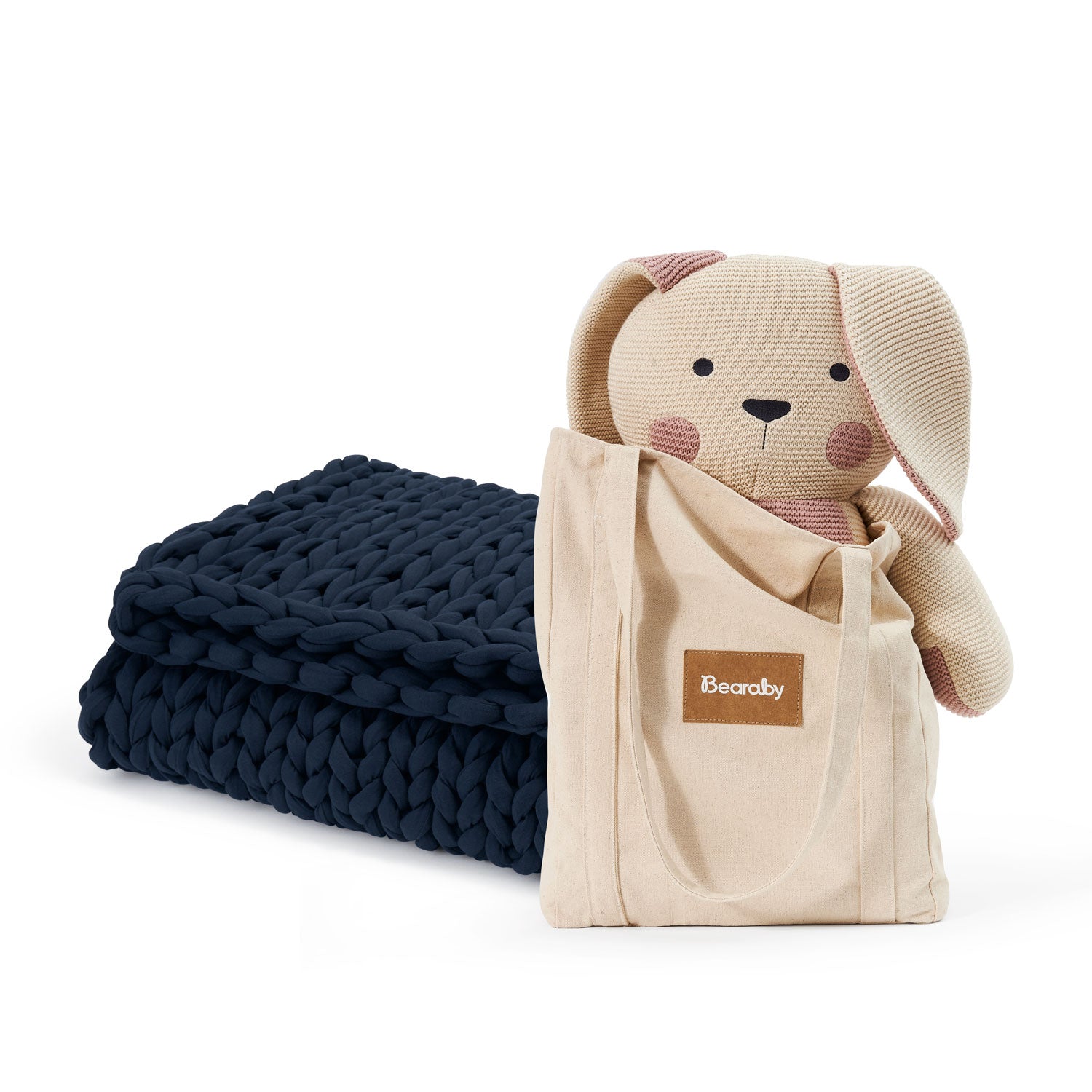
Bearaby Cotton Napper Weighted Blanket
Bearaby solves the heat problem that every glass-bead blanket has but few honestly address. The open-weave chunky knit allows airflow through the blanket surface — no trapped air pockets, no continuous fabric layer blocking heat dissipation. GOTS-certified organic cotton is the only material used, making it the cleanest-certified option in this comparison. The 20 lb (9.1 kg) and 25 lb (11.3 kg) weights require a front-load washer for home washing — top-load agitators damage the knit. The visual footprint on a bed is large; the chunky knit reads as a lifestyle statement as much as a sleep product. For buyers who sleep hot and want weighted pressure: this is the only option in this comparison that does not make the heat problem worse.
Pros
- ✓Open-weave knit dissipates heat — genuinely breathable
- ✓GOTS-certified organic cotton throughout
- ✓No glass beads — no shifting, no seam leaks
- ✓Visually distinctive — doubles as bedroom decor
Cons
- ✗20 lb and 25 lb require front-load washer
- ✗Highest price in the comparison ($249–$299)
- ✗Bulkier footprint on the bed than flat blankets
Score breakdown
| Fill | Chunky-knit organic cotton yarn (no beads) |
| Available weights | 15 lb (6.8 kg), 20 lb (9.1 kg), 25 lb (11.3 kg) |
| Size | 40x64 in (standard throw) |
| Certification | GOTS |
| Wash | Machine wash cold, front-load for 20+ lb |
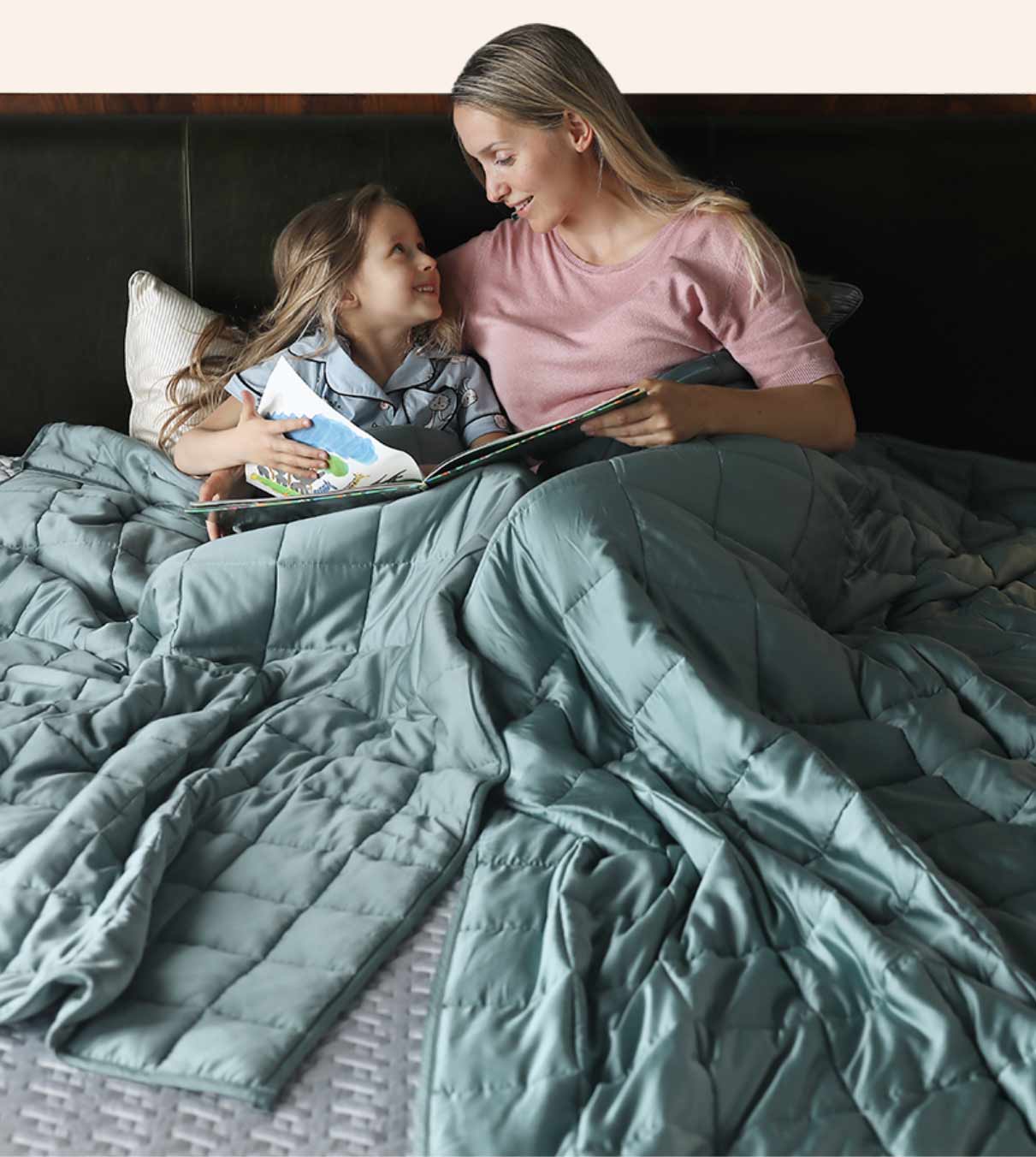
YnM Weighted Blanket
YnM is the commodity-tier benchmark — 7-layer glass bead construction for $55–$89 that covers the same basic function as Gravity at roughly one-third the price. The 100% cotton cover on the standard option is comparable in breathability to Gravity's standard cover; the premium cooling-fabric cover option adds modest heat reduction at modest upcharge. The structural caveat: bead distribution at the extreme edges is slightly less uniform than Gravity's rigid compartment grid, leading to occasional bead-shifting reports in long-term use from restless sleepers. For buyers trying weighted blankets for the first time at minimal financial risk, or buyers who confirmed weighted blankets work for them and want a second blanket without spending premium pricing: YnM is the honest recommendation.
Pros
- ✓One-third the price of Gravity for equivalent function
- ✓8+ years of Amazon reviews provide real durability data
- ✓Available from 5 lb to 25 lb — widest weight range in comparison
- ✓Multiple cover fabric options including cooling
Cons
- ✗Bead distribution at edges slightly less uniform than Gravity
- ✗No premium certification (OEKO-TEX, GOTS)
Score breakdown
| Fill | Glass micro-beads |
| Available weights | 5 lb to 25 lb (2.3–11.3 kg) |
| Cover | 100% cotton (standard), cooling fabric (premium) |
| Layers | 7 |
| Price range | $55–$89 |

Luna Weighted Blanket
Luna's OEKO-TEX certification covers both the glass bead fill and the cover fabric — a distinction that matters for buyers with chemical sensitivity or who prioritize certified materials. The dual-sided cover (plush minky on one side, cotton on the other) serves seasonal switching without buying a separate cover: cotton side in summer for lower heat retention, minky side in winter for warmth. The 7-layer construction is equivalent to YnM and Gravity in design. At $65–$95, it sits between YnM and Gravity on price. The honest gap versus Gravity: Luna's owner review history is shorter (5–6 years versus Gravity's 8+), so multi-year durability confidence, while positive in available data, has a smaller sample behind it.
Pros
- ✓OEKO-TEX certification covers beads and cover fabric
- ✓Dual-sided cover for seasonal switching
- ✓Mid-tier pricing between YnM and Gravity
- ✓12 lb to 25 lb weight range
Cons
- ✗Shorter owner review history than Gravity
- ✗Plush minky side adds heat retention in warm bedrooms
Score breakdown
| Fill | Glass micro-beads |
| Available weights | 12 lb, 15 lb, 20 lb, 25 lb (5.4–11.3 kg) |
| Cover | Dual-sided: plush minky / 100% cotton (reversible) |
| Certification | OEKO-TEX (beads + cover) |
| Layers | 7 |
Which one is right for you?
For anxiety relief and sensory input during sleep
Gravity Blanket Original Weighted Blanket
The original — 7-layer glass bead construction delivers consistent, even deep-pressure stimulation across the body that lighter blankets approximate but don't replicate.
For hot sleepers who want weight without overheating
Bearaby Cotton Napper Weighted Blanket
Open-weave chunky knit construction has no trapped-air pockets — the most breathable weighted option in this comparison by a significant margin.
For budget-first buyers testing weighted blankets for the first time
YnM Weighted Blanket
At $55–$89, it's low enough to lose nothing if weighted blankets turn out not to work for you, and the 7-layer construction is legitimate for the price.
For buyers who want wide in-store availability and easy returns
weighted-blanket-nitori-jp
Available at 500+ Nitori stores nationwide, no import or customs risk, sizes match Japanese JIS single standard, and the price is accessibly budget-tier.
For couples sharing a bed who want OEKO-TEX certified materials
Luna Weighted Blanket
OEKO-TEX certification covers both the cover and the glass beads, the dual-sided texture suits different seasonal preferences, and the 7-layer construction distributes weight consistently.
How we compared
Weighted blankets are measured in two ways that matter: fill weight accuracy (does the blanket actually weigh what it says on the label, and is that weight evenly distributed across the body surface) and heat retention (how much does the fill and cover construction trap body heat). We did not run controlled thermal imaging or independent weight distribution tests. What we did: verify stated weights against manufacturer specifications, cross-reference owner review patterns across Amazon US and brand direct pages, and check cover fabric certifications (OEKO-TEX, GOTS) against the issuing body registries.
The standard recommendation of 'choose 10% of your body weight' is a starting point, not a prescription. A 60 kg adult using a 6 kg blanket is the textbook pairing; in practice, preference varies. Heavier sleepers who prefer full-body coverage and lighter sleepers who want the weight concentrated on the torso often deviate from the 10% guideline. The five options in this comparison cover 3 kg to 11.3 kg — the range where most adults find weighted blankets usable.
One genuine limitation: we compared blankets across Japanese (single 150x200 cm) and US/international sizing, and the size mismatch matters. A US 'throw' (48x72 inches, 122x183 cm) does not cover a full single-size Japanese bed; a US 'twin' (60x80 inches, 152x203 cm) does. Buyers in Japan who want full-bed coverage should verify dimensions before purchasing US-import weighted blankets.
What changed in 2026
The weighted blanket category matured. The 2019–2021 wave of nearly identical glass-bead-in-polyester-cover blankets flooded Amazon and drove prices to commodity levels — YnM, Degrees of Comfort, and several other brands now provide functionally equivalent 7-layer glass bead construction at $50–$90, making the $150+ premium options justify their price on specific differentiators rather than basic function.
Bearaby's knit-weight design — where the blanket weight comes from the yarn mass rather than bead fill — found a durable niche that the commodity wave did not replicate. The chunky-knit construction is visually distinctive (a meaningful factor for buyers who care about bedroom aesthetics) and genuinely cooler than any glass-bead blanket at equivalent weight, because the open weave allows airflow that bead fill with a solid cover prevents. The trade-off is bulkiness and the inability to machine wash the full blanket without a front-load washer rated for heavy loads.
Outside the US the category arrived later and is still in early growth. Nitori's budget-tier entry brought accessible local pricing, but the selection is limited (two weights, one or two colorways) compared to US-market depth. MUJI does not currently offer a weighted blanket in their standard lineup. Buyers who want more options still primarily import from US brands, accepting customs fees and sizing differences as the cost.
Where each fits
Gravity Blanket at $189–$249 is the category originator. The 7-layer construction — glass micro-beads distributed in 6-inch square compartments across the blanket, sandwiched between a quilted duvet insert and a removable cover — was the reference design that most competitors copied. The specific claim Gravity makes is consistent weight distribution without bead shifting: the compartment grid prevents beads from migrating to blanket corners under use. Owner reviews at 5+ year ownership confirm this holds; no significant bead-clustering reports appear in the long-term review cohort. The honest weakness is heat — the polyester fill cover is not breathable by design, and owner reviews include a consistent 'warm in summer' signal that no cover swap fully eliminates. At $249 for the 20 lb option, it's the highest price in this comparison for standard bead-fill construction.
Bearaby Cotton Napper at $249–$299 uses a fundamentally different approach. The weight comes from GOTS-certified organic cotton yarn knitted into a chunky open-weave construction — no glass beads, no fill pockets, just the mass of the yarn distributed across the blanket. The open weave is the key differentiator: airflow passes through the blanket, making it the only genuinely cool-sleeping weighted option in this comparison. The trade-offs are real: the chunky knit looks visually large on a bed (takes up more visual space than a flat blanket), weighs more than its fill-weight equivalent because of the yarn structure, and requires a front-load washer for the 20 lb and 25 lb options — a top-load agitator will damage the knit. For buyers who sleep hot, the Bearaby is the only weighted blanket in this comparison that does not compound the heat problem.
YnM at $55–$89 is the commodity-tier reference. The 7-layer glass bead construction is functionally comparable to Gravity at roughly one-third the price — the difference is in cover material quality (YnM's standard option is 100% cotton, comparable to Gravity's; the premium options add cooling fabric at modest upcharge) and long-term owner data depth. YnM has 8+ years of Amazon reviews providing a larger sample than newer entrants. The structural weakness: bead distribution consistency is slightly less uniform than Gravity's compartment grid at the extreme edges of the blanket, leading to occasional 'beads shift toward one side' reports in long-term use. This is a minor issue for most uses but worth knowing if you move significantly in sleep.
Nitori's budget-tier weighted blanket is the practical locally-stocked choice. Available at 500+ Nitori stores nationwide with no import risk, the 3 kg and 5 kg options in standard single sizing (150x200 cm) cover the range where most adults (50–70 kg body weight, targeting 5–7% of body weight) find weighted blankets comfortable. The cover is polyester rather than cotton, which retains more heat than Gravity or YnM's cotton options — a relevant difference during hot summers. Nitori does not publish fill weight per compartment or compartment size, which makes detailed construction comparison difficult. For buyers who want local availability and after-sale support without import complexity, Nitori is the sensible default.
Luna at $65–$95 is the OEKO-TEX-certified mid-tier option. The certification covers the glass beads and the cover fabric — a meaningful distinction from YnM, which certifies the cover but not the bead fill. The dual-sided cover (one side plush minky, one side cotton) serves seasonal switching without buying a separate cover. The 7-layer glass bead construction is comparable to YnM and Gravity in design; at $65–$95 it sits between YnM and Gravity on price. The honest gap versus Gravity: Gravity's long-term owner review depth (8+ years on Amazon) is larger than Luna's, making multi-year durability confidence slightly lower for Luna despite equivalent certification.
Verdict
For first-time weighted blanket buyers who don't know yet whether the format works for them: YnM at $55–$89 is the right entry point. The 7-layer glass bead construction is legitimate, the price is low enough that if weighted blankets turn out not to suit your sleep, the loss is minor, and 8+ years of Amazon reviews give a real durability signal. Where it is stocked locally, Nitori's budget-tier option is the equivalent — local availability without import friction, accessible price, standard single sizing.
For hot sleepers who know they want weighted pressure but cannot tolerate additional heat: Bearaby Cotton Napper is the only option in this comparison that solves both problems. The open-weave knit is genuinely breathable; no glass-bead blanket in this comparison matches it on heat dissipation. Accept the higher price ($249–$299), the machine-wash requirement for a front-load washer, and the visual bulk of a chunky-knit blanket as the trade-offs. For buyers who want the longest-track-record bead-fill construction at premium quality: Gravity Blanket at $189–$249 is the original and the benchmark.