Best USB Mics 2026: Shure MV7+ vs Wave 3 vs Yeti
Your audience will forgive a shaky webcam but they'll click away from bad audio in seconds. The single biggest upgrade to how you sound on a podcast, stream, or call isn't a $2,000 setup — it's the right USB mic and understanding why a dynamic beats a condenser in an untreated room.
We compared each USB microphone on voice quality, dynamic versus condenser pickup and room-noise rejection, software features (denoising, mixing), connectivity (USB and XLR), included accessories and mounting, and price. Specifications were checked against independent audio tests and creator reviews, weighting real-world performance in untreated rooms over lab figures.
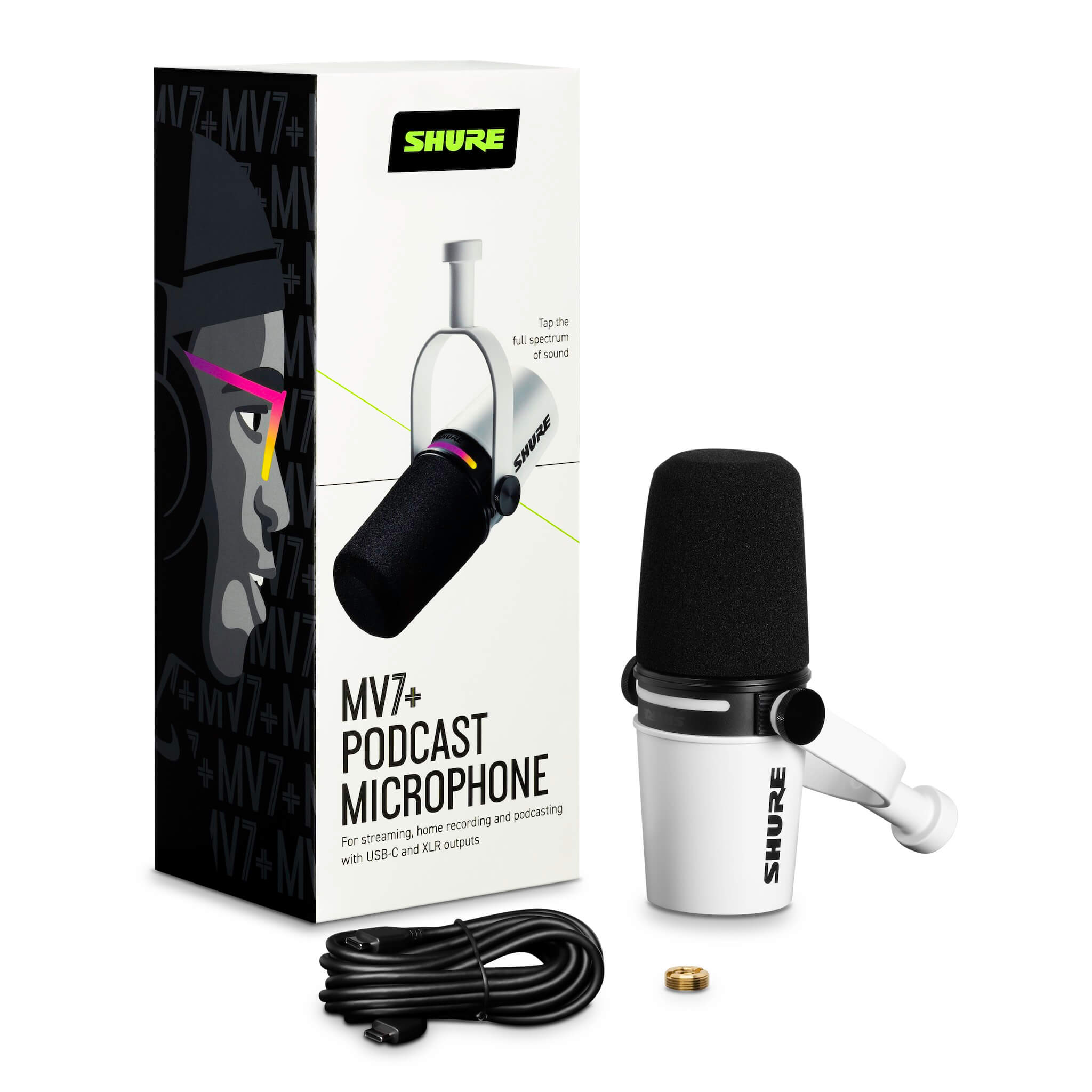
Shure Mv7 Plus
Best Overall: The Shure MV7+ is the best USB mic for people who talk for a living. It's a dynamic mic in the lineage of the legendary SM7B, so it rejects room echo, keyboard clatter, and background noise far better than the condensers beginners often buy by mistake — capturing a rich, warm voice up close while ignoring your untreated room.
Top picks ↓Related articles


Shure Mv7 Plus
The best for podcasters and streamers — a dynamic mic with SM7B-style room-noise rejection, broadcast-warm voice, both USB-C and XLR outputs to future-proof you, MOTIV software denoising, and an onboard touch panel. The forgiving choice for untreated rooms.
The Shure MV7+ is the best USB mic for people who talk for a living. It's a dynamic mic in the lineage of the legendary SM7B, so it rejects room echo, keyboard clatter, and background noise far better than the condensers beginners often buy by mistake — capturing a rich, warm voice up close while ignoring your untreated room. The smart advantage over its studio sibling is convenience: USB-C and XLR outputs let you start on USB and add an interface later without rebuying, MOTIV software adds real-time denoising and auto-leveling, and the onboard touch panel handles mute and adjustments. It wants you close and benefits from a boom arm, and it costs more than the condenser crowd, but it's the mic that makes you sound professional in a normal room.
Pros
- ✓Dynamic design rejects room noise and echo
- ✓Broadcast-warm, professional voice quality
- ✓USB-C and XLR outputs future-proof your setup
- ✓MOTIV software denoising and onboard touch controls
Cons
- ✗Needs close placement and ideally a boom arm
- ✗Costs more than condenser rivals

Elgato Wave 3
The best for streamers wanting polish — a crisp cardioid condenser with Clipguard distortion protection and the standout Wave Link software that turns it into a multi-channel mixer for voice, game, chat, and music. Best in a reasonably quiet room.
The Elgato Wave 3 is the pick for streamers who want crisp condenser sound and the best software here. The cardioid capsule captures a detailed voice, and Clipguard prevents the harsh digital distortion that ruins a take when you suddenly laugh or shout. Its real edge is Wave Link software, which turns the mic into a mini mixing console — balance voice, game audio, chat, music, and alerts on separate channels and route them independently to stream and headphones, no hardware mixer needed — with seamless Stream Deck integration. As a condenser it's more sensitive to room noise than the Shure, so it shines in a quieter or lightly treated room with a pop filter, but for streaming polish plus software mixing it's the standout.
Pros
- ✓Crisp, detailed condenser sound
- ✓Clipguard stops sudden-volume distortion
- ✓Wave Link software is a full multi-channel mixer
- ✓Seamless Stream Deck integration
Cons
- ✗Condenser — picks up room noise
- ✗Best with a pop filter and treated room

Blue Yeti Usb
The versatile all-rounder — four selectable pickup patterns (cardioid, omni, bidirectional, stereo) make it the most flexible mic here for solo, interview, and room recording, with plug-and-play simplicity and onboard controls. A condenser, so it prefers a quiet space.
The Blue Yeti is the famous all-rounder and the safe, versatile choice. Its defining feature is four selectable pickup patterns — cardioid for solo voice, omnidirectional for a whole room, bidirectional for a two-person interview across the mic, and stereo — so it's the most flexible mic here for varied situations, from a solo podcast to an in-person interview to recording an instrument. It's a big-sounding, present condenser with plug-and-play simplicity and onboard gain, mute, and headphone controls. Being a condenser it prefers a quiet space and can pick up desk and room noise, but for one mic that adapts to many recording setups, the Yeti remains hard to beat.
Pros
- ✓Four pickup patterns for any recording setup
- ✓Big, present sound, plug-and-play
- ✓Onboard gain, mute, and headphone monitoring
- ✓The most versatile mic here
Cons
- ✗Condenser sensitivity picks up room and desk noise
- ✗Larger and heavier than rivals
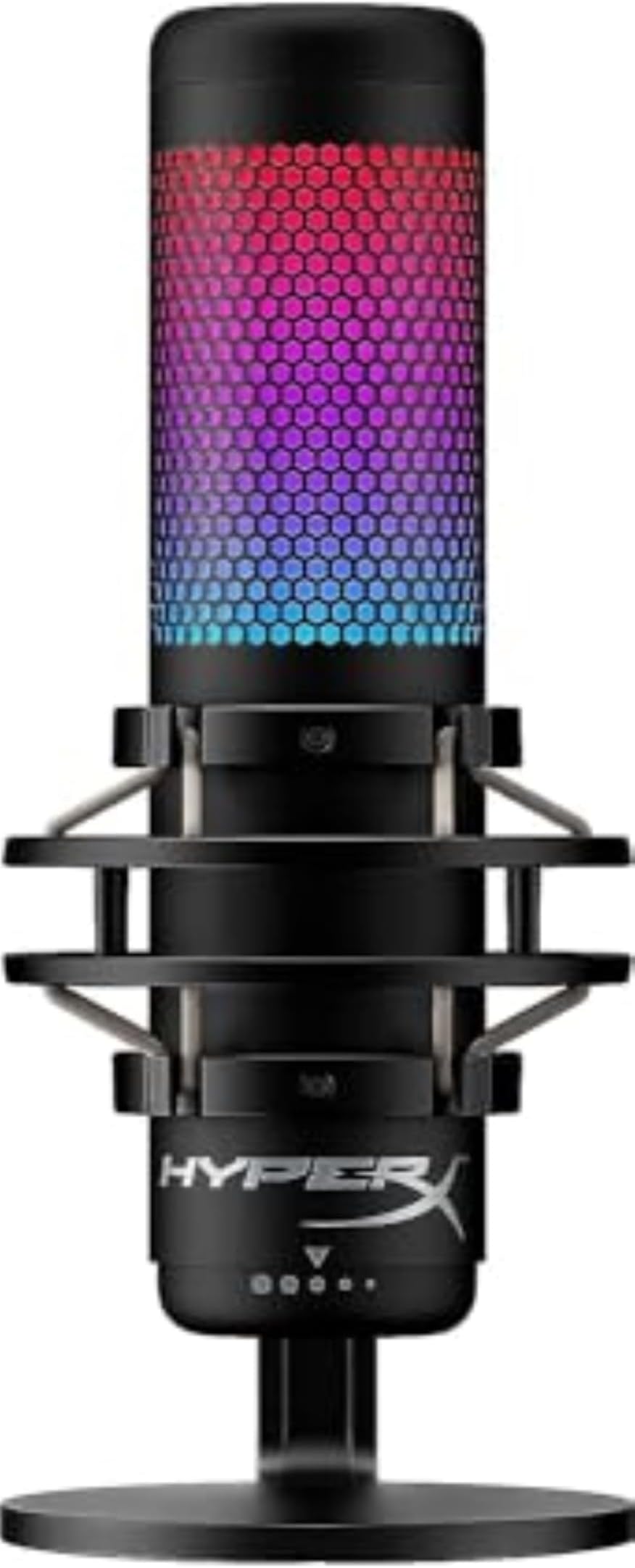
Hyperx Quadcast S
The gamer and streamer favourite — a condenser with built-in shock mount and pop filter, tap-to-mute with a clear indicator, four polar patterns, and RGB lighting in one package. Clean, lively sound that looks the part on camera.
The HyperX QuadCast S is the gamer and streamer favourite, and not just for the RGB. It's a condenser with a built-in internal shock mount and pop filter, a tap-to-mute top sensor with a clear visual indicator so you always know your status, and four selectable polar patterns. The integrated anti-vibration mount is a genuinely practical touch for desk setups where typing and bumps transmit through the stand, and it sounds clean and lively while looking the part on camera. As a condenser it favours a reasonably quiet room, but the all-in-one package of shock mount, pop filter, tap-to-mute, and patterns makes it an easy, complete pick for gaming and streaming.
Pros
- ✓Built-in shock mount and pop filter
- ✓Tap-to-mute with clear visual indicator
- ✓Four polar patterns and RGB lighting
- ✓Clean, lively sound that looks great on camera
Cons
- ✗Condenser — prefers a quiet room
- ✗RGB and styling aren't for everyone

Rode Podmic Usb
The value dynamic pick — a broadcast-style dynamic mic with USB and XLR outputs, excellent room-noise rejection, and Rode's clean sound at a lower price than the Shure. The smart budget choice for untreated rooms and growing podcasters.
The Rode PodMic USB is the value dynamic pick — a broadcast-style dynamic mic with both USB and XLR outputs, excellent room-noise rejection, and Rode's clean, professional sound at a lower price than the Shure. As a dynamic it's forgiving in untreated and noisy rooms, capturing your voice up close while ignoring the background, and the dual connectivity means it grows with you toward an XLR interface later. It wants close placement and a boom arm like any dynamic, and it lacks the Shure's onboard touch controls and software polish, but for a growing podcaster who wants dynamic-mic forgiveness on a budget, it's the smart buy.
Pros
- ✓Dynamic design forgives noisy, untreated rooms
- ✓USB and XLR outputs for future upgrades
- ✓Clean, professional Rode sound
- ✓Lower price than the Shure MV7+
Cons
- ✗Needs close placement and a boom arm
- ✗Less onboard control and software than the Shure
Which one is right for you?
For podcasters in a normal room
Shure Mv7 Plus
Its dynamic design rejects room noise and echo while sounding broadcast-warm, and USB/XLR outputs future-proof your setup — the most forgiving, professional choice for untreated spaces.
For streamers who want software mixing
Elgato Wave 3
Crisp condenser sound, Clipguard distortion protection, and Wave Link's multi-channel mixer make it the streamer's pick in a reasonably quiet room.
For varied recording situations
Blue Yeti Usb
Four selectable pickup patterns make it the one mic that handles solo voice, interviews, and room recording alike.
For gamers wanting an all-in-one mic
Hyperx Quadcast S
Built-in shock mount, pop filter, tap-to-mute, and four patterns in one RGB package make it the complete, fuss-free gaming and streaming choice.
For dynamic-mic forgiveness on a budget
Rode Podmic Usb
Broadcast-style dynamic sound with USB and XLR outputs rejects room noise at a lower price than the Shure — the value pick for growing podcasters.
Top pick: Shure MV7+
The Shure MV7+ is the best USB microphone for most people who talk for a living because it brings broadcast-grade sound to a plug-and-play USB connection. It's a dynamic microphone — the same fundamental design as the legendary Shure SM7B used on countless radio shows and podcasts — which means it rejects room noise, keyboard clatter, and echo far better than the condenser mics most beginners buy by mistake. You speak close to it and it captures a rich, warm voice while ignoring the air conditioner and the reflections off your bare walls.
What makes the MV7+ the smart buy over its famous studio sibling is convenience. It has both USB-C and XLR outputs, so you start with USB today and graduate to an audio interface later without rebuying. Shure's MOTIV software adds real-time denoising, a digital popper-stopper, reverb, and auto-level features, and the onboard touch panel lets you mute and adjust on the fly. An LED strip even gives visual feedback for streamers.
The honest caveats: as a dynamic mic it wants you close (within a hand's width) and benefits from a boom arm to get there comfortably, and it costs more than the condenser crowd. But for podcasters, streamers, and anyone recording in a normal untreated room, the MV7+ is the microphone that makes you sound like you know what you're doing — it's the default recommendation.
Best for streaming polish: Elgato Wave 3
The Elgato Wave 3 is the pick for streamers and creators who want a clean, modern condenser sound and tight integration with their broadcast software. It's a cardioid condenser that captures a crisp, detailed voice, and its standout feature is Clipguard — a circuit that prevents the harsh digital distortion that ruins a take when you suddenly laugh or shout, which condensers are otherwise prone to. The capsule and preamp are genuinely good for the price.
Where the Wave 3 pulls ahead for streamers is the Wave Link software. It turns the mic into a mini mixing console: you can balance your voice, game audio, chat, music, and alerts into separate channels and route them independently to your stream and your headphones, all without a hardware mixer. For a one-person streaming setup, that software mixing is worth as much as the microphone itself, and it integrates seamlessly with Elgato's Stream Deck.
The trade-off is the condenser nature: it's more sensitive to room noise and reflections than the dynamic Shure, so it sounds its best in a quieter or lightly treated room and benefits from a pop filter and a boom arm to control plosives and distance. If your space is noisy, the Shure MV7+ is more forgiving; if you have a reasonably quiet room and want crisp sound plus the best software mixer here, the Wave 3 is the one.
The all-rounder and the gamer's pick: Blue Yeti and HyperX QuadCast S
The Blue Yeti is the famous all-rounder and the safe, versatile choice. Its defining feature is multiple pickup patterns — cardioid for solo voice, omnidirectional for capturing a whole room, bidirectional for a two-person interview across the mic, and stereo — selectable with a dial on the back. No other mic here is as flexible for varied recording situations, from a solo podcast to an in-person interview to capturing an instrument. It's a condenser with a big, present sound, plug-and-play simplicity, and onboard gain, mute, and headphone controls.
The HyperX QuadCast S is the gamer and streamer favourite, and not only for its looks. It's a condenser with built-in RGB lighting, a tap-to-mute top sensor (with a clear visual indicator so you know you're muted), an included internal shock mount and pop filter, and four selectable polar patterns. The integrated anti-vibration shock mount is a genuinely practical touch for desk setups where bumps and typing transmit through the stand. It sounds clean and lively and looks the part on camera.
Choose by need. The Yeti wins on pattern versatility for people who record in different configurations and want one mic to do it all. The QuadCast S wins for gamers and streamers who want built-in shock mounting, a pop filter, tap-to-mute, and RGB in a single package. Both are condensers, so both prefer a reasonably quiet room — and both are more forgiving on the wallet than the Shure while still sounding genuinely good.
How to choose: dynamic vs condenser, your room, and connectivity
The dynamic-versus-condenser decision matters more than the brand. Dynamic mics (Shure MV7+, Rode PodMic USB) are less sensitive and capture mostly what's right in front of them, so they reject room echo, keyboard noise, and background sound — ideal for untreated rooms, shared spaces, and anyone who can't control their environment. Condenser mics (Elgato Wave 3, Blue Yeti, HyperX QuadCast S) are more sensitive and detailed but pick up the whole room, including reflections and noise, so they shine in quiet or acoustically treated spaces. If your room is noisy or bare-walled, lean dynamic; if it's quiet, a condenser gives you crisp detail.
Be honest about your room, because it dictates the result more than the mic. A great condenser in an echoey, noisy room sounds worse than a modest dynamic in the same space. If you can add a rug, curtains, and some soft furnishings, a condenser will reward you; if you record in a hard-surfaced or shared room you can't change, a dynamic like the Shure is the forgiving choice. And regardless of mic, getting close to it (a hand's width) and using a pop filter does more for your sound than spending more money.
Match connectivity and accessories to your trajectory. Pure USB mics (Wave 3, Yeti, QuadCast S) are plug-and-play and perfect if you'll stay USB. A USB/XLR hybrid (Shure MV7+) future-proofs you for a later upgrade to an audio interface and mixer without rebuying the mic. Most of these mics come with a desk stand but benefit enormously from a boom arm so you can position the mic close to your mouth and off the desk — budget for one, plus a pop filter, as part of the real cost of sounding good.
