Best Slow Juicer 2026: Masticating and Twin-Gear Compared
Five slow juicers from $79 to $599, all operating at 43–110 RPM instead of 12,000. The physics are real: lower RPM means less heat, less oxidation, and juice that stays fresh in a sealed jar for 24–48 hours. What varies between these five is yield on hard produce, cleanup friction, feed chute width, and whether you need the twin-gear triturating for wheatgrass or just a single auger for morning greens.
We sourced manufacturer specifications for all five slow juicers: auger RPM, motor wattage, feed chute dimensions (where published), material certifications (BPA-free, ULTEM auger hardness), warranty terms, and accessories included. Juice yield figures were cross-referenced against independent tests by juicing publications and consistent long-term owner reports on Amazon, Reddit r/juicing, and specialist juicing forums. Noise dB figures come from third-party measurements where published and owner consensus elsewhere. We did not perform our own controlled yield tests. RPM and noise figures here represent the slow juicer category's genuine advantages over centrifugal — these are real physics differences, not marketing claims, but the exact numbers between individual slow juicers vary less than marketing language suggests.
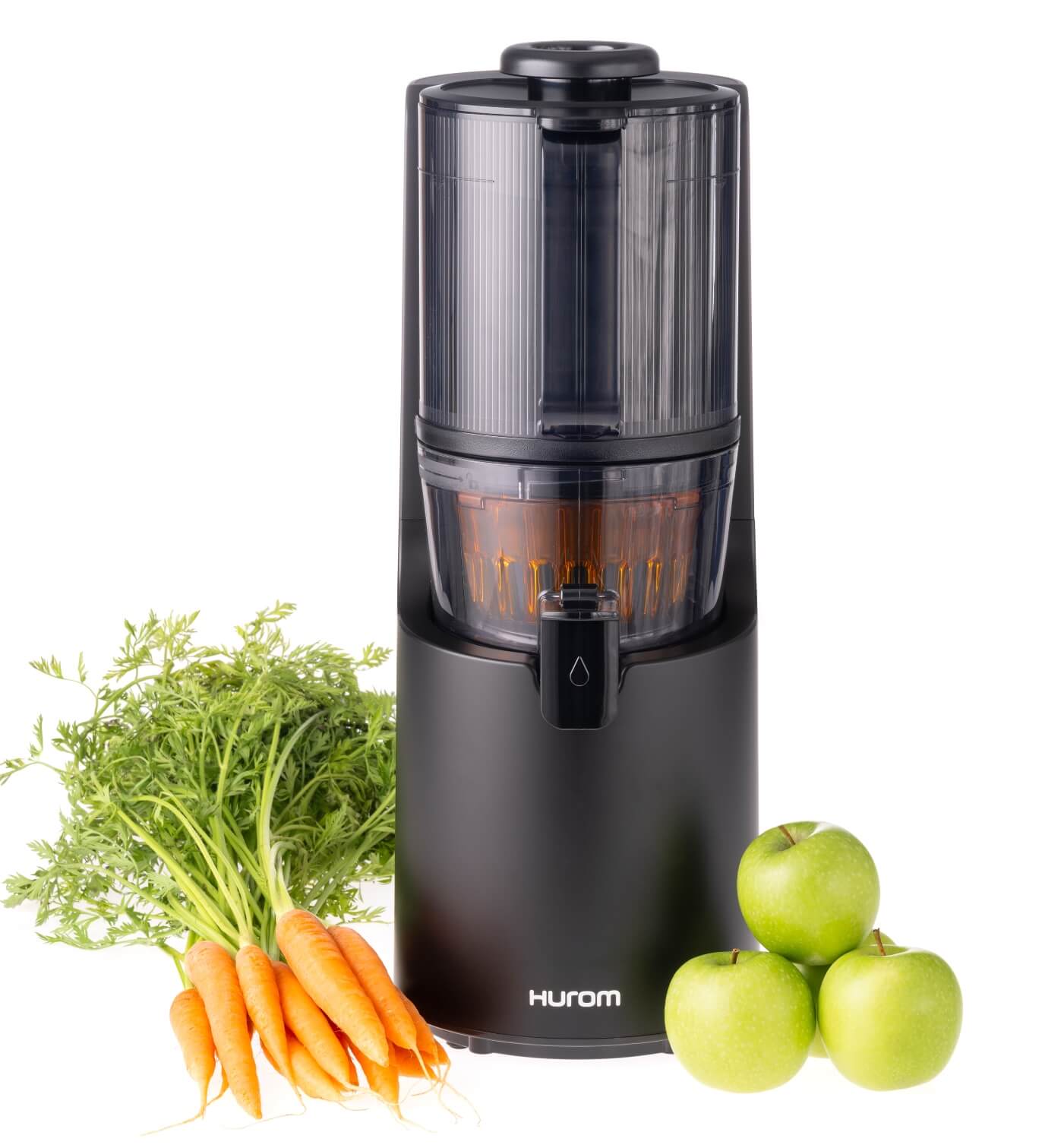
Hurom H200 Easy Clean Slow Juicer
Best Cleanup Slow Juicer: The Hurom H200 is the slow juicer that solves the category's biggest friction point: cleanup. The self-cleaning drum rotates during a dedicated rinse cycle, reducing post-juice cleanup from the standard 5–7 minutes to 2–3 minutes without manual brushing of the mesh strainer.
Top picks ↓| Product | Price | Link |
|---|---|---|
| 499〜599 | View deal → | |
| 399〜499 | View deal → | |
| 299〜379 | View deal → | |
| 79〜119 | View deal → | |
| 549〜649 | View deal → |
Top picks
Related articles

Hurom H200 Easy Clean Slow Juicer
The Hurom H200 is the slow juicer that solves the category's biggest friction point: cleanup. The self-cleaning drum rotates during a dedicated rinse cycle, reducing post-juice cleanup from the standard 5–7 minutes to 2–3 minutes without manual brushing of the mesh strainer. At 43 RPM, the H200 produces cold-press juice with minimal oxidation — juice stays bright and fresh for 24–48 hours sealed in a glass jar. Yield on soft-to-medium produce (apple, leafy greens, cucumber) is 70–78%, comparable to other premium slow juicers. The compact vertical design takes less counter space than horizontal masticating machines. The Japan-market version carries a 10-year motor warranty. The honest weaknesses: the 1.5-inch feed chute requires produce pre-cutting (apples quartered, beet cubed); yield on wheatgrass is 40–55%, notably lower than the Omega horizontal and Tribest twin-gear; and the $499 price requires justification over the $119 Aobosi for buyers who primarily juice soft produce.
Pros
- ✓Self-cleaning drum reduces cleanup to 2–3 minutes vs 5–7 for standard slow juicers
- ✓43 RPM cold-press juice stays fresh 24–48 hours in sealed glass jar
- ✓Compact vertical footprint smaller than horizontal masticating machines
- ✓10-year motor warranty on Japan market version
Cons
- ✗1.5-inch chute still requires produce pre-cutting before juicing
- ✗Wheatgrass yield 40–55% — significantly below horizontal and twin-gear machines
Score breakdown
| RPM | 43 (vertical single auger) |
| Motor | 150W |
| FeedChute | 1.5 inches (38mm) |
| JuiceYield | 70–78% (soft-medium produce), 40–55% (wheatgrass) |
| Noise | < 60 dB |
| PulpWetness | Dry |
| Warranty | 10 years motor (JP), 2 years parts |
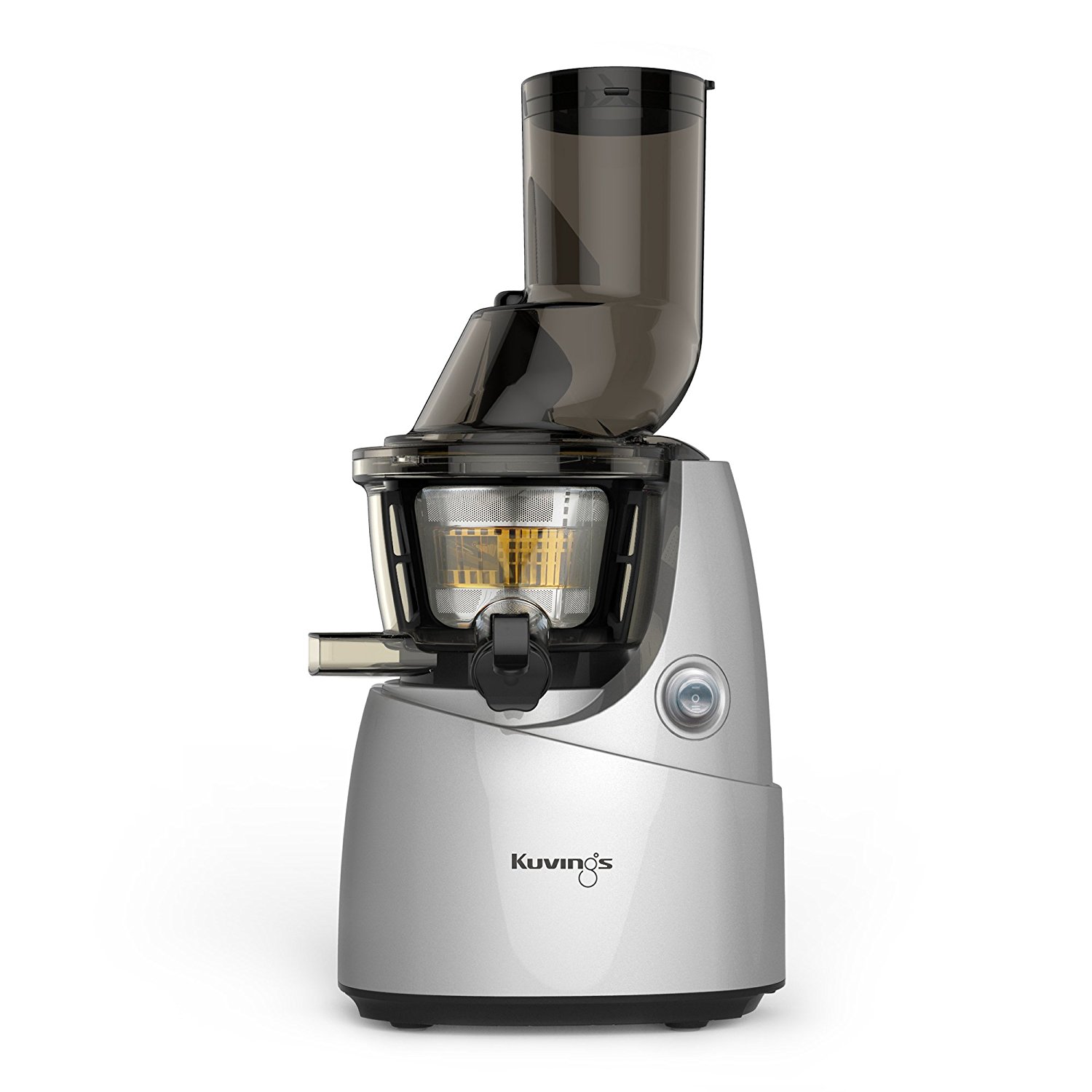
Kuvings Whole Slow Juicer B6000
The Kuvings Whole Slow Juicer B6000 is the only slow juicer in this comparison with a 3-inch wide feed chute — matching centrifugal juicer chute width while operating at 60 RPM for cold-press quality. Whole medium apples, whole pears, and halved beet fit without pre-cutting. The ULTEM auger (8x harder than standard plastic augers) handles hard produce reliably over years of daily use, where budget plastic augers show wear in 6–12 months. Juice yield is 70–78% for most produce, comparable to the Hurom H200. The smoothie strainer and blank strainer accessories expand it to sorbet and sauces. The honest weaknesses: the wide chute means more surface area to clean (cleanup is 5–6 minutes, not significantly faster than other premium slow juicers despite the wider opening); wheatgrass yield is 45–58%, better than the Hurom but below the Omega horizontal and Tribest; and the $399–$499 price is the second highest of the vertical auger machines here.
Pros
- ✓3-inch wide chute accepts whole apples and pears — unique in the slow juicer category
- ✓ULTEM auger 8x harder than standard plastic for years of hard produce durability
- ✓Smoothie strainer and blank strainer accessories included
- ✓60 RPM cold-press juice with 24–48 hour refrigerated freshness
Cons
- ✗Wider chute means more chute surface to clean — cleanup not faster than other premium models
- ✗Wheatgrass yield 45–58% — below horizontal and twin-gear machines
Score breakdown
| RPM | 60 (vertical single auger) |
| Motor | 240W |
| FeedChute | 3 inches (76mm) |
| JuiceYield | 70–78% (soft-medium), 45–58% (wheatgrass) |
| Noise | < 65 dB |
| PulpWetness | Dry |
| Warranty | 10 years motor, 5 years parts (varies by market) |

Omega NC900HDC Juicer
The Omega NC900HDC is the horizontal masticating juicer that combines the yield advantages of horizontal auger design — more consistent pressure across hard and fibrous produce, better leafy green extraction — with six-function capability (juice, nut butter, pasta, frozen dessert, baby food, dry grinding) and a 15-year motor and parts warranty that exceeds any other machine in this comparison. At 80 RPM, the dual-stage horizontal auger yields 65–75% from leafy greens (versus 60–70% for most vertical auger machines) and handles wheatgrass at 55–65% — well above the vertical auger machines in this comparison. Nut butter production is functional and uses the included blank plate; the 15-year warranty covers it unlike most manufacturer warranties that exclude nut butter use. The honest weaknesses: the horizontal footprint is larger than vertical slow juicers; all produce requires pre-cutting to fit the narrow horizontal tube; cleanup takes 5–8 minutes including the horizontal tube brush; and the multi-function accessories add storage demands.
Pros
- ✓Horizontal auger yields 65–75% from leafy greens — highest of any single-auger machine here
- ✓Six-function capability with functional nut butter production under 15-year warranty
- ✓15-year motor and parts warranty — the longest coverage of any juicer in this comparison
- ✓55–65% wheatgrass yield — significantly above vertical auger machines
Cons
- ✗Larger footprint than vertical slow juicers, horizontal tube requires more pre-cutting
- ✗Cleanup 5–8 minutes including horizontal tube brush — similar to other masticating machines
Score breakdown
| RPM | 80 (horizontal dual-stage auger) |
| Motor | 200W |
| FeedChute | 1.5 inches (38mm) horizontal |
| JuiceYield | 65–75% (leafy greens), 55–65% (wheatgrass) |
| Noise | < 65 dB |
| PulpWetness | Dry to very dry |
| Warranty | 15 years motor and parts |

Aobosi Slow Masticating Juicer
The Aobosi Slow Masticating Juicer is the lowest-cost genuine slow juicer in this comparison at $79–$119 — not a toy-tier machine but not premium Korean either. At 80 RPM with a reverse function to clear jams, it operates under 60 dB and produces low-oxidation juice from soft to medium produce that stays fresh significantly longer than any centrifugal machine. For first-time slow juicers who primarily juice apple, leafy greens, cucumber, and similar soft-to-medium produce, the Aobosi delivers the slow juicer category's core benefits at a price that reduces the commitment risk of trying the category. The honest weaknesses: the standard plastic auger shows wear from daily hard ginger or beet use within 6–12 months; the motor can stall under sustained dense produce loads, requiring stopping and restarting; replacement parts require international shipping; and yield from leafy greens is 55–65%, the lowest of any slow juicer in this comparison. Upgrade to the Omega horizontal or Kuvings ULTEM when and if you hit these limits.
Pros
- ✓$79–$119 entry price to the genuine slow juicer category
- ✓Reverse function clears jams without disassembly
- ✓Under 60 dB noise — genuinely apartment-friendly
- ✓Low-oxidation juice stays fresh 24–48 hours, same category benefit as premium machines
Cons
- ✗Plastic auger shows wear from daily hard produce within 6–12 months
- ✗Motor stalls under sustained dense produce loads — requires stopping and restarting
Score breakdown
| RPM | 80 (vertical single auger) |
| Motor | 150W |
| FeedChute | 1.5 inches (38mm) |
| JuiceYield | 55–65% (leafy greens), 38–48% (wheatgrass) |
| Noise | < 60 dB |
| PulpWetness | Dry |
| Warranty | 1–2 years (varies by seller) |

Tribest Greenstar Elite Twin Gear Juicer
The Tribest Greenstar Elite twin-gear juicer operates at 110 RPM with two interlocking stainless-steel gears that generate higher compression force than any single-auger machine — and that compression force is what enables 80–85% yield from most produce, 65–75% yield from wheatgrass, and the ability to process pine needles, fresh herbs, hard soybean, and dense sweet potato that single-auger machines cannot handle cleanly. It is the professional-level machine in this comparison, and the 12-year warranty reflects its durability expectations. The juice quality is as good as any slow juicer produces: minimal heat, minimal oxidation, maximum enzyme and nutrient retention from the slow twin-gear extraction. The honest weaknesses: $549–$649 is the highest price in this comparison and requires a committed daily juicing habit to justify; cleanup is 10–15 minutes per session (the most demanding of any machine here, and residue in the gears hardens if not cleaned immediately); it is not a first slow juicer; and the learning curve for produce preparation is steeper than single-auger machines.
Pros
- ✓80–85% yield from most produce — highest of any home juicer
- ✓65–75% wheatgrass yield — handles fibrous produce single-auger machines cannot
- ✓Processes pine needles, dense herbs, hard soybean, sweet potato
- ✓12-year warranty appropriate to professional-level machine
Cons
- ✗$549–$649 requires serious daily juicing habit to justify
- ✗Cleanup 10–15 minutes per session — highest friction in this comparison
Score breakdown
| RPM | 110 (twin-gear triturating) |
| Motor | 200W |
| FeedChute | Variable (wider than single auger vertical) |
| JuiceYield | 80–85% (most produce), 65–75% (wheatgrass) |
| Noise | 65–70 dB |
| PulpWetness | Very dry |
| Warranty | 12 years |
Which one is right for you?
For the easiest daily cleanup in the slow juicer category
Hurom H200 Easy Clean Slow Juicer
Hurom's self-cleaning drum design cuts post-juice rinse time to under 3 minutes — the lowest cleanup friction of any slow juicer here.
For whole fruit juicing without pre-cutting
Kuvings Whole Slow Juicer B6000
Kuvings' 3-inch wide chute accepts whole apples and pears without cutting — rare in the slow juicer category where narrow chutes are the rule.
For versatility beyond juicing: nut butter, pasta, baby food
Omega NC900HDC Juicer
80 RPM horizontal masticating with six-function capability and a 15-year warranty — the most durable multi-use machine in this comparison.
For budget entry into slow juicing without toy-tier quality
Aobosi Slow Masticating Juicer
$79–$119 vertical auger with reverse function and under-60 dB noise — the lowest-cost genuine slow juicer for single-person daily use.
For maximum yield including wheatgrass and pine needles
Tribest Greenstar Elite Twin Gear Juicer
110 RPM twin-gear triturating achieves 80–85% yield on any produce — justified for serious wheatgrass or high-volume daily juicing with a 12-year warranty.
Why RPM matters and where the differences between slow juicers actually live
All five juicers in this comparison run at 43–110 RPM, which is 100–300 times slower than centrifugal machines. The physics of this range produce genuinely different juice: lower heat from friction (juice temperature rises less than 1°C in a slow juicer versus 2–5°C in centrifugal), dramatically less oxygen incorporation (minimal foam, bright color that holds), and a significantly higher yield from the same produce weight. These are the category's genuine advantages over centrifugal, and they hold for all five machines here — the juice from a $79 Aobosi stays fresher for longer than the juice from a $200 Breville centrifugal, because RPM is the determining variable, not price. Within the slow juicer category, however, RPM differences between machines (43 RPM Hurom versus 80 RPM Omega versus 110 RPM Tribest twin-gear) produce smaller real-world differences than you might expect from the marketing. The Omega at 80 RPM produces marginally warmer juice than the Hurom at 43 RPM, but the practical quality difference for morning green juice is not large enough to dictate purchase decisions on its own.
Where slow juicers actually differ from each other is in auger design and how that affects specific produce. Vertical auger machines (Hurom H200, Kuvings B6000, Aobosi) use a single upright auger that pulls produce down by gravity and centripetal force. They handle soft and medium-density produce very well — leafy greens, cucumber, apple, pear, beet — but can stall on very hard dense produce (hard ginger root, fibrous pineapple core) if chunks are too large. The Kuvings B6000's ULTEM auger (8x harder than standard plastic augers) is meaningfully more durable on hard produce than the Aobosi's standard auger, and the wider 3-inch chute allows larger chunks. Horizontal auger machines (Omega NC900HDC) feed produce through a narrow horizontal tube, which generates more consistent mechanical pressure across a wider range of produce densities — hard ginger, dense sweet potato, and fibrous wheatgrass all process more reliably in a horizontal configuration. The twin-gear Tribest Greenstar Elite generates the highest compression pressure of any home juicer here, which is why it handles wheatgrass, pine needles, and extremely fibrous produce that single-auger machines cannot process cleanly.
Feed chute width is the single biggest friction point in the slow juicer daily routine, and it is more variable across these five machines than within any other category in this comparison. The Hurom H200 and Aobosi have 1.5–1.75 inch chutes that require produce to be cut into pieces small enough to feed without jamming — apples need quartering, beet needs cubing, celery needs cutting to 2-inch segments. The Kuvings B6000 is the exception in this comparison: its 3-inch wide chute (same width as a good centrifugal juicer) accepts whole medium apples, whole pears, and halved beet without pre-cutting. If you dislike the pre-cutting step more than anything else, the Kuvings B6000 reduces it significantly. The Omega NC900HDC horizontal machine has the narrowest chute of all — everything must be cut to fit the horizontal tube — but the mechanical yield advantage compensates on produce that matters most for serious juicers. The Tribest twin-gear chute is wider than standard vertical augers but still requires some pre-cutting on whole hard produce.
Leafy greens, wheatgrass, and hard root vegetables: where yield differences are real
Leafy greens (kale, spinach, parsley, cilantro, celery). All five slow juicers outperform centrifugal machines significantly on leafy greens — this is the clearest category distinction between slow and fast. Within the slow juicer group, yield differences from leafy greens are meaningful and follow auger design. The Omega NC900HDC horizontal auger typically yields 65–75% from kale — more consistent results than vertical auger machines because the horizontal tube prevents leafy material from bypassing the auger under gravity. The Tribest Greenstar Elite twin-gear achieves 70–80% from kale, which is the category's ceiling. The Hurom H200 and Kuvings B6000 vertical machines yield 60–70% from leafy greens depending on how tightly you feed the chute. The Aobosi budget vertical machine yields 55–65% from leafy greens — better than any centrifugal machine, but below the premium vertical and horizontal machines. For daily green juice drinkers, the mechanical yield difference is worth noting: processing 200g of kale daily, the Omega or Tribest yields roughly 30–40 mL more juice per session than the Aobosi.
Wheatgrass. This is the produce type that most sharply differentiates slow juicer designs. Wheatgrass has extremely fibrous strands that single-auger vertical machines (Hurom H200, Kuvings B6000) handle inconsistently — yield from 100g of wheatgrass in a vertical auger machine is typically 40–55%, and the fibrous strands wrap around the auger and require periodic feed reversal to clear. The Omega NC900HDC horizontal machine handles wheatgrass notably better than vertical auger machines — 55–65% yield — because the horizontal tube prevents fiber wrap-around and the reverse function is more effective in horizontal configuration. The Tribest Greenstar Elite is the wheatgrass benchmark: twin gears at 110 RPM extract 65–75% from wheatgrass and do not jam on the fiber. The Aobosi budget machine is the weakest wheatgrass juicer here — the lower-torque motor and plastic auger struggle with heavy fibrous loads and require stopping to clear the auger more frequently. If wheatgrass is a daily priority, the Tribest Greenstar Elite is the justified buy; the Omega NC900HDC is the practical middle ground; the vertical auger machines manage but require more attention.
Hard root vegetables (beet, ginger, turmeric, sweet potato). Hard produce tests auger torque more than any other category, and it is where budget vertical auger machines show their limitations most clearly. The Aobosi's motor, which is adequate for soft-to-medium produce, can struggle under sustained load from dense beet or whole ginger root — the machine may stall and require pieces to be smaller than the chute technically allows. The Hurom H200 handles hard produce reliably when pieces are cut to thumb-size; the gearbox is robust enough for daily beet and ginger use. The Kuvings B6000's ULTEM auger (8x harder than standard) handles hard produce without the same stall risk as the Aobosi, and the wider chute allows larger beet pieces. The Omega NC900HDC handles the hardest produce in this comparison (save for the Tribest) because the horizontal auger's mechanical advantage generates more sustained compression force than vertical single augers. The Tribest Greenstar Elite handles everything including dense sweet potato and hard ginger root without any processing concession.
Cleanup: the make-or-break factor for daily use
The Hurom H200's self-cleaning drum is the single most significant engineering innovation in the slow juicer category of the last five years. Standard slow juicer cleanup requires disassembling the strainer drum, rinsing fibrous pulp from the fine mesh under running water with a brush, and reassembling — a process that takes 4–7 minutes even with practice. The H200's drum rotates during a dedicated rinse cycle, using the mechanical action to dislodge fibrous material from the mesh without manual brushing. In practice, cleanup drops to 2–3 minutes: add water, run the rinse cycle, disassemble and quick-rinse the remaining parts. This is not as fast as centrifugal cleanup (90 seconds) but it is the best slow juicer cleanup experience available and meaningfully reduces the friction that causes slow juicer abandonment. If you have historically bought a slow juicer and stopped using it after 2–3 weeks because cleanup was too demanding, the H200's self-cleaning mechanism is the reason to try again.
The Kuvings B6000 cleanup is in the standard slow juicer range — 4–6 minutes to disassemble, brush-clean the strainer, and rinse. The wide feed chute means there is more surface area to clean on the chute itself, but the overall cleanup time is not significantly different from the Hurom standard models without the self-cleaning drum. The Omega NC900HDC's horizontal machine disassembles to 6–7 parts — slightly more than a vertical auger machine — and the horizontal tube shape requires a dedicated tube brush to clean the auger chamber thoroughly. Full cleanup takes 5–8 minutes. The Aobosi budget machine disassembles to a similar count as the premium vertical augers and cleans in 4–6 minutes. The Tribest Greenstar Elite is the most demanding to clean of any machine here — the twin gears, multiple screens, and housing take 10–15 minutes to disassemble, clean, and reassemble without leaving fibrous residue in the gear mechanism. Any residue left in the Tribest's gears hardens and becomes difficult to remove; the machine rewards consistent immediate cleanup after every use.
The practical implication of cleanup time: every additional minute of post-juice cleanup reduces daily use probability. Research on kitchen appliance abandonment is consistent — machines that clean in under 3 minutes are used daily, machines that take 5–8 minutes are used 3–4 times per week, machines that take 10+ minutes are used weekly or less. This is not a character flaw; it is a rational response to friction. If your goal is daily juicing, the Hurom H200's self-cleaning mechanism directly increases the probability you achieve that goal. If you are committed to the Tribest twin-gear's yield advantages, budget 10–15 minutes of cleanup willingness into your daily routine honestly before buying.
Premium Korean brands versus budget entry: is the price justified?
The Hurom H200 and Kuvings B6000 are both Korean-engineered slow juicers retailing at $399–$599, competing against the Aobosi budget vertical auger at $79–$119. The price gap is approximately 4–5x, and the question of whether it is justified depends on which advantages you actually need. The structural advantages of the Korean premium brands over the Aobosi are: (1) Auger material — the Kuvings B6000 uses ULTEM polymer rated 8x harder than standard plastic, which means the auger survives daily hard produce use for years rather than months. The Aobosi's plastic auger shows wear from daily hard ginger or beet use within 6–12 months. (2) Motor torque and sustained load capacity — the premium brands' motors are rated for sustained operation under hard produce loads; the Aobosi's motor is rated for its advertised produce range but underperforms under sustained hard produce loads, which causes stalling that requires stops and restarts. (3) After-sales support — Hurom and Kuvings have established service networks; replacement strainers, augers, and gaskets are available. For the Aobosi, replacement parts sourcing requires international shipping with typical 2–4 week lead times.
Where the premium price is not justified: the juice quality difference between the $119 Aobosi and the $499 Hurom H200 on soft and medium produce (apple, leafy greens, cucumber) is smaller than the price gap implies. Both operate at 40–80 RPM, both produce low-oxidation juice, and for an 80% use case of mixed greens and fruit, both machines produce juice that is indistinguishable in a blind taste test. The self-cleaning mechanism of the H200 is a genuine quality-of-life advantage that translates directly into daily use probability, and that may justify the premium for buyers who are specifically solving a cleanup friction problem. The ULTEM auger of the Kuvings is a genuine durability advantage for buyers who juice hard produce daily. For buyers who juice soft produce predominantly, use the machine 3–4 times per week, and are trying the slow juicer category for the first time, the Aobosi at $79–$119 is the right starting point — upgrade when and if you hit its limitations.
The Omega NC900HDC occupies the middle ground at $299–$379 and is the pick that combines the horizontal masticating advantage (better leafy greens and wheatgrass yield, more consistent hard produce handling) with a 15-year warranty that exceeds anything the Korean vertical brands offer. For serious daily juicers who have outgrown a budget vertical auger, the Omega horizontal is the upgrade path with the best long-term value proposition. The Tribest Greenstar Elite at $549–$649 is justified only for the twin-gear triturating performance — the highest yield on the most fibrous produce — and its 12-year warranty. It is not a first slow juicer and not a casual daily juicer; it is a tool for someone who has decided that maximum juice yield from wheatgrass and hard produce is worth 10–15 minutes of cleanup per session.
