Best Memory Foam Pillow 2026: 5 on Density, Heat & Fill Type
Memory foam pillows split into two categories that behave completely differently: solid slow-recovery foam (Tempur-Cloud, Nishikawa, Purple Harmony) and shredded adjustable foam (Saatva, Leesa). Solid foam conforms and stays where you put it; shredded foam lets you adjust loft but never conforms as smoothly. The choice depends on whether you want precise fit or adjustable height.
We compared each pillow on foam construction (solid vs. shredded), foam density and certification, heat retention characteristics, loft and firmness, cover washability, and long-term shape retention signals from aggregated owner reviews. Specifications verified against manufacturer pages as of May 2026.

Tempur-Pedic TEMPUR-Cloud Pillow
Best Conforming Support: TEMPUR material is the original slow-recovery viscoelastic foam — solid construction that conforms to head and neck geometry in a depth and smoothness that shredded-fill alternatives don't replicate. The medium-soft feel suits side sleepers and back sleepers without the firmer profile of Tempur's Pro or Symphony models.
Top picks ↓| Product | Price | Link |
|---|---|---|
| 119〜159 | View deal → | |
| 145〜175 | View deal → | |
| 85〜115 | View deal → | |
| 159〜189 | View deal → |
Top picks
Related articles

Tempur-Pedic TEMPUR-Cloud Pillow
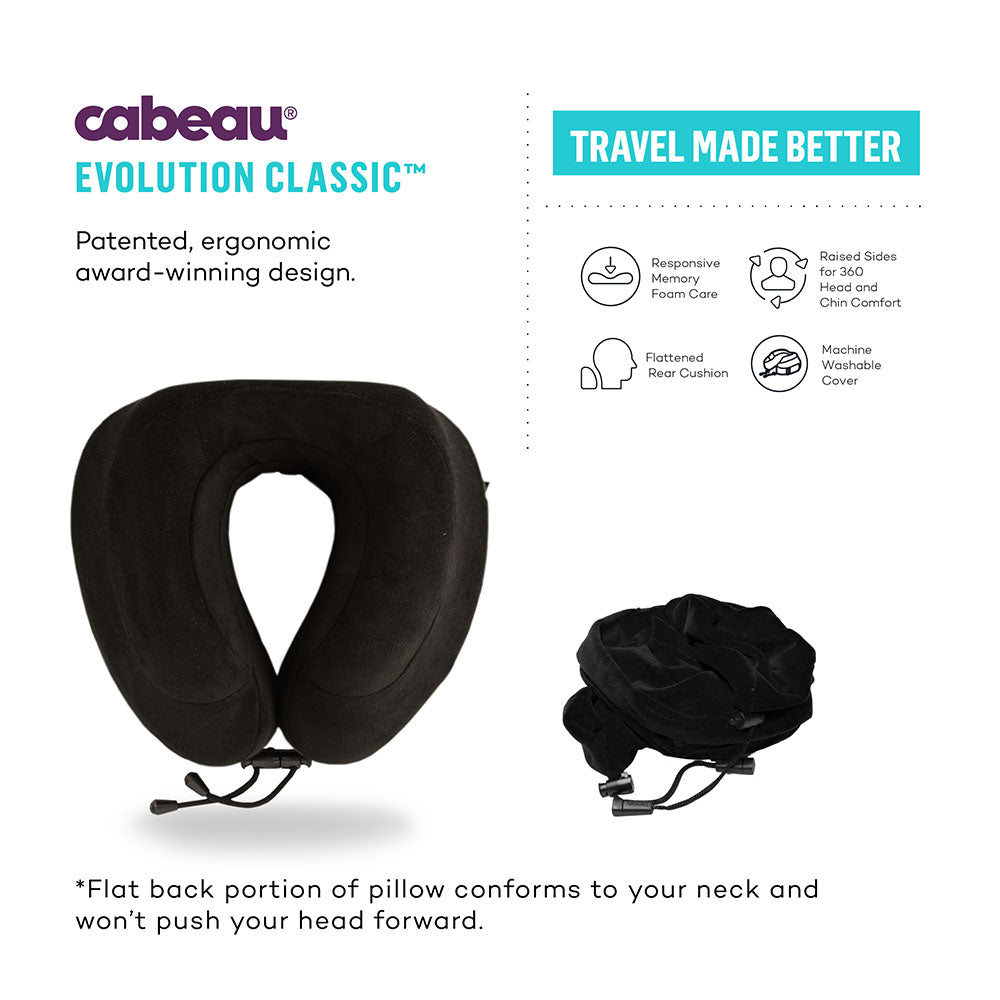
TEMPUR material is the original slow-recovery viscoelastic foam — solid construction that conforms to head and neck geometry in a depth and smoothness that shredded-fill alternatives don't replicate. The medium-soft feel suits side sleepers and back sleepers without the firmer profile of Tempur's Pro or Symphony models. Owner reviews at 3+ year use show consistent shape retention. The removable machine-washable cover handles hygiene without replacing the pillow. Heat retention is the known honest weakness — solid TEMPUR foam at full conformance reaches body temperature and stays there, which is perceptible in warm bedrooms. At $119–$159 for a Queen, it's the pillow-category Tempur premium.
Pros
- ✓Original TEMPUR material — deepest conforming support in this comparison
- ✓Solid construction holds shape through the night without shifting
- ✓3+ year owner reviews confirm shape retention
- ✓Removable machine-washable cover
Cons
- ✗Solid memory foam retains body heat — sleeps warm
- ✗Premium price ($119–$159 Queen) versus solid foam alternatives
Score breakdown
| Construction | Solid slow-recovery TEMPUR foam |
| Feel | Medium-soft |
| Weight | 4 lbs / 1.8 kg (Queen) |
| Size | Queen 26x17x5.3 in |
| Cover | Removable, machine-washable |

Saatva Latex Pillow
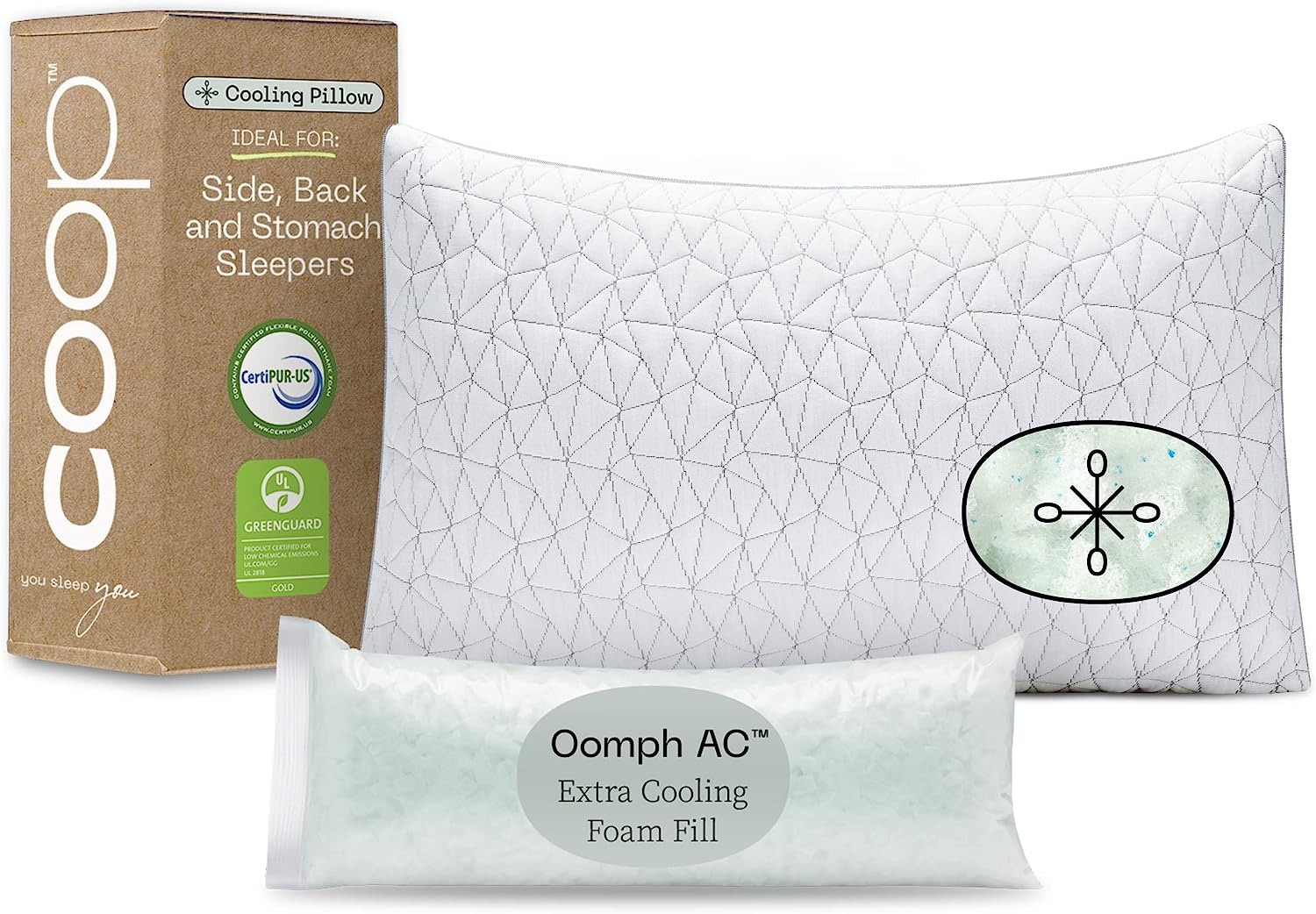
Saatva's Talalay latex pillow is the GOLS-certified adjustable alternative — shredded Talalay latex fill with a removable inner Talalay latex core, organic cotton cover. The GOLS certification (Global Organic Latex Standard) covers the latex from plantation to finished product — the most rigorous organic certification for latex bedding products. Talalay latex dissipates body heat faster than viscoelastic foam, making the Saatva measurably cooler-sleeping than Tempur-Cloud. The inner core removal adjusts loft from high to medium. At 6 lbs / 2.7 kg Queen, it's the heaviest pillow in this comparison. The honest gap: shredded latex fill creates a slightly lumpier surface than solid foam — it provides good support but not the same smooth conformance as TEMPUR.
Pros
- ✓GOLS certified Talalay latex — most rigorous organic certification
- ✓Adjustable loft via removable inner core
- ✓Cooler-sleeping than solid memory foam
- ✓Organic cotton cover
Cons
- ✗Shredded fill surface less smooth than solid foam
- ✗Heaviest pillow in comparison at 6 lbs (Queen)
Score breakdown
| Construction | Shredded Talalay latex + inner Talalay core |
| Certification | GOLS certified latex, organic cotton cover |
| Weight | 6 lbs / 2.7 kg (Queen) |
| Size | Queen 26x18 in |
| Loft | Adjustable via inner core removal |
Leesa Premium Foam Pillow
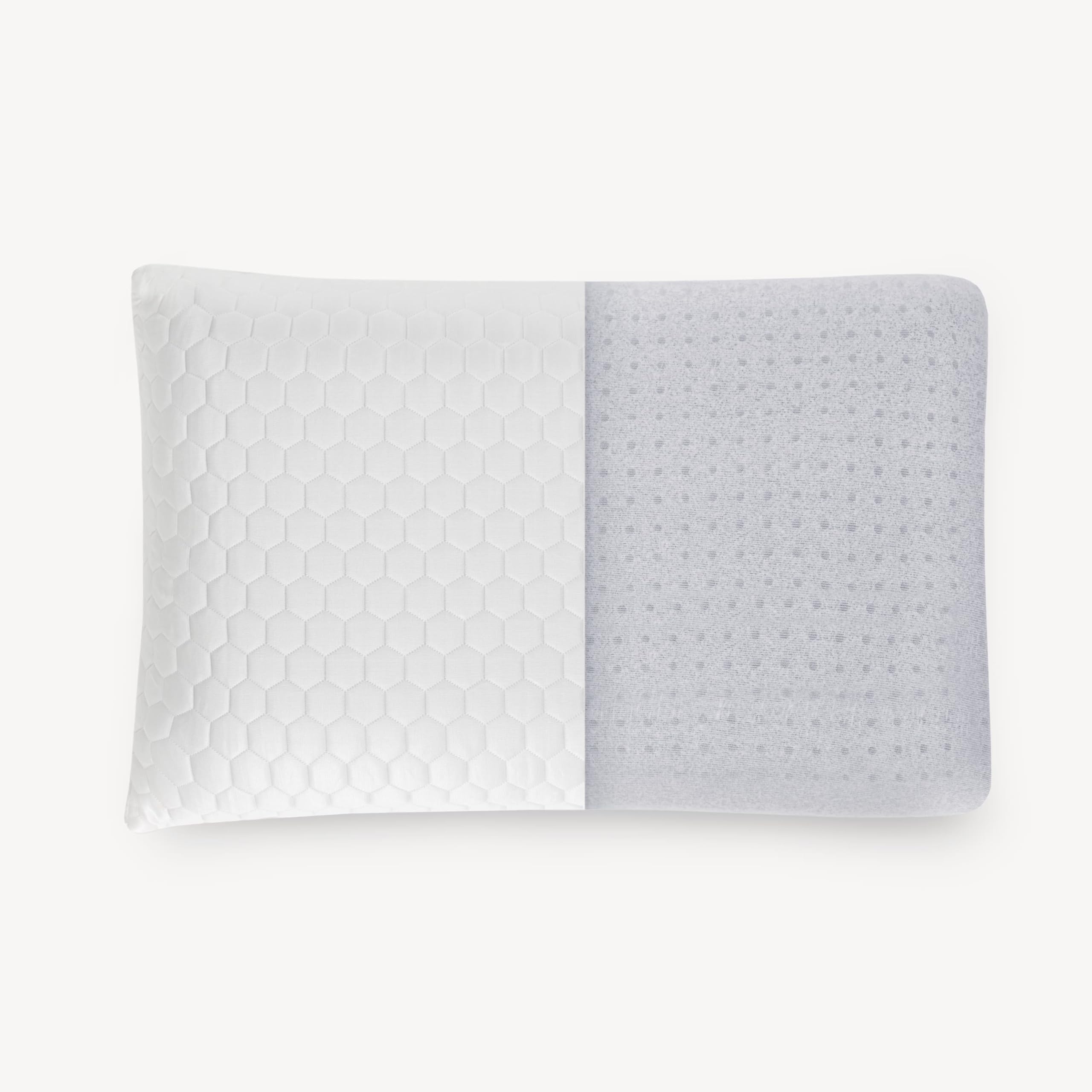
Leesa's solid memory foam pillow at $85–$115 covers the mid-tier gap between Tempur's premium and budget shredded-fill alternatives. CertiPUR-US certified foam, ventilation holes reduce heat versus non-ventilated solid foam, Tencel cover is more breathable than polyester. The solid foam construction provides smooth conforming support without the lumpiness of shredded fill. The honest limitation versus Tempur: Leesa's foam density and recovery curve don't match TEMPUR material — owner reviews at 2–3 years note minor sagging that Tempur reviews don't show at equivalent timeframes, indicating the foam density is lower than TEMPUR grade. For buyers who want solid conforming foam without paying Tempur prices and can accept a shorter reliable service life: Leesa is the logical mid-tier choice.
Pros
- ✓CertiPUR-US certified solid memory foam
- ✓Ventilation holes reduce heat vs. non-ventilated foam
- ✓Tencel cover — more breathable than polyester
- ✓Solid conforming surface without shredded-fill lumpiness
Cons
- ✗2–3 year owner reviews note minor sagging not seen in Tempur
- ✗Lower foam density than TEMPUR material
Score breakdown
| Construction | Solid ventilated memory foam (CertiPUR-US) |
| Weight | 3.7 lbs / 1.7 kg (Queen) |
| Size | Queen 26x16 in |
| Cover | Tencel, removable |
| Loft | Medium fixed |
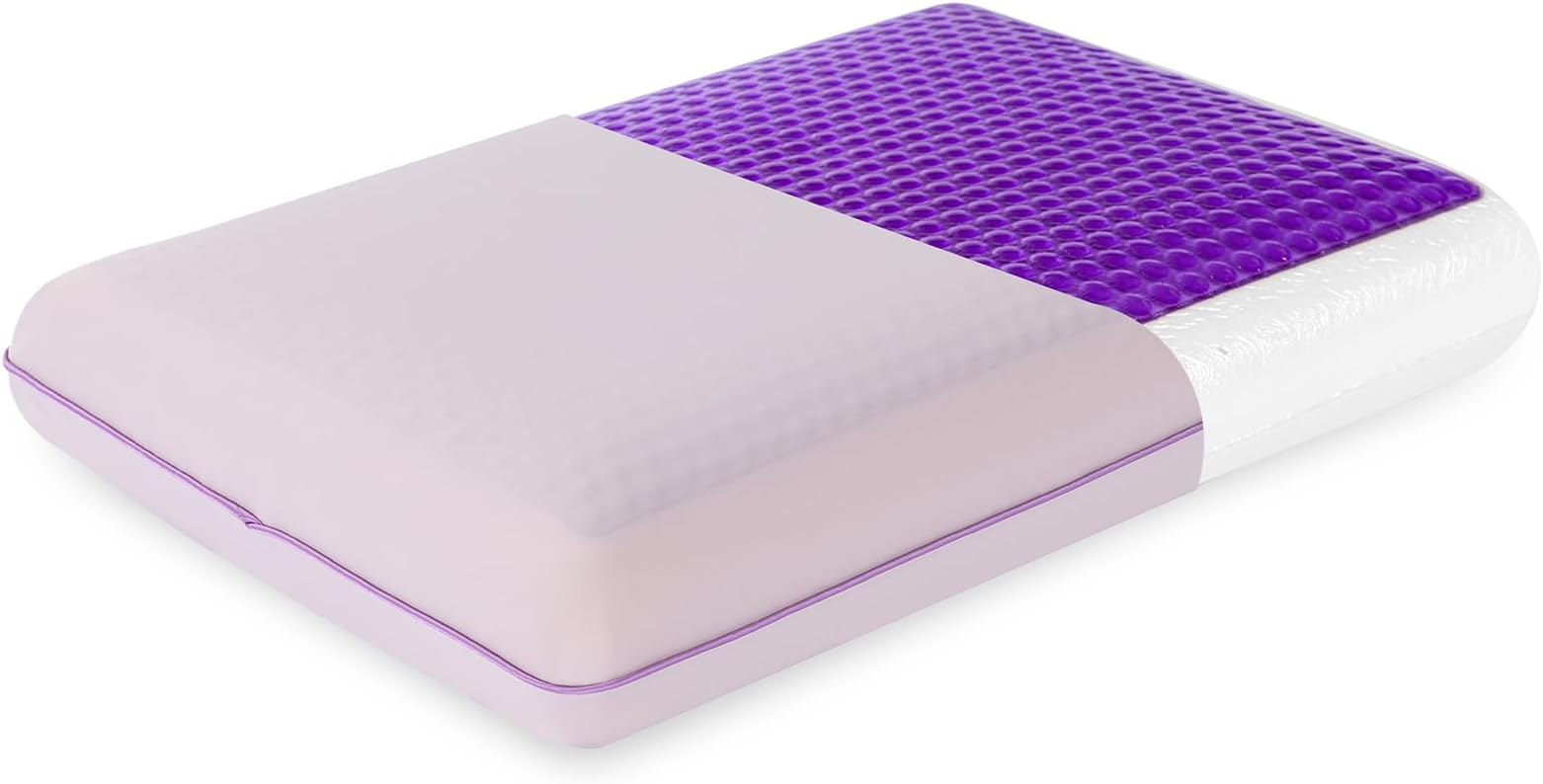
Purple Harmony Pillow
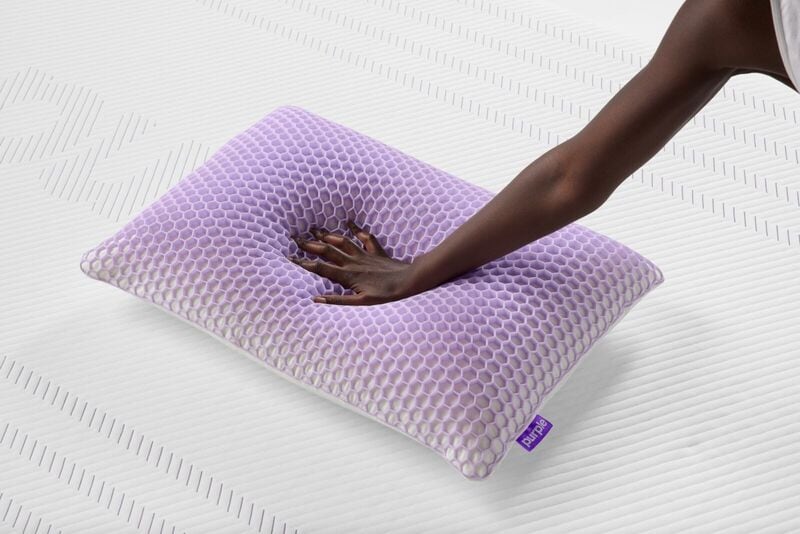
Purple Harmony solves the memory foam heat problem structurally. The GelFlex Grid — Purple's proprietary hyper-elastic polymer grid — sits between the head and the Talalay latex core. The grid creates open air channels that allow continuous airflow, preventing heat build-up at the skin-foam interface. This is different from gel infusions (which cool passively by absorbing heat temporarily) — the open channels actively prevent heat accumulation. Owner reviews consistently report cooler sleep than any previous foam pillow. The honest trade-off: the GelFlex Grid and Talalay latex combination is heavier (Tall loft: 7.5 lbs / 3.4 kg) and firmer-feeling than solid memory foam — buyers who specifically want the soft cradling feel of memory foam will find Purple Harmony firmer than expected.
Pros
- ✓GelFlex Grid creates open air channels — structural heat dissipation
- ✓Talalay latex core provides support without memory foam heat
- ✓Owner reviews consistently confirm cooler-sleeping than foam alternatives
- ✓Available in Tall (6.5 in) and Mid (5.5 in) loft
Cons
- ✗Firmer feel than soft memory foam — not for buyers who want cradling softness
- ✗Heaviest at Tall loft (7.5 lbs / 3.4 kg)
Score breakdown
| Construction | GelFlex Grid over Talalay latex core |
| Loft options | Tall (6.5 in) and Mid (5.5 in) |
| Weight | Tall: 7.5 lbs / 3.4 kg (Queen) |
| Size | Queen |
| Heat management | Open-channel GelFlex Grid |
Which one is right for you?
For buyers who want the deepest conforming pressure relief
Tempur-Pedic TEMPUR-Cloud Pillow
TEMPUR material is the original NASA-derived viscoelastic foam — slow-recovery solid construction that conforms to head and neck shape more completely than any shredded fill alternative.
For adjustable-loft buyers who want latex and organic certification
Saatva Latex Pillow
GOLS certified Talalay latex inner core with shredded latex fill — adjustable loft via removable inner core, organic cotton cover, the only GOLS-certified option in this comparison.
For hot sleepers who want memory foam without heat retention
Purple Harmony Pillow
GelFlex Grid over Talalay latex disperses heat through open channels — the only option in this comparison that solves the heat problem structurally rather than through gel infusion.
For buyers who want Nishikawa's point-contact memory foam design
memory-foam-pillow-nishikawa-tempur-jp
Nishikawa's AiR memory foam pillow combines point-contact urethane base with memory foam, standard 43x63 cm sizing, and a wide after-sales network.
For buyers who want CertiPUR-US certified solid foam at mid-price
Leesa Premium Foam Pillow
CertiPUR-US certified ventilated solid memory foam at $85–$115 — solid conforming construction with airflow channels, Tencel cover, mid-tier between Tempur-Cloud pricing and budget alternatives.
How we compared
Memory foam pillows divide into two distinct categories: solid slow-recovery foam and shredded (chopped) foam. Solid foam pillows (Tempur-Cloud, Nishikawa, Leesa, Purple Harmony) provide continuous surface support — the foam conforms to the head and neck without gaps, maintains its shape through the night without shifting, and recovers slowly when pressure is removed. Shredded foam pillows (Saatva's shredded latex layer) allow loft adjustment by adding or removing fill, but the pieces of foam don't create the same smooth conforming surface as a solid block.
Heat retention is the persistent weakness of solid memory foam. Viscoelastic foam reaches body temperature within 30–60 minutes of contact and then maintains that temperature — the deep conformance that creates pressure relief also creates sustained skin-to-foam contact that traps body heat. Gel infusions, ventilation holes, and aerated foam structures reduce heat retention by measurable but modest amounts. Purple Harmony's GelFlex Grid approach — separating the head from the foam surface with an open grid — is the most structurally different cooling approach in this comparison.
We verified foam certifications (TEMPUR material, CertiPUR-US, GOLS, GelFlex Grid composition), loft heights, cover washability, and pricing against manufacturer product pages. Long-term shape retention signals came from aggregated owner reviews at 1+ year use across major online retailers and brand direct sites.
What changed in 2026
The memory foam pillow category bifurcated. Premium solid foam (Tempur, at $119–$159 per pillow) held its position on the basis of the original TEMPUR material's documented performance and durability. Below $100, the market filled with shredded foam options that prioritize adjustability and certification over the smooth conforming behavior of solid foam. The middle ground — solid foam at reasonable price with decent certification — is where Leesa at $85–$115 positioned itself.
Latex entered the memory foam pillow conversation seriously. Saatva's shredded Talalay latex and Purple Harmony's Talalay latex core both address memory foam's heat problem with a more breathable alternative — latex has higher thermal conductivity than viscoelastic foam, meaning it dissipates body heat faster. The trade-off is cost: GOLS certified Talalay latex is more expensive per unit than memory foam, pushing Saatva ($145–$175) and Purple Harmony ($159–$189) above the Tempur price point for different reasons (organic certification for Saatva, the GelFlex Grid system for Purple).
Nishikawa's AiR memory foam pillow line continued to evolve — the point-contact urethane base philosophy combined with a memory foam comfort layer represents a distinct design approach that differs from both Western solid-block memory foam and shredded fill alternatives. Sold through specialty bedding retailers where it can be evaluated before purchase, standard 43x63 cm sizing.
Where each fits
Tempur-Cloud at $119–$159 is the original NASA-derived viscoelastic foam pillow benchmark. Solid TEMPUR material in a medium-soft profile — the slow-recovery foam conforms to head and neck geometry and holds that conformed shape through the night. The specific claim for Tempur material is the depth and smoothness of conformance: solid TEMPUR adapts to the shape continuously rather than creating the pressure points and gaps that a shredded-fill alternative can produce at the edges of fill pieces. Owner reviews at 3+ year use consistently show shape retention without significant sagging. The heat retention is the persistent honest weakness — TEMPUR foam at full conformance sleeps warm, and the Queen pillow at 4 lbs / 1.8 kg is not light-feeling. At $119–$159, it's the Tempur pillow premium over commodity memory foam.
Saatva Latex Pillow at $145–$175 is the GOLS-certified adjustable alternative. Shredded Talalay latex fill with an inner Talalay latex core (removable for lower loft), organic cotton cover — the only GOLS certified option in this comparison. Talalay latex has better thermal conductivity than viscoelastic foam (dissipates body heat faster), which makes the Saatva the better option for warmer sleepers who want the head-conforming support of foam without the heat retention of memory foam. The inner core removal adjusts loft from high (with core) to medium (without core), adding to the shredded latex fill that remains. At 6 lbs / 2.7 kg for the Queen, it's the heaviest pillow in this comparison. The honest gap: shredded Talalay latex fill doesn't produce the same smooth conforming surface as solid TEMPUR — the fill pieces create a slightly lumpier support than solid block.
Leesa Premium Foam Pillow at $85–$115 is the CertiPUR-US certified solid foam mid-tier. Ventilated solid memory foam with a Tencel cover — the ventilation holes reduce heat retention compared to non-ventilated solid memory foam, and the Tencel cover is more breathable than polyester. The solid foam construction gives smooth conforming support closer to Tempur than shredded alternatives. At $85–$115, it's priced between Tempur and budget alternatives. The honest gap versus Tempur: Leesa's foam density and recovery curve don't match TEMPUR material — the conformance is good but not as deep or as shape-retentive over time. Owner reviews show minor sagging indications at 2–3 year use that TEMPUR material reviews don't show at equivalent timeframes.
Nishikawa AiR Memory Foam Pillow is a distinct domestic-design approach. Nishikawa's AiR series point-contact urethane base distributes load through protrusions rather than continuous surface, and the memory foam comfort layer above the base handles head conformance. The combination delivers a firm base support character with memory foam adaptability at the top. Standard 43x63 cm sizing, sold through specialty bedding retailers where it can be evaluated before purchase. It's priced at mid-to-premium. The honest comparison limit: Nishikawa's AiR pillow philosophy (point support + memory foam) is genuinely different from Western solid-block memory foam, and the comparison isn't fully apples-to-apples — it solves the support problem differently rather than doing the same thing at different quality.
Purple Harmony Pillow at $159–$189 is the heat-problem solution. Talalay latex core encased in Purple's GelFlex Grid — the grid creates a physical separation between the head and the foam surface, with open channels that allow air circulation. This structural approach to heat dissipation is different from gel infusions (which reduce heat by a modest amount) — the air channels don't trap heat in the first place. At $159–$189, it's the highest price in this comparison. The honest trade-off: the GelFlex Grid and Talalay latex combination is heavier (the Tall loft option is 7.5 lbs / 3.4 kg) and firmer-feeling than solid memory foam — buyers who specifically want the cradling softness of memory foam will find Purple Harmony firmer than expected.
Verdict
For buyers who prioritize the deepest conforming pressure relief and can accept heat retention: Tempur-Cloud at $119–$159 remains the benchmark for solid slow-recovery memory foam. Three-plus years of owner reviews show consistent shape retention. Accept the heat as the known trade-off, particularly in warm bedrooms.
For buyers who sleep hot and want foam-adjacent support without the heat problem: Purple Harmony at $159–$189 is the structural solution — GelFlex Grid over Talalay latex dissipates heat through open air channels in a way gel infusions cannot match. The price is higher and the firmness is different from memory foam; the heat problem is genuinely addressed. For buyers who prefer to evaluate before purchase: Nishikawa AiR is worth trying in person — the point-contact plus memory foam design is distinctive, and Nishikawa's after-sales network is extensive.