Best Cooling Pillow 2026: 5 Compared on Real Cooling
Cooling pillows split into three approaches: gel infusion (absorbs heat passively, warms after an hour), phase-change materials (absorb and release heat to buffer temperature swings), and open-structure designs (Purple's GelFlex Grid — prevents heat buildup through airflow rather than absorbing it). Most pillows marketed as 'cooling' use gel infusion. Understanding the difference tells you which pillow actually solves your problem.
We compared each pillow on cooling mechanism (gel infusion vs. phase-change vs. open-structure airflow), fill material, cover fabric technology, weight, washability, and long-term cooling performance signals from aggregated owner reviews. Specifications verified against manufacturer pages as of May 2026.
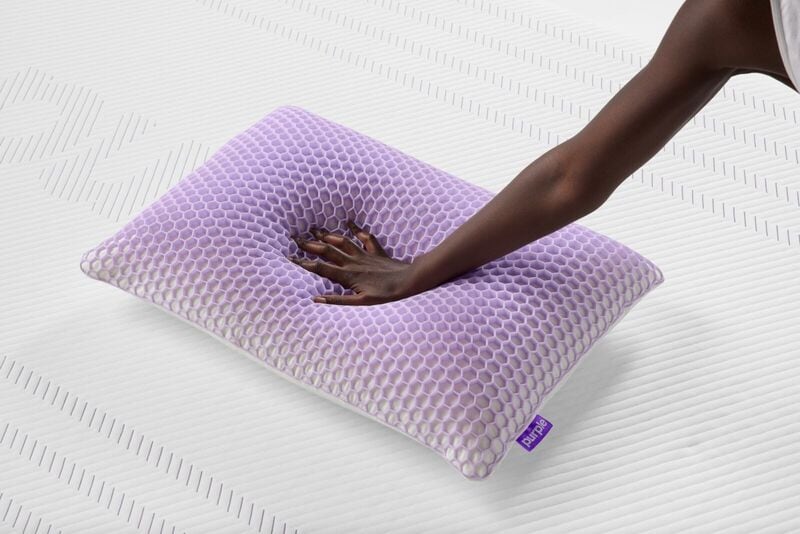
Purple Cloud Pillow
Best Sustained Cooling: Purple Cloud's GelFlex Grid is the most structurally different cooling approach in this comparison — open hexagonal channels allow body heat to escape through airflow rather than being absorbed and re-emitted. This means the pillow doesn't warm to body temperature over time the way gel-infused fill does.
Top picks ↓| Product | Price | Link |
|---|---|---|
| 129〜159 | View deal → | |
| 109〜149 | View deal → | |
| 35〜55 | View deal → | |
| 139〜169 | View deal → |
Top picks
Related articles

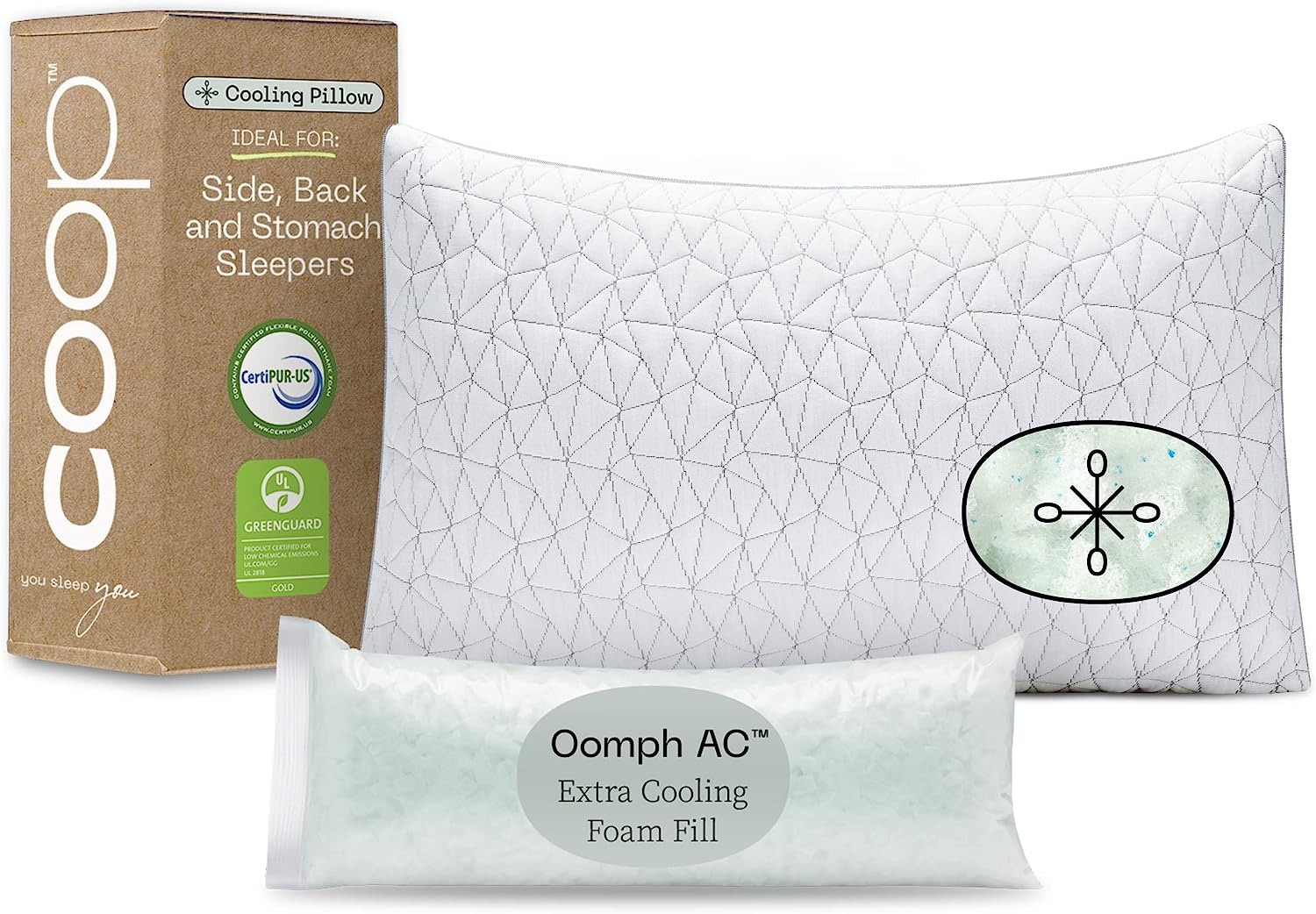

Purple Cloud Pillow
Purple Cloud's GelFlex Grid is the most structurally different cooling approach in this comparison — open hexagonal channels allow body heat to escape through airflow rather than being absorbed and re-emitted. This means the pillow doesn't warm to body temperature over time the way gel-infused fill does. Owner reviews specifically searching for 'cool in the morning' consistently confirm Purple Cloud outperforms gel alternatives at the 4–6 hour mark. The soft polyester fill below the grid provides a cushioned feel; the grid itself feels firmer and more textured than a standard pillow top. The honest trade-off: the GelFlex Grid surface is distinctive and different from traditional pillow feel — buyers expecting a soft pillow surface are sometimes surprised by the grid texture. At $129–$159, mid-to-upper tier.
Pros
- ✓GelFlex Grid dissipates heat through airflow — doesn't accumulate body temperature
- ✓Owner reviews confirm cooler sleep at 4+ hours versus gel alternatives
- ✓Polyester fill provides cushioned support below the grid
- ✓Queen size 26x17 in
Cons
- ✗GelFlex Grid surface feels firmer and more textured than soft pillow alternatives
- ✗Mid-to-upper price tier at $129–$159
Score breakdown
| Cooling mechanism | GelFlex Grid (open-channel airflow dissipation) |
| Fill | Polyester fiber |
| Cover | GelFlex Grid top panel |
| Size | Queen 26x17 in |
| Price range | $129–$159 |
:max_bytes(150000):strip_icc():focal(749x0:751x2)/sleep-number-true-temp-plush-pillow-beb4bc4a2f034498b0f899f626d7c096.jpg)
Sleep Number True Temp Pillow
Sleep Number True Temp uses 37.5 Technology — carbon-embedded fibers in the cover and fill that respond to body temperature and moisture changes, absorbing heat when you're warm and releasing it as you cool. This is a more sophisticated mechanism than gel infusion: gel passively absorbs until saturation; 37.5 fibers actively respond to temperature gradient changes, maintaining a more stable sleeping temperature over a longer period. Available in medium and firm loft, Queen and King. Owner reviews show consistent performance advantage over gel-only competitors in side-by-side comparisons within the same household. The honest limitation: 37.5 Technology manages temperature fluctuations around a set point — it cannot maintain a pillow cooler than ambient room temperature. In a hot room without air conditioning, it reduces heat accumulation but does not create cold.
Pros
- ✓37.5 phase-change technology responds to temperature changes dynamically
- ✓More sustained cooling than passive gel infusion
- ✓Medium and firm loft options
- ✓Queen and King sizing
Cons
- ✗Cannot cool below ambient room temperature — does not create cold
- ✗Less independent third-party verification than Purple's GelFlex Grid
Score breakdown
| Cooling mechanism | 37.5 phase-change technology (carbon-embedded fibers) |
| Fill | Polyester fiber with 37.5 technology |
| Loft options | Medium and firm |
| Size | Queen and King |
| Price range | $109–$149 |

Beckham Luxury Linens Gel Pillow
Beckham's gel fiber pillow is the lowest-cost entry to gel-infusion cooling — two pillows for $35–$55, roughly $18–$28 per pillow, with gel fiber fill (polyester blended with cooling gel fibers) and a 100% cotton cover. The gel fiber construction provides a cooler initial contact than straight polyester fill. The cooling effect is most noticeable in the first 60–90 minutes before the gel reaches body temperature. The honest assessment: Beckham is appropriate when your primary issue is hot-pillow feel at sleep onset (the sensation of lying on a warm pillow), not sustained all-night temperature management. If initial contact cooling is sufficient — or if you're testing gel pillow technology before investing in higher-tier options — the Beckham 2-pack is the correct low-risk starting point.
Pros
- ✓Lowest cost per pillow in comparison (~$18–28 each in a 2-pack)
- ✓Gel fiber fill provides cooler initial contact than straight polyester
- ✓100% cotton cover adds breathability
- ✓Machine washable
Cons
- ✗Gel warms to body temperature within 60–90 minutes
- ✗No sustained cooling after initial period
- ✗Non-adjustable fixed loft
Score breakdown
| Cooling mechanism | Gel fiber infusion (passive absorption) |
| Fill | Gel fiber (polyester-gel blend) |
| Cover | 100% cotton |
| Sold | 2-pack on Amazon |
| Price range | $35–$55 |
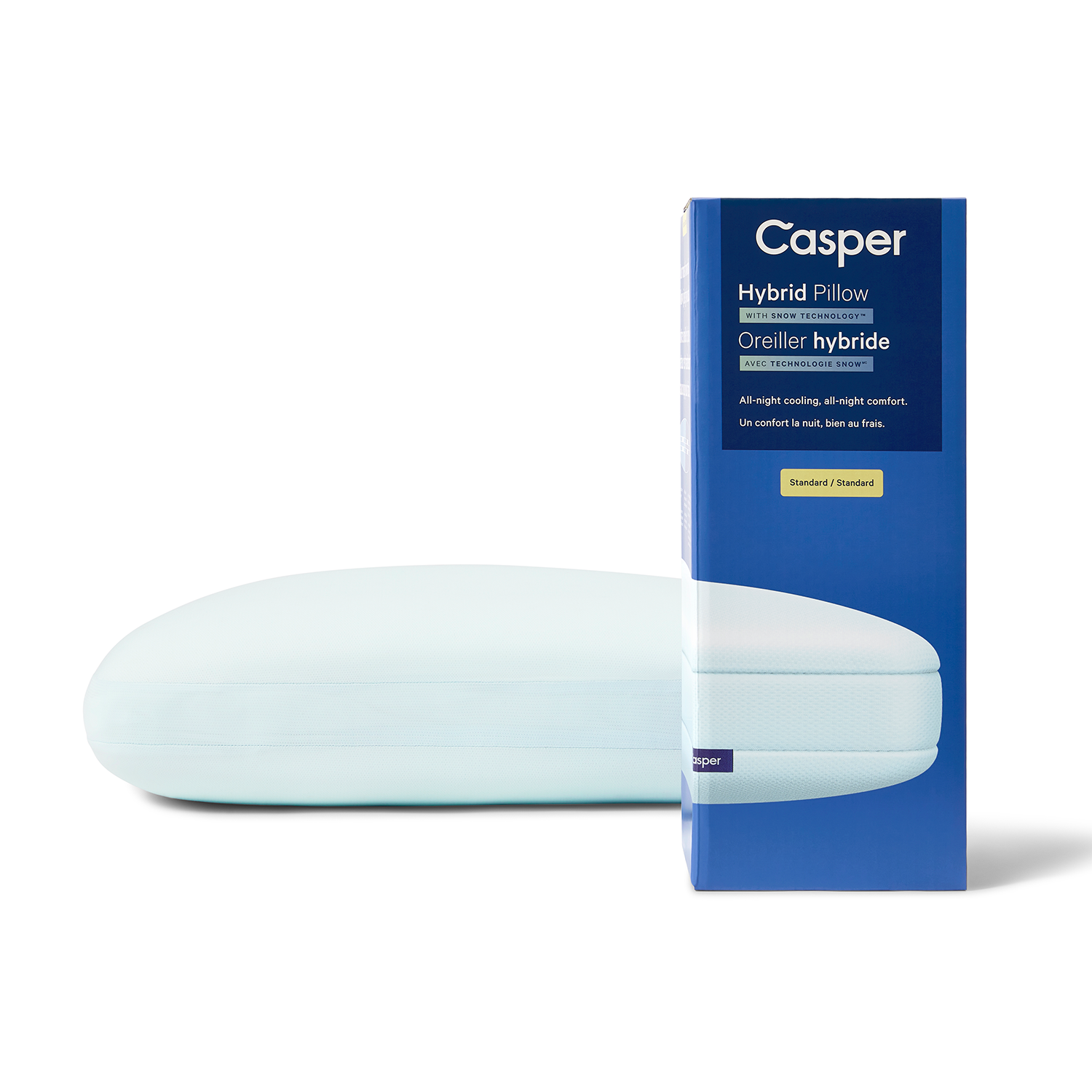
Casper Snow Pillow
Casper Snow uses two mechanisms — HeatDelete Bands along the pillow perimeter (moisture-wicking and heat-channeling fabric that directs face-contact heat away from the sleeping surface) and Snow Technology fiber fill (temperature-managed fill construction). The perimeter band design addresses the specific 'hot edge' sensation that side sleepers often report — the face-edge of the pillow heating up where cheek meets pillow surface. Available in Original and Plus (firmer) loft. At $139–$169, it's the highest price for a standard fill pillow in this comparison. The honest limitation: HeatDelete Band is Casper's proprietary technology with limited independent comparative testing versus 37.5 or GelFlex Grid alternatives. The multi-mechanism combination is interesting design but the performance advantage over 37.5 Technology at the $20–$30 lower price point requires buyer trust in Casper's claims.
Pros
- ✓HeatDelete Bands target face-edge heat — specific benefit for side sleepers
- ✓Snow Technology fill addresses overall pillow temperature
- ✓Original and Plus (firmer) loft options
- ✓Removable machine-washable cover
Cons
- ✗Highest price for standard fill pillow in comparison ($139–$169)
- ✗HeatDelete Band technology has limited independent verification vs. alternatives
Score breakdown
| Cooling mechanism | HeatDelete Bands + Snow Technology fiber |
| Fill | Snow Technology polyester fiber |
| Loft options | Original and Plus (firmer) |
| Size | Queen |
| Price range | $139–$169 |
Which one is right for you?
For the most structurally effective heat dissipation
Purple Cloud Pillow
GelFlex Grid over polyester fill creates open air channels that prevent heat buildup rather than absorbing it — the only option in this comparison that doesn't warm up to body temperature over a few hours of use.
For buyers who want phase-change temperature buffering
Sleep Number True Temp Pillow
37.5 phase-change technology absorbs excess heat when you're warm and releases it when you cool — more sophisticated than simple gel infusion, maintains target temperature rather than just absorbing heat.
For entry-level cooling pillow buyers at minimum cost
Beckham Luxury Linens Gel Pillow
Gel fiber fill at $35–$55 for a 2-pack — the lowest cost per pillow in this comparison. Gel infusion cooling is modest, but the price makes it a valid first test of cooling pillow technology.
For buyers who want Casper brand with HeatDelete technology
Casper Snow Pillow
HeatDelete Bands direct heat away from the face perimeter, Snow Technology fiber targets temperature management — the most sophisticated multi-mechanism cooling design among non-GelFlex options in this comparison.
For Japan domestic buyers who want Q-MAX rated contact cooling
cooling-pillow-nishikawa-cool-jp
Nishikawa's Q-MAX 0.5+ contact-cooling fabric delivers measurable instant cool-to-touch sensation at point of contact, available at department stores nationwide with standard Japanese 43x63 cm sizing.
How we compared
Cooling pillow claims fall into three mechanistic categories that perform very differently over a night of sleep. Gel infusion: the most common claim — gel particles or gel-fiber blends absorb body heat passively, providing a cool initial contact that dissipates as the gel reaches body temperature (typically 60–90 minutes). Once the gel is at body temperature, the cooling effect is minimal. Phase-change materials (PCM): materials that absorb heat as they transition from solid to liquid (like wax at room temperature), buffering temperature swings around a target point. 37.5 Technology (Sleep Number True Temp) uses carbon-embedded fibers that absorb and release moisture and heat in response to body temperature change. Open-structure designs: Purple's GelFlex Grid creates open air channels through which body heat escapes rather than being absorbed — the grid doesn't store heat, it dissipates it.
Q-MAX (Japanese contact-cooling measurement) is the standard metric for contact-cooling fabrics used in Japan. Q-MAX measures the heat flow from a warm probe to a fabric sample — higher values indicate faster heat transfer from skin to fabric (cooler initial feel). Q-MAX 0.5 W/cm² is the consumer threshold for 'cool to touch' labeling in Japan. Nishikawa's cool pillow line uses Q-MAX 0.5 or higher fabric, which is a measurable (if momentary) cooling signal rather than marketing language.
We verified cooling mechanism claims against manufacturer product pages, cross-referenced with owner reviews specifically searching for 'still cool in the morning' versus 'warm after an hour' patterns, and confirmed Japanese Q-MAX claims against product listing specifications. No independent calorimetric measurement was performed.
What changed in 2026
The cooling pillow category became more honest about mechanism limitations. Before 2024, many brands marketed gel infusion as if the cooling effect lasted all night — owner reviews corrected this narrative. By 2026, marketing copy on gel-infused pillows more commonly describes 'cool to touch' and 'initial cooling' rather than all-night temperature management, which is a more accurate description of what gel infusion actually provides.
Phase-change materials moved from mattresses into pillows. Sleep Number's True Temp pillow using 37.5 technology brought PCM-adjacent performance to a consumer pillow at $109–$149 — below the price point where mattress PCM layers typically appear. The 37.5 carbon-embedded fiber approach has a different mechanism from traditional PCM waxes (it manages moisture and temperature simultaneously) and has a larger body of consumer data than most cooling pillow technologies.
In Japan, the ひんやり冷感 (hiyahiya reiKan — instant cool sensation) product category grew significantly. Q-MAX rated fabrics became a standard specification point in bedding marketing, with Nishikawa and other domestic brands publishing Q-MAX values on product listings. Hot-summer sleep contexts (bedroom temperatures of 28–32°C without air conditioning) create stronger demand for effective cooling bedding than temperate climates — but also mean that contact-cooling (Q-MAX) delivers momentary relief rather than sustained temperature management in high-ambient-temperature conditions.
Where each fits
Purple Cloud Pillow at $129–$159 is the open-structure benchmark. GelFlex Grid on top of polyester fiber fill — the grid layer creates open hexagonal channels that allow body heat to escape through airflow rather than being absorbed. This is the most mechanistically different cooling approach in this comparison: the grid doesn't accumulate heat to release later (like gel or PCM), it dissipates it continuously. Owner reviews consistently report sleeping cooler through the morning versus previous gel-infused alternatives. The honest trade-off: the GelFlex Grid surface feels firmer and more textured than a standard pillow top — buyers who specifically want a soft pillow feel will find the grid surface different from what they're used to. At $129–$159, it's mid-to-upper tier in this comparison.
Sleep Number True Temp Pillow at $109–$149 is the phase-change technology option. 37.5 Technology fabric (carbon-embedded fibers that respond to body temperature changes) absorbs heat when you're warm and releases it when you cool down — a more sophisticated mechanism than gel infusion alone. Available in medium and firm loft options in Queen and King. The 37.5 mechanism is different from traditional PCM (it works through moisture management and thermal conductivity of the carbon fibers rather than a phase-change point) and has been used in athletic performance fabrics before entering bedding. The honest limitation: 37.5 Technology manages temperature buffering over a range; it doesn't prevent body temperature from raising the sleeping environment if your baseline body heat is high enough.
Beckham Luxury Linens Gel Pillow at $35–$55 is the entry-level gel option. Gel fiber fill (polyester blended with cooling gel fibers) with a 100% cotton cover — the gel fiber construction provides cooler initial contact than straight polyester fill but warms to body temperature within 60–90 minutes. The 2-pack pricing at Amazon makes it the lowest cost per pillow in this comparison ($18–$28 per pillow). The honest position: Beckham's gel pillow is appropriate as a first test of gel-infusion cooling at minimum investment. If the initial cool-to-touch sensation is sufficient for your sleep needs, or if you primarily feel hot only at pillow contact during falling asleep (rather than throughout the night), the Beckham is a cost-effective solution. If you need sustained all-night cooling, gel infusion alone is not the answer.
Casper Snow Pillow at $139–$169 is the multi-mechanism design. HeatDelete Bands run along the pillow's perimeter — moisture-wicking and heat-channeling fabric that directs heat away from the face contact area. Snow Technology fiber fill provides the main body cooling. The combination addresses both the face-edge contact heat (often the most noticed 'hot pillow' signal) and the general fill temperature. Available in Original and Plus (firmer) loft options. At $139–$169, it's the highest price in this comparison for a standard fill pillow. The honest gap: the HeatDelete Band technology is Casper's proprietary claim and has less independent performance verification than 37.5 Technology or Purple's GelFlex Grid in third-party testing.
Nishikawa Cool Pillow is the Japan Q-MAX domestic option. Q-MAX 0.5 W/cm² or higher contact-cooling fabric delivers measurable instant cool sensation at point of skin contact — the Q-MAX value is the most specific cooling performance metric in this comparison for the initial contact experience. Standard Japanese 43x63 cm sizing, available at department stores and Nishikawa stores nationwide. Polyester or urethane fill options depending on the specific product. The honest limitation: Q-MAX measures heat transfer rate at first contact, not sustained cooling over hours. In a 28–32°C summer bedroom without air conditioning, contact-cooling fabric buys cooler initial feel but cannot maintain below-body-temperature sleep surface indefinitely. With air conditioning at 26–27°C, the Q-MAX benefit is more durable.
Verdict
For buyers who prioritize sustained cooling performance over the whole night (not just the first hour): Purple Cloud at $129–$159 is the structural pick. The GelFlex Grid dissipates heat continuously through airflow rather than absorbing it — it doesn't warm to body temperature the way gel-infused options do. Accept the firmer, more textured surface feel as the trade-off.
For buyers who want more sophisticated temperature management than gel infusion and prefer a standard soft pillow feel: Sleep Number True Temp at $109–$149 with 37.5 Technology is the PCM-adjacent option. For Japan domestic buyers: Nishikawa's Q-MAX 0.5+ cool pillow delivers the most measurable contact-cooling specification in a domestic product — best used with air conditioning for extended benefit, and the correct in-store purchase path with Nishikawa's nationwide network. For first-time gel pillow buyers at minimum cost: Beckham 2-pack at $35–$55 is the risk-appropriate starting point.