Best Meat Grinders 2026: STX vs LEM Big Bite vs KitchenAid
A meat grinder lets you control exactly what goes into your burgers and sausages — grinding fresh cuts beats mystery store mince on flavour, fat content, and food safety. The catch is that an underpowered grinder bogs down and smears the meat instead of cutting it cleanly, so motor power is everything.
We compared each meat grinder on motor power and clean grinding (vs bogging/smearing), included attachments (grinding plates, sausage tubes), durability and build, suitability for occasional vs heavy/high-volume use, form factor, and price. Grinders were assessed against owner reviews and real grinding, weighting clean powerful grinding and the right power and attachments for the user's needs.

Stx Turboforce
Best Overall: The STX Turboforce 3000 offers powerful, fast grinding and a generous attachment set at a value price — the sweet spot of performance and cost. Its strong motor grinds through meat quickly and cleanly without bogging down or smearing (the failure of weak grinders), handling regular burger grinding, tougher cuts, and even some game, and it comes with multiple grinding plates (coarse, medium, fine) plus sausage-stuffing tubes and often kubbe attachments — so you can grind for burgers and meatloaf and stuff your own sausages out of the box.
Top picks ↓Top picks
Related articles
Stx Turboforce
The best overall — a powerful motor that grinds quickly and cleanly without bogging down or smearing, plus a generous attachment set (multiple plates, sausage tubes, often kubbe) ready for burgers and sausage-making out of the box, at a value price. Not true commercial-duty and sizeable to store, but the power-and-value sweet spot for serious home grinding.
The STX Turboforce 3000 offers powerful, fast grinding and a generous attachment set at a value price — the sweet spot of performance and cost. Its strong motor grinds through meat quickly and cleanly without bogging down or smearing (the failure of weak grinders), handling regular burger grinding, tougher cuts, and even some game, and it comes with multiple grinding plates (coarse, medium, fine) plus sausage-stuffing tubes and often kubbe attachments — so you can grind for burgers and meatloaf and stuff your own sausages out of the box. It processes a good amount of meat per minute for efficient home batches. It's powerful enough for serious home grinders and sausage-makers, ready to do multiple jobs without buying extras, and far cheaper than commercial-style grinders while out-performing cheap underpowered ones. It's not true commercial-duty (the LEM is more durable for constant heavy use) and is sizeable to store, but for power, attachments, and value in home grinding, it's the benchmark.
Pros
- ✓Strong motor grinds fast and clean, no bogging/smearing
- ✓Multiple plates plus sausage tubes (and often kubbe) included
- ✓Handles tough cuts and some game
- ✓Excellent power-and-value balance
Cons
- ✗Not true commercial-duty for constant heavy use
- ✗Sizeable countertop appliance to store

Lem Big Bite 8
The heavy-duty pick — a patented Big Bite auger, a powerful durable motor for sustained heavy grinding, and rugged all-metal construction with quality steel plates, built to last years of hard use. For hunters, dedicated sausage-makers, and high volume; pricier and overkill for occasional burger grinding, but the durable workhorse.
The LEM Big Bite #8 is the heavy-duty pick for serious hunters, sausage-makers, and anyone grinding large quantities who wants a durable, commercial-grade machine built to last. LEM is a respected meat-processing name, and its Big Bite grinders use a patented auger design that takes bigger bites to feed meat faster and more efficiently, a powerful durable motor built for sustained heavy grinding (not just short home bursts), and rugged all-metal construction with quality steel plates and knives. The #8 size suits serious home and small-game processing. It's the choice for processing a lot of meat — hunters dealing with whole animals, dedicated sausage-makers, or anyone wanting a grinder that won't bog down or wear out under heavy repeated use. The higher price and that it's overkill in power, size, and cost for occasional burger grinding are the trade-offs, but for durability, sustained power, and serious volume, it's the standout that lasts for years.
Pros
- ✓Patented Big Bite auger feeds faster and more efficiently
- ✓Powerful durable motor for sustained heavy grinding
- ✓Rugged all-metal build, quality steel plates/knives
- ✓Built to last years of hard, high-volume use
Cons
- ✗Higher price
- ✗Overkill in power, size, and cost for occasional grinding

Kitchenaid Grinder Attachment
The space-saving pick for KitchenAid owners — a grinder attachment that uses your stand mixer's motor to grind meat, with plates and often sausage tubes, for a fraction of a dedicated machine's cost and storage. Relies on the mixer's motor (best for moderate, occasional use, not heavy volume); the metal version outperforms plastic.
The KitchenAid Grinder Attachment is the pick for someone who already owns a KitchenAid stand mixer and wants to grind meat without a separate appliance. It fits the mixer's power hub and uses the mixer's motor to grind, with grinding plates and often sausage-stuffing tubes included. The appeal is space and value: if you have a KitchenAid mixer, this turns it into a meat grinder for a fraction of the cost and storage of a dedicated machine, convenient for occasional grinding (burgers, meatloaf, small sausage batches). It relies on the mixer's motor, which is less powerful and not designed for heavy sustained grinding (best for moderate, occasional use, not large volumes or tough cuts repeatedly — overworking it can strain the mixer), and the metal attachment version performs and lasts better than the plastic one. But for a KitchenAid owner who grinds occasionally, it's the most space- and cost-efficient option.
Pros
- ✓Uses your KitchenAid mixer — no extra appliance
- ✓Fraction of the cost and storage of a dedicated grinder
- ✓Includes plates and often sausage tubes
- ✓Convenient for occasional grinding
Cons
- ✗Mixer motor not built for heavy sustained grinding
- ✗Best moderate/occasional use; metal version outlasts plastic
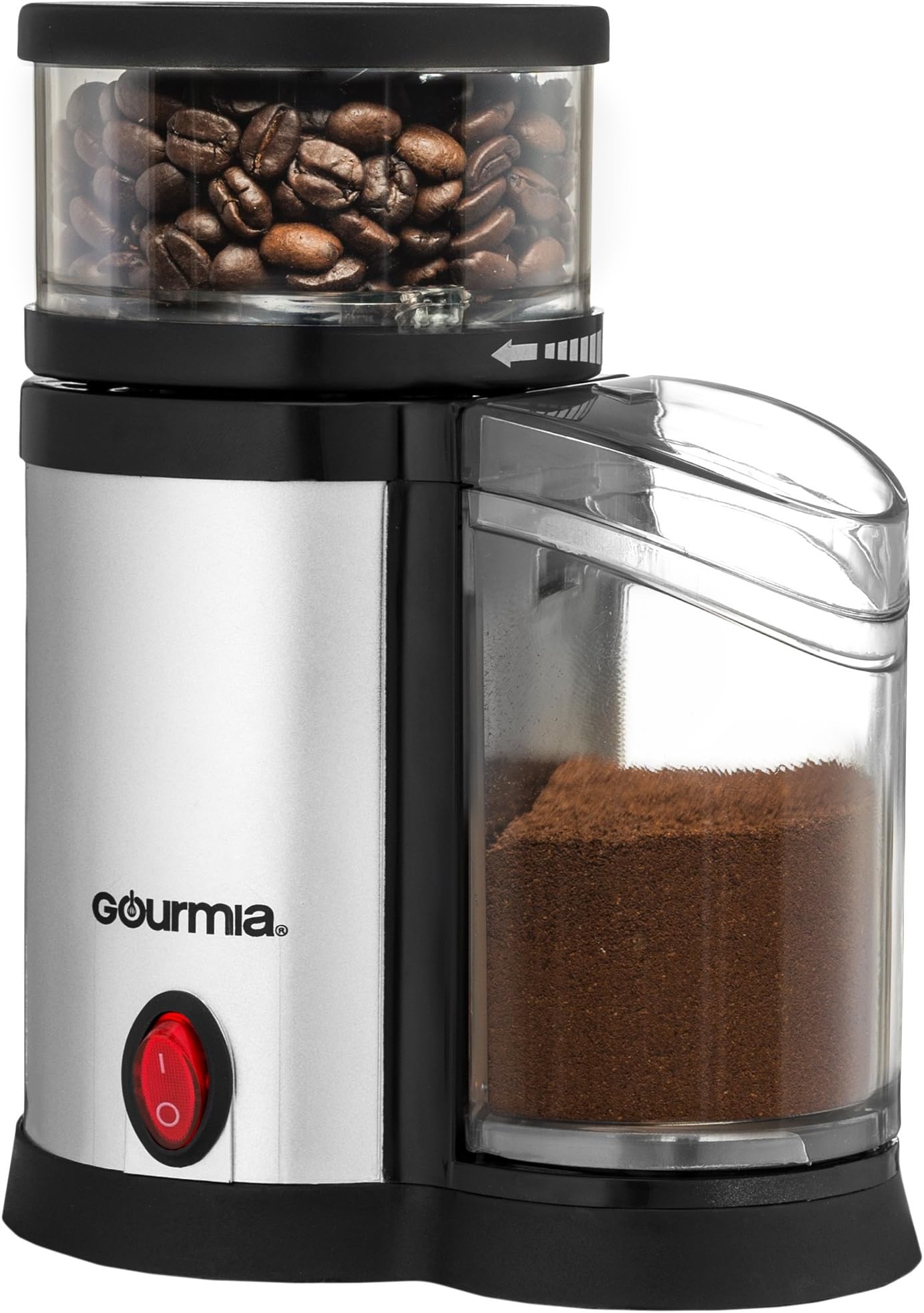
Gourmia Electric Grinder
The value everyday pick — a capable electric countertop grinder with a reasonable motor, multiple plates, and usually sausage tubes at a mid-budget price, handling regular home grinding and basic sausage-making competently. Power and durability a step below the STX (best for moderate home use), but a sensible affordable everyday grinder.
The Gourmia Electric Grinder is the accessible value pick — a capable electric countertop meat grinder at a mid-budget price for grinding meat at home without the cost of the STX or LEM. It offers a reasonable motor for everyday grinding, multiple grinding plates for coarse and fine textures, and usually sausage-stuffing attachments, in a compact countertop design. Gourmia is known for affordable kitchen appliances, and this grinder handles regular home grinding (burgers, meatloaf, basic sausage-making) competently for the money. It's the choice for a functional electric grinder with the key attachments at a friendly price, accepting that the motor power and durability are a step below the STX and well below the LEM (so it's best for moderate home use, not heavy or constant grinding of tough cuts). For affordable everyday home grinding with the essential attachments, it's a sensible value pick.
Pros
- ✓Reasonable motor for everyday grinding
- ✓Multiple plates and usually sausage tubes
- ✓Compact countertop design at a mid-budget price
- ✓Competent for regular home grinding
Cons
- ✗Power and durability below the STX (moderate use)
- ✗Struggles with heavy use or tough cuts

Sunmile Electric Grinder
The budget standout — an affordable, compact electric grinder that does the core job (burgers, basic sausage-making) at a low price, usually with a few plates and tubes. Modest motor power, speed, and durability suit small, occasional batches rather than heavy use or tough cuts, but the value pick to try home grinding cheaply.
The Sunmile Electric Grinder is the budget standout — an affordable, popular, compact electric meat grinder that does the core job (grinding meat for burgers and basic sausage-making) at a low price, for someone who wants to try home grinding cheaply or only grinds occasionally. It typically includes a few grinding plates and sausage tubes, has a modest but functional motor, and a stainless-steel-accented compact build, at a budget-friendly price. The motor power, grinding speed, and durability won't match the more powerful grinders, so it's best for small, occasional batches rather than heavy or frequent use, and tough cuts will challenge it. But for an inexpensive, functional entry-level grinder to establish whether you'll grind your own meat — or for light occasional use — it's the value standout, often a fraction of the STX's price, letting you start without a big investment.
Pros
- ✓Affordable entry into home grinding
- ✓Includes a few plates and sausage tubes
- ✓Compact and functional for small batches
- ✓Far cheaper than powerful grinders
Cons
- ✗Modest motor, speed, and durability
- ✗Struggles with tough cuts and heavy/frequent use
Which one is right for you?
For serious home grinding and sausages
Stx Turboforce
A powerful motor that grinds clean and fast plus a full attachment set (plates and sausage tubes) at a value price makes it the power-and-value sweet spot for most home cooks.
For hunters and high-volume grinding
Lem Big Bite 8
A patented Big Bite auger, durable motor for sustained grinding, and rugged all-metal build handle large volumes and tough cuts for years — the heavy-duty workhorse.
For KitchenAid mixer owners
Kitchenaid Grinder Attachment
It turns your stand mixer into a grinder for a fraction of the cost and storage of a separate machine — the space-saving pick for occasional grinding.
For affordable everyday grinding
Gourmia Electric Grinder
A capable motor, multiple plates, and sausage tubes at a mid-budget price handle regular home grinding competently — the value everyday pick.
For trying home grinding cheaply
Sunmile Electric Grinder
An affordable, functional compact grinder with the key attachments handles small occasional batches, letting you start grinding your own meat without a big investment.
Top pick: STX Turboforce 3000
The STX Turboforce 3000 is the best meat grinder for most home cooks because it offers powerful, fast grinding and a generous set of attachments at a value price, hitting the sweet spot of performance and cost. It has a strong motor that grinds through meat quickly and cleanly without bogging down or smearing (the failure of weak grinders), handling everything from regular burger grinding to tougher cuts and even some game, and it comes with multiple grinding plates (coarse, medium, fine) plus sausage-stuffing tubes and often kubbe attachments — so you can grind for burgers and meatloaf and stuff your own sausages out of the box. It's an electric countertop grinder that processes a good amount of meat per minute for efficient home batches.
Its appeal is the combination of genuine power, complete attachments, and value: it's powerful enough to satisfy serious home grinders and sausage-makers, comes ready to do multiple jobs (grind sizes plus sausage stuffing) without buying extras, and costs far less than the heavy-duty commercial-style grinders while out-performing the cheap underpowered ones. STX is a popular home meat-grinder brand for exactly this value-and-power balance. For someone who wants to grind their own meat and make sausages effectively at home without overspending, it's the benchmark.
The honest caveats: it's a powerful home grinder but not a true commercial-duty unit for constant heavy use (the LEM is more durable for that), and it's a sizeable countertop appliance to store. But for the best balance of strong, fast grinding, a full attachment set, and value for home use, the STX Turboforce 3000 is the one most people should buy.
Most heavy-duty and the appliance-integrated pick: LEM Big Bite and KitchenAid Attachment
The LEM Big Bite #8 is the heavy-duty pick for serious hunters, sausage-makers, and anyone grinding large quantities who wants a durable, commercial-grade machine built to last. LEM is a respected name in meat processing, and its Big Bite grinders use a patented 'Big Bite' auger design that takes bigger bites of meat to feed it faster and more efficiently, a powerful, durable motor built for sustained heavy grinding (not just short home bursts), and rugged all-metal construction with quality steel plates and knives. The #8 size suits serious home and small-game processing. It's the choice for someone who processes a lot of meat — hunters dealing with whole animals, dedicated sausage-makers, or anyone wanting a grinder that won't bog down or wear out under heavy repeated use. The trade-offs are the higher price and that it's overkill (in power, size, and cost) for someone who just grinds the occasional batch of burger meat — but for durability, sustained power, and serious volume, it's the standout that lasts for years of hard use.
The KitchenAid Grinder Attachment is the pick for someone who already owns a KitchenAid stand mixer and wants to grind meat without buying a separate appliance. It's a metal (or plastic) grinder attachment that fits the KitchenAid stand mixer's power hub, using the mixer's motor to grind meat, with grinding plates and often sausage-stuffing tubes included. The appeal is space and value: if you have a KitchenAid mixer, this attachment turns it into a meat grinder for a fraction of the cost and storage of a dedicated machine, and it's convenient for occasional grinding (burgers, meatloaf, small sausage batches). The trade-offs: it relies on the stand mixer's motor, which is less powerful and not designed for heavy sustained grinding (so it's best for moderate, occasional use, not large volumes or tough cuts repeatedly — and overworking it can strain the mixer), and the metal attachment version performs and lasts better than the plastic one. But for a KitchenAid owner who grinds occasionally, it's the most space- and cost-efficient option.
Choose between them by use and what you own. The LEM Big Bite wins for serious volume, durability, and sustained heavy grinding (hunters, dedicated sausage-makers). The KitchenAid Attachment wins for KitchenAid mixer owners who grind occasionally and want no extra appliance. The LEM is the heavy-duty workhorse; the KitchenAid the space-saving attachment for occasional use.
The value picks: Gourmia and Sunmile
The Gourmia Electric Grinder is the accessible value pick — a capable electric countertop meat grinder at a mid-budget price for someone who wants to grind meat at home without the cost of the STX or LEM. It offers a reasonable motor for everyday grinding, multiple grinding plates for coarse and fine textures, and usually sausage-stuffing attachments, in a compact countertop design. Gourmia is known for affordable kitchen appliances, and this grinder handles regular home grinding (burgers, meatloaf, basic sausage-making) competently for the money. It's the choice for someone who wants a functional electric grinder with the key attachments at a friendly price, accepting that the motor power and durability are a step below the STX and well below the LEM (so it's best for moderate home use, not heavy or constant grinding of tough cuts). For affordable everyday home grinding, it's a sensible value pick.
The Sunmile Electric Grinder is the budget standout — an affordable, popular, compact electric meat grinder that does the core job (grinding meat for burgers and basic sausage-making) at a low price, for someone who wants to try home grinding cheaply or only grinds occasionally. It typically includes a few grinding plates and sausage tubes, has a modest but functional motor, and a stainless-steel-accented compact build, at a budget-friendly price. The motor power, grinding speed, and durability won't match the more powerful grinders, so it's best for small, occasional batches rather than heavy or frequent use, and tough cuts will challenge it. But for an inexpensive, functional entry-level grinder to establish whether you'll grind your own meat — or for light occasional use — it's the value standout, often a fraction of the STX's price.
Choose between them by budget and use. The Gourmia wins as a capable mid-budget everyday grinder with the key attachments. The Sunmile wins on the lowest price for occasional or trial home grinding. The Gourmia is the value everyday pick; the Sunmile the cheap entry-level pick — both step down in power and durability from the STX.
How to choose: motor power, attachments, durability, and use
Prioritise motor power, because it determines whether the grinder cuts meat cleanly or fails. Grinding meat is demanding work, and an underpowered grinder bogs down, slows, overheats, and — worst of all — smears and mushes the meat (heating and crushing it rather than cleanly cutting) instead of producing a proper grind, which ruins texture and can be a food-safety issue. Powerful grinders (STX Turboforce, LEM Big Bite) cut cleanly and quickly through meat and even tougher cuts without bogging down, while budget grinders (Sunmile, and to a degree Gourmia) have weaker motors fine for small, occasional batches of softer meat but prone to struggling with volume or tough cuts. Match power to your use: heavy/frequent grinding or tough cuts and game need a strong motor (STX or LEM); occasional small batches of regular meat can use a value grinder. Don't under-buy power if you'll grind seriously — it's the most common source of frustration.
Consider attachments for the jobs you want to do. Beyond plain grinding, the included attachments determine versatility: multiple grinding plates (coarse, medium, fine) let you choose the texture for different uses (coarse for chili or rustic sausage, fine for smooth burgers or pâté) — most decent grinders include several; sausage-stuffing tubes (in various diameters) let you make your own sausages, a major reason many people buy a grinder, so check they're included if you want to stuff sausages; and kubbe/specialty attachments add other functions. If you want to make sausages, ensure the grinder comes with (or supports) stuffing tubes; if you just want ground meat, plates are the priority. Most grinders here (STX especially) come with a generous set out of the box, saving you buying extras.
Weigh durability and form factor against your volume and storage. Durability matters for how hard and often you'll grind: heavy-duty all-metal grinders (LEM Big Bite) are built for sustained, frequent, high-volume grinding and last for years of hard use (essential for hunters and serious sausage-makers), while home grinders (STX, Gourmia, Sunmile) are designed for shorter home sessions and lighter use — overworking a home grinder with constant heavy grinding can wear it out. Metal grinding components (auger, plates, housing) are more durable and better-performing than plastic. Also consider size and storage (these are sizeable countertop appliances — the heavy-duty units especially) and whether a stand-mixer attachment (KitchenAid) saves space if you already own the mixer. Buy the power and durability for your real volume (strong/heavy-duty for frequent or tough grinding, value for occasional), with the attachments for whether you'll make sausages, in a form factor (standalone vs mixer attachment) that fits your kitchen — and prioritise motor power above all, since it's what separates a clean grind from a smeared mess.
