Best Cat Food 2026: 5 Indoor Picks Compared
Indoor cats face a structural hydration problem — they evolved as desert hunters who get most of their water from prey, not a bowl. Five cat foods compared on the axis that matters most for urinary and kidney health: moisture and taurine content.
Each product was evaluated on moisture percentage, protein source and quality, taurine content (essential amino acid for cats), AAFCO nutritional adequacy statement, and suitability for indoor adult cats. Long-term owner reviews were analyzed for palatability, litter box output changes, and coat condition. Manufacturer specification sheets were cross-referenced against independent lab analysis where published.
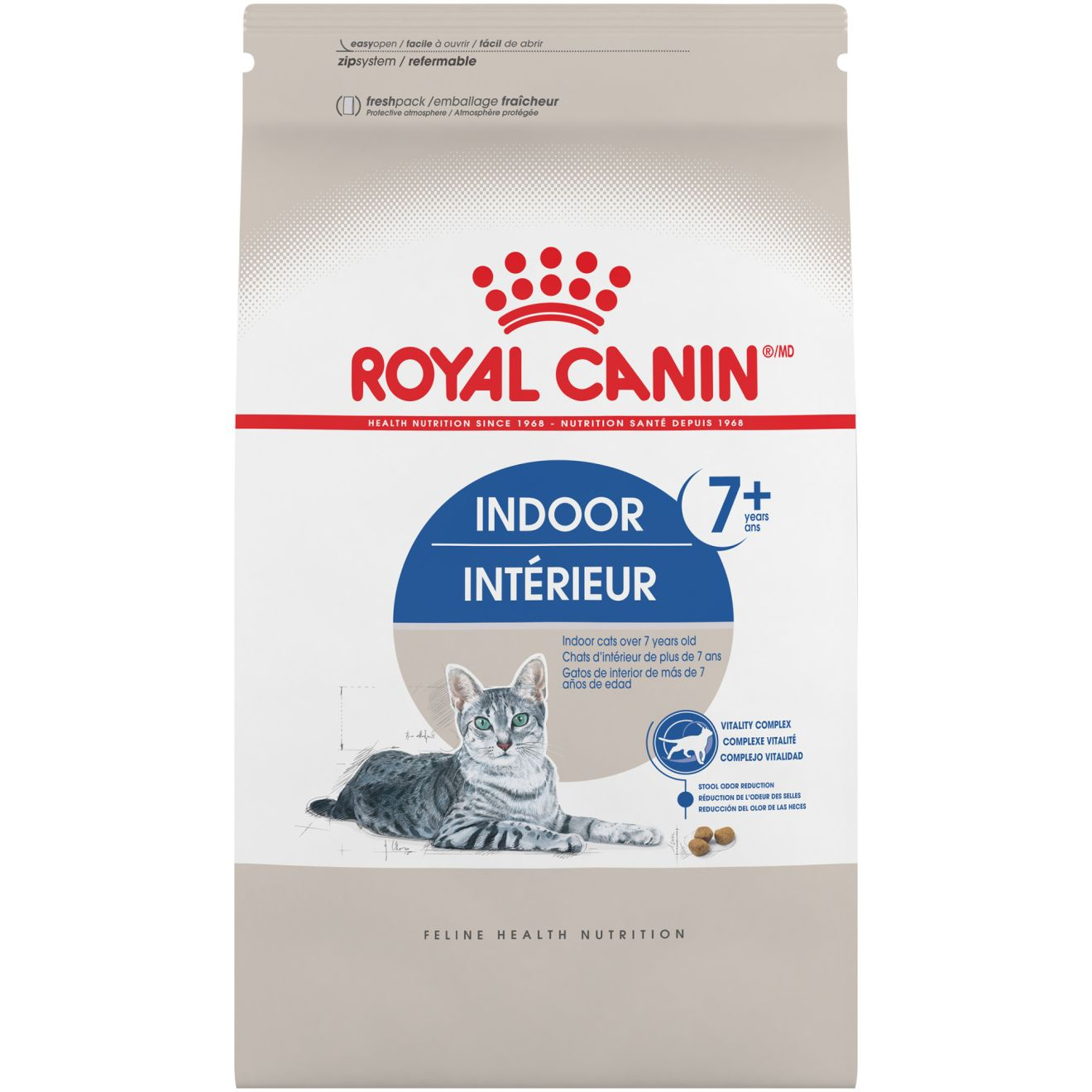
Royal Canin Indoor Adult Dry Cat Food
Best Indoor Specialist: Royal Canin Indoor Adult is the most precisely targeted indoor cat formula in this comparison, addressing the three main indoor-lifestyle risks in a single product: lower caloric density (319 kcal/cup) prevents the slow weight gain common in cats with reduced activity, a psyllium fiber blend reduces hairball frequency documented in clinical trials, and the formula maintains urinary pH at the level that minimizes struvite crystal formation. The honest weakness is the ingredient label: corn and chicken by-product meal are prominent positions, which reads poorly to ingredient-conscious buyers.
Top picks ↓| Product | Price | Link |
|---|---|---|
| 2800〜8500 | View deal → | |
| 2500〜7800 | View deal → | |
| 80〜500 | View deal → | |
| 3200〜9800 | View deal → | |
| 350〜900 | View deal → |
Top picks
Related articles


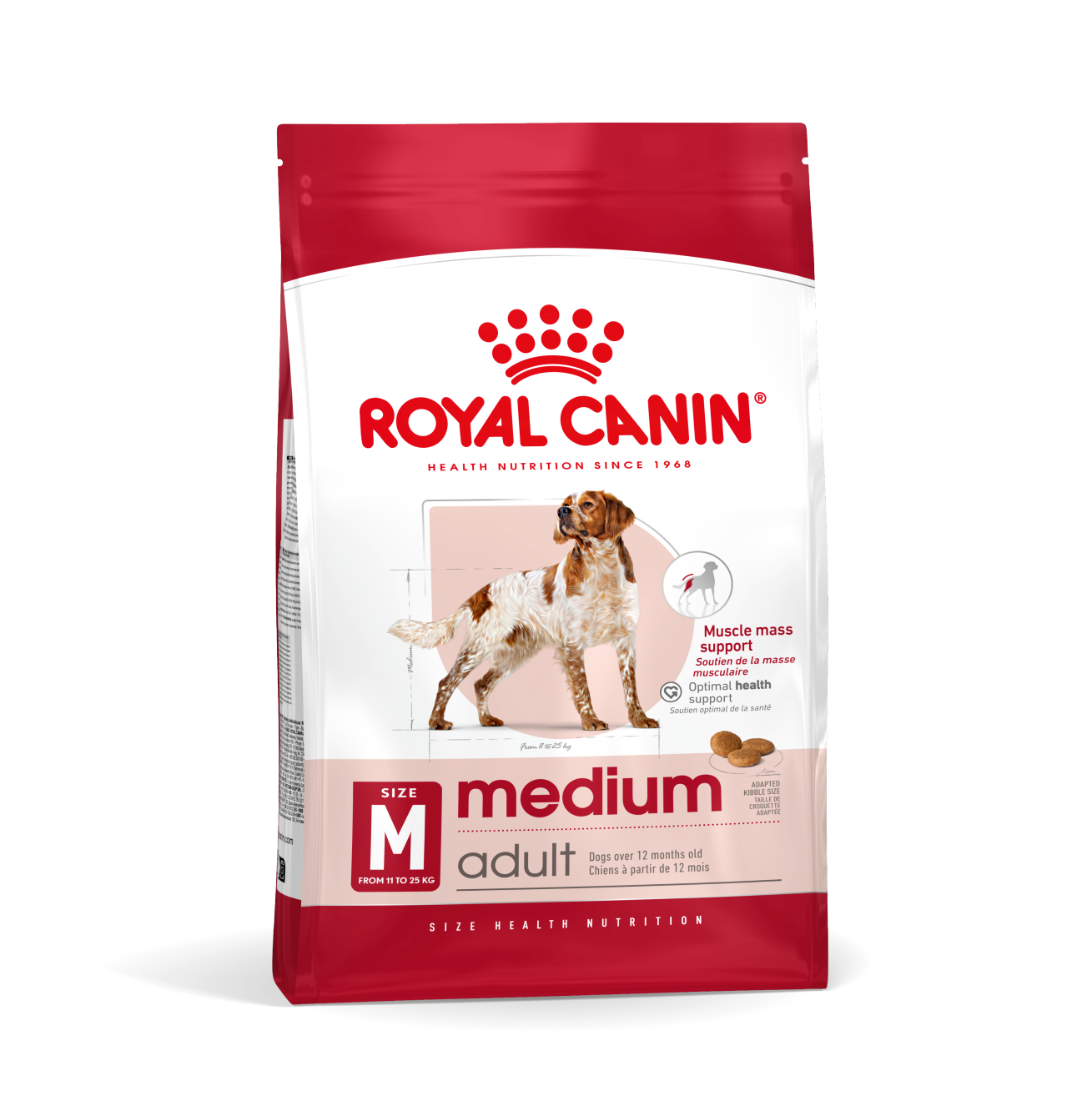
Royal Canin Indoor Adult Dry Cat Food
Royal Canin Indoor Adult is the most precisely targeted indoor cat formula in this comparison, addressing the three main indoor-lifestyle risks in a single product: lower caloric density (319 kcal/cup) prevents the slow weight gain common in cats with reduced activity, a psyllium fiber blend reduces hairball frequency documented in clinical trials, and the formula maintains urinary pH at the level that minimizes struvite crystal formation. The honest weakness is the ingredient label: corn and chicken by-product meal are prominent positions, which reads poorly to ingredient-conscious buyers. The clinical outcomes record over decades of veterinary use justifies the formulation. Best for indoor cats with mild urinary sensitivity or hairball issues.
Pros
- ✓Lower caloric density (319 kcal/cup) addresses indoor weight gain
- ✓Psyllium fiber blend reduces hairball frequency in clinical trials
- ✓Urinary pH-support formulation for struvite crystal prevention
- ✓Decades of veterinary recommendation for indoor cats
Cons
- ✗Corn and chicken by-product meal prominent — poor ingredient label optics
- ✗Dry-only format doesn't solve the indoor hydration problem directly
Score breakdown
| Moisture % | 8% (dry) |
| Protein source | Chicken by-product meal, corn gluten meal |
| Taurine content | 0.15% (above AAFCO minimum) |
| Life stage | Adult maintenance |
| AAFCO certified | Yes |
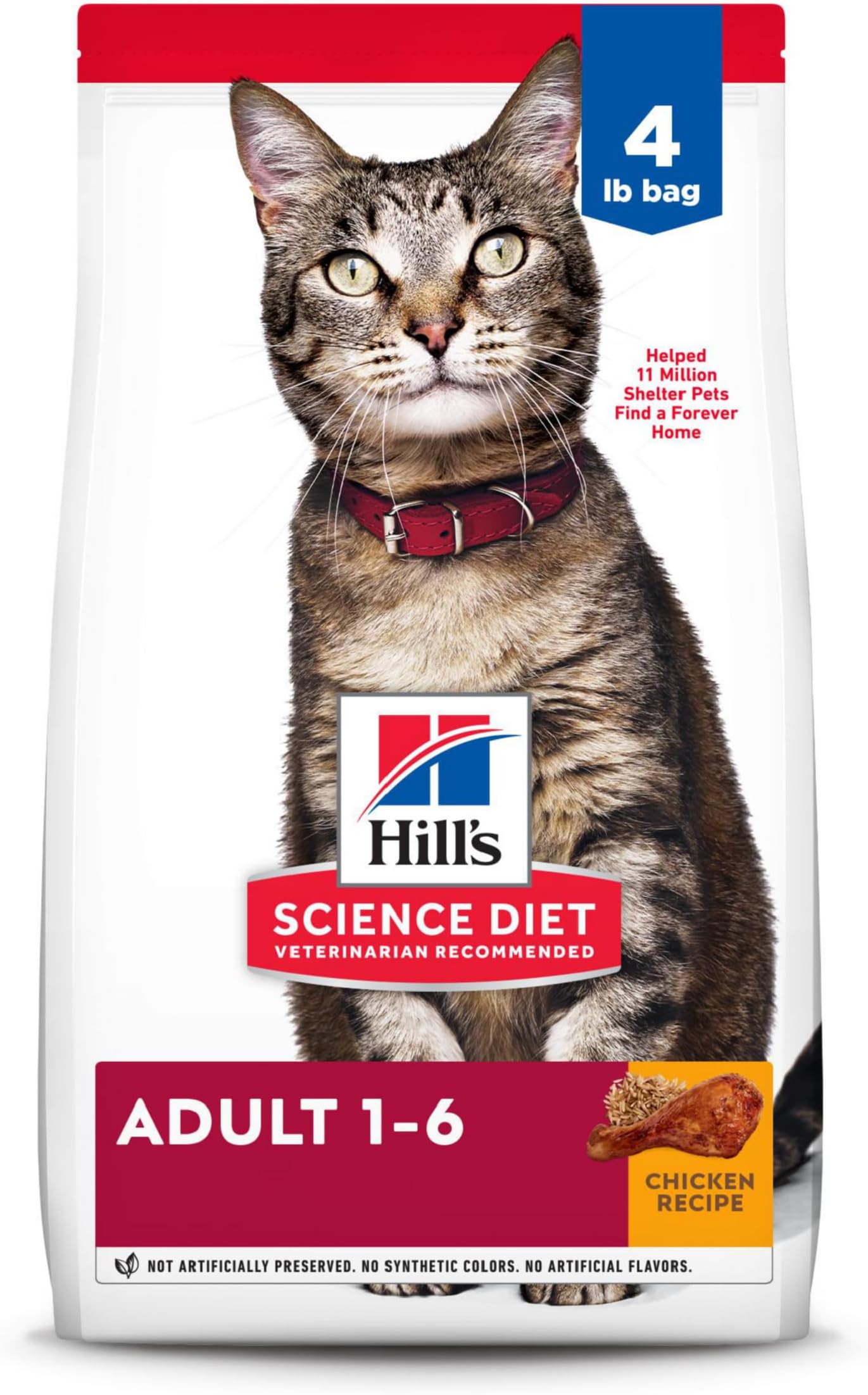
Hill's Science Diet Adult Indoor Dry Cat Food
Hill's Science Diet Adult Indoor is the most-recommended dry cat food in US and Japanese veterinary clinics, earning the slot through feeding-trial certification (real cats, 6-month trials) rather than formulation-only AAFCO compliance. Chicken meal as first ingredient delivers concentrated taurine-containing protein, L-carnitine supports lean muscle maintenance, and the formula is validated for weight management in indoor cats. Palatability is moderate but consistent — cats accept it reliably, which matters in a multi-cat household where individual palate preferences vary. The honest weakness: slightly higher caloric density than Royal Canin Indoor means portion discipline is more important; and the brand still carries perception damage from canned product recalls (which have not affected the dry line).
Pros
- ✓AAFCO feeding-trial certified — real animal testing, not calculation only
- ✓Most-recommended by veterinary clinics in US and Japan
- ✓Chicken meal first — high taurine content from whole animal protein
- ✓L-carnitine for lean muscle maintenance in lower-activity indoor cats
Cons
- ✗Slightly higher caloric density than Royal Canin Indoor requires stricter portions
- ✗Brand perception affected by unrelated canned product recalls
Score breakdown
| Moisture % | 8% (dry) |
| Protein source | Chicken Meal |
| Taurine content | 0.17% (above AAFCO minimum) |
| Life stage | Adult maintenance |
| AAFCO certified | Yes (feeding trial) |

Inaba Ciao Tuna in Broth Cat Complement Food (Japan)
Inaba Ciao is Japan's most beloved cat food brand and the go-to palatability tool in any Japanese cat household. The tuna-in-broth format delivers 91% moisture, which makes it the highest-moisture product in this comparison for the Ciao wet line — excellent for hydration support. However, Ciao is formulated as a complement food, not a complete-nutrition staple: crude protein on a wet basis is around 10%, which means a cat would need to consume many pouches to meet daily protein requirements. The practical role for Ciao is as a meal topper, treat, medication vehicle, or appetite stimulator for cats going through low-appetite periods. Every Japanese cat household that owns a finicky cat knows: if a cat won't eat anything else, they will eat Ciao.
Pros
- ✓91% moisture — the highest in this comparison for wet format
- ✓Japan's best-known and most-loved cat food brand
- ✓Excellent palatability even for finicky cats
- ✓Widely available at every Japanese pet shop and convenience store
Cons
- ✗Complement food only — not a complete-nutrition staple
- ✗Low protein concentration on wet basis requires pairing with a complete diet
- ✗Tuna habituation risk with repeated daily feeding
Score breakdown
| Moisture % | 91% (wet) |
| Protein source | Tuna |
| Taurine content | Meets Japanese feed standards |
| Life stage | Adult (complement, not complete) |
| AAFCO certified | No (Japanese feed standards) |

Wellness CORE Indoor Grain-Free Dry Cat Food
Wellness CORE Indoor is the grain-free indoor specialty kibble for owners committed to grain-free feeding. Turkey and chicken are the first two ingredients, crude protein 36%, AAFCO adult maintenance certified, with indoor-specific caloric density at 340 kcal/cup and added omega-3s for coat health. The 36% protein is meaningfully higher than Royal Canin Indoor (26%) and Hill's Science Diet (18.5%), which matters for cats who self-regulate caloric intake by protein satisfaction rather than carbohydrate fill. The honest weakness: grain-free cat foods carry the same theoretical DCM-taurine caution as grain-free dog foods, though the connection is less established in cats. Wellness CORE does supplement taurine, but the bioavailability of supplemented taurine is lower than taurine from whole animal protein.
Pros
- ✓Turkey and chicken as first two ingredients
- ✓36% crude protein — highest among dry foods in this comparison
- ✓Indoor-specific caloric density with omega-3 for coat health
- ✓Grain-free AAFCO certified
Cons
- ✗Grain-free formulation — DCM caution applies in principle
- ✗Supplemented taurine rather than fully whole-protein-derived
Score breakdown
| Moisture % | 9% (dry) |
| Protein source | Turkey, Chicken |
| Taurine content | 0.18% (above AAFCO minimum, supplemented) |
| Life stage | Adult maintenance |
| AAFCO certified | Yes |

Ziwi Peak Wet Cat Food
Ziwi Peak Wet is the premium moisture pick and the product most aligned with feline prey-model nutrition in this comparison. 78% moisture, 92% meat and organs, no grains, no legumes, no plant protein concentrates. Crude protein approximately 50% on a dry matter basis, crude fat 35% on a dry matter basis — the highest nutrient density in this comparison. Taurine comes from whole animal tissue rather than synthetic supplementation. For cats with chronic kidney disease risk, documented urinary history, or cats who refuse all other wet foods, the moisture content and ingredient quality justify the cost premium. The honest weakness: Ziwi Peak is the most expensive product in this comparison per kilogram on a dry matter basis, requires refrigeration after opening, and spoils within 24-48 hours in the bowl — free-choice feeding is not possible.
Pros
- ✓78% moisture — closest to whole-prey hydration profile
- ✓92% meat and organs, no grains or plant protein fillers
- ✓Taurine from whole animal protein rather than synthetic supplementation
- ✓Validated for cats with urinary and kidney health concerns
Cons
- ✗Most expensive product per kilogram dry matter in this comparison
- ✗Requires refrigeration, spoils within 24-48 hours — no free-choice feeding
Score breakdown
| Moisture % | 78% (wet) |
| Protein source | Beef/Venison/Mackerel (variant dependent) |
| Taurine content | High — from whole animal protein |
| Life stage | Adult maintenance (all life stages) |
| AAFCO certified | Yes |
Which one is right for you?
For indoor cats prone to urinary issues
Royal Canin Indoor Adult Dry Cat Food
Formulated specifically for indoor cats with controlled caloric density, hairball fiber, and urinary pH support — the most targeted indoor cat formula in this comparison.
For cats with documented sensitivities needing a vet-backed option
Hill's Science Diet Adult Indoor Dry Cat Food
AAFCO feeding-trial certified, most-recommended by veterinary clinics, with a proven digestibility record for adult indoor cats.
For Japanese cat owners wanting a beloved domestic treat
Inaba Ciao Tuna in Broth Cat Complement Food (Japan)
Inaba Ciao's tuna-based products are Japan's best-loved cat food line, widely available, and consistently high palatability for even finicky cats.
For grain-free high-protein indoor cats
Wellness CORE Indoor Grain-Free Dry Cat Food
Grain-free with turkey and chicken as first ingredients, indoor-specific caloric density, and 36% crude protein — the grain-free indoor specialty pick.
For maximum moisture and prey-model nutrition
Ziwi Peak Wet Cat Food
78% moisture, 92% meat and organs, air-dried or wet format that delivers the closest profile to whole prey — best for cats with documented hydration issues or chronic kidney disease risk.
Why indoor cats have different nutritional needs than outdoor cats
Indoor cats burn fewer calories than outdoor cats — typically 20–30% less — because they lack the hunting activity and thermoregulatory demands of outdoor life. This means the caloric density of their food matters more than it does for outdoor cats; feeding an indoor cat the same portions as an outdoor cat of the same weight produces a slow but consistent weight gain. Obesity in indoor cats has cascading consequences: type 2 diabetes (cats are particularly susceptible), hepatic lipidosis (fatty liver, which can be fatal in as little as 2–3 days of anorexia), joint disease, and reduced lifespan. Indoor-specific formulas address this with lower caloric density per cup while maintaining nutritional completeness.
Hydration is the second structural difference. Cats evolved as desert hunters who derive most of their water from prey — a mouse is roughly 70% moisture, whole prey is 65–75% moisture. Dry kibble is 6–10% moisture. An indoor cat fed exclusively dry food must compensate by dramatically increasing water intake from a bowl, which cats do poorly — their thirst drive is calibrated for prey moisture, not standing water. The practical consequence is that indoor cats on dry-only diets often run in a state of mild chronic dehydration, which over years contributes to the development of feline idiopathic cystitis (FIC), urinary tract infections, and chronic kidney disease (CKD). Incorporating wet food at even one meal per day measurably improves urinary output and reduces CKD risk.
Taurine: the essential amino acid cats cannot synthesize
Taurine is an amino acid that dogs can synthesize from other amino acids but cats cannot — cats must obtain it directly from diet. Taurine deficiency causes dilated cardiomyopathy (DCM), central retinal degeneration (leading to blindness), and reproductive failure in queens. Before 1987, when taurine was discovered to be essential for cats, taurine-deficient commercial cat food caused widespread feline DCM and retinal degeneration in the United States. All AAFCO-compliant cat foods now must meet minimum taurine levels (0.1% in dry food, 0.2% in wet food on a dry matter basis).
Taurine is concentrated in animal muscle tissue, particularly in the heart, shellfish, and fish — not in plant protein sources. A cat food deriving significant protein from plant concentrates (soy protein isolate, corn gluten meal) rather than whole animal tissue may meet the minimum taurine level on paper by supplementing synthetic taurine, but the bioavailability of supplemented synthetic taurine is lower than taurine from whole animal protein. This is one of the nutrition-science arguments for animal-protein-first cat foods, separate from the marketing argument.
Wet food vs dry food vs mixed feeding — what the science says
The research on wet-versus-dry feeding in indoor cats is clearer than the equivalent research in dogs. Studies consistently show that cats fed wet food as a majority of their diet have higher urine volume and lower urine specific gravity (less concentrated urine), which reduces crystal formation and the risk of feline lower urinary tract disease (FLUTD). A 2002 study in the Journal of Feline Medicine and Surgery found that increasing moisture intake via wet food reduced recurrence of feline idiopathic cystitis significantly — a result replicated in several subsequent studies. The consensus in veterinary internal medicine is that indoor cats with urinary history should receive at least 50% of their calories from wet food.
Dry food has practical advantages: it is cheaper per calorie, stores indefinitely once sealed, can be left out for free-choice feeding without spoiling, and is easier for multi-cat households to manage. Dental health is often cited as a dry food advantage, but the evidence for kibble as a meaningful dental prophylactic is weak — cats tend to swallow kibble whole rather than chewing it. The honest recommendation for most indoor cats is mixed feeding: dry food for daytime free-choice grazing, wet food at one or two scheduled meals per day, with a water fountain running at all times (moving water increases voluntary intake by 50–100% in many cats).
Where each fits
Royal Canin Indoor Adult is the most targeted indoor-specific formula in this comparison and earns the top slot for indoor cats not on wet food. Caloric density is set at 319 kcal per cup (lower than standard adult formulas) to prevent indoor-lifestyle weight gain, a psyllium-based fiber blend reduces hairball frequency by ~30% in clinical trials, and the formula is designed to maintain urinary pH at the level that minimizes struvite crystal formation. The honest weakness: the ingredient list reads like a clinic formula rather than a premium food — corn and chicken by-product meal are prominent, which frustrates ingredient-label readers. Royal Canin's consistent clinical outcome record justifies the formulation even when the ingredient list doesn't pass the marketing eye test.
Hill's Science Diet Adult Indoor is the veterinary clinic standard for indoor cats and the most widely recommended option in both Japanese and American veterinary practice. Chicken meal as first ingredient, L-carnitine for weight maintenance, and AAFCO feeding-trial certification rather than formulation-only. The honest weakness: the caloric density is slightly higher than Royal Canin Indoor, so portion control is more necessary; and Hill's has faced perception challenges from canned product recalls since 2019 (unrelated to dry food, but the brand association lingers).
Inaba Ciao is Japan's most beloved cat food brand and needs no introduction to any Japanese cat owner. The flagship product line is not a complete-nutrition staple food but a highly palatable complement food — the tuna-based varieties (Ciao Tuna in Broth, Ciao Grilled Tuna) function as a treat or feeding motivator rather than a nutritional mainstay. Crude protein 10% (wet basis), moisture 91%, taurine content meets Japanese feed standards. For cats who refuse other foods or need medication hidden in something irresistible, Ciao is the tool. The honest weakness for complete nutrition: the high moisture / low protein concentration means a cat needs to eat many pouches to meet daily protein targets — Ciao should complement, not replace, a complete-nutrition staple.
Wellness CORE Indoor is the grain-free indoor specialty pick for owners who want a high-protein, grain-free option without feeding a wet-only diet. Turkey and chicken are the first two ingredients, crude protein 36%, indoor-specific caloric density at 340 kcal/cup, and added omega-3 fatty acids for coat health. AAFCO certified for adult maintenance. The honest weakness: like all grain-free cat foods, the FDA caution about DCM applies, though the DCM-taurine connection is less clear in cats than dogs (cats synthesize less taurine from precursors regardless of diet, making supplemented taurine levels more important).
Ziwi Peak Wet Cat Food is the premium moisture pick and the closest commercially available product to whole prey nutrition. 78% moisture, 92% meat and organs (beef, venison, chicken, or mackerel variants), no grains, no legumes, no sugar. Crude protein 11% wet basis (approximately 50% on dry matter basis), crude fat 7% wet basis, taurine from whole animal protein rather than synthetic supplement. The honest weakness is price and practicality: Ziwi Peak is the most expensive product in this comparison per kilogram on a dry matter basis, requires refrigeration after opening, and must be fed at scheduled meals rather than free-choice. For cats with chronic kidney disease risk, documented urinary issues, or cats who refuse all other wet foods, the higher moisture and protein quality justify the cost.
