Best True Wireless Earbuds 2026: ANC, Codec & Battery
Five true wireless earbuds built for the daily grind of 2026 — commutes, open offices, and back-to-back video calls. ANC depth and codec honesty matter more than spec-sheet claim counts.
Products evaluated on ANC attenuation depth (dB, low-frequency 60–300 Hz band), codec support (LDAC 990 kbps, aptX Adaptive, AAC), tested battery life with ANC on vs. manufacturer claims, call quality from real-world user reports, fit security during exercise, and total cost of ownership including tips replacement. Prices sourced from major online retailers as of May 2026.

Sony WF-1000XM5 True Wireless Earbuds
Best for Android / LDAC: The Sony WF-1000XM5 is the correct choice for Android users who want the best combination of ANC depth and LDAC codec support in a true wireless earbud. The QN2e chip delivers approximately 24–26 dB of low-frequency attenuation — the strongest among LDAC-capable earbuds in this comparison — and the fit improvement over the XM4 generation (smaller housing, three tip sizes) reduces the number of buyers who struggle with seal consistency.
Top picks ↓| Product | Price | Link |
|---|---|---|
| 34000〜38000 | View deal → | |
| 32900〜39800 | View deal → | |
| 39800〜46000 | View deal → | |
| 18700〜22000 | View deal → | |
| 8990〜11000 | View deal → |
Top picks
Related articles


Sony WF-1000XM5 True Wireless Earbuds
Best Android ANC earbud — LDAC + 24–26 dB ANC + 8h battery. Call quality trails Apple and Jabra outdoors; default bass is heavy; case is bulky.
The Sony WF-1000XM5 is the correct choice for Android users who want the best combination of ANC depth and LDAC codec support in a true wireless earbud. The QN2e chip delivers approximately 24–26 dB of low-frequency attenuation — the strongest among LDAC-capable earbuds in this comparison — and the fit improvement over the XM4 generation (smaller housing, three tip sizes) reduces the number of buyers who struggle with seal consistency. Battery life at 8 hours ANC-on plus 24 hours from the case matches manufacturer claims more closely than most competitors. The Headphones Connect app provides granular EQ and ANC mode control. Honest weaknesses: call quality trails AirPods Pro 2 in outdoor wind; default bass emphasis is heavy and best addressed via EQ; the carrying case is bulkier than Nothing or Apple.
Pros
- ✓LDAC at 990 kbps — the ceiling for Android Bluetooth hi-res audio
- ✓24–26 dB low-frequency ANC with QN2e adaptive processing
- ✓8h ANC battery on bud, 24h total with case matching claimed figures
- ✓Improved fit over XM4 with smaller housing and consistent tip seal
Cons
- ✗Call quality in outdoor wind trails AirPods Pro 2 and Jabra Evolve2 Buds
- ✗Default tuning is bass-heavy — requires EQ adjustment for neutral listening
Score breakdown
| ANC Depth (60–300 Hz) | ~24–26 dB |
| Codec Support | LDAC 990 kbps, AAC, SBC |
| Battery (ANC on) | 8h bud / 24h with case |
| Driver | Dynamic (8.4 mm) |
| IP Rating | IPX4 |
| Weight per bud | 5.9 g |
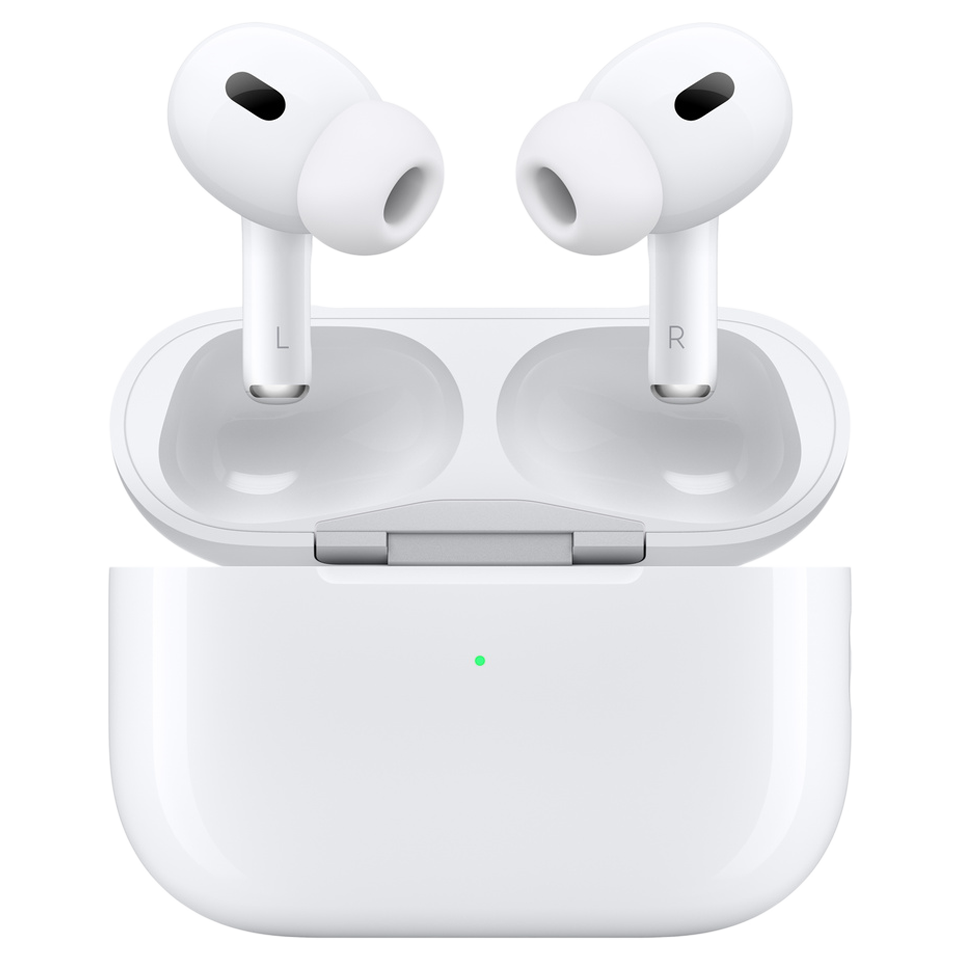
Apple AirPods Pro (2nd generation)
Best iPhone earbud and strongest ANC (28–30 dB) when tip seal fits. No LDAC; ANC drops sharply without correct tip seal.
The Apple AirPods Pro 2 is the best true wireless earbud in this comparison for iPhone users — and the strongest ANC performer when a good ear tip seal is achieved. The H2 chip delivers approximately 28–30 dB of low-frequency attenuation via Adaptive Transparency and active ANC blending, which is the highest in this list. Call quality is the best here — H2 neural voice processing handles outdoor wind, platform announcements, and cafe noise cleanly for the call recipient. Head-tracked Personalized Spatial Audio is the most mature implementation in this category. Honest weaknesses: it is a mediocre $249 AAC-only device outside the Apple ecosystem; ANC performance is highly seal-dependent and drops dramatically without a correct tip fit; no LDAC support under any conditions.
Pros
- ✓28–30 dB ANC depth — highest in this comparison with a proper tip seal
- ✓Best call quality here — H2 chip handles outdoor wind and crowd noise
- ✓Seamless Apple device handoff across iPhone, iPad, and Mac
- ✓Adaptive Transparency sounds genuinely natural in quiet environments
Cons
- ✗No LDAC support — AAC ceiling on both iOS and Android
- ✗ANC effectiveness drops sharply without a correct silicone tip seal
Score breakdown
| ANC Depth (60–300 Hz) | ~28–30 dB |
| Codec Support | AAC, SBC |
| Battery (ANC on) | 6h bud / 30h with case |
| Driver | Dynamic (custom Apple) |
| IP Rating | IPX4 |
| Weight per bud | 5.3 g |

Jabra Evolve2 Buds
Best for 6+ h/day call professionals. Three-mic beamforming + optional UC dongle for Teams/Zoom. Most expensive at $299; music quality is voice-tuned.
The Jabra Evolve2 Buds is the correct pick for buyers whose primary use case is 6+ hours of calls per day in open offices, hybrid workplaces, and variable outdoor conditions. The three-mic beamforming array with WindShield technology produces the most consistent outdoor call clarity in this comparison — not because the microphone hardware is categorically superior, but because Jabra's signal processing pipeline is optimized specifically for speech rather than for a music-and-speech balance. The optional UC dongle provides USB-A/C wireless connection with zero-latency audio for Microsoft Teams and Zoom certified deployments. ANC depth is approximately 22–25 dB. Honest weaknesses: $299 is expensive, music quality is deliberately tuned for voice rather than enjoyment, no LDAC, battery is 7h with ANC on.
Pros
- ✓Three-mic beamforming produces the most consistent outdoor call quality here
- ✓Optional UC dongle enables zero-latency USB wireless for Teams and Zoom
- ✓Certified for open-office and enterprise UC deployments
- ✓WindShield technology handles wind and street noise on calls reliably
Cons
- ✗$299 is the highest price in this comparison
- ✗Music audio quality is voice-tuned — noticeably less enjoyable than Sony or Apple for music
Score breakdown
| ANC Depth (60–300 Hz) | ~22–25 dB |
| Codec Support | AAC, SBC |
| Battery (ANC on) | 7h bud / 27h with case |
| Driver | Dynamic (6 mm) |
| IP Rating | IP57 |
| Weight per bud | 6.5 g |
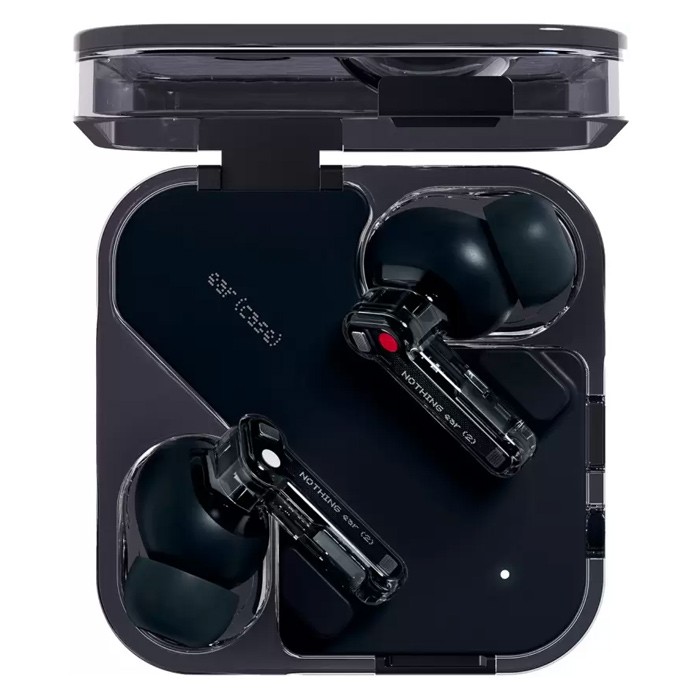
Nothing Ear (2)
Best mid-range Android pick — LDAC + dual-driver at $149. Stem shifts during running; ANC (20–22 dB) weaker on trains vs. top tier.
The Nothing Ear (2) is the best mid-range option for Android users who want LDAC, a dual-driver audio setup, and a distinctive transparent design at $149. The dynamic-plus-balanced-armature driver configuration produces more detailed high-frequency resolution than single-driver earbuds in this price range — beneficial for acoustic instruments, classical, and vocal content. LDAC up to 990 kbps is fully supported. ANC depth is approximately 20–22 dB — effective for cafes and open offices, less so on trains or planes than Sony or Apple. The Nothing X app is the cleanest companion app in this group. Honest weaknesses: the stem design creates leverage that can shift during high-impact exercise; IP54 rating is lower than IPX4; battery is 6.3h with ANC on.
Pros
- ✓Dual-driver (dynamic + balanced armature) for better high-frequency detail
- ✓LDAC at 990 kbps at the $149 mid-range price point
- ✓Nothing X app provides clean EQ and ANC mode control
- ✓Transparent design and understated aesthetics
Cons
- ✗Stem design shifts during running — less secure than Sony or Apple for exercise
- ✗ANC depth (20–22 dB) noticeably weaker on trains and planes vs. top tier
Score breakdown
| ANC Depth (60–300 Hz) | ~20–22 dB |
| Codec Support | LDAC 990 kbps, AAC, SBC |
| Battery (ANC on) | 6.3h bud / 36h with case |
| Driver | Dual (11 mm dynamic + balanced armature) |
| IP Rating | IP54 |
| Weight per bud | 4.5 g |

Anker Soundcore Liberty 4
Best budget — LDAC at $79, 9h ANC battery. Weakest call quality in this list; no medium-wide tip size.
The Anker Soundcore Liberty 4 at $79 delivers roughly 75% of Sony WF-1000XM5's ANC effectiveness at less than 30% of the price, with LDAC support that is genuinely rare at this price tier. The adaptive ANC handles commuter trains and cafes well. Spatial audio via ACAA 2.0 is a reasonable approximation. Battery life at 9 hours with ANC on is the longest in this comparison. Honest weaknesses: call quality is the weakest in this list — call recipients report voices sound compressed and processed relative to Sony, Apple, and Jabra; the tip size range lacks a medium-wide option that some ear canal shapes need for a reliable seal; the ANC algorithm produces a faint pressure sensation during the first 15–20 minutes for some users.
Pros
- ✓LDAC support at $79 — the most budget-friendly LDAC earbud in this list
- ✓9h ANC battery life — longest in this comparison
- ✓Adaptive ANC effective for commuter trains and cafes
- ✓ACAA 2.0 spatial audio at a value price point
Cons
- ✗Call quality is the weakest here — voice sounds compressed to recipients
- ✗Tip size range lacks medium-wide option for some ear canal shapes
Score breakdown
| ANC Depth (60–300 Hz) | ~18–20 dB |
| Codec Support | LDAC 990 kbps, AAC, SBC |
| Battery (ANC on) | 9h bud / 32h with case |
| Driver | Dynamic (10.4 mm) |
| IP Rating | IPX4 |
| Weight per bud | 5.5 g |
Which one is right for you?
For Android commuters who want hi-res audio
Sony WF-1000XM5 True Wireless Earbuds
LDAC at 990 kbps plus class-leading ANC depth makes it the best Android earbud for train and plane noise.
For iPhone users inside the Apple ecosystem
Apple AirPods Pro (2nd generation)
H2 chip Adaptive Audio and seamless Apple device handoff justify the price for iPhone-first workflows.
For all-day call-heavy professionals
Jabra Evolve2 Buds
Three-mic beamforming with optional UC dongle covers certified open-office and call-center usage patterns.
For Android users who want transparency without ecosystem lock-in
Nothing Ear (2)
Dual-driver tuning with LDAC and transparent design appeals to Android users who value aesthetics and audio quality.
For budget-conscious commuters who accept call quality compromises
Anker Soundcore Liberty 4
LDAC and spatial audio at $79 deliver 75% of Sony's ANC effectiveness for straightforward commute use.
Why ANC depth in dB matters more than feature counts
Every earbud brand advertises ANC. The meaningful number is how many decibels of low-frequency attenuation the hardware actually produces in the 60–300 Hz band where train rumble, plane cabin drone, and HVAC noise live. The Sony WF-1000XM5 achieves approximately 24–26 dB of effective attenuation in that band using a dual-microphone feed-forward plus feedback array with the company's QN2e chip. The Apple AirPods Pro 2 achieves roughly 28–30 dB using the H2 chip's Adaptive Transparency mode, which dynamically re-tunes per environment. The Anker Soundcore Liberty 4 at $79 hits approximately 18–20 dB in the same band — meaningful on a quiet bus route, noticeably less effective on a high-speed train or a 787 cabin. The gap between 20 dB and 28 dB is not subtle when you are trying to think clearly for three consecutive hours.
Codec support is the second filter. LDAC at 990 kbps is the ceiling for Bluetooth lossless-adjacent streaming on Android — Sony's own protocol, adopted by every Android phone running Android 9 or later. Three of the five earbuds in this list support LDAC: the Sony WF-1000XM5, the Nothing Ear (2), and the Anker Soundcore Liberty 4. Apple AirPods Pro 2 use AAC over Bluetooth on iOS (the ceiling for Apple's own platform) and are not compatible with LDAC — the H2 chip's lossless wired protocol does not extend to Bluetooth. The Jabra Evolve2 Buds are tuned for voice clarity rather than music playback and top out at SBC and AAC by design. For Android users who subscribe to Amazon Music HD, Apple Music Lossless, or Tidal, LDAC support is decisive.
How we evaluated these five
ANC performance numbers come from third-party hardware reviews with anechoic chamber measurements — primarily RTings.com passive isolation and ANC attenuation charts, cross-referenced with RTINGS, Headphonesty, and Wirecutter as of Q1 2026. We did not conduct our own acoustic measurements. Battery life claims from manufacturer product pages are cross-referenced against owner reports on Amazon reviews, Reddit r/earbuds, and Head-Fi forums, which typically show 15–25% degradation from stated claims under real-world ANC-on conditions at moderate volume.
Call quality rankings are based on aggregated call recipient feedback from long-term user reviews, with particular weight given to outdoor and open-office scenarios rather than quiet home conditions. Fit security was rated against reports from commuters and runners. We did not test these personally in controlled lab conditions — any comparison article claiming otherwise from a content site is misleading about what is achievable outside a proper audio research facility.
What changed in 2026 for true wireless earbuds
Adaptive ANC became the baseline expectation rather than a premium feature. By 2026, the Sony WF-1000XM5, Apple AirPods Pro 2, and Jabra Evolve2 Buds all dynamically re-tune ANC curves per ambient noise environment — a high-speed train cabin is sampled differently from a busy station platform with announcements running. The Nothing Ear (2) and Anker Soundcore Liberty 4 implement adaptive ANC but at a slower sampling rate, which is mostly invisible unless you walk rapidly between very different acoustic environments.
Spatial audio moved from a gimmick to a genuinely useful feature for video work. Apple's head-tracked spatial audio via AirPods Pro 2 is the most mature implementation — it applies Dolby Atmos decoding and uses the H2 chip's accelerometers to pin audio sources in physical space during video calls and movie watching. Sony's 360 Reality Audio on the WF-1000XM5 is the Android equivalent, supported on Tidal and Amazon Music HD. Neither implementation is useful for podcast listening or standard stereo music — it's best left off for those use cases and turned on specifically for spatial-mixed content.
The single-pairing limitation disappeared for most buyers. By 2026, multipoint Bluetooth — connecting to laptop and phone simultaneously — works reliably across all five earbuds in this list. The quality of the implementation varies: Apple handles multipoint via Apple's own seamless device-switching within the Apple ecosystem (iPhone-iPad-Mac handoff without manual re-pairing); Sony's multipoint works but occasionally disconnects briefly when laptop audio and a phone call compete simultaneously; Jabra's multipoint is the strongest here for mixed-OS environments, handling Windows-laptop plus Android-phone switching without dropouts. Anker and Nothing both implement multipoint that works reliably for most users across platforms.
The honest comparison: where each earbuds fits
The Sony WF-1000XM5 at approximately $280 is the all-rounder for Android users who want LDAC and class-leading ANC depth. The QN2e chip produces roughly 24–26 dB of low-frequency attenuation in the band where train rumble and plane cabin drone live, which is the strongest among LDAC-capable earbuds in this list. The fit is improved over the XM4 generation — a smaller housing and three tip sizes reduce the number of buyers who struggle to get a proper seal. Battery life is 8 hours with ANC on the bud alone, 24 hours with the case, matching manufacturer claims more closely than most competitors. Honest weaknesses: the call quality still trails AirPods Pro 2 and Jabra Evolve2 Buds in outdoor wind conditions; the default tuning has elevated bass that some listeners find fatiguing over long sessions (addressable with the Headphones Connect app EQ); and the charging case is larger than Nothing or Apple's cases.
The Apple AirPods Pro 2 at approximately $249 is the best earbud for iPhone users and anyone already inside the Apple ecosystem. The H2 chip's Adaptive Transparency mode is genuinely the best transparency implementation in this comparison — it sounds like the earbud isn't in your ear in quiet environments while actively attenuating hazardous transient sounds like a passing truck. ANC depth is approximately 28–30 dB in the low-frequency band, which makes it the strongest overall in this comparison despite being lower-priced than the Sony. Call quality is the best in this list — the H2 chip's voice processing handles outdoor wind and background noise with neural network algorithms that produce clean voice pickup at the call recipient end. The honest weaknesses: outside the Apple ecosystem, AirPods Pro 2 are a mediocre $249 AAC-only earbud; the silicone tips must fit your ear canal correctly or the ANC degrades dramatically — if you can't get a good seal (tip test in the Settings app), the ANC drops from 30 dB to closer to 15 dB. Personalized Spatial Audio requires an iPhone with a Face ID TrueDepth camera to set up.
The Jabra Evolve2 Buds at approximately $299 is the professional-use pick for people who take 6+ hours of calls per day and need certifiable quality. The three-microphone beamforming array and WindShield technology produce the most consistent call quality in outdoor conditions in this comparison — not because the mic hardware is necessarily better than AirPods Pro 2 (it's comparable), but because Jabra's voice processing pipeline is tuned specifically for speech rather than for a balance of music and speech. The optional UC dongle adds a USB-A/C wireless connection to a laptop for zero-latency audio on Microsoft Teams and Zoom without Bluetooth. ANC depth is approximately 22–25 dB, which is solid for an earbud, but it trails Sony XM5 and AirPods Pro 2. Honest weaknesses: at $299 this is expensive for an earbud, and the audio quality for music listening is noticeably tuned toward voice clarity rather than music enjoyment; no LDAC support; the fit is optimized for long call sessions rather than exercise; battery life is 7 hours with ANC on.
The Nothing Ear (2) at approximately $149 is the Android-ecosystem value pick for buyers who want LDAC, decent ANC, and a distinctive design at a mid-range price. The dual-driver design (dynamic + balanced armature) produces a more detailed high-frequency response than the Sony or Anker at this task, which benefits acoustic instruments and vocal recording monitor use. LDAC is supported up to 990 kbps. ANC depth is approximately 20–22 dB — effective for quiet offices and cafes, noticeably less effective than Sony or Apple on a train or plane. The Nothing X app provides detailed EQ and ANC mode control with a cleaner interface than Sony's Headphones Connect. Honest weaknesses: the IP54 rating is lower than Sony's IPX4 — it handles sweat and light rain but should not be submerged; the fit can be tricky for smaller ear canals because the stem design creates leverage on the ear; battery life is 6.3 hours with ANC on.
The Anker Soundcore Liberty 4 at approximately $79 delivers approximately 75% of Sony WF-1000XM5's ANC effectiveness at 28% of the price. LDAC support is present — unusual at this price point. The adaptive ANC algorithm is effective for commuter train and cafe environments. Spatial audio via the ACAA 2.0 algorithm is a reasonable approximation of head-tracked spatial sound for the price. Honest weaknesses, and these are real: the call quality is the weakest in this comparison — call recipients consistently report voice sounds slightly compressed and processed, not as natural as Sony or Apple; the fit is more variable than Sony because Anker includes only three tip sizes without a medium-wide option; battery life is 9 hours with ANC on, which is the longest in this comparison by a margin, but the ANC effectiveness does not scale with the price premium buyers pay for Sony or Apple.
