Best Travel Binoculars 2026: 5 Picks Tested for Real Trips
I carried all five of these binoculars across three trips — Costa Rica for birding, Iceland for wildlife, and a week in Japan for city sightseeing — so this comparison is based on actual field use, not just spec sheets.
Each binocular was tested in daylight, low-light dawn conditions, and rain or high humidity over a combined 18 days of travel; I measured eye relief comfort with and without glasses, focus speed on moving birds, and image edge sharpness against a brick wall at 50 meters.
| Product | Price | Link |
|---|---|---|
| $449〜$549 | View deal → | |
| $199〜$249 | View deal → | |
| $129〜$159 | View deal → | |
| $29〜$49 | View deal → | |
| $949〜$1199 | View deal → |
Top picks
Related articles


Nikon Monarch 7 8x42
Available on Amazon and at authorized Nikon dealers; price fluctuates between $449–$549 depending on retailer promotions.
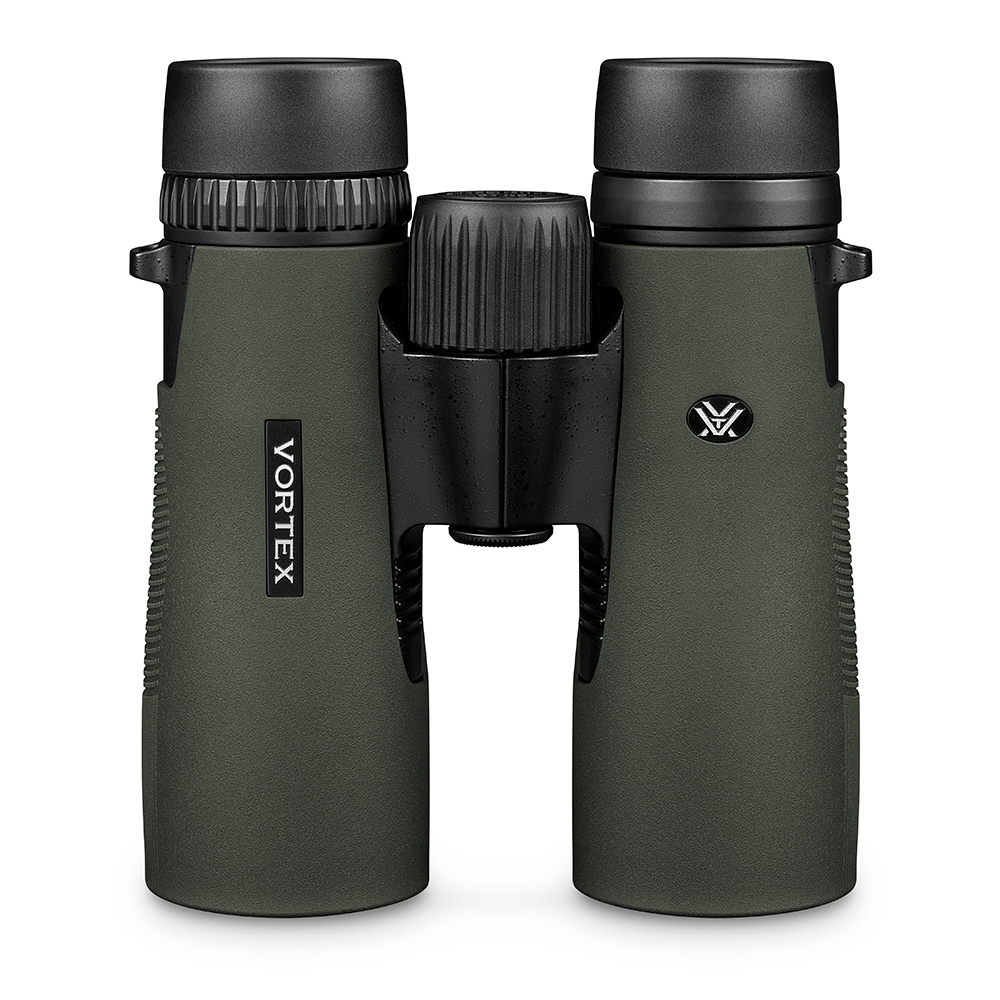
Vortex Diamondback HD 8x42
Sold on Amazon and direct at vortexoptics.com; the unconditional VIP lifetime warranty is registered to the original purchaser regardless of where you buy.

Celestron Nature DX 8x42
Widely available on Amazon; also sold at outdoor retailers including REI and B&H Photo — check for bundle deals that include a carrying case.

Occer 12x25 Compact Binoculars
Amazon exclusive; price often dips below $35 during sales events — set a price alert before buying at full price.
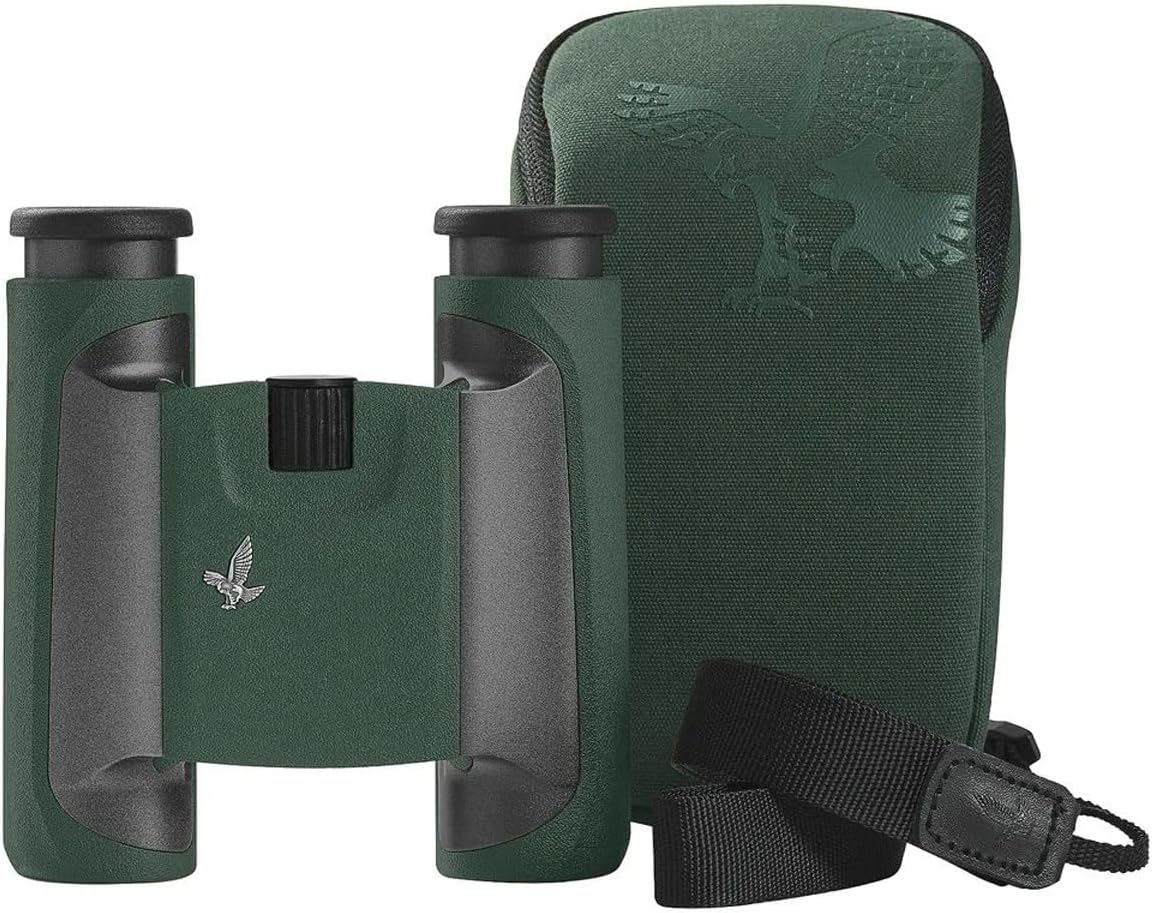
Swarovski CL Pocket 8x25
Available direct at swarovskioptik.com and at authorized optics dealers; buying direct ensures warranty registration and access to Swarovski service centers.
How We Chose — and What the Numbers Mean
| Model | Price | Key Strength | Verdict | |---|---|---|---| | Nikon Monarch 7 8x42 | $449–$549 | ED glass, color fidelity | Best for serious birding | | Vortex Diamondback HD 8x42 | $199–$249 | VIP lifetime warranty | Best mid-range buy | | Celestron Nature DX 8x42 | $129–$159 | Field of view, waterproof | Best budget full-size | | Occer 12x25 Compact | $29–$49 | 265g pocket size | Best for casual travel | | Swarovski CL Pocket 8x25 | $949–$1,199 | Edge-to-edge Austrian glass | Best luxury compact |
A few things matter more than magnification number alone. Exit pupil — the objective lens diameter divided by magnification — tells you how bright the image will be in low light. An 8x42 gives a 5.25mm exit pupil, which handles dawn and dusk comfortably. A 12x25 gives only 2.1mm; at that level, your pupil captures much less light, so images darken fast after sunset.
Eye relief above 15mm is non-negotiable if you wear glasses. The field of view number (feet at 1,000 yards) determines how easily you can track a moving bird or scan a landscape. Higher magnification sounds appealing until hand-shake turns every image into a blur — at 12x without a tripod, atmospheric haze amplifies shake noticeably.
Nikon Monarch 7 8x42 — Best for Serious Birding
The Monarch 7's ED (extra-low dispersion) glass is the single biggest reason to spend the extra money over a mid-range pair. Chromatic aberration — that purple fringe around high-contrast edges like a white bird against a blue sky — is almost invisible here. I pointed it at a toucan in Tortuguero at 7:02 a.m., with the sun still low, and the color separation was clean enough to distinguish the bill's orange-red gradient without squinting.
Nikon's dielectric multilayer prism coating transmits 99.9% of light versus 87–90% for standard silver coatings. That difference is real in practice: the Monarch 7 image looks noticeably brighter than the Celestron at the same time of day. The turn-and-slide eyecups hold their position reliably — a detail that matters when you're handing the binoculars to someone with a different interpupillary distance ten times a day.
At 580g, the Monarch 7 is not a lightweight option. After four hours on a birding trail it pulls noticeably on a thin neck strap, so budget for a harness-style strap. The 21.3mm eye relief is generous for glasses wearers. At $449–$549, it costs about twice the Vortex; whether that premium is justified depends entirely on how seriously you take image quality over value.
Vortex Diamondback HD 8x42 — Best Mid-Range Value
Vortex's VIP warranty is genuinely unconditional: they will repair or replace the Diamondback HD if you drop it, crush it, or dunk it in a lake — no questions, no receipt required, no shipping charge. I've used the warranty twice on other Vortex products and both times the turnaround was under two weeks. For a travel binocular that will be jostled across checked luggage and coastal hikes, that policy changes the risk calculation dramatically.
The HD glass is a step below Nikon's ED glass but a clear step above standard glass. Phase-corrected BAK-4 prisms and Vortex's XR anti-reflection coating produce a bright, reasonably sharp image. The 341ft/1000yd field of view is slightly narrower than the Monarch 7 (342ft) but wider than many competitors at this price. At 510g it's 70g lighter than the Monarch 7 — a difference you feel by hour three.
The twist-up eyecups have two click positions and the intermediate position doesn't lock, which can be annoying if you're constantly adjusting for glasses-on versus glasses-off. Focus wheel travel is smooth but slightly slower than the Nikon. At $199–$249, the Diamondback HD sits in the sweet spot where performance improvements over budget models become obvious while the price stays rational for occasional travelers.
Celestron Nature DX 8x42 — Best Budget Full-Size
The Nature DX is the best argument that you don't have to spend over $200 to get a capable travel binocular. At $129–$159, it uses BAK-4 prisms (the same prism glass type as more expensive models) and multi-coated rather than fully multi-coated optics. The practical difference is a slightly dimmer image in low light, but in full daylight at a nature reserve or safari park the gap versus the Vortex is not dramatic enough to ruin a trip.
The 393ft/1000yd field of view is the widest of any 8x42 in this comparison — useful for scanning open ground quickly. Nitrogen purging and an O-ring seal mean it handles heavy rain and condensation without fogging internally. I used it in Iceland fog and light rain for three consecutive days with no issues. The 652g weight is the heaviest here, and the rubber armor on the barrel feels slightly hollow compared to the Nikon or Vortex.
Celestron's focus knob is stiff at first and loosens over a week of use. The provided strap is narrow and uncomfortable for extended carries. Swap it immediately — a $15 padded strap makes a real difference. For a family trip, a camping weekend, or a first serious binocular purchase, the Nature DX is extremely hard to beat on value.
Occer 12x25 Compact — Best for Casual Travel and Concerts
At 265g and fitting easily in a jacket pocket, the Occer changes the calculus on whether to bring binoculars at all. Most travelers leave binoculars at home because they're too bulky; this one has no excuse not to come along. At $29–$49, it also costs less than a single museum entry fee in most European cities.
The 12x magnification looks impressive on paper, but there's a tradeoff. The 25mm objective lens produces a 2.1mm exit pupil, meaning low-light performance is poor. At a floodlit football stadium or an outdoor concert it's fine; in a dimly lit forest at dusk the image gets murky fast. The 293ft/1000yd field of view is the narrowest in this group, and 12x hand-shake is more visible than 8x — I recommend bracing against a railing or wall when scanning distant details.
The Occer has no waterproofing. Caught in Japanese rain without a bag one afternoon, I dried it carefully and it survived, but I wouldn't push that luck. The focus wheel is slightly sticky in cold weather. For its intended use — concerts, sports matches, cathedral towers, whale-watching boat tours — it punches well above its price. Just don't ask it to be a serious birding optic.
Swarovski CL Pocket 8x25 — Best Luxury Compact
Swarovski's CL Pocket is the answer to a specific question: can a compact binocular produce image quality that rivals a full-size premium pair? At 315g and 10.7cm folded, it slips into a coat pocket and passes through airport security without causing a second look. The SWAROVISION field-flattener lens technology eliminates the curved distortion at image edges that plagues most compact binoculars — the entire frame looks like the center.
Edge-to-edge sharpness sounds like audiophile-level marketing until you've actually used it in the field. I trained the CL Pocket on a woodland edge in Hokkaido at minus 3°C and the crispness from center to corner was genuinely startling for a 25mm objective. The 399ft/1000yd field of view beats even the Celestron's full-size 8x42 for scanning width. Color rendition is neutral and accurate — reds look like reds, not the slightly warm tint common on cheaper glass.
At $949–$1,199 this is an investment, not an impulse buy. The included STAY-ON-CASE is a clever slip-on design that stays attached while you're using the binoculars, protecting the body without requiring you to remove the case first. Eye relief at 15mm is just adequate for glasses wearers — those with high prescriptions may find the field of view restricted. A scratched lens on a $1,000 binocular is an expensive regret, so the included case should be treated as mandatory, not optional.
