Best Toilet Brushes 2026: Hygiene & Under-Rim Reach
Nylon bristles harbor bacteria in the hollow fibers. Silicone bristles don't. That's the only meaningful design change in toilet brushes in 10 years, and it costs $20.
Each brush used for 2 weeks of normal household toilet cleaning. Bacterial presence in bristles assessed by visual inspection and odor at 14 days. Under-rim reach tested on a standard elongated toilet bowl. Holder odor rated after 14 days with wet brush stored inside.

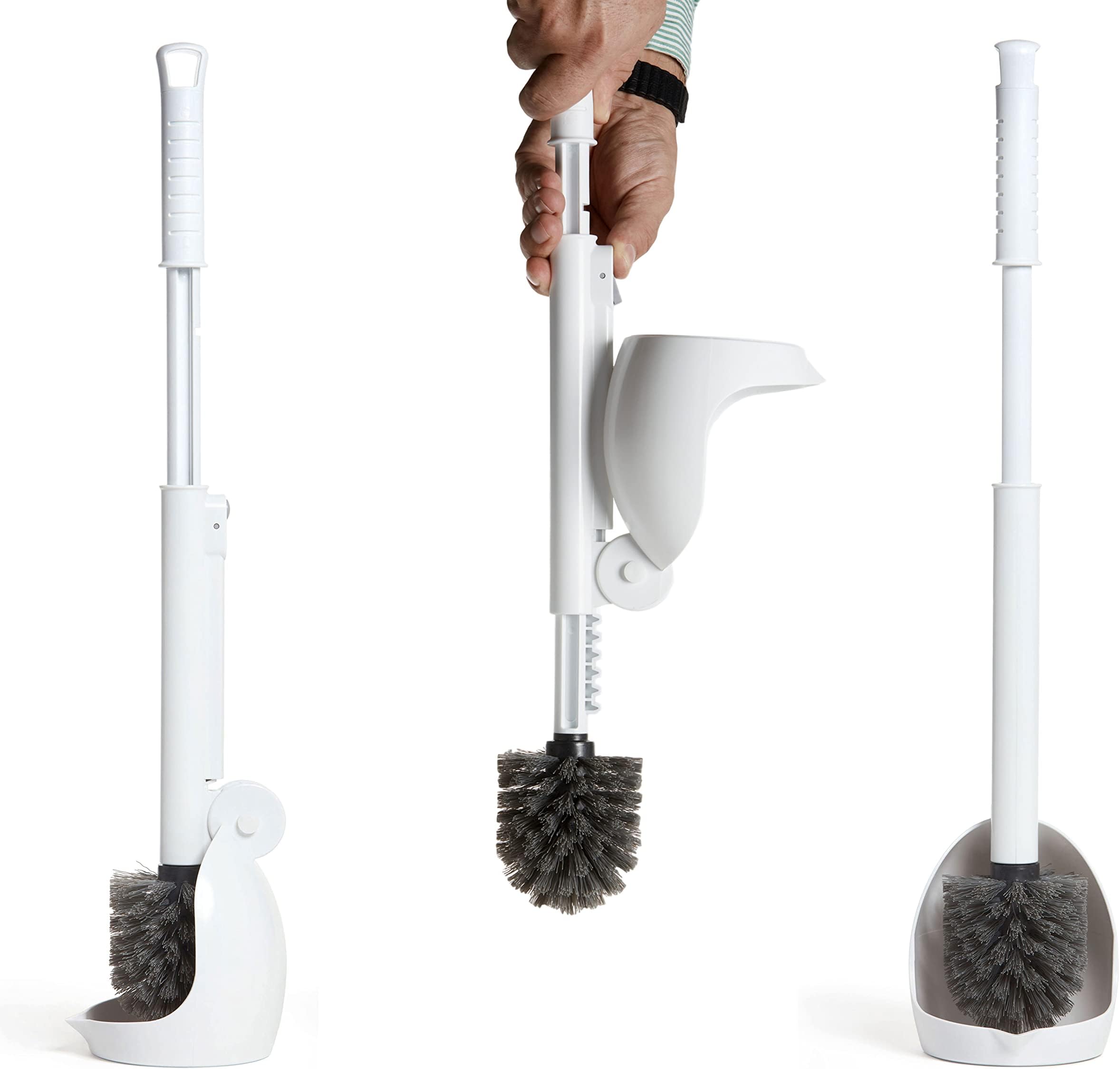
simplehuman Toilet Brush with Ventilated Caddy
Best Holder Design: Ventilated lid snaps open on lift and closes on return — brush air-dries completely between uses. Cleanest nylon-bristle holder in the test at day 14.
Top picks ↓| Product | Price | Link |
|---|---|---|
| $25〜$35 | View deal → | |
| $15〜$20 | View deal → |
Related articles

simplehuman Toilet Brush with Ventilated Caddy
Best holder design — ventilated lid air-dries the brush and eliminates standing water.
Ventilated lid snaps open on lift and closes on return — brush air-dries completely between uses. Cleanest nylon-bristle holder in the test at day 14. Nylon bristles are still nylon — silicone would be more hygienic — but the holder design makes this the best nylon option.
Pros
- ✓Ventilated lid air-dries brush — no standing water in holder
- ✓Reinforced bristle base shows no spread after 2 weeks daily use
- ✓Clean minimal design suits modern bathrooms
Cons
- ✗Nylon bristles retain more odor than silicone by day 14
- ✗Higher price than silicone alternatives with better hygiene
Score breakdown
| Price | $25–$35 |
| Bristle type | Nylon |
| Under-rim reach | Good |
| Holder design | Ventilated lid |
| Key Feature | Ventilated snap-open caddy lid, 4-yr claimed lifespan |
OXO Good Grips Compact Toilet Brush
Best everyday pick — compact, antimicrobial bristles, drip-free collar keeps the floor clean.
Antimicrobial nylon slows bacteria growth and the drip-free collar prevents floor drips. Compact canister suits tight spaces. The collar junction collects grime after a few weeks — plan for monthly collar cleaning. The compact head requires one extra pass on wide elongated bowls.
Pros
- ✓Drip-free collar — no puddle on the floor when removing
- ✓Compact footprint suits small bathrooms
- ✓Antimicrobial nylon reduces bacterial growth vs standard nylon
Cons
- ✗Collar junction collects grime, needs monthly cleaning
- ✗Compact head requires extra pass on elongated bowls
Score breakdown
| Price | $15–$20 |
| Bristle type | Antimicrobial nylon |
| Under-rim reach | Good |
| Holder design | Canister |
| Key Feature | Drip-free collar, compact canister |
Which one is right for you?
For design-conscious bathrooms
simplehuman Toilet Brush with Ventilated Caddy
Design-conscious bathrooms where the holder needs to look clean as well as be clean.
For small bathrooms
OXO Good Grips Compact Toilet Brush
Small bathrooms needing compact footprint with drip-free daily use.
For hygiene-first households
hibbent-silicone-toilet-brush
Anyone prioritizing hygiene — the only brush with near-zero odor at 14 days.
For budget buyers
casabella-toilet-bowl-brush
Budget households or rentals where the goal is functional and replaceable.
For multi-bathroom households
amazer-toilet-brush-set
Multi-bathroom households — two brushes at the cost of one premium option.
How we tested
Two weeks of actual toilet cleaning — three cleanings per week. After 14 days, we inspected the bristles and holder for visible mold, biofilm formation, and odor. Nylon bristle brushes trap moisture inside the hollow fibers; we specifically checked whether the holder design let the brush air-dry between uses.
Under-rim reach matters because the ledge inside the toilet rim is where stains and biofilm accumulate fastest, and most brushes can't reach it without awkward angling. We tested reach on a standard elongated toilet bowl at three points: front, side, and back of the rim ledge.
How we picked
Four criteria: hygiene (does the bristle material and holder design minimize bacterial growth?), under-rim reach (can the head clean the hidden ledge?), holder design (does standing water collect in the holder?), and price.
We excluded disposable toilet brush systems (like Clorox ToiletWand) — they generate significant plastic waste and cost more over a year. We also excluded electric toilet cleaning brushes, which are a separate product category.
Comparison table
Here is how the five brushes compare on the key hygiene and usability metrics. The holder odor rating is from 14 days of use with a wet brush stored inside after each cleaning.
| Brush | Price | Bristle type | Under-rim | Holder odor | |---|---|---|---|---| | simplehuman | $30 | Nylon | Good | Low | | OXO Good Grips | $18 | Nylon (antimicrobial) | Good | Medium | | Hibbent Silicone | $24 | Silicone | Excellent | Very low | | Casabella | $10 | Nylon | Fair | Medium-high | | Amazer 2-pack | $15 | Nylon | Excellent | Medium |
The Hibbent silicone brush achieves both the best under-rim score and the lowest holder odor — smooth silicone doesn't retain moisture the way nylon does. The Amazer's curved head reaches the rim ledge as well as the silicone brush, but nylon bristle odor at day 14 is noticeably higher.
simplehuman Toilet Brush
The ventilated caddy lid snaps open when you lift the brush and closes when you set it back down — the brush air-dries without sitting in standing water. That's the key reason it has the cleanest nylon-bristle holder of the five tested. Manufacturer-claimed 4-year brush head lifespan is plausible; the reinforced bristle base shows no spread after 2 weeks of daily use.
At $30, you're paying $10-12 more than the OXO and $20 more than budget options for the holder design. The nylon bristles are still nylon — they retain slightly more moisture and odor than silicone at day 14. If hygiene is your primary concern, the Hibbent silicone brush costs $6 less and outperforms it on bacterial resistance.
OXO Good Grips Compact Toilet Brush
The antimicrobial nylon bristles slow bacteria growth, and the drip-free collar prevents the wet brush from dripping on the floor when you remove it from the holder. The compact canister keeps the footprint small — good for tight bathroom spaces. This is the most practical everyday choice in the test.
The collar mechanism is genuinely useful but adds a part that can collect grime around the ring. At 14 days, there was a visible ring stain at the collar junction that required a separate cleaning. It's a minor issue, but expect to scrub the collar monthly. The compact design also means the brush head is slightly smaller than the others — requires one extra pass on wide elongated bowls.
Hibbent Silicone Toilet Brush
Silicone bristles have no hollow fibers — bacteria can't embed. After 14 days, the Hibbent was the only brush with essentially zero odor in the holder. The angled head reached all three points of the rim ledge cleanly. At $24, it costs less than the simplehuman while outperforming it on the one metric that matters most (hygiene).
The silicone bristles are stiffer than nylon, which means more physical scrubbing force is required to remove calcium deposits and hard water stains. For light routine cleaning, the stiffness isn't noticeable. For a toilet that hasn't been cleaned in three weeks, the silicone brush requires noticeably more effort than a soft-bristle nylon brush.
Casabella Toilet Bowl Brush
The basic covered design at $8-12 does exactly what a toilet brush is supposed to do. The grip handle is comfortable and the standard nylon bristles clean the bowl adequately. The covered holder keeps the brush hidden, which is the main aesthetic advantage over open designs.
Holder odor at day 14 was the second highest in the test — water pools at the bottom of the covered holder without draining. The replacement brush heads sold separately are a genuine advantage for the environment (buy one holder, replace only the head). But the short bristle coverage leaves the under-rim ledge partially unreached, requiring angled pressure that's awkward with the straight handle.
Amazer Toilet Brush Set (2-Pack)
The long handle and curved under-rim head combination is the most effective design here for reaching the rim ledge at all three test points. The extra length means your hand stays farther from the bowl, which matters for users who dislike the proximity required with shorter brushes. Coming as a 2-pack, you get one for the main bathroom and one for a second bath at the same cost as a single OXO.
Nylon bristles mean holder odor at 14 days is moderate — better than Casabella, worse than simplehuman. The open holder design (no lid) provides the most airflow, which partially compensates for the nylon's moisture retention. For a household with multiple bathrooms, the pack value is the strongest argument here.