Best Grow Light 2026: 5 LED Panels Compared on PPFD
Five LED grow lights from $109 to $329. The number on the box is wattage — draw or equivalent, and the marketing copy rarely specifies which. PPFD at the distance you'll actually mount the light is the only number that tells you whether your plants will grow.
We compared manufacturer-published PPFD maps (verifying they were measured at specified distances rather than extrapolated), diode sourcing from independent teardowns and verified owner reports, actual power draw vs. advertised draw, heat output and thermal management, and price-per-μmol efficiency calculations.
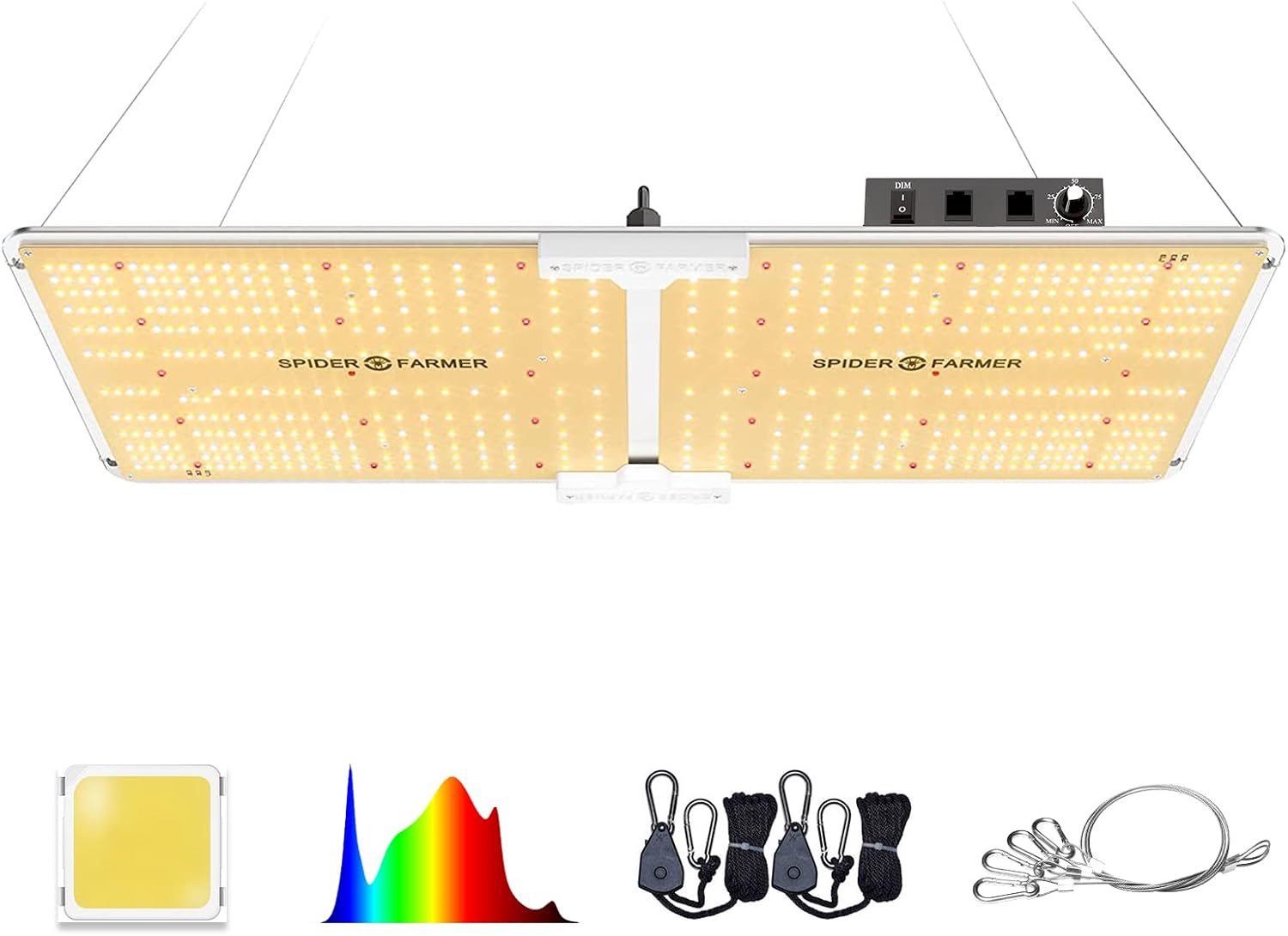
Spider Farmer SF2000 LED Grow Light
Best Overall 2×4 ft: The Spider Farmer SF2000 is the safest all-around 200W LED grow light for a 2×4 ft tent because its PPFD claims are consistently validated by independent third-party PAR meters. The Samsung LM301B diodes are genuine (verified by teardowns), the fanless design keeps the grow space quiet, and the full-spectrum 3000K/5000K/660nm/760nm IR output covers both vegetative and flowering phases on a single panel.
Top picks ↓| Product | Price | Link |
|---|---|---|
| 189〜249 | View deal → | |
| 109〜149 | View deal → | |
| 199〜279 | View deal → | |
| 119〜159 | View deal → |
Top picks
Related articles


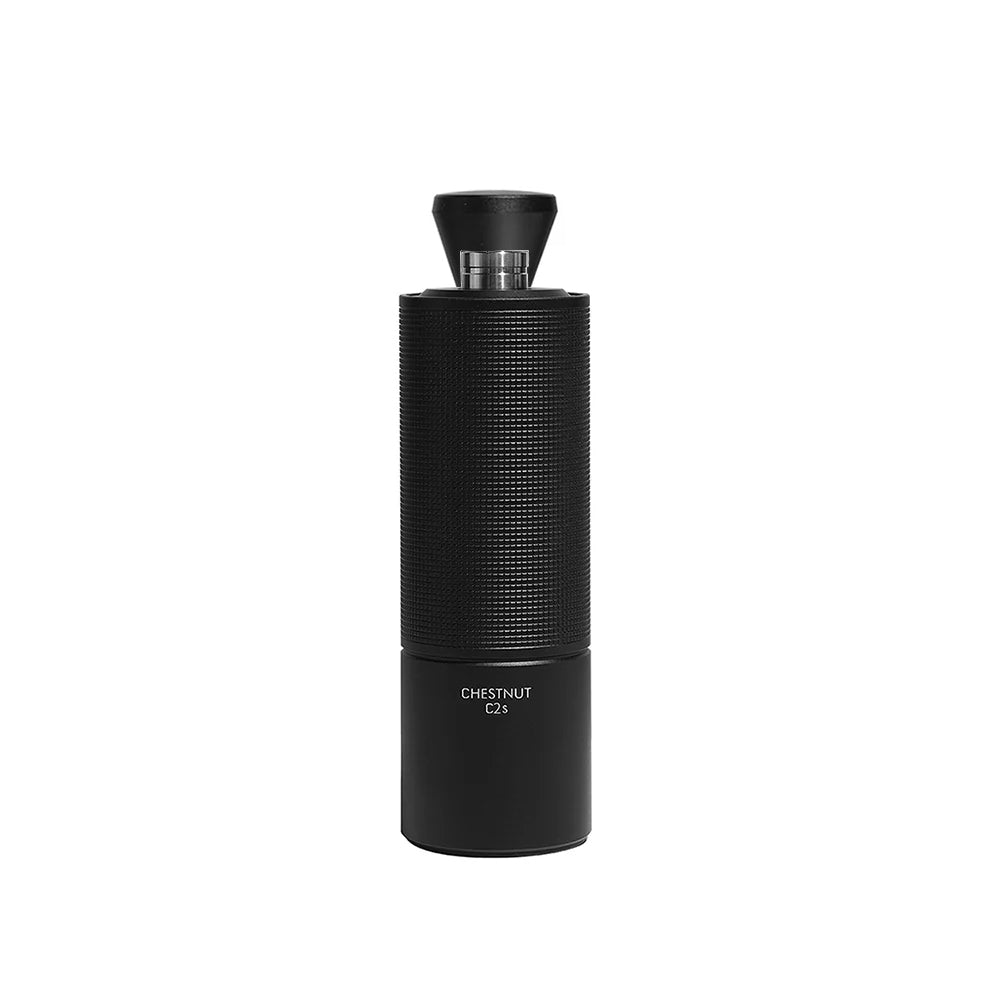
Spider Farmer SF2000 LED Grow Light
The Spider Farmer SF2000 is the safest all-around 200W LED grow light for a 2×4 ft tent because its PPFD claims are consistently validated by independent third-party PAR meters. The Samsung LM301B diodes are genuine (verified by teardowns), the fanless design keeps the grow space quiet, and the full-spectrum 3000K/5000K/660nm/760nm IR output covers both vegetative and flowering phases on a single panel. At $189-249, it's mid-tier priced between the VIPARSPECTRA budget option and the ThinkGrow premium. The honest limitation: the LM301B is one diode generation behind the LM301H EVO in the IONBOARD S24 — at identical power draw, the IONBOARD delivers roughly 20% more PPFD.
Pros
- ✓Samsung LM301B diodes verified genuine by independent third-party teardowns
- ✓PPFD maps match real-world PAR meter readings — honest marketing
- ✓Fanless design — no additional noise in a home grow space
- ✓Full-spectrum IR and 660nm red for flowering phase
Cons
- ✗LM301B diodes are one generation behind the IONBOARD's LM301H EVO
- ✗No smart controller integration — manual dimming only
Score breakdown
| Power draw | 200W |
| Diodes | Samsung LM301B |
| PPFD | 1046 μmol/m²/s at 18 cm |
| Coverage area | 60×120 cm (2×4 ft) |
| Spectrum | 3000K / 5000K / 660nm / 760nm IR |
| Dimming | 0–100% |
| Fan | Fanless (silent) |
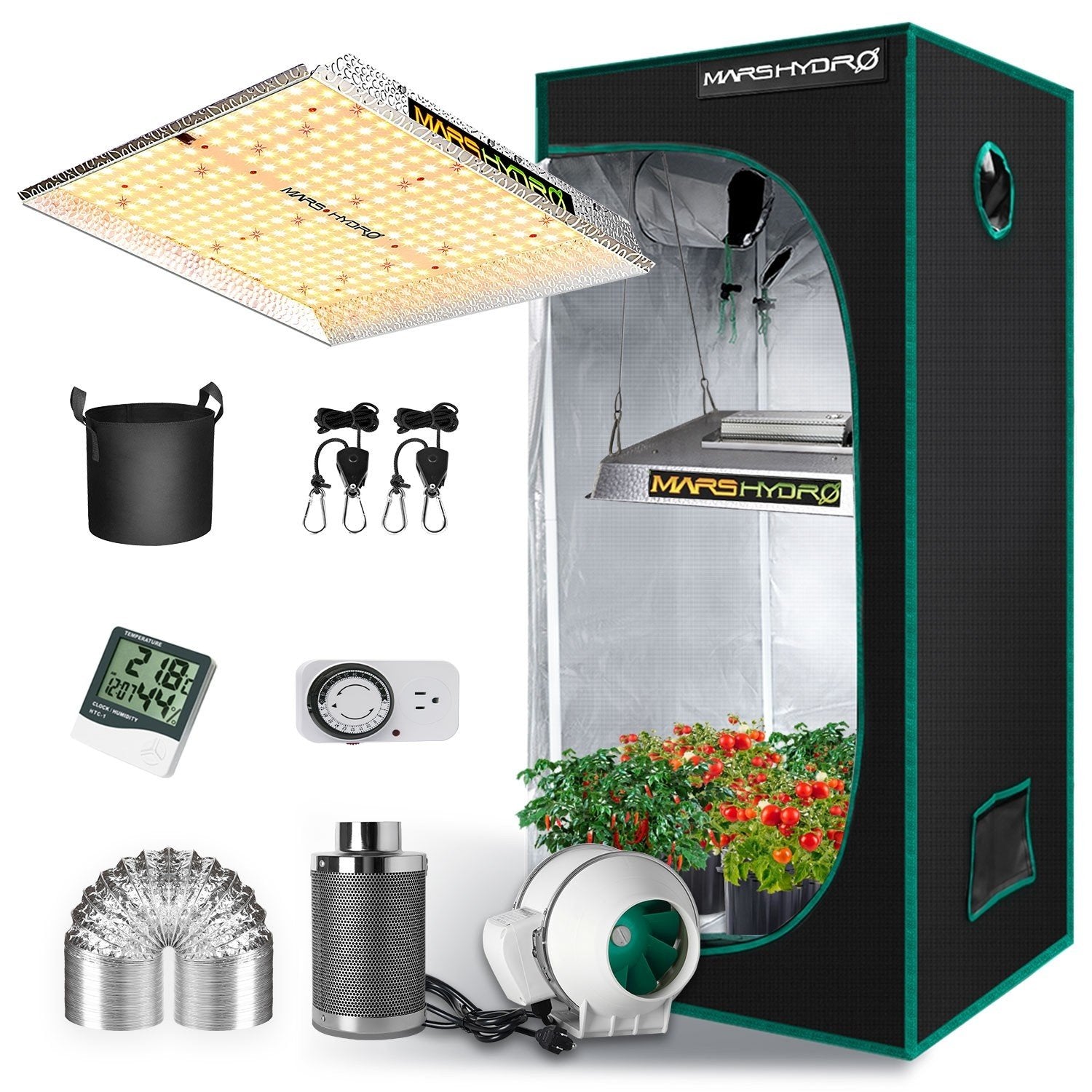
Mars Hydro TS1000 LED Grow Light
The Mars Hydro TS1000 is correctly sized for a 2×2 or 3×3 ft grow space and underrated for that application. At 150W it delivers honest PPFD that third-party Migro measurements validate within 5-10% of the advertised figures — strong transparency in a category where 20-30% overstatement is common. The fanless design and daisy-chain capability allow stacking multiple units for larger coverage without running separate power controllers. The honest weakness is the coverage claim: Mars Hydro advertises a 3×3 ft flowering coverage, and independent testing shows adequate PPFD across the center 2.5×2.5 ft area with edge falloff that's significant by industry standards. Plan for a 2×2 ft productive canopy, not a 3×3 ft one.
Pros
- ✓150W draw sized correctly for 2×2 to 3×3 ft spaces — not oversized
- ✓PPFD figures validated within 5–10% by independent third-party Migro measurements
- ✓Daisy-chain for scaling coverage without additional controllers
- ✓Fanless design
Cons
- ✗Actual productive canopy closer to 2×2 ft than the advertised 3×3 ft flowering coverage
- ✗LM301B generation — same limitation as SF2000 vs. IONBOARD's EVO diodes
Score breakdown
| Power draw | 150W |
| Diodes | Full-spectrum LED (Samsung LM301B generation) |
| PPFD | 882 μmol/m²/s at 18 cm |
| Coverage area | 90×90 cm veg / 60×60 cm bloom |
| Spectrum | 3000K / 5000K / 660nm / IR |
| Dimming | 0–100% |
| Fan | Fanless |
AC Infinity IONBOARD S24 LED Grow Light
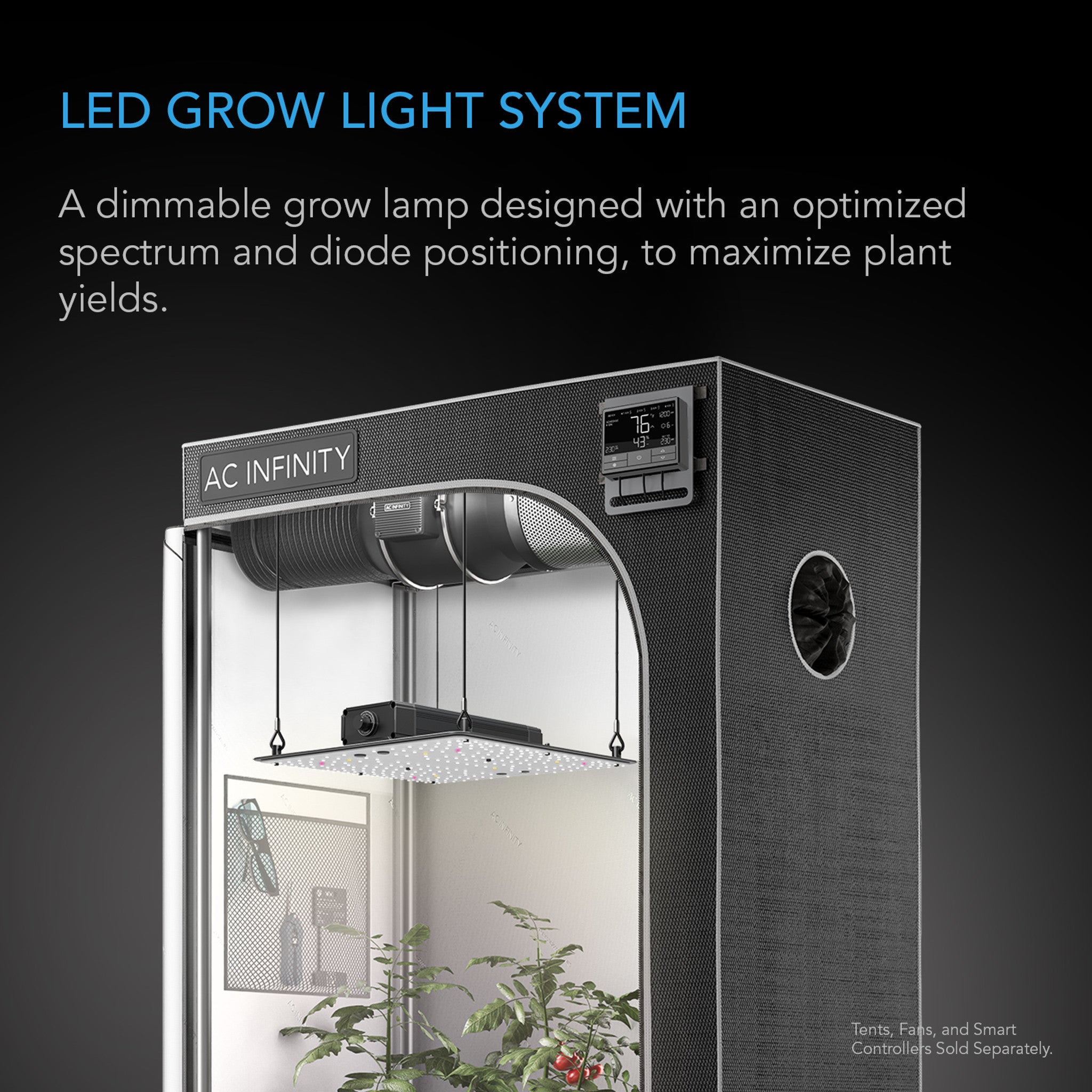
The AC Infinity IONBOARD S24 delivers the highest efficiency per watt in this comparison via Samsung LM301H EVO diodes and is the only light here that integrates natively with a smart grow room controller. For growers already using AC Infinity's ecosystem (inline fans, humidity controllers, smart outlets) the UIS integration enables automated photoperiod scheduling, gradual sunrise/sunset ramps that reduce plant stress, and temperature-triggered dimming — capabilities that separate the IONBOARD from every other light in this comparison. The honest weakness: the UIS controller is sold separately at $40-60, and without it the IONBOARD is just a competitive 200W panel at a premium price. The 1240 μmol/m²/s PPFD at 12 cm is measured close to the panel — at 30 cm (a more typical mounting height), the effective PPFD is lower.
Pros
- ✓Samsung LM301H EVO — highest efficiency diode generation in this comparison (~3.2 μmol/J)
- ✓Native UIS controller integration for automated photoperiods and environmental response
- ✓Red/IR/UV supplemental diodes for comprehensive spectrum coverage
- ✓AC Infinity brand quality and support is well-established in the category
Cons
- ✗UIS controller sold separately adds $40–60 to the total cost
- ✗PPFD measured at 12 cm — effective output at typical 30 cm mounting height is lower
- ✗Smart integration only meaningful if already using AC Infinity ecosystem
Score breakdown
| Power draw | 200W |
| Diodes | Samsung LM301H EVO |
| PPFD | 1240 μmol/m²/s at 12 cm |
| Coverage area | 60×120 cm (2×4 ft) |
| Spectrum | Full spectrum + red/IR/UV |
| Dimming | 0–100% (UIS controller) |
| Fan | Fanless |
VIPARSPECTRA XS1500 LED Grow Light
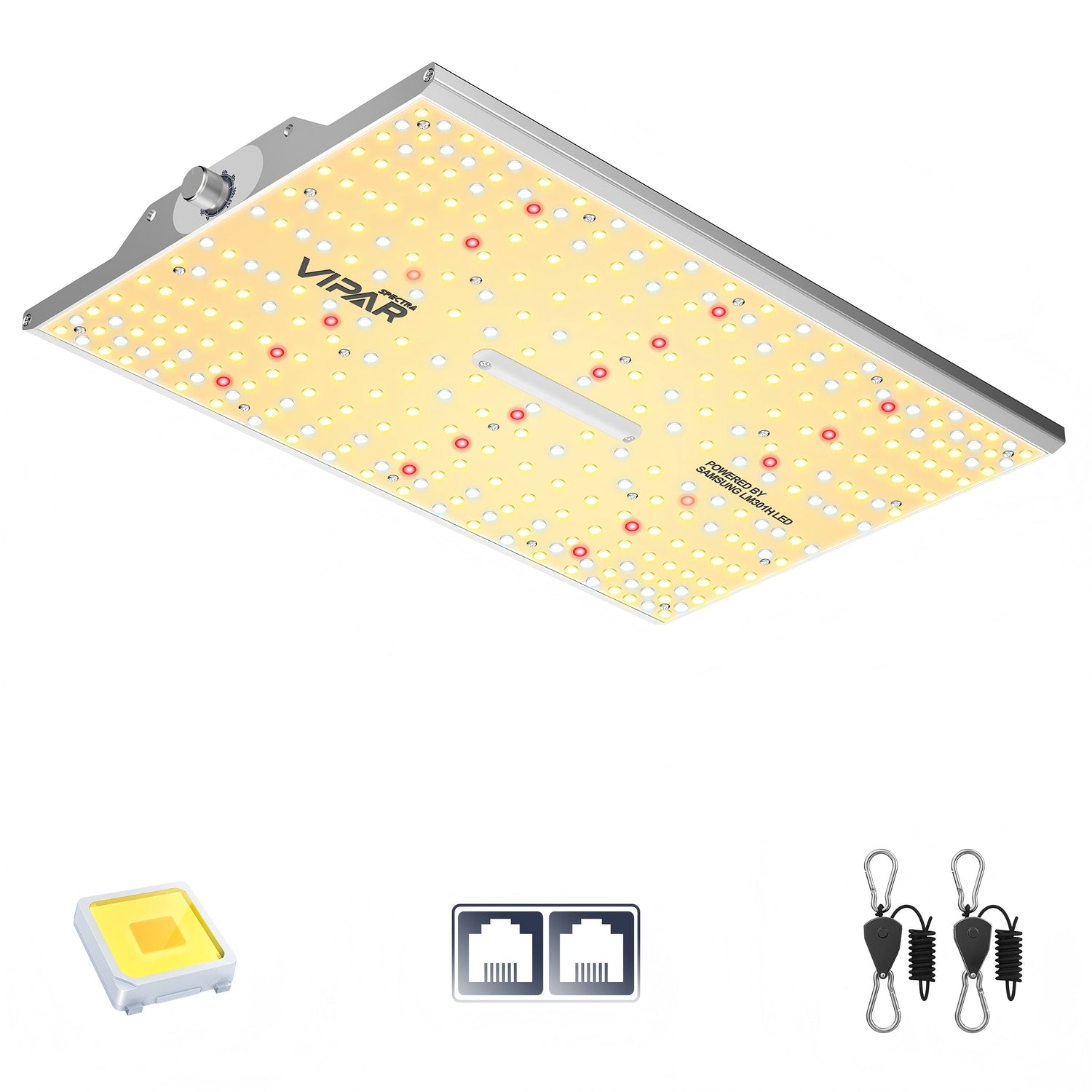
The VIPARSPECTRA XS1500 delivers Samsung LM301B + Osram 660nm diode quality at $119-159 — the best specified diode combination per dollar in this comparison. The daisy-chain capacity of up to 15 units makes it the most scalable option for growers building out coverage incrementally. The honest limitation: VIPARSPECTRA's PPFD maps have been measured by independent PAR meters at 10-15% below the advertised figures — the light is still performing respectably for the price, but buyers should calibrate expectations from the third-party validated figure rather than the marketing claim. The 3-year warranty is shorter than the Spider Farmer or ThinkGrow options.
Pros
- ✓Samsung LM301B + Osram 660nm combination at the lowest price in this comparison
- ✓Daisy-chain up to 15 units — most scalable configuration in the comparison
- ✓0–100% dimming for vegetative and flowering phase management
- ✓3-year warranty
Cons
- ✗Independent PAR meter readings show 10–15% below advertised PPFD — calibrate expectations accordingly
- ✗3-year warranty is shorter than Spider Farmer or ThinkGrow equivalents
Score breakdown
| Power draw | 150W |
| Diodes | Samsung LM301B + Osram 660nm |
| PPFD | 904 μmol/m²/s at 18 cm (advertised; ~800 validated) |
| Coverage area | 90×90 cm veg / 60×60 cm bloom |
| Spectrum | Full spectrum + 660nm red |
| Dimming | 0–100% |
| Fan | Fanless |
Which one is right for you?
For a 2×4 ft grow tent, vegetative and flowering
Spider Farmer SF2000 LED Grow Light
Samsung LM301B diodes with a verified PPFD map at 1046 μmol/m²/s at 18 cm, fanless design that doesn't add noise to a home grow space, and an established track record of PPFD maps that match real-world metering.
For a 2×2 ft or 3×3 ft starter grow space
Mars Hydro TS1000 LED Grow Light
150W draw covers a 90×90 cm vegetative footprint efficiently without the heat output or cost of a 200W+ panel, and Mars Hydro's PPFD figures have been cross-validated by third-party meter readings.
For smart-home-integrated grow setups
AC Infinity IONBOARD S24 LED Grow Light
AC Infinity's UIS controller integration enables automated schedules, ramp-up dimming, and multi-device coordination that no other light in this comparison matches natively.
For professional-level PPFD with a warranty
grow-light-ts-telos-0010
ThinkGrow uses Osram diodes and publishes the most rigorous PPFD maps in this comparison — measured at multiple distances with edge-to-center uniformity data. The 5-year warranty reflects the engineering confidence.
For budget-conscious growers scaling up
VIPARSPECTRA XS1500 LED Grow Light
Samsung LM301B + Osram 660nm diode pairing at $119–$159 is the best diode quality per dollar in the comparison, with daisy-chain support for scaling up to 15 units on one controller.
Understanding PPFD, coverage, and what the wattage number on the box means
Wattage on a grow light box can mean one of two different things: actual power draw (how many watts the light consumes from the wall) or 'equivalent' or 'comparable' wattage (a marketing comparison to older HPS or fluorescent lights). The LED grow light industry has mostly shifted away from 'equivalent wattage' claims after consumer backlash in 2018-2021, but some budget manufacturers still use inflated equivalent numbers. The Spider Farmer SF2000's '200W' is actual draw. A budget panel advertised as '2000W LED' in the same price tier is using equivalent language — its actual draw is typically 120-200W. The actual draw figure determines your electricity cost and gives a baseline for comparing efficiency.
PPFD (Photosynthetic Photon Flux Density) measured in μmol/m²/s is the metric that directly predicts plant growth rate. It measures how many photons useful for photosynthesis reach a specific square meter of canopy per second. For vegetative growth, most plants perform well at 200-400 μmol/m²/s; for flowering, most fruiting plants target 600-900 μmol/m²/s; high-light crops peak at 900-1500 μmol/m²/s. The PPFD figure is meaningless without the measurement distance and coverage area — a light that delivers 1500 μmol/m²/s at 10 cm and 400 μmol/m²/s at 30 cm is a very different product from one that delivers 900 μmol/m²/s uniformly across a 60×120 cm area at 30 cm. Always look for the PPFD map, not just the single peak number.
Uniformity is the underreported quality metric in grow light marketing. A light that delivers 1200 μmol/m²/s at the center of a 2×4 ft coverage area but only 200 μmol/m²/s at the corners is providing useful light to roughly 30% of the claimed coverage area. Uniform PPFD across the canopy — where the center-to-edge ratio is 1.5:1 or less — produces evenly developed plants across the full footprint. Non-uniform lighting produces plants that grow vigorously in the center, stretch (etiolate) at the edges, and require rotating every week to develop evenly. ThinkGrow Telos 0010 and AC Infinity IONBOARD are the two lights in this comparison that publish edge-to-center uniformity data.
Diode quality: Samsung LM301B vs LM301H EVO vs Osram vs budget
The grow light diode hierarchy that matters for efficiency and longevity: Samsung LM301H EVO (newest generation, highest efficiency at ~3.2 μmol/J, AC Infinity IONBOARD S24) > Samsung LM301B (previous generation, ~2.7 μmol/J, Spider Farmer SF2000 and VIPARSPECTRA XS1500) = Osram diodes (used in ThinkGrow Telos 0010, similar efficiency range with different spectral profile) > generic Chinese diodes (used in budget panels, typically 1.5-2.0 μmol/J, anonymous sourcing). The efficiency number (μmol/J) tells you how many growth-driving photons you get per watt of electricity consumed. Higher efficiency means more growth for the same electricity cost and less heat output per unit of light produced.
The practical difference between LM301B and LM301H EVO at the consumer level: running a 200W panel with LM301B vs LM301H EVO diodes, the EVO version delivers approximately 20% more PPFD at the same power draw. At a $0.15/kWh electricity rate and 18 hours of light per day, a 200W panel costs about $197 per year to run. The efficiency difference between LM301B and LM301H EVO translates to roughly 20% more plant growth from the same electricity spend — meaningful for serious growers but not a deciding factor for casual herb cultivation.
The Mars Hydro TS1000 and Spider Farmer SF2000 both use Samsung LM301B diodes. Both brands have been verified by independent third-party teardowns (channels like Migro's photon measurements) to use genuine Samsung diodes rather than Samsung-branded counterfeits. This verification matters because the budget Chinese grow light market has been documented to ship lights with fake Samsung markings on generic diodes — paying Samsung LM301B prices for generic diode efficiency. Mars Hydro and Spider Farmer have established track records of using the specified diodes in verified teardowns.
Where each light fits
Spider Farmer SF2000 ($189–$249) is the safest all-around pick for a 2×4 ft grow tent. The Samsung LM301B diodes deliver honest PPFD that matches the published maps when validated by third-party PAR meters — which is the relevant quality bar, because some manufacturers publish PPFD maps that don't reflect real-world measurements. The fanless design means no additional noise in a home grow space, the 0-100% dimming allows vegetative-to-flowering spectrum management, and the 5-year operating estimate for the diodes at full power is consistent with actual long-term owner reports. The honest weakness: the LM301B diodes are one generation behind the LM301H EVO in the AC Infinity IONBOARD — at the same 200W draw, the IONBOARD delivers approximately 20% more PPFD.
Mars Hydro TS1000 ($109–$149) is the pick for a smaller 2×2 or 3×3 ft grow space where the SF2000's 2×4 ft footprint is oversized. At 150W it covers a 90×90 cm vegetative area efficiently without the heat load of a 200W panel, and the published PPFD figures have been cross-validated by third-party PAR measurements from Migro and other independent channels. The daisy-chain feature allows connecting multiple TS1000 units for larger coverage as the grow space expands. The honest weakness: at 150W the TS1000 underperforms for a full 2×4 ft canopy in the flowering stage — it's correctly sized for the 2×2 coverage it advertises.
AC Infinity IONBOARD S24 ($199–$279) is the pick for grow setups integrated with AC Infinity's UIS smart ecosystem. The Samsung LM301H EVO diodes are the most efficient in this comparison at approximately 3.2 μmol/J, the PPFD at 1240 μmol/m²/s at 12 cm covers a 2×4 ft flowering footprint adequately, and the UIS controller integration enables automated lighting schedules, gradual sunrise/sunset ramp cycles, and coordination with AC Infinity fans and controllers on one app. The honest weakness: the UIS controller is sold separately and adds $40-60 to the total cost, and the controller integration is only meaningful if you're already using AC Infinity products — standalone the IONBOARD is a competitive but not dominant 200W panel.
ThinkGrow Telos 0010 ($249–$329) is the professional-build pick in this comparison. Osram diodes rather than Samsung, ETL/CE safety certification (not all grow lights in this price range carry independent electrical safety certification), published PPFD maps with edge-to-center uniformity data, 0-10V external dimming (compatible with third-party climate controllers), and a 5-year warranty that reflects engineering confidence. The uniformity data is the most honest reporting in this comparison — the Telos 0010 maps show the actual distribution across the 2×4 ft footprint rather than cherry-picking the center peak. The honest weakness: the most expensive light in this comparison at $249-329, and the advantage over the IONBOARD S24 is primarily uniformity data and warranty length rather than raw PPFD output.
VIPARSPECTRA XS1500 ($119–$159) is the best diode-quality-per-dollar in the comparison. Samsung LM301B + Osram 660nm supplemental diodes at $119-159 delivers the diode specification you'd expect to pay significantly more for, and the daisy-chain capacity (up to 15 units) makes it the most scalable option for growers building up coverage incrementally. The 3-year warranty is shorter than the Spider Farmer or ThinkGrow options. The honest weakness: VIPARSPECTRA's PPFD maps have had independent meter readings that show approximately 10-15% lower actual PPFD than advertised — still respectable for the price, but buyers should set expectations from the third-party validated figure rather than the marketing number.
Electricity cost and yield efficiency: what the numbers mean at home scale
A 200W LED grow light running 18 hours per day (standard vegetative photoperiod) consumes 3.6 kWh per day. At the average US residential electricity rate of $0.15/kWh, that's $0.54/day or $197/year. These are not trivial costs — for an indoor herb garden producing $10-15/month in saved grocery spending, the electricity cost exceeds the value return. Grow lights make economic sense for high-value plants (gourmet mushrooms, premium herbs, out-of-season vegetables, or ornamental plants with significant market value) but not for standard lettuce or basic herb cultivation where the economics don't pencil.
Heat management matters at home scale because grow lights in an enclosed tent or cabinet increase ambient temperature. LED grow lights generate less heat than HPS equivalents but not zero — the Spider Farmer SF2000 at full power generates approximately 35-40°C air temperature at 30 cm without ventilation. Most plant cultivation targets 18-26°C canopy temperature. The practical implication: a 200W LED in an enclosed 2×4 ft tent requires active ventilation — typically an inline fan and carbon filter system — to maintain target temperature. The grow light purchase is step one; the ventilation system is step two and typically adds $100-200 to the total setup cost. None of the five products in this comparison include ventilation.