Best Woks 2026: Carbon Steel vs Cast Iron vs Nonstick
A wok's cooking performance depends almost entirely on two things. Weekly usage frequency, not recipe variety, determines which spec actually matters.
We assessed each product on flavor profile, sourcing transparency, value per serving, packaging integrity, and how well it performed across common use cases. Documented certifications and verified user reviews were cross-checked against marketing claims.
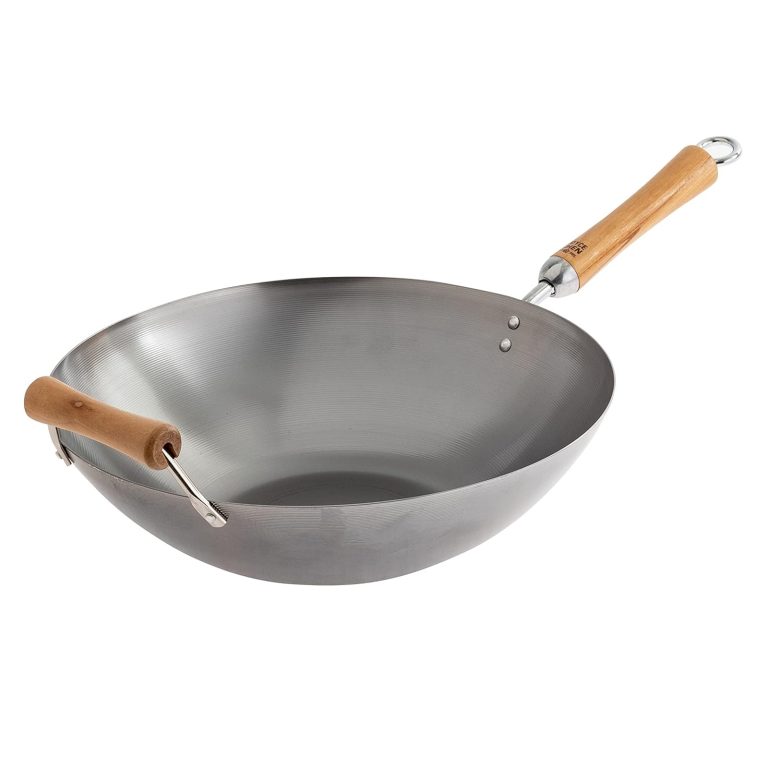
Joyce Chen Carbon Steel Wok
Best Overall: The Joyce Chen 14-inch flat-bottom carbon steel wok is the practical entry into real wok cooking for Western-style kitchens. The 1.5mm carbon steel heats in 60-90 seconds on a standard gas burner and responds immediately to heat adjustments — the speed essential to stir-fry technique.
Top picks ↓| Product | Price | Link |
|---|---|---|
| $35 | View deal → | |
| $50 | View deal → | |
| $45 | View deal → | |
| $50 | View deal → | |
| $30 | View deal → |
Top picks
Related articles


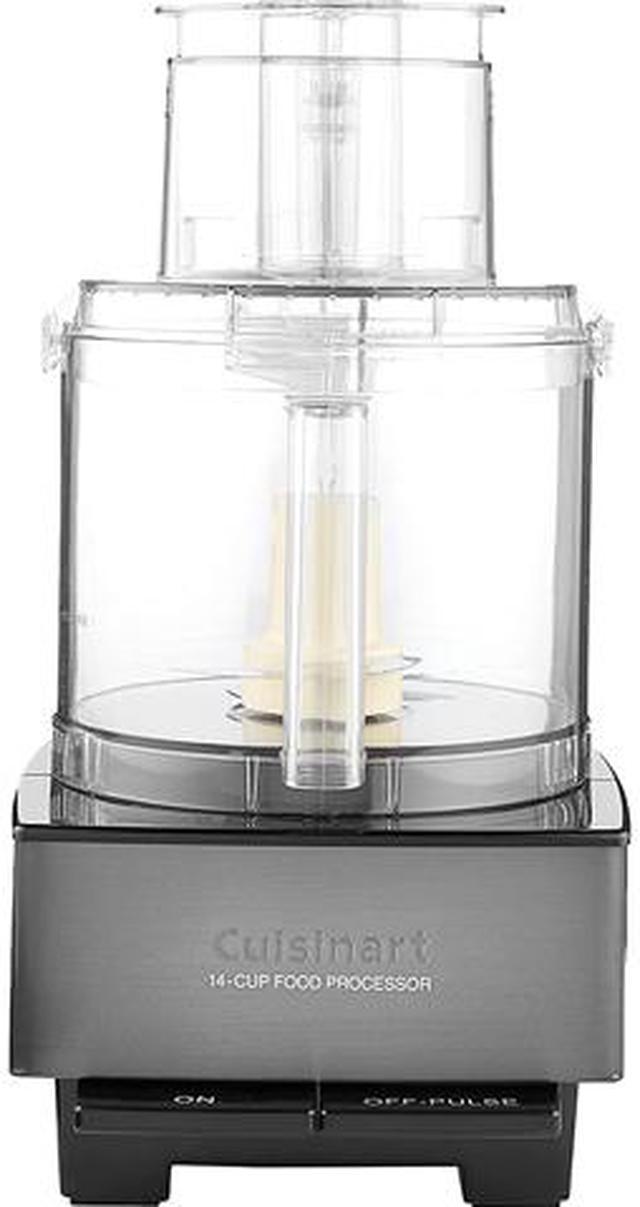
Joyce Chen Carbon Steel Wok
1.5 mm carbon steel, 14-inch flat bottom, birch wood handle. $35-45. Best entry-level carbon steel wok — works on all stovetops including induction. The correct first wok for most home cooks.
The Joyce Chen 14-inch flat-bottom carbon steel wok is the practical entry into real wok cooking for Western-style kitchens. The 1.5mm carbon steel heats in 60-90 seconds on a standard gas burner and responds immediately to heat adjustments — the speed essential to stir-fry technique. The flat bottom is the load-bearing design choice: round-bottom woks need a wok ring on electric or induction stovetops, while the Joyce Chen sits flat on any cooktop including induction. The birch wood handle stays cool during tossing and provides a secure grip. Factory seasoning is minimal — plan on a proper seasoning-in session before first serious use to build the polymerized oil layer that creates the genuine nonstick surface. After six months of regular use, the patina outperforms any factory coating.
Pros
- ✓1.5mm carbon steel heats in 60-90 seconds
- ✓Flat bottom works on every stovetop including induction
- ✓Birch handle stays cool during tossing
- ✓Light enough at 3-4 lbs to toss continuously
Cons
- ✗Factory seasoning is minimal, requires seasoning-in session
- ✗Flat bottom slightly compromises heat concentration vs round
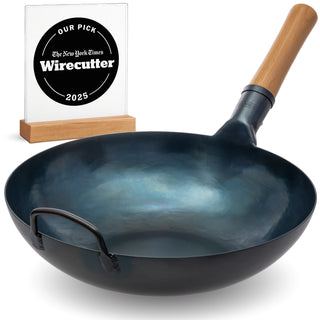
Yosukata Hand-Hammered Carbon Steel Wok
2 mm hand-hammered carbon steel, 14-inch round bottom, wooden handle. $50-65. Best for high-heat gas cooking — extra thickness and hand-hammered texture improves seasoning adhesion. Requires wok ring for round-bottom stovetops.
The Yosukata 14-inch hand-hammered carbon steel wok steps up from the Joyce Chen with 2mm gauge and a true round bottom. The extra thickness adds thermal mass, which means less temperature drop when cold ingredients hit the surface — useful for the batch-by-batch rhythm of serious stir-fry. The hand-hammered texture creates micro-indentations that help seasoning adhere more thoroughly and provide more surface area for the polymerized oil layer to grip. The round bottom concentrates heat at the base more aggressively than the Joyce Chen's flat bottom, which matters on a high-BTU gas burner. The catch: a round bottom requires a wok ring on standard electric or induction stovetops, and even then the heat distribution is compromised. This is a wok optimized for gas, not a universal wok.
Pros
- ✓2mm gauge adds thermal mass for batch cooking
- ✓Hand-hammered texture improves seasoning adhesion
- ✓Round bottom concentrates heat at the base for gas burners
- ✓Heavier steel resists warping under sustained high heat
Cons
- ✗Round bottom needs a wok ring on electric or induction
- ✗Heavier than Joyce Chen, slower to toss
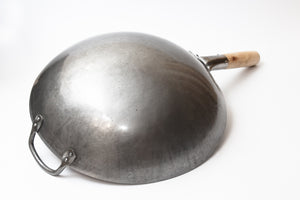
Craft Wok Traditional Hand-Hammered Carbon Steel
1.8 mm hand-hammered carbon steel, 14-inch round bottom, wooden + steel helper handle. $45-60. Chinese-made traditional wok — helper handle is practical for fully-loaded tossing. Best for gas burner cooking.
Craft Wok Traditional is the Chinese-made hand-hammered counterpart to the Yosukata: 15 gauge (1.8mm) carbon steel with a round bottom, hand-hammered throughout, and a steel helper handle opposite the main wooden handle. The helper handle is the practical differentiator — a fully loaded 14-inch wok is heavy, and the second handle lets you lift with two hands when transferring food from wok to plate. Like the Yosukata, this is optimized for high-BTU gas cooking; the round bottom needs a wok ring on flat cooktops. The hand-hammered surface holds seasoning well after a proper initial cure, and the slightly thinner 1.8mm gauge responds faster to heat changes than the 2mm Yosukata at the cost of slightly less thermal mass.
Pros
- ✓Steel helper handle makes two-handed lifting safe when fully loaded
- ✓1.8mm gauge responds faster to heat changes than 2mm
- ✓Traditional Chinese-made build with hand-hammered surface
- ✓Lower price than the Yosukata
Cons
- ✗Round bottom requires a wok ring on flat cooktops
- ✗Less thermal mass than the 2mm Yosukata

Lodge Cast Iron Wok
Seasoned cast iron, 14-inch, pre-seasoned. $50-70. Best for searing and braises rather than traditional stir-fry — heat retention is excellent but weight makes tossing impractical. Induction compatible.
The Lodge 14-inch cast iron wok ships pre-seasoned and is built more like a high-sided cast iron skillet than a traditional wok. The seasoned cast iron surface is genuinely nonstick once properly maintained, and the substantial thermal mass means the wok does not lose temperature when cold food hits the surface — a real advantage for searing thick proteins like duck breast or maintaining a sustained simmer for braised dishes. The 8-10 lb weight makes tossing impossible: Lodge wok cooking is stirring, not tossing. It is induction-compatible and oven-safe at any temperature. The slow preheat (5-8 minutes to stir-fry temperature) and weight mean this is not a wok for fast Cantonese-style stir-fry but it excels at slower, higher-mass cooking methods that carbon steel doesn't do as well.
Pros
- ✓Excellent heat retention for searing and braises
- ✓Pre-seasoned cast iron, ready to use
- ✓Induction-compatible and oven-safe to any temperature
- ✓Cannot warp or dent under sustained high heat
Cons
- ✗8-10 lbs makes tossing impossible
- ✗Slow 5-8 minute preheat to stir-fry temperature
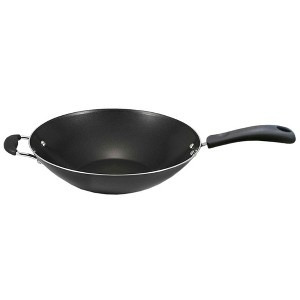
T-fal Nonstick Wok
Teflon-coated aluminum, 14-inch, no seasoning required. $30-45. Best zero-maintenance option for occasional stir-fry. Temperature ceiling of 450°F limits wok hei. Replace every 2-3 years as coating degrades.
The T-fal nonstick 14-inch wok is Teflon-coated aluminum with no seasoning requirement and a 30-45 second preheat — the lowest-friction entry to wok-style cooking. Nothing sticks, cleanup is rinse-and-go, and the light weight makes it accessible to cooks who find carbon steel intimidating. The honest limitation is temperature ceiling: PTFE coatings begin degrading above 230°C, and wok hei — the slightly charred, smoky flavor associated with restaurant stir-fry — requires 315°C and above. A T-fal wok produces good stir-fry but lacks the charred complexity of high-heat carbon steel cooking. Plan on replacing every 2-3 years as the coating degrades; use silicone or wooden utensils only. For occasional stir-fry and vegetable cooking at moderate heat, this is entirely appropriate.
Pros
- ✓No seasoning required, ready out of the box
- ✓30-45 second preheat is the fastest here
- ✓Lightest weight for easy daily handling
- ✓Cleanup is minimal — nothing sticks
Cons
- ✗230°C coating ceiling prevents real wok hei
- ✗Plan on replacement every 2-3 years
Which one is right for you?
The first-time carbon steel buyer on any stovetop
Joyce Chen Carbon Steel Wok
The flat bottom works on induction and electric without a wok ring, and the price makes the seasoning learning curve low-stakes.
The serious stir-fry cook with a high-BTU gas range
Yosukata Hand-Hammered Carbon Steel Wok
The 2mm gauge and hand-hammered round bottom concentrate heat the way a wok burner expects.
The cook who needs two-handed control when fully loaded
Craft Wok Traditional Hand-Hammered Carbon Steel
The steel helper handle lets you lift a fully loaded 14-inch wok safely, which the wooden-handle-only competitors do not.
The cook focused on searing and braises, not tossing
Lodge Cast Iron Wok
Cast iron's thermal mass holds temperature for thick-protein searing in a way carbon steel cannot match.
The cook who wants stir-fry without a learning curve
T-fal Nonstick Wok
Nothing sticks, no seasoning required, and the light weight makes daily use approachable.
Carbon steel vs cast iron vs nonstick: what material means for wok cooking
Carbon steel (typically 1.2-2 mm thick) heats in 60-90 seconds on a gas burner, responds immediately when you turn the heat up or down, and is light enough to toss food continuously — a technique essential to stir-fry. The seasoning on a carbon steel wok is built from polymerized cooking oil rather than a factory coating: it starts thin and somewhat sticky, requires a seasoning-in process before first use, and gets progressively more nonstick with use. A well-seasoned carbon steel wok after 6 months of regular use outperforms any factory nonstick coating.
Cast iron woks are heavier (a 14-inch cast iron wok weighs 8-10 lbs versus 3-4 lbs for carbon steel) and heat unevenly on standard Western stovetops — they require a round-bottom or wok ring, and the thick walls mean it takes 5-8 minutes to reach stir-fry temperature. The advantage is heat retention: a cast iron wok doesn't lose temperature when cold food is added. This is useful for specific tasks (searing thick proteins, maintaining consistent heat for braises) but the weight makes tossing impractical and the slow heat response is the opposite of what stir-fry technique requires.
Nonstick woks eliminate the seasoning learning curve and are the most accessible entry point for home cooks. The limitation is temperature: most nonstick coatings begin degrading above 450°F (230°C), and wok hei — the slightly charred, smoky flavor associated with restaurant stir-fry — requires temperatures of 600°F+ (315°C+). A nonstick wok on a home burner will produce good stir-fry, but the flavor profile will lack the charred complexity of high-heat carbon steel cooking.
Joyce Chen carbon steel: the accessible carbon steel benchmark
The Joyce Chen 14-inch flat-bottom carbon steel wok is designed for Western home kitchens — the flat bottom allows use on electric and induction stovetops without a wok ring, which round-bottom woks require. The gauge is 1.5 mm carbon steel with a birch wood handle that stays cool and provides a secure grip during tossing. It comes preseasoned with a minimal factory seasoning that needs to be reinforced with a proper seasoning-in before first serious use.
At $35-45, the Joyce Chen is the entry point into carbon steel wok cooking. The flat bottom is a practical compromise: technically, a round-bottom wok concentrates heat better at the base, but the flat bottom makes the Joyce Chen usable on every stovetop including induction. The 14-inch diameter is the right size for a household of 2-4 people — large enough to toss a full serving of stir-fry without crowding, small enough to heat efficiently on a standard home burner.
For a first carbon steel wok, the Joyce Chen is the correct choice. The price is low enough that the seasoning learning curve doesn't feel like a financial risk, the flat bottom works on all stovetops, and the cooking performance once seasoned is genuinely better than any nonstick alternative.
Yosukata and Craft Wok: the hand-hammered premium options
The Yosukata 14-inch hand-hammered carbon steel wok (2 mm gauge, round bottom) is the step up from the Joyce Chen. The extra thickness provides more thermal mass, which translates to better heat retention when cold ingredients are added — less temperature drop per batch. The hand-hammered texture creates micro-indentations across the cooking surface that help seasoning adhere more thoroughly and provide more surface area for the polymerized oil layer.
Craft Wok Traditional Hand-Hammered is the Chinese-made equivalent: 15 gauge (1.8 mm) carbon steel with a round bottom, hand-hammered throughout, with a steel helper handle in addition to the main wooden handle. The helper handle is practically important for a 14-inch wok — when the wok is fully loaded, lifting with one hand becomes difficult. Both Yosukata and Craft Wok require a round wok ring or powerful wok burner for optimal use, which limits their suitability for standard electric or induction stovetops.
The hand-hammered woks are the correct choice for cooks who have already mastered carbon steel seasoning and want to upgrade to a wok optimized for high-heat gas cooking. For most home cooks, the Joyce Chen flat-bottom is the practical daily driver.
Lodge cast iron and T-fal nonstick: the specialized alternatives
The Lodge 14-inch cast iron wok functions more as a high-sided skillet than a traditional wok. The seasoned cast iron surface is genuinely nonstick for high-heat cooking once properly maintained, and the heat retention is useful for dishes requiring consistent base temperature: searing duck breast, maintaining a sustained simmer for braised dishes. The 8-lb weight makes tossing impossible — Lodge wok cooking is stirring, not tossing.
The T-fal Nonstick 14-inch wok is Teflon-coated aluminum — it heats in 30-45 seconds and requires no seasoning. The cooking experience is genuinely easy: nothing sticks, cleanup is minimal, and the light weight makes it accessible to cooks who find carbon steel intimidating. The limitation is temperature ceiling: keep it under 450°F, don't use metal utensils, and expect to replace it every 2-3 years as the coating degrades. For occasional stir-fry or vegetables at moderate heat, the T-fal is entirely appropriate.
The choice between these comes down to cooking philosophy. Lodge is for cooks who want a permanent, reactive-cooking surface that improves with use and don't need the tossing technique. T-fal is for cooks who want zero-maintenance daily use and are comfortable with the temperature ceiling and replacement cycle.