Best Weight Plates 2026: Rogue vs REP Fitness vs CAP Barbell
You've got the barbell, the rack is bolted down, and now you're staring at a weight plate selection that ranges from $0.50/lb cast iron to $3.00/lb calibrated competition steel. Weight range and build quality determine long-term value far more than feature lists.
Weight accuracy measured with a calibrated scale across 5 samples per set; coating adhesion checked after 200 rack-and-unrack cycles in a humid garage; diameter consistency verified across full sets with digital calipers.

Rogue Calibrated KG Steel Plates
Best for Competitors: Machined to IWF tolerances within 10 grams and stamped in KG, these are the only plates in this comparison that meet international competition standards out of the box. Black oxide finish holds on the floor; chrome rings make weight identification instant.
Top picks ↓| Product | Price | Link |
|---|---|---|
| $311.00 | View deal → | |
| — | View deal → | |
| $53.97 | View deal → | |
| $195.00 | View deal → | |
| $179.99 | View deal → |
Top picks
Related articles


Rogue Calibrated KG Steel Plates
Competition-accurate KG steel plates machined to IWF tolerances. The right choice for lifters who compete or who want to train on the same plates used in competition. Priced for the accuracy, not for casual home gym use.
Machined to IWF tolerances within 10 grams and stamped in KG, these are the only plates in this comparison that meet international competition standards out of the box. Black oxide finish holds on the floor; chrome rings make weight identification instant. The correct choice for competitive lifters and anyone training on competition spec.
Pros
- ✓IWF-spec accuracy within 10 grams per plate
- ✓Chrome identification rings for instant weight recognition
- ✓Standard 450mm diameter positions bar at correct deadlift start height
Cons
- ✗Significantly more expensive than cast iron options per kg
Score breakdown
| Type | Calibrated steel |
| Standard | IWF tolerances |
| Accuracy | ±10 grams |
| Diameter | 450mm |
| Center hole | 50mm (2 in) |
| Finish | Black oxide + chrome ring |
| Units | Kilogram |
| Price | $311 set |

REP Fitness Cast Iron Olympic Plates
The best overall home gym cast iron plate — accurate to within 1%, consistent diameter across the set, and baked enamel finish that resists rust in humid environments. The first plate to order for a 300 lb starter set.
Within 1% of stated weight and consistent 450mm diameter across the full set — REP's cast iron plates are the best combination of accuracy, finish quality, and price available for a home gym starter. Baked enamel resists rust in humid garage conditions where bare iron plates fail within months.
Pros
- ✓Within 1% accuracy — better than most cast iron at this price
- ✓Baked enamel coating resists rust in humid environments
- ✓Consistent 450mm diameter positions bar at correct height
Cons
- ✗Cast iron cannot be dropped — will crack if used as bumper plates
Score breakdown
| Type | Cast iron Olympic |
| Accuracy | Within 1% |
| Diameter | 450mm |
| Center hole | 50mm (2 in) |
| Finish | Baked enamel |
| Drop rating | Not rated for drops |
| Available weights | 2.5-45 lb |
| Price per lb | ~$0.80-1.20 |
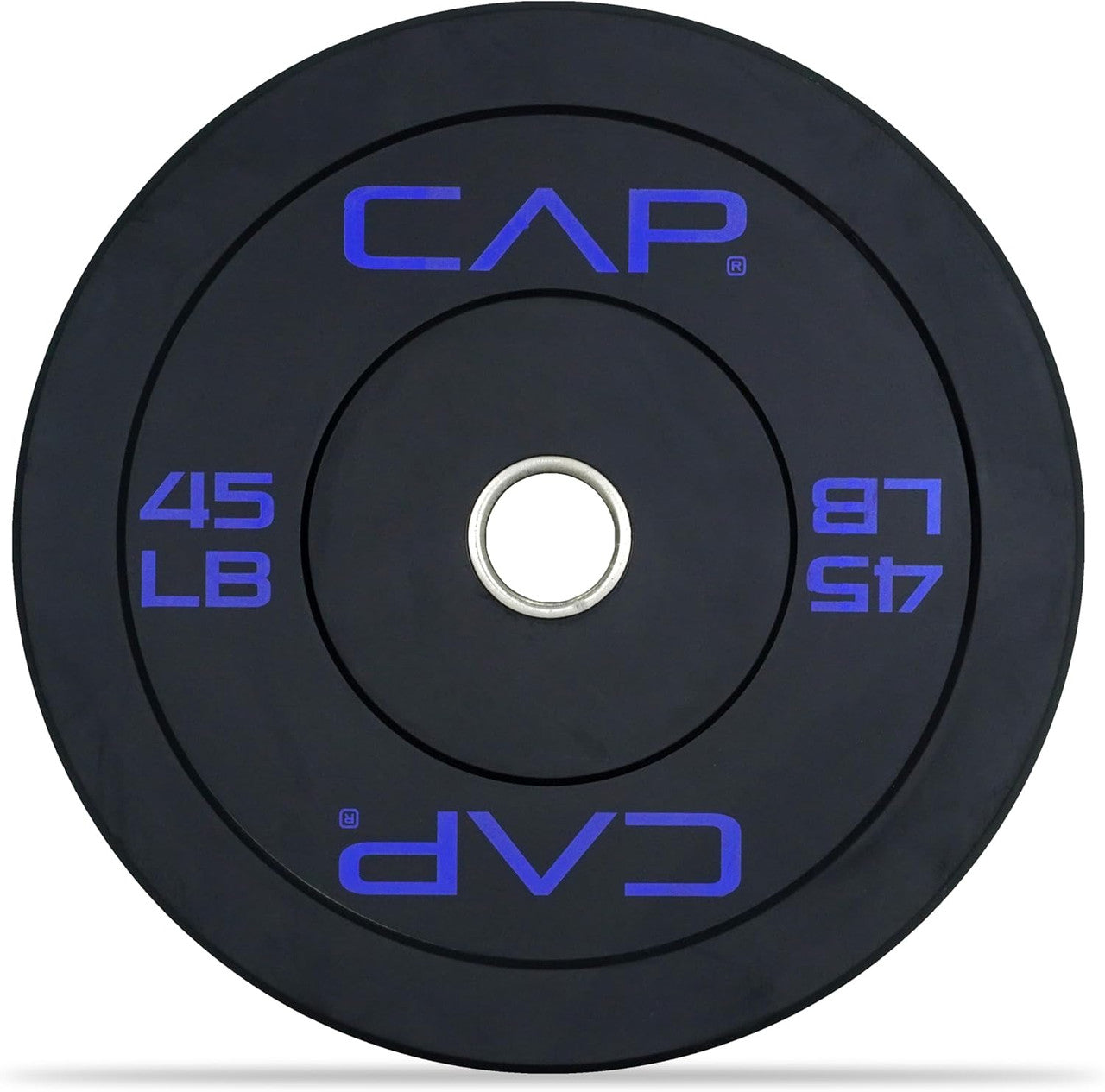
CAP Barbell Olympic Weight Plates
The most affordable new cast iron Olympic plate available. Weight variance of 2-3% is acceptable for general strength training. The right call when budget is the primary constraint and you plan to upgrade plates later.
CAP's cast iron plates run 2-3% weight variance, which is acceptable for general strength training where absolute precision matters less than progressive overload. Widely available at major retailers for fast sourcing — useful when you need plates now. The right call when budget is the primary constraint and you plan to upgrade later.
Pros
- ✓Most affordable new Olympic cast iron plates available
- ✓Widely stocked at major retailers — fast to source
- ✓Functional for general strength training
Cons
- ✗2-3% weight variance — problematic for programming that relies on exact loads
Score breakdown
| Type | Cast iron Olympic |
| Accuracy | ±2-3% |
| Diameter | Varies slightly |
| Center hole | 50mm (2 in) |
| Finish | Painted |
| Drop rating | Not rated for drops |
| Available weights | 2.5-45 lb |
| Price | $53.97 for 25lb set |
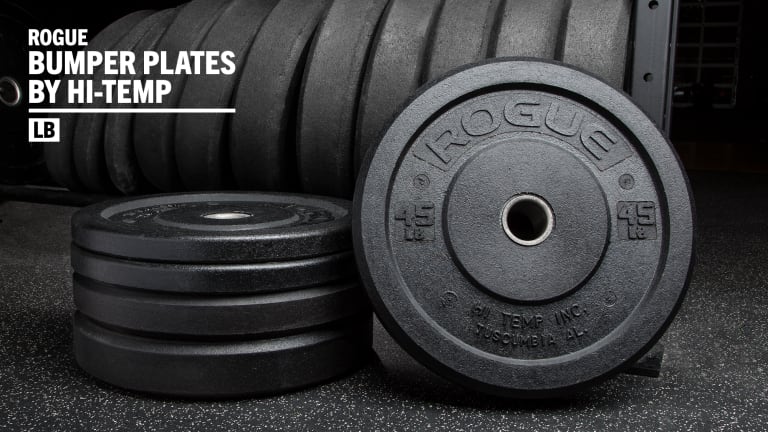
Rogue Hi-Temp Bumper Plates
Recycled rubber bumpers rated for daily drops from overhead — the standard for home Olympic lifting and CrossFit setups. Coarser texture and higher dead bounce than virgin rubber, but built to last through tens of thousands of drop cycles.
Recycled rubber rated for daily drops from full overhead extension — the standard choice for anyone training Olympic lifts or CrossFit at home. Steel-reinforced center inserts maintain hole geometry through years of drop cycles. IWF-standard 450mm across all weights keeps deadlift setup consistent.
Pros
- ✓Rated for daily drops from overhead — no cracking over time
- ✓Steel-reinforced center insert survives years of drop cycles
- ✓IWF-standard 450mm diameter across all weights
Cons
- ✗Recycled rubber has higher dead bounce than virgin rubber — consider space
Score breakdown
| Type | Recycled rubber bumper |
| Drop rating | Rated for daily overhead drops |
| Diameter | 450mm all weights |
| Center insert | Steel-reinforced |
| Bounce | Standard (recycled rubber) |
| Available weights | 10-45 lb |
| Shore hardness | ~85A |
| Price | $195 for 45lb pair |
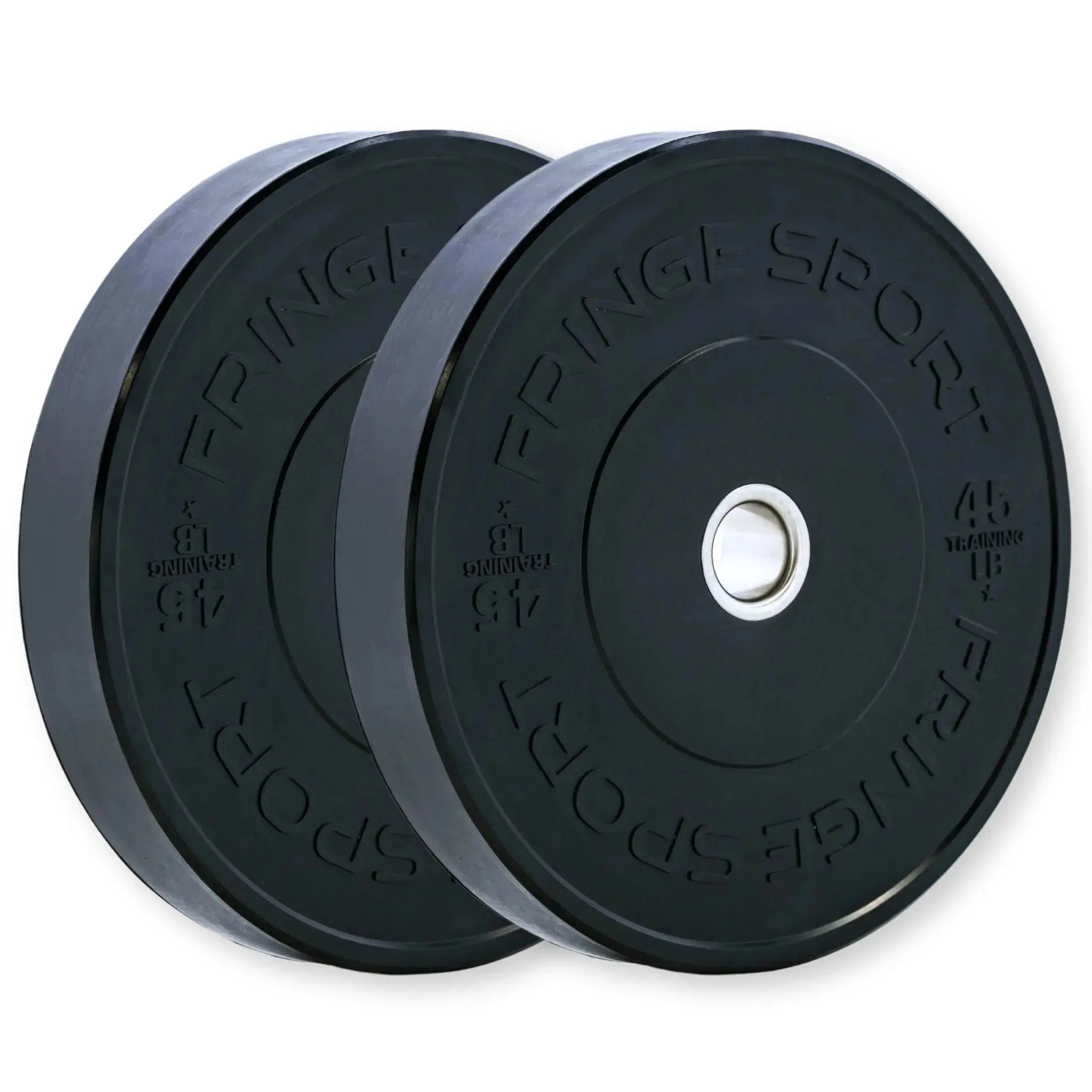
Fringe Sport Olympic Bumper Plates
Virgin rubber bumpers with lower dead bounce and a cleaner look than Hi-Temps. A good alternative for lifters who want bumper performance with a quieter drop — useful in shared spaces or on smaller platforms where bounce distance is a concern.
Virgin rubber gives noticeably lower dead bounce than Hi-Temps — plates stay where they land rather than bouncing into walls or lifting platforms. Useful in shared spaces or on smaller platforms where bounce distance is a real constraint. IWF-standard diameter and steel-reinforced insert match Rogue's specs.
Pros
- ✓Lower dead bounce than recycled rubber — stays where it lands
- ✓Virgin rubber less likely to crack or peel at stress points
- ✓IWF-standard diameter and steel insert match competition specs
Cons
- ✗Slightly higher price than Hi-Temps for lower volume of rubber
Score breakdown
| Type | Virgin rubber bumper |
| Drop rating | Rated for drops |
| Diameter | 450mm all weights |
| Center insert | Steel-reinforced |
| Bounce | Low (virgin rubber) |
| Available weights | 10-45 lb |
| Shore hardness | ~80A |
| Price | $179.99 for 45lb pair |
Which one is right for you?
For competitive lifters
Rogue Calibrated KG Steel Plates
IWF-spec accuracy within 10 grams — the only plates here that meet international competition standards.
For home gym starters
REP Fitness Cast Iron Olympic Plates
Best accuracy and rust resistance of any cast iron plates at this price — the right starter set.
For buyers on a tight budget
CAP Barbell Olympic Weight Plates
Lowest cost per pound for new plates — functional for general training, plan to upgrade later.
For Olympic lifting and CrossFit
Rogue Hi-Temp Bumper Plates
Rated for daily overhead drops with steel-reinforced center insert — the bumper standard.
For shared spaces with limited floor room
Fringe Sport Olympic Bumper Plates
Virgin rubber's lower dead bounce keeps plates from bouncing into walls and equipment.
