Best Vacuum Sealers 2026: FoodSaver vs Nesco vs Anova
A vacuum sealer extends the refrigerator life of meat from 3-5 days to 2-3 weeks, and freezer life from 6 months to 2-3 years by removing the oxygen that causes oxidation and freezer burn. Weekly usage frequency, not recipe variety, determines which spec actually matters.
Each sealer was evaluated on vacuum pressure level, seal-strip reliability, third-party bag compatibility, wet-food handling capability, and total cost of ownership including ongoing bag cost.

FoodSaver V4840 2-in-1 Vacuum Sealer
Best Overall: Built-in bag roll storage and cutter, a retractable handheld sealer for FoodSaver containers, and bags available in virtually every North American grocery store — the most practical all-rounder for users who want retail bag access. Third-party embossed bags work in the V4840 but compatibility varies by batch, and branded FoodSaver bags cost more per foot than universal alternatives.
Top picks ↓| Product | Price | Link |
|---|---|---|
| $100 | View deal → | |
| $70 | View deal → | |
| $100 | View deal → | |
| $30 | View deal → | |
| $60 | View deal → |
Top picks
Related articles
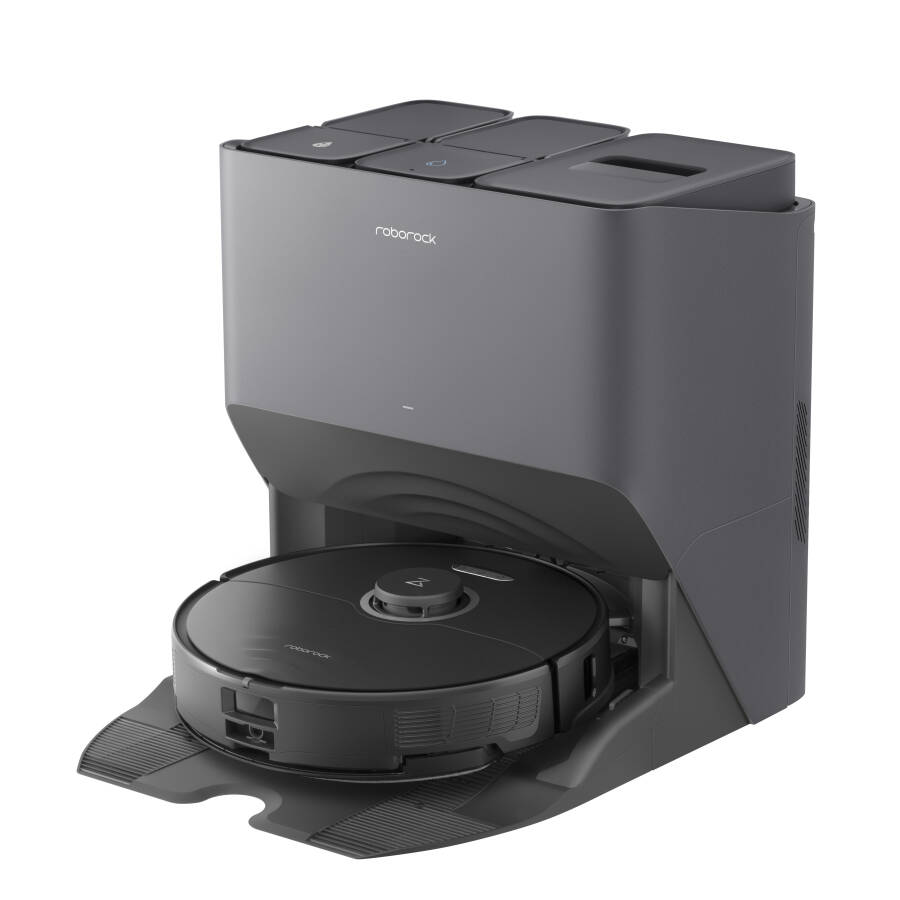
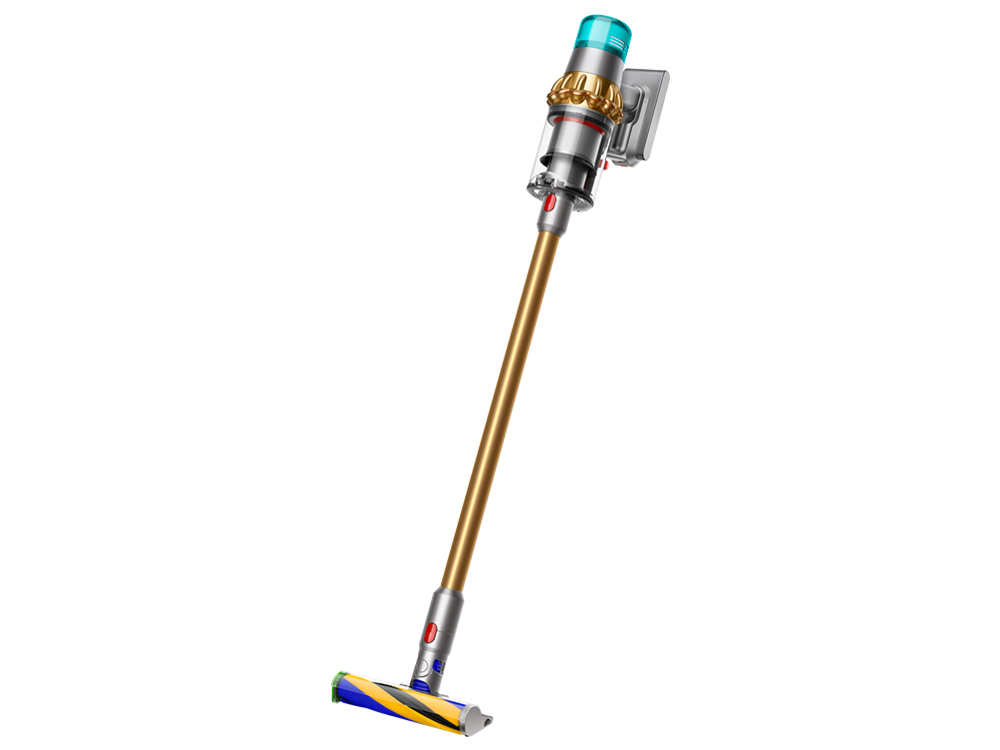
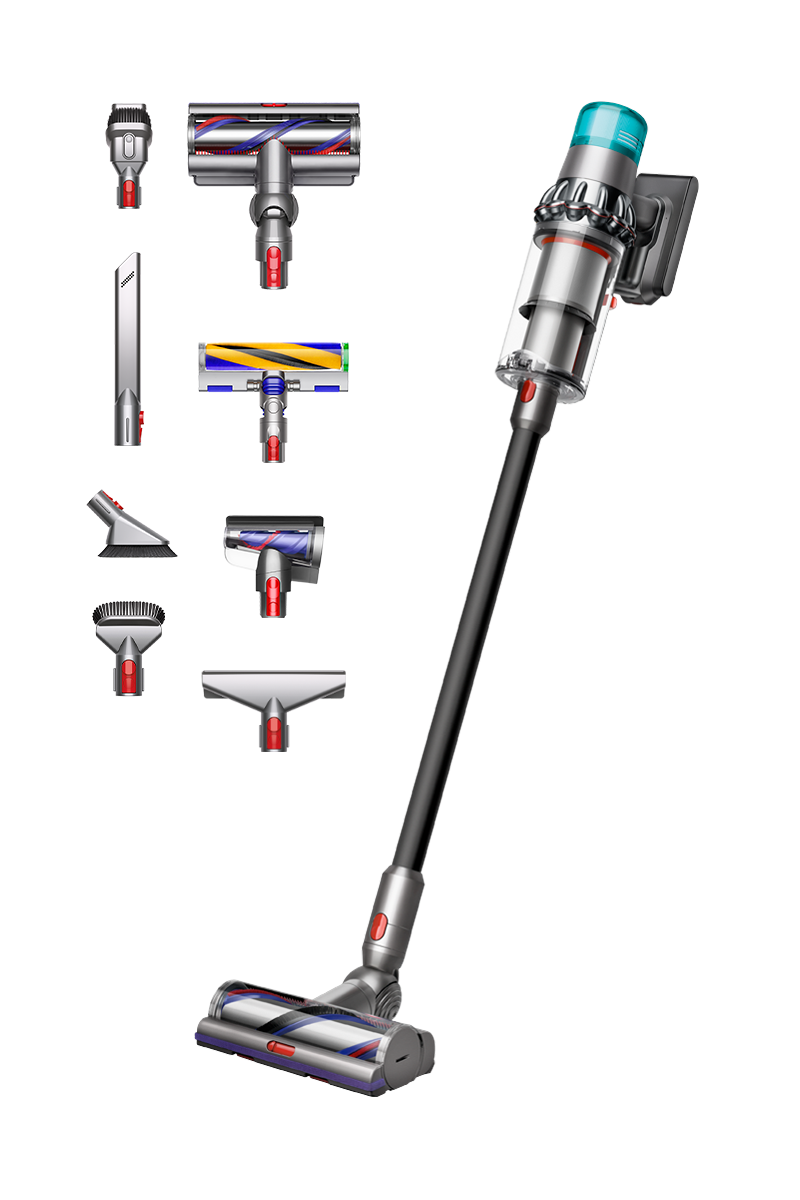
FoodSaver V4840 2-in-1 Vacuum Sealer
Built-in bag roll storage and cutter, retractable handheld sealer for containers, compatible with most embossed bags. The most widely available vacuum sealer — bags sold in grocery stores. Best for users who value retail bag availability and a proven long-term track record.
Built-in bag roll storage and cutter, a retractable handheld sealer for FoodSaver containers, and bags available in virtually every North American grocery store — the most practical all-rounder for users who want retail bag access. Third-party embossed bags work in the V4840 but compatibility varies by batch, and branded FoodSaver bags cost more per foot than universal alternatives.
Pros
- ✓Bag roll storage and cutter built in
- ✓Bags available at grocery stores — no ordering ahead
- ✓Retractable handheld sealer for FoodSaver containers
Cons
- ✗FoodSaver branded bags cost more than third-party alternatives
Score breakdown
| Type | External vacuum sealer |
| Bag roll storage | Built in with cutter |
| Handheld sealer | Retractable (for FoodSaver containers) |
| Bag compatibility | FoodSaver + most embossed third-party |
| Vacuum pressure | ~22 inHg |
| Price range | $100–$150 |
| Seal strips | Single |
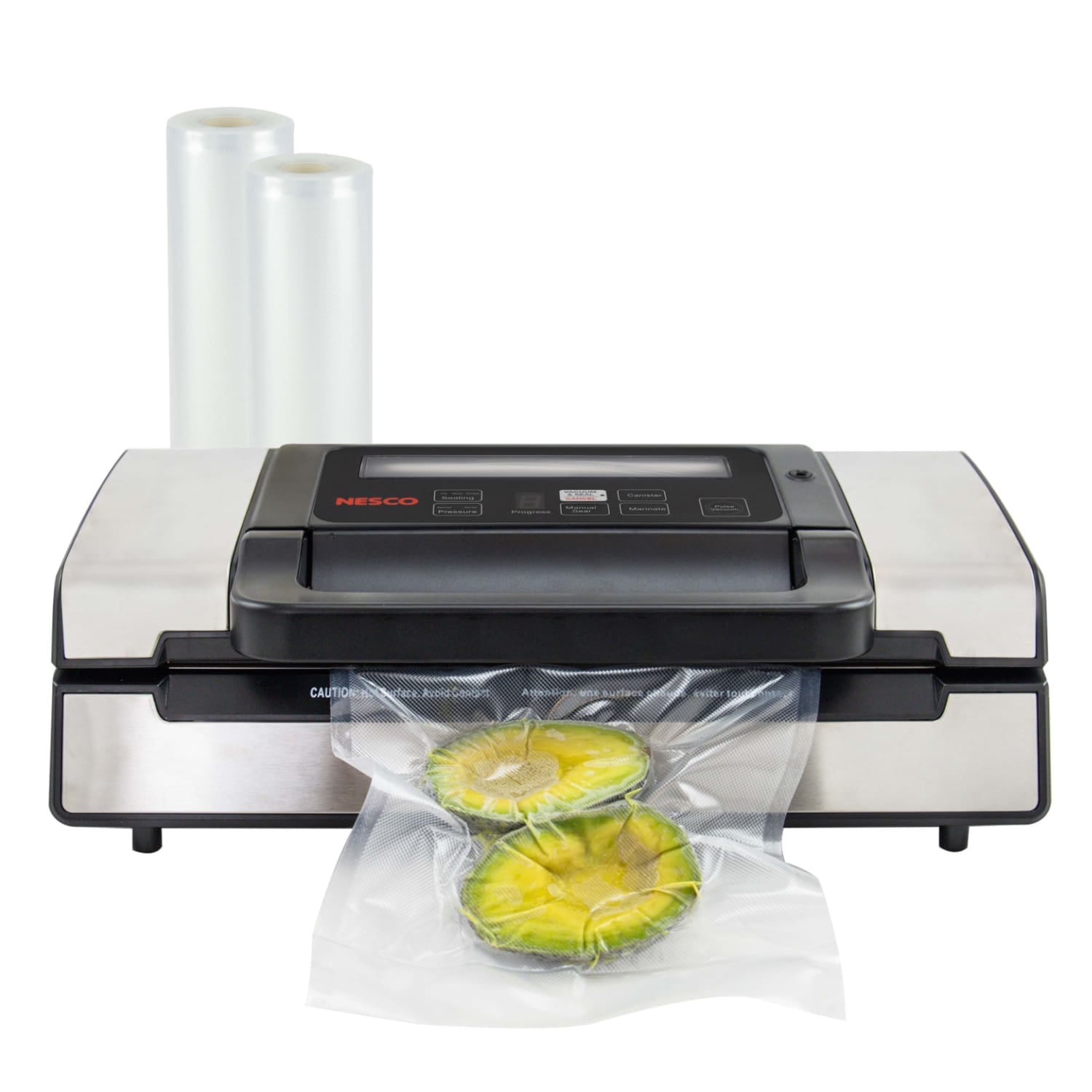
Nesco VS-12 Deluxe Vacuum Sealer
Double sealing strip (stronger seam), explicitly compatible with any embossed bag (best third-party bag support in class), ~23 inHg vacuum. Cheaper bags over time. Best for regular users who will buy bags in bulk online and want maximum seal reliability.
Explicitly compatible with any embossed vacuum sealer bag — the strongest third-party bag support in this comparison — and the double sealing strip produces a stronger seam less likely to fail during long-term freezer storage. Third-party bags at $0.10–0.20/foot vs branded bags at $0.25–0.40/foot save meaningful money at weekly usage. Trade-off: Nesco bags have lower retail availability and you will likely order online.
Pros
- ✓Double sealing strip — stronger seam than single
- ✓Explicitly universal bag compatibility
- ✓23 inHg vacuum — highest among external sealers here
Cons
- ✗Nesco bags have lower retail availability than FoodSaver
Score breakdown
| Type | External vacuum sealer |
| Seal strips | Double (stronger seam) |
| Bag compatibility | Any embossed bag — explicitly documented |
| Vacuum pressure | ~23 inHg |
| Price range | $70–$100 |
| Bag roll storage | No |
| Third-party bag cost | $0.10–$0.20/ft |
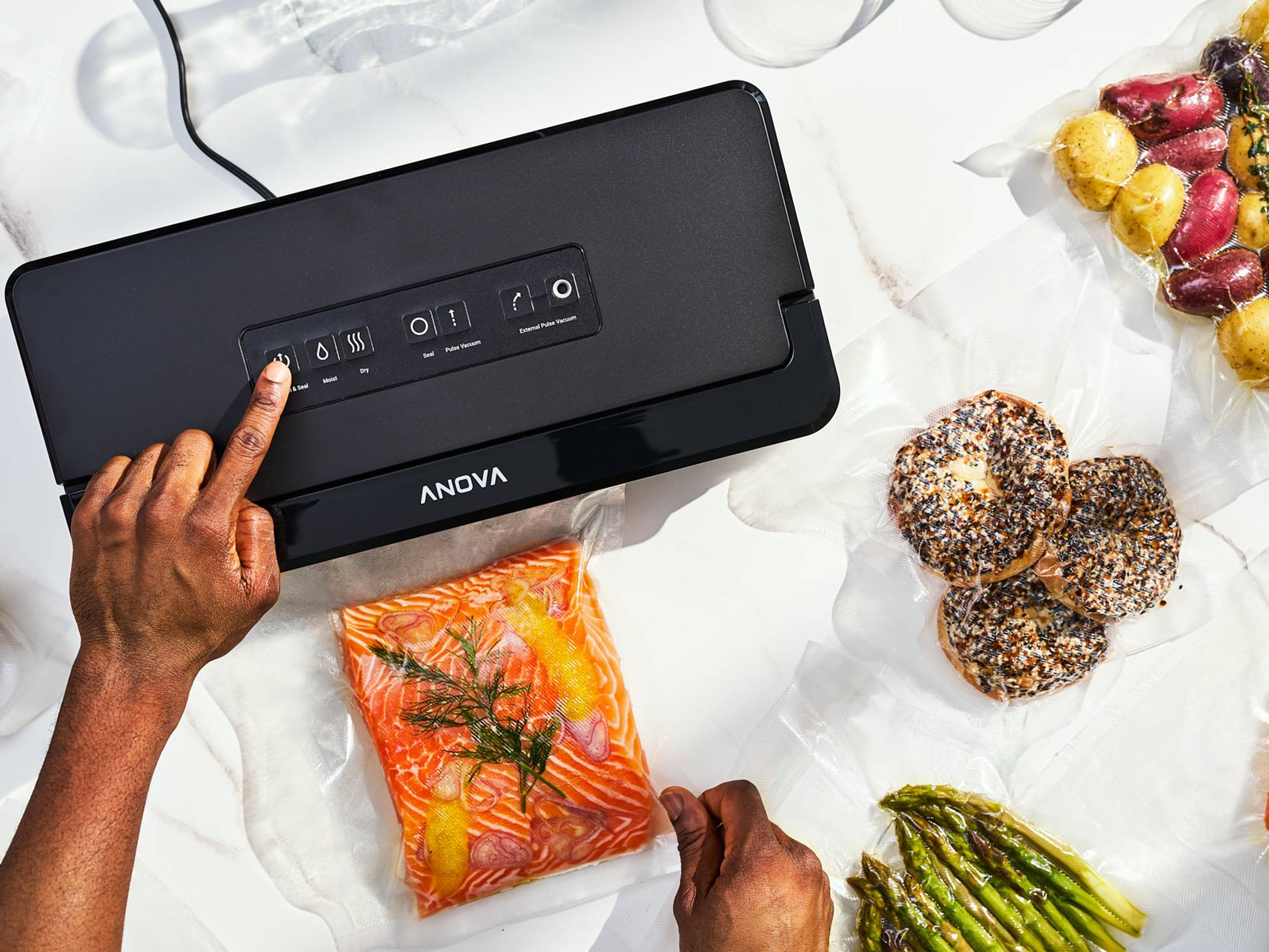
Anova Precision Vacuum Sealer Pro
99.9% vacuum level (higher than standard external sealers), pulse mode for fragile foods, compatible with any embossed bag. Best for sous vide cooks — near-complete vacuum keeps bags submerged in water bath. Also good for regular food storage.
99.9% vacuum level — higher than standard external sealers — ensures bags stay fully submerged in a sous vide water bath for even heat exposure. Pulse mode for fragile foods and universal embossed bag compatibility round out a purpose-built sous vide companion. For regular food storage without sous vide, the premium over the Nesco is hard to justify.
Pros
- ✓99.9% vacuum — bags stay submerged in water bath
- ✓Pulse mode for delicate foods
- ✓Compatible with any embossed bag
Cons
- ✗Vacuum advantage over standard sealers only matters for sous vide users
Score breakdown
| Type | External vacuum sealer |
| Vacuum level | 99.9% (two-stage pump) |
| Pulse mode | Yes — for fragile foods |
| Bag compatibility | Any embossed bag |
| Seal strips | Single |
| Price range | $100–$130 |
| Best for | Sous vide cooking |
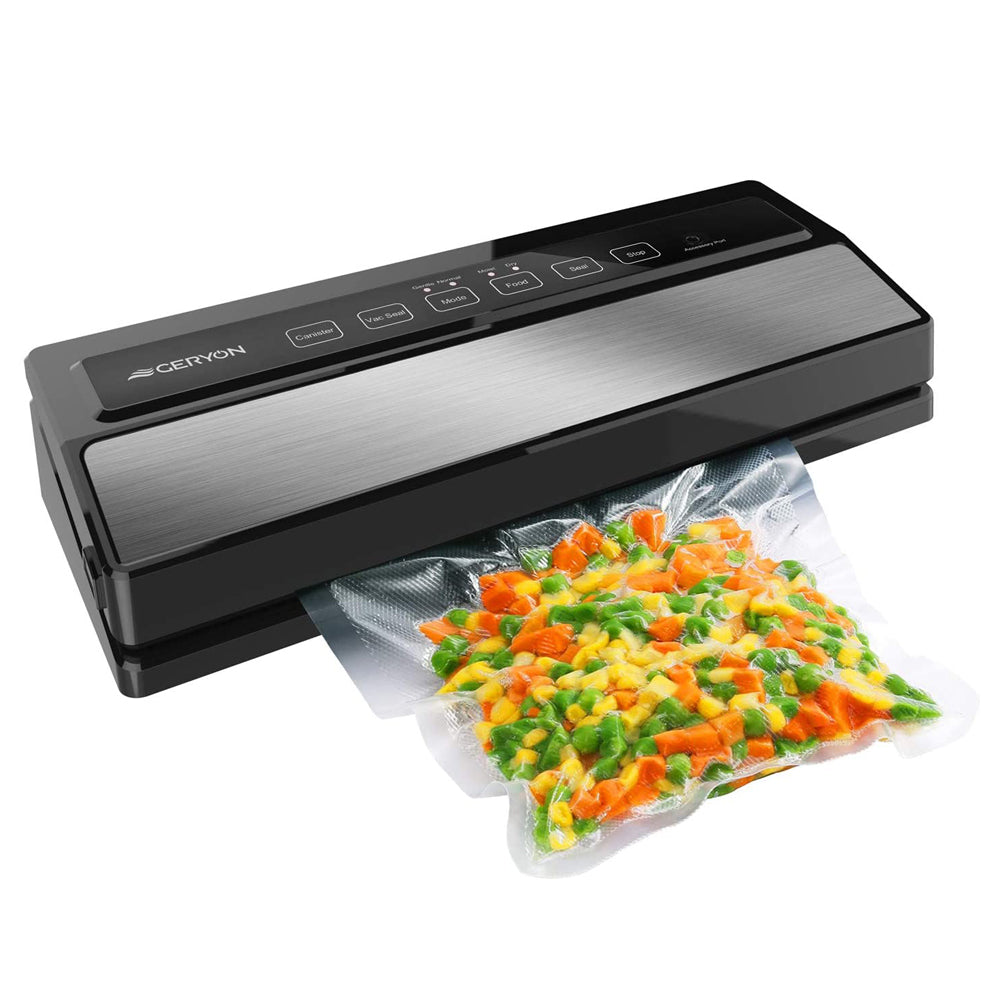
Geryon Vacuum Sealer Machine
Compact drawer-storable size, ~18 inHg vacuum, $30-50. Best entry-level purchase for first-time users testing vacuum sealing workflow. Lower vacuum and fewer controls than premium options.
Compact enough to store in a kitchen drawer, at $30–50 it is the lowest-cost way to test whether vacuum sealing fits your kitchen workflow. Adequate for regular food storage; lower vacuum pressure (~18 inHg) and fewer controls than premium options mean it is not the right tool if you are confident you will use it heavily long-term.
Pros
- ✓Drawer-storable compact size
- ✓Lowest price in this comparison
- ✓Adequate for routine food storage
Cons
- ✗Lower vacuum pressure (~18 inHg) and fewer controls than premium models
Score breakdown
| Type | External vacuum sealer |
| Vacuum pressure | ~18 inHg |
| Seal strips | Single |
| Bag compatibility | Embossed bags |
| Form factor | Compact — drawer-storable |
| Price range | $30–$50 |
| Controls | Basic |

Zwilling Fresh & Save Vacuum Starter Set
USB-rechargeable handheld pump, reusable rigid containers and zipper bags, no heat sealing needed. Handles wet foods easily. Best for refrigerator life extension of produce and leftovers — not a substitute for long-term freezer storage via heat-sealed bags.
USB-rechargeable handheld pump evacuates reusable rigid containers and zipper bags without heat sealing — handles wet foods and liquids that trip up external sealers. Best understood as a fridge-life upgrade: produce and leftovers last 5–7 days instead of 2–3. Not a substitute for heat-sealed long-term freezer storage.
Pros
- ✓Handles wet foods easily — no liquid-in-mechanism problem
- ✓Reusable containers — no consumable bags required
- ✓USB-rechargeable — no disposable batteries
Cons
- ✗Not a substitute for long-term freezer storage via heat-sealed bags
Score breakdown
| Type | Handheld pump (rigid containers + zipper bags) |
| Heat sealing | No |
| Bag type | Reusable zipper bags + rigid containers |
| Power | USB-rechargeable |
| Wet food handling | Excellent |
| Price range | $60–$100 |
| Best for | Fridge life extension (not freezer) |
Which one is right for you?
For families who want bags from the grocery store
FoodSaver V4840 2-in-1 Vacuum Sealer
FoodSaver bags are available at virtually every supermarket — no online ordering required when you run out.
For regular users buying bags in bulk online
Nesco VS-12 Deluxe Vacuum Sealer
Universal bag compatibility and double seal strip save money and produce stronger seams for long-term freezer storage.
For sous vide cooks
Anova Precision Vacuum Sealer Pro
99.9% vacuum keeps bags fully submerged in the water bath — the specific requirement that standard sealers fail to meet.
For first-time vacuum sealer buyers
Geryon Vacuum Sealer Machine
The lowest-cost entry point to test whether the workflow fits your kitchen habits before committing to a premium model.
For fridge organisation and wet food storage
Zwilling Fresh & Save Vacuum Starter Set
Handles liquids and leftovers without heat sealing — the practical tool for refrigerator life extension.
External vs chamber vacuum sealers: understanding what you actually need
Consumer vacuum sealers are almost all external sealers — the bag opening slides into a slot on the machine, air is extracted from inside the bag, and the opening is heat-sealed. This design works reliably for dry and semi-dry foods: steaks, chicken breasts, vegetables, cheese, nuts, dry grains. The limitation is liquid: if liquid is near the opening when the machine evacuates air, it gets sucked into the sealing mechanism and causes sealing failures. Techniques like pre-freezing wet foods before sealing or angling the machine manage this, but not eliminate it.
Chamber vacuum sealers (used by butchers, restaurants, and serious sous vide cooks) place the entire bag inside a sealed chamber, evacuate the whole chamber, and then seal the bag before restoring pressure. Because the liquid inside the bag is also under vacuum, it doesn't travel toward the opening. Chamber sealers handle wet foods, marinades, and liquids without problem. They also create a higher vacuum level (closer to 99.9% air removal vs the 80-90% typical of external sealers). The trade-off is size, weight, and price — chamber sealers cost $300-2,000 for home models.
For most home users, an external sealer is the right tool. The FoodSaver V4840, Nesco VS-12, Anova Precision Pro, and Geryon are all external sealers. The Zwilling Fresh & Save uses a different approach — it uses a handheld vacuum pump to evacuate rigid containers and zipper bags, which is not traditional vacuum sealing but achieves similar short-term preservation for items you'll use within days.
The reliable standard: FoodSaver V4840
The FoodSaver V4840 is the most widely used home vacuum sealer in North America, with a market penetration that means its bags are available in virtually every grocery store that sells kitchen supplies. The proprietary FoodSaver bag system — ridged textured bags that allow air to be extracted uniformly — is well-documented, the seals are consistent, and the machine has a long service history.
The V4840 has a built-in bag roll storage and cutter, which is a practical convenience: you cut custom-length bags from the roll rather than stocking only pre-sized bags. This is useful for irregularly shaped items like large cuts of meat or whole fish that don't fit standard bag sizes. The retractable handheld sealer allows vacuum sealing of FoodSaver-compatible containers for fresh produce, wine stoppers, and other short-term preservation uses without sealing in a bag.
The main drawback of the FoodSaver system is bag cost: FoodSaver proprietary bags cost more per foot than third-party alternatives, and the company has historically used DRM-style features on some models to discourage non-FoodSaver bags. The V4840 is compatible with most embossed textured bags from other manufacturers, but compatibility varies. At $100-150, the machine itself is reasonably priced.
The third-party bag pick: Nesco VS-12
The Nesco VS-12 Deluxe Vacuum Sealer is designed from the start to work with any embossed vacuum sealer bag, not just Nesco proprietary bags. This compatibility is explicitly documented and is the primary reason to choose the Nesco over the FoodSaver — third-party bags cost $0.10-0.20 per foot compared to $0.25-0.40 for FoodSaver branded bags, a difference that adds up over years of regular use.
The VS-12 has a double sealing strip — two parallel heat-seal lines rather than one — which produces a stronger seal edge that is less likely to fail at the seam. Double sealing is particularly relevant for long-term freezer storage of wet or fatty foods where single seals can sometimes develop microscopic failures over months. The vacuum pressure (approximately 23 inHg) is competitive with the FoodSaver.
At $70-100, the Nesco VS-12 is slightly less expensive than the FoodSaver V4840 and will cost significantly less to operate over time due to bag compatibility. The trade-off is the smaller retail availability of Nesco bags — you'll likely order online rather than finding them at a local grocery store.
Anova Precision Pro: the sous vide companion
The Anova Precision Vacuum Sealer Pro is designed specifically for sous vide cooking integration. Anova makes the best-selling sous vide immersion circulators, and their vacuum sealer completes the system. The sealer produces a 99.9% vacuum level — higher than most external sealers — using a two-stage pump that evacuates more completely than single-stage systems.
The higher vacuum level matters specifically for sous vide: a bag that isn't fully evacuated will float in the water bath, producing uneven heat exposure. The Anova Pro's near-complete vacuum ensures the bag stays submerged and maintains contact with the circulating water. For regular food storage without sous vide, the difference between 90% and 99.9% vacuum is not practically significant.
The Anova sealer is compatible with any embossed bag and includes a pulse mode for fragile foods — the pulse function allows partial vacuum without the full evacuation that would crush delicate items like chips or crackers. At $100-130, it is priced similarly to the FoodSaver V4840.
Geryon and Zwilling: the compact options
The Geryon Vacuum Sealer Machine is the most compact traditional vacuum sealer in this comparison — small enough to store in a kitchen drawer rather than on the counter. At $30-50, it is the entry-level option. Sealing performance is adequate for regular food storage; the vacuum level is lower than premium options (approximately 18 inHg vs the Nesco's 23 inHg) and the sealer has fewer control options. For a first vacuum sealer to test whether the workflow integrates into your kitchen habits, the Geryon is a reasonable starting purchase.
The Zwilling Fresh & Save Vacuum Starter Set takes a different approach entirely: it uses a small USB-rechargeable handheld pump to evacuate rigid plastic containers and special zipper bags rather than heat-sealing. This design handles wet foods and liquids without the liquid-in-sealing-mechanism problem of traditional sealers, and the containers can be opened and resealed repeatedly without needing new bags.
The Zwilling system is not a replacement for traditional vacuum sealing for long-term storage — the zipper bags don't achieve the same vacuum level or seal permanence as heat-sealed bags. It is better understood as a reusable food storage upgrade over regular containers: the partial vacuum extends refrigerator life of produce, leftovers, and partially used ingredients from 2-3 days to 5-7 days.
