Best Swim Goggles 2026: Racing vs open-water vs fitness compared
Swim goggles divide into two fundamentally different tool categories the moment you ask what the water looks like and how fast you want to go. Fit and waterproof rating for your specific climate type matter most.
Each goggle was scored on gasket seal quality across a range of face shapes including Asian orbital geometry, lens optical clarity through the center and at the periphery, comfort over 45-minute continuous sessions, value per dollar including nose bridge adjustability, and long-term durability of the gasket and anti-fog coating under correct care conditions.
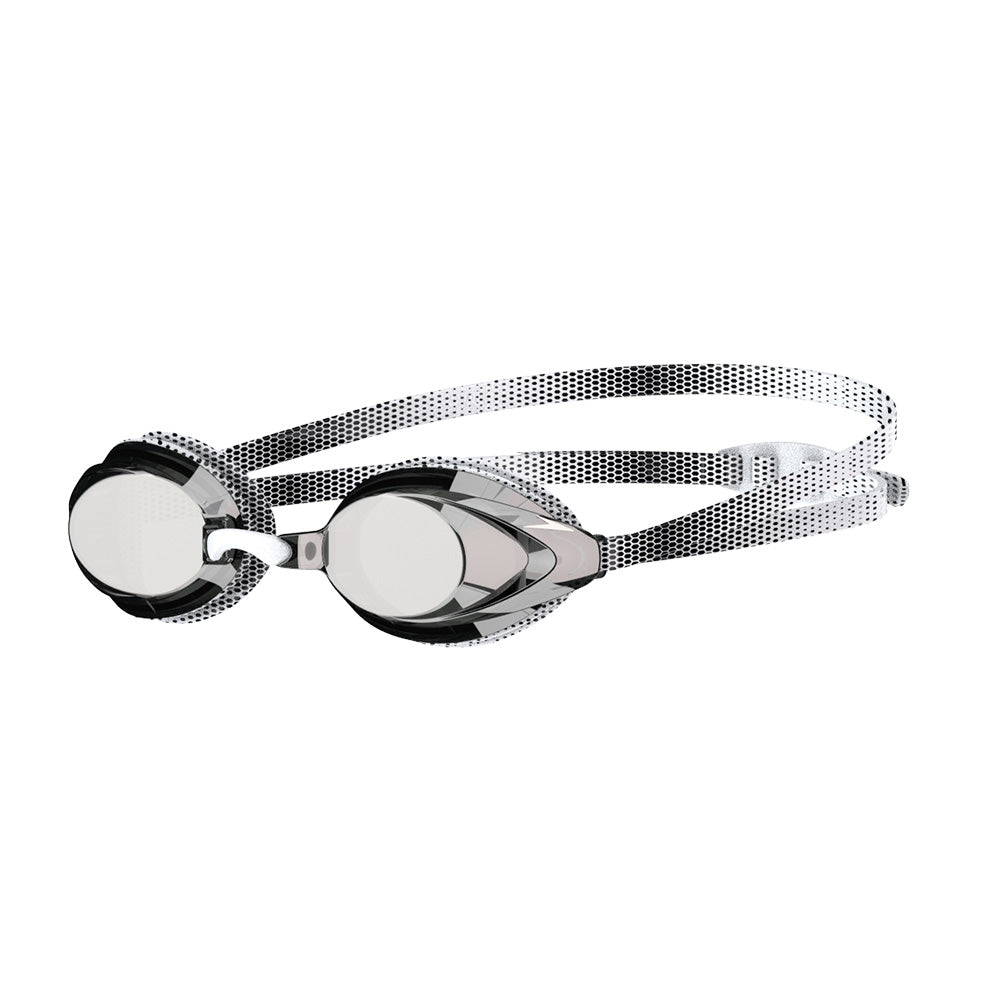
Speedo Vanquisher 2.0 Swim Goggles
Best Overall: The Speedo Vanquisher 2.0 balances competition-grade low profile with practical training usability — the thin silicone gasket and multiple included nose bridges address fit across different facial widths. UV400 anti-fog lenses hold coating life longer than most when maintained with the no-wipe rule.
Top picks ↓| Product | Price | Link |
|---|---|---|
| $28.00 | View deal → | |
| $32.50 | View deal → | |
| $56.99 | View deal → | |
| $34.99 | View deal → | |
| $20 | View deal → |
Top picks
Related articles

Speedo Vanquisher 2.0 Swim Goggles
Best competitive pool swim goggles for training and racing. Low-profile silicone gasket minimizes drag while sealing reliably under flip-turn pressure. Multiple nose bridge widths included for fit adjustment. UV400 anti-fog lenses in clear, smoke, blue mirror, and other colorways. Anti-fog coating lasts with correct no-wipe care. The proven competition tool for club swimmers and triathletes who want race-day performance in their daily training goggle.
The Speedo Vanquisher 2.0 balances competition-grade low profile with practical training usability — the thin silicone gasket and multiple included nose bridges address fit across different facial widths. UV400 anti-fog lenses hold coating life longer than most when maintained with the no-wipe rule.
Pros
- ✓Multiple nose bridge widths included in the box — first-step fit adjustment before concluding the goggle doesn't fit
- ✓Low-profile hydrodynamic shell minimizes drag for competition and lap training
- ✓Proven competition tool trusted in pool training and racing by club swimmers worldwide
Cons
- ✗Flatter orbital profile of East Asian faces may require nose bridge adjustment — standard Western fit can gap at the upper gasket edge
Score breakdown
| Lens type | anti-fog; clear or mirrored options |
| UV protection | Yes (blocks UVA/UVB) |
| Gasket | silicone (soft silicone eye seals) |
| Use type | racing/training |
| Strap | silicone strap |
| Nose bridge | 4 interchangeable nosepieces (slide & lock) |
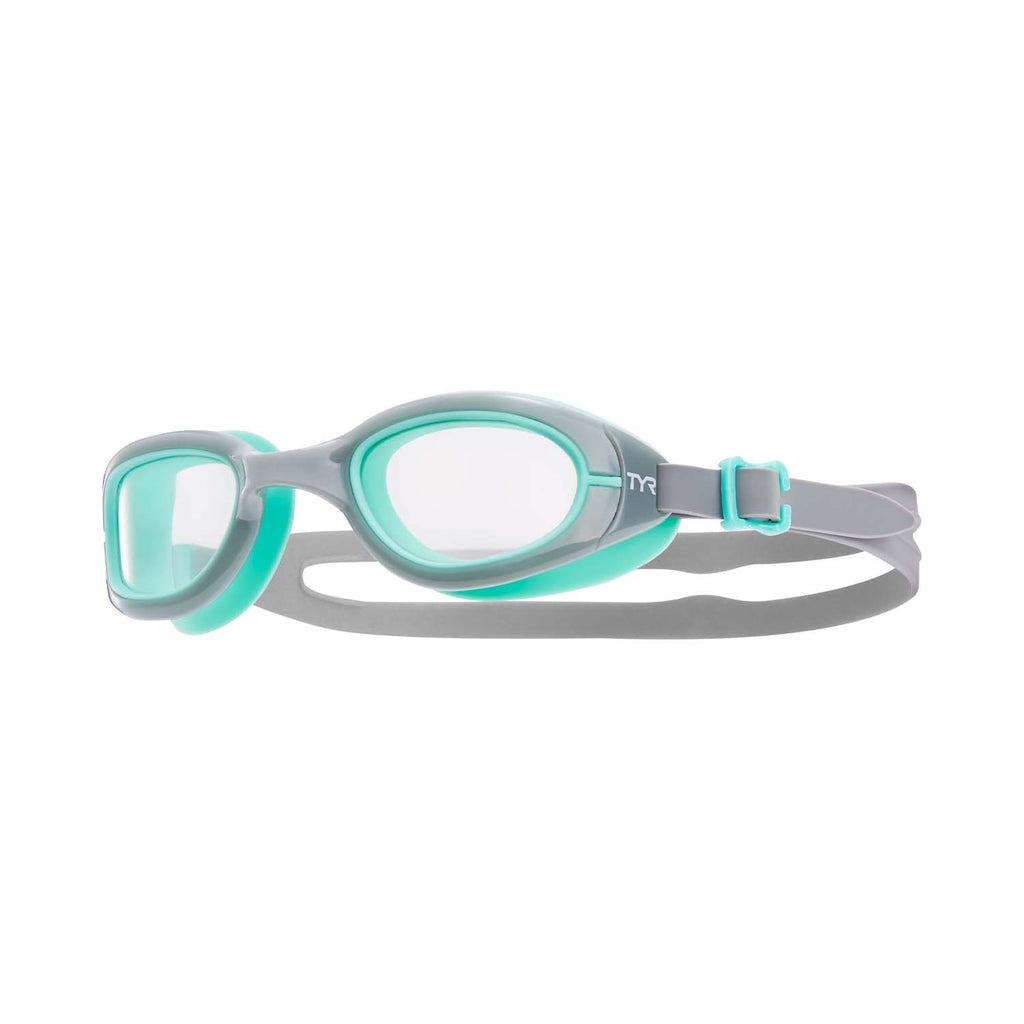
TYR Special Ops 2.0 Transition Swim Goggles
Best triathlon and open-water swim goggles. Polarized wide-angle lens cuts water-surface glare over 1,500-meter-plus distances. Dual-strap system distributes pressure and resists wave impact. Thicker silicone gasket tolerates extended wear for long-distance open-water efforts. Available in polarized smoke for mixed-light conditions. Not optimized for pool training — the open-water features do not add value in a 25-meter lane, but they are essential for triathlon and ocean racing.
TYR Special Ops 2.0's polarized wide-angle lens cuts water-surface glare over 1,500+ meter distances where non-polarized lenses cause genuine visual fatigue. The dual-strap system handles wave impacts and head-lifting at speed. In a pool it's technically adequate but overbuilt for what the lens technology delivers in a 25-meter lane.
Pros
- ✓Polarized lens cuts water-surface glare for sighting over long open-water distances
- ✓Dual-strap distributes pressure and resists goggle rotation under wave impact
- ✓Thicker silicone gasket tolerates extended open-water wear that racing gaskets cannot
Cons
- ✗Polarized lenses reduce total light transmission — slightly dark for poorly lit indoor pool training
Score breakdown
| Lens type | photochromic transition (clear to smoke), anti-fog |
| UV protection | Yes (full UVA/UVB) |
| Gasket | silicone (DURAFIT hypoallergenic) |
| Use type | training/open-water |
| Strap | silicone split strap with Speed Adjustment release button |
| Nose bridge | adjustable nose bridge |

Arena Cobra Ultra Swipe Racing Swim Goggles
Best high-performance racing goggles for elite club and Masters competitive swimming. Curved wraparound lens expands peripheral field of view without sacrificing the low-profile frame that competitive swimmers require. Anti-fog coating with durability claims that hold up with proper care. UV400 protection in multiple lens colors. The preferred tool for competitive swimmers who want slightly wider lateral visibility than standard low-profile lenses provide.
Arena's curved wraparound lens expands peripheral vision beyond what the Vanquisher provides without sacrificing the low-profile frame that competitive swimmers require. The anti-fog coating durability claims hold up with correct no-wipe care. Elite club swimmers and Masters competitors choosing between the Cobra Ultra and Vanquisher decide on field-of-view priority.
Pros
- ✓Curved wraparound lens expands peripheral field of view — meaningful advantage in open-turns and pack swimming
- ✓Low-profile racing frame with UV400 protection in multiple lens colorways
- ✓Anti-fog coating with durability advantages over standard coatings when maintained correctly
Cons
- ✗Higher price than Vanquisher for a performance advantage primarily useful to competitive swimmers
Score breakdown
| Lens type | mirrored, Swipe anti-fog (reactivatable) |
| UV protection | Yes (UV protection per retailer; not specified on arena spec panel) |
| Gasket | TPE (thermoplastic elastomer) |
| Use type | racing |
| Strap | dual adjustable silicone strap |
| Nose bridge | 5 interchangeable nose bridges (S/M/L) |
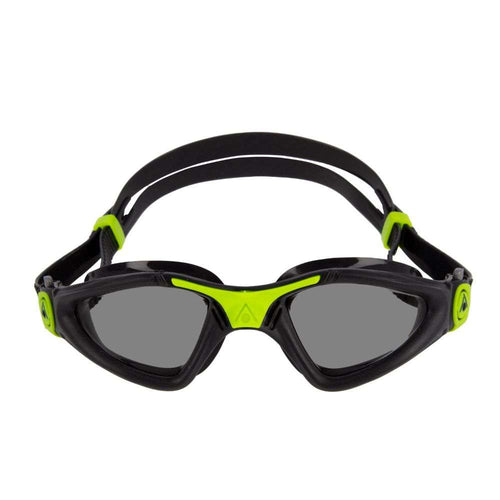
Aqua Sphere Kayenne Swim Goggles
Best fitness and leisure swim goggles for swimmers with leaking problems or face shapes that don't fit racing goggles. Flexible lens and wide silicone gasket tolerate face geometry variations that cause precision-fit racing goggles to leak. UV400 tinted lenses suitable for both indoor and outdoor pools. Larger frame accepts more hydrodynamic drag than racing goggles — not a competitive choice, but the most reliable seal across the widest range of face geometries in this comparison.
The Aqua Sphere Kayenne's flexible curved lens and wide soft silicone gasket create a secondary sealing surface that accommodates face geometries that cause precision-fit racing goggles to leak — including the flatter orbital profiles common in Asian facial structure. The larger frame adds hydrodynamic drag; not a competitive tool.
Pros
- ✓Flexible lens membrane creates a secondary seal — most forgiving fit across different face shapes and orbital geometries
- ✓Wide soft silicone gasket seals reliably without the overtightening that causes raccoon-eye marks
- ✓UV400 tinted lenses suitable for both indoor and outdoor pool use
Cons
- ✗Larger frame creates meaningful hydrodynamic drag — not suitable for competitive swimming or time trial efforts
Score breakdown
| Lens type | anti-fog & anti-scratch (clear/mirror/polarized options) |
| UV protection | Yes (100% UVA/UVB) |
| Gasket | silicone (Softeril soft skirt seal) |
| Use type | training/open-water |
| Strap | silicone strap with one-touch quick-fit buckle |
| Nose bridge | fixed stabilizing nose bridge (non-interchangeable) |

Barracuda Fenix Swim Goggles
Best budget swim goggles for beginner and recreational lap swimmers. UV400 anti-fog polycarbonate lenses, adequate seal for standard lap swimming, available in multiple lens colors including mirrored for outdoor use. Simpler strap adjustment than premium models. Covers all baseline goggle requirements at the lowest price in this comparison. The right choice for swimmers starting out or who swim recreationally without competitive goals — upgrade to the Vanquisher or Kayenne when fit or performance requirements specifically justify the cost.
Barracuda Fenix covers all baseline goggle requirements — UV400, anti-fog, adequate lap-swimming seal — at the lowest price in this comparison. The thermoplastic elastomer gasket and simpler buckle system are functional for recreational use. For beginners and 2–3 sessions per week fitness swimmers, the case for spending more is specific: competitive goals or fit requirements that the Fenix doesn't solve.
Pros
- ✓UV400 anti-fog polycarbonate lenses at the lowest price in this comparison
- ✓Available in mirrored variants for outdoor pool use — covers both indoor and outdoor use cases
- ✓Adequate seal for standard lap swimming without competitive fit precision
Cons
- ✗Simpler buckle system than premium models — less precise for frequent minor strap adjustments; gasket material less premium than silicone
Score breakdown
| Lens type | anti-fog coated (clear or mirror options) |
| UV protection | Yes (UV-blocking polycarbonate) |
| Gasket | TPR (TriFusion three-layer rubber seal) |
| Use type | training/racing |
| Strap | split silicone strap with rotatable side clips |
| Nose bridge | 3 interchangeable nose bridges (S/M/L) |
Which one is right for you?
For competitive pool swimmers and serious lap training
Speedo Vanquisher 2.0 Swim Goggles
Low-profile hydrodynamic shell with multiple nose bridge widths for fit adjustment — the proven competition tool that works equally well as a daily training goggle.
For triathletes and open-water swimmers
TYR Special Ops 2.0 Transition Swim Goggles
Polarized wide-angle lens and dual-strap system address the specific visual fatigue and wave-impact problems of open-water racing that pool goggles are not designed for.
For elite club and Masters competitive swimmers
Arena Cobra Ultra Swipe Racing Swim Goggles
The curved wraparound lens expands peripheral field of view beyond what the Vanquisher provides — a meaningful advantage for swimmers who prioritize maximum race-day optical performance.
For fitness and leisure swimmers who struggle with leaking goggles
Aqua Sphere Kayenne Swim Goggles
The flexible lens and wide soft gasket accommodate face geometries including flat Asian orbital profiles that cause racing goggles to leak — the most reliable seal in this comparison.
For beginners and recreational swimmers starting out
Barracuda Fenix Swim Goggles
UV400 anti-fog coverage at the lowest price in the comparison — all baseline requirements met, with a clear upgrade path to Vanquisher or Kayenne when training goals demand it.
Low-profile racing lenses: how Swedish-style and low-volume designs reduce drag
The defining characteristic of competitive swim goggles is the low-profile lens frame. Swedish-style goggles — the archetype of competitive racing eyewear — use a minimal hard plastic cup that sits directly against the orbital rim with no soft gasket at all; sealing pressure is created by suction between the rigid lens edge and the skin around the eye socket. The result is the smallest possible frontal area and essentially zero foam or silicone protruding beyond the face, which minimizes water resistance at race pace. The tradeoff is that they require careful fit adjustment and are uncomfortable for extended wear; most club swimmers reserve Swedish-style goggles for race day only.
The Speedo Vanquisher 2.0 sits one step above Swedish-style: it uses a thin silicone gasket rather than bare plastic, which makes it wearable for full training sessions while still maintaining a very low profile. The lens shape is relatively narrow, and the frame depth is minimal — the goggle sits mostly within the orbital rim rather than protruding from it. The Arena Cobra Ultra Swipe shares this design philosophy: a small, hydrodynamic shell with a curved lens that wraps slightly around the eye to expand the lateral field of view without adding frame bulk. Both are built for swimmers who want competition-day performance without the daily adjustment friction of a pure Swedish goggle.
Mirrored and tinted lenses, which both the Vanquisher 2.0 and the Cobra Ultra Swipe offer in multiple colorways, serve a practical function beyond aesthetics. In outdoor pools and open-water settings, glare from sun angle on the water surface creates visual noise that tinted lenses reduce. The mirror coating on the lens exterior also reflects a percentage of incoming light, lowering the total light transmission to the eye — blue and silver mirror coatings are neutral for overcast conditions, smoke and copper coatings increase contrast in varying light, and dark polarized lenses cut glare most aggressively. For indoor pool training, clear or lightly tinted lenses maximize visibility at the walls and turn markers without glare being a concern.
Anti-fog performance is the variable that determines whether a low-profile racing goggle stays useful through a full training season. All new goggles arrive with a factory anti-fog coating applied to the inner lens surface. This coating is a temporary hydrophilic layer that causes condensation to spread into a thin transparent film rather than forming discrete droplets that scatter light. The coating degrades with repeated water contact, and the single most damaging thing a swimmer can do to it is wipe the inside of the lens with a finger or cloth — the mechanical abrasion strips the hydrophilic layer faster than swimming does. Rinsing with clean water only and storing with lens caps extends coating life meaningfully. The Arena Cobra Ultra Swipe's marketing claims of a more durable anti-fog treatment compared to standard coatings; longevity comparisons in real-world use are mixed, but the coating does hold up longer than typical thin-layer treatments when the no-wiping rule is followed.
TYR Special Ops 2.0: the open-water and triathlon case
Open-water swimming places different demands on goggles than pool training does. The primary visibility challenge is not speed — it is sighting: the ability to lift the head briefly above the surface to locate buoys, landmarks, or other swimmers over distances of 50 to 200 meters. For triathlon and open-water racing, the field of view becomes a performance variable rather than just a comfort feature. The TYR Special Ops 2.0 is designed specifically for this use case: a polarized lens that cuts the glare and reflection off a choppy water surface, a curved wide-angle lens shape that expands the peripheral field of view in the horizontal plane, and a seal design that handles the wider range of entry conditions — shallow-angle dives, wave impacts, and head-lifting at speed — found in open water.
Polarized lenses block horizontally polarized light, which is the primary component of water-surface glare. In open water on a sunny day, non-polarized lenses cause significant visual fatigue from repeated glare exposure over a 1,500-meter or longer swim. Polarized lenses reduce this fatigue and improve clarity at the water surface, making sighting landmarks easier. The tradeoff in pool training is that polarized lenses slightly reduce total light transmission, which can make lane markers at depth slightly harder to read in poorly lit indoor pools — though this is a minor issue for most training environments.
The gasket construction on the Special Ops 2.0 uses a thicker silicone profile than most racing goggles, which contributes to both comfort over long-duration swims and a more forgiving seal across variations in orbital geometry. In a 3.8-kilometer Ironman swim, even minor gasket discomfort becomes a meaningful distraction; the softer, wider gasket trades the optimal hydrodynamic profile of a pure racing goggle for the wear tolerance that extended open-water efforts require. The strap adjustment system uses a dual-strap design — two parallel straps rather than a single strap — which distributes strap pressure across a wider area of the back of the head and reduces the likelihood of the goggle rotating under wave impact or repeated head-lifting.
Color selection matters more in open water than most swimmers realize before their first race. Smoke, blue, or gray lenses provide good general visibility in bright sunny conditions. Amber and yellow-tinted lenses enhance contrast in low-light conditions — overcast mornings, dawn swims, murky water with low visibility. Mirrored surfaces help with very bright midday sun but can oversuppress visibility in shadows and low-angle light. The Special Ops 2.0 is available in polarized smoke, which is the most versatile single selection for mixed-light open-water conditions.
Gasket fit and face shape: why the same goggle leaks for one swimmer and seals for another
Goggle leaking is the most common complaint about swim goggles, and in the majority of cases it is a fit issue rather than a product defect. The gasket — the silicone or foam ring that contacts the skin around the eye — must conform to the contour of the orbital rim for a watertight seal. The geometry of the orbital rim varies substantially between individuals: Asian facial bone structure tends to have a flatter orbital profile and less pronounced supraorbital ridge (brow ridge), which means goggles designed for Western facial geometry may sit unevenly on a flatter face, leaving a gap at the top of the gasket. Many manufacturers now offer Asia-fit variants of popular models specifically because of this geometric mismatch.
The Aqua Sphere Kayenne addresses the sealing problem differently from most racing goggles. Rather than relying on the gasket's exact fit to the orbital rim, the Kayenne uses a soft curved lens that extends beyond the edge of the silicone gasket and flexes against the face, creating a secondary sealing surface. The gasket is wide and soft — more like the material in a soft diving mask than a traditional swim goggle gasket. This design makes the Kayenne significantly more forgiving across different face shapes: the flexible lens membrane accommodates surface irregularities that would cause a rigid low-profile gasket to leak. The tradeoff is that the Kayenne's frame is considerably larger than any racing goggle, which creates meaningful water resistance at high speeds — it is not a competitive racing tool, but it provides the most reliable seal of any goggle in this comparison across the widest range of face geometries.
Suction pressure from the strap is a common overcorrection for leaking goggles that creates a new problem: excessive suction creates periorbital edema (raccoon eyes) and, over repeated sessions, can irritate the soft tissue around the eye socket. The correct strap tension allows the gasket to seal passively through its own geometry — not through strap pressure forcing the lens against the face. If a goggle requires tight strap tension to seal, the gasket geometry does not match the orbital profile; the correct solution is to try a different goggle model or a variant with a different fit profile, not to add more strap tension.
Nose bridge adjustment is the second major fit variable. Many goggles offer interchangeable nose bridges in multiple widths — the distance between the two lens cups. A nose bridge that is too narrow pulls the outer edges of the lens cups away from the face, creating a gap at the outer corner of the eye; a nose bridge that is too wide pushes the lens cups toward the nose and away from the orbital rim at the inner corner. Both conditions cause leaking. The Speedo Vanquisher 2.0 includes multiple nose bridges in the box; swapping nose bridges to find the correct interocular distance for your face geometry is the first adjustment step before concluding the goggle itself does not fit.
UV protection, lens tint, and outdoor swimming visibility
UV protection in swim goggles is specified as UV400 or as a percentage transmission figure for UVA and UVB wavelengths. UV400 means the lens blocks all light at or below 400 nanometers — effectively 100% UVA and UVB blocking. All five goggles in this comparison offer UV400 protection in their tinted and mirrored variants. Clear lenses may or may not have UV protection depending on whether the base polycarbonate material includes UV inhibitors; most modern competition goggles use polycarbonate with UV inhibitors even in clear variants, but this should be verified on product specification sheets for goggles used in extended outdoor training.
Visible light transmission (VLT) is the percentage of visible light that passes through the lens to the eye. A VLT of 80–100% (clear or very lightly tinted lenses) is appropriate for indoor pools and low-light conditions. A VLT of 50–70% (smoke, gray, or light blue tints) suits most outdoor conditions with variable cloud cover. A VLT of 15–40% (dark smoke, blue mirror, silver mirror) is appropriate for bright direct sunlight and is the correct choice for outdoor racing and ocean swimming on clear days. Polarized lenses typically have a VLT of 15–25% — very effective at cutting glare but reducing total scene brightness significantly.
For swimmers who train outdoors regularly, lens selection matters across different times of day and weather conditions. Many competitive swimmers maintain two pairs: a clear or light-tinted pair for indoor or early-morning outdoor training, and a dark mirrored or polarized pair for midday outdoor sessions. Single-lens solutions compromise in both directions — too dark for indoor use, not dark enough for bright midday sun. The Arena Cobra Ultra Swipe's lens swap feature partially addresses this: in some variants, the lens frame design allows exchangeable lens inserts, though this is more relevant for outdoor enthusiasts than competitive pool swimmers.
Photochromic lenses — which darken automatically in response to UV exposure — are available in a small number of swim goggle models, though not in the five comparison products here. The photochromic mechanism in swim goggles is less reliable than in eyeglasses because water temperature and UV intensity interact with the activation rate. Cold water slows the darkening response; the lens may be too light for bright sun or too dark for shade transition zones during a single swim in varying conditions. For swimmers who consistently train in mixed indoor/outdoor environments, photochromic goggles can be a practical single-pair solution, but the response characteristics should be verified before relying on them for racing.
Budget goggles and what the Barracuda Fenix actually delivers
Budget swim goggles occupy a genuine market position: adult-onset swimmers, recreational lap swimmers, and beginning open-water swimmers who want functional eye protection without the price of competitive equipment. The Barracuda Fenix is the most accessible price point in this comparison, and the relevant question is whether the cost reduction requires meaningful functional compromises for its target user.
The Fenix uses a standard thermoplastic elastomer gasket — softer and more flexible than rigid polycarbonate but firmer than the premium silicone used in the Vanquisher 2.0 and Cobra Ultra. For beginners and fitness swimmers who are not optimizing flip-turn pressure or race-pace seal durability, this material distinction is largely irrelevant in practice: the gasket seals adequately for standard lap swimming and will last a full season of recreational use. The lens is UV400 polycarbonate with a factory anti-fog coating — the same specification as the more expensive goggles — and the coating will degrade at a similar rate under similar care conditions.
Where budget goggles reliably underperform premium models is in strap system durability and nose bridge adjustment range. The Fenix uses a simpler buckle system than the tool-free adjustment mechanisms on the Vanquisher or Cobra Ultra. For experienced swimmers who make frequent minor strap adjustments to optimize fit across different hair styles, caps, and session intensities, the adjustment mechanism quality becomes noticeable. For a beginner who sets the strap length once and uses the same configuration for months, this difference is functionally invisible.
The Fenix is available in multiple lens colors including a mirrored version, which means it covers both indoor and outdoor use cases at its price point. For a swimmer doing 2–3 pool sessions per week without competitive goals, it represents the correct value-to-functionality trade in this comparison. The case for spending more on the Vanquisher or Kayenne is specific: competitive swimmers who need reliable race-day performance, swimmers with face geometry that requires the Kayenne's wider gasket format, or open-water swimmers who need the Special Ops 2.0's polarized wide-angle lens. The case for the Fenix is: everything else.
Verdict
The Speedo Vanquisher 2.0 is the correct choice for competitive pool swimmers and serious fitness swimmers who want a tested competition-day goggle for training. The low-profile silicone gasket, hydrodynamic shell, and multiple nose bridge widths address the core requirements of competitive swimming — minimized drag, reliable seal under flip-turn force, and adjustability for different facial geometries. The anti-fog coating lasts longer than many competitors when maintained correctly (no wiping). For swimmers training toward meets or time trials, it is the most proven option in this comparison.
Choose the TYR Special Ops 2.0 for triathlon and open-water swimming. The polarized wide-angle lens cuts water-surface glare over distances that make non-polarized goggles genuinely fatiguing, the dual-strap design handles wave and sighting impacts, and the thicker gasket tolerates the extended wear time that open-water and triathlon distances require. In a pool, it is technically adequate but overbuilt — the value of its open-water features does not manifest in a 25-meter lane.
Choose the Arena Cobra Ultra Swipe if competitive performance is the priority and you want a slightly wider lateral field of view than the Vanquisher provides. The curved lens wraps around the eye to expand peripheral visibility without sacrificing the low-profile frame that competitive swimmers need. The anti-fog coating claims durability advantages that hold up with correct care. For elite club swimmers and Masters competitors, the Cobra Ultra is the preferred tool.
Choose the Aqua Sphere Kayenne for fitness and leisure swimming, particularly if you have struggled with leaking goggles. The flexible lens and wide silicone gasket make it the most face-shape-agnostic goggle in this comparison — it works reliably across face geometries that cause problems for all of the racing options. The wider frame accepts UV-blocking tinted lenses appropriate for outdoor pool use. The trade is clear: you accept more hydrodynamic drag and a larger frame presence in exchange for the most comfortable, leak-resistant wear experience in the group.
Choose the Barracuda Fenix if you are starting out or want a functional pair without spending on competitive features you will not use. It covers all baseline requirements — UV400 protection, anti-fog coating, adequate seal for lap swimming — at the lowest price in this comparison. Upgrade to the Vanquisher or Kayenne when your training goals or fit requirements specifically justify the cost difference.
Product specifications in this comparison are drawn from manufacturer published data. Anti-fog durability reflects reported real-world use patterns. Pricing reflects standard retail and changes with color and lens variants. UV protection claims apply to tinted and mirrored variants; clear lens UV protection should be verified against each manufacturer's current product specification.