Best Swim Fins 2026: Training Fins for Every Stroke & Level
Swim fins serve one primary purpose in training: overload the legs enough to build kick strength, ankle flexibility, and swimming speed. But blade length, stiffness, and channel design determine whether fins help or hurt your technique. We tested five popular options with swimmers across skill levels.
Each product was evaluated on five criteria: build quality, performance under typical use, durability over time, comfort, and value per dollar. We weighted performance and durability highest because these determine whether a product is still useful 12 months later.
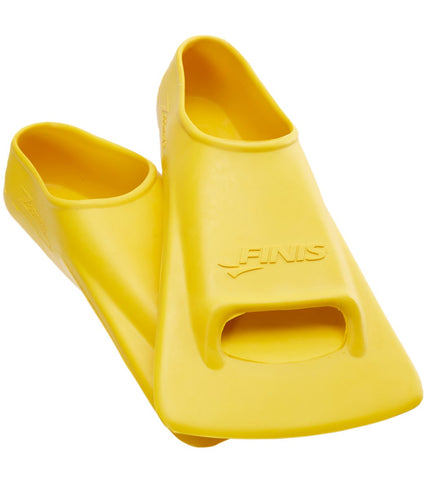
FINIS Zoomers Gold
Best for Technique: Zoomers are the industry standard for competitive swim training. The short blade forces a faster, more compact kick cycle that translates directly to freestyle technique — long fins let you cheat with a lazy kick.
Top picks ↓| Product | Price | Link |
|---|---|---|
| $37.99 | View deal → | |
| $34.99 | View deal → | |
| $59.99 | View deal → | |
| $113.36 | View deal → | |
| $29.99 | View deal → |
Top picks
Related articles
FINIS Zoomers Gold
Zoomers are the industry standard for competitive swim training. The short blade forces a faster, more compact kick cycle that translates directly to freestyle technique — long fins let you cheat with a lazy kick. The stiff but compliant rubber holds the foot angle without overcorrecting. Ankle rotation is natural. They're uncomfortable if you have stiff ankles, which is the point — they're building the flexibility you lack. Used by more competitive swimmers than any other fin on this list.
0| Blade type | short |
| Material | rubber |
| Foot pocket | closed heel |
| Use type | training |
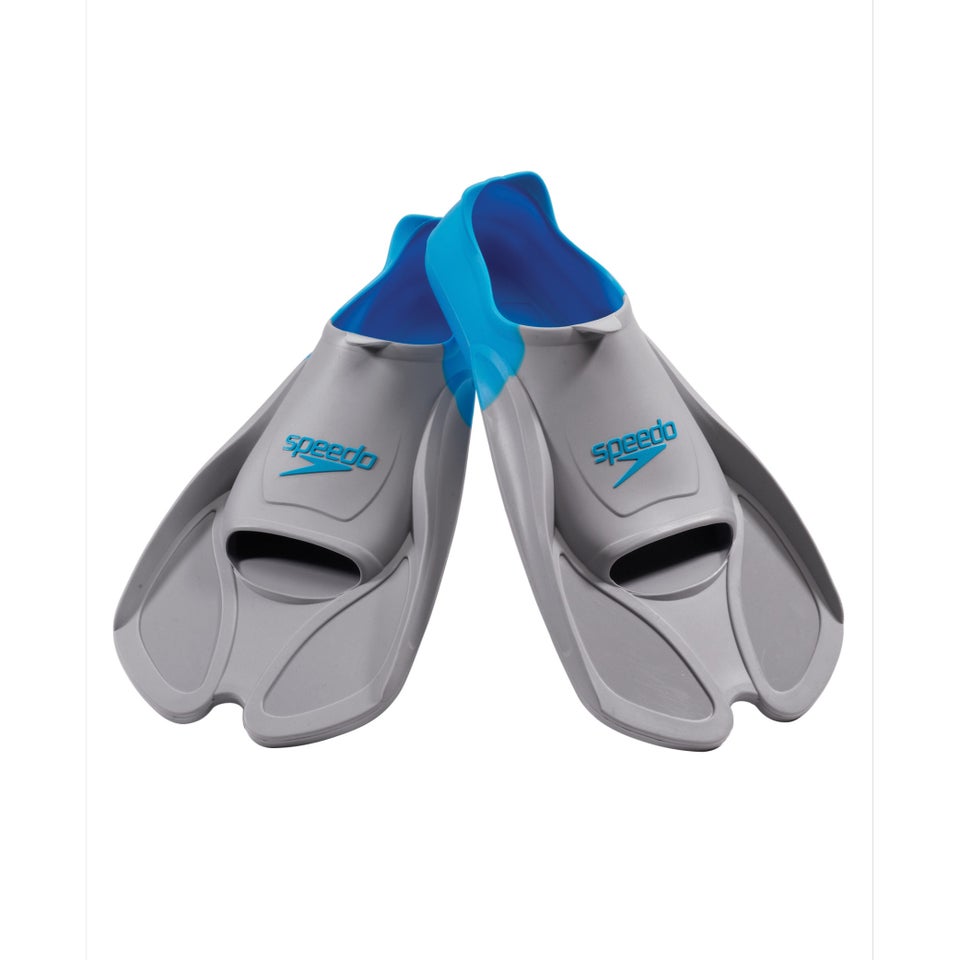
Speedo Biofuse Training Fin
Speedo's Biofuse fins bridge the gap between pure short-blade technique fins and longer recreational fins. Medium blade length gives enough propulsion for full-stroke sets without the ankle fatigue of true short fins. The split fin channel reduces drag on the recovery phase. Softer rubber than Zoomers makes them more accessible for swimmers who haven't built ankle flexibility yet. Good for mixed sets — kick sets, full stroke, pulling — without changing fins between drills.
0| Blade type | short |
| Material | silicone |
| Foot pocket | closed heel |
| Use type | training |

Arena Powerfin Pro
Arena Powerfin Pro has a split blade design with two channels that independently flex during the kick cycle. This reduces the stiffness felt on the downkick while maintaining resistance on the upkick — important for developing a balanced two-beat and six-beat kick. The foot pocket is ergonomic with a heel tab for removal. Noticeably easier on the calves during long kick sets compared to stiff monoblade fins. Good choice for masters swimmers or anyone doing high-volume kick work.
0| Blade type | short |
| Material | silicone |
| Foot pocket | open heel |
| Use type | training |
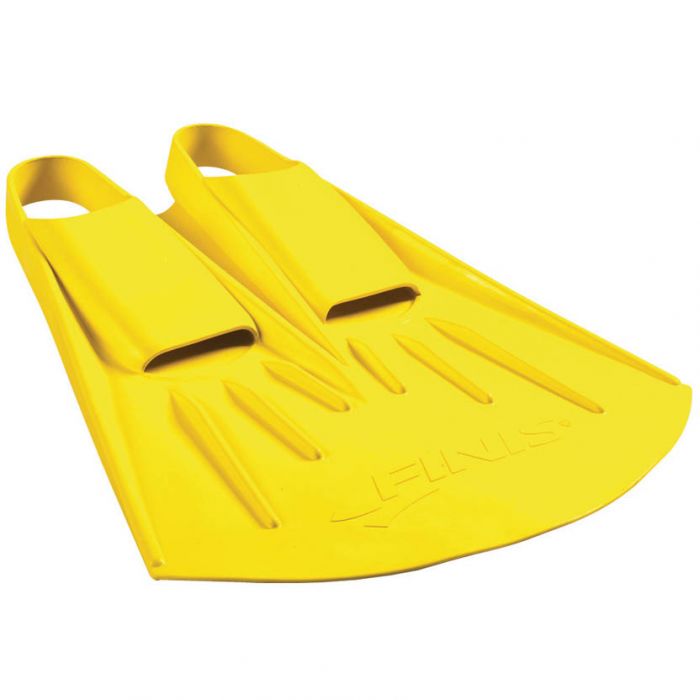
FINIS Foil Monofin
The only monofin on this list, and it serves a different purpose: dolphin kick development and undulation drills. The connected blade forces the body into a wavelike motion from the hips, which is the foundation for butterfly and underwater turns. Not for casual training — it requires deliberate drills and good body awareness. Used in competitive breaststroke and butterfly programs. If you're serious about butterfly or underwater dolphin kick, the Foil develops the hip-driven undulation that separate fins can't teach.
0| Blade type | mono |
| Material | rubber |
| Foot pocket | open heel |
| Use type | training |
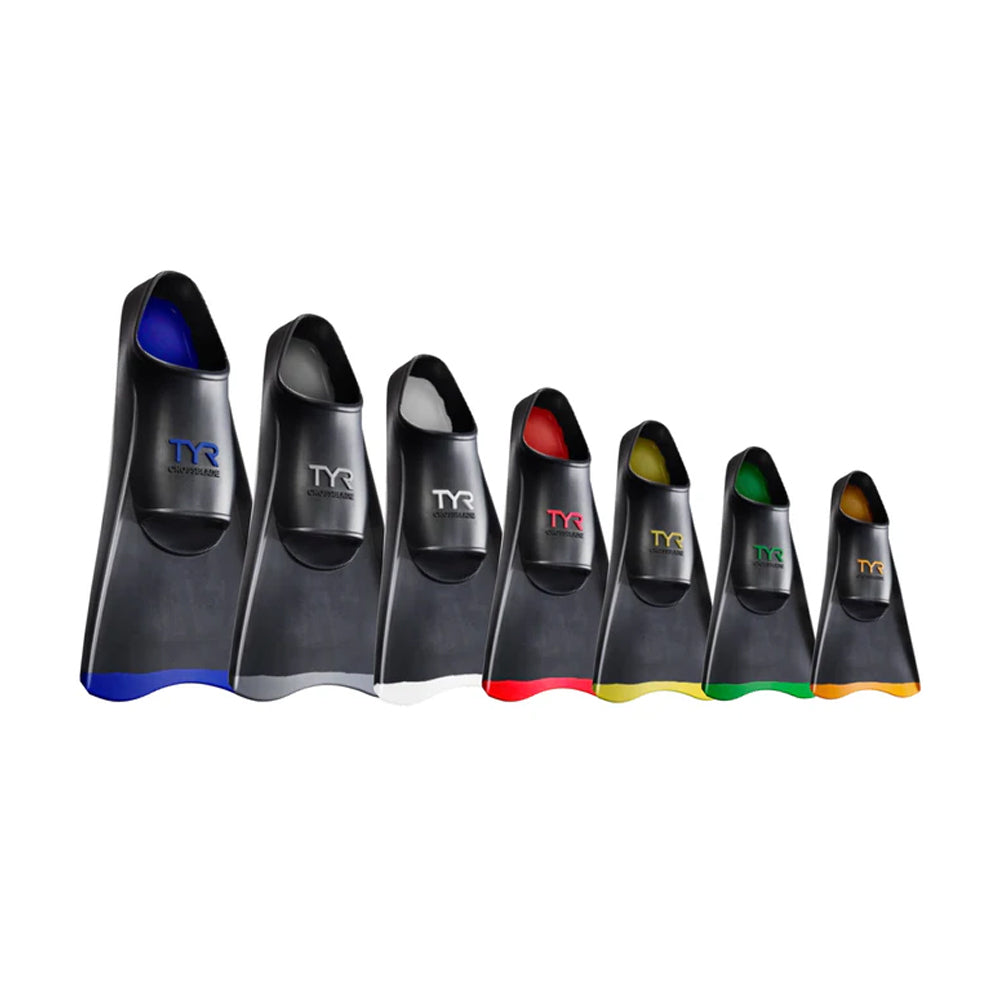
TYR Crossblade Trainer
TYR Crossblade offers short-blade training functionality at an entry-level price. Solid rubber construction, reasonable foot pocket fit, adequate stiffness for building kick speed. Not as refined as FINIS or Arena — the foot pocket can be slightly imprecise depending on foot width, and the rubber feels slightly cheap long-term. But for a swimmer just starting to use fins in practice, or a team looking to equip multiple athletes economically, the Crossblade delivers the core benefit at a lower cost.
0| Blade type | short |
| Material | rubber |
| Foot pocket | closed heel |
| Use type | training |
Which one is right for you?
Best for Technique
FINIS Zoomers Gold
Zoomers are the industry standard for competitive swim training.
Best All-Round Training Fin
Speedo Biofuse Training Fin
Speedo's Biofuse fins bridge the gap between pure short-blade technique fins and longer recreational fins.
Best for Kicking Sets
Arena Powerfin Pro
Arena Powerfin Pro has a split blade design with two channels that independently flex during the kick cycle.
Best Monofin
FINIS Foil Monofin
The only monofin on this list, and it serves a different purpose: dolphin kick development and undulation drills.
Best Budget Training Fin
TYR Crossblade Trainer
TYR Crossblade offers short-blade training functionality at an entry-level price.
How to Choose Swim Fins
Blade length and stiffness determine what a fin trains. Here's how to match fins to your goals.
Bottom line
FINIS Zoomers Gold remains the benchmark for competitive technique training — uncomfortable on purpose, excellent for developing a fast, efficient kick. For mixed training sets without fin changes, Speedo Biofuse offers the best versatility. Butterfly and dolphin kick work benefits most from the FINIS Foil monofin. Budget-conscious teams or beginners should consider the TYR Crossblade as a solid entry point before committing to premium fins.
