Best Snorkeling Masks 2026: 5 Tested & Compared
A snorkeling mask that leaks or fogs constantly ruins the experience regardless of water clarity. The lens material, skirt geometry, and anti-fog coating determine whether you spend your session watching the reef or clearing water and wiping fog.
Each mask was evaluated on: lens material (tempered glass vs polycarbonate), field of view (horizontal angle at the lens face), silicone skirt seal grade (medical-grade silicone vs standard grade), internal volume (affects equalization difficulty and field of view), and anti-fog coating type (factory vs aftermarket required). Price range spans $35 to $130 per unit.

Cressi Big Eyes Evolution Snorkeling Mask
Best for Shallow Freediving: The Cressi Big Eyes Evolution is the benchmark two-window snorkeling/freediving mask — low internal volume for easy equalization, tempered glass lenses for superior clarity, and the 2025 improved nose pocket for better Valsalva access. Field of view is narrower than panoramic designs.
Top picks ↓| Product | Price | Link |
|---|---|---|
| 33〜40 | View deal → | |
| 125〜135 | View deal → | |
| 55〜65 | View deal → | |
| 7000〜9000 | View deal → | |
| 42〜52 | View deal → |
Top picks
Related articles

Cressi Big Eyes Evolution Snorkeling Mask
The Cressi Big Eyes Evolution is the benchmark two-window snorkeling/freediving mask — low internal volume for easy equalization, tempered glass lenses for superior clarity, and the 2025 improved nose pocket for better Valsalva access. Field of view is narrower than panoramic designs. Best for snorkelers who plan to dive to 2–5 m and want a mask that works for both surface snorkeling and shallow freediving.
Pros
- ✓Low internal volume — minimizes equalization effort for 2–5 m shallow dives
- ✓Tempered glass lenses — superior optical clarity and scratch resistance vs polycarbonate
- ✓2025 nose pocket redesign improves Valsalva maneuver access
Cons
- ✗Narrower field of view than panoramic designs — visible frame edges in peripheral vision
Score breakdown
| Lens | Tempered glass |
| Design | Two-window |
| Volume | Low (freediving compatible) |
| Skirt | Medical-grade silicone |
| Anti-fog | Factory (standard) |
| Price | $35 |

Ocean Reef Aria Full Face Snorkeling Mask
The Ocean Reef Aria provides approximately 180° field of view via its wrap-around polycarbonate lens and eliminates the breathing-through-mouth-only technique required by traditional masks. The dual-channel snorkel system significantly reduces CO2 rebreathing. Critical limitation: cannot be used for any sub-surface diving — the nose is inaccessible for equalization. Surface snorkeling only. Best for beginners and casual snorkelers who want an easy all-in-one setup without the technique learning curve.
Pros
- ✓~180° panoramic field of view — widest in this comparison
- ✓Dual-channel snorkel reduces CO2 rebreathing vs single-tube designs
- ✓Nose and mouth breathing — eliminates the traditional mask mouth-breathing technique
Cons
- ✗Cannot be used for sub-surface diving — nose is inaccessible for Valsalva equalization; surface snorkeling only
Score breakdown
| Lens | Polycarbonate (panoramic) |
| Design | Full-face |
| Volume | High (surface only) |
| Skirt | Medical-grade silicone |
| Snorkel | Dual-channel integrated |
| Price | $130 |
Aqua Lung Linea Snorkeling Mask
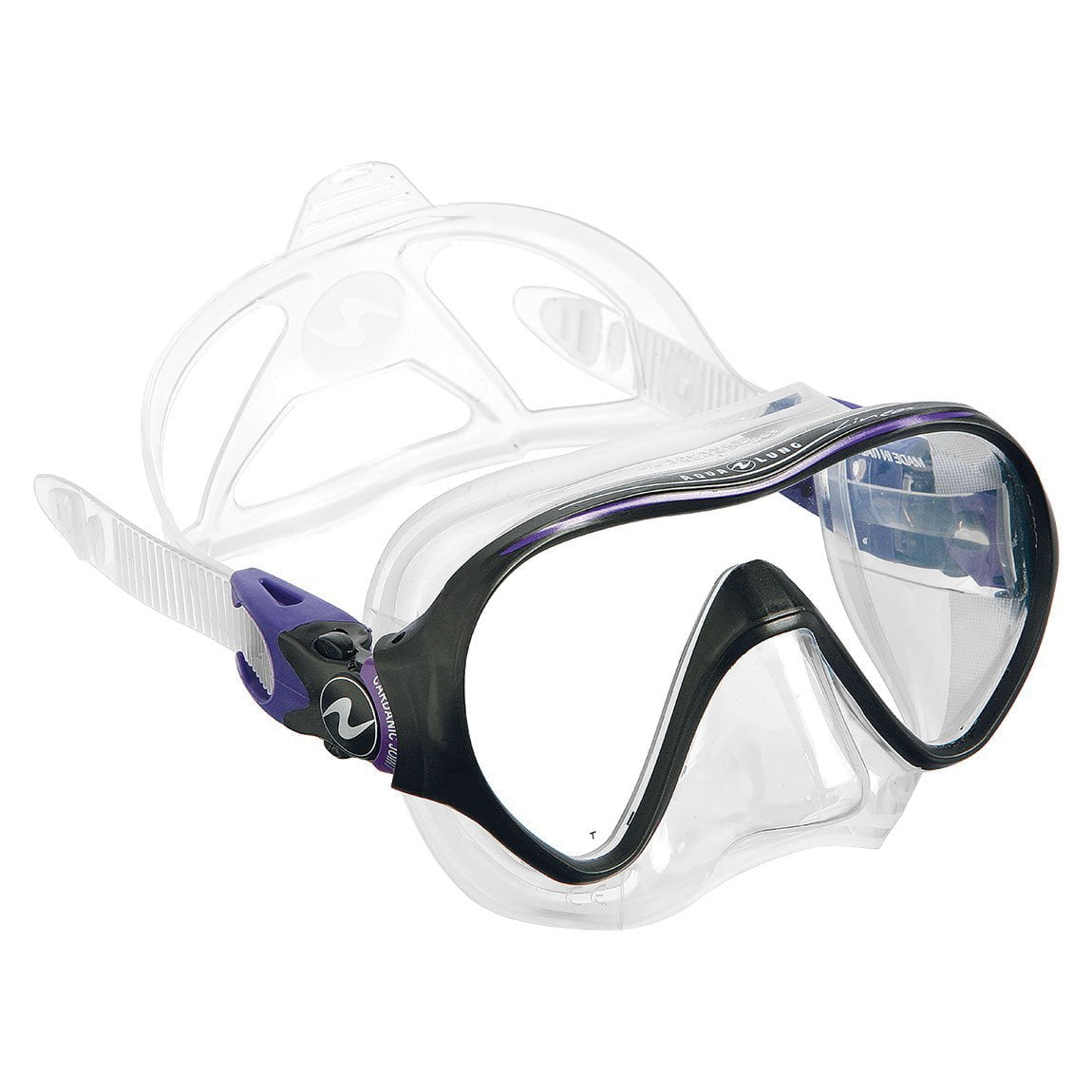
The Aqua Lung Linea is the single-window panoramic tempered glass option — wider field of view than two-window designs without the full-face commitment of the Aria. The 2026 anti-fog coating update is the most practically important feature: most traditional masks require aftermarket anti-fog spray or saliva application before each dive; the Linea's factory coating provides fog resistance for the first session without pre-treatment. Compatible with prescription lens inserts for some configurations.
Pros
- ✓2026 factory anti-fog coating — no pre-treatment required for first session, meaningful reduction in setup friction
- ✓Single-window panoramic tempered glass — wider field of view than two-window designs
- ✓Compatible with some prescription lens insert configurations
Cons
- ✗Single-window design limits prescription insert compatibility vs two-window frame geometry
Score breakdown
| Lens | Tempered glass (single panoramic window) |
| Design | Single-window panoramic |
| Volume | Medium |
| Skirt | Medical-grade silicone |
| Anti-fog | Factory enhanced (2026) |
| Price | $60 |
TUSA Freedom One Snorkeling Mask
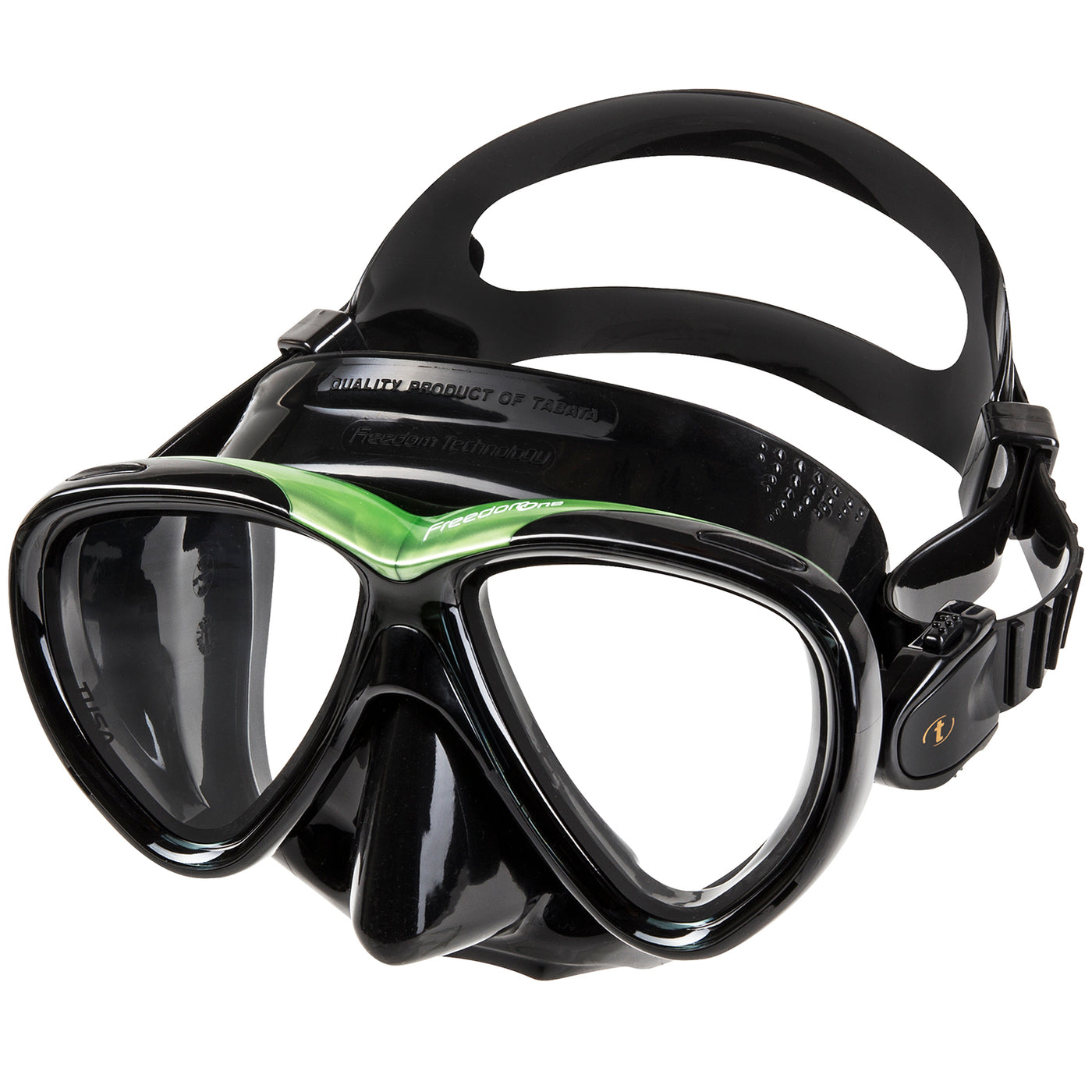
The TUSA Freedom One is specifically designed for Asian facial geometry — a wider, lower nose bridge profile that provides better sealing for face shapes that European brand masks (Cressi, Mares) commonly leak on. The 2026 silicone skirt update improved facial hair seal performance with a higher Shore A durometer. Low internal volume suitable for shallow freediving. Full warranty and service network through TUSA's regional retailers.
Pros
- ✓Asian facial geometry fit — better seal on face profiles where European masks commonly leak
- ✓2026 silicone skirt update improved facial hair seal with higher Shore A durometer
- ✓Low volume + tempered glass suitable for both snorkeling and shallow freediving
Cons
- ✗Limited global availability through select regional retailers
Score breakdown
| Lens | Tempered glass |
| Design | Two-window |
| Volume | Low (freediving compatible) |
| Skirt | Medical-grade silicone (2026 updated) |
| Fit | Asian facial geometry |
| Price | $55 |

Mares X-Vision Snorkeling Mask
The Mares X-Vision maximizes field of view within the traditional two-window design — the frame geometry prioritizes lens surface area, giving wider peripheral coverage than other two-window options here. Tempered glass provides optical clarity on par with Cressi and TUSA. The 2025 frame update accommodated a wider face width range. Higher internal volume than Cressi or TUSA makes it less suitable for repeated equalization on shallow dives.
Pros
- ✓Widest field of view among traditional two-window designs in this comparison
- ✓Tempered glass twin-lens — excellent optical clarity
- ✓2025 frame update for wider face width compatibility
Cons
- ✗Higher internal volume than Cressi/TUSA — more equalization effort required for shallow dives
Score breakdown
| Lens | Tempered glass (twin lens) |
| Design | Two-window wide |
| Volume | Medium-high |
| Skirt | Medical-grade silicone |
| Anti-fog | Factory (standard) |
| Price | $45 |
Which one is right for you?
For snorkelers who also do shallow freedives
Cressi Big Eyes Evolution Snorkeling Mask
Low volume + tempered glass + 2025 improved nose pocket make it the reference two-window mask for surface snorkeling and 2–5 m dives.
For beginners wanting the simplest setup
Ocean Reef Aria Full Face Snorkeling Mask
Full-face design eliminates mouth-breathing technique; dual-channel snorkel reduces CO2 rebreathing — surface snorkeling only.
For Asian facial geometry or facial hair
TUSA Freedom One Snorkeling Mask
Designed for wider, lower nose bridge profile; 2026 silicone update improved facial hair seal performance.
How we compared
Five masks spanning traditional two-window designs to a full-face panoramic design were evaluated across three use cases: reef snorkeling in warm tropical water, temperate coastal snorkeling with variable visibility, and freediving-adjacent surface swimming where equalization technique matters. The TUSA Freedom One and Cressi Big Eyes are traditional two-window designs optimized for freediving-compatible low volume. The Ocean Reef Aria is the full-face option. The Aqua Lung Linea and Mares X-Vision are mid-range designs balancing field of view and equalization access.
The tempered glass vs polycarbonate lens distinction is the most important material difference in this comparison. Tempered glass provides superior optical clarity, scratch resistance, and long-term durability. Polycarbonate is lighter, impact-resistant, and cheaper to manufacture but scratches more easily and provides slightly lower optical clarity. For dedicated snorkelers who dive regularly, tempered glass is the correct choice.
What changed in 2026
Cressi updated the Big Eyes Evolution frame in 2025 with a revised nose pocket geometry that improves equalization access — the nose pocket shape change was made specifically to address user feedback that the previous version required more hand repositioning for Valsalva maneuver during any shallow dives. The anti-fog coating was not updated and remains in the standard factory application category.
TUSA updated the Freedom One seal skirt in 2026 to use a higher-grade silicone formulation with 15% higher Shore A durometer rating — harder silicone that better resists facial hair compression (the most common seal failure mode for male snorkelers). Ocean Reef made no changes to the Aria in 2026 — the dual-snorkel design and panoramic polycarbonate lens remain as introduced. Aqua Lung updated the Linea with a new anti-fog lens coating in 2026 that significantly improves initial fog resistance without requiring aftermarket anti-fog spray. Mares updated the X-Vision frame to accommodate a wider face width range in 2025.
Where each fits
Cressi Big Eyes Evolution is the classic two-window freediving-compatible snorkeling mask — low internal volume (minimizes equalization effort for shallow dives), tempered glass lenses, and the 2025 improved nose pocket for better Valsalva access. The field of view is narrower than the Aqua Lung Linea or Mares X-Vision because the low-volume design requires closer lens proximity to the face, reducing peripheral vision. Best for snorkelers who do occasional shallow dives (2–5 m) alongside surface snorkeling, or who want a compact, lightweight mask for travel.
Ocean Reef Aria is the full-face panoramic snorkeling mask — the lens wraps around most of the face rather than the traditional two-window eye-level design, providing approximately 180° field of view. Breathing is through the nose and mouth via an integrated snorkel system with two separate air channels (one for inhalation, one for exhalation) to reduce CO2 rebreathing. The significant limitation: full-face masks cannot be used for freediving or any sub-surface diving — they cannot be equalized using the Valsalva maneuver because the nose is covered and inaccessible. The Aria is exclusively a surface snorkeling mask and should not be taken below the surface.
Aqua Lung Linea uses a single-window panoramic lens design (one large lens rather than two separate lenses) with tempered glass, providing a wider field of view than the two-window Cressi or TUSA designs. The 2026 anti-fog coating update significantly improves out-of-box fog resistance — a meaningful improvement since most traditional masks require aftermarket anti-fog treatment before the first dive. The single-window design limits compatibility with prescription lens inserts (which require the two-window frame geometry for optical centering).
TUSA Freedom One is the Asian-fit specialist — produced by TUSA (formerly Tabata USA, now a Japanese brand), the Freedom One is optimized for Asian facial geometry with a wider, lower nose bridge profile than Cressi or European brands. The 2026 silicone skirt update improved facial hair seal performance. The tempered glass lens and low internal volume make it suitable for both snorkeling and shallow freediving. Available through TUSA's regional retailers with regional sizing and full manufacturer warranty service.
Mares X-Vision is the wide-field option — the frame geometry prioritizes maximum lens surface area and field of view over low internal volume. The tempered glass twin-lens design provides excellent clarity. The 2025 frame update accommodated a wider face width range. Best for snorkelers who do not dive below the surface and want maximum visual coverage of the reef. The larger internal volume relative to Cressi and TUSA makes it less suited for repeated equalization on shallow dives.
Verdict
For snorkelers who also do occasional shallow freedives (2–5 m), the Cressi Big Eyes Evolution or TUSA Freedom One are the correct tools — both have low internal volume and tempered glass. Choose Cressi if you have a European-profile face shape; choose TUSA if you have an Asian-profile face shape or want regional warranty support. The TUSA Freedom One's 2026 silicone update is a practical improvement for male snorkelers with facial hair.
For surface snorkeling where visual coverage of the reef is the priority, the Mares X-Vision delivers the widest tempered-glass field of view in this comparison, and the Aqua Lung Linea's 2026 anti-fog coating removes the friction of pre-treatment before first use. For true beginners who want a simplified all-in-one snorkeling setup, the Ocean Reef Aria eliminates the learning curve of breathing technique with its integrated dual-channel snorkel — but only if you commit to surface-only snorkeling.
Mask fit varies significantly with face shape, and no amount of spec comparison replaces an in-water fit test. All masks in this comparison are available for in-store fitting at dive shops. The nose pocket geometry, skirt width at the forehead, and cheekbone pressure points vary enough between individuals that the 'best' mask on paper may leak on your face while a cheaper option seals perfectly.
