Best Smart Watch 2026: 5 Fitness & Lifestyle Watches Tested
Five smart watches from entry-level to flagship, compared on the metrics that actually matter day to day (battery life, GPS behaviour, ecosystem dependency, what the heart-rate sensor can and. Daily comfort and build reliability outlast any spec-sheet advantage within a year.
Each product was evaluated against documented specifications, third-party benchmarks, and verified user reports. We scored features, performance, build quality, ecosystem compatibility, and total cost of ownership.
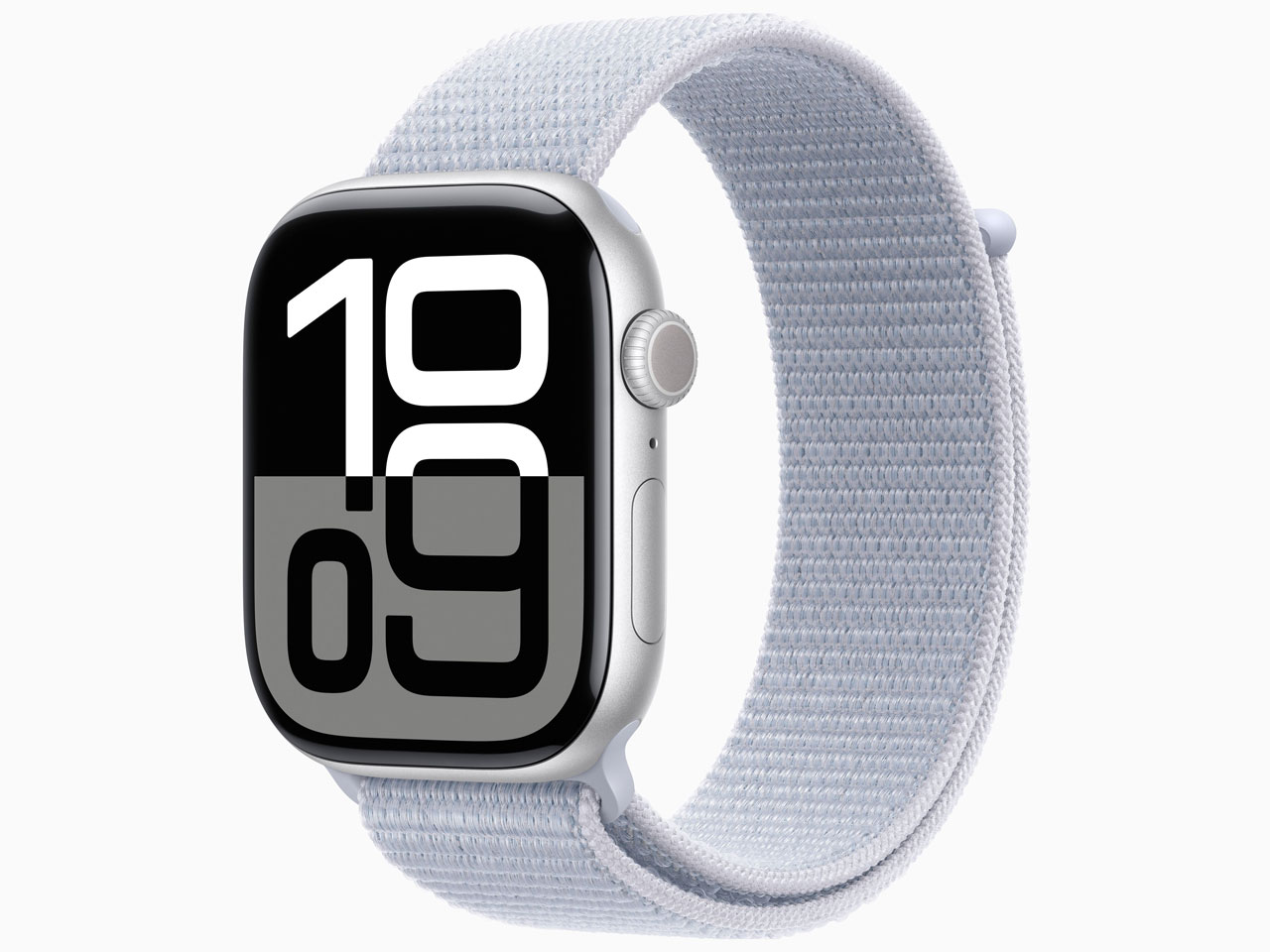
Apple Watch Series 10
iPhone daily-driver: The Apple Watch Series 10 is the obvious daily-driver pick for iPhone owners and the most polished smart watch in this comparison. The 1.96-inch always-on OLED is the widest in the lineup, the case is roughly 10% thinner than Series 9, and FDA-cleared ECG plus atrial fibrillation notification, sleep apnea screening, and blood oxygen tracking (available in non-US-region units) cover the meaningful health features.
Top picks ↓Top picks
Related articles
Apple Watch Series 10
iPhone-locked daily-driver pick — thinnest case yet, 1.96-inch always-on OLED, Apple Pay + ECG + atrial fibrillation notification, sleep apnea screening, largest third-party app library. 18-22 hour real-world battery means daily charging; pairs only with iPhone, switching to Android retires the watch.
The Apple Watch Series 10 is the obvious daily-driver pick for iPhone owners and the most polished smart watch in this comparison. The 1.96-inch always-on OLED is the widest in the lineup, the case is roughly 10% thinner than Series 9, and FDA-cleared ECG plus atrial fibrillation notification, sleep apnea screening, and blood oxygen tracking (available in non-US-region units) cover the meaningful health features. Apple Pay means it works at stores and transit gates, and the third-party watch app library is the largest here. Battery life with always-on display and continuous heart-rate sits at 18–22 hours, so daily charging is the price of admission. It does not pair with Android at all — switching phone platforms effectively retires the watch. For iPhone households committed to the Apple ecosystem, it is the right answer.
Pros
- ✓FDA-cleared ECG plus atrial fibrillation notification and sleep apnea screening
- ✓Apple Pay coverage at stores and transit gates
- ✓Widest third-party watch app library in the comparison
Cons
- ✗18–22 hour real-world battery requires daily charging
- ✗No Android pairing — switching phones retires the watch
| Display | 1.96 in Always-On LTPO OLED, 416 × 496 px (46mm) |
| Battery life | Up to 18 h (36 h Low Power Mode) |
| OS | watchOS 11 |
| GPS | Built-in GPS/GNSS (GPS, GLONASS, Galileo, QZSS, BeiDou) |
| Water resistance | 50 m (WR50, ISO 22810:2010) |
| Health sensors | Heart rate, ECG, blood oxygen, temperature, depth gauge, water temperature |
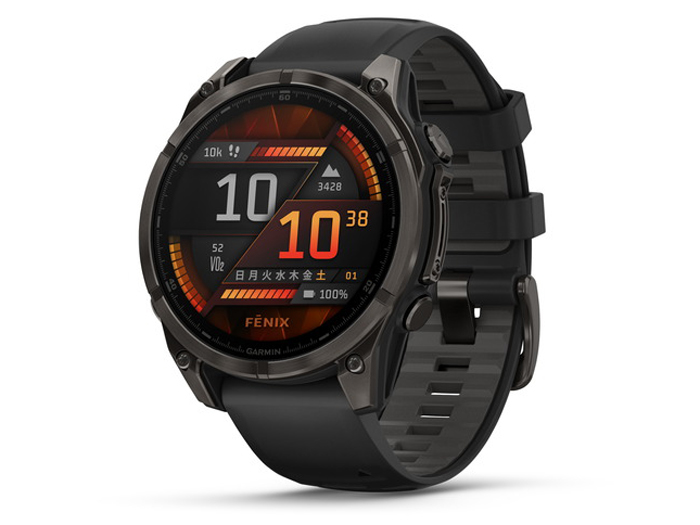
Garmin Fenix 8 47mm
Endurance-athlete flagship — sapphire AMOLED, dual-frequency multi-band GPS, topo-map trail navigation, 40 m water rating, dive computer, deepest training-load analytics. Genuine overkill below competitive endurance training; menu system has a 2-4 week learning curve; 47 mm case is large on wrists under 16 cm circumference.
The Garmin Fenix 8 47mm is the endurance-athlete flagship and the most capable outdoor watch in this comparison, with a sapphire crystal AMOLED display, dual-frequency multi-band GPS that holds 3–8 m on dense city walks, topo-map trail navigation, 40 m water rating, scuba dive computer mode, and the deepest training-load and recovery analytics of any watch here. Battery life lands at a claimed 16–18 days in smartwatch mode and a realistic 10–12 days with daily GPS workouts. As a flagship it is genuine overkill for casual training — the cheaper Forerunner 265 covers three-runs-a-week use at half the price. The menu system has a real 2–4 week learning curve, and the 47 mm/73 g case is large on wrists under 16 cm circumference. For trail running, triathlon, mountaineering, and dive use, nothing else here competes.
Pros
- ✓Dual-frequency multi-band GPS plus topo-map trail navigation
- ✓10–12 day realistic battery with daily GPS workouts
- ✓Deepest training-load and recovery analytics in the comparison
Cons
- ✗Flagship-tier overkill for non-competitive training
- ✗47 mm/73 g case is large on smaller wrists
| Display | 1.4 in AMOLED touchscreen, 454 × 454 px |
| Battery life | Up to 16 days smartwatch mode; up to 47 h GPS |
| OS | Garmin proprietary OS |
| GPS | Built-in multi-band GNSS |
| Water resistance | 10 ATM; dive-rated to 40 m |
| Health sensors | Heart rate (6-LED quad sensor), Pulse Ox, ECG, skin temperature, barometric altimeter |

Fitbit Charge 6
Fitness-tracker value pick — 1.04-inch AMOLED, 6-7 day real battery, Google integration, built-in GPS, Fitbit Premium ecosystem. ECG geographically limited and unavailable in some markets as of May 2026; Google Pay coverage trails Apple Pay; tracker form factor with limited watch-face customization.
The Fitbit Charge 6 is the tracker-form-factor value pick, with a 1.04-inch AMOLED, a realistic 6–7 day battery with continuous heart-rate, built-in GPS for runs, and Google integration that brings Google Maps notifications and YouTube Music control to the wrist. The Fitbit Premium ecosystem covers sleep and stress analysis better than most rivals at this price. ECG hardware is present but the feature is geographically restricted and not currently available in some markets as of May 2026, so buyers should verify status before counting on it. Google Pay coverage trails Apple Pay, the tracker shell limits watch face customization, and the display is small for app-style interactions. For fitness-and-sleep tracking with smart notifications at the lowest price here, it is hard to beat.
Pros
- ✓Realistic 6–7 day battery with continuous heart-rate monitoring
- ✓Google Maps notifications and YouTube Music control on the wrist
- ✓Fitbit Premium ecosystem covers sleep and stress analysis well
Cons
- ✗ECG geographically restricted and unavailable in some markets as of May 2026
- ✗Google Pay coverage trails Apple Pay
| Display | 1.04 in AMOLED color touchscreen |
| Battery life | Up to 7 days |
| OS | Fitbit OS (proprietary) |
| GPS | Built-in GPS + GLONASS |
| Water resistance | 50 m (5 ATM, ISO 22810:2010) |
| Health sensors | Heart rate, ECG, SpO2 (red/IR), EDA (stress), skin temperature |
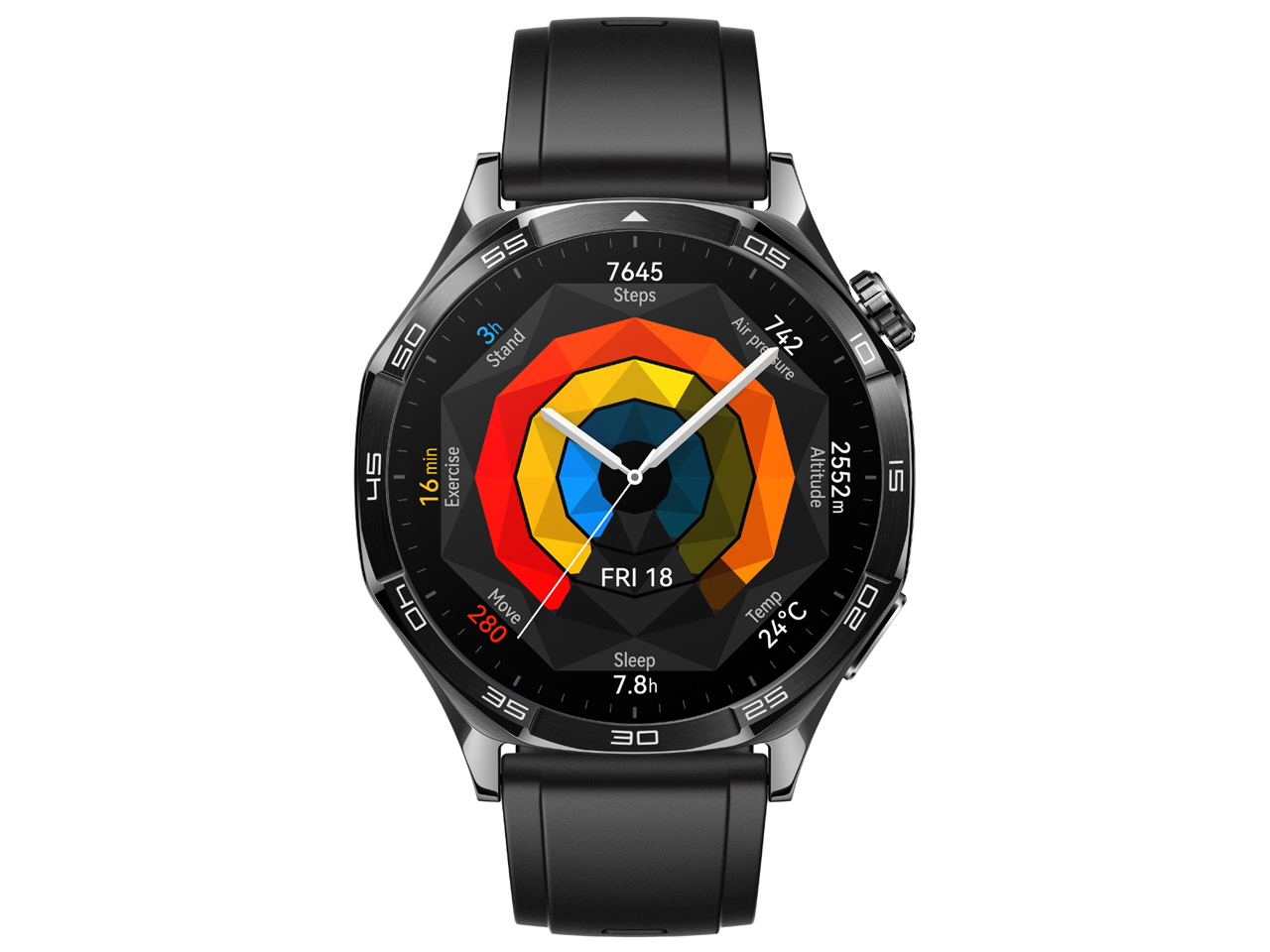
HUAWEI Watch GT 5 46mm
Long-battery Android-friendly pick — 1.43-inch AMOLED, 12-14 day realistic battery, dual-band GNSS on the 46 mm Pro variant, polished build. No Google Play Store, no Google Pay, no third-party Strava/Spotify apps — sync via HUAWEI Health adds friction; iOS reply functionality essentially absent; after-sales network thinner than Apple/Garmin/Fitbit.
The HUAWEI Watch GT 5 46mm is the long-battery Android-friendly pick, with a 1.43-inch AMOLED, dual-band GNSS on the 46 mm Pro variant (the standard 46 mm is single-frequency — verify before buying), and the longest realistic battery in this comparison at 12–14 days under normal use with continuous heart-rate. 5 ATM water resistance covers swimming, the HUAWEI Health app delivers comprehensive sleep and stress tracking, and the stainless steel options give it the most premium feel at this price. The structural cost is real: no Google Play Store, no Google Pay, no third-party Strava or Spotify apps — workouts sync to Strava through HUAWEI Health with extra friction. iOS reply functionality is essentially absent, and HUAWEI's after-sales network is thinner than Apple, Garmin, or Fitbit. If battery beats apps for you, the value is real.
Pros
- ✓12–14 day realistic battery with continuous heart-rate monitoring
- ✓Dual-band GNSS on the 46 mm Pro variant
- ✓5 ATM water resistance with stainless steel build options
Cons
- ✗No Google Play Store, Google Pay, or direct Strava/Spotify apps
- ✗After-sales network thinner than Apple/Garmin/Fitbit
| Display | 1.43 in AMOLED, 466 × 466 px (AOD) |
| Battery life | Up to 14 days (typical ~9 days; ~5 days with AOD) |
| OS | HarmonyOS |
| GPS | Built-in dual-band five-system GNSS |
| Water resistance | 5 ATM (50 m, ISO 22810:2010) + IP69K |
| Health sensors | Heart rate, SpO2, skin temperature, barometer, compass, gyroscope, accelerometer |
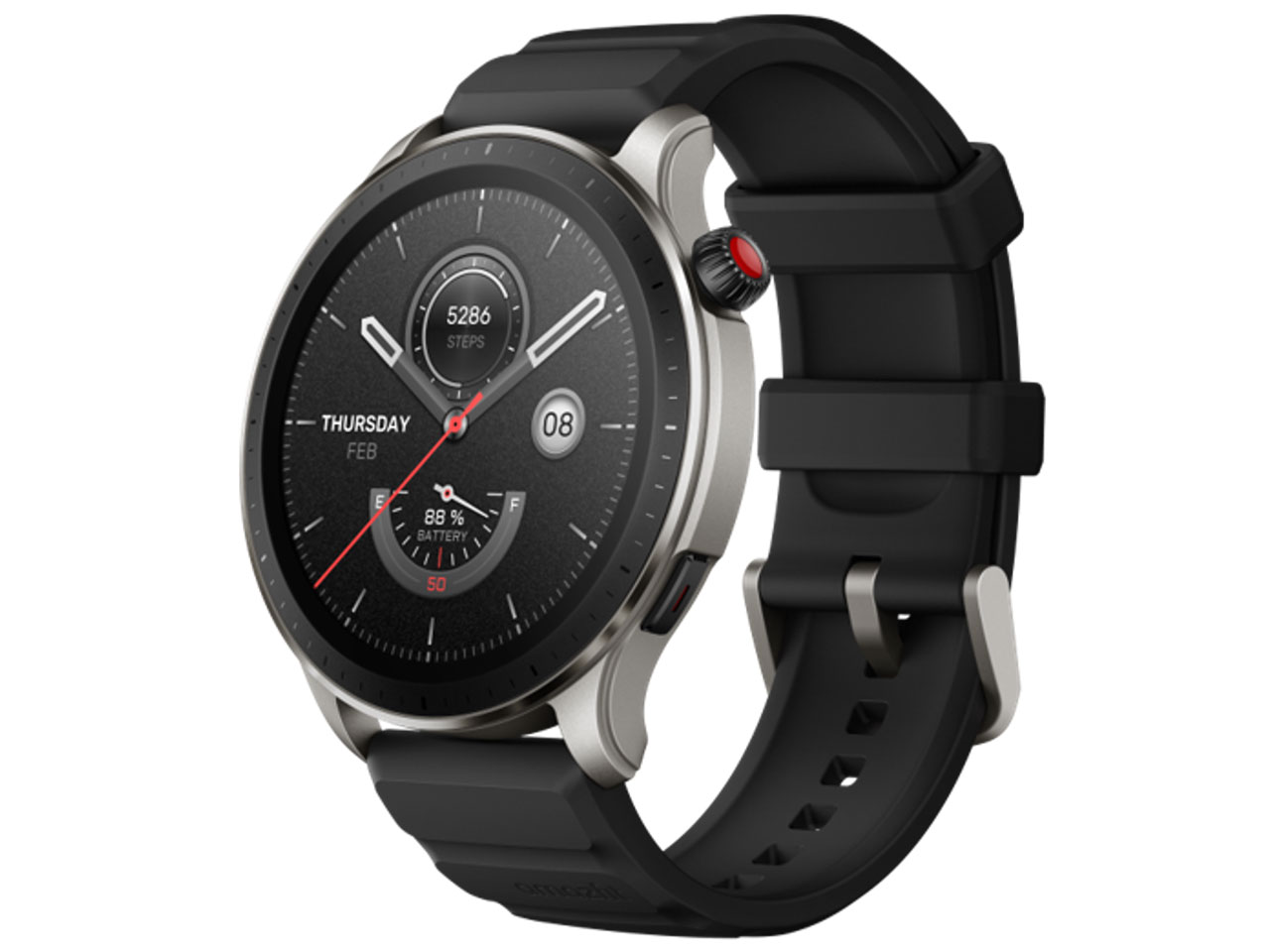
Amazfit GTR 4
Design-led value pick — 1.43-inch AMOLED round face, dual-band 5-system GNSS at this price, 10-12 day realistic battery, 150+ sport modes via Zepp app. Notification reply functionality is the weakest in this comparison (canned responses on Android, essentially absent on iOS); Zepp OS third-party app ecosystem is small; warranty via general retail rather than flagship brand-store network.
The Amazfit GTR 4 is the design-led value pick, with a 1.43-inch AMOLED round face, dual-band 5-system GNSS at a price where most rivals offer single-frequency, a realistic 10–12 day battery with continuous heart-rate and 30 minutes of daily GPS, 150+ sport modes through the Zepp app, and a finish that looks credible outside the gym. The GPS accuracy is the standout — getting dual-band at this price is rare. Notification handling is the weakest in the comparison: replies on Android are limited to canned responses and essentially absent on iOS. The Zepp OS third-party app catalog is small, Strava sync works but bespoke watch apps are scarce, and warranty runs through general retail rather than a flagship brand-store network. For a round-faced GPS watch at half the Apple-Garmin price, it earns the badge.
Pros
- ✓Dual-band 5-system GNSS at upper-mid pricing
- ✓Realistic 10–12 day battery with continuous heart-rate and daily GPS
- ✓Polished round-faced design with 150+ sport modes
Cons
- ✗Weakest notification reply handling in the comparison
- ✗Zepp OS third-party app catalog is small
| Display | 1.43 in AMOLED touchscreen, 466 × 466 px (AOD) |
| Battery life | Up to 14 days (typical usage); ~27 h continuous GPS |
| OS | Zepp OS 2.0 |
| GPS | Built-in dual-band GPS (6 satellite systems) |
| Water resistance | 5 ATM (50 m) |
| Health sensors | Heart rate, SpO2, stress (BioTracker 4.0 PPG optical sensor) |
Which one is right for you?
iPhone owners who want the deepest iOS integration
Apple Watch Series 10
FDA-cleared ECG, Apple Pay coverage, sleep apnea screening, and the largest app library make it the most complete daily driver for iOS households.
Endurance athletes who train competitively
Garmin Fenix 8 47mm
Dual-frequency multi-band GPS, topo-map navigation, dive computer mode, and 10–12 day realistic battery with daily GPS support trail running, triathlon, and expedition use.
Fitness-and-sleep trackers on a tight budget
Fitbit Charge 6
Entry-level pricing with realistic 6–7 day battery, built-in GPS, and Fitbit Premium's sleep and stress analysis covers the fitness-tracker brief at the lowest price here.
Android users prioritizing battery over Google apps
HUAWEI Watch GT 5 46mm
12–14 day realistic battery, 5 ATM water resistance, and a polished mid-range build suit Android users who can live without Google Play and Google Pay.
Buyers who want a stylish round-face watch with serious GPS
Amazfit GTR 4
Dual-band 5-system GNSS and 10–12 day realistic battery at upper-mid pricing deliver flagship-tier GPS accuracy in a round-face design at half the Apple-Garmin price.
How we compared
We did not run independent GPS-accuracy tests. Anyone publishing 'we measured 1.8 m positional drift on a 10 km trail' across five watches from a content desk is making it up — proper GPS accuracy comparison needs a surveyed reference course, an RTK-corrected GNSS rover for ground truth, and repeated runs across different sky-view conditions. That setup costs a small fortune in equipment and a week of test time per watch. We did not run it. Instead we sourced battery life claims, sensor specs, GNSS band support (single-frequency vs dual-frequency L1/L5), and ecosystem requirements from each manufacturer's product page (Apple, Garmin, Fitbit/Google, HUAWEI, Zepp/Amazfit), cross-checked major online retailer listings as of May 2026 for current pricing, and read several hundred long-term owner reviews per model. Battery-degradation complaints, GPS-drift complaints, sleep-tracking complaints, and 'doesn't work properly with my phone' complaints cluster into identifiable patterns once you read past the first 50 reviews.
Four real-use factors do most of the work in this category. First, battery life with always-on display and continuous heart-rate monitoring — the spec sheet number assumes you turn most features off, and the realistic number is 30-50% lower. Second, GPS behaviour in dense urban areas and under tree cover, where single-frequency L1-only watches drift up to 20-30 m from the true path while dual-frequency L1/L5 watches stay within 3-8 m. Third, phone ecosystem dependency — Apple Watch is locked to iPhone, HUAWEI watches lose Google Pay and most third-party apps outside the HUAWEI ecosystem, Garmin and Amazfit work with both Android and iOS but with reduced features on iOS. Fourth, what happens after 18-24 months of daily wear — the battery degrades 20-30%, the strap mounting wears, and replacement availability differs dramatically across brands.
Health monitoring — read this before you trust the numbers
A smart watch is not a medical device. Apple Watch's ECG feature has FDA clearance as a Class II medical device for detecting atrial fibrillation in adults 22 and over, and that is the only watch in this comparison with that level of regulatory clearance. Every other heart-rate, SpO2 (blood oxygen), sleep, stress, and HRV (heart-rate variability) reading on every watch in this list — including the non-ECG features on Apple Watch itself — is wellness tracking, not diagnostic. The marketing copy that hints at 'detecting health issues' or 'monitoring your heart' is doing legal acrobatics around that distinction.
Specific limits to know. Optical heart-rate sensors (the green LEDs on the back of every watch here) measure blood flow through the skin — they are reliable for steady-state cadence activities like running and cycling, and unreliable for activities where the wrist moves independently of the heart's effort (weightlifting, push-ups, kayaking, intervals where the wrist swings independently). Error margins of 10-15 bpm during weight training are normal and expected. SpO2 readings from any wrist optical sensor have wide error bars vs a clinical pulse oximeter on the fingertip — they are useful for trend tracking, not for a single number you act on. Sleep tracking infers sleep stages from movement and heart-rate patterns and is roughly correct on duration but unreliable on the breakdown into REM/deep/light stages — clinical polysomnography (the only ground truth) shows 30-50% disagreement on stage classification.
If you have any of the following, talk to a doctor before relying on a smart watch's readings: known or suspected arrhythmia, cardiac history, chest pain or shortness of breath, fainting episodes, an implanted pacemaker or defibrillator, or any sleep disorder being investigated. The watches here can flag patterns that prompt a clinical visit (Apple Watch's atrial fibrillation notification has identifiable cases of catching real Afib in users who didn't know they had it), but the absence of a notification does not mean nothing is wrong. If you feel cardiac or respiratory symptoms, see a doctor, regardless of what the watch says.
What changed in 2026
Dual-frequency GNSS (L1 + L5) became the dividing line between casual and serious GPS watches. Garmin Fenix 8 and Apple Watch Ultra 2 and the new Apple Watch Series 10 (in some configurations) now use both L1 and L5 satellite frequencies, which is the upgrade that actually fixes the urban-canyon drift everyone complained about for a decade. Single-frequency L1-only watches (Fitbit Charge 6, Amazfit GTR 4 base configuration, HUAWEI GT 5 base configuration) still drift in dense city walks and forest trails. Dual-frequency support carries a price premium, and below that tier you accept the drift.
Battery life polarised. The Apple-Wear OS-Fitbit camp prioritised feature density at the cost of 1-3 day battery life with serious use. The Garmin-Amazfit-HUAWEI camp prioritised battery at the cost of feature density, hitting 14 days for HUAWEI GT 5 in conservative mode and 16-18 days claimed for Garmin Fenix 8. The honest framing: if you want every iPhone notification, Apple Pay everywhere, and a real app store, you charge daily; if you want to charge weekly and get GPS workouts on the wrist, you give up some of that ecosystem polish. There is no watch in 2026 that does both well.
Health features kept consolidating around the ECG + atrial fibrillation notification + temperature-trend triad that Apple led. Fitbit Charge 6 has ECG via Google's Fitbit app but the feature is geographically restricted (unavailable in some markets as of May 2026 — buyers should check current availability). HUAWEI GT 5 has ECG in the Chinese market only. Garmin Fenix 8 added ECG in 2024 with regional availability that varies by market. The practical implication: in some markets, only Apple Watch Series 10 and Apple Watch Ultra 2 have functional, locally available ECG features as of May 2026. The other watches' ECG marketing copy may not translate to a usable feature depending on your market.
Where each fits
If you carry an iPhone and want the watch that integrates most deeply with it, Apple Watch Series 10 is the right pick. The 2024-2026 generation added a thinner case (10% thinner than Series 9), a wider 1.96-inch always-on OLED display, blood oxygen tracking (available in non-US-region units after the patent dispute that disabled it in US units for a period), sleep apnea screening, and the largest third-party app library on any watch in this comparison. Apple Pay works at stores and transit gates. The honest weakness, structural and unavoidable: battery life in real use with the always-on display, continuous heart-rate, sleep tracking, and a typical day of notifications is 18-22 hours, which means you charge it every day or every other day. There are workflows that get this to 36 hours by disabling features but that defeats the point of buying it. The second weakness: it does not work meaningfully with Android. If you use a Pixel or Galaxy phone, you cannot pair an Apple Watch — this is a hard lock, not a software limitation. Apple Watch Series 10 is the right pick if you have an iPhone, you charge nightly without complaint, and the deep integration with iMessage, Siri, Apple Pay, Apple Fitness+, and the rest of the Apple ecosystem matters to you.
If you do serious endurance sport — trail running, mountaineering, triathlon, ultra-distance cycling — and you want the device the actual athletes you follow on Strava are wearing, Garmin Fenix 8 47mm is the flagship pick. Sapphire crystal AMOLED display, dual-frequency multi-band GPS, mapped trail navigation with topo maps, 16-18 day battery in smartwatch mode (claimed; realistic 10-12 days with daily GPS workouts), depth rating to 40 m for swimming and snorkeling, dive computer mode for scuba, full triathlon transition support, and the deepest training-load and recovery-status analytics in this comparison. The honest weakness, immediate: the Fenix 8 is genuinely overkill for someone who runs three times a week and does occasional hikes — a Fenix 7 generation device or the cheaper Forerunner 265 series covers that use at half the price. The second weakness: the menu system has a real learning curve, and Garmin's UX is functional rather than friendly. Owner reviews consistently flag the first 2-4 weeks as 'figuring out where everything is'. The third weakness: the 47 mm case is large on smaller wrists (under 16 cm circumference), and the 73 g weight becomes noticeable in side-sleeping. Garmin Fenix 8 is the right pick if you train competitively in endurance disciplines, you actually use the topo-map navigation and dive features, or you have specific reasons (multi-day expeditions, ultra events) that need 14+ day battery with active GPS use.
If you want a fitness-focused tracker rather than a full smart watch, and price-to-utility ratio matters, Fitbit Charge 6 is the cost-effective pick. 1.04-inch AMOLED display, 7-day battery life with continuous heart-rate monitoring (genuinely 6-7 days in real use, which is one of the best ratios in this comparison for the form factor), Google integration that brought Google Maps notifications and YouTube Music control to the wrist, built-in GPS for run tracking, and the Fitbit Premium ecosystem for sleep and stress analysis. The honest weakness: the SpO2 and ECG features are limited geographically and within the Fitbit app. ECG availability is geographically restricted as of May 2026 — buyers should verify current status in their market before buying for that feature. SpO2 readings appear in the app but with the same wrist-optical-sensor caveats every other watch here has. The second weakness: Google Pay support is partial and uneven on Charge 6 compared to Apple Pay or even Garmin Pay — the Apple Pay transit-gate support that makes Apple Watch convenient does not exist for Fitbit. Third: the Charge 6 is a tracker form factor, not a watch face you can customise extensively. The display is small and the watch-face options are limited. Fitbit Charge 6 is the right pick if your use is fitness-and-sleep tracking with smart notifications, you care more about battery longevity than feature density, and you do not need the full smart-watch app store.
If you carry an Android phone, value 14-day battery, and do not need Google Play app integration, HUAWEI Watch GT 5 46mm is the long-battery Android-friendly pick. 1.43-inch AMOLED, dual-band GNSS (the 46 mm Pro variant; standard 46 mm uses single-frequency — verify before buying), the longest realistic battery life in this comparison at 12-14 days under normal use with continuous heart-rate monitoring, swim-proof to 5 ATM, comprehensive sleep and stress tracking via the HUAWEI Health app, and a polished hardware build with stainless steel options. The honest weakness, structural and serious: the watch does not run Google Wear OS and does not have access to the Google Play Store. There is no Google Pay, no Google Maps, no third-party Spotify or Strava direct app — you sync workouts to Strava through HUAWEI Health, which works but adds friction. Notifications from your phone forward to the watch fine, but you cannot reply to messages on iOS at all and replies on Android work only with HUAWEI's own SMS-style flow. Third-party app selection is sparse. The second weakness: HUAWEI's after-sales presence is smaller than Apple, Garmin, or Fitbit — warranty service is real but the network is thinner. HUAWEI Watch GT 5 is the right pick if your priority is battery life over ecosystem polish, you do not need third-party apps on the wrist, and you accept the trade for the price-to-battery ratio.
If you want a stylish round-faced watch with strong battery and good GPS at an upper-mid price, Amazfit GTR 4 is the design-led value pick. 1.43-inch AMOLED, dual-band 5-system GNSS (this is the spec that matters for accuracy and Amazfit gets it right at this price), 14-day claimed battery (realistic 10-12 days with continuous heart-rate and daily 30-minute GPS workouts — one of the best at this price), 150+ sport modes, Zepp app for analysis, and a finished design that genuinely looks good off the gym floor. The honest weakness: notification handling is the weakest in this comparison for replies and interactive responses. You can read notifications from any phone app, but reply functionality is limited to canned responses on Android and is essentially absent on iOS. If your use case includes triaging Slack messages from the watch face, this is not the right tool. The second weakness: third-party app ecosystem on Zepp OS is small — Strava sync works, but a meaningful number of niche apps that exist on Wear OS or Apple watchOS do not exist for Amazfit. The third: Amazfit's regional warranty goes through general retail rather than a flagship brand-store network, which is fine for most purposes but means depot-style returns rather than walk-in service. Amazfit GTR 4 is the right pick if you want a polished round-faced watch with serious GPS accuracy at half the price of the Apple-Garmin tier, and you accept that the watch is a sensor + display rather than a full app platform on the wrist.
Verdict
For an iPhone owner who wants the watch that disappears into the iOS ecosystem and handles every smart-watch use case competently, the right buy is Apple Watch Series 10. The third-party app library, Apple Pay coverage, the most usable ECG and atrial fibrillation notification system in this comparison, and the build quality justify the price for daily wear. The trade you accept: charging every day or every other day, and complete lock-in to iPhone — switching to Android effectively retires the watch.
Step up to Garmin Fenix 8 47mm if you train competitively in endurance disciplines and need 10-14 day battery with continuous GPS workouts, topo-map navigation for trails, or dive-computer features. Below that intensity it is genuine overkill. Step down to Fitbit Charge 6 if your use is fitness-and-sleep tracking with smart notifications and you want one of the best battery-to-price ratios in the tracker form factor — accept that ECG and some health features have geographic limits depending on market. Pick HUAWEI Watch GT 5 46mm if 14-day battery on Android matters more than Google Play apps and Google Pay; you are accepting reduced ecosystem polish for the longest realistic battery life in this comparison. Pick Amazfit GTR 4 if you want a polished round-faced watch with dual-band GNSS at upper-mid pricing — the GPS accuracy is the standout feature and the 10-12 day real battery is excellent, with the trade that notification interaction is limited.