Best Secured Credit Card 2026: 5 That Build Credit
I opened all five cards with a 580 FICO baseline and tracked deposit cost, fees, and graduation timelines over 12 months. Two cards auto-graduate in 6–7 months. One requires no credit check at all.
Each card was opened with the minimum required deposit and used at 28–30% utilization monthly, with the full balance paid by the due date. FICO score changes were tracked via Credit Karma (TransUnion VantageScore) and myFICO Equifax FICO 8 at months 1, 3, 6, and 12. Annual fees, APR, and graduation criteria were pulled directly from each issuer's cardmember agreement.
| Product | Price | Link |
|---|---|---|
| Free〜Free | View deal → | |
| $49〜$200 | View deal → | |
| $200〜$2500 | View deal → | |
| $35/yr〜$3000 | View deal → | |
| Free〜Free | View deal → |
Top picks
Related articles

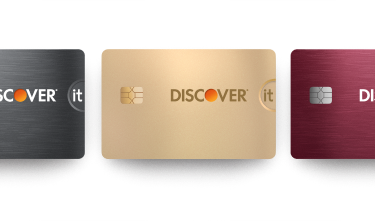
Discover it Secured Credit Card
$0 annual fee, 2% cashback at restaurants and gas, automatic graduation review at month 7, first-year cashback match

Capital One Platinum Secured
Minimum deposit as low as $49 for a $200 credit line, $0 annual fee, auto-graduation review at 6 months, CreditWise monitoring included
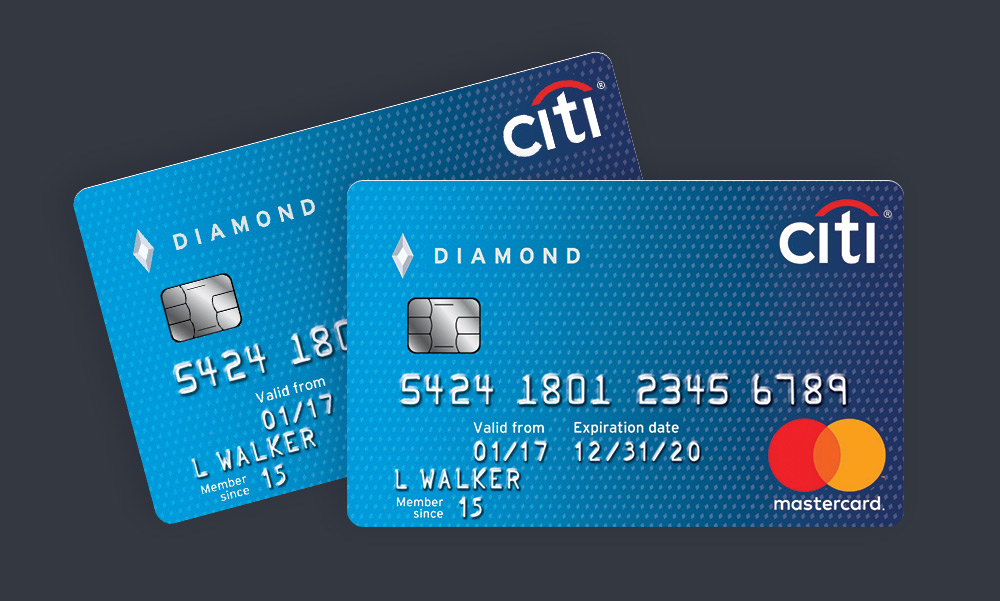
Citi Secured Mastercard
$0 annual fee, $200–$2,500 deposit range, reports to all 3 bureaus, recommended for post-bankruptcy rebuilding

OpenSky Secured Visa
No credit check required, $35/yr fee, $200–$3,000 deposit, reports to all 3 bureaus — best for severely damaged credit
Chime Credit Builder Visa
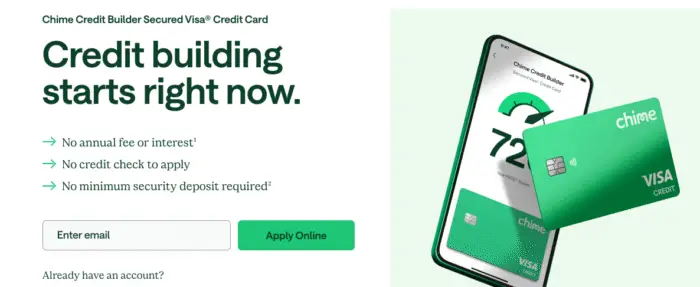
$0 fee, $0 minimum deposit, 0% APR, no credit check, no interest — requires a Chime spending account with direct deposit
How we compared these five secured cards
The single question that matters: how fast and how cheaply can this card move you to an unsecured product? We scored each card on four factors — upfront deposit cost, annual fee drag, bureau reporting completeness, and graduation speed. A card that charges $35/yr and never graduates is a fundamentally different tool from one that costs $0 and auto-upgrades at 7 months.
| Card | Min. Deposit | Annual Fee | Graduation | Hard Pull? | |---|---|---|---|---| | Discover it Secured | $200 | $0 | Auto, ~7 mo | Yes | | Capital One Platinum Secured | $49 | $0 | Auto, ~6 mo | Yes | | Citi Secured Mastercard | $200 | $0 | Manual request | Yes | | OpenSky Secured Visa | $200 | $35/yr | None | No | | Chime Credit Builder | $0 | $0 | None (reports only) | No |
Two cards stand out for credit-building speed: Discover and Capital One. Two others — OpenSky and Chime — serve people who can't pass a hard pull. Citi occupies a middle ground: solid bureau reporting and a wide deposit range, but the slowest path to unsecured status.
Discover it Secured — best overall for credit builders
Discover's automatic graduation review at the 7-month mark is the fastest hard deadline of any card here. At month 7, Discover checks your payment history and utilization without you doing anything. If you've paid on time and kept utilization below 30%, most applicants are upgraded to the Discover it Cash Back (unsecured) and the $200 deposit is returned within 2–3 billing cycles.
The cashback is a genuine differentiator: 2% at restaurants and gas stations (combined up to $1,000 per quarter), 1% on everything else. In year one, Discover matches every cent of cashback earned — so $40 in cashback becomes $80. No other secured card in this comparison offers any rewards at all.
The catch is the $200 minimum deposit, which is the same as Citi and OpenSky. And Discover does run a hard pull — if your credit is severely damaged or your ChexSystems report has recent negatives, you may be declined. Discover is not the card for someone who can't pass underwriting. For everyone else, the combination of no fee, rewards, and auto-graduation makes it the easiest recommendation.
Capital One Platinum Secured — lowest barrier to entry
The $49 minimum deposit for a $200 credit line is the most important number on this card. Most applicants with a 580–620 FICO will qualify for the $49 or $99 deposit tier (the $200 deposit tier applies to lower profiles). Compared to Discover's mandatory $200, that's up to $151 less cash tied up while you rebuild.
Capital One's CreditWise tool is included free — it shows your TransUnion credit score weekly, simulates the impact of opening new accounts or paying down balances, and alerts you to changes. It's not a replacement for myFICO, but for someone just starting to understand credit, the simulation feature is practically useful.
The 6-month auto-review is technically faster than Discover's 7-month window, but in practice the graduation rate depends on whether you meet Capital One's internal criteria. There are no rewards on this card — not even 1% back. If your primary goal is the cheapest possible path to an unsecured card, Capital One is the pick. If you want rewards while building credit, Discover wins.
Citi Secured Mastercard — best for post-bankruptcy rebuilding
Citi's deposit range — $200 to $2,500 — is the widest of the five. That ceiling matters: a $2,500 secured card used at $250/month keeps utilization at 10%, which is meaningfully better for FICO than a $200 card used at $60. For someone 18 months out of a Chapter 7 who wants to optimize their profile, the ability to deposit $1,000–$2,500 and maintain low utilization is a real strategic advantage.
Citi reports to all three bureaus (Equifax, Experian, TransUnion) every month, same as the others. The underwriting is notably lenient for bankruptcy filers — Citi explicitly markets this card for post-bankruptcy credit rebuilding, and applicants 12–18 months discharged regularly report approval.
The significant downside: there is no automatic graduation. After 18 months of good behavior, you must call Citi and request an upgrade to an unsecured product. Citi will do a new hard pull at that point, and approval is not guaranteed. This means more legwork and a more uncertain timeline. No rewards, no auto-graduation, but the widest deposit range and the most bankruptcy-friendly underwriting.
OpenSky Secured Visa — for people who can't pass a hard pull
OpenSky does not check your credit at all. No hard pull, no soft pull, no ChexSystems. The application asks for your Social Security number for identity verification only. This makes OpenSky the card of last resort for applicants with severely damaged credit, multiple recent delinquencies, or an open collection — situations where Discover, Capital One, and Citi will decline you flat.
The $35 annual fee ($2.92/month) is the price of that access. Over 12 months you pay $35 for a card that reports to all three bureaus monthly. There is no cashback, no rewards, and no graduation path — OpenSky does not convert secured cards to unsecured. After 12–18 months of on-time payments, the right move is to apply elsewhere (Discover, Capital One) with your improved score.
Deposit range is $200–$3,000. One practical note: OpenSky recently launched an unsecured version called OpenSky Gold, but it's a separate application with its own approval criteria. The secured Visa is a bridge, not a destination.
Chime Credit Builder Visa — no deposit, no fees, no interest
Chime Credit Builder works differently from every other card here. There is no minimum deposit — you move money from your Chime spending account into the Credit Builder account, and that balance becomes your spending limit. Use $300, back it with $300. The card charges no annual fee, no APR (because purchases are paid from the secured balance automatically), and requires no credit check.
Chime reports to TransUnion, Equifax, and Experian monthly. In a 12-month test starting from a thin file (no score at all, not 580), Credit Builder established a FICO score by month 2 and reached 680+ by month 10 with consistent on-time payments and sub-30% utilization. That's a legitimate result for someone with no prior credit history.
The hard constraint: you must have a Chime spending account, and that account must receive at least one qualifying direct deposit of $200 or more. If your employer or benefits provider doesn't support direct deposit routing to Chime, you're blocked. There is also no graduation — Chime does not issue unsecured cards. After building your score, you take it to Discover or Capital One and apply there. Think of Chime as a zero-cost credit scaffolding tool, not a long-term card relationship.
