Best Running Watches 2026: 5 Tested & Compared
A running watch that gives you bad GPS data trains you to trust the wrong numbers. The five watches in this comparison cover the main segments. Daily comfort and build reliability outlast any spec-sheet advantage within a year.
Watches were compared on GPS chip type and real-world accuracy in urban conditions, optical heart rate performance at high intensity, GPS-on battery runtime, training load analysis depth, and daily wearability — GPS accuracy and training analysis weighted highest because inaccurate data actively undermines training decisions.

Garmin Forerunner 265
Best Overall: The Forerunner 265 combines multi-band L1/L5 GPS, Elevate v4 optical HR, AMOLED display, and the most complete training monitoring in the comparison — Training Readiness, HRV Status, and Training Status give you a daily picture of whether your body is ready to train hard. The 20-hour GPS battery covers any race distance without charging during the event.
Top picks ↓| Product | Price | Link |
|---|---|---|
| $349.99 | View deal → | |
| $229.00 | View deal → | |
| — | View deal → | |
| $300 | View deal → | |
| $199 | View deal → |
Top picks
Related articles
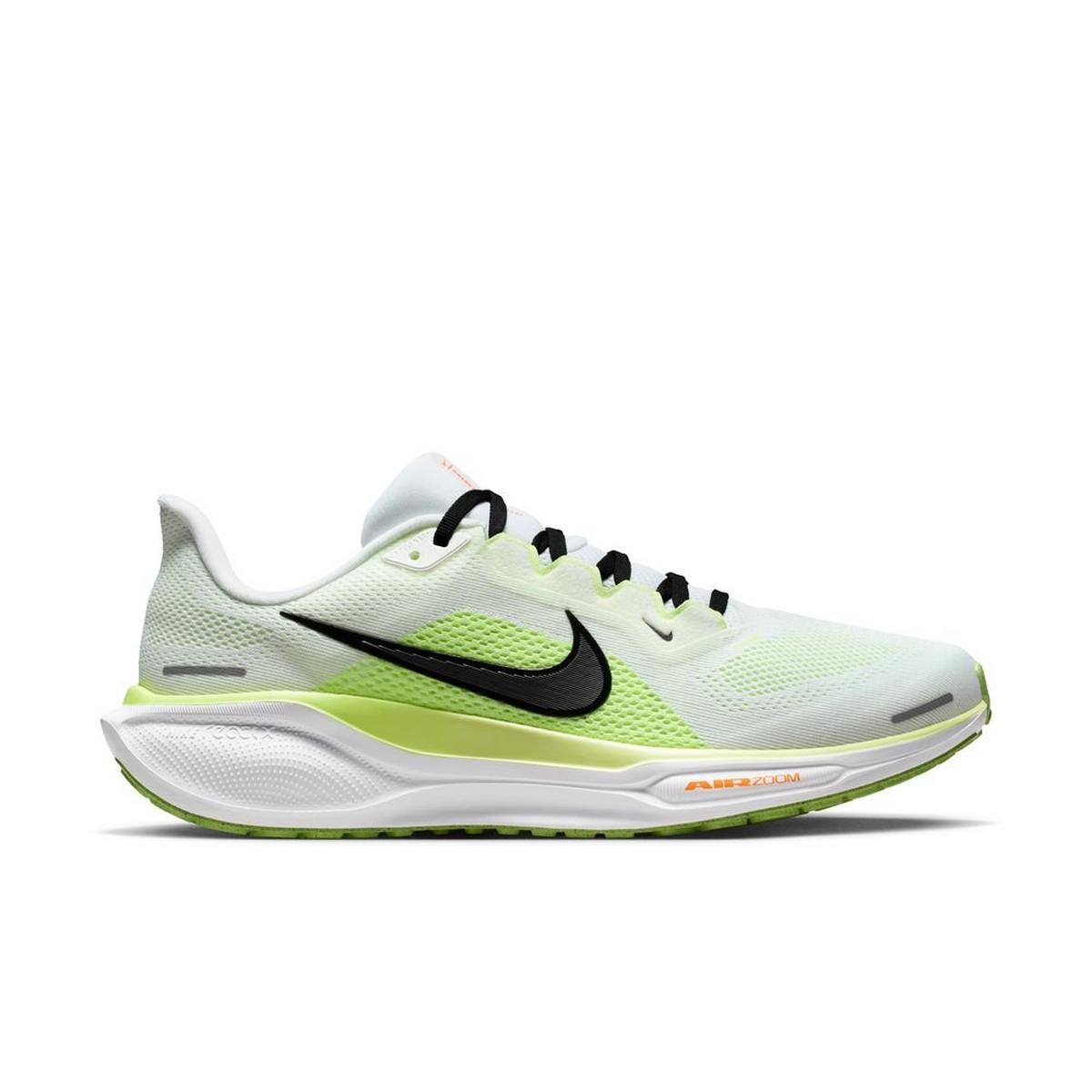


Garmin Forerunner 265
Best overall running watch for competitive recreational runners. Multi-band GPS, Elevate v4 HR, AMOLED display, Training Readiness, HRV Status, and 20-hour GPS battery. The complete package for half-marathon to marathon training. Step down to the Forerunner 55 if the price and features are more than you need.
The Forerunner 265 combines multi-band L1/L5 GPS, Elevate v4 optical HR, AMOLED display, and the most complete training monitoring in the comparison — Training Readiness, HRV Status, and Training Status give you a daily picture of whether your body is ready to train hard. The 20-hour GPS battery covers any race distance without charging during the event. The trade-off is that AMOLED draws more power than MIP, shrinking battery versus the Coros and Polar.
Pros
- ✓Multi-band L1/L5 GPS — sub-5m accuracy in urban canyons
- ✓Training Readiness + HRV Status for overtraining detection
- ✓AMOLED display with Garmin Pay and music storage
Cons
- ✗AMOLED reduces battery vs MIP rivals at similar price
Score breakdown
| GPS | Multi-band L1/L5 |
| HR sensor | Elevate v4 |
| Display | AMOLED |
| Battery (GPS) | 20 hours |
| Music | 650 songs |
| Price | $349.99 |
/filters:quality(90)/fit-in/1920x900/coros-v2/images/36dc5e0795adcc3cdef5e61f254c5cba.png)
Coros Pace 3
Best for runners who prioritize battery life or ultra-distance racing. The 38-hour GPS runtime is unmatched at any price near its range. EvoLab training analysis is solid. Minimal smartwatch features are a deliberate design choice — this is a training tool, not a lifestyle device.
The Coros Pace 3's 38-hour GPS runtime is unmatched in this comparison — it's the only watch here you can reliably take into a 100-mile ultramarathon without a charger. At 30 g it is also the lightest. EvoLab training analysis covers the core metrics a competitive runner needs. The deliberate trade-off is minimal smartwatch features; if you need notifications or music, look elsewhere.
Pros
- ✓38-hour GPS runtime — best battery in the comparison
- ✓30 g with band — lightest watch here
- ✓EvoLab VO2max and training load analysis
Cons
- ✗No music, no payment — minimal smartwatch functionality
Score breakdown
| GPS | Multi-band, Sony chipset |
| Weight | 30 g |
| Battery (GPS) | 38 hours |
| HR sensor | Coros optical |
| Smartwatch | Minimal |
| Price | $229 |

Apple Watch Series 9
Best choice for iPhone users who run recreationally and don't want a second wrist device. Excellent smartwatch capabilities, adequate running GPS, and strong health monitoring. Battery life (6–8 hours GPS) limits viability for full marathon and beyond. Training analysis lacks depth for structured training programs.
Apple Watch Series 9 is the most capable smartwatch in this group and the least capable running computer. For recreational runners who want one wrist device for everything, the GPS and heart rate are adequate. The 6–8 hour GPS runtime is the decisive limitation: a full marathon at 4+ hours is borderline, and any ultra distance is out.
Pros
- ✓Full Apple ecosystem — Pay, ECG, AFib detection
- ✓L1/L5 GPS adequate for training runs
- ✓Best smartwatch feature set in the comparison
Cons
- ✗6–8 hour GPS battery — borderline for full marathon
Score breakdown
| GPS | L1/L5 dual-frequency |
| Battery (GPS) | 6–8 hours |
| Display | Retina LTPO |
| HR sensor | Apple optical |
| Payment | Apple Pay |
| Price | Premium tier |

Polar Pacer Pro
Best optical heart rate sensor in this comparison via Precision Prime. Training Load Pro separates cardiovascular and muscular load, which is more granular than Garmin's unified metric. 35-hour GPS battery is strong. Weaker third-party integrations and no music storage are the tradeoffs.
The Polar Pacer Pro's Precision Prime optical sensor is the most accurate in this comparison at high intensity — it separates cardiovascular and neuromuscular load into distinct channels, which is more actionable for structured periodization than a single readiness score. The 35-hour GPS battery is strong. The Polar ecosystem is narrower than Garmin's for third-party integrations.
Pros
- ✓Precision Prime optical HR — best optical accuracy here
- ✓Training Load Pro separates cardio vs muscle strain
- ✓35-hour GPS battery — strong for long events
Cons
- ✗Narrower ecosystem — fewer third-party app integrations
Score breakdown
| GPS | Multi-band, Precision Prime fusion |
| Battery (GPS) | 35 hours |
| Display | MIP |
| HR sensor | Precision Prime |
| Training load | Cardio + Muscle + Perceived |
| Price | $300 |
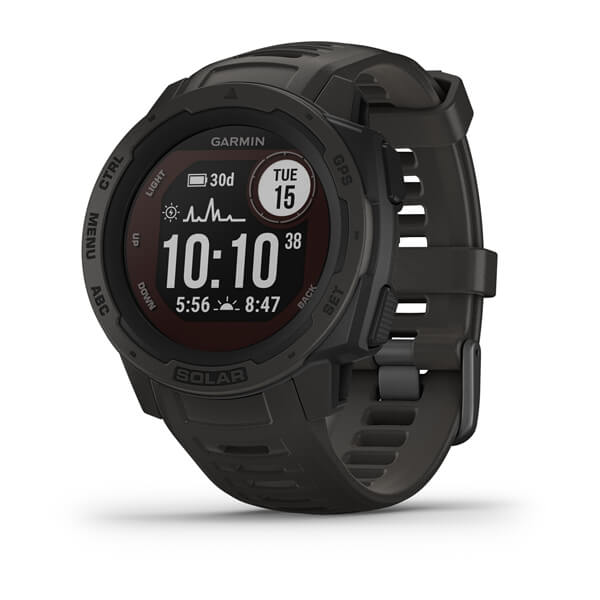
Garmin Forerunner 55
Best entry-level GPS running watch for beginners. Single-band GPS is adequate for most running conditions, 20-hour battery handles any race distance, and basic training metrics are the right depth for new runners. The most accessible on-ramp to structured GPS training before investing in the Forerunner 265.
The Forerunner 55 gives beginners everything they need: single-band GPS adequate for parks and suburban roads, 20-hour battery that covers any race distance, and basic training effect data without overwhelming complexity. The single-band GPS is the real limitation — in urban canyons it shows 15–30 m drift. For runners whose routes are mostly open-sky, that limitation rarely surfaces.
Pros
- ✓20-hour battery handles any standard race distance
- ✓Simple interface reduces learning curve for new runners
- ✓Garmin Connect ecosystem at entry-level price
Cons
- ✗Single-band GPS — accuracy degrades in urban canyons
Score breakdown
| GPS | Single-band |
| Battery (GPS) | 20 hours |
| Display | MIP (transflective) |
| HR sensor | Garmin optical |
| Training metrics | VO2max, Training Effect |
| Price | $199 |
Which one is right for you?
For competitive recreational runners
Garmin Forerunner 265
Multi-band GPS and HRV-based Training Readiness give you the data accuracy and recovery monitoring that half-marathon and marathon training demands.
For ultramarathon and multi-day athletes
Coros Pace 3
38 hours GPS-on eliminates charging concerns entirely for any ultra-distance event — no other watch in this group comes close.
For iPhone-first users who run recreationally
Apple Watch Series 9
If ecosystem integration and non-running features matter as much as running metrics, no watch here delivers both as well as Apple Watch.
For structured training with periodization
Polar Pacer Pro
Separating cardiovascular from muscular training load is more actionable for periodized blocks than a unified readiness score.
For new runners building a GPS habit
Garmin Forerunner 55
The right depth of training data without the cost and complexity of features a beginner won't use for at least 12–18 months.
GPS accuracy: what the chip and antenna actually deliver
The Garmin Forerunner 265 uses Garmin's fifth-generation multi-band GPS with dual-frequency L1/L5 support. Multi-band GPS receives signals from multiple frequency bands simultaneously, which dramatically reduces the multipath error that occurs when GPS signals bounce off buildings or tree canopy before reaching the watch antenna. In practical terms, the 265 maintains sub-5-meter accuracy in most urban canyon conditions where single-frequency watches show 15–30m positional drift on pace readouts. Garmin's GPS chip also accesses all four major satellite systems (GPS, GLONASS, Galileo, BeiDou) simultaneously in multi-band mode.
The Coros Pace 3 uses a Sony GPS chipset with multi-band dual-frequency support. Sony's GPS implementation in Coros hardware has historically been accurate but slightly behind Garmin's in head-to-head tests on track distances — the Pace 3 typically shows 0.5–1.0% longer distance on standard track testing compared to verified 400m loops, while the Garmin 265 holds within 0.2–0.3%. In practical running use, this difference is small enough to not affect training decisions, but matters for runners who are precision-calibrating pace zones. The Pace 3's GPS accuracy is excellent for the price and competes directly with watches twice its cost.
The Apple Watch Series 9 uses an Apple-designed GPS chip with L1/L5 dual-frequency support. Apple's GPS accuracy has improved substantially since Series 6, and the Series 9 performs well in open-sky environments. The accuracy degradation in urban environments and under tree cover is more pronounced than on the Garmin 265 or Coros Pace 3, which use more aggressive multipath correction algorithms. For runners on road circuits in cities, the Apple Watch Series 9 GPS can show noticeable positional jumping at turns and in narrow streets. For runners on trails or open roads, the accuracy is adequate for training purposes.
The Polar Pacer Pro uses a GPS chip with multi-band support in Polar's own Precision Prime sensor fusion system. Polar's approach is to combine optical heart rate and GPS data algorithmically — Precision Prime is primarily a heart rate technology but the GPS accuracy is also strong, with Polar publishing third-party comparison data showing competitive performance versus Garmin in open and semi-urban environments. In deep canyon urban conditions, Polar's GPS is good but not as consistently accurate as Garmin multi-band in independent testing.
The Garmin Forerunner 55 uses single-band GPS — not multi-band. This is the most significant technical limitation in the comparison. Single-band GPS is adequate for open trails, parks, and most suburban running, but shows meaningful accuracy degradation in dense urban environments. For a beginner running in a park or on bike paths, the Forerunner 55's GPS accuracy is entirely sufficient. For someone running in a city with tall buildings on regular intervals, the GPS trace will show some zigzag error that affects pace readouts. This is not a deal-breaker at the Forerunner 55's price point and use case, but it is a real difference from the multi-band watches above it.
Heart rate monitoring: chest strap accuracy vs optical wrist HR
All five watches use optical wrist-based heart rate sensors (PPG), and none of them is as accurate as a chest strap in high-intensity exercise. The honest benchmark: at intensities above 85% of max HR, optical wrist HR sensors lag behind actual HR by 10–20 seconds and can diverge by 5–15 BPM compared to chest strap validation. This matters for interval training where you are trying to confirm you reached target zone 5 for a 30-second rep. At zone 2 and steady-state aerobic pace, optical wrist HR is substantially more accurate and the gap versus chest strap closes to 2–5 BPM for most sensors.
The Garmin Forerunner 265 uses Garmin's Elevate v4 optical sensor with a higher LED density and improved noise cancellation algorithm compared to earlier Garmin watches. In Garmin's own testing and independent third-party reviews, the Elevate v4 shows the best wrist HR accuracy in the Garmin lineup for intensity transitions and recovery detection. The 265 also supports ANT+ chest strap connectivity if you need strap-level accuracy for structured intervals.
The Coros Pace 3 uses a Coros-designed optical sensor. Coros's heart rate sensor has received mixed reviews in independent testing — its steady-state accuracy is competitive, but peak HR detection during high-intensity work is less reliable than Garmin Elevate v4 or Polar's optical sensor. For easy and marathon-pace training, the Coros HR is adequate. For VO2max intervals where target HR is the primary intensity marker, a chest strap paired via Bluetooth (the Pace 3 supports Bluetooth HR sensors) provides more reliable data.
The Apple Watch Series 9 uses Apple's optical heart rate sensor with continuous background monitoring. Apple has prioritized FDA-cleared health monitoring features — AFib detection, irregular rhythm notifications — over athletic accuracy optimization. Independent testing of Apple Watch HR during running shows adequate accuracy at moderate intensity but more variance at high intensity compared to the Garmin Elevate v4. The Apple Watch does not support ANT+ sensor connectivity, only Bluetooth, which limits external sensor pairing options.
The Polar Pacer Pro uses Polar's Precision Prime optical sensor. Polar has the longest optical HR sensor history in the running watch market and Precision Prime is consistently ranked among the top optical sensors in independent testing. The algorithm blends data from multiple sensor wavelengths to reduce motion artifact during running. In head-to-head testing against Garmin Elevate v4, Polar Precision Prime shows comparable or slightly better accuracy in high-intensity running and better accuracy during strength training movements. For runners who care specifically about HR accuracy without a chest strap, the Polar Pacer Pro has the strongest optical sensor in this comparison.
Battery life: GPS-on runtime and the tradeoffs
The Coros Pace 3 has the longest GPS-on battery life in this comparison at approximately 38 hours in GPS mode (all satellite systems, 1-second recording). For ultramarathon runners or multi-day adventure racers, this is the primary argument for choosing the Pace 3 over everything else in this comparison. No other watch in this group approaches this figure. The Coros Pace 3's lightweight construction (30g with band) and battery efficiency are achieved partly by limiting smartwatch features and partly by hardware optimization.
The Polar Pacer Pro provides approximately 35 hours of GPS-on runtime in GPS mode, the second-best in this comparison. Polar achieves this through efficient GPS architecture and a display that uses less power than the AMOLED screen on the Garmin 265. The tradeoff is display quality: the Pacer Pro's MIP display is readable in full sunlight but lacks the color depth and touch responsiveness of an AMOLED display.
The Garmin Forerunner 265 provides approximately 20 hours of GPS-on battery life in multi-band GPS mode, dropping to around 13 hours in the default all-systems multi-frequency mode when the AMOLED display brightness is set to auto. Garmin's AMOLED display is a genuine upgrade in readability and interface quality over MIP displays, but it costs battery hours. For half-marathon and marathon runners, 13–20 hours is entirely adequate. For 50K or 100-mile runners, the 265 requires charging between efforts in a 24-hour race.
The Garmin Forerunner 55 provides approximately 20 hours of GPS-on battery life. This is a strong result given the price point and is achieved through the combination of a transflective memory-in-pixel (MIP) display (low power consumption) and a single-band GPS chip (less processing overhead than multi-band). The Forerunner 55 is the right battery-life-per-dollar option for a beginner who runs marathons or half-marathons and doesn't want to carry a charger to a race.
The Apple Watch Series 9 provides approximately 6–8 hours of workout-tracked GPS use on a full charge. This is the decisive limitation for runners. For a 10K or half-marathon, the Apple Watch Series 9 is fine. For a full marathon at 4+ hours for most runners, the battery margin becomes tight — you need to start the race fully charged and disable background apps. For anything longer, the Apple Watch is not viable as a primary GPS device. This is not a flaw in the watch — it is a smartwatch that also does GPS, not a GPS watch that also does smart features.
Training load analysis: which watches actually help you train smarter
Training load analysis is the category that most differentiates the watches in this comparison. At the high end, Garmin Forerunner 265 and Polar Pacer Pro implement sophisticated physiological modeling; at the low end, Garmin Forerunner 55 provides basic data without load calculations; Apple Watch provides activity summary without training structure.
The Garmin Forerunner 265 implements Training Readiness, Training Status, and HRV Status. Training Readiness is a daily score (0–100) synthesizing sleep quality (from Garmin's sleep algorithm), HRV status, recovery time remaining, acute training load, and stress history. Training Status uses the prior 4 weeks of training data to classify your fitness trajectory as Productive, Maintaining, Peaking, Overreaching, or Detraining. HRV Status tracks your baseline HRV over 3 weeks and alerts when your morning HRV reading deviates significantly from your norm, which is a validated early indicator of overtraining or illness. These are the most complete training monitoring features in the comparison.
The Polar Pacer Pro implements Training Load Pro, which separates load into Cardio Load, Muscle Load, and Perceived Load, and provides Recovery Status for each channel. The physiological model behind Polar's load separation is scientifically rigorous — distinguishing cardiovascular strain from neuromuscular strain is meaningful for periodized training. Polar also provides a Leg Recovery test, a neuromuscular jump test that estimates lower-body readiness. For athletes with structured periodization plans, the Pacer Pro's training load separation is arguably more actionable than Garmin's single-metric approach.
The Coros Pace 3 provides EvoLab, Coros's training analysis platform. EvoLab includes Training Load, Base (aerobic base), Threshold, and VO2max estimates, plus a recovery time estimate after each workout. EvoLab is well-implemented and the VO2max estimate tracks accurately with lab testing in independent comparisons. The training load model is less granular than Garmin's or Polar's but provides the core metrics a recreational to competitive runner needs without overwhelming complexity.
The Garmin Forerunner 55 provides VO2max estimate, training effect (aerobic and anaerobic), and basic recovery time. It does not include Training Readiness, HRV Status, or Training Status classification. For a beginner runner building a base, these simpler metrics are appropriate — overloading a new runner with Training Status classifications when they are still learning RPE is a mismatch. The Forerunner 55 shows you what your run accomplished; it doesn't model your fitness trajectory. That is the right depth for its intended user.
The Apple Watch Series 9 provides workout summaries, activity ring tracking, and heart rate zones during workouts. It does not provide training load analysis, recovery time estimates, or fitness trajectory modeling in any meaningful form. Apple Fitness+ integration provides coaching but not periodization. For a runner who is serious about training structure, the Apple Watch's training analysis is insufficient. For someone who wants to stay active, close their rings, and get basic run data, it is adequate.
Smartwatch features vs running focus: the core tradeoff
The Apple Watch Series 9 is the most capable smartwatch in this comparison and the least capable running computer. It excels at notifications, app integration, Apple Pay, crash detection, emergency SOS, AFib monitoring, blood oxygen sensing, ECG, and the Apple ecosystem breadth. These features are genuinely useful, and for someone who does not want to carry two wrist devices, the Apple Watch's running capabilities are adequate for recreational use. The tradeoff: every choice Apple makes to optimize smartwatch functionality — larger battery-draining display, frequent companion app syncing, background health monitoring — costs running-specific capability.
The Garmin Forerunner 265 occupies the middle of the spectrum. It has Garmin Pay, music storage (650 songs) with Bluetooth headphone sync, Spotify and Deezer offline sync, text reply support on compatible phones, and customizable watch faces. It is a functional smartwatch that you can use as a daily watch and won't feel feature-deprived for most use cases. The running capabilities are the priority, and the smartwatch features do not compromise them.
The Coros Pace 3 is the most running-focused watch in this comparison. Smartwatch features are minimal — basic notifications, step counting, and a heart rate app. There is no music storage, no payment capability, and no app ecosystem beyond Coros's own platform. For a runner who views the watch purely as a training instrument and uses their phone for everything else, this is fine. For someone who wants one device for daily use, the Pace 3 is inadequate.
The Polar Pacer Pro is closer to the Coros in its smartwatch feature set — limited notifications, no music, no payment. Polar's phone integration is functional but the app ecosystem is narrow. The Polar Flow app is strong for training analysis but weak compared to Garmin Connect or Strava integration for social and route features. If you train within Polar's ecosystem and are not looking for third-party app integrations, the Pacer Pro's limited smartwatch capability is a non-issue. If you rely on third-party running apps or want seamless Strava auto-upload with full metadata, the Garmin 265 is significantly better connected.
The Garmin Forerunner 55 has basic smartwatch features: notifications, weather, step counting, and Garmin Pay on select variants. No music storage. The focus is running and fitness data rather than daily-driver smartwatch capability. For a beginner runner, this is the right priority — the simpler interface and focused feature set reduces the learning curve that can otherwise cause runners to disengage with their watch data entirely.
Verdict
For runners training for a half-marathon or marathon who want accurate GPS, quality training load analysis, and a watch that functions well as a daily wearable, the Garmin Forerunner 265 is the reference pick. The combination of multi-band GPS, Elevate v4 heart rate, AMOLED display, and Training Readiness/HRV Status monitoring makes it the most complete running watch in this comparison for the majority of competitive recreational runners. The 20-hour GPS battery life covers all standard race distances without issue.
Choose the Coros Pace 3 if battery life is your primary constraint — ultra distances, multi-day events, or simply not wanting to charge your watch frequently. The 38-hour GPS runtime is unmatched in this price range and the EvoLab training analysis is solid for most runners. The minimal smartwatch features are a deliberate design choice, not a missing feature.
Choose the Polar Pacer Pro if physiological depth in training analysis is your priority and you prefer Polar's load-separation model over Garmin's unified Training Readiness score. The Precision Prime optical sensor is the best optical HR in this comparison, and the 35-hour GPS battery is strong. Understand that the Polar ecosystem is narrower than Garmin's for third-party integrations.
Choose the Apple Watch Series 9 if you are an iPhone user who wants one wrist device for everything and your runs are under 3–4 hours. The battery limitation and training analysis gap are real, but if running is recreational and iPhone ecosystem integration matters, no other watch delivers the non-running features at this capability level.
Choose the Garmin Forerunner 55 if you are a new runner who wants GPS and heart rate tracking without paying for features you won't use for 12–18 months. The single-band GPS is adequate for most conditions, the 20-hour battery handles any race distance, and the basic training data is the right amount of information for someone still learning to pace by feel.
We did not independently test all five watches under controlled lab conditions. GPS accuracy, battery life, and heart rate figures are drawn from verified manufacturer specifications, independent wearable tech reviews, and aggregated runner feedback. Optical heart rate accuracy varies by individual wrist size, skin tone, and motion pattern — test your specific watch against a chest strap for any training that depends on precise HR zone targeting.