Best Rain Boots 2026: Hunter vs Bogs vs Kamik vs Xtratuf
All rain boots keep water out for a while — the differences that matter are whether they're warm enough for your winter, comfortable enough to walk in all day, and grippy enough not to dump you on a wet pavement. Style sells the iconic ones, but fit and function decide which you'll actually wear.
We compared each rain boot on waterproofing and shaft height, insulation and warmth, all-day comfort (footbed, fit, sole flexibility), wet-surface grip, durability, style, and price. Boots were assessed against owner reviews and real-world wet and cold use, weighting genuine dry, warm, comfortable, non-slip performance over fashion alone.

Hunter Original Tall
Best Overall: The Hunter Original Tall combines genuine, reliable waterproofing with the iconic, versatile style that's made it a staple for decades. It's a handcrafted natural-rubber boot with fully waterproof construction, a tall shaft that keeps you dry through deep puddles and downpours, and the clean classic silhouette that goes with everything from jeans to a dress — as at home at a festival or city commute as on a muddy walk.
Top picks ↓Top picks
Related articles
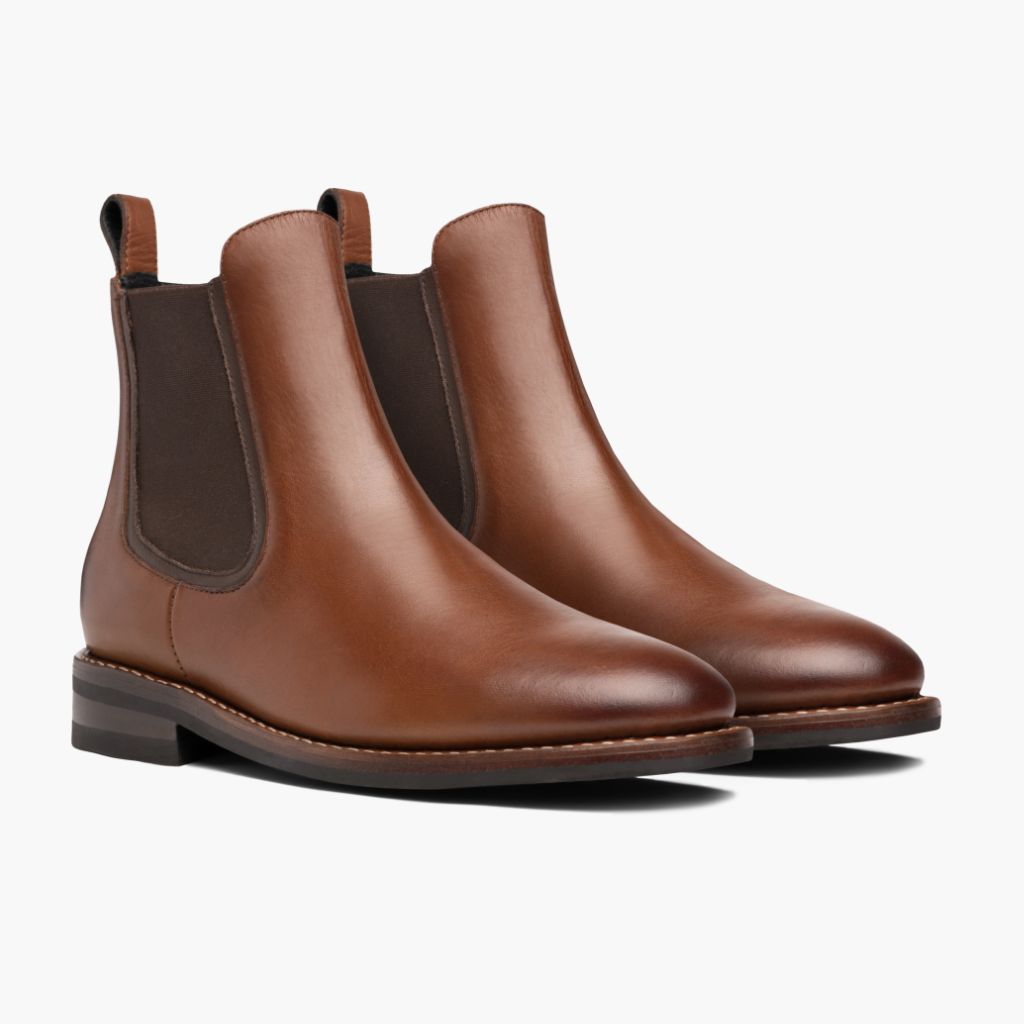


Hunter Original Tall
The iconic all-rounder — handcrafted natural-rubber, fully waterproof, with a tall shaft and the classic versatile silhouette that goes with everything from jeans to a dress. Not insulated (needs warm socks in winter) and premium-priced, but the safe, stylish default.
The Hunter Original Tall combines genuine, reliable waterproofing with the iconic, versatile style that's made it a staple for decades. It's a handcrafted natural-rubber boot with fully waterproof construction, a tall shaft that keeps you dry through deep puddles and downpours, and the clean classic silhouette that goes with everything from jeans to a dress — as at home at a festival or city commute as on a muddy walk. The calendered rubber resists cracking, an Ortholite insole option adds comfort, and the sole has reasonable wet grip. It's not insulated (cold in winter without thick socks), the natural rubber feels stiff until broken in, the tall shaft doesn't suit every calf, and it's premium-priced — but for the best balance of true waterproofing, iconic versatile style, and all-round usability, it's the safe default.
Pros
- ✓Reliable full waterproofing, tall shaft
- ✓Iconic, versatile style that goes with anything
- ✓Crack-resistant natural rubber, insole option
- ✓Holds up season after season
Cons
- ✗Not insulated — cold in winter without warm socks
- ✗Premium-priced and stiff until broken in

Bogs Classic High
The warmest pick — full waterproofing plus Neo-Tech insulation rated well below freezing, a comfortable footbed, and aggressive grip for snow, sleet, and freezing mud. Chunkier and too warm for summer, but the genuinely weatherproof choice for cold-wet conditions.
The Bogs Classic High is the pick when warmth and serious cold-and-wet conditions matter most. Built for the genuinely harsh stuff — farms, barns, snow, sleet, freezing mud — it has full waterproofing plus Neo-Tech insulation rated well below freezing, so feet stay warm where a non-insulated Hunter leaves them cold. Pull-on handles make them easy to get on, a contoured footbed keeps them comfortable for all-day standing and walking, and an aggressive outsole grips slippery, muddy ground. Bogs have a devoted following among people who actually work and play outdoors in winter. They're chunkier and more utilitarian than a sleek Hunter and too warm for hot summer rain, but if your rain comes with cold, they're the warmest, most genuinely weatherproof pick here.
Pros
- ✓Insulated and rated well below freezing
- ✓Comfortable footbed for all-day wear
- ✓Aggressive grip for snow and mud
- ✓Easy pull-on handles, durable and washable
Cons
- ✗Chunkier, more utilitarian look
- ✗Too warm for hot-weather rain
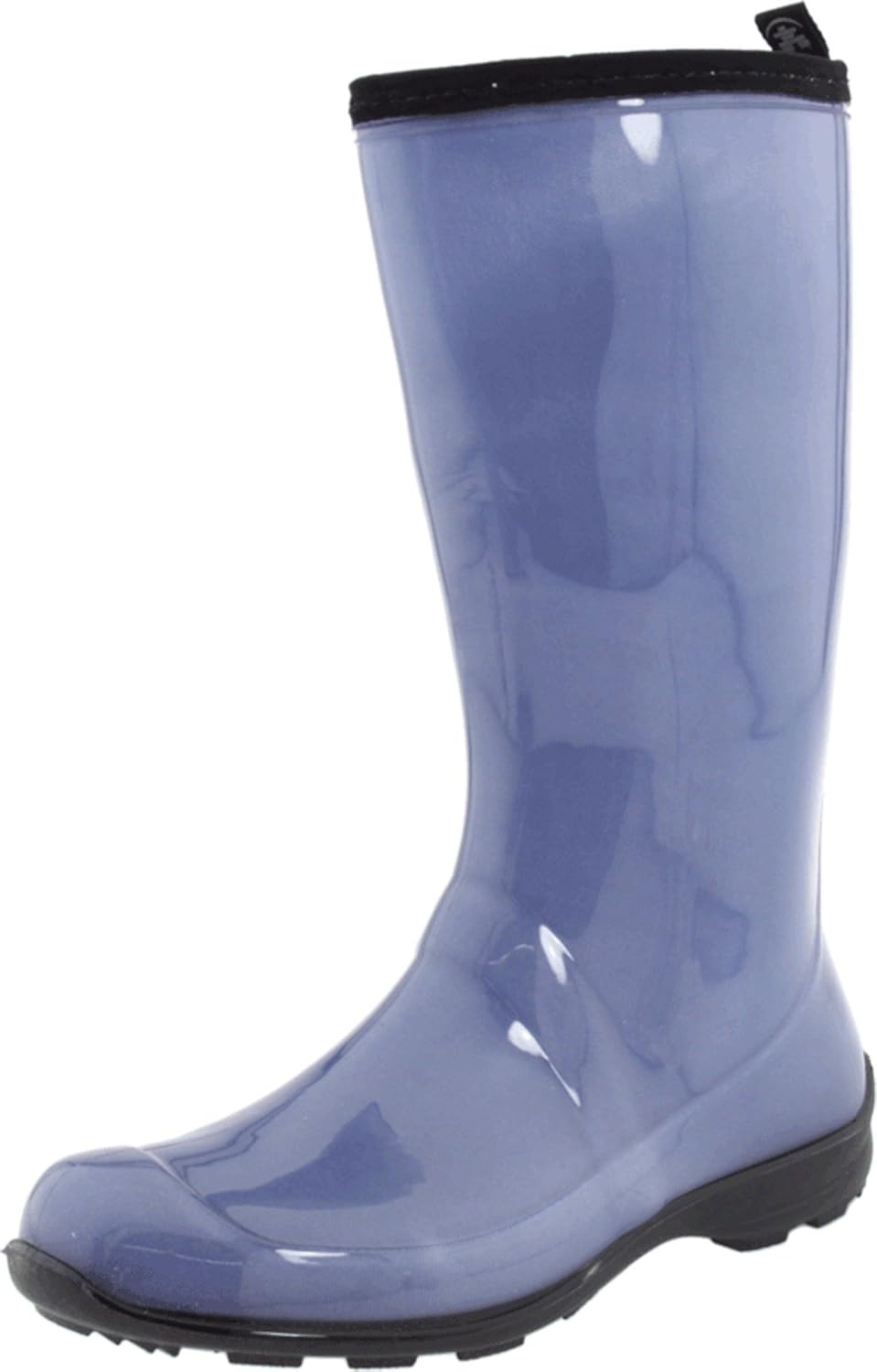
Kamik Heidi
The value champion — reliable full waterproofing, a comfortable, lighter, flexible build, and decent grip at a notably lower price than the iconic brands, often with eco-conscious materials. The smart no-nonsense everyday pick.
The Kamik Heidi is the value champion — a genuinely good, fully waterproof rain boot at a notably lower price than the iconic brands, from a company that's made weather boots for over a century. It offers reliable waterproofing, a comfortable fit, decent grip, and often a more flexible, lighter synthetic-rubber construction that's easy to walk in, frequently with eco-conscious materials. For someone who wants a dependable, comfortable rain boot for everyday wet-weather use without paying Hunter prices, it's the smart, no-nonsense value pick. It lacks the iconic-brand cachet and the heaviest-duty insulation of the Bogs, but for dry, comfortable feet at a fair price, it's hard to beat.
Pros
- ✓Reliable waterproofing at a low price
- ✓Comfortable, lighter, flexible build
- ✓Decent grip, easy to walk in
- ✓Often eco-conscious materials
Cons
- ✗Less brand cachet than Hunter
- ✗Standard styles less insulated than Bogs

Joules Molly Welly
The stylish, fun pick — cheerful colourful and patterned designs with proper waterproofing, reasonable comfort, and an adjustable calf buckle. For people who want their wellies to have personality for school runs, gardens, and festivals.
The Joules Molly Welly is the pick for style and personality — Joules is famous for cheerful, colourful, often floral or patterned rain boots that bring a bit of joy to a grey day. Beyond the looks, they're properly waterproof and reasonably comfortable, with an adjustable buckle for calf fit, making them a favourite for people who want their rain boots to be a fun fashion statement rather than purely functional. They're the choice for school runs, garden parties, festivals, and anyone who'd rather their wellies have character. They're not insulated for deep winter or as grip-focused as the Xtratuf, but with solid everyday waterproof performance behind the print-led range, they deliver dry feet with a smile.
Pros
- ✓Cheerful, colourful, patterned designs
- ✓Properly waterproof with an adjustable calf buckle
- ✓Fun fashion statement for everyday rain
- ✓Reasonable everyday comfort
Cons
- ✗Not insulated for deep winter
- ✗Style-led rather than grip- or warmth-focused
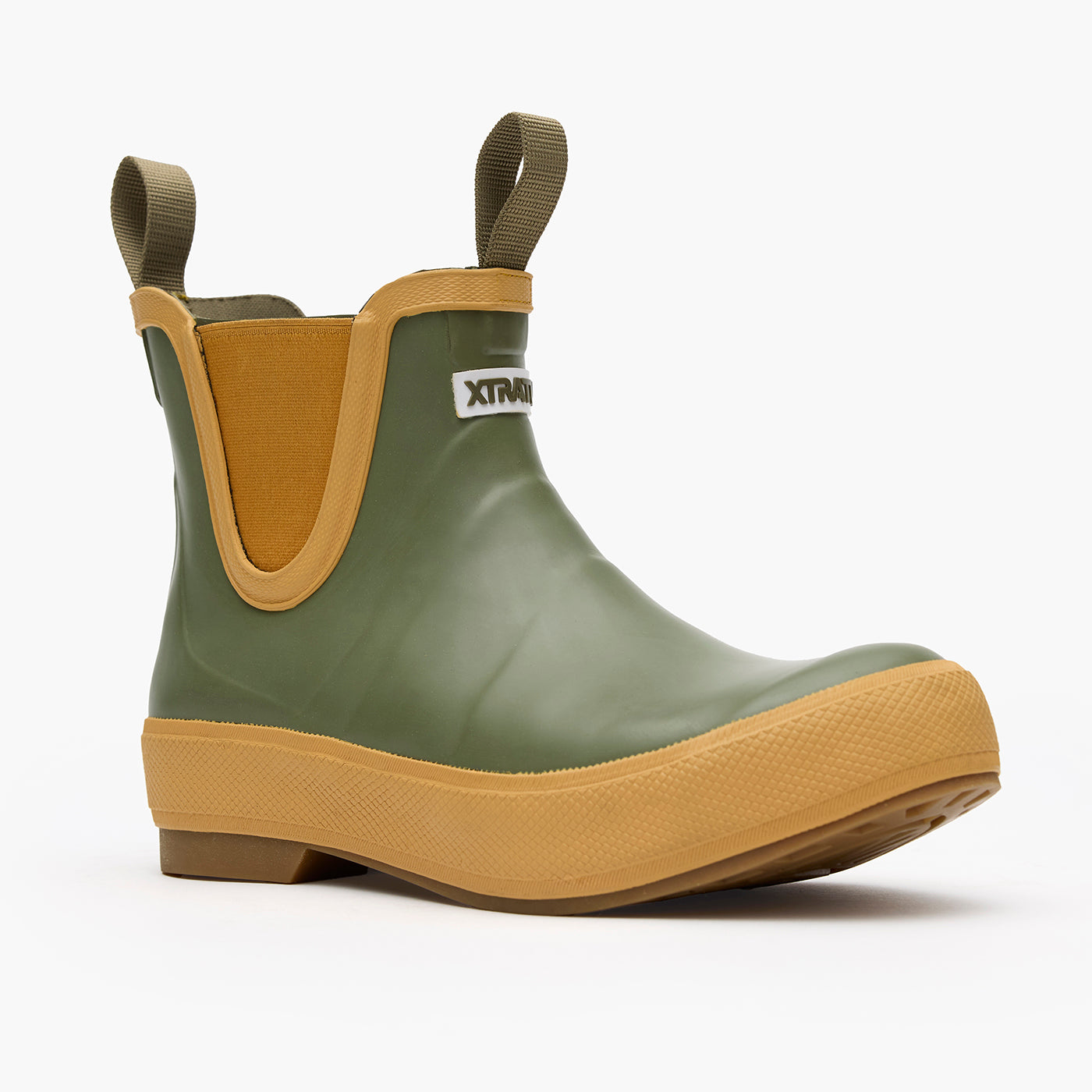
Xtratuf Legacy Deck Boot
The rugged grip specialist — fishing-heritage durability and an outstanding slip-resistant Chevron outsole that grips wet, oily, and slick surfaces better than almost anything. Fully waterproof, flexible, and tough; utilitarian rather than stylish, but the pick for not falling on treacherous wet ground.
The Xtratuf Legacy is the rugged, no-nonsense performance boot with serious heritage — originally built for Alaskan fishermen and deckhands, it's renowned for outstanding wet grip. Its standout is the Chevron-pattern non-marking slip-resistant outsole, which grips wet, oily, and slick surfaces — boat decks, wet docks, slippery floors — better than almost anything, making it the pick for anyone whose priority is not falling on treacherous wet ground. It's fully waterproof, flexible, comfortable, and tough, with a loyal following far beyond fishing among restaurant workers, boaters, and gardeners. It's more utilitarian than stylish and not built for deep-winter warmth, but for grip and durability on wet surfaces, it's the standout.
Pros
- ✓Outstanding slip-resistant Chevron outsole
- ✓Fishing-grade waterproofing and durability
- ✓Flexible and comfortable
- ✓Loyal following for wet-surface safety
Cons
- ✗Utilitarian rather than stylish
- ✗Not insulated for deep winter
Which one is right for you?
For iconic, versatile everyday rain boots
Hunter Original Tall
Reliable waterproofing and a classic silhouette that pairs with anything make it the stylish, all-round default — just add warm socks in winter.
For cold, snowy, freezing-wet conditions
Bogs Classic High
Full waterproofing plus below-freezing insulation and a comfortable footbed keep feet warm and dry through snow, sleet, and long winter hours outdoors.
For dependable rain boots on a budget
Kamik Heidi
Reliable waterproofing, a comfortable lighter build, and decent grip at a notably lower price make it the smart no-nonsense value pick.
For fun, colourful style
Joules Molly Welly
Cheerful patterned designs with proper waterproofing and an adjustable calf buckle suit anyone who wants their wellies to have personality.
For the best grip on slick surfaces
Xtratuf Legacy Deck Boot
A fishing-grade slip-resistant Chevron outsole grips wet decks, floors, and mud better than almost anything — the pick for not falling on treacherous ground.
Top pick: Hunter Original Tall
The Hunter Original Tall is the best all-round rain boot because it combines genuine, reliable waterproofing with the iconic, versatile style that's made it a wardrobe staple for decades. It's a handcrafted natural-rubber boot with fully waterproof construction, a tall shaft that keeps you dry through deep puddles and downpours, and the clean, classic silhouette that goes with everything from jeans to a dress — the reason it's as at home at a festival or city commute as on a muddy walk. The matte (or gloss) rubber, the buckle detail, and the wide colour range have made it the default 'nice rain boot.'
Functionally it delivers where it counts: completely waterproof, a calendered rubber that resists cracking, an Ortholite cushioned insole option for comfort, and a sole with reasonable grip for wet streets. It's the boot you can wear for a rainy day in the city without looking like you're dressed for the farm, and it holds up season after season.
The honest caveats: the Original is not insulated, so on its own it's cold in winter — you'll want thick socks or Hunter's separate boot socks/liners for genuine cold (or choose an insulated boot below). The natural rubber can feel stiff until broken in, the tall shaft doesn't suit every calf, and they're premium-priced for a rubber boot. But for the best balance of true waterproofing, iconic versatile style, and all-round usability, the Hunter Original Tall is the one most people picture and the safe default.
Warmest for winter: Bogs Classic High
The Bogs Classic High is the pick when warmth and serious cold-and-wet conditions matter most. Bogs are built for the genuinely harsh stuff — farms, barns, snow, sleet, and freezing mud — with full waterproofing and, crucially, Neo-Tech insulation rated to handle well below-freezing temperatures, so your feet stay warm where a non-insulated Hunter would leave them cold. The pull-on construction with built-in handles makes them easy to get on, and they're designed to be worn hard in the worst weather.
They also nail the practical details for cold-wet use: a contoured comfortable footbed for all-day standing and walking, an aggressive, grippy outsole for slippery and muddy ground, and durable, easy-to-clean construction (hose them off). Bogs have a devoted following among people who actually work or play outdoors in winter — gardeners, dog walkers in all weather, farmers, and parents doing the school run in the snow — because they're warm, bone-dry, and comfortable for hours.
The trade-offs: they're chunkier and more utilitarian-looking than a sleek Hunter, so they're about function over fashion (though the range has become more stylish), and the insulation that makes them great for winter makes them too warm for hot summer rain. But if your rain comes with cold — snow, sleet, freezing temperatures, or long hours outdoors in winter — the Bogs Classic High is the warmest, most genuinely weatherproof pick here.
The value, the stylish, and the rugged picks: Kamik, Joules, Xtratuf
The Kamik Heidi (and similar Kamik styles) is the value champion — a genuinely good, fully waterproof rain boot at a notably lower price than the iconic brands, from a company that's made weather boots for over a century. It offers reliable waterproofing, a comfortable fit, decent grip, and often a more flexible, lighter synthetic-rubber construction that's easy to walk in, frequently with eco-conscious materials. For someone who wants a dependable, comfortable rain boot for everyday wet-weather use without paying Hunter prices, Kamik is the smart, no-nonsense value pick, and it's a popular choice for exactly that reason.
The Joules Molly Welly is the pick for style and personality — Joules is famous for its cheerful, colourful, often floral or patterned rain boots that bring a bit of joy to a grey day. Beyond the looks, they're properly waterproof and reasonably comfortable, with an adjustable buckle for calf fit, making them a favourite for people who want their rain boots to be a fun fashion statement rather than purely functional. They're the choice for school runs, garden parties, festivals, and anyone who'd rather their wellies have character. The print-led range is the draw, with solid everyday waterproof performance behind it.
The Xtratuf Legacy is the rugged, no-nonsense performance boot with serious heritage — originally built for Alaskan fishermen and deckhands, it's renowned for genuinely outstanding wet grip. Its standout is the Chevron-pattern non-marking slip-resistant outsole, which grips wet, oily, and slick surfaces (boat decks, wet docks, slippery floors) better than almost anything, making it the pick for anyone whose priority is not falling on treacherous wet ground. It's fully waterproof, flexible, comfortable, and tough, with a loyal following far beyond fishing — among restaurant workers, boaters, gardeners, and anyone working on wet surfaces. It's more utilitarian than stylish, but for grip and durability, it's the standout.
How to choose: waterproofing, warmth, comfort, and grip
Confirm true waterproofing and the right height. All genuine rain boots (all five here) are fully waterproof through the rubber, so the question is height and seal: a tall shaft (Hunter Original Tall, Bogs Classic High) keeps you dry through deep puddles, mud, and heavy rain, while ankle or mid-height boots are easier to walk in and fine for light rain and city use. Match the height to your conditions — deep mud, flooding, and farm use want tall; everyday city drizzle is fine with shorter. Beware cheap 'fashion' rubber boots with glued seams that can leak; the established brands here have reliably sealed, durable waterproofing.
Decide whether you need insulation, because it's the biggest comfort variable. A non-insulated boot (Hunter Original, and the lighter Kamik and Joules styles) is fine for mild and warm rain but cold in winter — you'd add thick or thermal socks. An insulated boot (Bogs Classic High, and insulated Kamik versions) has built-in lining rated for cold temperatures, keeping your feet warm in snow, sleet, and freezing conditions, but is too warm for hot weather. If your rain is cold or you'll stand around outdoors in winter, prioritise insulation; if it's mild or you only need light rain protection, a non-insulated boot is more versatile and cooler.
Prioritise comfort and grip for how you'll actually use them. Comfort matters enormously if you'll walk or stand for hours — look for a cushioned, contoured footbed (or add an insole), a flexible rather than stiff sole, and the right calf and foot fit (tall boots vary a lot in calf width; check sizing). Grip is a genuine safety issue on wet surfaces: an aggressive, slip-resistant outsole (the Xtratuf's Chevron pattern is the benchmark, and Bogs grip well too) prevents falls on slick pavements, wet decks, and muddy ground, whereas smooth-soled fashion boots can be treacherous. Match the boot to your priority — iconic style (Hunter), winter warmth (Bogs), value (Kamik), personality (Joules), or maximum wet grip (Xtratuf) — and you'll get a boot you actually reach for when it rains.
