Best Freestanding Pull-Up Bars 2026: Power Tower vs Wall-Mounted
No studs, no doorframe, no landlord negotiation — a freestanding pull-up bar sets up anywhere with enough floor space and lets you pull from day one. The trade-off is footprint. Weight range and build quality determine long-term value far more than feature lists.
Each unit was assessed on frame stability under static dead-hang and simulated dynamic loading, base footprint and room clearance requirements, bar height relative to user height, dip station and VKR padding comfort, and long-term frame rigidity reported by users beyond 12 months of regular use.
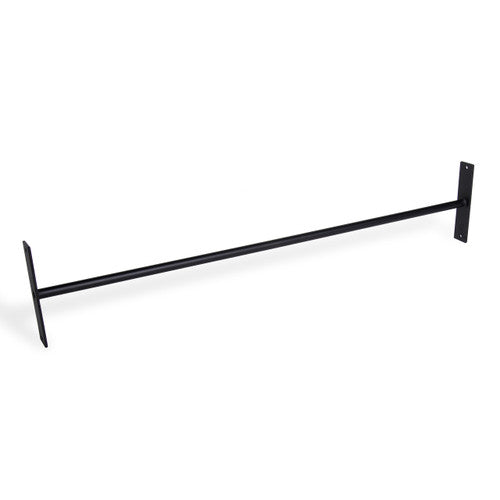
CAP Barbell Freestanding Pull Up Bar
Best Pull-Up Only: The CAP Barbell is a standalone pull-up station without dip or VKR — which makes it the smallest-depth unit in this comparison at 97×60 cm. The A-frame outrigger base delivers better lateral stability for strict dead-hang pull-ups than rectangular-base power towers, because the user hangs at the center of a wide base rather than at the edge of a narrow one.
Top picks ↓| Product | Price | Link |
|---|---|---|
| $149.99 | View deal → | |
| $79.95 | View deal → | |
| $199.99 | View deal → | |
| $140 | View deal → | |
| $206.09 | View deal → |
Top picks
Related articles


CAP Barbell Freestanding Pull Up Bar
Standalone pull-up bar with A-frame base — no dip station, no VKR. Smallest depth footprint in this comparison at approximately 97 by 60 cm. Wide outrigger feet create good lateral stability for strict pull-ups. Fixed bar height at approximately 218 cm. Rated to 136 kg static. The right choice if you want freestanding pull-up capability without the bulk of a power tower.
The CAP Barbell is a standalone pull-up station without dip or VKR — which makes it the smallest-depth unit in this comparison at 97×60 cm. The A-frame outrigger base delivers better lateral stability for strict dead-hang pull-ups than rectangular-base power towers, because the user hangs at the center of a wide base rather than at the edge of a narrow one. Fixed bar at 218 cm and multiple grip options built in. Not the choice if you want to add dips or VKR to your program.
Pros
- ✓Smallest depth footprint at 97×60 cm — fits spaces power towers cannot
- ✓A-frame base produces better lateral stability than rectangular-base designs
- ✓Multiple grip positions: wide overhand and neutral parallel
Cons
- ✗No dip station, push-up handles, or VKR — pull-up only
Score breakdown
| Stations | 1 (pull-up only) |
| Base footprint | ~97×60 cm |
| Bar height | ~218 cm (fixed) |
| Load capacity | 136 kg static |
| Base design | A-frame with outrigger feet |
| Price | $149.99 |
| Grip options | Wide overhand, neutral parallel |
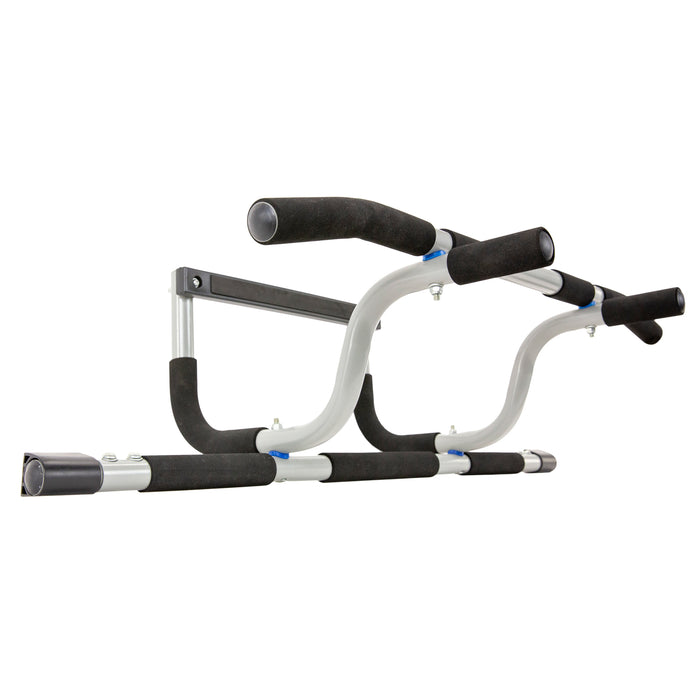
Ultimate Body Press Freestanding Pull Up Bar
Adjustable height from 193 to 244 cm in preset steps — the tallest available setting in this comparison. Straight overhand bar only, no integrated parallel or neutral grip handles. Optional wall-anchor strap included for added stability. Rated to 136 kg with anchor. Best for users taller than 185 cm who need maximum overhead clearance.
The Ultimate Body Press is the only standalone pull-up bar in this comparison with height adjustment — 193 to 244 cm in preset steps, the tallest available setting here. The straight overhand bar has no integrated neutral or parallel grip handles. The rectangular four-foot base is slightly less stable than the CAP's A-frame design at tall settings for users over 80 kg doing dynamic movements; the included wall-anchor strap addresses this. Best for users over 185 cm who share the bar with training partners of different heights.
Pros
- ✓Adjustable height 193–244 cm — tallest setting in this comparison
- ✓Wall-anchor hardware included for added stability under dynamic loading
- ✓Compact rectangular base fits narrow spaces
Cons
- ✗Straight bar only — no neutral or parallel grip handles built in
Score breakdown
| Stations | 1 (pull-up only) |
| Base footprint | ~4-foot rectangular |
| Bar height | 193–244 cm (adjustable presets) |
| Load capacity | 136 kg with anchor |
| Base design | Rectangular 4-foot |
| Price | $79.95 |
| Anchor | Wall strap included |
Yaheetech Power Tower Pull Up Dip Station
Full four-station power tower (pull-up, dip, push-up, VKR) in a compact 95 by 110 cm footprint — the most space-efficient power tower in this comparison. Adjustable bar height to approximately 220 cm. Rated to 150 kg static — highest weight capacity in this comparison. Strong value for full-function power tower capability in smaller rooms.
The Yaheetech Power Tower packs the same four stations as the Fitness Reality X2 into a 95×110 cm footprint — the smallest power tower in this comparison. Bar height adjusts to 220 cm via preset holes, and the 150 kg rating is the highest in this comparison. The VKR arm rest padding is thinner than the X2, and the fixed-width dip handles may feel narrow for wide-shouldered users. Best choice when every square centimeter of room space matters.
Pros
- ✓Smallest power tower footprint in this comparison at 95×110 cm
- ✓150 kg static load rating — highest of any unit here
- ✓Adjustable bar height up to 220 cm via preset positions
Cons
- ✗Thinner VKR arm rest padding than Fitness Reality X2 and Weider
Score breakdown
| Stations | 4 (pull-up, dip, push-up, VKR) |
| Base footprint | 95×110 cm |
| Bar height | Up to ~220 cm (adjustable) |
| Load capacity | 150 kg static |
| Frame | Round tube steel |
| Price | $199.99 |
| Assembly time | ~60 min |

Fitness Reality X2 4-in-1 Power Tower
Best overall freestanding pull-up station for most home gyms. Four stations: pull-up bar at 228 cm, dip station, push-up handles, and padded VKR arm rests. Heavy-gauge square tube frame. 110 by 130 cm base footprint. Rated to 136 kg static. The right starting point for anyone who wants complete upper-body freestanding training without the premium cost of the Weider.
The Fitness Reality X2 delivers four training stations — pull-up bar, dip station, push-up handles, padded VKR — in a 110×130 cm footprint at a price that makes it the right starting point for most home gyms. The 3.8 cm square tube frame is noticeably more rigid than round tube designs at the same price. Bar height at 228 cm provides dead-hang clearance for users up to 185 cm. The VKR arm rests and dip handles are adequate but not the most comfortable for long sets — the Weider improves on both.
Pros
- ✓4-station design covers pull-up, dip, push-up, and VKR in one unit
- ✓3.8 cm square tube frame is rigid for the price category
- ✓228 cm bar height covers users up to ~185 cm without knee bend
Cons
- ✗VKR arm rest padding thinner than Weider — noticeable on long hanging leg raise sets
Score breakdown
| Stations | 4 (pull-up, dip, push-up, VKR) |
| Base footprint | 110×130 cm |
| Bar height | ~228 cm (fixed) |
| Load capacity | 136 kg static |
| Frame | 3.8 cm square tube steel |
| Price | $140 |
| Assembly time | ~60–90 min |
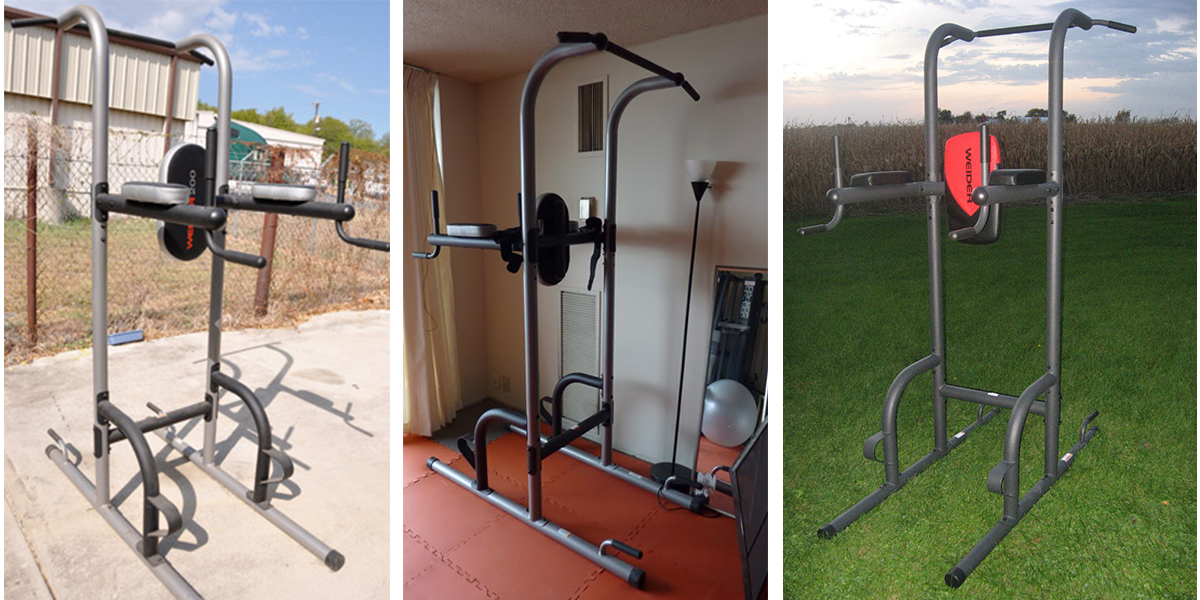
Weider Power Tower 200
Premium four-station power tower with thicker frame, wider dip handle spacing, and heavier VKR arm rest padding than budget alternatives. Best-in-class dip and VKR comfort. 115 by 135 cm base footprint — largest in this comparison. Rated to 136 kg static. Worth the price premium over the Fitness Reality X2 for buyers who will use the dip and VKR stations frequently.
The Weider Power Tower 200 improves on the Fitness Reality X2 in the two areas most noticeable during training: wider dip handle spacing and thicker VKR arm rest padding. Both changes improve comfort and shoulder positioning for athletes who use these stations frequently. The heavier frame gauge increases rigidity but also size — the 115×135 cm footprint is the largest in this comparison. Worth the price premium over the X2 if you use the dip and VKR stations regularly and value comfort during longer sets.
Pros
- ✓Wider dip handle spacing improves shoulder positioning at the bottom of dips
- ✓Thicker VKR arm rest padding noticeably more comfortable for long sets
- ✓Heavier frame gauge more rigid than budget power towers
Cons
- ✗115×135 cm footprint is the largest in this comparison
Score breakdown
| Stations | 4 (pull-up, dip, push-up, VKR) |
| Base footprint | 115×135 cm |
| Bar height | ~228 cm (fixed) |
| Load capacity | 136 kg static |
| Frame | Heavy-gauge steel |
| Price | $206.09 |
| Assembly time | ~90 min |
Which one is right for you?
For most home gyms wanting full upper-body training
Fitness Reality X2 4-in-1 Power Tower
Four stations in a manageable footprint at the lowest price — pull-ups, dips, push-ups, and VKR without buying separate equipment.
For small rooms where every centimeter counts
Yaheetech Power Tower Pull Up Dip Station
Smallest power tower footprint in this comparison with the highest load rating — the right choice when space is the binding constraint.
For pull-up-only training without power tower bulk
CAP Barbell Freestanding Pull Up Bar
A-frame stability and minimal depth footprint deliver pull-up capability without the room commitment of a full power tower.
For frequent dip and VKR users who want maximum comfort
Weider Power Tower 200
Wider dip handles and thicker VKR padding justify the premium for athletes whose program relies on these stations 3+ times per week.
For users taller than 185 cm needing adjustable height
Ultimate Body Press Freestanding Pull Up Bar
The tallest bar setting in this comparison at 244 cm — the only freestanding option that accommodates very tall users without a bent-knee hang.
Fitness Reality X2 4-in-1 Power Tower — the best overall for most home gyms
The Fitness Reality X2 Power Tower combines four training stations into a single freestanding unit: pull-up bar, dip station, push-up handles, and a vertical knee raise (VKR) station with back pad and arm rests. The pull-up bar sits at approximately 228 cm (90 inches) height — tall enough for full dead-hang clearance for users up to around 185 cm without any knee bend. The bar width is approximately 120 cm, with neutral parallel grip handles on the sides and a straight overhand bar across the top.
Weight capacity is rated at 136 kg (300 lbs) across all four stations, which accommodates most home gym users without forcing them to buy a heavier-duty commercial option. The steel frame uses 3.8 cm (1.5 inch) square tube construction, which provides a noticeably more rigid feel under load than round tube designs in the same price range. The base footprint is approximately 110 cm wide by 130 cm deep — not a small piece of equipment, but compact enough to fit in a standard bedroom or garage corner.
The dip station is the most useful addition over a standalone pull-up bar. Parallel bar dips are one of the most effective pressing movements for chest, triceps, and anterior deltoid, and having a stable dip station integrated with the pull-up bar means you can superset pull-ups and dips without needing a second freestanding unit. The arm rests on the VKR station are padded and wide enough to distribute forearm pressure comfortably during hanging knee raises.
Assembly takes approximately 60–90 minutes with two people. The hardware is included and the instruction manual is adequate, though the step numbering on the diagram can be ambiguous at a few points. Best for: anyone who wants a complete upper-body freestanding station under 200 USD and has floor space for a 110 by 130 cm footprint.
Yaheetech Power Tower Pull Up Dip Station — compact footprint, full four-station function
The Yaheetech Power Tower delivers the same four training stations as the Fitness Reality X2 — pull-up bar, dip station, push-up handles, and VKR — in a slightly more compact footprint of approximately 95 cm wide by 110 cm deep. This makes it the more practical option in rooms where the extra 15–20 cm of depth matters: studio apartments, small spare bedrooms, or basement gym spaces where every square meter counts.
Pull-up bar height is adjustable across multiple settings, with the highest position reaching approximately 220 cm. The adjustment mechanism uses a series of height-setting holes in the upright tubes rather than a continuously adjustable system, which limits you to the available preset heights but keeps the structure simpler and more rigid at each height than a continuously adjustable design would be. Weight capacity is rated at 150 kg (330 lbs) — slightly higher than the Fitness Reality X2's 136 kg rating.
The dip handles are positioned at a fixed width rather than adjustable, which is adequate for most users but may feel slightly narrow for users with broader shoulders. The padding on the VKR arm rests is thinner than on the Fitness Reality X2, which becomes noticeable during longer sets of hanging leg raises. At lower price points than the Fitness Reality, it represents strong value for users who want full power tower functionality with a smaller footprint and do not need the wider dip handles.
Best for: buyers who want all four stations in a more compact package and weigh up to 130 kg. Also the better choice for users who are taller than 185 cm and need the higher of the bar height adjustment settings.
CAP Barbell Freestanding Pull Up Bar — the compact, no-frills standalone option
The CAP Barbell Freestanding Pull Up Bar is a standalone pull-up station without the dip, push-up, or VKR stations of the power tower designs. This makes it the smallest-footprint option in this comparison: the base measures approximately 97 cm wide by 60 cm deep, meaning it can fit in spaces where even the most compact power towers cannot. If you only want a freestanding pull-up bar and have no interest in adding a dip station to the same unit, the CAP removes the extra bulk.
The bar height is fixed rather than adjustable, reaching approximately 218 cm. Multiple grip options are built into the bar frame: a wide overhand grip at the top, neutral parallel grip handles on the angled side rails. Weight capacity is rated at 136 kg (300 lbs) static. The steel construction uses a wider A-frame base with outrigger feet that spread the load across a larger floor contact area than the compact rectangular base of the power tower designs — which contributes to freestanding stability without needing to anchor the unit to a wall.
The A-frame design also means that the bar position sits at the center of a wider base, which feels noticeably more stable during the dead-hang bottom position compared to power towers where the user hangs at the edge of a narrower base. The practical trade-off is that the A-frame outriggers extend sideways and require clearance on both sides of the unit, which can make it awkward in narrow rooms even if the depth is acceptable.
Best for: buyers who specifically want a freestanding pull-up bar rather than a full power tower, have limited depth space but can accommodate the wider side clearance, and weigh under 120 kg.
Ultimate Body Press Freestanding Pull Up Bar — adjustable height, wall-anchor optional
The Ultimate Body Press Freestanding Pull Up Bar offers height-adjustable positioning from approximately 193 cm to 244 cm in several preset steps — the tallest available setting in this comparison, which matters for users over 190 cm who need maximum overhead clearance for full dead-hang. The bar itself is a straight overhand pull-up bar with no integrated neutral grip or parallel handles; grip variation requires hand position changes along the single bar rather than switching between handle orientations.
The base is a rectangular design with four feet rather than the A-frame of the CAP Barbell, which produces a more compact side footprint at the cost of slightly less inherent lateral stability. The unit includes optional wall-anchor hardware: if your space allows you to run an anchor strap to a wall stud or anchor point, the additional tether dramatically increases stability during dynamic movements. Used purely freestanding without the anchor, the bar is stable for strict dead-hang pull-ups at the lower height settings but develops noticeable sway at the tallest height settings for users over 80 kg doing dynamic movements.
Weight capacity is rated at 136 kg (300 lbs) when using the optional wall anchor, and the manufacturer recommends anchor use for users over approximately 90 kg. The height adjustability is the primary reason to choose this bar over the CAP Barbell — if you are taller than 185 cm or share the bar with training partners of different heights, the multiple height presets are genuinely useful.
Best for: taller users (185 cm and above) who want a standalone pull-up bar with height adjustability and who have a wall anchor point available for stability during heavier use.
Weider Power Tower 200 — upgraded padding and wider dip handle spacing
The Weider Power Tower 200 is a full four-station power tower (pull-up, dip, push-up, VKR) positioned at the higher end of the home-gym freestanding market. The pull-up bar sits at a fixed height of approximately 228 cm, consistent with the Fitness Reality X2. The most meaningful upgrade over less expensive power towers is the dip handle design: the Weider uses a slightly wider handle spacing and thicker foam grip padding than budget power tower options, which improves both comfort and shoulder positioning during the bottom of the dip movement.
Weight capacity is rated at 136 kg (300 lbs). The steel frame uses heavier gauge tubing than the Yaheetech and Fitness Reality X2, which produces a more rigid structure but also increases the assembled weight — moving the Weider between rooms is a two-person job. The VKR arm rests use thicker padding than either of the budget power towers, which makes longer sets of hanging leg raises and knee raises noticeably more comfortable on the forearms.
The base footprint is approximately 115 cm wide by 135 cm deep — slightly larger than the Fitness Reality X2 and significantly larger than the Yaheetech. This is the main trade-off for the heavier frame construction and upgraded padding: the Weider takes more floor space than any other option in this comparison. Assembly is similar in complexity to the other power towers, requiring approximately 90 minutes with two people.
Best for: buyers who want the most durable and comfortable home freestanding power tower available under 300 USD, are not constrained by floor space, and will use the dip station and VKR frequently enough to justify the premium over the Fitness Reality X2.
Freestanding vs doorframe vs wall-mount: how to pick the right pull-up setup
Freestanding pull-up bars solve one problem better than any other type: installation. No wall penetrations, no stud finding, no drill. But they solve it by trading floor space. Every freestanding option in this comparison requires at minimum 60 cm of depth and 95 cm of width — and power towers need meaningfully more. If you have less than 1 square meter of available floor space, a freestanding option will not fit without dominating the room.
Doorframe bars are the opposite trade-off: almost no floor space required, but they depend entirely on the geometry and structural condition of the specific door frame you have. Standard over-the-door lever bars require a 61–91 cm opening width and adequate trim depth for the hook to seat. If your door frame meets those requirements and you only need pull-up capability, a doorframe bar costs less and takes up less space than any freestanding option.
Wall-mounted bars eliminate both the floor-space problem and the door-frame dependency problem — but they require drilling into wall studs (or a solid concrete/brick wall), which is not possible in all rental situations. Wall-mounted bars typically offer the highest weight capacity and the lowest amount of sway under dynamic loading because they anchor directly into structural material rather than relying on floor contact or door frame geometry.
Weight capacity is less decisive than most buyers expect. Every freestanding option in this comparison is rated to at least 136 kg under static loading conditions — adequate for the vast majority of users doing strict dead-hang pull-ups. The more relevant factors for most buyers are footprint (how much floor space the unit takes), station count (pull-up only vs pull-up plus dip and VKR), and bar height (whether you can hang with fully extended arms at the available height setting).
Stability, footprint, and bar height: the three freestanding decisions
Stability in a freestanding pull-up bar comes from two factors: base width and unit mass. A wider base spreads the lever force of a hanging user across a longer moment arm, reducing the tendency to tip. Heavier construction adds inertial resistance to rocking. The A-frame designs like the CAP Barbell tend to feel more stable than rectangular-base power towers for strict pull-ups because the outrigger feet create a very wide effective base. Power towers compensate with heavier total mass and — on some models — optional wall anchor points.
Footprint calculation should include more than just the unit's base dimensions. You also need clearance around the unit for safe dismount — approximately 60 cm of open space behind and to the sides so you can step off or lower yourself from the bar without stepping into an obstruction. In practice, a power tower with a 110 by 130 cm base needs a total clear floor area of roughly 230 cm by 250 cm to use safely. Measure the actual available space in your room before ordering.
Bar height relative to your standing height is the most overlooked specification in this category. A pull-up bar at 218 cm gives a user who is 175 cm tall approximately 43 cm of clearance between the top of their head and the bar — enough for a fully extended dead-hang without needing to bend the knees significantly. A user who is 190 cm tall at the same bar height has only 28 cm of clearance, which requires a noticeable knee bend to avoid touching the floor. If you are taller than 180 cm, confirm the bar height specification of any unit you are considering against your own height before purchasing.
