Best Ceiling-Mounted Pull-Up Bars 2026: 5 Tested & Compared
Ceiling-mounted pull-up bars are the permanent end of the pull-up bar spectrum. Weight range and build quality determine long-term value far more than feature lists.
Each bar was assessed on steel gauge and tube diameter, manufacturer-rated static load capacity, joist spacing compatibility, grip knurl depth and surface area, ceiling height minimum requirement, included hardware quality, and corrosion resistance for non-climate-controlled installation environments.

Rogue Joist Mount Pull-Up Bar
Best Overall: The Rogue Joist Mount is the garage gym ceiling bar benchmark — 11-gauge steel, 500-lb rating, 48-inch span, and lag hardware included for two standard 16-inch-spaced joists. The medium-depth knurl is aggressive enough to hold grip during weighted pull-ups without tearing skin on high-rep sets.
Top picks ↓| Product | Price | Link |
|---|---|---|
| $95.00 | View deal → | |
| $85〜$120 | View deal → | |
| $80〜$140 | View deal → | |
| $60〜$100 | View deal → | |
| $89.95 | View deal → |
Top picks
Related articles

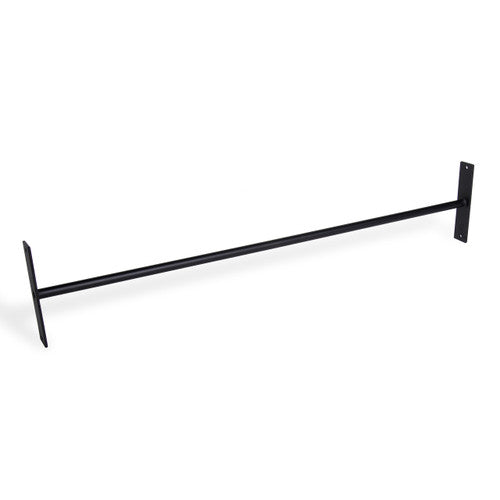
Rogue Joist Mount Pull-Up Bar
The garage gym benchmark. 11-gauge 1.25-inch steel, 500-lb capacity, 48-inch span, full lag hardware included. Installs into two standard 16-inch-spaced ceiling joists. Aggressive medium-depth knurl, powder-coated to rack-grade standards. The bar you install once and never replace.
The Rogue Joist Mount is the garage gym ceiling bar benchmark — 11-gauge steel, 500-lb rating, 48-inch span, and lag hardware included for two standard 16-inch-spaced joists. The medium-depth knurl is aggressive enough to hold grip during weighted pull-ups without tearing skin on high-rep sets. It is the bar you install once and expect to outlast whatever it is bolted to. The only argument against it is the Titan for non-standard ceiling angles.
Pros
- ✓11-gauge steel and 500-lb rating — highest load capacity in this comparison
- ✓Rack-grade powder coat survives unconditioned garage environments
- ✓Full lag hardware included — no separate hardware purchase needed
Cons
- ✗Requires standard 16-inch joist spacing — non-standard ceilings need the Titan
Score breakdown
| Steel gauge | 11-gauge |
| Bar diameter | 1.25 inches |
| Load capacity | 500 lb (227 kg) |
| Span | 48 inches |
| Ceiling height min | Standard |
| Mounting | 2 ceiling joists at 16-inch centers |
| Price | $95.00 |
Titan Fitness Wall/Ceiling Pull-Up Bar
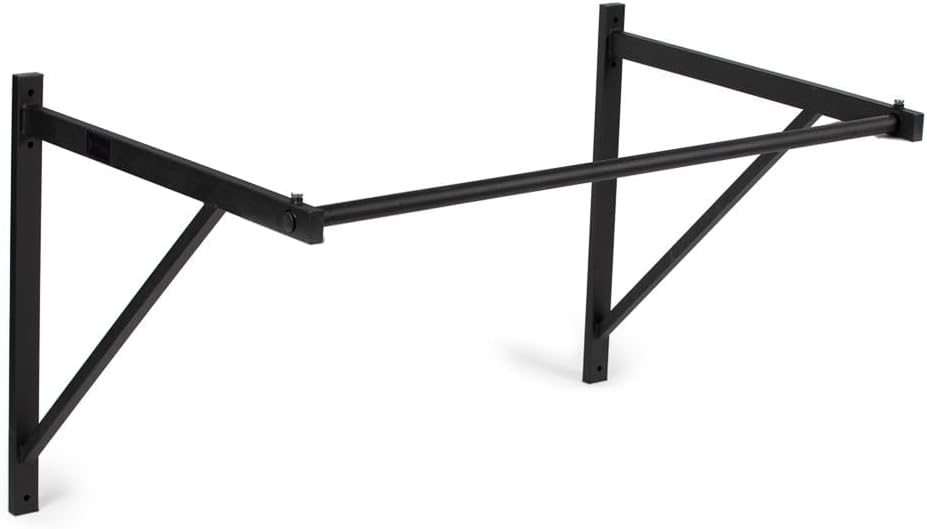
Multi-angle bracket mounts at any angle from 45–90 degrees on wall or flat ceiling. 12-gauge 1.25-inch steel, 400-lb capacity, 44-inch span. Built-in angled grip sections allow neutral-grip pull-ups without extra hardware. Best value for non-standard ceiling installations.
Titan's adjustable bracket mounts at any angle between 45 and 90 degrees on wall or ceiling — the only option in this comparison for non-standard ceiling pitches or wall-to-ceiling corner installations. Built-in angled grip sections provide a neutral grip without additional hardware. The 12-gauge construction and 400-lb rating are lower than Rogue and REP, which matters for heavier athletes and dynamic loading. Best value per dollar for non-standard installations.
Pros
- ✓Mounts at any angle 45–90° — solves pitched ceiling and corner installations
- ✓Built-in neutral-grip sections without extra attachments
- ✓Lowest price for a 400-lb-rated steel bar in this comparison
Cons
- ✗12-gauge vs 11-gauge means less rigidity than Rogue or REP under high load
Score breakdown
| Steel gauge | 12-gauge |
| Bar diameter | 1.25 inches |
| Load capacity | 400 lb (181 kg) |
| Span | 44 inches |
| Mount angle | 45–90° adjustable |
| Mounting | Wall or ceiling |
| Price | $85–120 |
REP Fitness Ceiling Mount Pull-Up Bar
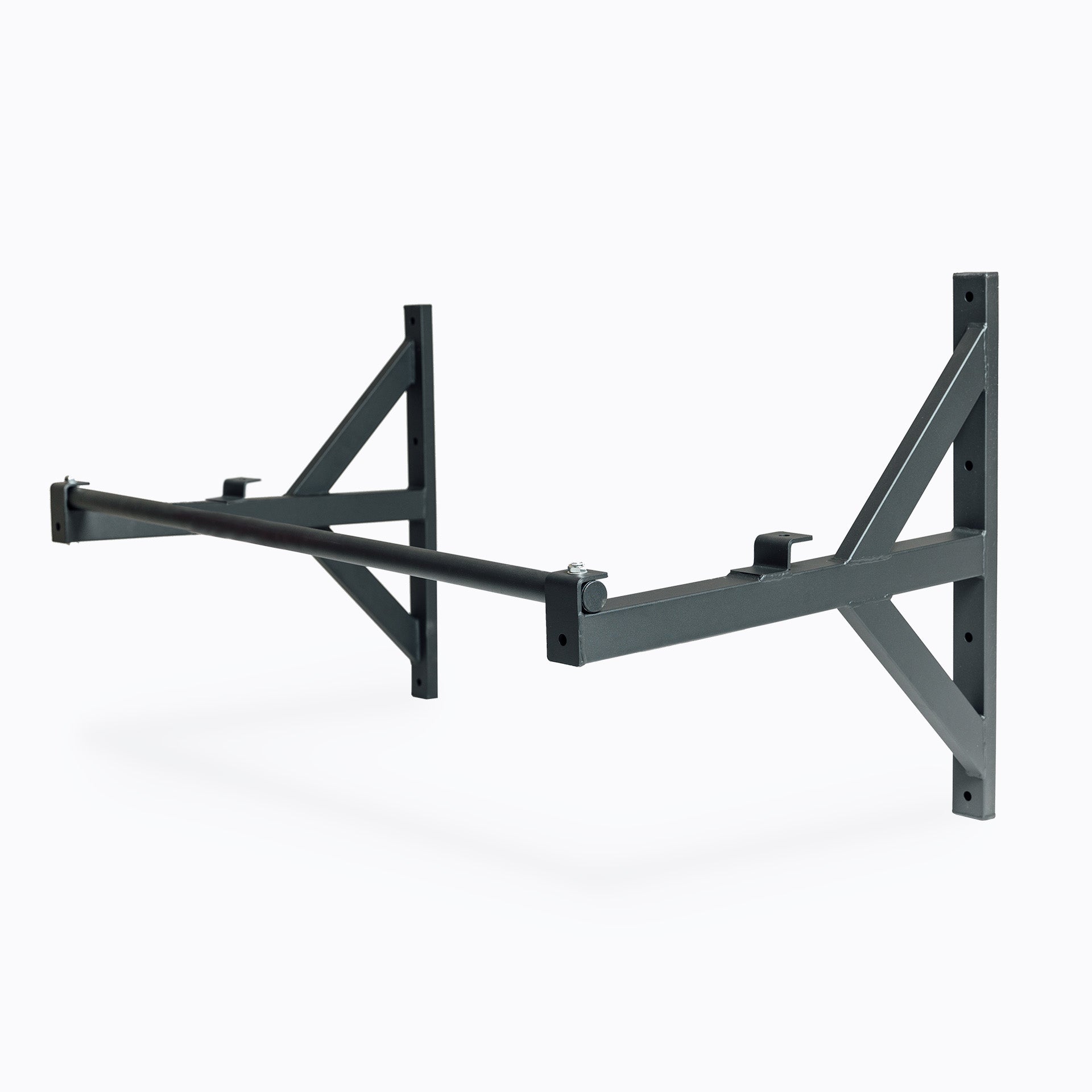
1.5-inch diameter bar integrates grip training into every set. 11-gauge steel, 500-lb capacity, 48-inch span. Rubber ceiling gasket eliminates creak during load cycles. Lighter knurl than Rogue — better for high-rep sets, less aggressive feedback for max-load weighted work.
REP's 1.5-inch diameter bar is the thickest in this comparison — which trains grip strength passively during every set and is a genuine differentiator from the 1.25-inch alternatives. The rubber ceiling gasket eliminates the creaking noise common during heavy load cycles on wood joists. The knurl is lighter than Rogue's, making it more comfortable for 20+ rep sets. 500-lb capacity matches Rogue at a slightly lower price.
Pros
- ✓1.5-inch diameter bar trains grip passively during every set
- ✓Rubber ceiling gasket eliminates load-cycle creak on wood joists
- ✓Lighter knurl suits high-rep bodyweight training better than Rogue
Cons
- ✗Lighter knurl provides less feedback during max-load weighted sets versus Rogue
Score breakdown
| Steel gauge | 11-gauge |
| Bar diameter | 1.5 inches |
| Load capacity | 500 lb (227 kg) |
| Span | 48 inches |
| Ceiling gasket | Rubber (creak prevention) |
| Mounting | 2 ceiling joists |
| Price | $80–140 |

ProBar Wall Mount Pull-Up Bar by Pullup & Dip
304 stainless steel bar and hardware — the only corrosion-resistant option in this comparison. 1.25-inch diameter, 441-lb capacity, 39-inch span. Includes narrow parallel grip attachments for neutral-grip training. Required for any outdoor or unconditioned-space installation.
ProBar uses 304 stainless steel for both bar and hardware — the only corrosion-resistant option in this comparison, and the correct choice for any outdoor, unconditioned garage, or high-humidity installation where carbon steel will rust. The 441-lb capacity and 39-inch span are competitive, and the included parallel grip attachments add a neutral-grip option. Stainless has a cost premium that only makes sense when corrosion is an actual concern.
Pros
- ✓304 stainless steel bar and hardware resist corrosion in outdoor or humid spaces
- ✓Includes parallel narrow-grip attachments for neutral-grip pull-ups
- ✓441-lb capacity rating competitive with mid-tier steel bars
Cons
- ✗39-inch span is shorter than Rogue and REP — less room for wide-grip variation
Score breakdown
| Material | 304 stainless steel |
| Bar diameter | 1.25 inches |
| Load capacity | 441 lb (200 kg) |
| Span | 39 inches |
| Includes | Parallel grip attachments |
| Best for | Outdoor / unconditioned spaces |
| Price | $60–100 |

Ultimate Body Press Ceiling Mount Pull-Up Bar
Budget entry into permanent ceiling installation. 14-gauge 1.25-inch steel, 300-lb capacity, 40-inch span. 90-inch ceiling height minimum is the lowest in this comparison. Best for users under 100 kg doing strict dead-hang work who want permanent installation without full gym-grade cost.
Ultimate Body Press is the entry-level ceiling bar — 14-gauge steel (lighter than competitors), 300-lb capacity, 40-inch span, and a 90-inch minimum ceiling height that is the lowest clearance requirement in this comparison. For users under 100 kg doing strict dead-hang pull-ups who want permanent installation without paying full gym-grade prices, it delivers the core function adequately. Not the right choice for heavier users or dynamic loading.
Pros
- ✓Lowest price for a permanent ceiling-mounted pull-up bar
- ✓90-inch minimum ceiling height — lowest clearance requirement here
- ✓Functional for strict dead-hang bodyweight use under 100 kg
Cons
- ✗14-gauge lighter construction — noticeably less rigid than Rogue or REP under load
Score breakdown
| Steel gauge | 14-gauge |
| Bar diameter | 1.25 inches |
| Load capacity | 300 lb (136 kg) |
| Span | 40 inches |
| Ceiling height min | 90 inches (229 cm) |
| Mounting | 2 ceiling joists |
| Price | $89.95 |
Which one is right for you?
For garage gym permanent installation
Rogue Joist Mount Pull-Up Bar
11-gauge steel and 500-lb rating at the standard joist spacing — the bar that handles weighted pull-ups, kipping, and daily high-volume use without flexing or degrading.
For non-standard ceiling angles or pitches
Titan Fitness Wall/Ceiling Pull-Up Bar
The only bar in this comparison that mounts at any angle between 45 and 90 degrees — solves sloped ceilings and corner installations that standard bars cannot accommodate.
For high-rep bodyweight training
REP Fitness Ceiling Mount Pull-Up Bar
1.5-inch diameter trains grip passively and the lighter knurl is more comfortable for 15-plus rep bodyweight sets than the more aggressive Rogue texture.
For outdoor or unconditioned garage installations
ProBar Wall Mount Pull-Up Bar by Pullup & Dip
304 stainless bar and hardware are the only corrosion-resistant option here — necessary when rain, humidity, or condensation contact is likely.
For low-budget permanent ceiling installation
Ultimate Body Press Ceiling Mount Pull-Up Bar
Lowest entry price for a ceiling-mounted bar — functional for strict bodyweight pull-ups under 100 kg when gym-grade load ratings are not required.
Rogue Joist Mount Pull-Up Bar — the garage gym benchmark
The Rogue Joist Mount Pull-Up Bar uses 1.25-inch diameter 11-gauge steel tubing welded to a laser-cut steel plate that lags directly into two ceiling joists on a standard 16-inch spacing. The bar spans 48 inches between mounting plates, giving a usable pull-up grip width of approximately 40 inches — enough for competition-width wide-grip pull-ups without the bar ends getting in the way. All hardware is included: two mounting plates, eight 5/16-inch lag screws, and a installation template.
Weight capacity is rated at 500 lbs (227 kg) for the mounted assembly, which covers virtually every realistic use case including kipping pull-ups, muscle-up attempts, and weighted pull-up work with an added 50-lb vest. The 11-gauge steel wall thickness means the bar does not flex perceptibly under the load of a single athlete — the rigidity is closer to a fixed rack pull-up station than to a doorframe bar. Ceiling height requirement is a minimum of 96 inches (244 cm) to allow a full dead hang for users up to about 185 cm tall.
The Rogue bar ships in a flat package with no assembly required beyond mounting. The knurled finish on the bar's center 24-inch section provides aggressive grip without raw metal — the knurl is medium-depth by gym standards, which means chalk is optional rather than required for most sets. The powder coat on the plates and the bar is the same Rogue finish used on their rack products, which holds up to standard garage humidity and temperature cycling without peeling.
Best for: anyone building a serious home or garage gym who wants a bar they will never need to replace. The Rogue Joist Mount is the reference product in this category because the construction quality, warranty, and hardware inclusion are unmatched at its price point.
Titan Fitness Wall/Ceiling Pull-Up Bar — adjustable mounting angle at lower cost
The Titan Fitness Wall/Ceiling Pull-Up Bar is designed to mount at either 90 degrees (ceiling) or on a wall at any angle between 45 and 90 degrees, using the same bolt pattern. The bar itself is 1.25-inch diameter 12-gauge steel — one gauge thinner than the Rogue — spanning a total of 44 inches between mounting points. The versatile mounting bracket is the key differentiator: if you have a sloped ceiling, a concrete wall, or want the option of a wall-angle installation, Titan's bracket geometry accommodates it without additional hardware.
Weight capacity is rated at 400 lbs (181 kg). The bar handles standard pull-up training, kipping movements, and weighted vest work within this ceiling without issue. Three grip positions are built into the bar: a straight center section for neutral-width grip, and two angled sections at approximately 30 degrees that allow a neutral-grip pull-up (palms facing each other) without a separate parallel grip attachment. This multi-angle bar profile is unusual in the ceiling mount category.
Installation requires locating ceiling joists (Titan recommends a stud finder and pilot holes before final lag placement), and the included hardware covers a standard 16-inch joist spacing. For wall mounting, Titan includes both ceiling-lag and wall-anchor hardware. The price sits meaningfully below the Rogue at around $120–140, which makes it the most cost-competitive option in this comparison with a legitimate multi-mount design.
Best for: buyers who want ceiling mount flexibility at a lower entry cost, or who have a sloped ceiling or concrete wall that makes a standard flat-ceiling installation impractical. The 12-gauge construction is adequate for users under 160 kg doing controlled movements.
REP Fitness Ceiling Mount Pull-Up Bar — thicker bar diameter for grip training
The REP Fitness Ceiling Mount Pull-Up Bar uses a 1.5-inch diameter bar — a quarter inch thicker than the Rogue and Titan — which noticeably increases the grip challenge for standard pull-up training and makes it useful as a grip-strength development tool. The thicker diameter forces the fingers to work harder to maintain contact, particularly on supinated (chin-up) grip positions. The 11-gauge steel construction and 500-lb capacity rating put it on par with the Rogue in structural terms.
The bar mounts to ceiling joists via two bracket plates spaced 48 inches apart, with full hardware included. The total usable bar width is 42 inches. One practical difference from the Rogue: REP includes a rubber gasket between the mounting plate and the ceiling surface that compresses to fill minor gaps and prevents metal-on-wood creak during loading cycles. This small detail eliminates the audible tick that some ceiling mount bars develop after months of use.
Knurling on the REP bar is lighter than the Rogue — the smaller contact area per tooth creates a bar that is comfortable for long sets without chalk but provides less aggressive feedback on heavy-weighted pull-ups. Users who run high-rep programs will prefer the REP's milder knurl; those training maximum-load weighted pull-ups typically prefer more aggressive grip texture. Ceiling height minimum is 96 inches.
Best for: intermediate to advanced trainees who want to integrate grip strength development into their pull-up programming without a separate grip trainer, or who find standard 1.25-inch bars too easy to hold after months of direct grip work.
ProBar Wall Mount Pull-Up Bar by Pullup & Dip — outdoor-rated stainless construction
The ProBar by Pullup & Dip uses 304 stainless steel for both the bar and mounting hardware — the only bar in this comparison built for outdoor or high-humidity environments without corrosion risk. The bar diameter is 1.25 inches, and the construction handles loads up to 441 lbs (200 kg). The stainless finish requires no powder coat maintenance and will not rust in a covered outdoor garage, open porch, or coastal-climate gym space where mild steel or powder-coated products develop surface rust within two to three seasons.
The mounting system uses a single back-plate design that lags into wall studs (not ceiling joists), which means installation requires a wall with accessible studs at 16-inch spacing rather than an open ceiling. Bar width between mounting points is 39 inches, slightly narrower than the Rogue and REP bars. Pullup & Dip includes two grip-width options: the standard straight bar and an additional set of narrow parallel grips that slide onto the bar ends for neutral-grip training, which ships in the box at no additional cost.
The ProBar is priced at the high end of this comparison — around $180–220 — reflecting the stainless steel material cost. For indoor gym applications where corrosion is not a concern, the price premium over the Rogue or REP does not add functional value. For any outdoor or high-humidity installation, it is the correct choice and the premium is justified.
Best for: outdoor pull-up stations, covered porches, garages without climate control in humid climates, or any application where long-term corrosion resistance matters more than minimum purchase price.
Ultimate Body Press Ceiling Mount Pull-Up Bar — budget entry into permanent installation
The Ultimate Body Press Ceiling Mount Pull-Up Bar is the lowest-cost entry into permanent ceiling installation in this comparison, priced around $60–80. It uses 1.25-inch diameter steel tubing with 14-gauge wall thickness — two gauges thinner than the Rogue and REP — and is rated to 300 lbs (136 kg) for static loading. For users under 100 kg doing strict dead-hang pull-ups, the construction is adequate. For kipping movements or weighted work at the upper end of the capacity rating, the thinner gauge creates more flex than the thicker-walled competitors.
The bar mounts to ceiling joists using a two-plate system with hardware included for standard 16-inch spacing. Total usable bar width is 40 inches. Unlike the higher-priced options, the Ultimate Body Press bar has minimal knurling — the bar surface is lightly textured but closer to smooth than knurled, which means chalk or lifting straps are more useful for grip security than on the heavily-knurled Rogue. Ceiling height requirement is 90 inches, slightly lower than the 96-inch requirement of the thicker competition, which matters for lower-ceiling basements and rooms.
The finish is a basic black powder coat that is adequate for a climate-controlled indoor gym but should not be used in unconditioned spaces where humidity cycles exceed typical residential ranges. Given the lower price, the Ultimate Body Press is best treated as a starter installation — it works as intended for basic pull-up training but lacks the construction margin for heavy use over years that the Rogue and REP provide.
Best for: budget-constrained buyers who want a permanent ceiling installation and weigh under 100 kg, or for a secondary training location where permanent hardware is needed without spending full gym-grade money.
What to know before drilling into your ceiling
The single most important step before buying any ceiling mount bar is locating your ceiling joists and confirming they are structural lumber, not engineered I-joists or metal bridging. Standard dimensional lumber joists (2x6, 2x8, or 2x10 nominal) at 16-inch spacing are the assumed substrate for every bar in this comparison — lag screws into solid lumber at the correct depth (minimum 2.5 inches of engagement) create a connection that exceeds the rated bar capacity before the joist itself fails. Engineered I-joists have a hollow web that should not receive lag screws without a web stiffener; a structural engineer should specify the correct attachment method if your ceiling uses engineered lumber.
Ceiling height requirements for the bars in this comparison range from 90 inches (Ultimate Body Press) to 96 inches (Rogue, REP). These minimums assume a user of approximately 185 cm (6 feet) tall hanging with arms extended, with the bar set at a typical installation height of 84–96 inches from the floor. Taller users or users who want more clearance below the bar should account for their specific height when choosing installation height rather than relying on the manufacturer's minimum.
The bar's mounting plate dimensions determine how much ceiling real estate the hardware occupies and whether the bar can be installed between existing ceiling fixtures. A typical mounting plate for the bars in this comparison is approximately 8 × 4 inches — confirm there are no electrical cables running perpendicular to the joists in the planned installation area before drilling. Most residential wiring runs parallel to joists or through drilled holes in the joists; a non-contact voltage tester on the ceiling surface before drilling is a minimal precaution worth taking.
How to choose between these five bars
If you are building a serious home gym for long-term use and cost is secondary: the Rogue Joist Mount is the correct answer. The combination of 11-gauge steel, 500-lb capacity, full hardware, and Rogue's build quality makes it the bar you install once and never think about again. The price premium over the budget options is real but amortizes quickly over years of use.
If you need mounting flexibility beyond a flat ceiling — sloped ceiling, concrete wall, or want the option to relocate: the Titan Fitness Wall/Ceiling bar covers these scenarios at a lower price than the Rogue. The 12-gauge construction is adequate for users under 160 kg doing standard pull-up training.
If grip strength development is part of your training goals: the REP Fitness 1.5-inch bar integrates grip training directly into every set without a separate tool. The thicker diameter increases forearm fatigue meaningfully, and the rubber ceiling gasket addresses the creak problem that affects some ceiling mounts after extended use.
If the bar is going outside or into an unconditioned space: the Pullup & Dip ProBar's stainless steel construction is the only long-term corrosion-resistant option in this comparison. The price premium reflects the material cost and is justified for any outdoor application.
If you have budget constraints or a low ceiling: the Ultimate Body Press enters permanent installation territory at the lowest price point. Confirm you weigh under 100 kg and plan to do strict dead-hang work rather than kipping or weighted training before buying.
