Best Power Racks 2026: 5 Tested & Compared
A power rack (also called a full cage or squat cage) encloses the barbell on four uprights with safety bars or safeties on both sides. Weight range and build quality determine long-term value far more than feature lists.
Each rack was assessed on upright gauge and cross-section, hole spacing, weight capacity, J-hook quality, accessory ecosystem depth, footprint, and long-term customer service track record.
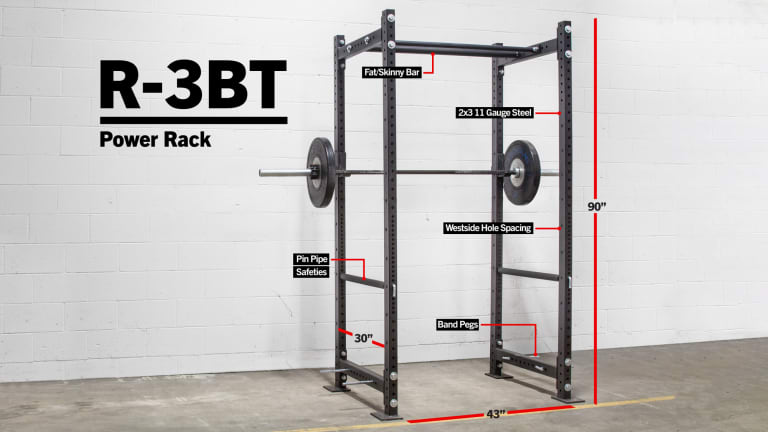
Rogue R-3 Monster Lite Power Rack
Best Overall: The Rogue R-3's 3×3 inch 11-gauge uprights, 1-inch hole spacing throughout, and Monster Lite accessory ecosystem set the benchmark for home gym power racks. UHMW-lined J-cups protect barbell knurling.
Top picks ↓| Product | Price | Link |
|---|---|---|
| $825.00 | View deal → | |
| — | View deal → | |
| $621〜$1,700 | View deal → | |
| — | View deal → | |
| $599.00 | View deal → | |
| $249.99 | View deal → |
Top picks
Related articles
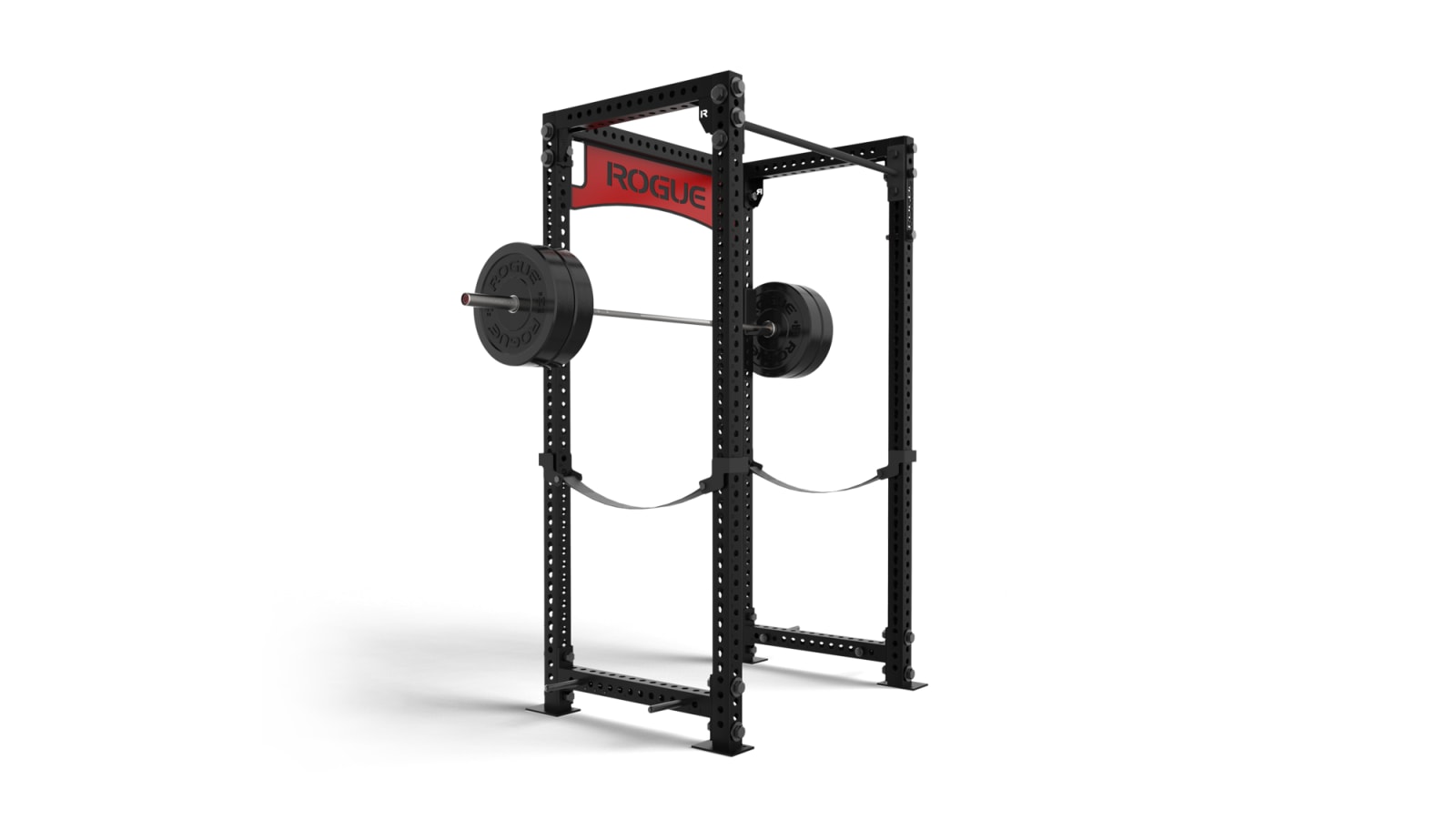

Rogue R-3 Monster Lite Power Rack
3x3 inch, 11-gauge, 1-inch holes, 90-inch height, ~175 lbs. $620-700. Best home gym power rack — Rogue build quality, extensive Monster Lite accessory ecosystem, best J-hook quality. The reference rack for serious home gym use. Heavy and expensive to return.
The Rogue R-3's 3×3 inch 11-gauge uprights, 1-inch hole spacing throughout, and Monster Lite accessory ecosystem set the benchmark for home gym power racks. UHMW-lined J-cups protect barbell knurling. The price premium over REP and Titan is real — justified by accessory depth and Rogue's long-term quality track record, not necessary for every buyer.
Pros
- ✓3×3 in 11-gauge uprights — commercial standard rigidity under maximum load
- ✓1-inch hole spacing throughout for precise safety bar positioning
- ✓Monster Lite accessory ecosystem: lat pulldown, monolift, dip attachment, band pegs
Cons
- ✗Premium price over REP PR-4000 for functionally similar construction — accessory ecosystem is the key differentiator
Score breakdown
| Upright | 3×3 in, 11-gauge steel |
| Hole spacing | 1 in throughout |
| Height | 90 in (requires 9+ ft ceiling) |
| J-hooks | Monster Lite UHMW-lined |
| Weight | ~175 lbs |
| Price (US) | ~$825 |
REP Fitness PR-4000 Power Rack
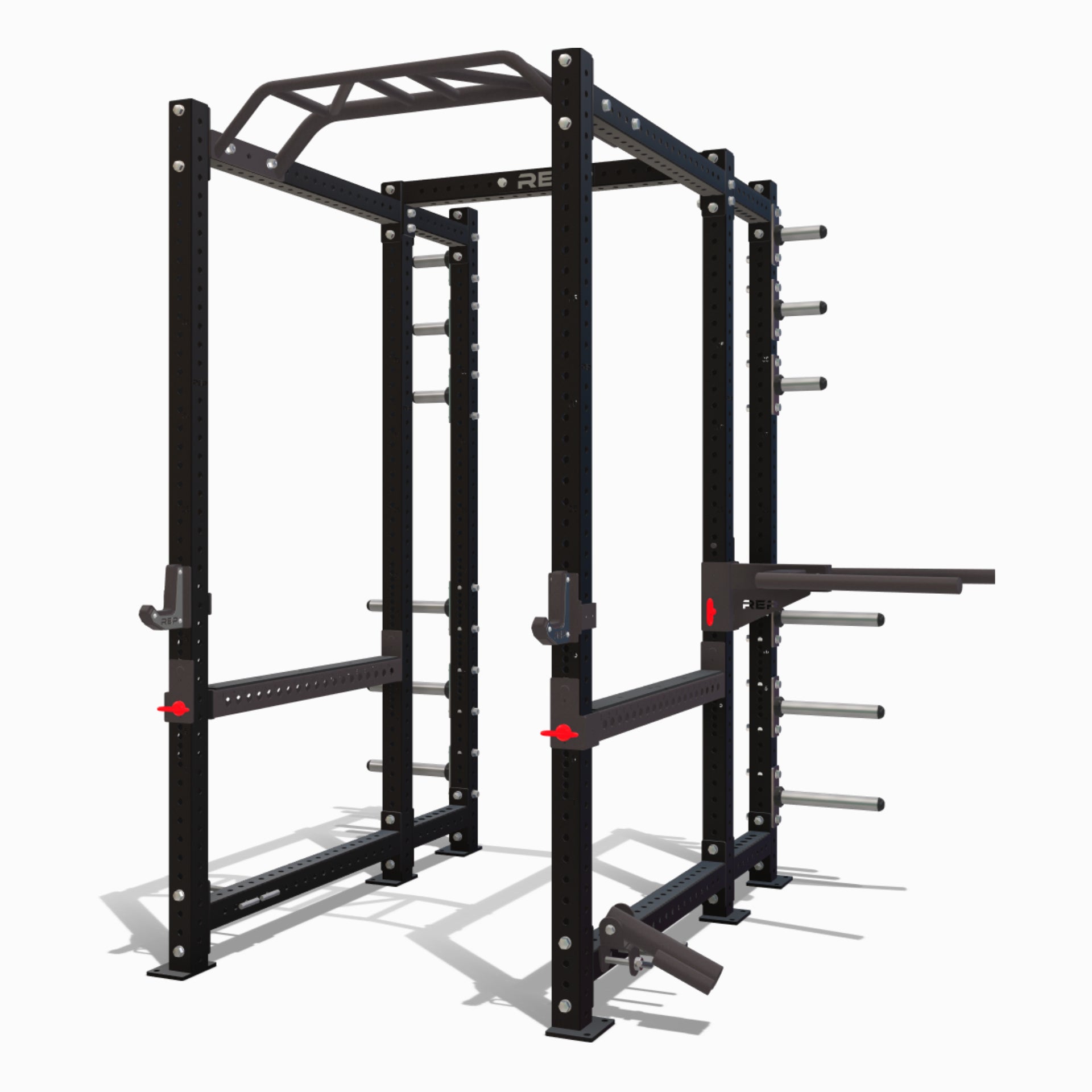
3x3 inch, 11-gauge, Westside hole spacing, 90-inch height. $520-600. Best value equivalent to Rogue R-3 — same spec at 15-20% lower cost. Slightly lower finish quality but functionally equivalent. Good accessory ecosystem.
The REP PR-4000 matches the Rogue R-3 on upright spec (3×3 in, 11-gauge, Westside spacing) at 15–20% lower cost. Weld quality and finish fall slightly below Rogue, but structurally equivalent for the exercises that matter. The right choice for home gym athletes who want R-3 performance without R-3 pricing.
Pros
- ✓3×3 in 11-gauge — same structural tier as Rogue R-3
- ✓Westside hole spacing provides 1-in precision in the bench zone
- ✓15–20% lower cost than the Rogue R-3
Cons
- ✗Weld quality and finish slightly below Rogue; accessory ecosystem smaller than Monster Lite
Score breakdown
| Steel gauge | 3 x 3 in, 11-gauge steel |
| Hole spacing | 1 in (Westside) in bench zone, 2 in elsewhere |
| Height | 80 in or 93 in (upright options) |
| Weight capacity | 1,000 lb rackable |
| Footprint | 50.8 in wide; depth options 24 / 30 / 41 in |
| Attachments compatible | REP 4000-series attachments |
REP Fitness PR-4000 Power Rack
3x3 inch, 11-gauge, Westside hole spacing, 90-inch height. $520-600. Best value equivalent to Rogue R-3 — same spec at 15-20% lower cost. Slightly lower finish quality but functionally equivalent. Good accessory ecosystem.
The REP PR-4000 matches the Rogue R-3 on upright spec (3×3 in, 11-gauge, Westside spacing) at 15–20% lower cost. Weld quality and finish fall slightly below Rogue, but structurally equivalent for the exercises that matter. The right choice for home gym athletes who want R-3 performance without R-3 pricing.
Pros
- ✓3×3 in 11-gauge — same structural tier as Rogue R-3
- ✓Westside hole spacing provides 1-in precision in the bench zone
- ✓15–20% lower cost than the Rogue R-3
Cons
- ✗Weld quality and finish slightly below Rogue; accessory ecosystem smaller than Monster Lite
Score breakdown
| Steel gauge | 3 x 3 in, 11-gauge steel |
| Hole spacing | 1 in (Westside) in bench zone, 2 in elsewhere |
| Height | 80 in or 93 in (upright options) |
| Weight capacity | 1,000 lb rackable |
| Footprint | 50.8 in wide; depth options 24 / 30 / 41 in |
| Attachments compatible | REP 4000-series attachments |
Titan Fitness X-3 Power Rack
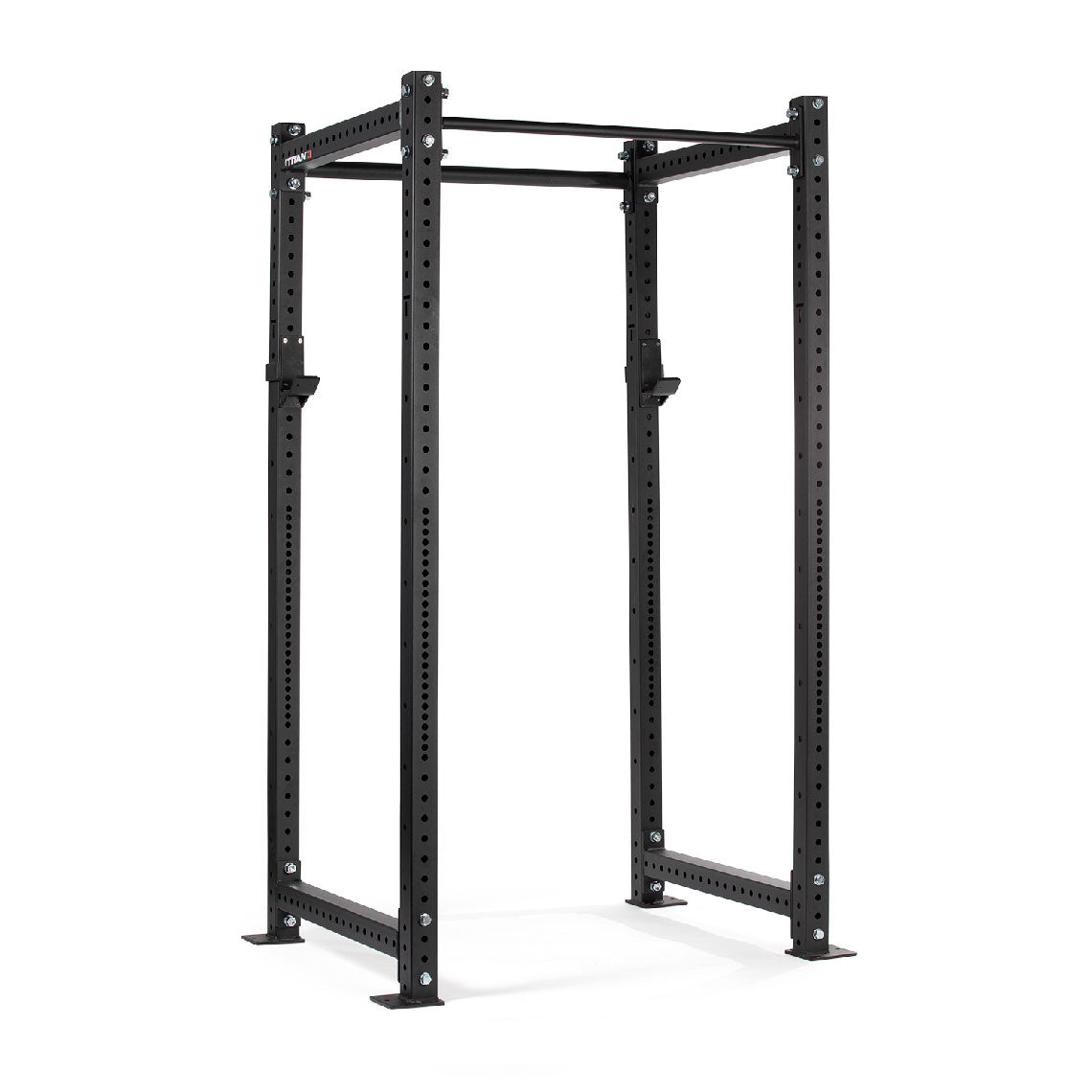
3x3 inch, 11-gauge, Westside spacing, 90-inch height. $400-500. Budget entry to 11-gauge quality — solid upright spec at lower price. J-hook quality and finish below Rogue/REP. Mixed customer service reputation.
The Titan X-3 offers 11-gauge 3×3 construction at a lower price than REP — the same structural spec tier but with mixed reports on J-hook lining durability and variable customer service. If budget is the constraint and you need 11-gauge construction, the X-3 delivers; if you can stretch to REP, the quality consistency is better.
Pros
- ✓11-gauge 3×3 construction at a lower price point than REP
- ✓1-inch Westside hole spacing for precision safety positioning
- ✓90-inch height for full range overhead press and pull-up clearance
Cons
- ✗J-hook lining has shifted over time in long-term reports; customer service reputation is inconsistent
Score breakdown
| Upright | 3×3 in, 11-gauge steel |
| Hole spacing | Westside 1 in |
| Height | 90 in |
| Price range | $400–$500 |

Body-Solid GPR378 Power Rack with Lat Pulldown
2x2 inch, 12-gauge, includes lat pulldown + cable system. $400-550. Best integrated system option — comes with cable/pulldown in base config. Lighter upright spec limits heavy barbell use. Correct for moderate-load home gym with cable needs.
The GPR378's integrated lat pulldown, low pulley, and weight storage deliver a complete home gym system out of the box — the key advantage over standalone power racks. The 2×2 inch 12-gauge uprights flex more under heavy barbell loading than the 3×3 11-gauge field, making this the right choice for moderate-load training with cable work, not heavy powerlifting.
Pros
- ✓Integrated lat pulldown and low pulley cable system included in base price
- ✓Weight storage pegs eliminate separate storage equipment
- ✓Complete home gym solution in a single footprint
Cons
- ✗2×2 in 12-gauge uprights flex more under heavy barbell work than 3×3 11-gauge competitors
Score breakdown
| Upright | 2×2 in, 12-gauge steel |
| Includes | Lat pulldown + low pulley cable |
| Weight storage | Yes |
| Price (US) | ~$599 |
CAP Barbell FM-8000F Power Rack
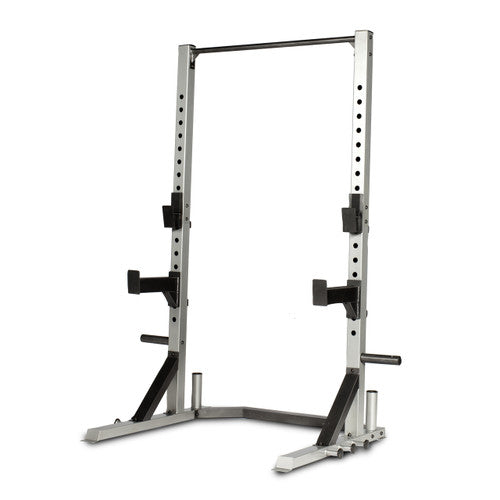
2x2 inch, 14-gauge, 2-inch holes, entry-level. $200-350. Budget cage option — functional for light-moderate home training. Flexes at heavy loads, 2-inch spacing limits safety precision. Starter rack, not long-term solution.
The CAP FM-8000F provides an enclosed cage for home training at moderate loads — the right starting point before upgrading. 14-gauge uprights develop noticeable flex above 300 lbs, 2-inch hole spacing limits safety bar precision, and J-hook quality doesn't hold up to heavy use. Not recommended as a long-term solution for serious strength training.
Pros
- ✓Lowest price for an enclosed cage format
- ✓Functional for beginner to intermediate loads under 300 lbs
- ✓Enclosed design provides four-sided safety coverage
Cons
- ✗14-gauge uprights flex noticeably above 300 lbs; 2-inch hole spacing limits safety bar precision
Score breakdown
| Upright | 2×2 in, 14-gauge steel |
| Hole spacing | 2 in |
| Max load rating | Moderate (under 300 lbs recommended) |
| Price (US) | ~$250 |
Which one is right for you?
For serious home gym athletes who want the benchmark rack
Rogue R-3 Monster Lite Power Rack
11-gauge 3×3 uprights, 1-inch spacing throughout, and the deepest accessory ecosystem in the home gym market.
For athletes who want R-3 specs at a lower price
REP Fitness PR-4000 Power Rack
Structurally equivalent to the Rogue R-3 at 15–20% lower cost — the best value in the 11-gauge tier.
For home gym builders on a tight budget who need 11-gauge
Titan Fitness X-3 Power Rack
11-gauge construction at the lowest price in the tier — if budget requires it over REP.
For athletes who want a complete cable and pulldown system
Body-Solid GPR378 Power Rack with Lat Pulldown
Integrated lat pulldown and low pulley create a full home gym in one unit — ideal for moderate-load training.
For beginners who need an enclosed cage to start training safely
CAP Barbell FM-8000F Power Rack
Lowest-cost enclosed cage for learning barbell movements at beginner to intermediate loads.
Upright gauge, hole spacing, and what they determine
Upright gauge: power rack uprights are specified by steel gauge — 3x3 inch uprights at 11-gauge steel are commercial standard. Lower gauge numbers mean thicker steel: 11-gauge is 0.120 inches thick, 3/16 is 0.188 inches. Budget racks use 14-gauge (0.075 inches) or 12-gauge. The practical difference: 11-gauge racks flex negligibly under load; 14-gauge racks develop noticeable wobble at heavy loads. For powerlifters or anyone regularly working at 400+ lbs, 11-gauge minimum. For strength training at under 300 lbs, 12-gauge works. Below 12-gauge, the rack will feel unstable at heavy loads.
Hole spacing: uprights have evenly spaced holes for J-hooks and safety bar pin placement. 1-inch hole spacing (Rogue, REP, Titan premium models) allows fine-grained safety bar height adjustment — you can set safeties within 1 inch of your lowest point for precise bail-out safety. 2-inch hole spacing (common on budget racks) means safety bars are only adjustable in 2-inch increments, which may mean your ideal height falls between two positions. For bench press spotting, 1-inch spacing is meaningful: the difference between the barbell clearing the safeties on a good rep and hitting them is often less than an inch.
Westside hole spacing is a separate spec: some racks (REP PR-4000, Rogue RML-390F) use 1-inch spacing throughout the bench zone (middle of the upright) and 2-inch spacing above and below. This gives precision where it matters most (bench, squat depth) without requiring hole machining the full upright length. This is generally preferable to uniform 2-inch spacing but equivalent to full 1-inch spacing in practice.
Rogue R-3 and REP PR-4000: the benchmark home gym racks
Rogue R-3 Monster Lite ($620-700) uses 3x3 inch, 11-gauge steel uprights with 1-inch hole spacing throughout. The R-3 is 90 inches tall (requires 9+ foot ceiling clearance), depth is 24 inches (inside), and it weighs approximately 175 lbs. Rogue's J-hook quality is a key differentiator: the R-3 uses Rogue's standard Monster Lite J-cups with UHMW plastic lining that protects the barbell knurling. The base rack comes with a pull-up bar and two J-hooks — no lat pulldown or cable system. Rogue's extensive accessory ecosystem (Monster Lite compatible) means virtually any attachment (lat pulldown, monolift, dip attachment, band pegs) can be added. The R-3 is the default recommendation for serious home gym use.
REP Fitness PR-4000 ($520-600) is the closest competitor to the Rogue R-3 at a lower price. 3x3 inch, 11-gauge uprights, Westside hole spacing (1-inch in bench zone, 2-inch elsewhere), 90-inch height. The PR-4000's standard configuration includes a pull-up bar and J-hooks. REP's accessory ecosystem is less extensive than Rogue's but covers the most common additions (lat pulldown, cable system, spotter arms). Build quality is slightly below Rogue — weld quality and finish aren't quite at Rogue level but functional and structurally equivalent. For home gym athletes who want Rogue-equivalent specs at 15-20% lower cost, the PR-4000 is the value choice.
Titan Fitness X-3 ($400-500) uses 3x3 inch, 11-gauge uprights with 1-inch Westside hole spacing — equivalent spec to Rogue and REP on upright construction. The X-3 is Titan's premium residential rack and their main competitor to the R-3. The difference shows in finish quality and J-hook design — Titan's J-hooks have had issues with the lining shifting over time. Titan's customer service reputation is mixed. The X-3 is structurally capable but Rogue and REP have better long-term quality records. At $400-500, the X-3 offers 11-gauge construction at a price below REP, making it relevant for home gym athletes with budget constraints.
Body-Solid GPR378 and budget options
Body-Solid GPR378 ($400-550) is a commercial-style rack with a different design philosophy than the Rogue/REP/Titan options. The GPR378 uses 2x2 inch, 12-gauge uprights — smaller cross-section and lighter gauge than the 3x3 11-gauge field. It does however include a weight storage system, lat pulldown attachment, and low pulley in the base configuration — meaning the GPR378 is a more complete home gym system out of box. The tradeoff: 2x2 uprights with 12-gauge steel flex more under heavy load and have less accessory compatibility with the Westside-spec 3x3 ecosystem. For athletes who want an integrated cable + pulldown system and train at moderate loads (under 300 lbs), the GPR378 is a legitimate option. For powerlifters or those planning to push heavy barbell work, the lighter upright spec is a limitation.
CAP Barbell FM-8000F ($200-350) is the entry-level option — 2x2 inch uprights, 14-gauge steel, 2-inch hole spacing. The FM-8000F works as a basic cage for home training at moderate loads. The limitations are real: 14-gauge uprights have noticeable flex at loads above 300 lbs, 2-inch hole spacing limits safety bar precision, and the J-hook quality doesn't hold up to heavy use. For athletes who are newer to barbell training and need an enclosed cage on a tight budget before upgrading, the FM-8000F serves the function. It is not recommended as a long-term solution for serious strength training.
Footprint and ceiling height planning: full power racks require more space than half racks or squat stands. Minimum floor space: 4 ft × 4 ft (inside the rack) plus clearance to load plates on both ends (at least 2 ft each side) — total room width minimum 8-10 ft. 90-inch uprights (Rogue, REP, Titan) require ceiling clearance of approximately 9 ft 6 in to 10 ft when accounting for overhead press range and pull-up clearance. 83-inch uprights (some shorter rack models) can fit 8-foot ceilings with limited overhead press range. Measure ceiling height before purchasing — returning a 175+ lb power rack is genuinely difficult.
Safety system, J-hooks, and training alone
Safety bars vs spotter arms: most power racks include pin-pipe safeties (steel tubes that span between uprights at adjustable heights) or strap safeties. Pin-pipe safeties are more common and work by catching the barbell if you fail a rep — the bar rolls or drops onto the pipes. Strap safeties (REP offers these) absorb the bar's descent more smoothly, reducing barbell bounce and stress on the rack. For training alone, safeties should be set at barbell height when you're at your lowest position with chest touch (bench) or at parallel (squat) — the goal is to catch the bar without catching your body.
J-hook quality: J-hooks hold the barbell at starting height for squat and bench. Poor J-hooks damage barbell knurling through repeated contact. UHMW plastic lining (Rogue standard) or urethane lining protects both barbell and hook. Look for J-hooks that are welded or mechanically fastened rather than plastic-only. The J-hook angle matters: hooks angled slightly outward make unracking and re-racking easier when training alone, as the bar rolls naturally outward to re-rack. Generic budget J-hooks often skip the lining and have poor angle, requiring exact horizontal re-rack — difficult when fatigued.
Training alone safely: the purpose of a full rack is to remove the need for a spotter. For squats, set safeties at barbell height when you're parallel — you should be able to drop under the bar and stand. For bench, set safeties 1 inch below your lowest chest touch point — on a missed rep, lower the bar to your chest, then roll it off your chest onto the safeties. Never bounce the bar off your chest as a bail strategy. The rack allows failure — safeties are there for bad reps, not emergencies.