Best Pizza Stones 2026: Unicook vs Emile Henry vs Steel
Getting a genuinely crispy pizza crust at home has one bottleneck. Weekly usage frequency, not recipe variety, determines which spec actually matters.
We assessed each product on flavor profile, sourcing transparency, value per serving, packaging integrity, and how well it performed across common use cases. Documented certifications and verified user reviews were cross-checked against marketing claims.
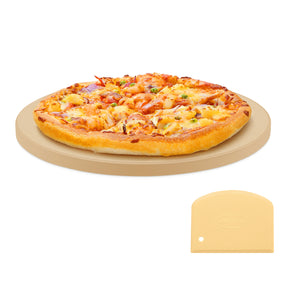
Unicook Heavy Duty Cordierite Pizza Stone
Best Overall: The Unicook Heavy Duty is a 15x12-inch cordierite stone at roughly 3kg, thick enough to hold serious thermal mass without being prohibitive to move. Cordierite is the right mineral ceramic for this job: it tolerates the thermal shock of cold dough hitting a fully preheated surface where standard ceramic stones crack.
Top picks ↓| Product | Price | Link |
|---|---|---|
| $30 | View deal → | |
| $60 | View deal → | |
| $100 | View deal → | |
| $40 | View deal → | |
| $30 | View deal → |
Top picks
Related articles


Unicook Heavy Duty Cordierite Pizza Stone
15×12-inch cordierite, 3 kg, oven and grill compatible. Requires 30-45 minute preheat at full temperature and soap-free cleaning. The best combination of size, thermal mass, and price for most home bakers.
The Unicook Heavy Duty is a 15x12-inch cordierite stone at roughly 3kg, thick enough to hold serious thermal mass without being prohibitive to move. Cordierite is the right mineral ceramic for this job: it tolerates the thermal shock of cold dough hitting a fully preheated surface where standard ceramic stones crack. The 15x12 dimension covers a full home oven rack width and holds enough heat to bake two 12-inch pizzas back-to-back without a full reheat cycle. The porous surface wicks moisture from dough during baking, which is what produces the crisp bottom crust home cooks chase. Plan on 30-45 minutes of soak time after the oven reaches temperature — put the pizza in early and you get a pale, soft base. Soap is forbidden; the porous structure absorbs it and off-gasses during the next bake.
Pros
- ✓Cordierite handles thermal shock that cracks standard ceramic
- ✓15x12-inch surface covers a full oven rack
- ✓3kg thermal mass holds heat for back-to-back pizzas
- ✓Best size-to-thickness value in this comparison
Cons
- ✗Soap-free cleaning only, debris must be scraped
- ✗Requires 30-45 minute soak after oven reaches temperature

Emile Henry Made in France Pizza Stone
French Burgundy clay, 14.5-inch round, 2.1 kg, dishwasher-safe. The only stone in this comparison you can put in a dishwasher — a genuine practical advantage if low-maintenance cookware matters to you. Rated to 400°C maximum.
The Emile Henry Made in France pizza stone is a 14.5-inch round panel in proprietary HR Burgundy clay, glazed rather than raw, and the only stone in this comparison that is dishwasher-safe. The glaze is the load-bearing feature: when it gets dirty, you put it in the dishwasher and run the cycle. Cordierite stones, Baking Steel, and Lodge cast iron all require careful hand maintenance around soap, rust, or thermal shock. Cooking performance is genuinely good — French Burgundy clay produces an even, medium-intensity heat transfer that suits thicker-crust styles, Roman al taglio, focaccia-based pizza, and American thick pies. Rated to 400°C maximum, which is fine for any home oven (most cap at 250-280°C) but limits use on a high-heat charcoal or pellet grill. At 2.1kg, it is also the lightest pizza-stone-format item in this comparison.
Pros
- ✓Only stone here that is dishwasher-safe
- ✓Glazed surface resists staining
- ✓Lightweight at 2.1kg
- ✓Even heat transfer suits thick-crust and pan-style pizzas
Cons
- ✗400°C ceiling limits use on hot grills
- ✗Less aggressive bottom char than Baking Steel
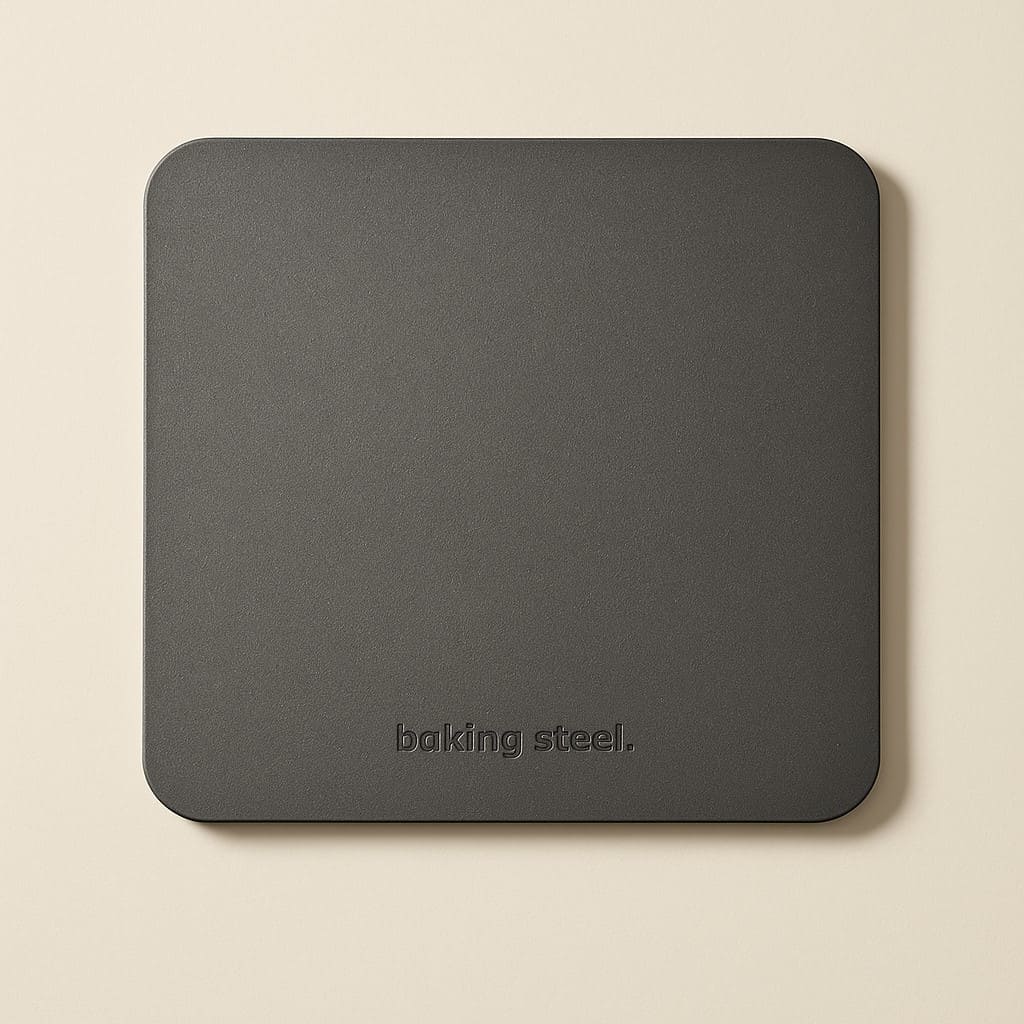
Baking Steel Original (1/4 inch)
Solid 1/4-inch steel plate, 6.8 kg, indestructible. Steel's 18× higher thermal conductivity delivers Neapolitan-style bottom char that no ceramic stone can replicate. Requires seasoning; expensive; very heavy.
The Baking Steel Original is a quarter-inch solid steel plate at 6.8kg that is not really a pizza stone — it's a different category of surface. Steel conducts heat roughly 18 times faster than ceramic, so the moment a pizza touches the preheated steel, the bottom hits high heat aggressively rather than gradually. At 260°C in a home oven, a thin-crust pizza on Baking Steel browns the bottom in 5-7 minutes versus 8-12 minutes on cordierite. Done right, this gets closer to Neapolitan wood-fired oven results than any stone. The catch: thin-crust pizzas go from pale to charred in a 90-second window at full oven temperature, so you cannot walk away. Seasoning is required like cast iron — bake on a thin oil coat before first use, re-season periodically. At 6.8kg it is the heaviest item here, but indestructible.
Pros
- ✓Steel's 18x thermal conductivity delivers Neapolitan-style bottom char
- ✓Indestructible — cannot crack like ceramic
- ✓Reaches full preheat faster than thick stones
- ✓Doubles as a baking surface for bread
Cons
- ✗6.8kg is heavy to handle in and out of a hot oven
- ✗Requires cast-iron-style seasoning and rust prevention

Lodge Pre-Seasoned 14" Cast Iron Pizza Pan
14-inch round cast iron, 2.95 kg, pre-seasoned, induction compatible. Works on stovetop for pan pizza as well as in the oven. Requires same care as cast iron skillet — dry immediately, oil lightly when storing.
The Lodge 14-inch round cast iron pizza pan sits between stone and steel in thermal behavior at about 2.95kg with pre-applied seasoning. Cast iron has more thermal mass than thin cordierite and heats more slowly than steel, with the same caveats as any cast iron: keep it dry, oil lightly when storing, never run through the dishwasher. The main advantages are durability (it cannot crack), induction compatibility, and the option to use it on a stovetop as well as in the oven — useful for pan pizza, focaccia, and high-sided baked dishes where a true pizza stone is limited to oven use. If you already cook with cast iron and want a single maintenance routine across your cookware, this fits cleanly.
Pros
- ✓Cannot crack, unlike ceramic stones
- ✓Induction-compatible and stovetop-usable
- ✓Pre-seasoned, ready to use out of the box
- ✓Doubles as a pan-pizza and high-sided baking surface
Cons
- ✗Requires cast-iron care: dry immediately, oil before storage
- ✗Slower preheat than thin cordierite
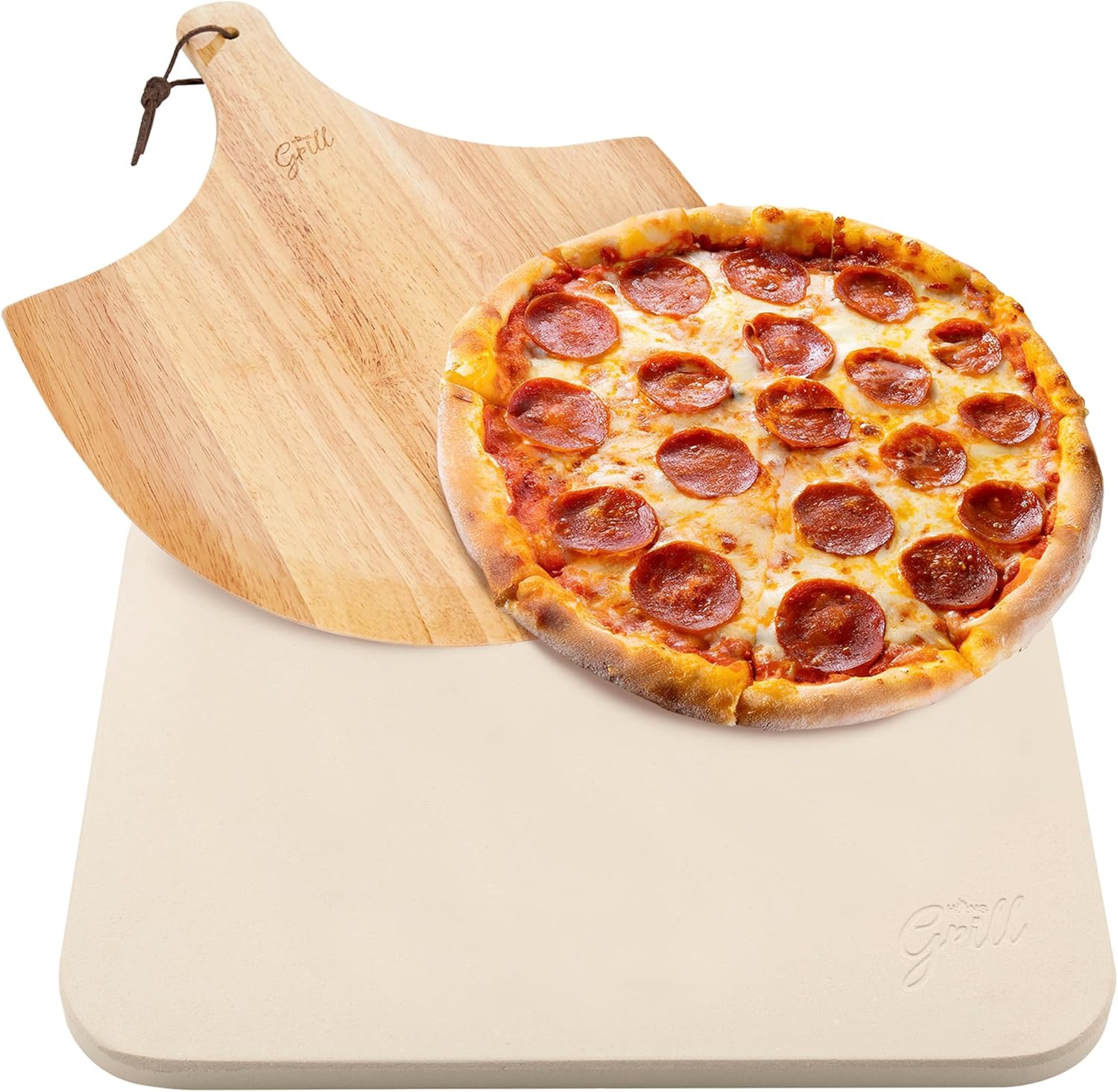
Hans Grill Pizza Stone Rectangular
15×12-inch cordierite, 2.5 kg, includes a plastic-handled pizza peel. Best entry-level value as a bundle. Peel is lightweight plastic — functional for home use but not as durable as a wood or metal peel.
The Hans Grill rectangular pizza stone is 15x12-inch cordierite at about 2.5kg and ships with a plastic-handled pizza peel in the box. The bundle is the load-bearing feature: a first-time pizza-stone buyer typically also needs a peel, and getting both for the price of the standalone Unicook is the practical entry point. The cordierite handles thermal shock and oven temperatures the same way the Unicook does, with similar moisture-wicking from the porous surface. The peel is lightweight plastic — functional for home use but not as durable or rigid as a wood or anodized aluminum peel, and the plastic edge is thicker than a metal peel which makes sliding under a delicate dough slightly harder. Suitable as a starter setup that you can upgrade peel-side later.
Pros
- ✓Cordierite stone plus pizza peel bundled
- ✓15x12-inch surface matches the Unicook
- ✓Lower entry price than buying stone and peel separately
- ✓Cordierite handles thermal shock like the Unicook
Cons
- ✗Plastic peel is less durable than wood or metal
- ✗Peel edge is thicker, harder to slide under delicate dough
Which one is right for you?
The home cook who bakes pizza weekly
Unicook Heavy Duty Cordierite Pizza Stone
The 15x12-inch cordierite holds enough thermal mass for back-to-back pizzas without a full reheat cycle.
The cook who hates hand-washing cookware
Emile Henry Made in France Pizza Stone
It is the only stone here that goes in the dishwasher when it gets dirty.
The thin-crust obsessive chasing wood-fired char
Baking Steel Original (1/4 inch)
Steel's 18x thermal conductivity is the only way to get aggressive bottom char on a 260°C home oven.
The existing cast-iron user
Lodge Pre-Seasoned 14" Cast Iron Pizza Pan
Same maintenance routine as your other cast iron, plus stovetop and induction compatibility a stone cannot offer.
The first-time pizza-stone buyer
Hans Grill Pizza Stone Rectangular
The bundled peel covers the missing piece of the setup that most newcomers underestimate.
Cordierite vs ceramic vs steel: the material difference that actually matters
Cordierite is a mineral ceramic used in kiln furniture and automotive catalytic converters because it tolerates extreme temperature swings without cracking. For pizza, the relevant properties are two: its porous surface wicks moisture from dough during baking, and it survives the rapid temperature changes of being loaded with cold dough while at full oven heat. Standard ceramic stones crack when hit by thermal shock — cordierite doesn't. The Unicook and Hans Grill stones in this comparison are both cordierite.
Emile Henry's HR Ceramic is a proprietary Burgundy clay formulation that is fired at extremely high temperature. It behaves differently from cordierite: the surface is glazed rather than raw, so moisture-wicking is gentler and the stone is dishwasher-safe — a genuine practical advantage that no cordierite stone offers. The trade-off is maximum rated temperature: Emile Henry tops out at 400°C, while raw cordierite handles temperatures a home oven cannot reach. For most home ovens that max at 250-280°C, this distinction doesn't matter.
Steel baking surfaces like the Baking Steel Original are a different category entirely. Steel conducts heat 18 times faster than ceramic — the practical effect is that the bottom of your pizza hits high heat almost immediately on contact, producing the fast char associated with Neapolitan wood-fired ovens. A stone at the same oven temperature produces a softer, more gradual heat transfer. For thin-crust pizza lovers who want authentic bottom char, steel outperforms stone. For people who want a forgiving surface that doesn't require seasoning or careful maintenance, stone is simpler.
Cast iron (Lodge Pizza Pan) sits between stone and steel in thermal behavior. It has more thermal mass than thin cordierite, heats more slowly than steel, and requires seasoning and rust prevention like any cast iron. Its main advantage is durability — it will not crack — and the ability to use it on a stovetop as well as in the oven. If you already own cast iron cookware and want a consistent maintenance routine, the Lodge pizza pan fits that approach.
The top pick: Unicook cordierite for most home bakers
The Unicook Heavy Duty Cordierite Pizza Stone earns the top pick for a specific reason: it is the largest cordierite stone at the lowest price that is actually thick enough to hold meaningful thermal mass. At 15×12 inches and 6.6 lb (3 kg), it covers the width of a standard home oven rack and holds enough heat to bake two 12-inch pizzas back to back without a full reheat cycle between them.
Preheat is the variable that most new pizza stone owners underestimate. The stone needs to reach full oven temperature — not just be placed in a hot oven. At 250°C, a stone of this thickness needs 30-45 minutes of soak time in the preheated oven before the first pizza goes in. Putting the pizza on an insufficiently preheated stone produces a pale, soft bottom crust — exactly what you were trying to avoid. Set a second timer 30 minutes after the oven reaches temperature, not 30 minutes after you turn the oven on.
The Unicook stone should never be washed with soap. The porous cordierite absorbs soap into the structure, and that soap off-gasses during the next bake. Clean it by scraping off debris while still warm, then wiping with a damp cloth. Discoloration from use — brown and black staining — is normal and does not affect performance. A well-used pizza stone looks burnt; this is correct.
The steel pick: Baking Steel for char-seekers
The Baking Steel Original is not competing with pizza stones — it is replacing the concept. A 1/4-inch solid steel plate at 6.8 kg does not wick moisture; instead, it dumps stored heat into the pizza dough so aggressively that the bottom chars before the interior overcooks. At 500°F (260°C) in a home oven, a pizza on the Baking Steel browns the bottom in 5-7 minutes. The same pizza on cordierite takes 8-12 minutes.
The practical implications of that speed difference: you need less total time per pizza, but you cannot be distracted. Thin-crust pizzas on the Baking Steel go from pale to charred in a 90-second window at full oven temperature. This is by design — Neapolitan-style pizza at 900°F (480°C) in a wood-fired oven bakes in 60-90 seconds total. Home ovens cannot reach those temperatures, but the Baking Steel gets closer to the result than any stone.
The Baking Steel requires seasoning like cast iron: a thin oil coat baked on at high temperature before first use, and periodic re-seasoning when spots show bare metal. It also needs to be stored dry and not left in a wet sink. At $100-120, it is the most expensive item in this comparison — but it is also indestructible. Unlike cordierite or clay stones, it cannot crack, and properly maintained it will outlast the oven it lives in.
The premium pick: Emile Henry for dishwasher users
The Emile Henry Made in France Pizza Stone is the right choice for one specific user: someone who wants quality pizza crust and refuses to own cookware that cannot go in the dishwasher. Every other item in this comparison — cordierite stones, Baking Steel, Lodge cast iron — requires hand washing and some degree of care around soap, rust, or thermal shock. The Emile Henry stone is dishwasher-safe. Put it in the dishwasher when it is dirty, run the cycle, done.
The cooking performance is genuinely good. French Burgundy clay produces an even, medium-intensity heat transfer that suits thicker-crust and pan-style pizzas well. If you are baking Roman-style al taglio, focaccia-based pizza, or American-style thick pies, the Emile Henry delivers excellent results. For Neapolitan thin-crust maximum char, the Baking Steel outperforms it.
The one limitation worth stating clearly: the Emile Henry stone is rated to 400°C maximum. For home ovens that top out at 250-280°C, this is a non-issue. For use on a charcoal or wood-pellet grill where surface temperatures can exceed 400°C, the Baking Steel or a raw cordierite stone is the appropriate choice.
How to choose: the four questions that determine the right surface
First question: do you want char or even bake? Baking Steel produces aggressive bottom char — ideal for Neapolitan and New York thin-crust styles. Cordierite and ceramic produce gentler, more even heat — better for thick-crust, focaccia, and American-style pizza. This is the most important decision in this comparison, and it is a preference question rather than a quality question.
Second question: how much weight do you want to manage? The Baking Steel at 6.8 kg is the heaviest item in this comparison — it requires two hands to move in and out of a hot oven, and it is heavy enough to make casual handling difficult. The Emile Henry at 2.1 kg is the lightest. If weight is a concern for daily use, ceramic or the Hans Grill cordierite stone at 2.5 kg is more manageable.
Third question: how much maintenance can you commit to? Baking Steel and Lodge cast iron need seasoning and rust prevention. Cordierite stones need soap-free cleaning and careful drying. Emile Henry needs nothing beyond normal dish care. If you want zero-maintenance cookware, Emile Henry is the answer.
Fourth question: what is your budget? Hans Grill at $30-40 with a peel included is the lowest-cost entry. Unicook at $30-35 is the best stone value without the peel bundle. Lodge at $40-50 suits people who already cook with cast iron. Emile Henry at $60-75 is the premium ceramic option. Baking Steel at $100-120 is the steel premium option. All five produce better pizza than a standard baking sheet — the price difference is about specific performance characteristics, not baseline quality.