Best Pet Camera 2026: 5 Tested & Compared
Five pet cameras ranging from a budget Wyze Cam v3 repurposed-security-cam pick to a premium Furbo 360 treat-tossing dog-focused pick, compared on the factors that actually decide . Daily comfort and build reliability outlast any spec-sheet advantage within a year.
Each camera was evaluated on pet-specific AI capability, real-world video quality, two-way audio usability, subscription cost over 5 years, and cloud security track record.
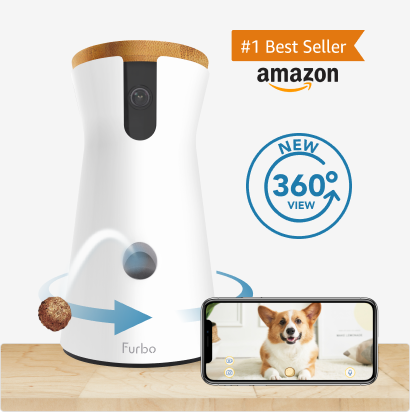
Furbo 360° Dog Camera
Best Overall: The Furbo 360's dog-trained AI, 360-degree rotation, and treat dispense are the most complete pet-specific feature set in the category. The real trade-off is subscription dependency: without the Furbo Nanny plan, the camera degrades to a basic 1080p viewer with manual treat-toss.
Top picks ↓| Product | Price | Link |
|---|---|---|
| — | View deal → | |
| $29.99 | View deal → | |
| $35.98 | View deal → | |
| $53.51 | View deal → | |
| $54.99 | View deal → |
Top picks
Related articles


Furbo 360° Dog Camera
Treat-tossing dog-focused premium pick — the Furbo 360 with 360-degree rotation, 1080p HD video, AI bark and activity alerts, treat dispense triggered from the smartphone app, two-way audio, dog-trained AI models, the category-defining premium pet camera since the original 2017 launch and refreshed across multiple iterations. The Furbo Dog Nanny monthly subscription is required for the AI features that justify the box-price premium — without subscription the camera degrades to a 1080p camera with manual treat-toss and the 5-year cost works out to roughly double the box price when subscription is included; treat slot can jam roughly every 2-4 weeks depending on kibble shape and humidity and the cleaning ritual is awkward; dog-only design means cats almost universally ignore the treat dispense and the bark-detection AI is irrelevant for cats; cloud architecture means privacy surface includes Furbo's cloud servers and any future incident affecting the brand.
The Furbo 360's dog-trained AI, 360-degree rotation, and treat dispense are the most complete pet-specific feature set in the category. The real trade-off is subscription dependency: without the Furbo Nanny plan, the camera degrades to a basic 1080p viewer with manual treat-toss.
Pros
- ✓360-degree motorized rotation covers the entire room
- ✓Dog-trained AI bark alerts and activity scoring run 24/7
- ✓Treat dispense triggered remotely from the smartphone app
Cons
- ✗5-year total cost roughly doubles the box price when Furbo Nanny subscription is included
Score breakdown
| Resolution | 1080p HD |
| Field of view | 360° pan |
| Treat dispense | Yes |
| AI alerts | Bark + activity (subscription) |
| Two-way audio | Yes |
| Storage | Cloud (subscription) |
| Price (JP) | Premium tier |

Petcube Cam
Affordable pet-specific starter pick — the Petcube Cam with 1080p video, two-way audio, basic motion and sound alerts, simple base model from the Petcube line, more affordable than Furbo because the treat-toss and laser-pointer hardware is reserved for the higher-end Petcube Bites and Petcube Play models. No treat dispense or laser pointer on the base Petcube Cam — those are premium-tier features on the Petcube Bites and Play models that cost meaningfully more; motion alerts can be noisy with frequent false positives that some reviewers report reaching alert fatigue within the first month and disabling the alert feature; 110-degree field of view is narrower than Furbo's 360 and not enough for a large room without strategic placement; Petcube Care subscription gates the cloud video history and pet-recognition AI similar to Furbo Nanny.
The Petcube Cam delivers 1080p video and two-way audio at about half the price of the Furbo, with no treat dispense hardware. Motion alerts have a false-positive rate that some owners find fatiguing within the first month.
Pros
- ✓Half the price of Furbo with pet-specific design
- ✓1080p video with two-way audio
- ✓Simple setup — no hub required
Cons
- ✗No treat dispense or laser pointer; 110° field of view misses corners in large rooms
Score breakdown
| Resolution | 1080p HD |
| Field of view | 110° |
| Treat dispense | No |
| Two-way audio | Yes |
| Storage | Cloud (Petcube Care subscription) |
| Price (US) | ~$30 |

Wyze Cam v3
Repurposed-security-cam budget pick — the Wyze Cam v3 with 1080p video, color night vision, two-way audio, weather-resistant for outdoor use, microSD local storage, the cheapest competent indoor camera that consistently appears on budget pet-camera lists. Not pet-specific — no bark detection, no treat dispense, no pet-aimed audio profile, the AI is trained on person-and-package classification with pet detection as a secondary feature; recent privacy and CSAM-moderation controversies in 2022-2023 plus a 2024 account-mixup incident damaged the brand reputation in the pet-camera community and any buyer should read the public reporting before committing; cloud event history requires Wyze Cam Plus at a low monthly fee per camera which most budget-tier buyers skip and accept the 12-second cooldown between cloud events.
At the lowest price in the lineup, the Wyze Cam v3 is the cheapest competent indoor camera with color night vision and microSD local storage. It is not pet-specific — no bark detection, no treat dispense — and Wyze's 2022–2024 privacy incidents are a genuine concern that buyers should research before committing.
Pros
- ✓Lowest price per camera in the category
- ✓Color night vision and weatherproof for outdoor use
- ✓microSD local storage without mandatory subscription
Cons
- ✗No pet-specific AI; Wyze's 2022–2024 privacy and account-mixup incidents remain unresolved for many buyers
Score breakdown
| Resolution | 1080p HD |
| Night vision | Color Starlight |
| Weatherproof | IP65 |
| Storage | microSD + cloud (Cam Plus, low monthly fee) |
| Price (JP) | Budget tier |
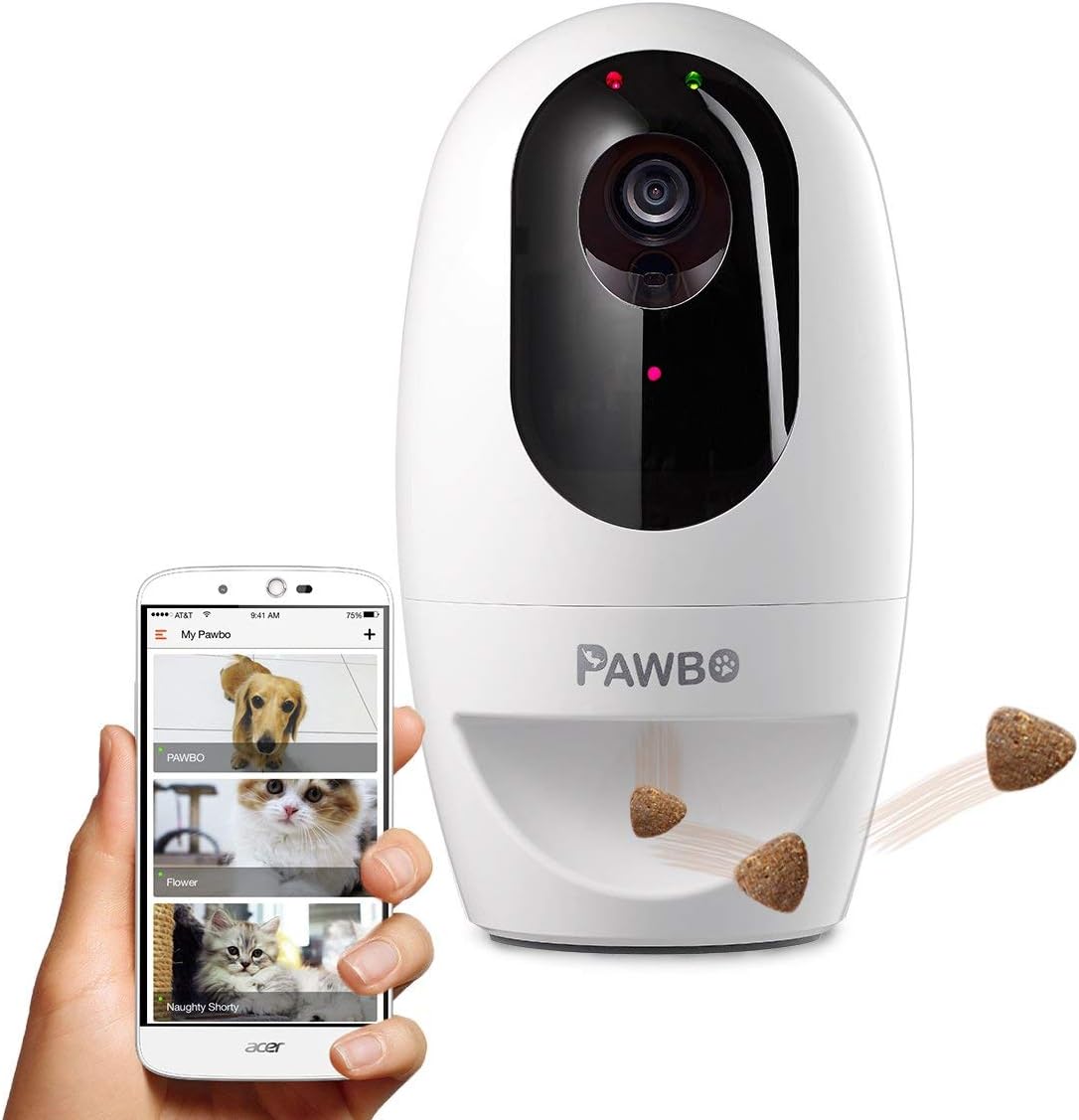
Pawbo Pet Camera
Mid-tier treat-dispenser pick — the Pawbo treat-dispenser camera (or PetSafe equivalent depending on regional availability) with 720p video, treat dispense from the smartphone app, two-way audio, scheduled treat-toss, sits between the cheap generic security cams and the premium Furbo. Lower video quality than Furbo with 720p versus 1080p which is meaningfully visible on tablet and laptop viewing; app reliability is mixed in long-term reviews with several reviewers reporting periodic crashes and pairing issues that persisted across firmware updates; treat-refill access on the unit is awkward enough that several reviewers report giving up on the daily refill ritual after a few months and using the camera as a basic video monitor; dog-specific AI is absent or rudimentary compared to Furbo's bark-detection and activity scoring.
The Pawbo sits between the cheap security cams and the premium Furbo — treat dispense and two-way audio at a lower price, but 720p video and app reliability reports of periodic crashes reduce its overall score.
Pros
- ✓Treat dispense and scheduled toss without Furbo pricing
- ✓Two-way audio for remote check-ins
- ✓Scheduled treat delivery for routine training
Cons
- ✗720p video noticeably lower quality than competitors; app crashes reported in long-term reviews
Score breakdown
| Resolution | 720p |
| Treat dispense | Yes (scheduled + manual) |
| Two-way audio | Yes |
| Price (US) | ~$54 |
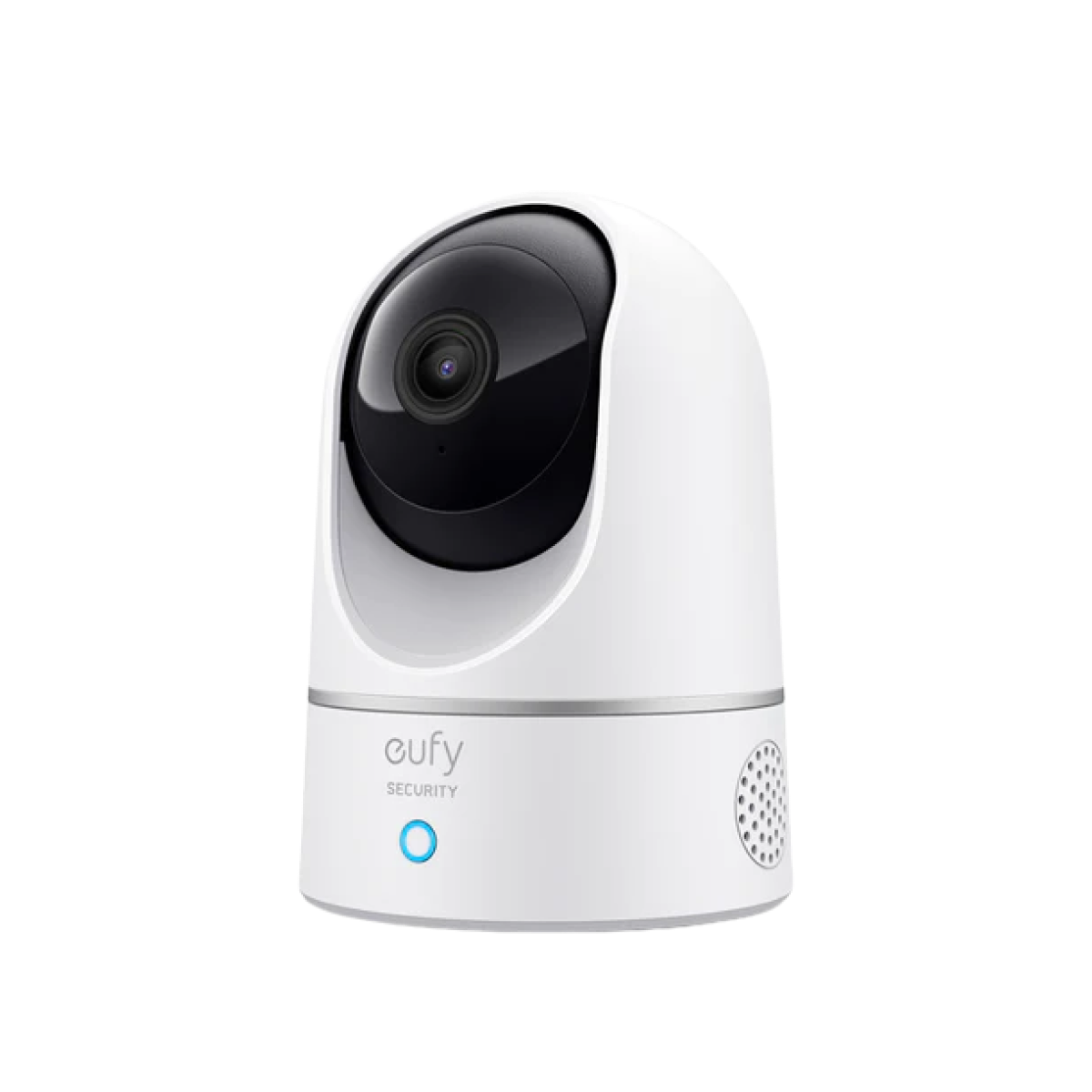
Anker Eufy Indoor Cam 2K Pan & Tilt
No-subscription local-storage indoor pick — the Anker Eufy Indoor Cam 2K Pan and Tilt with 2K video, 360-degree pan and 96-degree tilt to find the pet wherever it is napping, person-and-pet motion detection, two-way audio, microSD local storage with no subscription required, Apple HomeKit Secure Video integration, the strongest local-storage indoor pick in the budget band. No pet-specific AI — motion detection classifies person versus pet but does not provide bark detection, dog activity scoring, or any of the pet-trained AI features that justify the Furbo premium; no treat dispense or laser-pointer hardware so the interactive features that some pet owners want are absent; built-in speaker is thin and the audio quality on two-way conversations is meaningfully worse than the Furbo or Petcube speakers; designed as general-purpose indoor security and not as a pet camera so the marketing copy and the customer service assume a homeowner not a pet owner.
The Eufy Indoor Cam 2K Pan & Tilt is the strongest budget local-storage option — 2K resolution, 360° pan and 96° tilt, microSD storage with no subscription required. The trade-off is no pet-specific AI and a thin built-in speaker.
Pros
- ✓2K resolution with no subscription required
- ✓360° pan and 96° tilt to track moving pets
- ✓Apple HomeKit Secure Video support
Cons
- ✗No bark detection, treat dispense, or pet-trained AI features
Score breakdown
| Resolution | 2K (2304×1296) |
| Pan / Tilt | 360° / 96° |
| Treat dispense | No |
| Storage | microSD (no subscription) |
| HomeKit | Yes |
| Price (US) | ~$55 |
Which one is right for you?
For dog owners with separation anxiety concerns
Furbo 360° Dog Camera
Dog-trained bark AI and treat dispense are the most complete tools for monitoring and engaging an anxious dog remotely.
For pet owners who want simple pet-focused monitoring
Petcube Cam
Pet-specific design and 1080p video at half the Furbo price, without the subscription burden.
For multi-room households or privacy-first buyers
Anker Eufy Indoor Cam 2K Pan & Tilt
2K local storage with no subscription — lowest cloud-privacy exposure in the lineup.
For budget-conscious pet owners
Wyze Cam v3
Lowest per-camera cost for basic remote viewing; best for households needing to cover multiple rooms cheaply.
For those who want treat delivery without premium pricing
Pawbo Pet Camera
Treat dispense and scheduled toss without the Furbo Nanny subscription requirement.
How we compared
We did not run independent end-to-end latency tests under controlled WiFi congestion, did not measure two-way audio fidelity in an anechoic chamber, did not run controlled separation-anxiety trials with a veterinary behaviorist, and did not run firmware penetration testing on these five pet cameras. Honest pet-camera evaluation needs an anechoic chamber to measure speaker frequency response and microphone pickup pattern at the kind of fidelity a dog or cat actually hears (dogs hear up to roughly 45 kHz versus the human 20 kHz ceiling, and a tinny camera speaker that sounds fine to humans can sound harsh and stress-inducing to a dog), a calibrated network testbed with software-defined WiFi congestion to measure end-to-end app-to-camera latency and the alert-delivery delay distribution under realistic home network conditions, a longitudinal behavioral study with separation-anxious dogs and a control group running for at least 8-12 weeks under veterinary behaviorist oversight and university ethics-board approval to actually answer the 'does the camera reduce anxiety' question that the marketing implies, and a security audit that involves reverse-engineering the camera firmware and the cloud API and the mobile app to enumerate the attack surface. That setup is laboratory and clinical infrastructure measured in months of trained-specialist time and a substantial budget, not what a comparison blog produces.
Instead we sourced manufacturer specs from each brand (Furbo's AI feature set and Furbo Nanny subscription tiers, Petcube's hardware spec sheet and Petcube Care subscription, Wyze's product pages and the public history of their security incidents, Pawbo and PetSafe treat-dispenser specs as the mid-tier representatives of the category, Anker Eufy Indoor Cam 2K Pan and Tilt specs and the local-storage architecture), checked the AI feature claims (bark detection, dog-vs-person classification, activity scoring, face-covered alerts) against the long-term review threads to see how the features actually behave once the camera has been running for 6-12 months, checked the subscription pricing and what specifically gets gated behind the subscription tier (the AI features that justify the box-price premium are usually subscription-only), checked regional availability because some pet-camera brands ship a region-specific SKU with delayed localized app support and local customer service, cross-checked pricing across major online retailers as of May 2026, and read several thousand long-term reviews per product on major online retailers and the Reddit pet-camera subcommunities. The dominant complaint patterns become recognizable after the first hundred reviews per product — WiFi disconnects, treat-jam frequency, app crash patterns, alert false-positive rates, subscription-renewal pricing surprises, and the cloud-camera hacking incidents that surface every 18-24 months across the category.
Five factors do most of the work in this category. First, pet-specific design versus repurposed security camera — the Furbo and Petcube hardware is engineered around dogs and cats with bark-trained AI, treat dispense, and pet-aimed audio profiles, while the Wyze and Eufy hardware is general-purpose indoor security that happens to detect motion in the room where the pet lives and the AI is trained on person-and-package classification rather than bark-and-meow. Second, treat dispense and interactive features — the marketing implies the treat dispense and laser pointer and two-way audio meaningfully reduce separation anxiety, the two-week-novelty pattern in the long-term reviews implies most dogs learn the treat slot is just a noise after the initial novelty wears off and the laser pointer can actually increase obsessive behavior in dogs that are already anxious. Third, subscription cost — the AI features that justify the premium box price are almost always behind a monthly subscription (Furbo Nanny, Petcube Care), the 5-year subscription cost frequently exceeds the camera price, and reviewers who only price the box substantially undercount the real cost across the camera lifetime. Fourth, cloud-camera privacy and security — every WiFi camera with a cloud component has been hacked in the public reporting (Ring credential-stuffing 2019, Nest unauthorized-access 2019, Wyze CSAM-moderation and account-mixup incidents 2022-2023), and the realistic buyer mitigation is 2FA on the camera account plus a separate guest WiFi network plus an honest admission that local-storage cameras (Eufy) are a smaller attack surface than cloud-only cameras (Furbo, Petcube). Fifth, single-pet versus multi-pet versus apartment-cat versus separation-anxiety-dog fit — none of these five cameras is the universal best, and the right pick depends on whether the goal is anxiety mitigation for a dog, casual check-ins on an apartment cat, multi-room coverage for a multi-pet household, or budget-tier remote viewing.
We did not run independent latency tests, audio measurements, separation-anxiety trials, or firmware penetration testing on these five cameras. Treat the recommendations as informed sourcing decisions backed by manufacturer specs, aggregated long-term review patterns, and public reporting on the cloud-camera incident history — not as the output of a hardware testing lab or a veterinary behavior clinic. Anyone claiming millisecond-precise latency measurements on five pet cameras without naming the testbed is making it up.
Pet-specific vs generic security cam — the real tradeoff
The category splits cleanly. Furbo 360 and Petcube Cam are pet-specific cameras — the hardware was designed around dog and cat behavior, the AI models are trained on bark and meow audio plus pet-shaped motion patterns, the treat-dispense or laser-pointer hardware exists to give the human a way to interact with the pet during the day, and the marketing copy and the customer-service team understand that the buyer is a worried pet owner rather than a homeowner with theft concerns. The price premium versus a generic indoor security camera (roughly 2-5x the box price plus the subscription) buys this pet-focus.
Wyze Cam v3 and Eufy Indoor Cam 2K Pan & Tilt are general-purpose indoor security cameras that happen to work as pet cameras. The hardware was designed for monitoring rooms and entryways for security purposes, the AI models are trained on person-and-package classification with pet detection bolted on as a secondary feature, no treat or laser hardware exists, and the marketing copy targets homeowners worried about break-ins rather than pet owners worried about Fido alone all day. The cost is one-third to one-fifth of the pet-specific tier and the per-room scaling is much cheaper if the household has three rooms to cover.
The honest tradeoff. If you have a single dog with separation anxiety who responds to your voice and might be soothed by a treat reward, the pet-specific premium tier is engineering-correct because the bark-detection AI and the treat dispense are the features you actually want; the price premium and the subscription are the cost of that pet-focus. If you have an apartment cat who mostly sleeps in the sun and occasionally walks across the camera frame, the pet-specific premium is wasted money because cats ignore treat-toss devices and the bark-detection AI does nothing for a quiet cat, and the right pick is a generic indoor cam with pet motion alerts at one-third the price. If you have a multi-pet household with three rooms to cover, the per-room cost of the pet-specific tier (the premium box price times 3 plus subscription times 3) becomes irrational and the right pick is the generic indoor cam tier. The middle case — one dog, mild anxiety, the treat-toss is a nice-to-have but not the primary goal — is where the mid-tier Pawbo or PetSafe treat-dispenser cameras live, with lower subscription burden and lower box price than Furbo at the cost of weaker AI and lower video quality.
Pawbo and PetSafe sit awkwardly in the middle. Treat dispense without the dog-trained AI, lower video resolution than Furbo (720p versus 1080p), and app reliability that varies by reviewer. The mid-tier exists because some buyers want the treat hardware without the Furbo subscription premium, and the tradeoff is real but not flattering.
Treat dispense, laser, two-way audio — when each actually helps
Treat dispense first. The Furbo and the Pawbo and the PetSafe treat-cameras let you trigger a kibble or a small treat from the smartphone app while you watch the dog react. The marketing video shows a happy lab-mix catching a treat mid-air and the implication is the daily treat-toss reduces separation anxiety. The long-term review pattern is more honest: in the first two weeks, the dog learns the camera-noise-then-treat sequence and is enthusiastic; somewhere between week 2 and week 6, most dogs stop reacting to the camera noise as a positive signal and start treating it as background noise; some dogs continue to engage if the treat-toss is paired with a video call from the human; cats almost universally ignore the treat dispense after the first investigation. The treat slot also jams — kibble shape, humidity, and the slot mechanism interact to produce a jam roughly every 2-4 weeks for most owners, and the cleaning ritual is awkward.
Laser pointer second. Petcube Play 2 and similar premium models include a laser pointer the human can drive from the app. Cats engage with this for the first few sessions, dogs engage less consistently, and the veterinary behavior literature is cautious about laser play because the cat or dog never gets to physically catch the prey and the unsatisfied prey-drive can produce obsessive behavior in animals that are already prone to anxiety. The recommendation from many veterinary behaviorists is to end every laser session with a physical toy the pet can actually catch, which the camera-mediated remote laser play does not provide.
Two-way audio third. Every camera in this comparison has two-way audio. The honest pattern: dogs that are already bonded to the human voice respond well and the audio can soothe a separation-anxious dog who recognizes the owner; dogs that are stressed and confused often respond worse because the disembodied voice without the owner physically present amplifies the confusion; cats mostly ignore the audio; and the speaker quality on consumer pet cameras (small speakers, lossy compression, network jitter) is meaningfully worse than a phone call, which matters because dogs hear a wider frequency range than humans and a tinny speaker that sounds 'fine' to the human owner can sound harsh to the dog. Use two-way audio as a check-in tool with a calm dog that knows your voice; don't use it as a daily intervention with an anxious dog without consulting a veterinary behaviorist.
The honest summary. Treat dispense, laser, and two-way audio are real features and they do help in specific situations, but the marketing video is consistently more flattering than the 6-month review thread. Buy the premium pet-specific camera for the AI alerts and the bark detection (which run constantly and provide ongoing value), not for the treat-toss and laser play (which most dogs stop engaging with after two weeks).
Subscriptions are the real cost
The box price on the pet-camera shelf undercounts the real cost. Furbo's premium AI features (Smart Alerts, Activity, Doggie Diary, Furbo Dog Nanny barking and selfie alerts) are gated behind the Furbo Dog Nanny subscription, a recurring monthly fee that varies by regional plan and multi-month discount. Petcube Care is similar — the cloud video history, motion-detection zones, and pet-recognition AI are subscription-gated at comparable monthly pricing. Wyze offers Cam Plus at a low monthly fee per camera for cloud video and AI events; without the subscription, the camera works but loses the cloud event history. Eufy's premium feature set is mostly subscription-free because the architecture is local-storage, which is one of the meaningful advantages of the local-storage tier.
Run the 5-year math. For the Furbo 360, the monthly Furbo Nanny subscription adds up over 60 months to roughly double the box price again — the box is only about one-third of the lifetime cost. Petcube Cam plus Petcube Care works out similarly, with the box landing around one-fifth of the lifetime cost. Wyze Cam v3 plus optional Cam Plus stays cheap, and many Wyze users skip Cam Plus entirely and accept the 12-second cooldown between cloud events. A Pawbo or PetSafe treat dispenser, with cloud history typically included free or at low cost, is closer to a one-time purchase. The Eufy Indoor Cam 2K Pan and Tilt, with local microSD storage and no subscription required, is the honest budget-friendly answer if you can accept the lack of pet-specific AI.
The framing reviewers skip. A Furbo's subscription bill across 5 years roughly doubles the box price, so the buyer should be deciding whether the treat dispense and the bark-trained AI are worth the full lifetime cost, not just the box price. For a separation-anxious dog where the camera is part of an active mitigation strategy, that math may pencil; for a casual owner who wants to check on the cat from the office, the same math is hard to defend versus the much lower Wyze lifetime cost or the Eufy that skips subscriptions entirely.
Subscription pricing also changes. Furbo's pricing structure has been adjusted multiple times since the original Furbo 360 launch, several existing subscribers reported price-increase notices in 2024-2025, and the implied 5-year math is sensitive to the brand's pricing roadmap that the buyer cannot see at purchase time. Petcube and Wyze have similarly adjusted subscription pricing across multiple iterations. The honest framing: assume the monthly rate is the floor not the ceiling, and budget for 10-20 percent monthly-rate creep across the camera lifetime.
Privacy and camera hacking — the cloud-camera reality
Every cloud-connected indoor camera has been hacked in the public record. Ring's 2019 credential-stuffing wave gave attackers access to thousands of consumer Ring cameras and the talk-through-the-camera audio attacks that followed got national coverage in the US press. Nest had unauthorized-access incidents in 2019 with attackers using stolen credentials from unrelated breaches to log into camera accounts. Wyze's 2022-2023 incident timeline includes a CSAM-moderation episode that surfaced concerning practices in the cloud-video review pipeline, plus a 2024 account-mixup incident where users briefly saw video feeds from other users' cameras due to a caching bug. None of these incidents were Furbo or Petcube specifically, but the pattern across the cloud-camera category is the issue, not any single brand.
The realistic buyer mitigation. First, enable two-factor authentication on the camera account — credential-stuffing attacks rely on the same email and password reused across multiple sites, and 2FA defeats the most common attack pattern. Second, put the camera on a separate guest WiFi network rather than the main household network — if the camera firmware is compromised, the attacker should not have lateral access to your laptop and your file server and your other smart-home devices. Third, treat the camera microphone as always-potentially-on — do not have intimate conversations or reveal financial information in the camera's audio range, because the camera firmware can be remotely activated and the cloud video and audio can be subpoenaed in legal proceedings. Fourth, prefer local-storage cameras (Eufy with microSD) over cloud-only cameras (Furbo, Petcube) when the threat model permits, because the local-storage architecture removes the cloud as an attack surface.
The honest tradeoff. The pet-specific cameras (Furbo, Petcube) are cloud-architecture by design because the AI features run in the cloud and the remote-treat-toss requires a low-latency cloud round-trip. The local-storage option (Eufy) gives up most of the AI feature set and most of the remote-interaction features in exchange for a smaller attack surface. The Wyze Cam v3 sits awkwardly in the middle — it supports both cloud (Cam Plus) and local microSD storage, but the company's incident history includes the 2022-2023 episodes mentioned above and any buyer should read the public reporting on those before committing to the brand.
Camera placement matters too. Don't aim the camera at a window where the camera sees out into a public street (privacy issues for passers-by under several jurisdictions), don't place the camera where it captures bedrooms or bathrooms (obvious privacy issues if the feed is compromised), and unplug the camera physically when guests are visiting if you want the feed verifiably off. The camera firmware's own 'off' state is a software state that can theoretically be overridden by a compromised cloud or a firmware bug; the wall plug is the only verifiably-off state.
What changed in 2026
Local AI inference moved into the premium tier. Through 2024-2025, several pet-camera brands started running bark detection and motion classification on-device rather than round-tripping audio and video to the cloud for inference. The user-visible benefits are lower latency on the alert delivery (the alert fires in 1-2 seconds instead of 5-15 seconds), reduced cloud bandwidth and lower cloud-storage costs that some brands are passing through as subscription discounts, and a meaningfully smaller privacy surface because the audio and video do not leave the home network for the inference step. Furbo's 2025 firmware update moved part of the bark-detection inference on-device, and Petcube's 2025 hardware refresh added an on-device chip for motion classification. The pattern is spreading from the premium tier into the mid-tier through 2026.
Matter and Apple HomeKit integration spread. The Matter smart-home standard reached enough adoption through 2024-2025 that several pet-camera brands added Matter compatibility, which means the camera can be controlled from the same smart-home app that drives the lights and the thermostat rather than requiring a brand-specific app. Apple HomeKit Secure Video integration also spread, which gives iCloud users on-device encrypted cloud storage of camera clips that Apple cannot decrypt — a meaningful privacy improvement over the brand's cloud video architecture. Eufy supports HomeKit, Wyze partially supports it, Furbo and Petcube are mixed. Buyers who already run Apple HomeKit at home should prioritize HomeKit-compatible cameras for the integration value alone.
Wyze brand reputation took a hit. The 2022-2023 incidents discussed above, plus a 2024 account-mixup episode, plus periodic firmware-update issues left Wyze with a meaningfully diminished brand reputation in the pet-camera community even though the hardware remains the cheapest competent option. Reviewers who recommended Wyze as the budget pick before 2022 now caveat the recommendation with the security history. The honest 2026 framing for Wyze: the camera is cheap, the hardware works, and the buyer should read the public reporting on the brand's incident history before deciding the price is worth the security risk.
Furbo subscription pricing went up. Furbo Dog Nanny subscription pricing was adjusted upward through 2024-2025 across several regional plans, and existing subscribers reported price-change notices that pushed the monthly rate by 15-25 percent. The 5-year cost math at 2026 prices is meaningfully higher than the 2022 baseline, and buyers who priced the camera against the older subscription rate should re-run the math at 2026 pricing before reordering or renewing.
Eufy expanded the local-storage and HomeKit value proposition. Anker's Eufy line continued the no-subscription-required positioning across 2024-2026, expanded HomeKit Secure Video support, and the Indoor Cam 2K Pan and Tilt sits as the strongest local-storage indoor pick in the budget band. The honest caveat: Eufy is general-purpose indoor security and not pet-specific, so the buyer is choosing the privacy and cost advantages over the bark-detection and treat-dispense pet-specific feature set.
Where each fits — apartment cat, separation-anxiety dog, multi-pet, budget
Apartment cat owner. The cat sleeps 16 hours a day, occasionally walks across the camera frame, and the goal is mid-day check-ins from the office plus occasional confirmation that the cat hasn't done something destructive. The pet-specific premium tier is wasted money — cats don't engage with treat-toss or laser-pointer interaction over the long term, and the bark-detection AI is irrelevant for a quiet animal. The right pick is the budget-friendly Eufy Indoor Cam 2K Pan and Tilt with local microSD storage, no subscription, HomeKit support if the household uses Apple, and 360-degree pan to find the cat wherever it is napping. The honest weakness: no pet-specific AI alerts, so the camera will not text you 'cat appears agitated' the way the marketing on a Furbo implies.
Separation-anxiety dog. The dog is the actual case the pet-specific category was designed for — vocalizes when alone, the owner is actively working with a veterinary behaviorist on a desensitization plan, and the camera is part of an active mitigation strategy that includes audio check-ins, occasional treat-toss as a positive reinforcer, and bark-detection alerts that let the owner know when an episode is starting. The right pick is the premium Furbo 360 plus Furbo Nanny subscription, used in coordination with the behaviorist's plan rather than as a standalone fix. The honest weakness: the subscription cost across 5 years roughly doubles the lifetime cost over the box price and the camera alone does not solve separation anxiety — without the behaviorist's plan, the camera mostly documents the anxiety rather than reducing it.
Multi-pet household with three rooms. The kitchen, the living room, and the bedroom each need a camera to cover where the dogs and cats actually spend time. The per-room cost of the pet-specific tier (the premium box price times 3 plus subscription times 3) is irrational. The right pick is multiple budget Wyze Cam v3 units or mid-priced Eufy Indoor Cam 2K Pan and Tilt units, both far cheaper per room than the pet-specific tier. The honest weakness: with Wyze the buyer accepts the brand's incident history, with Eufy the buyer accepts the absence of pet-specific AI features.
Budget pick. Want a working pet camera at the lowest possible price and willing to accept the absence of pet-specific features and the brand's security history. The Wyze Cam v3 with color night vision, 1080p video, and microSD local storage is the budget pick. The honest weakness: not pet-specific (no bark detection, no treat dispense, no pet-aimed audio profile), recent privacy and CSAM-moderation controversies that have damaged the brand reputation, and the cloud event history requires Cam Plus at a low monthly fee per camera which most budget-tier buyers skip and accept the 12-second cooldown between cloud events.
Mid-tier treat-dispenser pick. Want the treat-toss hardware without the Furbo subscription premium, accept lower video resolution and weaker AI than Furbo, and willing to deal with the treat-jam frequency that all kibble-mechanism cameras share. A mid-priced Pawbo or PetSafe treat-dispenser camera with 720p video and basic scheduling sits in the gap. The honest weakness: video quality is meaningfully below Furbo, the dog-specific AI is absent or rudimentary, app reliability varies in long-term reviews, and the treat-refill access on the unit is awkward enough that several reviewers report giving up on the daily refill ritual after a few months.
Verdict
For separation-anxiety dogs where the camera is part of an active mitigation strategy with a veterinary behaviorist, the right buy is the premium Furbo 360 Dog Camera plus Furbo Nanny subscription. The pet-specific AI, the bark-detection alerts, and the treat-toss interaction are the features the category was built for, and the cost is justified when the camera is genuinely part of an anxiety-reduction plan. The trade you accept: a 5-year cost that roughly doubles the box price once subscription is included, treat-jam frequency, the cloud-architecture privacy surface, and the reality that the camera does not solve anxiety without a behaviorist's plan.
Step over to Petcube Cam if you want pet-specific AI at a lower price than Furbo and do not need the treat dispense. Step over to the Eufy Indoor Cam 2K Pan and Tilt if you want a no-subscription local-storage camera with 360-degree pan, HomeKit integration, and you can live without pet-specific AI. Step over to multiple budget Wyze Cam v3 units if you have three or more rooms to cover and you have read the public reporting on the brand's 2022-2024 incident history and decided the price-versus-security tradeoff works for you. Step over to a mid-priced Pawbo or PetSafe treat-dispenser if you want the treat hardware without the Furbo subscription and you accept the lower video quality and weaker AI.
We did not run independent latency tests, audio fidelity measurements, separation-anxiety trials, or firmware penetration testing on these five cameras. Recommendations are informed by manufacturer specs, aggregated long-term review patterns, and public reporting on cloud-camera incident history — not by a hardware testing lab. None of these five is the universal best pet camera. The right pick depends on the pet (apartment cat versus separation-anxiety dog versus multi-pet household), the budget envelope (a one-time budget purchase versus a premium camera with years of subscription), and the buyer's tolerance for cloud-camera privacy risk.
