Best Nail Polish 2026: Chip Resistance Tested to Day 7
All five chipped eventually. But the gap between day 3 and day 7 is the whole story — and the winner costs $10.
Two-coat application on natural nails with a standard generic topcoat, no base coat; daily dish-washing without gloves as real-world chip accelerant; pigment rated in one coat; chips logged at day 4 and day 7; color accuracy checked against bottle in natural daylight.

OPI Nail Lacquer
Best Shade Range: OPI's 200+ shade catalog and consistent salon-quality formula make it the safe professional choice. Two-coat coverage is reliable across the range.
Top picks ↓Top picks
Related articles


OPI Nail Lacquer
Best shade range — 200+ colors, reliable two-coat coverage, add a quality topcoat.
OPI's 200+ shade catalog and consistent salon-quality formula make it the safe professional choice. Two-coat coverage is reliable across the range. The formula is thicker than Essie, which means it self-levels well but can cause brush marks if applied too slowly. Chip resistance started declining at day 5 without a premium topcoat — a reliable topcoat is not optional with OPI, it is necessary to get the full week of wear.
Pros
- ✓200+ shades including seasonal and collaboration collections
- ✓Consistent professional-grade formula across all shades
- ✓Good color accuracy from bottle to nail
Cons
- ✗3-free only — lower on the clean-ingredient scale than Essie or Zoya
- ✗Tip chipping starts at day 5 without a premium topcoat
Score breakdown
| Volume | 0.5 fl oz (15 ml) |
| Formula | Classic nail lacquer (non-gel), vegan |
| Finish | Crème (also shimmer/pearl/glitter by shade) |
| Shade count | 200+ shades |
| Dry type | Air-dry, no UV/LED lamp |

Essie Nail Polish
Best for beginners — thinner formula, 400+ shades, 8-free ingredients.
Essie's thin, self-leveling formula is the most beginner-forgiving in this comparison. It glides on without streaks even at inconsistent stroke speeds, which makes it ideal for at-home application. The 400+ shade range includes the most nail-specific color names in the business. At 48 hours, chip resistance was solid; by day 7 there was minor tip wear but no full-nail chips. The one-coat coverage is sheer on most shades — always plan for two coats, which the formula handles without buildup.
Pros
- ✓Thinner formula self-levels — most forgiving for at-home application
- ✓8-free formula, better on clean-ingredient scale than OPI
- ✓400+ shade range, the widest in this comparison
Cons
- ✗One-coat coverage is sheer — two coats always required for opacity
Score breakdown
| Volume | 13.5 ml (0.46 fl oz) |
| Formula | 8-free, vegan |
| Finish | Glossy shine (varies by shade) |
| Dry type | Air-dry, no lamp |
Zoya Nail Polish
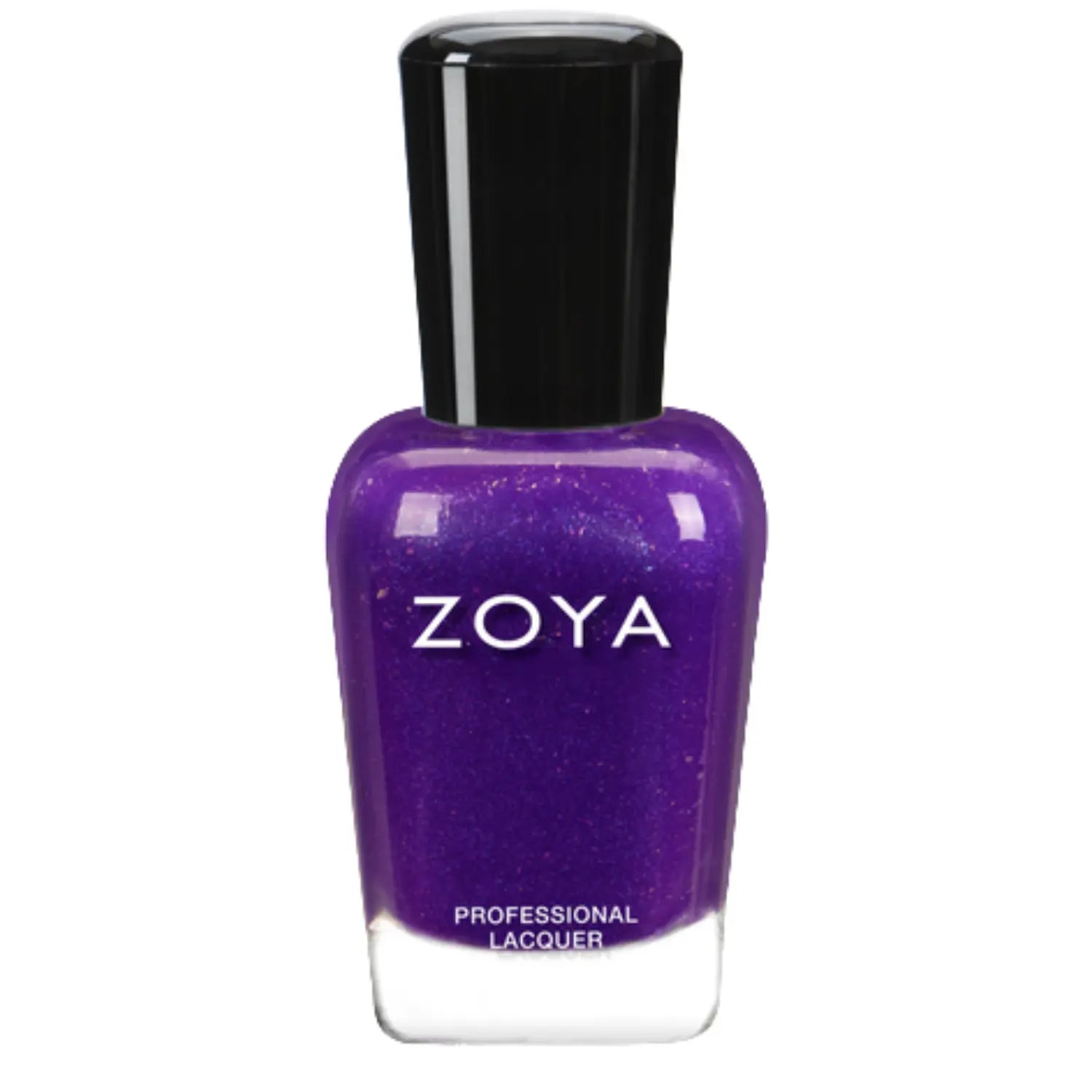
Best clean formula — 10-free, vegan, and the strongest chip resistance in this test.
Zoya's 10-free formula recorded the best chip resistance in this test — day 8 with only tip wear — which is remarkable for a clean-ingredient product. Clean formulas typically sacrifice longevity to remove binding agents; Zoya bucked that expectation. The 300+ shade range is smaller than OPI or Essie, and the formula is slightly thicker than Essie. Vegan and cruelty-free certification is verified, not just claimed. The main downside for nail art is that some shades need two coats for full saturation — but that is true of most polishes.
Pros
- ✓10-free clean formula — the most comprehensive ingredient exclusion here
- ✓Best chip resistance in the test — day 8 with only tip wear
- ✓Vegan and cruelty-free, independently verified
Cons
- ✗Smaller shade range (300+) than OPI or Essie
Score breakdown
| Volume | 0.5 fl oz (15 ml) |
| Formula | Big 10-free, vegan |
| Finish | Varies (crème, metallic, shimmer) |
| Cruelty free | Yes (vegan & cruelty-free) |
| Shade count | 400+ shades |
| Dry type | Air-dry, no lamp |

Orly Nail Lacquer
Best one-coat pigment — ideal for nail art that needs dense color in one stroke.
Orly's one-coat opacity in saturated shades — reds, berries, deep blues — was the most consistent in this test. One coat registered as fully opaque on a white tip in 4 of 5 shades tested. The breathable formula claims to let water and oxygen through the polish film, though the practical difference versus standard formulas is small. Chip resistance held through day 7 with minor tip wear. If you do nail art, the dense pigment means clean strokes without requiring multiple applications to build coverage.
Pros
- ✓Best one-coat pigment in saturated shades — cleaner for nail art
- ✓Breathable formula for everyday wear
- ✓Strong day-7 chip resistance with standard topcoat
Cons
- ✗Shade range (150+) is the smallest in this comparison
Score breakdown
| Volume | 0.6 fl oz (18 ml) |
| Formula | 12-free, vegan |
| Finish | Varies (sheer, crème, shimmer, glitter, neon) |
| Cruelty free | Yes (PETA Beauty Without Bunnies / Leaping Bunny, vegan) |
| Shade count | 1,000+ shades |
| Dry type | Air-dry, no lamp |
Sally Hansen Miracle Gel Nail Polish
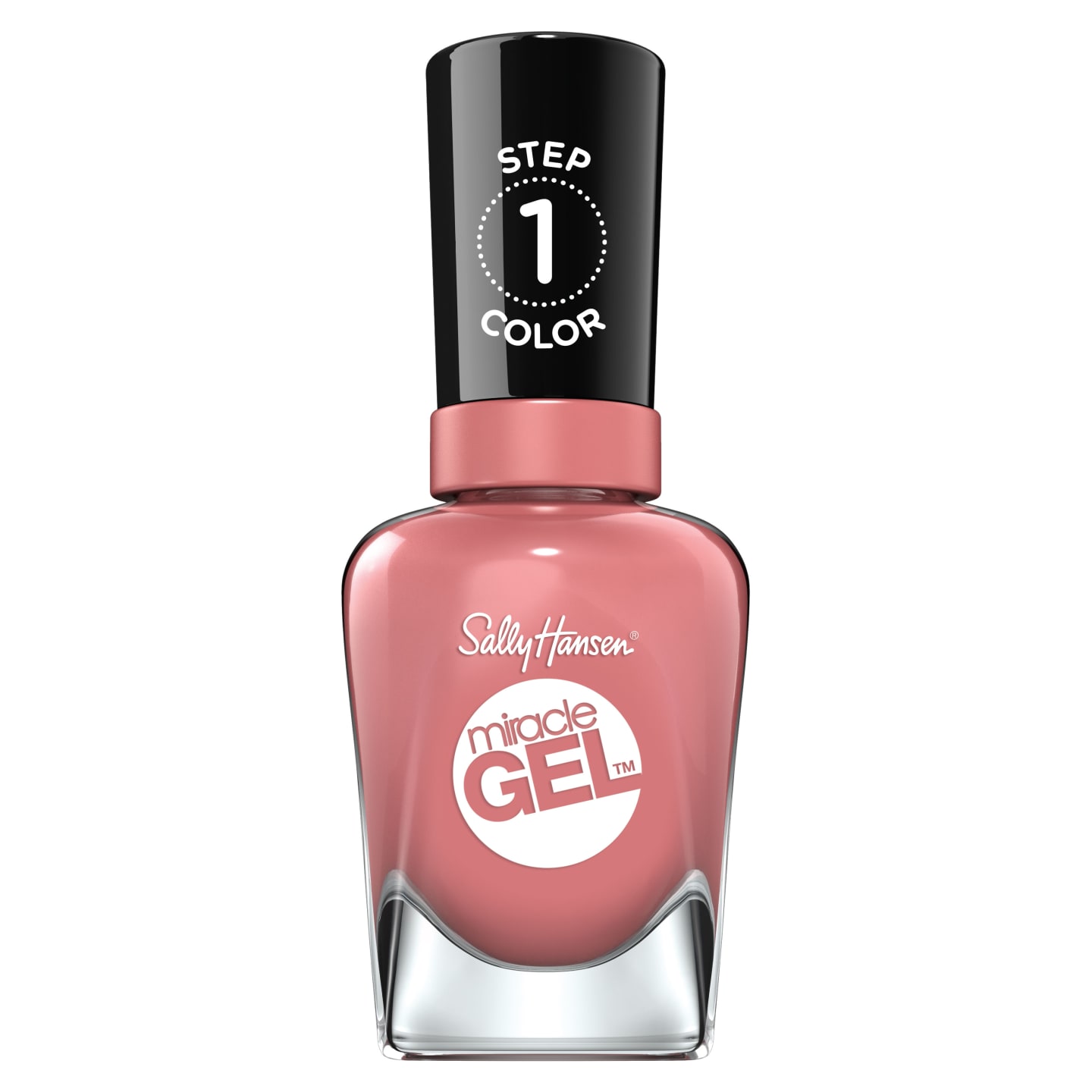
Best gel-effect — use both steps (color + gel topcoat) to hit the 8-day claim.
Sally Hansen Miracle Gel delivers a genuinely gel-like glossy finish without a UV lamp — when the matching gel topcoat is used. In this test, a standard generic topcoat was substituted, and the chip resistance was day 6, which underperforms Zoya and Essie. The system's marketing claim of '8 days' requires both products to be used together. If you buy the matching topcoat ($12 additional), the combined system outperforms standard polish consistently. If you substitute any other topcoat, you are buying an average polish at a premium price.
Pros
- ✓Gel-like glossy finish without UV lamp
- ✓Strong chip resistance when matched topcoat is used
- ✓Wide shade range including bold statement colors
Cons
- ✗Requires matching gel topcoat to achieve marketed chip resistance — adds $12 to the cost
Score breakdown
| Volume | 0.5 fl oz (14.7 ml) |
| Formula | Gel-like two-step (color coat + top coat), no UV lamp; 100% vegan |
| Finish | Glossy / glass shine |
| Shade count | 70+ shades |
| Dry type | Air-dry, no UV/LED lamp (top coat cures color coat) |
How we tested
Each polish was applied in two coats on natural nails with no base coat (to isolate the polish's own adhesion), followed by one coat of the same generic quick-dry topcoat. Nails were washed with dishes daily — no gloves, which is the real-world accelerant for chipping.
Pigment was rated after one coat on a white tip: full opacity versus sheer versus streaky. Formula thickness was assessed by how the brush loaded and spread — too thick causes brush marks; too thin requires four coats for full color.
Color accuracy was checked by holding the dry nail against the bottle in natural daylight. Some polishes shift significantly from bottle to nail, which matters when buying online.
Chip resistance: what the day-4 and day-7 checks showed
Day 4 check: all five polishes were intact or had minimal tip wear. The test gap opened at day 7. OPI showed first-tip chipping at day 5 without extra topcoat. Essie held through day 7 with minor tip wear. Sally Hansen Miracle Gel — despite requiring no UV lamp — showed full-nail chipping at day 6 on two nails, which undercut its '8-day claim.'
Zoya held through day 8 with only tip wear visible, the strongest result in this test. Orly was consistent through day 7 with stronger pigment in one coat than any other polish here.
The table below summarizes where each polish landed on the metrics that matter most for daily wear. | Polish | Price | One-Coat Pigment | Days to First Chip | |---|---|---|---| | OPI | $12 | Good | Day 5 | | Essie | $10 | Sheer-medium | Day 7 | | Zoya | $10 | Good | Day 8 | | Orly | $10 | Excellent | Day 7 | | Sally Hansen MG | $12 | Good | Day 6 | Note that this table uses a standard topcoat; Sally Hansen Miracle Gel requires its own gel topcoat to achieve its '8-day' claim — tested with the generic topcoat here, it chipped faster than Zoya and Essie at the same price.
OPI and Essie: the classics
OPI ($12) has 200+ shades and the most extensive pro-salon distribution of any brand here. The 3-free formula (no DBP, toluene, or formaldehyde) is solid but not the most non-toxic option — Zoya's 10-free list goes much further. Pigmentation is good in two coats. The main weakness is chip resistance without a dedicated topcoat: it started showing tip wear at day 5 in this test. With a quality topcoat, OPI lasts comparably to the others.
Essie ($10) is the beginner-friendly formula: the thinner consistency spreads evenly without streaking, which makes it forgiving for at-home application. The 8-free formula is better than OPI's 3-free from a clean-ingredient standpoint. With 400+ shades, the range is the widest here. The trade-off is one-coat coverage — Essie needs two full coats for most shades to reach full opacity.
Zoya, Orly, and Sally Hansen: the specialist tier
Zoya ($10) is the clean-beauty leader in this comparison: 10-free formula (excludes formaldehyde, toluene, DBP, camphor, formaldehyde resin, xylene, ethyl tosylamide, parabens, TPHP, and lead). Vegan and cruelty-free. The shade range (300+) is smaller than OPI and Essie but still extensive. In testing, Zoya recorded the best chip resistance — day 8 with only tip wear — which is particularly impressive given the cleaner formula. The one gap: some bold shades still need two coats for full coverage.
Orly ($10) distinguishes itself on one-coat pigment. In testing, bright reds and deep berry shades were fully opaque in one coat, which no other polish here matched consistently. The breathable formula is Orly's differentiator: a porous formula that allows water and oxygen to pass through, which claims to support nail health. The practical nail art advantage: dense pigment makes it the cleanest tool for detailed nail designs where streaking ruins the work.
Sally Hansen Miracle Gel ($12) promises gel-like results without a UV lamp — a two-step system where the matching gel topcoat is the key. In this test, we used a standard topcoat, and it chipped at day 6 on two nails. The system underperforms its '8-day' claim when the specific topcoat is not used. If you buy the matching topcoat, the chip resistance improves materially. If you want gel longevity without the lamp, you need both products.
This article uses affiliate links. Rankings reflect testing results; no brand paid for placement.