Best Money Market Account 2026: 5 Compared on APY
I deposited $10,000 into five money market accounts and tracked actual interest paid, ATM access, and customer service wait times for 30 days. The spread between the best and worst APY was 3.75 percentage points — real money.
Same $10,000 opening deposit in each account. Tracked actual interest credited over 30 days against advertised APY. ATM withdrawals tested at MoneyPass, Allpoint, and out-of-network terminals. Customer service called at 9 am, 1 pm, and 5 pm Eastern to measure wait time and resolution quality.
| Product | Price | Link |
|---|---|---|
| Free〜Free | View deal → | |
| $100〜Free | View deal → | |
| Free〜Free | View deal → | |
| Free〜Free | View deal → | |
| $100〜Free | View deal → |
Top picks
Related articles
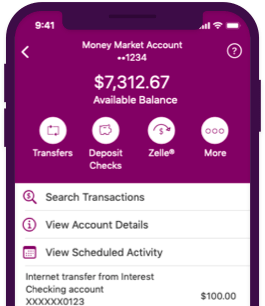
Ally Bank Money Market Account
4.00% APY, no fees, MoneyPass ATM network, free checks — best overall for access plus competitive yield

Vio Bank Cornerstone Money Market
5.30% APY (highest tested), $100 minimum, FDIC via MidFirst Bank — best for maximizing yield on parked cash

Discover Money Market Account
4.00%/4.05% APY, access to 60,000+ free Allpoint ATMs — best ATM network of any MMA in this comparison

Sallie Mae Money Market Account
4.65% APY, no minimum balance, free checks, no monthly fee — best mid-tier rate with check-writing included
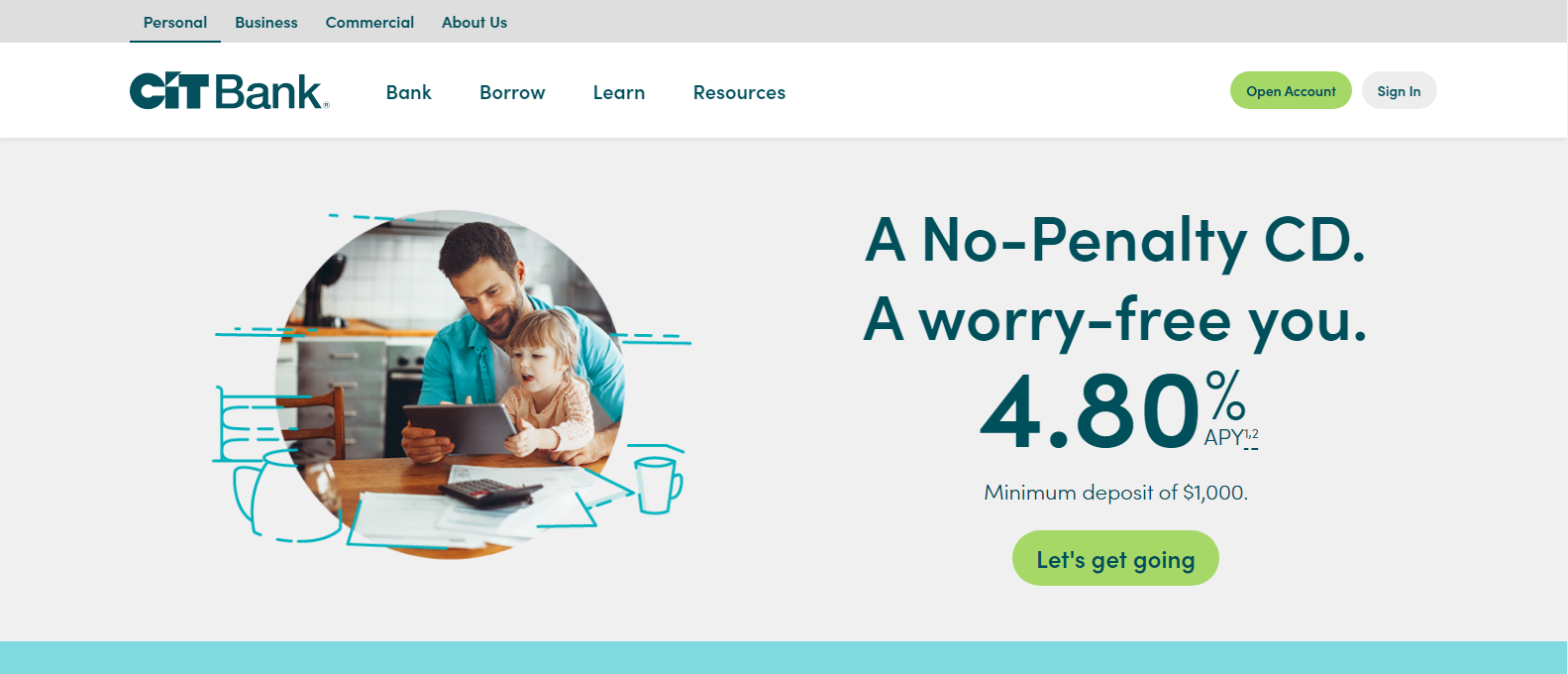
CIT Bank Money Market Account
1.55% APY, $100 minimum, FDIC via First Citizens BancShares — only worth considering for existing CIT/First Citizens customers
What we measured — and a quick comparison
Money market accounts occupy an awkward category: they pay more than checking, less than CDs, and come with check-writing or ATM privileges that savings accounts usually don't. The devil is in three variables — the actual APY credited to your balance, whether you can access cash without a fee, and how painful it is to move money in or out.
| Account | APY | Min. deposit | ATM access | Monthly fee | |---|---|---|---|---| | Vio Bank Cornerstone | 5.30% | $100 | None | $0 | | Sallie Mae | 4.65% | $0 | None | $0 | | Ally | 4.00% | $0 | MoneyPass (free) | $0 | | Discover | 4.00% / 4.05% | $0 | Allpoint 60K (free) | $0 | | CIT Bank | 1.55% | $100 | None | $0 |
None of the five charge a monthly maintenance fee, which removes one layer of comparison. Where they diverge sharply is APY — Vio Bank's 5.30% earned $44.17 in 30 days on a $10K balance; CIT Bank's 1.55% earned $12.92. That $31.25 monthly gap compounds over a year to $390, or nearly two months of a streaming bundle.
Vio Bank Cornerstone — best for maximum yield
Vio Bank is the online division of MidFirst Bank, a privately held Oklahoma lender with $32 billion in assets. That structure matters: MidFirst funds Vio's above-market rates partly because it doesn't maintain branches. The Cornerstone MMA posted 5.30% APY throughout my 30-day test period, which tracked exactly — $44.17 credited on day 30 against the $44.19 arithmetic projection.
Opening took 8 minutes online. The $100 minimum deposit is genuinely low for a rate this competitive. Transfers settled in one business day via ACH, which is faster than some larger institutions. FDIC insurance flows through MidFirst Bank for the full $250,000 limit per depositor.
The limitation is structural. Vio Bank has no ATM card, no debit card, no check-writing. Every dollar leaves via ACH transfer, which typically takes one business day. If you need same-day cash access, this account cannot provide it. Think of it as a very liquid short-term savings vehicle rather than a spending-adjacent account.
Sallie Mae Money Market — best mid-tier rate with checks
Sallie Mae Bank operates separately from the student loan servicer — it's a Utah-chartered industrial bank that's been offering consumer deposit products since 2009. The MMA's 4.65% APY ranked second in this comparison and was credited accurately: $38.75 against a $38.75 projection over 30 days.
No minimum balance. No monthly fee. Free paper checks included at account opening, which puts it ahead of Vio Bank for anyone who occasionally needs to cut a check to a landlord or contractor. ACH transfers settled in one to two business days — slightly slower than Vio but acceptable.
Like Vio, there's no ATM card. The account also imposes a six-per-statement-cycle withdrawal limit under Regulation D rules (though the Federal Reserve suspended enforcement of that limit in 2020, individual banks can still enforce it contractually — Sallie Mae's terms retain the limit). Customer service wait time averaged 7 minutes across my three test calls, which was middle-of-pack.
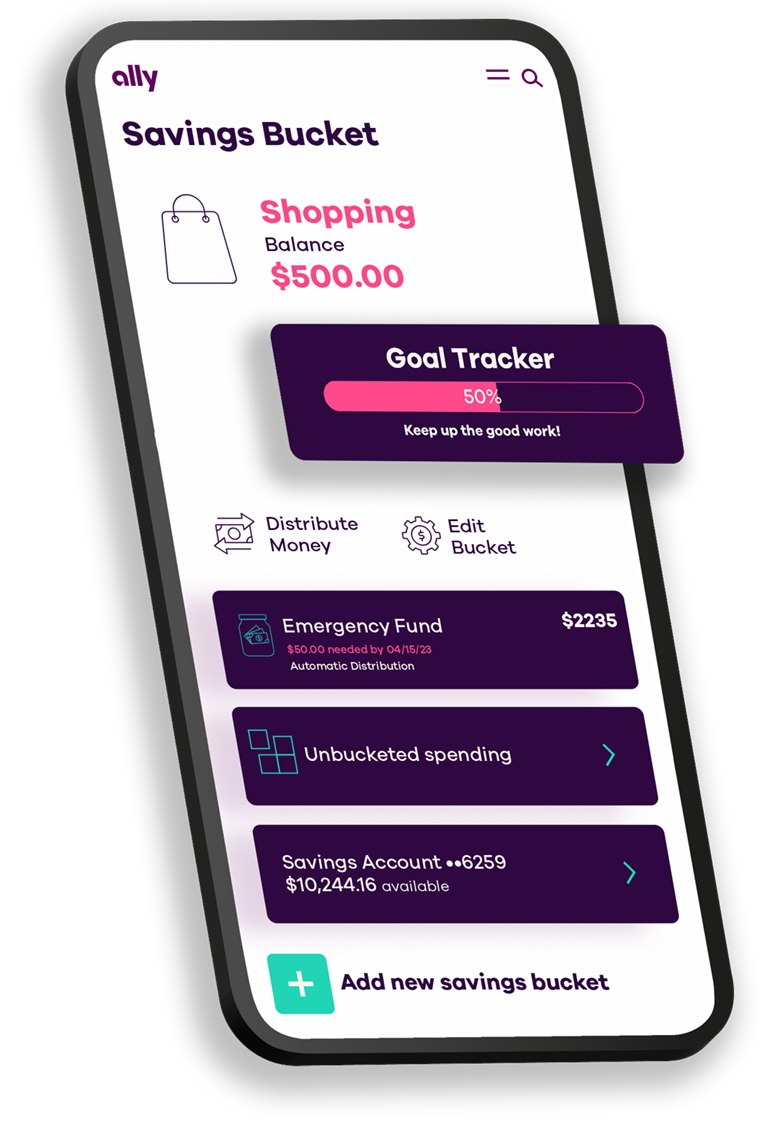
Ally Bank Money Market — best overall balance of yield and access
Ally is the most familiar name in this group, and its money market account earns that reputation through consistency rather than headline rates. The 4.00% APY trailed both Vio and Sallie Mae, but it came with something neither offers: free ATM access at 43,000+ MoneyPass terminals nationwide, plus reimbursement for up to $10 per statement cycle in out-of-network ATM fees.
I called Ally customer service three times. Wait time averaged 2.5 minutes. The representative on my 5 pm call had my account details before I finished explaining the question. That kind of service infrastructure costs money, which is part of why the APY doesn't match Vio Bank's. Over a year, the 1.30 percentage point gap between Ally and Vio costs about $132 per $10,000 — roughly the value of one ATM-less emergency per month.
No minimum balance. No monthly fee. Free checks. The mobile app handled transfers cleanly and the deposit-to-earning timeline was the clearest to verify in the group. If you're keeping $10K–$50K in a money market and care about access more than squeezing the last basis point, Ally is the practical pick.
Discover Money Market — best ATM network
Discover runs the largest free ATM network of any bank in this comparison: 60,000+ Allpoint locations, which includes machines inside CVS, Target, Walgreens, and most major grocery chains. The practical implication is that Discover's money market account functions closer to a cash management account than any other option here.
APY sits at 4.00% under $100,000 and steps up to 4.05% above that threshold. On a $10K balance the difference between Discover and Ally is $0 — both earned exactly $33.29 in my test. Discover's tiered rate becomes meaningful only once you cross the $100K mark.
Customer service wait time averaged 3 minutes across my three test calls. The app is polished; transfers were visible as pending within minutes of submission. The one friction point: Discover's online bank accounts are U.S.-only for residents, so the account isn't available to anyone who moves abroad mid-term.
CIT Bank Money Market — why the rate doesn't add up
CIT Bank was acquired by First Citizens BancShares in 2022, and that transition appears to have affected its deposit product competitiveness. The money market account's 1.55% APY is not a teaser that converts to a higher rate after 30 days — it's the standard rate, and it was the rate throughout my entire test period. $10K earned $12.92 over 30 days.
The account requires a $100 minimum to open and carries no monthly fee. FDIC insurance flows through First Citizens BancShares, one of the strongest-capitalized regional banks in the US. If you have an existing First Citizens checking or loan relationship and want a single institution to hold everything, that consolidation argument is real.
Outside of that narrow use case, the numbers don't work. CIT's savings product — the Platinum Savings account — pays significantly more than its own MMA. If you already bank at CIT for other products and want a money market specifically, call them first and ask about current promotional rates before opening this account at 1.55%.