Best Microwaves 2026: Toshiba vs Panasonic vs Breville
The microwave's reputation for rubbery, unevenly-heated food is mostly a problem of cheap on/off power delivery, not the technology itself. The single upgrade that fixes cold-centre, overcooked-edge reheating is inverter power — and it's the spec that separates a microwave you tolerate from one that actually cooks evenly.
We compared each microwave on inverter versus standard power and reheating evenness, wattage and cooking speed, capacity and footprint, sensor cooking and presets, multi-function versatility, build, and price. Units were assessed against independent testing and owner reviews, weighting even, reliable reheating and defrosting and right-sizing to the kitchen over feature counts.
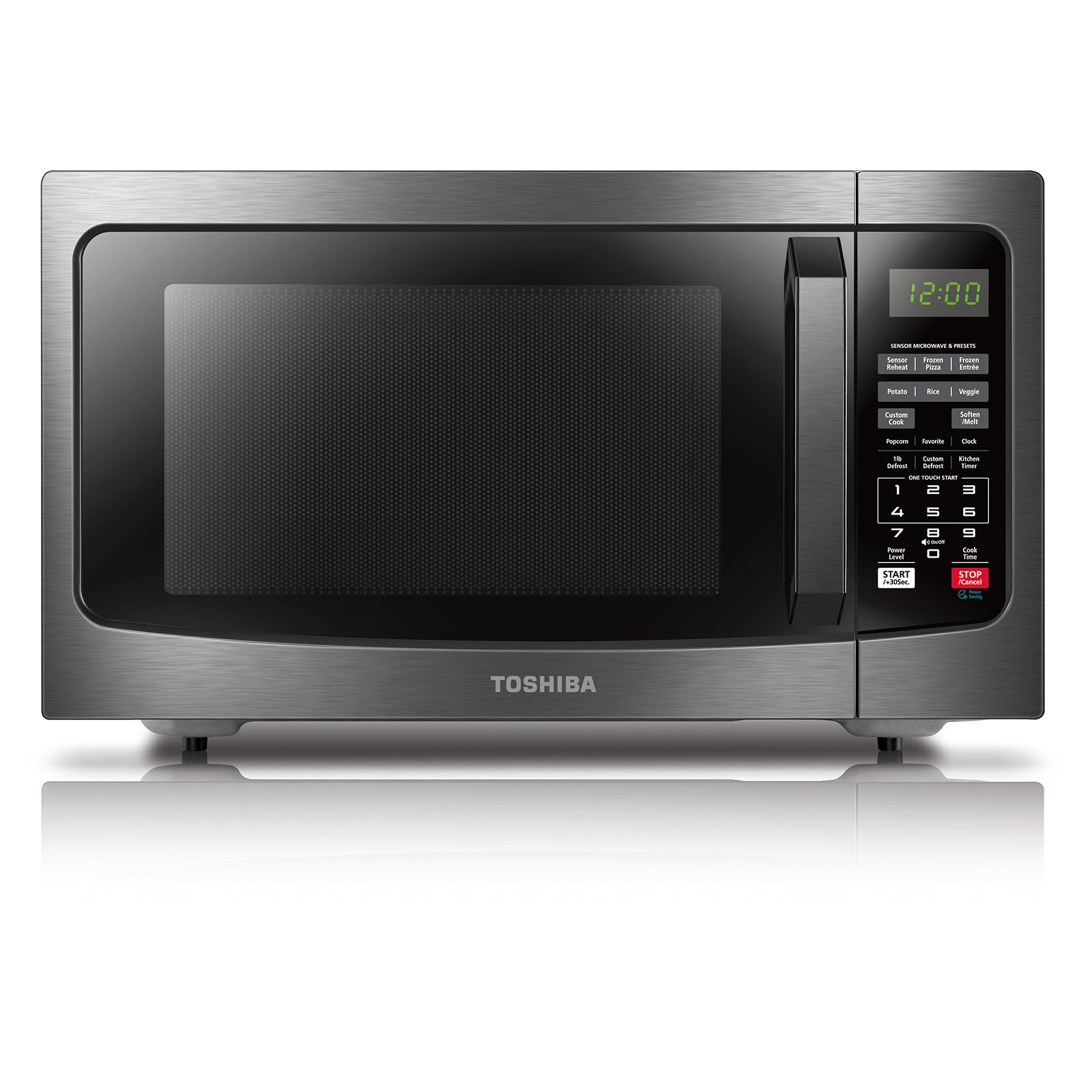
Toshiba Em131a5c
Best Overall: The Toshiba EM131A5C delivers genuinely useful features at a mid-range price that's excellent value. Its standout is sensor cooking: humidity sensors detect when food is properly heated and auto-adjust time and power, so you stop guessing and stop over- or under-cooking.
Top picks ↓Top picks
Related articles


Toshiba Em131a5c
The best all-rounder — humidity sensor cooking that auto-adjusts time and power, a roomy 1.2 cu ft / 1100W capacity for family dishes, one-touch presets, and a mute option, at an excellent mid-range value price. Standard (not inverter) power, but the best balance of features, capacity, and cost.
The Toshiba EM131A5C delivers genuinely useful features at a mid-range price that's excellent value. Its standout is sensor cooking: humidity sensors detect when food is properly heated and auto-adjust time and power, so you stop guessing and stop over- or under-cooking. It's a roomy ~1.2 cu ft, 1100W unit that handles family-sized dishes, with one-touch presets, a mute option to silence the beeps, and a clear display. It hits the sweet spot of capability and value — powerful and fast, large enough for dinner plates and casseroles, and loaded with the conveniences pricier models offer without the premium. It's a standard (not inverter) microwave, so the Panasonic edges it on even low-power cooking, and at 1.2 cu ft it takes real counter space, but for the best all-round balance of sensor cooking, capacity, performance, and price, it suits the most kitchens.
Pros
- ✓Humidity sensor cooking auto-adjusts time and power
- ✓Roomy 1.2 cu ft / 1100W for family dishes
- ✓Presets, mute option, clear display
- ✓Excellent mid-range value
Cons
- ✗Standard power, not inverter
- ✗Takes real counter space at 1.2 cu ft

Panasonic Nn Sn966s Inverter
The even-cooking pick — inverter technology delivers steady continuous low power for dramatically more even reheating, gentle melting, and Turbo Defrost that thaws evenly, plus Genius sensor cooking and 1250W power. The most worthwhile microwave upgrade for anyone who reheats and defrosts often.
The Panasonic NN-SN966S is the pick for even, gentle cooking and defrosting, because its inverter technology is a genuine functional upgrade. A standard microwave fakes lower power by switching full power on and off, cooking edges while the centre stays cold; the inverter delivers steady, continuous lower power, so reduced settings genuinely cook evenly throughout — dramatically better reheating, gentle melting and softening without scorching, and Turbo Defrost that thaws evenly instead of cooking the edges. It's a powerful, large-capacity 1250W unit with Genius sensor cooking that auto-adjusts, and the inverter design makes the interior flatter and roomier for its footprint. It's priced above basic microwaves and the benefit is greatest for those who use low power and defrost often, but for the even, quality results that fix the core microwave complaint, it's the standout.
Pros
- ✓Inverter delivers even, gentle low-power cooking
- ✓Turbo Defrost thaws evenly without cooking edges
- ✓Genius sensor cooking, powerful 1250W
- ✓Flatter, roomier interior for its size
Cons
- ✗Priced above basic microwaves
- ✗Inverter benefit smaller if you only use full power

Breville Combi Wave 3 In 1
The space-saving 3-in-1 — a microwave, convection oven, and air fryer in one, with inverter even-microwaving and quality build, replacing three appliances. Expensive and the most complex, but genuinely versatile for kitchens short on space.
The Breville Combi Wave 3-in-1 is the premium pick that replaces three appliances — a microwave, a convection oven, and an air fryer in one. Beyond microwaving, the convection function bakes and roasts, and the built-in air-fry mode crisps food properly, so it genuinely saves counter space by combining a microwave with a small oven and air fryer. It uses inverter technology for even microwaving, has Breville's quality build and smart presets, and is the choice for someone with limited kitchen space who wants one capable appliance to do the work of several. It's expensive and the most complex option here, and a dedicated air fryer or oven will out-perform it on those specific tasks, but the all-in-one versatility and even inverter microwaving make it uniquely space-saving for small kitchens.
Pros
- ✓Microwave, convection oven, and air fryer in one
- ✓Inverter technology for even microwaving
- ✓Saves counter space, quality Breville build
- ✓Smart presets across functions
Cons
- ✗Expensive and the most complex option
- ✗Dedicated single-purpose appliances out-perform it
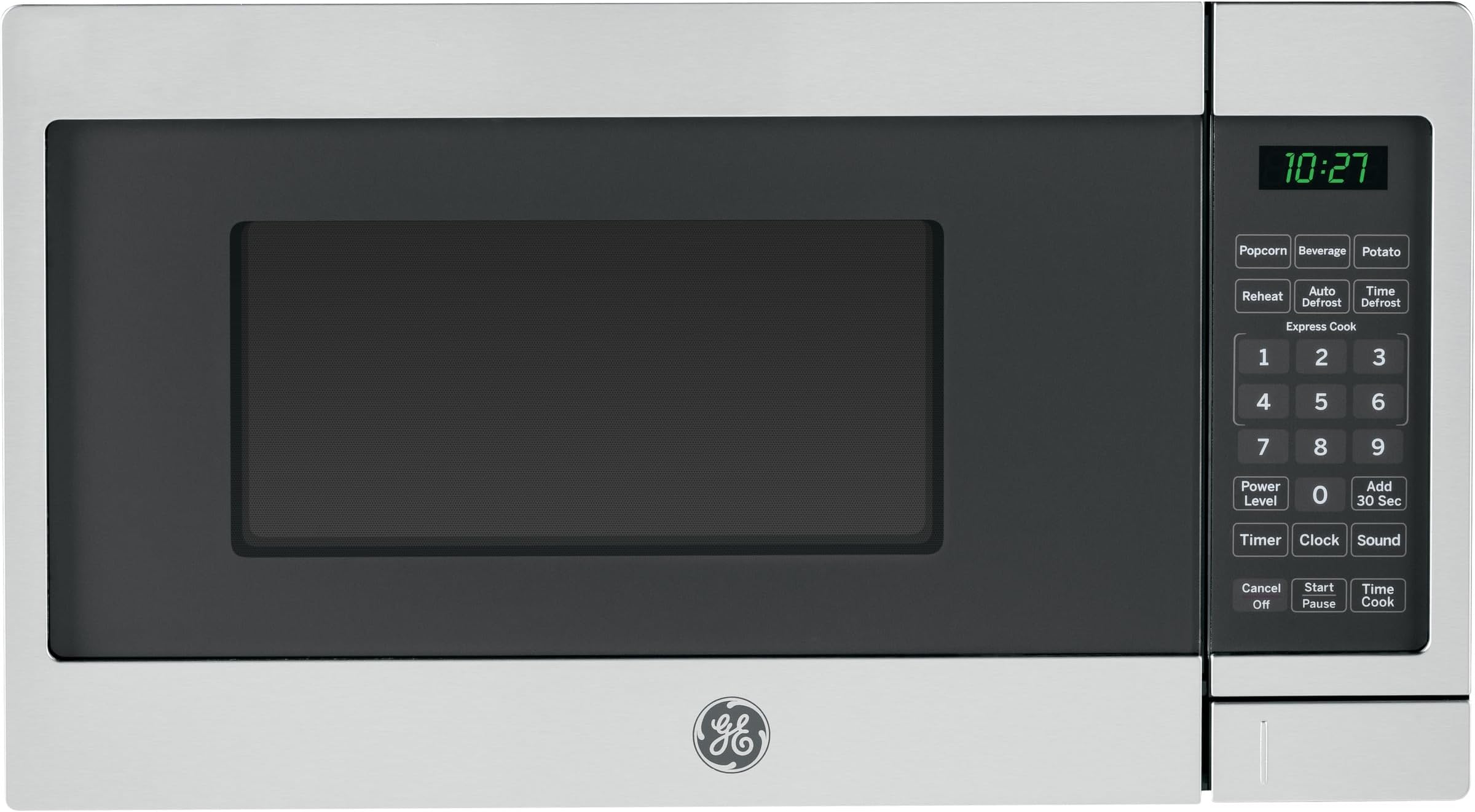
Ge Jes1072shss
The compact pick — a small 0.7 cu ft / 700W no-frills microwave that reliably reheats and defrosts in a footprint that fits dorms, offices, and tight counters. No sensor or inverter and won't hold big dishes, but a dependable, affordable, appropriately-sized choice.
The GE JES1072SHSS is the compact, space-saving pick for small kitchens, dorms, offices, and anywhere counter space is tight. It's a small ~0.7 cu ft, 700W no-frills microwave that does the fundamentals — reheating, defrosting, basic cooking — reliably in a footprint that fits where a full-size unit won't. It lacks sensor cooking, inverter power, and large capacity, so it's not for cooking family meals or fitting big dishes (a large dinner plate may not turn inside it), but for a single person, a small space, or a secondary microwave, it's a dependable, affordable, appropriately-sized choice from a trusted brand. At 700W it's slower than a full-power unit, so it's best where reheating, not heavy cooking, is the job.
Pros
- ✓Compact 0.7 cu ft footprint for tight spaces
- ✓Reliable reheating and defrosting
- ✓Affordable, from a trusted brand
- ✓Ideal single-person or secondary microwave
Cons
- ✗700W is slower; won't fit large dishes
- ✗No sensor or inverter

Commercial Chef Countertop
The rock-bottom budget pick — a basic, functional microwave at the lowest price that covers reheating and defrosting essentials with simple controls. No sensor cooking or inverter and basic even-heating, but the honest 'just need a microwave' choice for rentals and budget kitchens.
The Commercial Chef Countertop is the rock-bottom budget pick — a basic, functional microwave at the lowest price for someone who just wants to reheat and defrost without spending much. It covers the essentials with simple controls and comes in various small-to-mid sizes. It has no sensor cooking, no inverter, and a more basic build, and the even-heating won't match the Panasonic, but for a rental, a first apartment, a budget kitchen, or anyone who treats the microwave purely as a reheating box, it does the job at minimal cost. It's the honest 'just need a microwave' choice — don't expect even gourmet cooking from it, but for cheap, dependable reheating, it delivers exactly what's promised.
Pros
- ✓Lowest price
- ✓Covers reheating and defrosting essentials
- ✓Simple controls, various sizes
- ✓Honest 'just need a microwave' choice
Cons
- ✗No sensor cooking or inverter
- ✗Basic build and less even heating
Which one is right for you?
For most kitchens
Toshiba Em131a5c
Sensor cooking, family-sized 1.2 cu ft / 1100W capacity, presets, and a mute option at an excellent value price make it the best-balanced all-rounder.
For the most even reheating and defrosting
Panasonic Nn Sn966s Inverter
Inverter power delivers steady low heat for even reheating, gentle melting, and Turbo Defrost — the upgrade that fixes the core microwave complaint.
For saving space with one appliance
Breville Combi Wave 3 In 1
A microwave, convection oven, and air fryer in one with inverter even-microwaving replaces three appliances — ideal for small kitchens.
For small spaces and tight counters
Ge Jes1072shss
A compact 0.7 cu ft unit reliably reheats and defrosts where a full-size microwave won't fit — perfect for dorms, offices, and as a secondary unit.
For the cheapest dependable reheating
Commercial Chef Countertop
A basic, functional microwave at the lowest price covers reheating and defrosting essentials for rentals, first apartments, and budget kitchens.
Top pick: Toshiba EM131A5C
The Toshiba EM131A5C is the best microwave for most kitchens because it delivers genuinely useful features — sensor cooking, even performance, and smart conveniences — at a mid-range price that represents excellent value. Its standout is sensor cooking: built-in humidity sensors detect when food is properly heated and automatically adjust the time and power, so you stop guessing and stop over- or under-cooking. It's a roomy mid-size unit (around 1.2 cubic feet, 1100 watts) that handles family-sized dishes, with one-touch presets, a mute option (you can silence the beeps), and an easy-to-read display.
It hits the sweet spot of capability and value: powerful enough to cook and reheat quickly, large enough for dinner plates and casserole dishes, and loaded with the conveniences (sensor reheat, popcorn and other presets, eco mode) that more expensive models offer, without the premium price. Toshiba has become one of the most recommended microwave brands precisely because units like this punch above their cost, with a stainless or black-stainless finish that looks good on a counter.
The honest caveats: it's a standard (not inverter) microwave, so for the smoothest, most even low-power cooking and defrosting the Panasonic inverter below edges it, and at 1.2 cubic feet it takes up real counter space. But for the best all-round balance of sensor cooking, capacity, performance, and price, the Toshiba EM131A5C is the default recommendation and the one that suits the most kitchens.
Best even cooking: Panasonic NN-SN966S Inverter
The Panasonic NN-SN966S is the pick for anyone who cares about even, gentle cooking and defrosting, because it uses inverter technology — and that's a genuine functional upgrade, not marketing. A standard microwave delivers, say, '50% power' by switching full power on and off repeatedly, which cooks the edges while the centre stays cold and overcooks delicate foods. An inverter delivers a steady, continuous stream of lower power, so 50% really means consistent half-power throughout — the result is dramatically more even reheating, gentle melting and softening without scorching, and defrosting that thaws evenly instead of cooking the edges while the middle stays frozen.
It's a powerful, large-capacity unit (around 1.2–2.2 cubic feet options, 1250 watts) with Panasonic's Genius sensor cooking that auto-adjusts time and power, plus a 'Turbo Defrost' that's noticeably faster and more even than standard defrost. The inverter design also makes the interior flatter and more spacious for its footprint. For someone who reheats a lot, cooks actual food (not just frozen meals) in the microwave, or hates rubbery, unevenly-heated leftovers, the inverter difference is the most worthwhile upgrade in microwaves.
The trade-offs: it's priced above basic microwaves, it's large, and the benefit is most noticeable to people who use the lower power levels and defrost often (if you only ever blast things on full power for two minutes, you'll notice the inverter advantage less). But for genuinely better, more even cooking and defrosting — the core complaint people have about microwaves — the Panasonic inverter is the standout.
The 3-in-1, the compact, and the budget picks: Breville Combi Wave, GE, Commercial Chef
The Breville Combi Wave 3-in-1 is the premium pick that replaces three appliances: it's a microwave, a convection oven, and an air fryer in one. Beyond microwaving, the convection function lets it bake and roast, and the built-in air-fry mode crisps food properly — so it can genuinely save counter space by combining a microwave with a small oven and air fryer. It uses inverter technology for even microwaving, has Breville's quality build and smart presets, and is the choice for someone with limited kitchen space who wants one capable appliance to do the work of several. It's expensive and the most complex option, but the versatility is real.
The GE JES1072SHSS is the compact, space-saving pick for small kitchens, dorms, offices, and anywhere counter space is tight. It's a small (around 0.7 cubic feet, 700 watts) no-frills microwave that does the fundamentals — reheating, defrosting, basic cooking — reliably in a footprint that fits where a full-size unit won't. It lacks sensor cooking, inverter power, and large capacity, so it's not for cooking family meals or fitting big dishes, but for a single person, a small space, or a secondary microwave, it's a dependable, affordable, appropriately-sized choice from a trusted brand.
The Commercial Chef Countertop is the rock-bottom budget pick — a basic, functional microwave at the lowest price for someone who just wants to reheat and defrost without spending much. It covers the essentials with simple controls and is available in various small-to-mid sizes. It has no sensor cooking, no inverter, and a more basic build, and the even-heating won't match the Panasonic, but for a rental, a first apartment, a budget kitchen, or anyone who treats the microwave purely as a reheating box, it does the job at minimal cost. It's the honest 'just need a microwave' choice.
How to choose: inverter vs standard, wattage, size, and sensor cooking
Understand inverter versus standard power, because it's the most meaningful quality difference. A standard microwave creates lower power levels by pulsing full power on and off, which causes uneven results — hot edges and cold centres when reheating, scorched spots when melting or softening, and defrosting that cooks the outside while the inside stays frozen. An inverter microwave (Panasonic, Breville Combi Wave) delivers steady, continuous lower power, so reduced power settings genuinely cook gently and evenly throughout, transforming reheating, defrosting, and delicate tasks like melting chocolate or softening butter. If you reheat leftovers often, cook real food in the microwave, or defrost regularly, the inverter upgrade is the one most worth paying for; if you only ever full-power-blast things, it matters less.
Match wattage and size to your cooking and your space. Wattage determines speed and cooking power: 700 watts (compact GE, budget units) is slower and fine for basic reheating in a small space, while 1000–1250 watts (Toshiba, Panasonic) cooks and reheats noticeably faster and handles more demanding tasks — for a main kitchen microwave, higher wattage is worth it. Capacity (cubic feet) determines what fits: compact ~0.7 cu ft units suit dorms and tight counters but won't hold a large dinner plate or casserole dish, while mid-to-large 1.2+ cu ft units (Toshiba, Panasonic) fit family-sized dishes. Measure your counter space and consider what dishes you actually microwave before choosing — bigger isn't automatically better if counter room is precious.
Weigh sensor cooking and extra functions for how you'll really use it. Sensor cooking (Toshiba, Panasonic) uses humidity or temperature sensors to detect when food is done and auto-adjust time and power — genuinely useful for foolproof reheating and cooking without guessing or overcooking. Multi-function units (Breville Combi Wave) that add convection baking and air frying are excellent if you want to save space by combining appliances, but add cost and complexity you don't need if you only microwave. Conveniences like a mute/silence option (surprisingly valued), one-touch presets, and an eco mode add daily polish. Decide whether you want a pure, even-heating microwave (Panasonic inverter), a feature-rich value all-rounder (Toshiba), a space-saving combo (Breville), a compact unit (GE), or a cheap basic box (Commercial Chef) — and buy for that, not the longest spec list.