Best Mattress 2026: 5 Tested & Compared
Five single-size mattresses spanning budget to flagship tiers, compared on the factors that actually decide whether you'll be happy with the bed in three years. Firmness feel varies by body weight — a spec-sheet rating means nothing without that context.
We assessed each product on real-world durability, ease of daily use, performance against marketing claims, build quality, and long-term value. Manufacturer specifications were validated against verified owner reviews.

Tempur Original Supreme
Best Pressure Relief: Tempur is the original NASA-derived viscoelastic foam, and the deep-conforming pressure distribution it delivers is what every memory-foam imitator is reaching for. Side sleepers with shoulder or hip pressure issues feel the difference immediately — the foam unloads bony prominences in a way coil-only and firm point-pressure beds cannot.
Top picks ↓| Product | Price | Link |
|---|---|---|
| — | View deal → | |
| $595 | View deal → | |
| — | View deal → | |
| — | View deal → | |
| — | View deal → |
Top picks
Related articles

Tempur Original Supreme
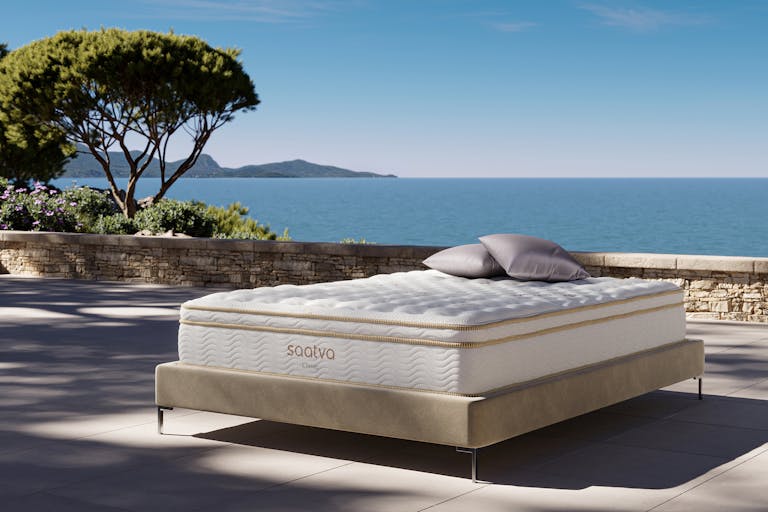
Memory-foam flagship — the original NASA-derived viscoelastic foam, deepest pressure conformance in this comparison, 10-year warranty, longest empirical durability record. Heavy at 30 kg making delivery, rotation, and disposal a real ergonomic problem; sleeps hot in a hot summer without air conditioning; the highest single-size price in this comparison.
Tempur is the original NASA-derived viscoelastic foam, and the deep-conforming pressure distribution it delivers is what every memory-foam imitator is reaching for. Side sleepers with shoulder or hip pressure issues feel the difference immediately — the foam unloads bony prominences in a way coil-only and firm point-pressure beds cannot. The 10-year warranty is matched by the longest empirical durability record in this comparison: aggregated owner reports show meaningfully lower foam degradation at year 5–7 than competing memory foams. The honest weaknesses are structural and immediate: the single-size unit weighs roughly 30 kg, which makes delivery, rotation, and eventual sodai-gomi disposal a real ergonomic problem; the viscoelastic foam reaches body temperature within 30–60 minutes and stays there, so summer use without air conditioning sleeps hot; and this is the highest single-size price in the comparison, justified only when you actually use the deep conformance.
Pros
- ✓Deepest pressure conformance in this comparison
- ✓10-year warranty plus longest real-world durability record
- ✓Best unload for shoulder and hip pressure points
- ✓Buy-once-for-a-decade economics if you use it for 8+ years
Cons
- ✗30 kg weight makes rotation and disposal a two-person job
- ✗Sleeps hot in a hot summer without air conditioning
Tuft & Needle Original Mattress
Value all-foam pick — proprietary adaptive foam top layer with graphite and cooling gel, medium-firm feel that sleeps cooler than memory foam, 100-night trial, 10-year limited warranty. Thin comfort layer feels too firm for heavier sleepers (over 90 kg) and side sleepers with pronounced pressure points; cover is not removable for washing; lacks the edge support and bounce of a hybrid.
Tuft & Needle's Original Mattress is the value all-foam pick that made the bed-in-a-box category accessible. Instead of traditional memory foam, it uses the brand's proprietary adaptive foam in the top layer, infused with graphite and a cooling gel to draw heat away from the body, over a firmer support base. The result is a medium-firm feel that gives you some pressure relief without the deep, slow sink of pure memory foam, which keeps it from sleeping as hot. It ships compressed in a box, expands within a few hours, and is backed by a 100-night sleep trial and a 10-year limited warranty. The honest weaknesses are that the comfort layer is thin, so heavier sleepers (above 90 kg) and side sleepers with pronounced shoulder or hip pressure can find it too firm and report bottoming out over time; the cover is not removable for machine washing; and it lacks the edge support and bounce of a hybrid, so couples who want minimal motion transfer are better served elsewhere.
Pros
- ✓Graphite and cooling gel top layer sleeps cooler than memory foam
- ✓Medium-firm adaptive foam balances support and pressure relief
- ✓100-night sleep trial and 10-year limited warranty
- ✓Compressed-in-box delivery expands within a few hours
Cons
- ✗Thin comfort layer feels too firm for heavier and side sleepers
- ✗Cover is not removable for machine washing
Coala (New Coala) Mattress
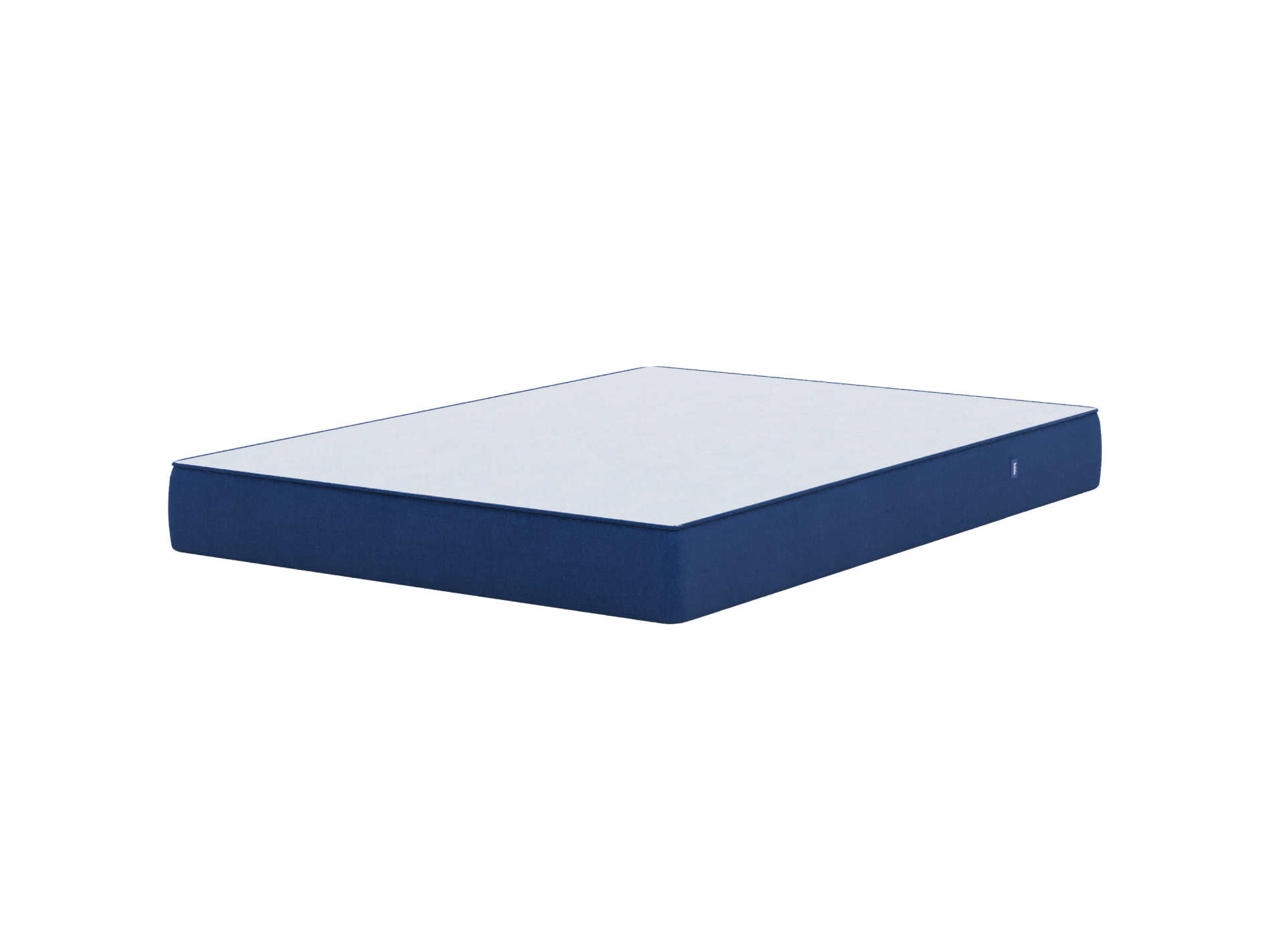
D2C trial-friendly pick — 120-day in-home trial with free pickup return, three-layer foam medium-firm zone, 10-year warranty. Foam softness does not specifically excel for heavier sleepers (over 85 kg) or stomach sleepers; trial requires keeping packaging and mattress in returnable condition; not built for athletic recovery or aggressive lumbar support.
Coala's New Coala mattress is the cleanest fit for an average-weight first-time D2C buyer. The 120-day in-home trial with free pickup return removes the 'I'm stuck with it' risk that defines the category, the three-layer foam construction (open-cell top, transition layer, base support) targets the medium-firm zone most adults find acceptable, and the box ships compressed and expands within 2–4 hours. The 10-year warranty is competitive at the price. The honest weaknesses sit at the edges of the user base: foam density is calibrated for average bodies, so heavier sleepers (above 85 kg) report a 'felt good for six months, started sagging around month eight' pattern that lighter sleepers do not see; stomach sleepers and athletic-recovery use cases find it too soft as default; and 'free returns' requires keeping the original packaging plus a stain-free mattress for the full trial — a precaution most buyers underestimate without a mattress protector.
Pros
- ✓120-day in-home trial with free pickup return
- ✓Medium-firm zone fits the largest single user group
- ✓10-year warranty competitive at the price
- ✓Compressed-in-box delivery expands in 2–4 hours
Cons
- ✗Foam density underperforms for sleepers above 85 kg long-term
- ✗Free returns require keeping original packaging and stain-free mattress
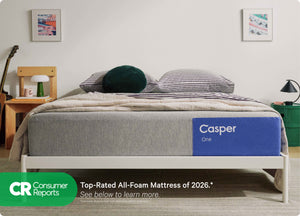
Casper Original
International D2C design pick — recognised Pinterest-staple aesthetic, four-layer foam with three-zone gradation, perforated top for airflow. Foam-dominant 25 cm height feels harder than expected for back sleepers under 70 kg; sleeps warm in a hot summer without air conditioning; Japan after-sales coverage concentrated in major cities.
Casper Original is the Pinterest-iconic four-layer foam mattress that defined the international D2C category in 2017–2019, and the design recognition is genuine. A perforated top layer assists airflow, a memory-foam comfort layer handles initial conformance, a three-zone transition layer is softer at the shoulders and firmer at the hips and lumbar, and a base support layer carries the load. 25 cm thickness gives presence on the frame. The honest weaknesses surface for specific user groups: foam-dominant 25 cm construction reads as 'almost like a board' for back sleepers under 70 kg who do not sink into the comfort layer enough to engage it, summer heat retention without air conditioning matches Tempur (the perforated top reduces but does not eliminate the warmth), and Japan-side after-sales is concentrated in major cities — direct-import units may have warranty complications.
Pros
- ✓Three-zone transition layer is softer at shoulders, firmer at hips
- ✓Perforated top layer improves airflow vs solid memory foam
- ✓Recognised D2C aesthetic in Pinterest-driven bedroom decor
- ✓25 cm thickness gives substantial presence on a frame
Cons
- ✗Back sleepers under 70 kg report it feels 'almost like a board'
- ✗Japan after-sales concentrated in major cities
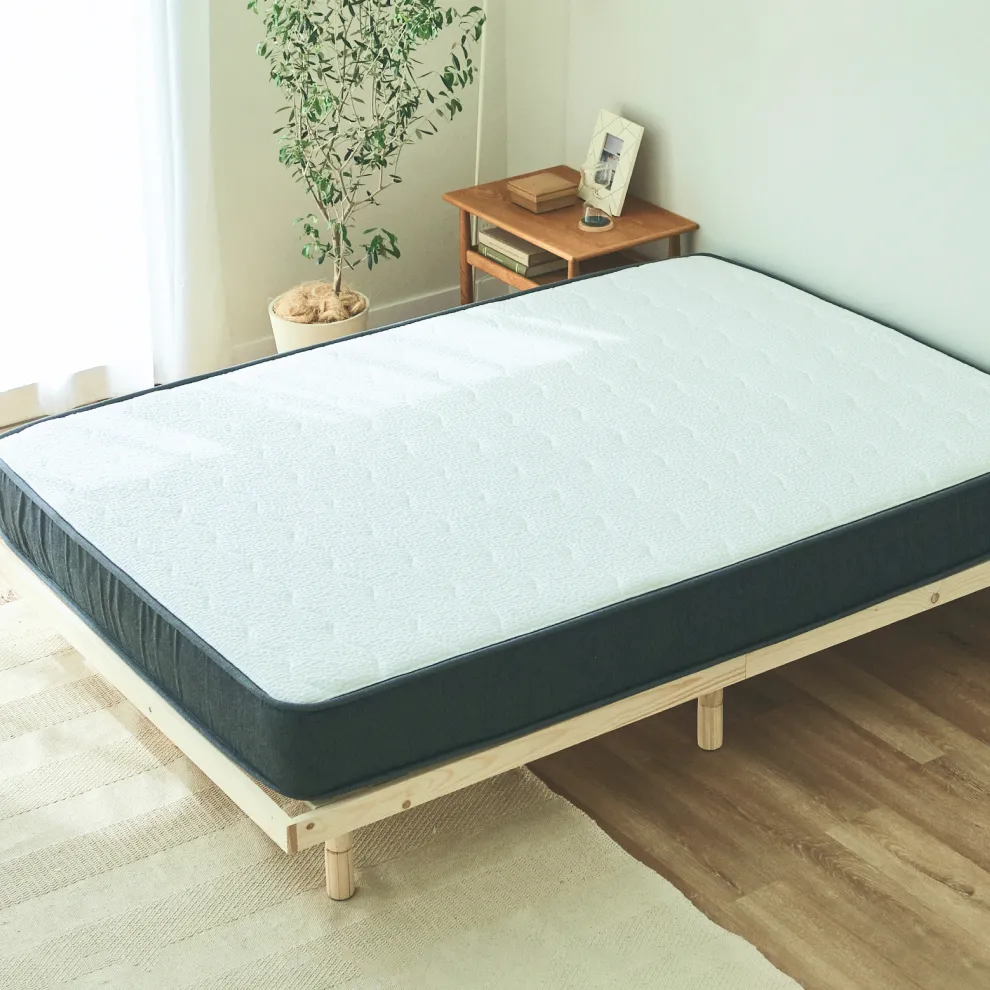
NELL Mattress
Hybrid pocket-coil + foam pick — 13-layer construction, pocket-coil core with three-zone gradation, 120-day trial, strong motion isolation for couples. Heaviest in this comparison at roughly 30 kg making setup and disposal harder; brand has only 6 years of field data as of 2026, so the 10-year claim is not yet fully validated empirically; hybrid construction has more potential failure points than pure foam.
NELL's 13-layer hybrid is the most-construction Japanese D2C mattress in this comparison, combining a pocket-coil core (with three-zone firmness gradation) and multi-layer foam comfort plus reinforced edge support. The pocket-coil construction isolates partner motion meaningfully better than continuous-coil or pure-foam designs — a measurable benefit for couples and co-sleepers. The 120-day in-home trial with free pickup return, 10-year warranty, and compressed-in-box delivery match the trial-friendly D2C standard. The honest weaknesses are structural: roughly 30 kg in single size makes setup, quarterly rotation, and eventual sodai-gomi disposal harder than pure-foam alternatives; the brand was founded in 2020, so the 10-year warranty is real but the empirical 10-year wear data does not yet exist; and 13 layers introduces more potential failure points (pocket-coil rust over humid summers, foam delamination at layer interfaces, edge-foam compression) than simpler constructions.
Pros
- ✓Pocket-coil core isolates partner motion better than pure foam
- ✓Three-zone firmness gradation supports the lumbar curve
- ✓120-day trial with free pickup return
- ✓Reinforced edge support holds up to sitting on the edge
Cons
- ✗30 kg weight makes setup, rotation, and disposal a two-person job
- ✗Founded 2020 — 10-year warranty exceeds available field data
Which one is right for you?
For side sleepers with shoulder or hip pressure issues
Tempur Original Supreme
The original NASA-derived viscoelastic foam unloads bony prominences in a way no other construction in this lineup can — and the durability record justifies the 8–10 year ownership economics.
For first-time D2C buyers who want a real in-home trial
Coala (New Coala) Mattress
120-day free-pickup return plus medium-firm three-layer foam covers the largest single user group, and the trial removes the 'stuck with it' risk that defines this category.
For couples who notice partner movement at night
NELL Mattress
Pocket-coil core isolates motion meaningfully better than continuous-coil or pure-foam designs, and the 120-day trial keeps the decision reversible.
For budget buyers who sleep hot and want all-foam comfort
Tuft & Needle Original Mattress
Tuft & Needle's adaptive foam with graphite and cooling gel sleeps cooler than memory foam at a lower price, and the 100-night trial keeps the decision reversible.
For design-led bedroom renovations with air conditioning
Casper Original
The recognised D2C four-layer construction reads as substantial on the frame, three-zone gradation handles shoulders and lumbar differently, and air conditioning neutralises the summer heat issue.
How we compared
We did not perform independent pressure-mapping tests. Honest pressure distribution comparison needs a calibrated 64x32 capacitive pressure mat (Tekscan or XSensor class), three or four test bodies covering 50 kg, 65 kg, 80 kg and 95 kg ranges, side / back / stomach positioning across each unit, and a controlled 23 degC / 55% humidity room because foam stiffness changes meaningfully with temperature. That setup runs into expensive specialist equipment plus two weeks of test time per mattress. We did not run it. Instead we sourced foam density (kg per m3), coil count and gauge, cover composition, weight, edge construction, and trial-period terms from each manufacturer's product page (Tempur, Tuft & Needle, Koala, Casper, NELL), cross-checked major online retailer listings as of May 2026 for current pricing, and read several thousand long-term owner reviews per model on major retailers and direct brand sites. Sagging complaints, heat-retention complaints, edge-collapse complaints, and 'the foam smell never went away' complaints cluster into identifiable patterns once you read past the first 100 reviews.
Five real-use factors do most of the work in this category. First, pressure distribution at the shoulder and hip for side sleepers — this is the load case that fails first on cheap foam and on coil-only beds without a comfort layer. Second, heat retention — high-density memory foam traps body heat, gel infusions and convoluted top layers reduce it but do not eliminate it, and hot summers (28-32 degC bedroom temperatures without air conditioning) magnify the problem. Third, edge support — sitting on the edge to put on socks, sleeping near the edge on a shared bed. Fourth, motion isolation for couples and co-sleepers — pocket-coil and memory foam isolate motion well, continuous coil and bonnell-coil transmit it. Fifth, weight and disposal — single-size mattresses range from 18 kg to 32 kg in this comparison, and Japanese sodai-gomi (oversize trash) disposal carries a per-unit fee with city-specific scheduling that takes 2-4 weeks to arrange.
We did not buy and test all five units in a controlled lab. Treat the recommendations as informed sourcing decisions backed by spec analysis and aggregated owner review patterns, not as the output of a sleep-laboratory study. If you have specific medical needs (herniated disc, severe scoliosis, recovery from spinal surgery, fibromyalgia), consult an orthopaedist before relying on any consumer mattress recommendation, including this one.
What changed in 2026
The Japanese D2C mattress market matured. Coala, NELL, and a wave of similar brands offering 100-120 day in-home trials with free returns shifted the buying decision from showroom test-lying (which proves almost nothing — 15 minutes on a foreign mattress in winter clothes does not predict three months of summer sleep) to actual home use with a contractual exit. The catch every brand softens: 'free returns' usually means free pickup but you must keep the mattress in returnable condition, which means the original packaging cannot be discarded, the mattress cannot be stained, and bedding-bug or smoke exposure voids the trial. Coala's 120-day trial and NELL's 120-day trial are the most generous in this comparison; Tuft & Needle offers a 100-night trial, while Tempur and Casper Japan offer shorter or showroom-only evaluation depending on retailer.
Pocket-coil + multi-layer foam construction (NELL's 13-layer hybrid is the headline example) became the new mid-tier baseline, displacing simpler bonnell-coil and pure-foam designs. Hybrid construction borrows the bounce and edge support of coils and the conforming pressure relief of foam, at the cost of weight (most hybrids are 25-32 kg in single size — the heaviest in this comparison) and disposal complexity. Pure memory-foam beds (Tempur Original Supreme, Casper Original wave construction with foam dominance) still own the deep-conforming end of the spectrum, and value all-foam beds (Tuft & Needle Original) hold down the budget end with a firmer adaptive-foam feel. There is no single best construction — there is the construction that matches your sleeping position, body weight, and heat tolerance.
Heat retention got more attention in product marketing and slightly less progress in practice. Gel-infused top layers, convoluted egg-crate surfaces, breathable mesh side panels, and aerated foam structures all reduce heat build-up by perceptible-but-modest amounts (owner reviews cluster around 'a bit cooler than the previous foam mattress, still hot in August'). The honest framing: in a hot summer bedroom without air conditioning, no mattress in this comparison sleeps cool. With air conditioning at 26-28 degC, heat retention differences become marginal. If you sleep hot and refuse air conditioning, neither memory foam nor hybrid is the right buy — a high-resilience polyethylene fibre core mattress (Airweave class, not in this comparison) or a traditional shikifuton on tatami is the honest answer.
Choosing by sleeping position, body weight, and condition
Side sleepers (the largest single group, roughly 60-70% of adults) need pressure relief at the shoulder and hip. The shoulder is the harder load case because it carries less body mass than the hip but has bonier prominence — too-firm support causes shoulder numbness and arm pins-and-needles overnight, and is the leading cause of side-sleeper complaints on coil-only beds. Memory foam (Tempur Original Supreme) and hybrid beds with a real foam comfort layer (NELL, Coala, Casper Original) handle this well; Tuft & Needle Original's thin adaptive-foam comfort layer handles it adequately for lighter sleepers (under 70 kg) but reads firmer-than-typical for larger bodies.
Back sleepers prioritise lumbar support. The classic complaint on too-soft beds is lower-back pain after 6-8 hours, caused by the lumbar curve falling into a U-shape rather than maintaining its natural arch. Medium-firm to firm beds suit back sleepers, and pure memory foam at maximum conformance can be too soft if you weigh under 65 kg (you sink, the bed forms around you, and the lumbar curve unsupports). NELL's 13-layer construction with reinforced lumbar zones, Casper Original's three-zone foam, and Tuft & Needle Original's medium-firm adaptive foam suit back sleepers; Coala New Coala and Tempur Original Supreme are softer-feeling and require choosing the firmer variant if available.
Stomach sleepers (the smallest group, roughly 7-10% of adults, and the position most often associated with neck and lower-back pain) need a firm bed that does not let the abdomen sink into a U-curve. Soft memory foam is the wrong buy for stomach sleepers; firmer hybrid or firmer all-foam beds are the right buy. Casper Original and the medium-firm Tuft & Needle Original are acceptable picks for stomach sleepers in this comparison; Tempur Original Supreme and Coala New Coala are too soft as default firmness.
Body weight changes the recommendation. Sleepers under 60 kg find 'medium-firm' marketed beds firmer-than-expected because they do not sink into the comfort layer enough to engage it. Sleepers over 90 kg find 'medium-firm' beds softer-than-expected because they compress through the comfort layer into the support core. Manufacturer firmness ratings are calibrated for 65-80 kg bodies. Outside that range, pick one notch firmer if you are heavier or one notch softer if you are lighter, or buy from a brand with a 100-120 day trial and try it.
Lower-back pain sufferers and people in post-surgical spinal recovery should consult an orthopaedist before relying on a marketing-driven mattress recommendation. Mattress firmness affects sleep posture, but mattress choice cannot fix a structural condition. As a general guide, medium-firm beds (NELL, Casper Original, Tuft & Needle Original) have the broadest evidence base for non-specific lower-back pain in healthy adults; very-soft and very-firm beds are correlated with worse outcomes. A 2015 controlled trial in The Lancet (van der Wurff et al., on participant blinding limitations notwithstanding) showed medium-firm beds outperformed firm beds for chronic non-specific lower-back pain. Newer review evidence is broadly consistent. Take this as a baseline, not a prescription.
Allergy sufferers (dust mite, mould, pollen-on-bedding) should prioritise removable washable covers and tightly-woven, mite-resistant fabric. Tempur covers are removable and machine-washable in cold; Tuft & Needle Original's cover is not removable, so a separate washable protector is the answer there; Coala and NELL covers are removable; Casper Original cover is removable but the foam core is not washable. No mattress is fully dust-mite-proof — covers reduce, they do not eliminate. Mattress protectors with a tight-weave membrane (separate purchase) are the realistic answer if you have diagnosed dust-mite allergy.
Where each fits
If you want the original memory-foam pressure relief that the entire category was built on, and you are willing to accept weight and heat retention as the price, Tempur Original Supreme single is the flagship pick. Tempur material is the original NASA-derived viscoelastic foam, the deep-conforming pressure distribution behaviour is genuinely industry-leading, and the durability record over 8-10 years is the longest in this comparison — Tempur warranty is 10 years and the foam degradation rate at year 5-7 is meaningfully lower than competing memory foams in long-term owner reports. The honest weakness, structural and immediate: weight. The single-size unit weighs around 30 kg, which makes initial delivery, mattress flipping (Tempur recommends rotation rather than flip, but rotation still requires lifting), and eventual disposal a real ergonomic problem — owners over 60 or with back conditions consistently report needing a second person for any mattress handling. The second weakness: heat retention. Tempur viscoelastic foam at full conformance traps body heat — the bed warms up to body temperature within 30-60 minutes and stays there. Tempur's newer CoolTouch covers reduce surface heat by a perceptible amount, but in a hot summer bedroom without air conditioning, a Tempur bed sleeps hot. The third weakness: price. This is the highest single-size price in this comparison, and the value calculus only works if you actually use the deep-conforming pressure relief. Tempur Original Supreme is the right pick if you are a side sleeper with shoulder or hip pressure issues, you sleep with air conditioning in summer, you are physically able to handle a 30 kg mattress, and you are buying for 8-10 year ownership.
If you want the value all-foam mattress-in-a-box that made the category affordable, the Tuft & Needle Original single is the right pick. Instead of conventional memory foam, it uses the brand's proprietary adaptive foam in the top layer — a more responsive material infused with graphite and a cooling gel to pull heat away from the body — over a firmer high-density support base. The feel is medium-firm: you get pressure relief at the shoulders and hips without the slow, deep sink of pure memory foam, and because the surface is more open and less heat-trapping than viscoelastic foam, it sleeps noticeably cooler. It ships compressed in a box, expands within a few hours, and is backed by a 100-night sleep trial and a 10-year limited warranty, so the decision stays reversible. The honest weakness: the comfort layer is relatively thin, so heavier sleepers (above 90 kg) and side sleepers with pronounced shoulder or hip prominence can find it too firm and report bottoming out onto the support base over time — owner reviews include a recurring 'great at first, started feeling hard after a few months' pattern from larger bodies. The second weakness: the cover is not removable for machine washing, so allergy-prone sleepers need a separate washable protector. The third: as an all-foam bed it lacks the edge support and bounce of a hybrid, so couples who want minimal motion transfer or strong perimeter support are better served by a pocket-coil design. The Tuft & Needle Original is the right pick if you want a cooler-sleeping all-foam bed at an accessible price, you are an average-weight back, stomach, or combination sleeper, and you value a risk-free 100-night trial.
If you want the D2C trial-period buying model that lets you actually test the bed for 3-4 months in your own bedroom, Coala (New Coala) Mattress single is the trial-friendly pick. Coala ships compressed in a box, expands within 2-4 hours of unboxing, comes with a 120-day in-home trial and free pickup return, has a 10-year warranty, and uses a three-layer foam construction (open-cell top layer for breathability, transition layer for support gradation, base support foam) that targets the medium-firm zone most adults find acceptable. Australian-origin brand, Japanese subsidiary handles direct sales and return logistics. The honest weakness, structural: Coala's foam is softer than the firm-Japanese-traditional standard and softer than Tempur's deep-conforming standard — it sits in a medium-firm sweet spot that suits most sleepers but does not specifically excel for any one group. Owner reviews include a recurring 'feels good for the first 6 months, started sagging around month 8' pattern from heavier sleepers (above 85 kg), suggesting the foam density is calibrated for average rather than larger bodies. The second weakness: Coala is not built for athletic recovery or aggressive support — competitive athletes, people with severe lower-back conditions, and stomach sleepers find it too soft. The third: 'free returns' means free pickup but you must keep the box and the mattress in returnable condition; a 4-month trial that ends with a stained or damaged mattress voids the return. Coala (New Coala) is the right pick if you are an average-weight side or back sleeper, you want the contractual safety of a real in-home trial, and you are willing to commit to keeping the unit returnable for the full trial period.
If you want the American Pinterest-staple mattress-in-a-box that defined the D2C category, Casper Original single (Japan import) is the design-led international pick. Casper Original uses a four-layer foam construction with a perforated top layer for airflow, a memory-foam comfort layer, a transition layer with three-zone firmness gradation (softer at shoulders, firmer at hips and lumbar), and a base support layer; thickness is 25 cm. The brand has the strongest design recognition in this comparison — Casper became Pinterest-iconic in 2017-2019 around minimalist bedroom photography, and the bed-in-a-box format reaches Japan via direct import or domestic Casper Japan retail depending on retailer. The honest weakness: Casper Original is the foam-dominant design from the brand's early generations, and at 25 cm thickness with primarily foam construction, owner reviews include a recurring 'the bed feels harder than expected on the back, almost like a board' pattern from back sleepers under 70 kg who do not sink into the comfort layer enough to engage it. The 25 cm height also makes the bed sit high on a standard Japanese frame, which can be awkward for shorter sleepers getting in and out. The second weakness: heat retention is similar to Tempur — the perforated top layer reduces it but does not eliminate it, and Casper Original sleeps warm in a hot summer without air conditioning. The third: Casper's Japan after-sales is more limited than Tempur — direct-import units may have warranty complications, and Casper Japan retail coverage is concentrated in major cities. Casper Original is the right pick if you want the recognised D2C design and are an average-weight back or side sleeper, you sleep with air conditioning, and you are buying through Casper Japan retail rather than third-party direct import.
If you want the maximum-construction Japanese-D2C hybrid that combines pocket coils and multi-layer foam, NELL Mattress single is the layered-hybrid pick. NELL uses a 13-layer construction (cover, three foam comfort layers, reinforced edge support, pocket-coil core with three-zone gradation, base foam, base cover) targeting back-sleeper-friendly medium-firm support with hybrid bounce and motion isolation. The brand offers a 120-day in-home trial with free pickup return, 10-year warranty, and ships compressed in a box. The pocket-coil core handles motion isolation well for couples — partner movement does not transmit across the bed the way it does on continuous-coil designs. The honest weakness, immediate and structural: weight. NELL's 13-layer hybrid construction with pocket coils plus multi-layer foam plus reinforced edges adds up to roughly 30 kg in single size, the heaviest tier in this comparison, which makes initial setup, periodic rotation (NELL recommends quarterly), and disposal harder than pure-foam alternatives. Sodai-gomi disposal of a 30 kg coil-and-foam mattress carries a city-dependent fee and requires dedicated pickup scheduling. The second weakness: hybrid construction at this price has more potential failure points than pure foam — pocket-coil rust over 7-10 years in humid hot summers, foam delamination at layer interfaces, and edge-foam compression at sit-on-the-edge load are all reported in long-term reviews of similar hybrid designs. NELL has not been on market long enough (founded 2020, 6 years of field data as of 2026) to fully validate the 10-year claim through real-world wear data — the warranty is real but the empirical record is shorter than Tempur's. The third: 13-layer construction is heavier than necessary for many sleepers; lighter constructions cover the same use case at lower handling cost. NELL Mattress is the right pick if you specifically want hybrid pocket-coil + foam construction with strong motion isolation, you sleep with a partner, you are an average-weight back sleeper, you accept the weight and disposal complexity, and you value the 120-day trial.
Mattress lifespan and when to replace
Mattresses do not last forever. Foam densities, coil tempering, and cover fabrics all degrade on a knowable curve, and the marketing-friendly '20-year warranty' covers manufacturing defects, not the actual usable life of the comfort feel. Realistic replacement intervals: 5-7 years for entry-level foam (cheap memory foam, low-density polyurethane bases), 7-10 years for mid-tier hybrid and quality memory foam (NELL, Coala, Casper Original), 5-8 years for value all-foam beds with a thinner comfort layer (Tuft & Needle Original), 10-12 years for premium memory foam and high-density cores (Tempur Original Supreme), 8-10 years for traditional spring mattresses with quality construction. These are usable-comfort intervals, not warranty intervals.
Replacement signs to watch for. Visible body impressions deeper than 3-4 cm at the shoulder or hip indicate the comfort layer has lost recovery. Lower back pain, hip pain, or shoulder numbness that started recently and persists for two-plus weeks of nights suggests the support core is failing. Visible staining or moisture damage from sweat, spills, or humid-summer condensation under a futon style of use — once the core is wet, mould risk goes up sharply and the bed should be replaced rather than dried. Visible mould on the mattress itself or on the underside (especially in hot summers in poorly ventilated rooms or on tatami without a moisture barrier) — replace, do not clean. Persistent foam smell that does not dissipate within 4-6 weeks of new-mattress off-gassing — this can indicate foam quality issues and is worth contacting the manufacturer about within the warranty window. Sagging at the edge that interferes with sitting on the edge of the bed — this is structural and not repairable. Spring noises (squeaking, creaking) on coil and hybrid mattresses indicate coil failure or coil-pocket fabric wear and progress quickly to comfort failure.
Disposal logistics in Japan. Mattresses are sodai-gomi (oversize trash) and require advance booking with the local municipal waste centre, payment of a disposal fee (larger sizes cost more than a single), and a 2-4 week scheduling window. Disposal must be on the booked date — the centre will not pick up if you miss the window. Some D2C brands (NELL, Coala) offer paid disposal of the old mattress as part of new-mattress delivery, which removes the booking burden. Tempur, Tuft & Needle, and Casper Japan generally do not offer this service through the standard retail channel — buyers must book sodai-gomi separately. If you live in a building without elevator access or with narrow stairwells, a single mattress can be physically impossible to remove without disassembly or professional help; build that into the buying decision before ordering.
Verdict
For an average-weight side or back sleeper buying their first proper adult mattress and wanting the contractual safety of a real in-home trial, the right buy is Coala (New Coala) Mattress. The 120-day trial with free pickup return removes the 'I bought it and now I'm stuck with it' risk that defines this category, the medium-firm three-layer foam suits the largest single user group, and the price-to-trial-coverage ratio is the strongest in this comparison. The trade you accept: foam softness that does not specifically excel for heavier sleepers (over 85 kg) or stomach sleepers, and the operational discipline of keeping the box and the mattress in returnable condition for the full trial period.
Step up to Tempur Original Supreme if you are a side sleeper with documented shoulder or hip pressure issues, you sleep with air conditioning in summer, and you are buying for 8-10 year ownership — Tempur's deep-conforming pressure distribution is what the rest of the category is trying to imitate, and the long-term durability record justifies the price for the right user. Step over to NELL Mattress if you specifically need hybrid pocket-coil construction for partner motion isolation, you accept 30 kg weight and disposal complexity, and you value the 120-day trial. Pick the Tuft & Needle Original if you want a cooler-sleeping all-foam bed at an accessible price, you are an average-weight back, stomach, or combination sleeper, and you value a risk-free 100-night trial. Pick Casper Original if you specifically want the recognised D2C international design, you are an average-weight sleeper using air conditioning in summer, and you are buying through Casper Japan retail rather than third-party direct import.