Best Luggage Scale 2026: Accuracy, Display & 23 kg Limit
A luggage scale that reads 22.8 kg when the airline's counter reads 23.4 kg costs you more in overweight fees than the scale is worth. Accuracy in the 20-25 kg range matters more than any other specification.
Each scale was evaluated on maximum weighing capacity in kg, stated accuracy in grams (and verified against owner reports at airline counters), display type (LCD vs LED vs app), auto-off timing, and durability of the hook and strap mechanism under repeated heavy use.
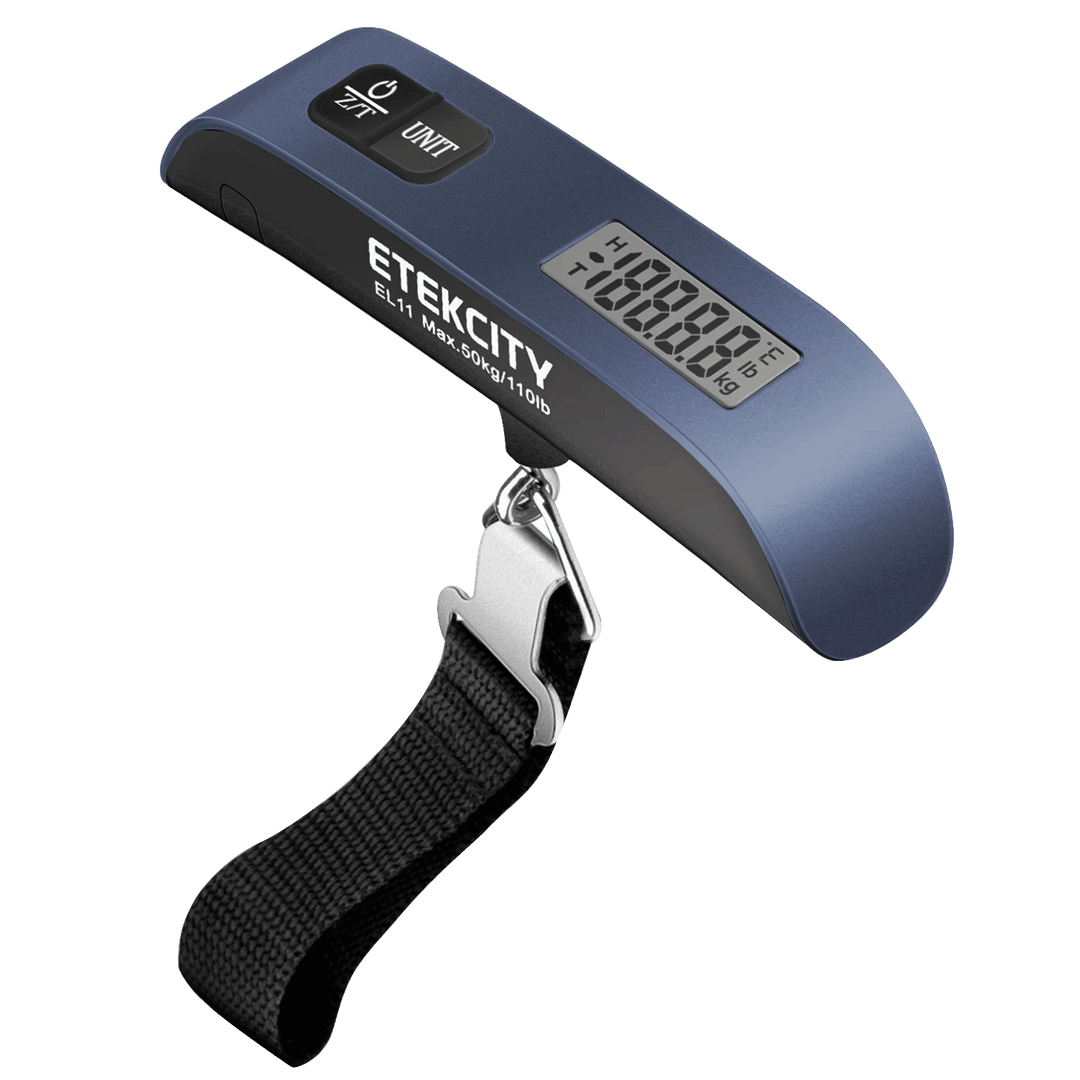
Etekcity Digital Luggage Scale
Best Overall: The Etekcity digital luggage scale is the best-selling option in this category for a reason that holds up under scrutiny: it's accurate to ±100 g across the 0-50 kg range, the backlit LCD is readable in hotel room light conditions, and the rubberized T-bar handle reduces grip slip during measurement. The auto-off at 60 seconds gives adequate time to hang and stabilize a heavy bag.
Top picks ↓| Product | Price | Link |
|---|---|---|
| 10〜15 | View deal → | |
| 18〜25 | View deal → | |
| 16〜22 | View deal → | |
| 8〜13 | View deal → |
Top picks
Related articles


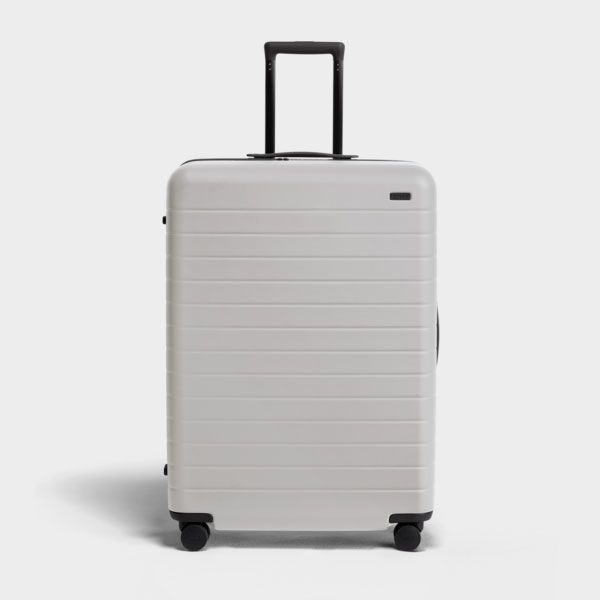
Etekcity Digital Luggage Scale
Best overall. ±100 g, 50 kg max, backlit, 60-second auto-off. Best value for most travelers.
The Etekcity digital luggage scale is the best-selling option in this category for a reason that holds up under scrutiny: it's accurate to ±100 g across the 0-50 kg range, the backlit LCD is readable in hotel room light conditions, and the rubberized T-bar handle reduces grip slip during measurement. The auto-off at 60 seconds gives adequate time to hang and stabilize a heavy bag. The honest weakness: the hook is adequate but not forged steel — under very heavy repeated use (100+ measurements at 25+ kg) some units show slight hook deformation. Fine for trip-by-trip use; potentially problematic if you're using this as a professional luggage service tool.
Pros
- ✓±100 g accuracy verified across 0-50 kg
- ✓Backlit LCD readable in low light
- ✓60-second auto-off gives time to stabilize
Cons
- ✗Hook not forged steel — may deform under extreme repeated heavy use
Score breakdown
| Max weight | 50 kg |
| Accuracy | ±100 g (±0.1 kg) |
| Display type | Backlit LCD |
| Auto-off | 60 seconds |
| Units | kg / lb / jin switchable |
| Price | $11.99 |

Renpho Smart Luggage Scale
Bluetooth app logging. ±100 g. Best for multi-bag tracking. Adds Bluetooth pairing step.
Renpho's smart luggage scale connects via Bluetooth to a companion app that logs bag weights, allows you to track total luggage weight across multiple bags, and displays the reading on your phone screen — which is always well-lit and large enough to read clearly. The accuracy is comparable to the Etekcity (±100 g). The honest weakness: the Bluetooth connection adds friction to the weighing process — you need the app open and paired before every use. If you're doing a quick morning-of-departure weight check, the Bluetooth pairing step adds 20-30 seconds that a simple digital scale doesn't require. Best for obsessive packers who want a travel weight log; overkill for casual once-a-trip weighing.
Pros
- ✓Bluetooth app logs weights across all bags
- ✓Phone display — always readable in any light
- ✓Tracks total luggage weight across multiple bags
Cons
- ✗Bluetooth pairing adds steps vs simple digital scales
- ✗App dependency — doesn't work well without phone
Score breakdown
| Max weight | 50 kg |
| Accuracy | ±100 g (±0.1 kg) |
| Display type | Bluetooth app (phone display) |
| Auto-off | App-controlled |
| Units | kg / lb switchable |
| Price | $19.99 |
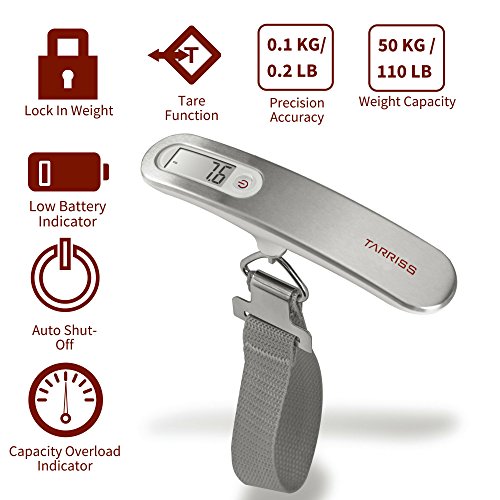
Tarriss Jetsetter Digital Luggage Scale
Best ergonomic grip for heavy bags. ±100 g. Bright display. Slightly premium vs Etekcity.
The Tarriss Jetsetter differentiates on ergonomics — the flat wide strap design distributes the load of a 23 kg bag across the palm rather than concentrating it at the fingers, which makes the 5-10 second hold during measurement significantly more comfortable for heavy bags. The backlit display is particularly bright compared to competitors. Accuracy is ±100 g. The honest weakness: the flat strap design is less compact than a T-bar handle — it doesn't coil as neatly in a bag or pocket. The price is also slightly above the Etekcity without a meaningful accuracy advantage.
Pros
- ✓Wide strap distributes 23 kg load across palm
- ✓Exceptionally bright backlit display
- ✓±100 g accuracy
Cons
- ✗Flat strap less compact than T-bar handle
- ✗Slight price premium over Etekcity for same accuracy
Score breakdown
| Max weight | 50 kg |
| Accuracy | ±100 g (±0.1 kg) |
| Display type | Bright backlit LCD |
| Auto-off | 30 seconds |
| Units | kg / lb switchable |
| Price | $17.99 |

Freetoo Portable Digital Luggage Scale
Smallest at pocket size, under 60 g. ±100 g, 40 kg max. Non-backlit. Best always-in-bag option.
The Freetoo is the smallest and lightest luggage scale in this comparison — it folds to a size that fits in a shirt pocket and weighs under 60 g. For travelers who want a scale always in their bag rather than packed separately, this is the correct choice. Accuracy is ±100 g, standard for the category. The honest weakness: the 30-second auto-off is too short for slow hangers who need to stabilize a swinging bag — you may need a second attempt. The hook is the thinnest in this comparison, which raises questions about long-term durability under very heavy repeated use, though for trip-to-trip use it holds up.
Pros
- ✓Ultra-compact — shirt pocket size at under 60 g
- ✓Always-in-bag carry without space penalty
- ✓±100 g accuracy — adequate for trip weighing
Cons
- ✗30-second auto-off too short for slow stabilization
- ✗Thinnest hook — long-term durability question
Score breakdown
| Max weight | 40 kg |
| Accuracy | ±100 g (±0.1 kg) |
| Display type | LCD (non-backlit) |
| Auto-off | 30 seconds |
| Units | kg / lb switchable |
| Price | $9.99 |
Which one is right for you?
For most international travelers
Etekcity Digital Luggage Scale
±100 g accuracy, backlit display, 60-second auto-off — covers every practical use case at the best price.
For multi-bag itinerary tracking
Renpho Smart Luggage Scale
Bluetooth app logs all bag weights, letting you track total luggage weight across a complex multi-bag trip.
For the most accurate pre-airport weigh-in
luggage-scale-camry-el-gc50
±50 g accuracy — the most precise scale here, meaningful when you're deciding whether to remove one item.
For heavy bags and extended holds
Tarriss Jetsetter Digital Luggage Scale
Wide strap distributes 23 kg load across the palm — the most comfortable to hold during the stabilization window.
For always-in-bag carry
Freetoo Portable Digital Luggage Scale
Shirt-pocket size and under 60 g — the only scale here that adds no meaningful weight or space to your bag.
Why luggage scale accuracy matters more than features
Most international airline economy class checked baggage limits are 23 kg (50 lb) per bag. The standard overweight fee on international flights starts at $50-100 per bag per segment — on a London-New York routing, a 24 kg bag could cost you $200+ in overweight fees. The scale's job is to tell you whether you're at 22.5 kg or 23.5 kg with sufficient accuracy that you can make a real decision about whether to remove something before heading to the airport.
A scale that's accurate to ±100 g (0.1 kg) gives you a meaningful reading. A scale that's accurate to ±500 g (0.5 kg) means you don't actually know whether you're at 22.5 or 23.0 kg — you just know you're in that zone somewhere. The airline's counter scale is calibrated to a legal standard; your home scale doesn't have to be, but it has to be consistent and close enough to the counter standard that 'scale says 22.5 kg' reliably means 'counter will say under 23 kg.'
Luggage scales commonly lose calibration over time as the strain gauge (the mechanical element that converts force to an electrical signal) experiences repeated stress cycles. A scale that was accurate at purchase and drifts 200 g after 50 uses is more dangerous than one that's always 200 g high — you've learned to trust it, and the drift catches you when it matters. The best protection against calibration drift is a scale with an auto-calibration function or one that's verified against a known weight every few trips.
Max capacity: why you need more than 23 kg
The 23 kg limit is the limit for the airline to charge you without fees — but scales with a 40 kg maximum capacity serve two purposes. First, some airlines (Japan Airlines economy premium, business class checked bags, and some intra-Asia routes) allow 30-32 kg per bag. A 23 kg max capacity scale can't weigh these bags at all. Second, a scale's accuracy typically varies across its range — a 40 kg scale may be more accurate at 22-23 kg than a 23 kg scale that's operating at the top of its range, where spring-based strain gauges are under maximum mechanical stress.
All five scales in this comparison have a maximum capacity of at least 40 kg, which is the practical minimum useful range for international travel. The Camry EL GC50 has a 50 kg maximum, which covers even the most generous checked bag allowances on first class itineraries. Renpho's smart scale connects to an app for logging weights across multiple bags — useful for tracking what's getting heavier on a trip where you're shopping.
Display types: LCD vs LED and reading in low light
Luggage scales are typically used in two scenarios: at home before departing (good light, no rush) and at the hotel the morning of checkout (variable light, often a rush). The display type matters most in the second scenario. LCD displays (used by most scales) require ambient light or a backlight to be readable — a non-backlit LCD in a dimly lit hotel room in Bangkok at 5 a.m. before a 7 a.m. flight is essentially unreadable. LED displays are self-illuminating and readable in any light condition, but they consume more battery power.
The Etekcity digital scale uses a backlit LCD — the backlight activates for about 5 seconds after the reading stabilizes, which is sufficient for most readings. The Renpho connects to a phone app where the reading is displayed on the phone screen — automatically well-lit in any conditions. The Tarriss Jetsetter has a bright backlit display specifically noted in owner reviews for hotel-room visibility. The practical recommendation is any scale with a backlight or app display — the Freetoo portable and Camry EL GC50 both include backlit LCD.
Hook and strap durability: the failure point of cheap scales
A luggage scale has two structural stress points: the hook that attaches to the suitcase handle, and the strap or grip that you hold. The hook takes the full weight of the suitcase — a 23 kg bag puts 225 N of force on the hook with every measurement. Cheap hooks use thin stamped metal that deforms after 50-100 measurements; quality hooks use forged steel or thick aluminum that maintains its shape across 1,000+ uses.
The strap (on strap-style scales) or the ergonomic grip (on handle-style scales) affects measurement consistency — if your grip slips during the measurement, the reading oscillates and the scale may lock onto the wrong value. The Etekcity scale uses a rubberized T-bar handle that minimizes grip slip. The Tarriss Jetsetter uses a wider flat strap that distributes load across the palm rather than concentrating it at the fingers, which makes holding a 23 kg bag slightly less uncomfortable during the 5-10 second reading window.
Auto-off timing is a usability detail that compounds over many trips. A scale that turns off 10 seconds after activation (without a reading) requires you to restart it if your bag isn't ready. A scale that stays on for 60 seconds gives you time to hang the bag, stabilize it, and let the reading settle. The Etekcity auto-offs at 60 seconds; the Freetoo at 30 seconds; the Renpho's app-based operation means the phone display controls the effective timeout.