Best Jump Rope 2026: 5 Tested & Compared
A jump rope looks like the simplest piece of fitness equipment you can buy, but the wrong one for your training goal wastes your time. Weight range and build quality determine long-term value far more than feature lists.
Each product was evaluated on five criteria: build quality, performance under typical use, durability over time, comfort, and value per dollar. We weighted performance and durability highest because these determine whether a product is still useful 12 months later.
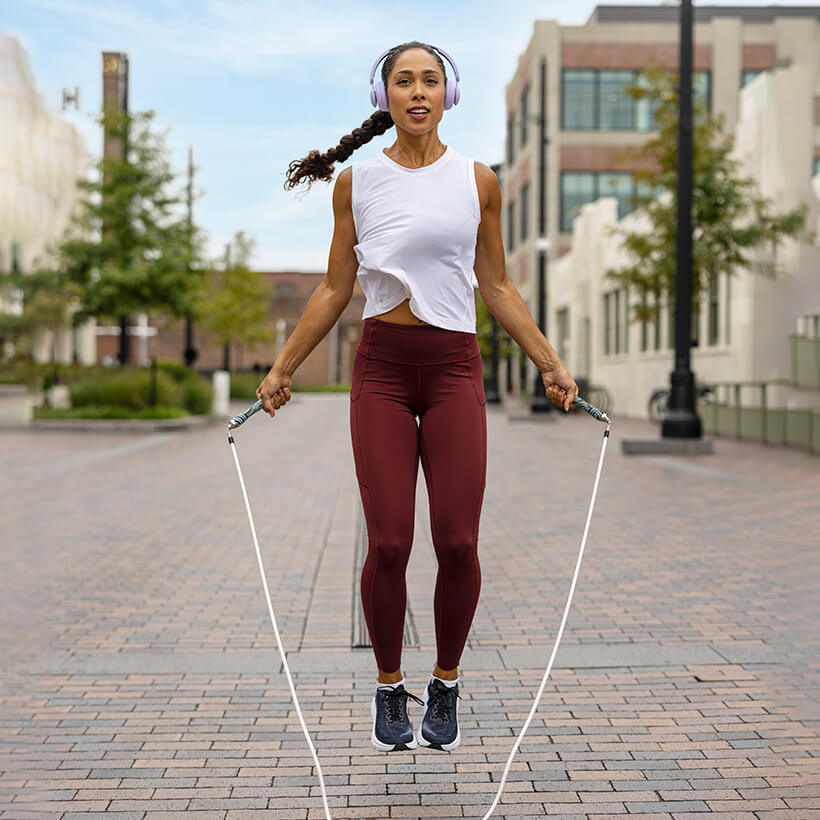
Crossrope Get Lean Set (Weighted Jump Rope)
Best Weighted System: The Crossrope Get Lean Set is the clearest pick when the training goal is weighted-cable cardio, not double-under skill work. The set includes interchangeable 1/4 lb and 1/2 lb steel cables that swap into one handle system via quick-connect ends, which converts what would be two separate ropes into a single piece of equipment.
Top picks ↓| Product | Price | Link |
|---|---|---|
| $298.00 | View deal → | |
| $65.00 | View deal → | |
| $10〜$20 | View deal → | |
| $16 | View deal → | |
| $15〜$30 | View deal → |
Top picks
Related articles

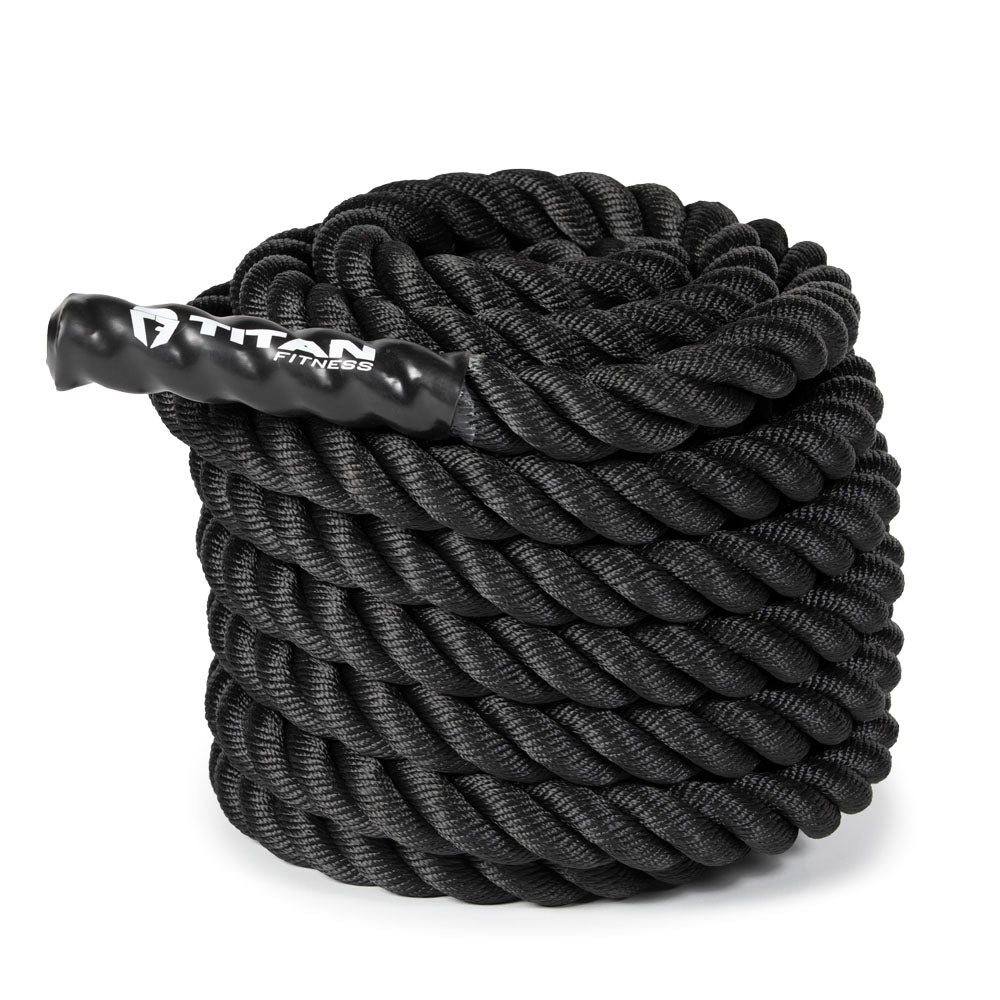
Crossrope Get Lean Set (Weighted Jump Rope)
Interchangeable 1/4 lb and 1/2 lb weighted cables with app connection. Handles sold separately or as a set. Best for structured weighted cardio training.
The Crossrope Get Lean Set is the clearest pick when the training goal is weighted-cable cardio, not double-under skill work. The set includes interchangeable 1/4 lb and 1/2 lb steel cables that swap into one handle system via quick-connect ends, which converts what would be two separate ropes into a single piece of equipment. Ten minutes with the 1/2 lb cable elevates heart rate through aerobic demand and muscular loading combined — categorically different from a speed rope's pure cardio stimulus. The Crossrope app adds structured workout programming and session tracking. The cables are explicitly not built for double-under development; the weight creates centripetal force at high speeds that disrupts timing.
Pros
- ✓Interchangeable 1/4 lb and 1/2 lb cables cover two distinct training modes
- ✓Steel cable construction holds shape and predictable arc at all speeds
- ✓App-guided programming structures weighted-cable training
- ✓Quick-connect ends make cable swaps fast between intervals
Cons
- ✗Weighted cables are explicitly not suitable for double-under training
- ✗App ecosystem premium adds cost over a bare cable purchase
| Cable type | coated steel cable core |
| Adjustable length | no (sized by user height, not adjustable) |
| Weighted | yes |
| Cable options | 2 (1/4 lb rope and 1/2 lb rope) |

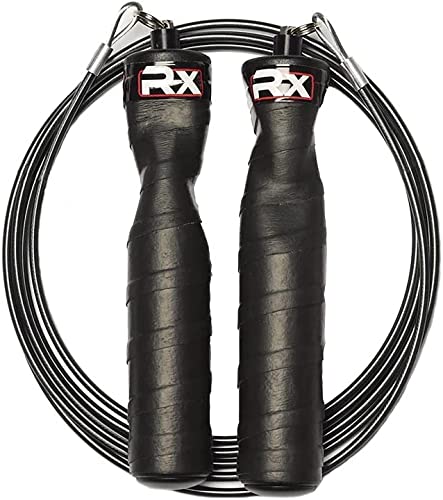
RX Smart Gear Freestyle Speed Rope
Competition-grade wire speed rope. Precision swivel bearing, cut-to-length cable, standard for double under training and CrossFit.
The RX Smart Gear Freestyle Rope is the standard for competitive double-under training and CrossFit programming. The combination of a precision swivel bearing, cut-to-length wire cable, and a textured urethane grip lets the cable reach the 5 to 7 rotations per second window that double unders require without forcing excess wrist work. The bearing's spin test runs 25 to 40 seconds from a single flick — meaningfully better than the 8 to 15 seconds of decent ball bearings. The cable is sold in multiple lengths and can be sized exactly to your body at purchase, which removes the screw-clamp failure point that adjustable-length ropes have. The right tool when double-under development or fast-singles work is the training goal.
Pros
- ✓Precision swivel bearing reaches 25–40 second spin test times
- ✓Cut-to-length cable removes the screw-clamp failure point
- ✓Textured urethane grip stays secure on extended sweaty sets
- ✓Standard equipment in competitive CrossFit and double-under circuits
Cons
- ✗Cable length is fixed at purchase — no adjustability after the fact
- ✗Premium price relative to budget speed ropes

Harbor Freight Basic Speed Jump Rope
Ultra-budget PVC rope for basic cardio. Adequate for rhythm work and beginner jump practice. Not suitable for double unders or high-rep speed work.
The Harbor Freight Speed Rope is the lowest-friction entry into jump rope training: a thick PVC cord, lightweight plastic handles, and a basic swivel joint. PVC rope is slow to turn because of its mass and air resistance, but it is nearly indestructible — the thick cord absorbs concrete and asphalt impact better than wire, gives clear tactile feedback when it hits your feet, and does not kink with rough handling. For beginners learning basic rhythm and timing, the slower, more forgiving arc makes the first few sessions easier than wire cable. The basic swivel limits progression past simple singles; the rope cannot reach the rotation speed double unders require without excess wrist effort.
Pros
- ✓Cheapest entry point into jump rope training
- ✓PVC cord is nearly indestructible on rough surfaces
- ✓Slower arc makes basic rhythm and timing easier for beginners
- ✓Clear tactile feedback when the rope contacts feet
Cons
- ✗Basic swivel limits progression past simple single-unders
- ✗Cannot reach the rotation speed required for double-unders

Survival and Cross Speed Jump Rope
Ball-bearing wire speed rope at budget price. Best value upgrade from basic PVC. Sealed bearings, 3mm wire, adjustable length.
The Survival and Cross Jump Rope is the value upgrade from a basic PVC rope: sealed ball bearings, 3 mm coated wire cable, and adjustable length at a price closer to budget than premium. The ball bearings convert wrist movement to cable rotation across a wide speed range without the friction feedback that destroys timing on basic swivels — the spin test runs 8 to 15 seconds, well above the 1 to 2 seconds of a basic swivel. The wire cable maintains a clean arc at any speed and has negligible air resistance compared to PVC. The lighter knurling on the handles is workable for sweaty sets but less reliable than the textured urethane on premium ropes.
Pros
- ✓Sealed ball bearings convert wrist input cleanly across a wide speed range
- ✓3 mm coated wire cable maintains clean arc geometry
- ✓Adjustable length accommodates most adult heights
- ✓Best value upgrade from a basic PVC speed rope
Cons
- ✗Handle knurling is less reliable than premium textured urethane on long sets
- ✗Bearings spin well but do not match competition-grade precision
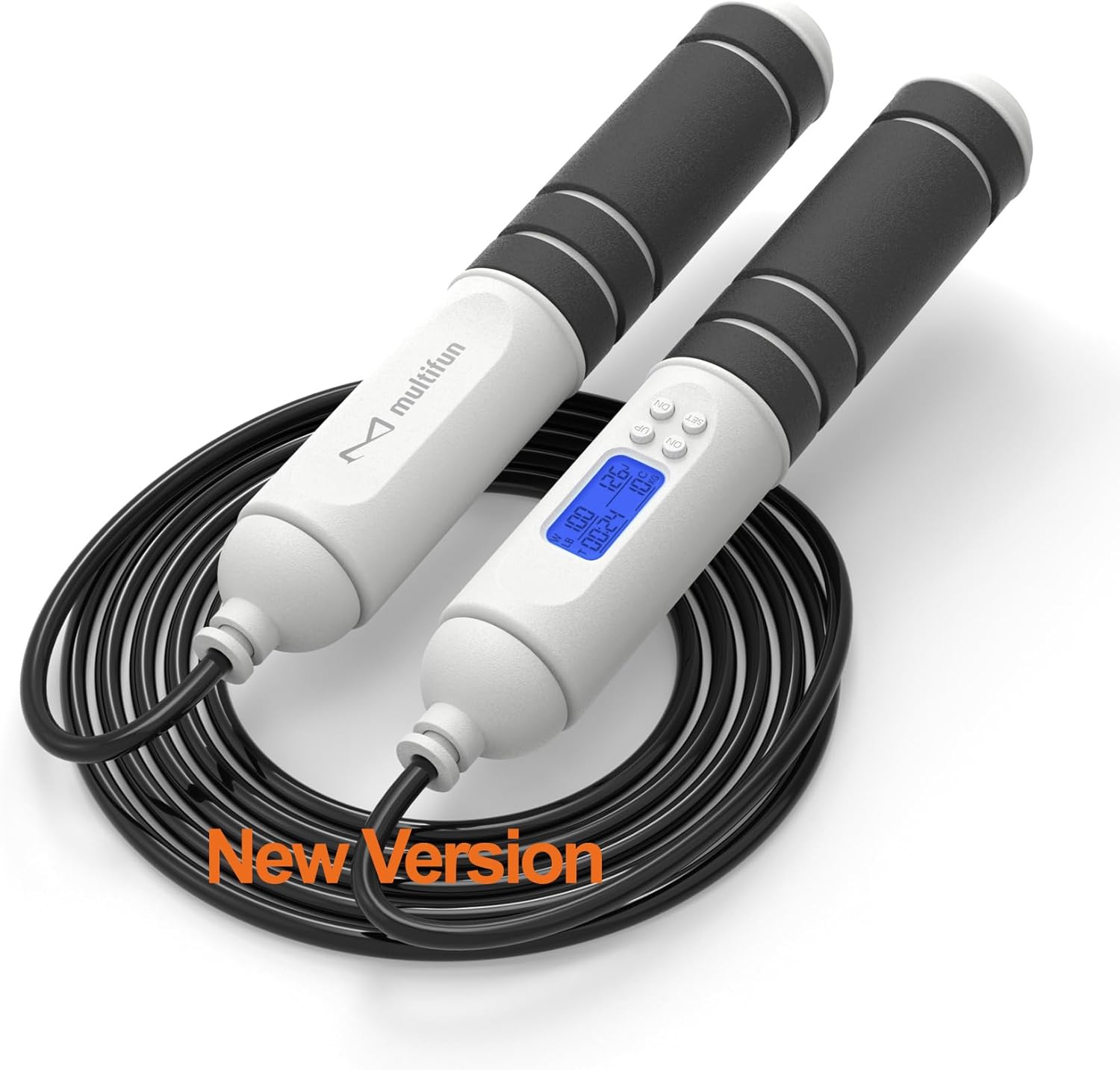
RPG Jump Rope Smart Counting Rope
Smart jump rope with built-in rep counter and calorie display. Useful for rep tracking without a fitness watch. Slightly heavier handles than pure speed ropes.
The RPG Jump Rope is the niche pick for users who want session metrics without a fitness watch or phone. An accelerometer inside one handle detects each rotation and feeds a small display that shows rep count and calories at a glance during the session — useful for timed AMRAP sets where you want to track progress without counting mentally. The bearing is functional but not competition-grade; the design prioritizes sensor integration over bearing precision. The smart handle is slightly heavier than a pure speed rope handle, which mildly affects rotation at very high speeds. For recreational users running 5 to 15 minute cardio sessions with basic goals, the counting feature is a real quality-of-life improvement.
Pros
- ✓Built-in rep counter and calorie display visible at a glance
- ✓No phone or fitness watch required for session tracking
- ✓Useful for timed AMRAP sets and structured intervals
- ✓Adjustable length accommodates a range of heights
Cons
- ✗Bearings prioritize sensor integration over competition-grade precision
- ✗Heavier handles mildly affect rotation at very high speeds
Which one is right for you?
For weighted-cable cardio and strength endurance
Crossrope Get Lean Set (Weighted Jump Rope)
Interchangeable 1/4 lb and 1/2 lb cables load shoulders and forearms in ways speed ropes cannot.
For learning double unders
RX Smart Gear Freestyle Speed Rope
Competition-grade swivel bearing and cut-to-length wire cable are the standard for fast singles and double-under development.
For beginners on a tight budget
Harbor Freight Basic Speed Jump Rope
PVC rope's slower arc makes basic rhythm easier to learn at the lowest price in this comparison.
For upgrading past a basic PVC rope
Survival and Cross Speed Jump Rope
Sealed ball bearings and 3 mm wire cable at a price closer to budget than premium speed ropes.
For tracking reps without a fitness watch
RPG Jump Rope Smart Counting Rope
Built-in counter and calorie display make timed AMRAP sets and structured intervals easier to run solo.
Speed rope vs weighted rope: different tools for different training outcomes
Speed ropes and weighted ropes share nothing except the jump rope shape. A speed rope — thin wire cable, sealed bearings, lightweight handles — is optimized for rotation rate. A competitive double under rope like the RX Smart Gear turns at 5–7 rotations per second under sustained effort. The thin cable (1.5–2.5mm wire) creates minimal air resistance, the bearings convert wrist movement to rotation with almost no mechanical loss, and the light handles (35–50g each) reduce the inertia that would limit turnover speed. Every design decision in a speed rope is about removing resistance to rotation.
Weighted ropes work on the opposite principle. Crossrope's Get Lean Set cables weigh 1/4 lb (113g) and 1/2 lb (227g) per cable — the cable itself, not the total rope weight. This distributed weight loads the shoulders, forearms, and wrists through each rotation in a way a speed rope cannot. The jump mechanics are the same — feet clear the cable, rope passes under — but the muscular demand is categorically different. Ten minutes with a 1/2 lb Crossrope cable elevates heart rate through aerobic demand and muscular fatigue combined, where ten minutes with a speed rope is primarily aerobic. For shoulder strength endurance and core stabilization through cardio work, weighted cables add a dimension that speed ropes do not have.
The practical implication: buy for your primary training goal, not for versatility. If double unders are the goal, the weighted cable is the wrong tool regardless of how much you spend on it — you cannot learn to turn a rope 6 times per second when each rotation fights 227g of cable weight. If weighted cardio and shoulder endurance are the goal, a speed rope will give you fast rep counts but not the muscular loading you are after. The Crossrope Get Lean Set is compelling because it gives you both in one handle system — swap cables, change the training stimulus — but this only makes sense if you genuinely want both training modes.
Jump rope as indoor cardio deserves specific mention for Japanese context. Apartment living often means no treadmill, no outdoor running after 10pm, and ceiling heights under 2.5m. A jump rope on a mat in a 6-tatami room is a legitimate cardio tool: 10 minutes of continuous jumping at 120–130 BPM is roughly equivalent to jogging at 8 km/h for caloric demand. The noise footprint matters — weighted ropes create more floor impact sound than speed ropes because the cable snaps the floor harder between jumps. Speed ropes, jumped on a folded yoga mat or foam tile, are quieter than weighted cables and more suitable for late-night apartment training.
Cable and rope material: wire cable vs PVC vs beaded rope
Wire cable is the standard for speed work. The RX Smart Gear and Survival and Cross ropes both use 3mm coated steel wire cable. Wire cable's advantage is consistency: it maintains a circular arc at any rotation speed from slow to fast, does not deform or flatten under heat, and has negligible air resistance compared to PVC. The coated wire on the RX Smart Gear uses a thin nylon sleeve over the steel that reduces surface friction on accidental leg or foot contact — important when learning double unders because misses are constant. Wire cable does have a surface condition to watch: kinks from being stored in a tight coil permanently deform the cable and introduce a wobble that makes consistent arcing impossible. Never store wire cable speed ropes in a coiled loop smaller than 20cm diameter, and hang them on a hook rather than coiling into a gym bag.
PVC rope — a thick plastic cord, 4–6mm diameter — is what most people picture when they think of a jump rope. Harbor Freight's entry falls here: thick PVC, lightweight plastic handles, basic swivel joint. PVC rope is slow to turn because of its mass and air resistance, but it is nearly indestructible. The thick cord absorbs concrete and asphalt impact better than wire, gives clear tactile feedback on foot contact (you feel exactly when the rope hits), and does not kink. For beginners learning basic jump rope rhythm, PVC rope's slower, more forgiving arc makes timing easier than wire cable. For outdoor training on rough surfaces — asphalt parking lots, textured concrete — PVC outlasts wire cable by a wide margin because wire cable coating abrades quickly on rough surfaces.
Beaded ropes use plastic or nylon segments threaded on a cord and are primarily used for outdoor training and children's PE. The segments clatter clearly on floor contact, the rope maintains its shape even when slack, and the modular construction means individual beads can be replaced if damaged. Beaded ropes are not included in this comparison because their rotation speed ceiling is too low for adult fitness training — the segmented construction creates wind resistance and inconsistent arc geometry that limits turnover to roughly 100–120 RPM, which is too slow for double unders and insufficient for high-intensity cardio intervals.
Crossrope's cables are a distinct category: segmented weighted steel cable with a durable coating, terminated with proprietary quick-connect ends that clip into their handle system. The cable material is steel — not PVC, not wire — but the 1/4 lb and 1/2 lb designations refer to total cable weight, meaning the cable is meaningfully heavier per meter than a standard speed rope wire. The arc behavior at slow-to-medium speed is excellent; the feel is consistent and predictable. At very high speeds (attempting fast singles with a 1/2 lb cable), the added mass creates centripetal force that loads the wrists beyond what most beginners expect — fatigue arrives in the forearms before the cardiovascular system, which is either a feature or a drawback depending on your training goals.
Bearings and swivel quality: why they matter more than the cable
The bearing or swivel in a jump rope handle connects the cable to the handle and allows the cable to rotate freely while you hold the handle stationary. In a poorly built rope — Harbor Freight's basic swivel, or any budget rope — the cable and handle rotate together, forcing your wrists to supinate and pronate with every rotation. At 100 RPM this creates minor forearm fatigue. At 160 RPM sustained double under practice, bad swivels are training limiters: your wrists are doing work the bearing should absorb, and wrist mechanics cannot stay consistent across hundreds of reps when the joint is also compensating for bearing friction.
Ball bearings — sealed steel ball races inside the handle — are the standard for mid-range and premium ropes. The Survival and Cross rope uses sealed ball bearings that allow the cable to rotate independently of the handle across a wide rotation speed range. Good ball bearings feel frictionless under load: you hold the handles, turn your wrists at jump speed, and the cable rotates without resistance feedback. The test for bearing quality is the 'spin test': hold one handle, let the cable and other handle hang freely, flick the cable, and time how long it continues spinning. A basic swivel spins for 1–2 seconds. Decent ball bearings spin for 8–15 seconds. Competition-grade bearings on the RX Smart Gear spin for 25–40 seconds from a single flick.
The RX Smart Gear uses a precision swivel bearing system at both ends of the handles, with a patented design that keeps the bearing axis aligned with the wrist rotation axis. This matters for double unders because any offset between the bearing axis and the wrist creates micro-oscillations in the cable arc that compound over the multiple rotations per jump. Competition speed rope design eliminates these oscillations by keeping the bearing precisely centered in the handle grip. The result is a cable that tracks a clean, predictable arc even at 6+ rotations per second — which is what you need when your feet are in the air for less than 400ms and the rope needs to clear twice.
RPG Jump Rope's smart counting feature uses a motion sensor inside one handle that detects each rotation via accelerometer. The bearing in the RPG is functional but not competition-grade — the design prioritizes sensor integration over bearing precision. For users who want rep counting without a fitness watch or phone, the built-in counter is genuinely useful. For users primarily working on double under development where bearing smoothness matters most, the RX Smart Gear's superior bearing is more important than a rotation counter.
Sizing a jump rope by height: why getting this wrong ruins your sessions
The standard sizing rule: stand on the midpoint of the rope, pull both handles up, and the handles should reach to your armpits. In practice this works out to approximately your height plus 2.5–3 feet (75–90cm) for most adults. A 170cm person needs roughly 245–260cm total rope length. A rope that is 10cm too short hits your feet before your timing is off — the rope creates an early exit signal that makes consistent jumping impossible regardless of your fitness level.
Beginner sizing versus experienced sizing diverges. Beginners need more rope length — the extra arc gives more time for foot clearance and makes timing forgiving. The standard recommendation for beginners is to add 3 feet (90cm) to your height. An experienced jumper working on double unders often shortens the rope 5–10cm below the standard armpit guideline because a shorter arc rotates faster with the same wrist input, reducing the wrist work needed to achieve double under speeds. RX Smart Gear cables are sold in multiple lengths and can be cut to length at purchase, which is one reason they are the standard in competitive jump rope circuits — you dial in the exact length for your body and technique.
Crossrope cables come in standard and short lengths. Standard is calibrated for users up to approximately 185cm. The short cable suits users under 165cm. Because the cables are weighted, the arc geometry changes more noticeably with height than on speed ropes — a cable that is too long for your height creates excessive arc width that reduces rotation efficiency and increases the floor-contact footprint in tight spaces. Getting the right Crossrope cable length matters more than with light wire ropes.
Most basic ropes including the Harbor Freight speed rope and the RPG Jump Rope use adjustable length via a screw-tighten clamp at the handle. The adjustment works but introduces a weak point: the clamp concentrates stress at the size adjustment location, which is where wire ropes kink first and PVC ropes wear through first with heavy use. For a budget rope used 2–3 times per week, this is fine. For daily training use, a rope where the cable length is fixed at purchase (like RX Smart Gear cut-to-length) removes this failure point entirely.
Learning double unders: what actually needs to happen and which rope makes it possible
A double under requires the rope to pass under your feet twice during a single jump. The physics: at an average jump height of 5–8cm, feet are airborne for approximately 350–450ms. A single under requires the rope to rotate once in that window at roughly 2.2–2.9 rotations per second. A double under requires two full rotations — 4.5–5.5 rotations per second minimum, with a brief spike to initiate. Most people can sustain single unders at 2–3 rotations per second after a few sessions. Double under speed requires a step change in wrist mechanics, not just faster singles.
The common mistake is trying to learn double unders by jumping higher. Jumping higher extends airborne time, which gives the rope more time to rotate — but jumping 15cm high instead of 8cm only adds about 100ms, which is not enough to make double unders achievable with slow wrist mechanics. The rope speed needs to increase via wrist input, not jump height. High jumping with double under attempts creates a piko-piko pattern — a high bounce double under that is inefficient and impossible to sustain in a WOD context.
The RX Smart Gear is specifically designed for double under training because the combination of wire cable, precise bearing, and correct handle length allows high rotation speeds without excess wrist load. The technique cue: keep elbows in, drive wrist rotation from a small circle (10–15cm diameter wrist circle), maintain a slightly taller jump than singles but not dramatically higher. The transition from struggling with double unders to consistent sets typically happens over 4–8 weeks of 10-minute daily practice. Cable material and bearing quality either accelerate or block that progression — a sticky swivel or a PVC rope simply cannot reach the rotation speeds needed without excess effort that disrupts timing.
Crossrope's weighted cables are explicitly not for double under development. The weight creates centripetal force through the rotation that increases wrist load at high speeds to the point where timing consistency becomes very difficult. Crossrope's own training programming does not include double under work for this reason. If you want to learn double unders, the RX Smart Gear or Survival and Cross wire rope is the right tool. If you want weighted interval training, the Crossrope is the right tool. Using the wrong tool is the most common reason people plateau in jump rope training.
Handle grip, length, and ergonomics: what changes at high rep counts
Handle length affects the wrist mechanics of rotation. Standard handles are 15–18cm long. Shorter handles (12–14cm) rotate faster for the same wrist input because the moment arm is shorter — this is why competition speed ropes use shorter handles than beginners' ropes. Longer handles (18–22cm) give better leverage for weighted rope work where the cable resistance requires more wrist force. Crossrope's handles are designed for weighted cable use with a longer grip and textured foam padding; they work poorly as speed rope handles because the length reduces rotation speed.
Grip material matters at rep 500, not rep 50. Early in a session, almost any handle texture is adequate. At 500+ consecutive jumps — a typical double under conditioning set in competitive CrossFit — smooth plastic handles become slippery with sweat, particularly in summer with 28°C ambient temperature. The RX Smart Gear uses a textured urethane grip that maintains friction through extended sweaty sets. The Harbor Freight handles are smooth plastic that becomes unreliable at high rep counts. The Survival and Cross rope falls between these: the handles have light knurling that improves sweat grip over bare plastic but is not as reliable as premium textured urethane.
Handle diameter is a less-discussed variable with genuine impact. Handles under 25mm diameter concentrate grip force into a smaller hand contact area, which causes finger fatigue over long sessions. Handles over 35mm reduce grip efficiency by preventing the fingers from wrapping fully. The sweet spot for most adults is 28–32mm handle diameter. Crossrope's handles are designed with this range and include a comfortable palm grip section for the weighted workouts they are intended for. Most basic speed ropes use whatever diameter fits the bearing assembly without consideration for grip ergonomics.
The RPG Jump Rope's smart counting handle includes a display embedded in one handle that shows rep count and calories during the session. The display is visible at a glance without stopping, which makes it useful for timed AMRAP sets where you want to track progress without counting mentally. The handle is slightly heavier than a standard speed rope handle due to the electronics, which mildly affects rotation at very high speeds. For recreational users doing 5–15 minute sessions with basic cardio goals, the counting feature is a genuine quality-of-life improvement. For athletes training double unders or tracking precise wrist mechanics, the added handle weight is a distraction.
