Best IPL Hair Removal 2026: Braun Silk-expert vs Philips Lumea
At-home IPL promises to end shaving for good, and for the right person it largely delivers — but the technology has a hard limit nobody advertises: it reads the contrast between dark hair and light skin, so it works brilliantly on some people and not at all on others. Knowing which group you're in matters more than which device you buy.
We compared each at-home hair removal device on skin-tone safety sensors, suitability across skin tones and hair colors, treatment speed and window size, flash lifetime or unlimited flashes, comfort features, and price. Specifications were checked against manufacturer data, independent reviews, and dermatology guidance, weighting safety and realistic results for suitable users.

Braun Silk Expert Pro 5
Best Overall: The Braun Silk-expert Pro 5 pairs fast, reliable results with the smartest safety system. Its SensoAdapt sensor reads your skin tone ten times a second and automatically adjusts the light to the safest effective intensity as you move across your body — the single most important IPL feature, since the right intensity protects you while ensuring the treatment works.
Top picks ↓Top picks
Related articles
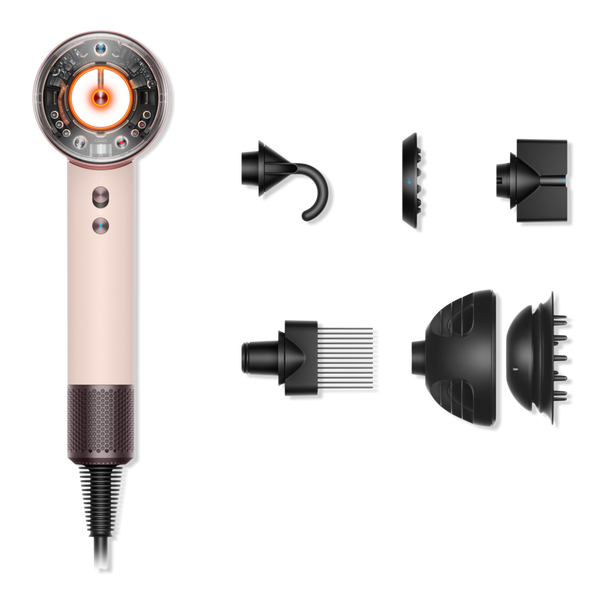


Braun Silk Expert Pro 5
The best overall — SensoAdapt reads your skin tone ten times a second and auto-adjusts intensity for safe, effective flashes, with a fast glide mode, very high flash lifetime, and precision attachments. The smartest, fastest at-home IPL for suitable skin and hair.
The Braun Silk-expert Pro 5 pairs fast, reliable results with the smartest safety system. Its SensoAdapt sensor reads your skin tone ten times a second and automatically adjusts the light to the safest effective intensity as you move across your body — the single most important IPL feature, since the right intensity protects you while ensuring the treatment works. It's among the fastest here, with a high flash rate and a glide mode for legs, a very high flash lifetime (years of full-body use with no cartridge to replace), multiple levels, and face and bikini attachments. Like all IPL it only works on suitable hair and skin, it's premium-priced, and it requires a committed treatment schedule — but for safety, speed, and longevity, it's the device to beat.
Pros
- ✓SensoAdapt auto-adjusts intensity for safety and results
- ✓Fast flash rate and glide mode for large areas
- ✓Very high flash lifetime — no cartridge replacement
- ✓Precision attachments for face and bikini
Cons
- ✗Premium price
- ✗Only works on suitable hair and skin tones

Philips Lumea Prestige
The premium alternative — a SmartSkin sensor plus curved attachments tailored to body, face, bikini, and underarm zones, in corded and cordless models. Excellent, well-established results with the most ergonomic area-specific system.
The Philips Lumea Prestige is the Braun's closest rival and the other premium heavyweight. It has an integrated SmartSkin sensor that reads your skin tone and recommends the right intensity, and it ships with curved attachments shaped for the body, face, bikini, and underarm — each optimising the window and intensity for that zone, which makes awkward areas more comfortable and effective. Philips offers corded and cordless models; the cordless Prestige frees you to reach the back of legs and underarms without a cable. Results are well established and many users find the area-specific attachments the most ergonomic full-body system. It's premium-priced and bound by the same IPL suitability limits, but it's an excellent, well-rounded choice.
Pros
- ✓SmartSkin sensor recommends safe intensity
- ✓Curved attachments tailored to each body zone
- ✓Corded and cordless options
- ✓Well-established, reliable results
Cons
- ✗Premium price
- ✗Bound by the same IPL skin/hair limits

Ulike Air 3 Ipl
The comfortable fast newcomer — a sapphire cooling plate chills the skin for more comfortable, higher-intensity flashes at a fast rate and an approachable price. Check its skin-tone safety guidance carefully, as it leans more on manual level selection.
The Ulike Air 3 competes on speed and comfort. Its signature sapphire cooling plate chills the skin during each flash, making treatment noticeably more comfortable than the warm snap of IPL and allowing higher comfortable intensity, and a fast flash rate keeps sessions quick — at a more approachable price than Braun or Philips, which has made it a social-media favourite. The main caution is to check its skin-tone safety guidance carefully, as some devices in this tier rely more on you selecting the correct level than on a continuous automatic sensor. For comfort, speed, and value, it's a strong pick provided you follow the suitability guidance.
Pros
- ✓Sapphire cooling plate for comfortable flashes
- ✓Fast flash rate for quick sessions
- ✓More approachable price than the premium pair
- ✓Popular, well-reviewed for comfort
Cons
- ✗Leans more on manual level selection
- ✗Verify skin-tone safety guidance carefully

Tria Hair Removal Laser 4x
The targeted laser outlier — an actual diode laser (not IPL) for stronger results on small, stubborn areas like the upper lip and bikini line. Slow over large areas due to a small window; best for precise spot treatment.
The Tria Hair Removal Laser 4X is the outlier because it uses an actual diode laser rather than IPL. A laser is more concentrated and targeted than IPL's broad-spectrum light, which can mean stronger results on small, precise areas — but it has a much smaller treatment window, so covering large areas like full legs is slow and tedious. It's the pick for someone targeting specific stubborn spots like the upper lip, chin, or bikini line rather than treating the whole body, and it has its own skin-tone suitability range to check. For precise, powerful spot treatment it excels; for whole-body speed, an IPL device is the better tool.
Pros
- ✓Actual diode laser — concentrated, strong on spots
- ✓Excellent for small, stubborn areas
- ✓Cordless and portable
- ✓Adjustable energy levels
Cons
- ✗Small window — slow over large areas
- ✗Its own skin-tone limits to verify

Nood The Flasher 2 0
The value and simplicity pick — a clean, minimalist IPL device with unlimited flashes and an accessible price, a popular entry point into at-home IPL. Scrutinise its skin-tone safety features and follow the guidance precisely.
The Nood The Flasher 2.0 is the value and simplicity pick — a clean, minimalist IPL device with unlimited flashes (no cartridge to replace), a straightforward design, and an accessible price that has made it a popular entry point into at-home IPL. It does the core IPL job at a lower cost than the premium devices, which is exactly its appeal for someone who wants to try home hair removal without a big outlay. As with any budget IPL, scrutinise its skin-tone safety features and follow the guidance precisely, and accept that it lacks the continuous auto-sensor sophistication of the Braun — but as an affordable, simple starting point for suitable users, it's sensible.
Pros
- ✓Unlimited flashes — no cartridge to replace
- ✓Clean, simple, minimalist design
- ✓Accessible entry-level price
- ✓Popular starting point for home IPL
Cons
- ✗Less sophisticated skin-tone safety than premium devices
- ✗Follow suitability guidance carefully
Which one is right for you?
For the safest, fastest full-body IPL
Braun Silk Expert Pro 5
Continuous SensoAdapt skin reading, a fast glide mode, and a huge flash lifetime make it the smartest, most hands-off device for suitable hair and skin.
For ergonomic area-specific treatment
Philips Lumea Prestige
A SmartSkin sensor plus curved attachments tailored to body, face, bikini, and underarm zones make it the most comfortable full-body system, with a cordless option.
For comfort and value
Ulike Air 3 Ipl
A sapphire cooling plate makes flashes comfortable at a fast rate and a friendlier price — a strong pick if you follow its skin-tone guidance.
For targeting small stubborn areas
Tria Hair Removal Laser 4x
An actual diode laser delivers concentrated, strong results on spots like the upper lip and bikini line, where a precise tool beats broad IPL.
For trying IPL on a budget
Nood The Flasher 2 0
Unlimited flashes and a simple, accessible design make it a sensible low-cost entry point into at-home IPL for suitable users.
Top pick: Braun Silk-expert Pro 5
The Braun Silk-expert Pro 5 is the best at-home IPL device because it pairs fast, reliable results with the smartest safety system. Its SensoAdapt skin sensor reads your skin tone continuously — ten times per second — and automatically adjusts the light intensity to the safest effective level as you move across different areas of your body. This is the single most important feature in IPL: too much intensity for your skin tone risks burns, too little wastes the treatment, and Braun's continuous auto-adjustment handles it for you rather than relying on you to pick a level correctly.
It's also among the fastest devices here, with a high flash rate and a gliding mode for large areas like legs, so a full-body session takes minutes rather than an ordeal. It has a very high flash lifetime (effectively enough for many years of full-body treatments, so you won't need to replace cartridges), multiple intensity levels, and precision attachments for the face and bikini line. Clinical-style results — meaningfully reduced hair after a course of treatments — are well documented for Braun's Pro line.
The honest caveats: like all IPL, it only works on the right hair-and-skin combination (see the buying guide), it's a premium-priced device, and IPL requires commitment — an initial course of treatments every week or two, then periodic top-ups, not a one-time fix. But for the best combination of safety, speed, and longevity, the Silk-expert Pro 5 is the device to beat.
Best alternative: Philips Lumea Prestige
The Philips Lumea Prestige is the other premium heavyweight and the Braun's closest rival, with a strong reputation and a slightly different design philosophy. It also has an integrated SmartSkin sensor that reads your skin tone and recommends the appropriate intensity, and it ships with a range of curved attachments specifically shaped for different body areas — the body, face, bikini, and underarm attachments each optimise the window and intensity for that zone, which makes treating awkward areas like the bikini line and face more comfortable and effective.
Philips offers both corded and cordless models in the Lumea range; the cordless Prestige gives you freedom of movement for reaching the back of legs and underarms without fighting a cable, while corded models never need recharging mid-session. Treatment results are well established, and many users find the curved, area-specific attachments the most ergonomic system for full-body home use.
Choosing between Braun and Philips largely comes down to the details: Braun's SensoAdapt adjusts continuously and automatically as you glide (more hands-off), while Philips's attachments are exceptionally well-tailored to each body zone. Both are excellent, both have proper skin sensors, and both are priced as premium devices. If continuous auto-intensity and speed appeal most, lean Braun; if area-specific attachments and the cordless option appeal, lean Philips.
The fast newcomer, the targeted laser, and the value pick: Ulike, Tria, Nood
The Ulike Air 3 is the popular newcomer that competes on speed and comfort. Its signature is a sapphire cooling plate that chills the skin during each flash, making treatment noticeably more comfortable (IPL can feel like a warm snap) and allowing higher comfortable intensity. It has a fast flash rate for quick sessions and a more approachable price than Braun or Philips, which has made it a social-media favourite. The main caution is to check its skin-tone safety guidance carefully — some budget-to-mid devices rely more on you selecting the correct level than on a continuous automatic sensor.
The Tria Hair Removal Laser 4X is the outlier because it uses an actual diode laser rather than IPL. A laser is more concentrated and targeted than IPL's broad-spectrum light, which can mean stronger results on small, precise areas — but it also has a much smaller treatment window, so covering large areas like full legs is slow and tedious. It's the pick for someone targeting specific stubborn spots (upper lip, chin, bikini line) rather than treating the whole body, and it has its own skin-tone suitability range.
The Nood The Flasher 2.0 is the value and simplicity pick — a clean, minimalist IPL device with unlimited flashes (no cartridge to replace), a straightforward design, and an accessible price that has made it a popular entry point. It does the core IPL job at a lower cost than the premium devices. As with any budget IPL, scrutinise its skin-tone safety features and follow the guidance precisely, but for someone who wants to try at-home IPL without a premium outlay, it's a sensible starting point.
How to choose: skin and hair color, the safety sensor, speed, and commitment
Confirm IPL will work for you before anything else, because for some people it simply won't. IPL targets the pigment (melanin) in the hair, so it works best with dark hair on light-to-medium skin, where there's high contrast. It works poorly or not at all on light hair (blonde, red, grey, white) because there isn't enough pigment to absorb the light, and standard IPL is unsafe on very dark skin tones because the light targets the skin's melanin too, risking burns. Check the device's specific skin-tone chart (usually based on the Fitzpatrick scale) and hair-color guidance — this determines your results far more than the brand.
Prioritise a proper skin-tone safety sensor. The best devices (Braun SensoAdapt, Philips SmartSkin) read your skin tone and automatically set or recommend a safe intensity, which both protects you from burns and ensures the treatment is strong enough to work. Cheaper devices may rely on you manually choosing a level, which is riskier and easier to get wrong. An integrated, automatic sensor is a genuine safety and effectiveness feature worth paying for, not a gimmick.
Weigh speed and commit to the schedule. Flash rate and window size determine how long a session takes — fast, wide devices (Braun, Ulike) glide over legs in minutes, while a small-window laser (Tria) is slow over large areas but precise on small ones. Crucially, understand that IPL is a commitment, not a one-time purchase: you treat every week or two for an initial course (commonly 4–12 sessions), then do periodic maintenance flashes to keep hair away. It also requires shaving (not waxing or plucking) before each session, since the hair root must stay in place. If you'll stick to the schedule, the results last; if you won't, no device will deliver.